

 Apple Podcasts
 Spotify
 Overcast
 PocketCasts
 RSS Feed
From Iran to Paris: How The US Makes And Breaks Global Deals | Ep263: Secretary John Kerry
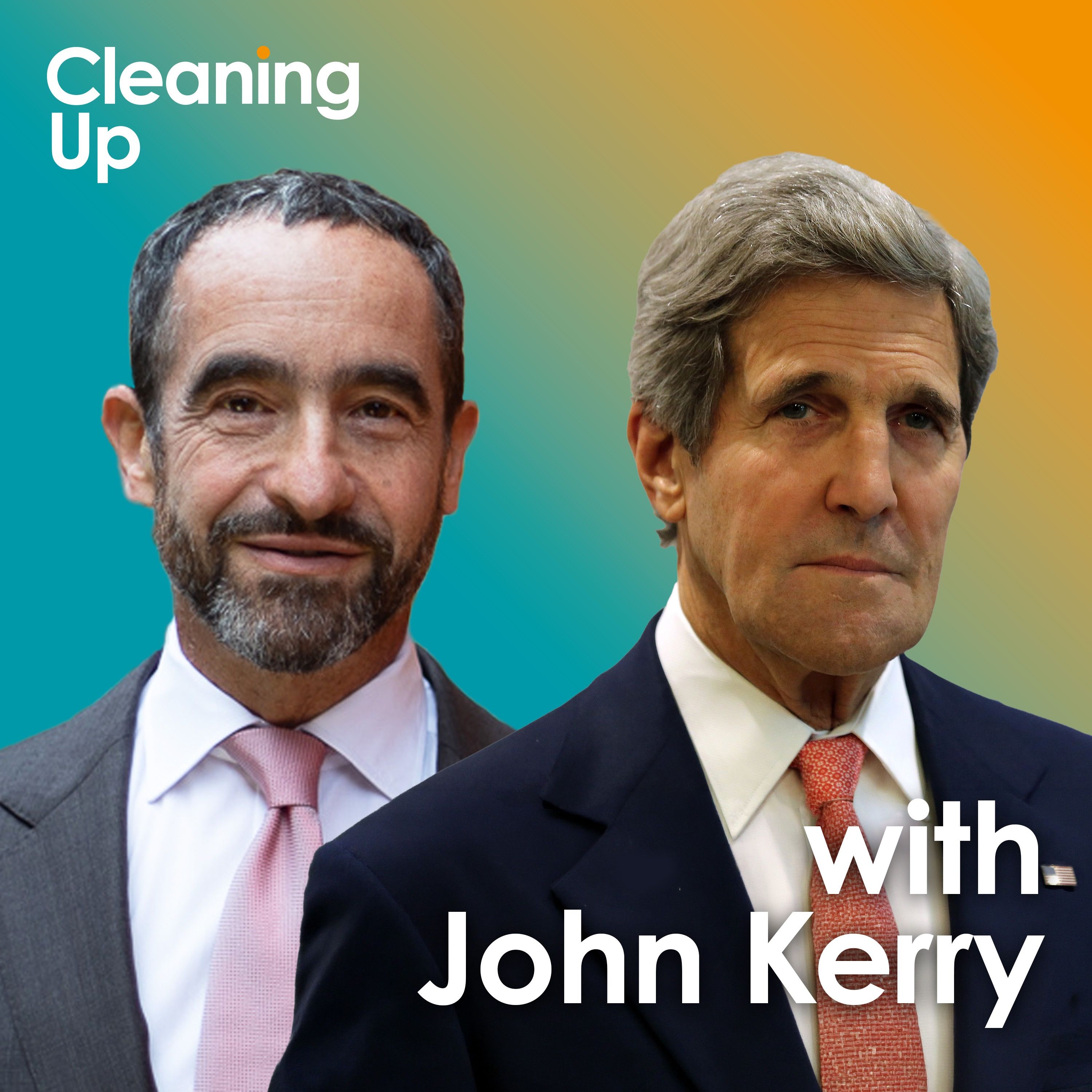
Since Donald Trump returned to the Presidency in 2025, the US has become increasingly isolationist. It has pulled out of the Paris climate agreement and the IPCC, left the World Health Organisation, as well as a whole host of other international organisations and agencies. So, when President Trump leaves the White House, will the US be able to rebuild trust on the international stage?
This week on Cleaning Up, former US Secretary of State and Special Presidential Envoy for Climate John Kerry sits down with Michael Liebreich and reflects on some of the defining diplomatic efforts of his career, from negotiating the Iran nuclear deal to helping secure the Paris Climate Agreement.
Secretary Kerry explains how years of relationship-building and behind the scenes diplomacy helped bring Iran to the negotiating table and why he believes the original nuclear agreement succeeded in limiting Iran's nuclear programme. He also shares his frustration at what he sees as the dismantling of agreements and relationships that took years to build, and the challenge of restoring trust in US leadership on the global stage.
Secretary Kerry also shares his perspective on working with China, the importance of international cooperation, and the role diplomacy still has to play. They also discuss rebuilding trust in US leadership, and the shifting balance between the US and China in clean energy.
Topics Include:
- How the Obama administration negotiated limits on Iran's nuclear programme
- The diplomacy behind the Paris Climate Agreement
- The meaning of "common but differentiated" in climate diplomacy
- Lessons from Kyoto, Paris and Dubai on international climate agreements
- Why engaging adversaries matters more than isolating them
- How can the U.S. rebuild trust on a global stage?
- Petrostate vs electrostate: the shifting US-China dynamic
Leadership Circle:
Cleaning Up is proud to be supported by its Leadership Circle. The members are Actis, Alcazar Energy, Arup, Copenhagen Infrastructure Partners, Cygnum Capital, Davidson Kempner, Ecopragma Capital, EDP, Eurelectric, the Gilardini Foundation, KKR, Mitsubishi Heavy Industries, National Grid, Octopus Energy, Quadrature Climate Foundation, Schneider Electric, SDCL and Wärtsilä. For more information about the Leadership Circle, visit cleaningup.live
Links:
- John Kerry’s bio: https://galvanizeclimate.com/team/secretary-john-kerry
- Galvanize https://galvanizeclimate.com/
- Our Ocean Conference https://www.ouroceanconference.org/
- Todd Stern on Cleaning Up https://www.youtube.com/watch?v=ffnZzO6CMI8
- Ernie Moniz on Cleaning Up https://www.youtube.com/watch?v=0shzlRv4MTY
Acronyms:
- ADNOC - Abu Dhabi National Oil Company
- LNG - Liquified Natural Gas
- OPCW - Organisation for the Prevention of Chemical Weapons
- ESG - Environment, Social and Governance
- IRGC - Islamic Revolutionary Guard Corps
Michael Liebreich
Will they go back to trusting the word of the U.S. on trade?
Secretary John Kerry
Let me tell you, when I negotiated the Iran nuclear agreement, I changed Ronald Reagan's maxim, which was trust but verify. And I said to my whole team, don't trust and verify. Verify the hell out of it.
And that's exactly the way we approach that negotiation. It shouldn't be on trust. And you can't get by with that. Most professional people would say, well, you can't trust these people.
ML
But nobody has had to verify that the U.S. is good for its word in the past. What you're saying now is that we in the U.K., other Europeans, Canadians, and so on, shouldn't trust the U.S
JK
I didn't say that. I said it's fairly obvious globally that people don't have trust in President Trump.
ML
Hello, I'm Michael Liebreich, and this is Cleaning Up. We're recording today in front of a live audience as part of London Climate Action Week. My guest needs very little introduction.
It is Secretary John Kerry, former Massachusetts senator, U.S. presidential candidate, Secretary of State of the U.S., and special envoy on climate for President Biden, now chair of Galvanize, the global climate investor. So please welcome Secretary Kerry to Cleaning Up.
ML
Secretary Kerry, John, thank you so much for joining us here today on Cleaning Up.
JK
Thanks for having me here. I hope we can clean up.
ML
Well, we're trying, we're doing our best. And you've been doing your best for quite some time. But you were on yet another global tour and here we are in London. Where have you been so far on this trip?
JK
Well, I was in Montreal from Boston, and then I went Boston to Australia, and Australia back to UAE to Mombasa, where we had the major ocean conference that I started when I was Secretary. I mean, honestly, I'd love to chat about it a little bit. And then I went from there to London, here, where I've had various things happening.
ML
So I was trying to track your movements, and not succeeded, and not in a stalking kind of way, and not sort of tracking the flights you're on. But I had not picked up all of those. I did pick up that you were in Montreal, that was around finance.
And then Mombasa was oceans, you can give it a plug, the Our Ocean conference, which I did pick up on, but I missed a few of the other stops. One of the things, the timing today in the UK, by the time this comes out, it will already be old news, because Keir Starmer has set a timetable to resign.
But the topical story I'd love to dive in on, if we could to get started, is Iran and the negotiations that are currently underway. And the reason I want to start with that is that you led the negotiations from the US perspective on the POA, the plan of action, which ultimately led to the JCPOA, which was the Joint Comprehensive Plan Of Action, which was comprehensive plan of action, which was the deal which was supposed to rein in Iran, and that President Trump then tore up.
JK
It did rein in.
ML
Can you talk us through, how long did that process take? Because we're now, I think, 57 more days before there's supposed to be a deal, a final deal. How did the process work back in 2015, 2016, when you led the original deal?
JK
Back in 2015, we really began from a very, very different place. I had my first conversation with my counterpart, Foreign Minister Zarif, Javad Zarif. And Javad was extremely articulate, very well spoken.
He'd been to the University of Colorado for some period of time, been to the UN. So he was a pro, and he knew the ups and downs and ropes. And we held our first private conversation at the UN, which we'd scheduled together.
First time an American Secretary of State had talked face to face with an Iranian Foreign Minister since, what, 1979. So we just were determined. President Obama obviously designated and gave me the power to go do this and said, you know, we've got to change this dynamic.
It's dangerous for the world, and there's some tough bridges to cross. So I became deeply involved in this. I was already extremely involved in the Middle East peace process. We got the Palestinians to really come back to the table. We had Bibi Netanyahu agreed to be serious and actually step up. And if we had the right equation security-wise for Israel, he said, I'm prepared to support two states.
It's very obvious from today and the last couple of years, he's not prepared to, not only not prepared to support two states, has been very public and very clear, as has every single member of his cabinet, that there will never be a Palestinian state. Which is why you're seeing such an uptick in the number of settlers, which Minister Ben-Gvir is sort of moving into the West Bank to change the facts on the ground. So this is very, very dangerous for the long run, exceedingly dangerous.
And now, as of the last 24 hours, it's even more a question mark about danger because apparently President Trump thinks it's OK for them to have missiles and sort of put that on the table. I mean, I would think that would be something you'd negotiate, but he just threw it out there. And he has made it very clear that they intend to try to deal with Iran as a major player in the region, which must give the willies to a number of other countries. And it doesn't end Lebanon. So it's really, I guess the best word I could find is not particularly professional.
ML
But going back to the plan of action, which was the first thing that was signed, and then it took 20 months of negotiation to get to the JCPOA. And what are the Iranians like to negotiate with?
JK
They're very serious people and they have an enormous sense of nation and nationhood. I think among all the peoples I've dealt with in the world, and there have been many, I've never met a group of people as prideful and as proud and steeped in the history of their country and in their accomplishments, like inventing algebra, perfecting chess. I mean, these are people for years who have done a lot of things.
And if you look at Persia and the Persian Empire and Persepolis and so forth, and you really understand the Iranians, then you know how difficult a negotiation can be. The current administration has no feel for that. I am told from reasonable sources that the deal that Iran offered prior to the president on a Saturday in January deciding to drop bombs was pretty good.
And I don't know that for a fact. I can't vouch for it. But I've heard it from people who are pretty clear about what the benefits were, and it sounded to me like they'd made some progress.
That was thrown out and has never been put to the test. Now the dynamics are changing very rapidly. But look, I was approached by an Omani businessman, very close to the Sultan of Oman. And he said to me, you know, the Sultan is very interested in peace, very interested in changing the dynamic. He believes, as I do, that you and President Obama present an opportunity to have a serious approach and try to do something. And I'm here to tell you, I believe there is an opportunity for you to be able to negotiate and get something going.
So we didn't just stand up and announce, OK, we're going to do that. We put it to the test. You know, we had a number of different tests to that effect. And I actually became very good friends with Sultan Qaboos, who was quite sick sadly, at that period of time. He had cancer. He was being treated in Germany quite regularly.
And I was the only foreign diplomat to go to Germany and visit with him in Germany, in Garmisch. And, you know, we really grew to have a relationship. And I believe very deeply, very deeply, that relationships are really critical to good diplomacy. And you can't just blow in and blow out and not know people. And if you don't treat people with mutual respect, even though you may disagree so intensely with what they're doing violently, you really won't get anywhere if all you do is create a shouting match and accusatory back and forth and so forth.
So we worked and that's what we did for a year and a half. We sort of tested the waters, are they serious? I mean, the last thing you want to do, I wanted to do, was propose to President Obama, you go do this, and then he has egg on his face because they weren't ready or they stand up and say, screw you, you guys lie. And all of a sudden you have a huge diplomatic deficit. So we worked hard to avoid that kind of play.
And I ultimately was able to persuade the Sultan, who knew the Ayatollah, I asked him if he would go to Iran and vouch for President Obama and me and for the fact that we were serious about trying to make peace and move forward to a new dynamic. And he did. He upped and travelled, sick as he was, to Iran.
They had a state visit. They put together a state visit as the cover for why he was there. And, you know, we started the work, which created so the initial plan was to have a framework sufficient to believe that was a reason to go and negotiate at length. And we did get a sense of, well, this is the way this thing could work. And then when I was appointed secretary of state, you know, I immediately talked to the President about it and we agreed that I should continue and pick it up. So that was about two years already behind a secret.
And we pissed off a few people because it was secret, no doubt. But it wouldn't have worked if it hadn't been tested that way. And then we began the negotiations of the JCPOA, which took weeks, months. I personally went to meeting after meeting with Javad Zarif and we worked and worked and tried to find difficulties and even them out. So honestly, I'm proud of it. I think it was the best of diplomacy, frankly.
And in the end, we got an agreement where Iran destroyed, of their own volition and identified 15-20,000 centrifuges, all their modern centrifuges were destroyed. They were allowed to keep 5000 or so of the older generation. We put cement in the calandria of an about to be commissioned plutonium reactor at the Iraq reactor, and that destroyed it for any potential use down the future. And we took all of the enriched material that we were going to destroy. We got 130 foreign inspectors into the country who would inspect on a daily basis what their level of enrichment was, what it wasn't.
We had cradle to grave uranium tracking with television cameras, every ounce of uranium taken out, put into a centrifuge, taken out and yellow cake and down the food chain to waste we tracked. And in the end, we took it out of the country. We had a 20 year window there where we were going to just not allow them any enriched material.
So the bottom line is, folks, I'm not going to go through every detail of it, but we took a nuclear weapon off the table. And when President Trump today runs around and says they can't have a nuclear weapon, we're not going to let them - everybody knows that. And they knew it because the Ayatollah actually issued a fatwa, which has meaning, that they were never going to develop a nuclear weapon.
And in fact, he resisted the IRGC, who wanted a weapon. So there were people, certainly Israel, who had reason to be concerned because the IRGC is the most militant entity around, radical with respect to Israel. And so and then people would say, well, why did you leave the missiles there, or you did this or that?
Yeah, we did purposefully because we knew that if we began a negotiation on the missiles and on Hezbollah and on Houthis and we'd be there forever and they would have a breakout time on a nuclear weapon that was unacceptable. So we took the breakout time of a nuclear weapon from about it was at two weeks or so to more than a year, and more than a year if we discovered or even if we thought that they were doing something nefarious in a building somewhere in Tehran or somewhere at Isfahan or somewhere, we had the right to say we want to go to that facility, we get to inspect it and if we're not satisfied, the sanctions snap back.
So I personally think that President Trump has been irresponsible and just personal in the way in which he has attacked this from day one saying it's the worst deal in history, lousy, it's a pathway to a nuclear weapon. No, no, Mr. President, not a pathway to a nuclear weapon at all. And you know who agreed with that? Israeli security, Israeli intelligence, China, Russia, France, Germany, Britain, the United States all agreed the deal was working. Don't get out of it.
And President Trump just lied about it and pulled out and got out. So, you know, it's like the Paris Agreement. He just lied about it and he pulled out of the Paris Agreement. What he didn't bargain on is the fact that the Paris Agreement, 37 states in the United States live under renewable portfolio laws. I mean, you're familiar with this from your work and the mayors, we had over a thousand mayors who joined in saying you know, we're going to do what we need to do in our cities to protect ourselves and so forth.
So in the end, you know, Donald Trump pulled out of Paris, but the American people stayed in. We don't have quite that kind of freedom to operate with respect to Iran because it's international affairs. It's, you know, more particular.
So bottom line, folks, we went to war. President Trump went to war, we didn't. President Trump went to war on his own, in the most ill-advised way, without any clarity as to what the goals were going to be. They changed by the day in the early days of the bombing. Oh, you know, you've got to have unconditional surrender - well, anybody who knows the Iranians give up on that before you begin. Then you were going to have, the people were going to rise up and take the streets. Well, I think, you know, when that moment might have been that that could have happened, he didn't do anything in the months ahead of time.
And then when it happened, they were terrified because a whole bunch of their families and people had been murdered in the streets. And they did successfully shut down what was happening there.
ML
It does feel at this point like the best outcome, you know, ultimately, after all of this will be almost identical to the JCPOA, because we know that the Iranians are prepared to put that on the table. They've done that before.
JK
Right.
ML
But that is, in a sense, that's the ceiling of accomplishment, it feels like. And then on top of that, you know, you were accused of putting pallets of cash into an aeroplane and sending it to Iran. Now we're talking about $300 billion of investment.
JK
$300 billion they want to give. And we had $1.7 billion. He has $300 billion. The $1.7 billion that we had that we returned to them was their money. They had that money because they went to court in 1979 or whenever prior to 1979 with the Shah. The Shah had purchased a bunch of weapons. But because of the events in Tehran and in Iran itself, those weapons were never received. So they went to court and they won and they won the appeal. And we were paying interest every single day.
So what we thought was rather than have the American taxpayer paying ongoing forever interest, let's pull a bandaid off, rip it off and pay what we have to. These guys are now talking about rebuilding Iran and helping rebuild. So they're talking about $300 billion dollars of what's equivalent to many Marshall plans over. And it's really quite remarkable. I mean, it's it's, you know, beyond what you can easily-
ML
And of course, if it does happen, would happen with the sort of scrutiny that is now being provided to all sorts of transactions.
JK
Oh God, yeah for sure. It'll have the same scrutiny that we're seeing about all these other projects in Gaza and elsewhere. And, you know, I suppose the two real estate negotiators will be prime and arrange whatever they want.
ML
There are many miles of road before we get to that point. I want to actually come to climate because we started off on Iran because that was one of your major negotiations back in that period. Extraordinary time.
It must have been 2013/14/15. But the other one, of course, was climate and Paris, where you led the U.S. delegation or the U.S. negotiation in what ended up the Paris Agreement. You said already that negotiations, you don't just bungee in, do the negotiation and fly out. You unlocked the Paris Agreement with the U.S-China pact, and we've had lots of participants. I've had Todd Stern on the show. Either way, I've had Ernie Moniz, who was involved in the Paris negotiation.
JK
I brought Ernie in because I knew I was not a nuclear physicist. And Ernie came in and really helped enormously.
ML
On the Iran one but also then was involved, but to a lesser extent, as Secretary of Energy in the U.S. at the time. So the origins of the U.S. climate pact, so that was 2014. This really shocked, I mean, this was really a surprise, I remember suddenly there was a pact that President Obama and President Xi announced their contribution to Paris simultaneously in Beijing. Nobody was expecting that. How did you pull that off?
JK
It didn't come out of nowhere. I was privileged to serve as the Chairman of the Foreign Relations Committee for a number of years. And I was on the Foreign Relations Committee the entire 28 years I was in the Senate. So I knew a lot of these people, again, relationships. It came down to relationships. Within weeks, literally, maybe three weeks, four weeks, might have been a little more - don't hold me to three weeks - I decided to go to China and see President Xi.
I started this journey in 1988 when Jim Hansen first testified to us in the Congress. And we all knew that was happening. So we went down to Rio, Al Gore, myself, Tim Wirth, Frank Lautenberg, a group of senators like-minded. And Republicans, we had John Warner from Virginia and you know, Mac Mathias from Maryland.
And we all went down there and George H.W. Bush came down and signed an agreement, a voluntary agreement for what we had to do to respond to the threat of climate change. And so I knew by experience, I watched everything fall apart in Copenhagen when President Obama went there and Secretary Clinton, and I was chairman of the Foreign Relations Committee. And Copenhagen fell apart.
I mean, President Obama was literally chasing President Xi through the halls of the building to get to meet with him and sit down and talk, and never succeeded in really having a-
ML
2009, that was a few days after I had sold New Energy Finance to Mike Bloomberg. And of course, that was where we first met, was at those summits with them. And it was just shortly after he left as the mayor of New York, back in New York.
JK
And he became deeply involved obviously in the climate issue. But well, thank you for that and for your help. But I was determined that we were not going to go to Paris and have a failure. And the way to do that I thought, was to pre-cook with the Chinese what we would do together. So I literally asked President Obama, you game, you want to do this? And I went to China, I sat down with President Xi, persuaded him, let's both work together to announce to the world what each of us will do in order to reduce emissions.
And he agreed. So we worked for a year, this was 2014 into 2015, and we worked for the year on what those levels would be. And, you know, you had Todd Stern on, Todd did some of the negotiating and so forth. And we arrived at an agreement on what our targets ought to be, understanding that they were going to be different because the language of Paris allowed common but differentiated approaches.
That was the trademark famous drive you crazy term, common but differentiated. And so in Paris, in fact, we had a very dramatic moment. I was woken up at three in the morning in my bed in Paris by the people who were there negotiating the nitty gritty of some of that. And they called me to say this thing is getting out of hand. People are starting to freak out on the common differentiated.
So I got out of bed and we drove out there and and I went into this huge room bigger than this with a big rectangular table and everybody sitting around. They were all stalled. And, you know, we can't do this because it's not common and differentiated. So I came and found my voice, so to speak.
And I said, what are you talking about? What are you talking about? Common differentiated, you don't think it's enough? I said, no one here is being told what you have to do. This is what in my mind, this is one of the great deficits of Paris. It's why I pushed to go on into Dubai ultimately, because Dubai has a much stronger mandate than Paris does, by the way. But in Paris, we got everybody to agree. And I said, this is a monument to common but differentiated, because every country will write its own plan.
And I have no ability to change that or make it stronger or whatever. So when I came in as secretary, one of the first things I did was said, you know, we're going to go out and I continued as President Biden's envoy, was to go to people and persuade them that you need to up your commitment.
ML
We should probably explain for the audience, because I think we've both lived common but differentiated. The reason this is an iconic phrase in the climate world, in climate diplomacy, because common says that all countries have to be involved and it is very much lent on by the developed world, by the richer countries to say, listen, don't expect us to do everything because it's common.
But differentiated is what the then the global south, the developing countries use to say, yeah but differentiated means you guys have to do more. So the advanced countries have to do more. And it's embedded throughout all of the texts of everything, all the way going back to probably back to 1992 and throughout Kyoto and so on.
JK
So Kyoto was a failed experiment. Kyoto may have seen the play here when it was on, but it very accurately portrayed really tough negotiation. And I remember, I was there, Al Gore came in as vice president. We had Stu Eizenstat there and we really went at this. But they were the other countries, the less developed countries, the third world, you know, global south decided we're not going.
ML
Because it wasn't common. The common was not respected because China got a free pass. And so with the best will in the world-
JK
We ended that in Paris. We ended that and not only ended in Paris, but we went to Glasgow and we got a commitment from all these countries to up their commitments. That was the main centrepiece of what happened in Glasgow. And then we went to Sharm el-Sheikh, where regrettably, obviously, I got COVID in Sharm el-Sheikh and I wasn't even able to be in the room for the final piece. We didn't get a lot out of it, to be honest with you.
And that's when we went to Dubai and everybody was shocked that Sultan Al-Jaber was appointed to be the president of the COP, because of course, he was the head of ADNOC, the oil and gas company, and this was an oil and gas country. And people were criticising me and others for being supportive of him. And I said, guys, if you don't talk to other people and you don't bring them to the table, we're never going to get where we need to go. In the end, Sultan and Mohammed bin Zayed, who really stood by him and us, we brought 51, 52 oil and gas companies to Dubai.
And they signed on to the mandate of we must transition away from fossil fuel so as to achieve net zero by 2050, according to the science, accelerating in this decade. And that is the mission statement. That's a powerful mission statement. It's just that people aren't doing it.
ML
I know Sultan Al-Jaber as the founder of Masdar. Yes. And I've worked with him closely as that was built. And then what was then the Zayed Future Energy Prize, now the Zayed Sustainability Prize. So to me, there was no question that he could wear both hats representing the economic interest.
JK
That wasn't the view of activists.
ML
Cleaning Up is proud to be supported by its leadership circle. The members are Actis, Cleaning Up is proud to be supported by its leadership circle. The members are Actis, Alcazar Energy, Arup, Copenhagen Infrastructure Partners, Cygnum Capital, Davidson Kempner, EcoPragma Capital, EDP, Eurelectric, the Gilardini Foundation, KKR, Mitsubishi Heavy Industries, National Grid, Octopus Energy, Quadrature Climate Foundation, Schneider Electric, SDCL, and Wärtsilä. For more information on the Leadership Circle, please visit cleaningup.live.
To keep up with all that's going on in the Cleaning Up universe, make sure you subscribe to our newsletter. Written and edited by my longtime New Energy Finance and BloombergNEF colleague, Angus McCrone, it comes out every second Monday. Angus provides the latest on the episodes we're recording, the events we're hosting, stories we're watching and what Bryony Worthington and I are up to. To sign up for the Cleaning Up newsletter, visit cleaningup.live.
ML
In amongst all of those times, you also, particularly between your time as Secretary of State and then your time as climate envoy to President Obama, sorry, Secretary of State under Obama, climate envoy under President Biden, you had to rebuild the trust in the US. How did you go about that and what will that task look like if and when there is a post Trump period?
JK
Well, I mean, I was chairman of the Senate Foreign Relations Committee, which is not a bad perch and from which you get to know a lot of people and they get to know you. I'd run for president of the United States, came within one state of winning. And I think a lot of people around the world still to this day, they say I voted for, I supported you, what a difference it would have made.
And I think that I had some credibility and I had friendships with some of these folks. So when I immediately went, I went early to Brussels, sat down with everybody and basically I just said, look, I'm really sorry for what has happened, but I'm not here. You know, I'm here to build the future and not apologise for the past, but we need to move on.
And people were terrific. I mean, they couldn't have been more welcoming. And it doesn't mean they're going to give you everything. It doesn't mean they believe everything you say immediately. It takes time, therefore, to build relationships back up. And that's exactly what will happen, I think, extremely rapidly.
I'm not going to get too personal here, but I'll tell you within an hour of the new president providing it's, you know, a Democrat etc, all those gaudy gold plaques on that walkway will be taken down. Names will be gone from anything and we will restart, believe me. And I think the country will welcome a breath of fresh air in which things calm down. We act soberly and intelligently about real challenges that we face.
And I think when you go to people who may be angry at you for something you said or did or voted for or whatever, but you're respectful and you move on to a common understanding of the importance of winning the day for everyone. People will join up. I do not see a massive long term difference. Now, that depends on our having legitimate bonafide elections and it depends on sort of the flavour, if you will, of the post-election playing field.
ML
But what do you say to a Canada, a Europe, a Denmark, a China, the other countries that you, as you know, you'll be in negotiations with and you'll be making commitments to? Why should they? Will they go back to trusting the word of the U.S. on trade?
JK
Let me tell you, when I negotiated the Iran nuclear agreement, I changed Ronald Reagan's maxim, which was trust, but verify. And I said to my whole team, don't trust and verify, verify the very hell out of it. And that's exactly the way we approach that negotiation. It shouldn't be on trust. And you can't get by with that. Most professional people would say, well, you can't trust these people.
ML
But nobody has had to verify that the U.S. is good for its word in the past. What you're saying now is that we in the U.K., other Europeans, Canadians and so on, shouldn't trust the U.S.
JK
I didn't say that. I said it's fairly obvious globally that people don't have trust in President Trump. How can you trust a point of view that's tweeted out at three in the morning and by seven in the morning it's totally different. And by noon, it's still different. I think we've gone through the most extraordinary period of distortion and lying.
ML
But you're also saying, you are in a way saying it will end with him because you could have the most reliable administration after him. What's to say that it won't go back to somebody else who will behave and break norms in the same way? I think that's the question.
JK
I think I have to be careful here a little bit. But look, in the future, I think people are going to make a fundamental judgement about whether their candidate is crazy or not. And, you know, we'll move on.
ML
One of the things that has happened during this period is a reset in the centre of mass between the U.S. and China. So, you know, I speak for myself here that for me, it was always a knee-jerk reaction to trust the U.S., align with the U.S. It's a special relationship. And to be distrustful of China, dictatorial regimes, authoritarians, whatever you want to call them.
And we've now got a situation, particularly in the energy space, where you've got the U.S., which is doing its petrostate thing and trying to force LNG on countries. You have China that has a huge lead on all of the clean technologies that I think and that I suspect you think are the future. We are being forced to be closer to China.
And I think the question that I would pose is, first of all, is two questions. Do you agree with that characterisation of the kind of petrostate versus the future electrostate and that we're being forced to be closer? And if so, how do we manage that risk as a world that we are essentially normalising or having a rapprochement with some regimes we really don't want to?
JK
I am a huge believer in the capacity of good diplomacy to change dynamics as they appear. And I'm not a huge believer because it's nice to believe it. I've done it. I've seen it. I know what happens.
I mean, Lavrov and I, you know, I made a comment right here in London, I was here I think I was meeting with Boris Johnson and at the end of the thing, CBS News asked me, is there any way that Assad can avoid being bombed? And I said, yes, he can get the chemical weapons out of Syria.
And within an hour, I was on the plane, I was leaving and fly back to the States and Lavrov was on the phone to me and he said, listen, President Putin heard what you were saying. He wants me to get together with you and talk and see how we can follow up on what you said. And so I again, I reported back to President Obama, cleared, you know, flew back two days later or something, went to Switzerland. We met in Geneva for three days and we came to an agreement that we were going to take all the chemical weapons out of Syria.
And we together decided that we would get the OPCW, the Organisation for the Prevention of Chemical Weapons, to be the entity that actually moved them out or was responsible for the oversight, moving it out. And we announced that together in Geneva and began the work of doing it. And guess what?
The OPCW won the Nobel Peace Prize that year for getting the weapons out of Syria. And if we had not done what we did, think of what would have happened when ISIS was sweeping down through Syria, taking over town after town. You'd have had chemical weapon potential in the subways of London, Paris, whatever. Be a very different world.
So we did things with Russia. I got President Putin to agree. He helped on the Iran nuclear agreement, by the way. Lavrov was in the room with me when I cut the deal with Zarif. And why? Because we were sober, serious, respectful, talked about differences that we had about things, but we worked to try to make things happen for each of us that were of interest to us in terms of global diplomacy. And none of it, we never had to say yes to anything, people would say to me, why are you talking to those guys?
I'm talking to them because they're one of the most powerful entities on the planet, because we need them in order to not have a veto at the UN. And because, by the way, you know, they're critical to having support for whatever is the largest marine protected area in the world, Ross Sea. Putin had a hold on that for 10 years, no progress. And in my conversations with him, we finally got him to open up and do it. And we now have this protected area.
So I think, you know, China, we have to talk to China. It is absurd to sit around and think you're going to play the politics of containment, not able to do. And particularly not with some of the players that we have today. So the answer is we're not. You know, we should be talking to China right now in a very serious way about AI and how you are going to what are the guardrails going to be? What are the rules of the road going to be?
How do we make sure this is used for the benefit of humanity and not used in a really dangerous and weaponised way by other countries? And, you know, I remember in the 1950s and 60s, I'm older than you might think, or maybe you don't. I was a kid who roamed the streets of Berlin in the aftermath of World War Two. I saw Hitler's bunker this far away when I was biking, you know, down by the Kurfürstendamm and through there. So I've had a long time sense of what happens in wars when things go wrong. And wars are the failure of diplomacy. So I believe you got to exhaust the diplomacy.
When I protested against the war I fought in Vietnam, I said, you know, the duty of a president is to make sure you exhaust every possibility before you ask young people to go fight and die somewhere. Clearly, President Trump didn't do that just recently with respect to Iran. So I don't think it's that hard if you approach these things with seriousness, seriousness of purpose, with respect and with the openness that they can get a sense that you might treat them fairly and reasonably.
ML
And I acknowledge that. I don't want to move on too fast without acknowledging that, you know, you've described your style as a diplomat and you've had great successes. China, though, economically, you know, is set up to dominate clean energy, transportation and all of the benefits that flow from that, both economically for them and also security.
But the question is not so much whose fault it is. The question I want to ask is, what would you do today were that your brief? Because today the Yuan is enormously undervalued, right? Official figures, 20 percent, 25 percent. They're dominating these industries. They're dominating the supply chain. That's they're embedding their technology in our economies. What would you do about it?
JK
I would have very serious negotiations with the Chinese about this issue of what we could cooperate on more effectively without harming our economies, but also what the rules of the road are. We need to respect and dumping is not acceptable. And so it became acceptable.
And I think you have to now find an equilibrium. It is in China's interest to actually find some way of calming things down, getting greater stability in the marketplace and some understanding of how, you know, we could apply our wealth more intelligently to solve some real problems together. And I think China would join and do it. When Ebola hit, I went to China at one point because we had nothing going on in Western Africa to really adequately deal with it. And it was brutal what might have happened, particularly if it came to other countries. So we needed to build a whole infrastructure.
You know, we sent troops over. We built tents. We did burial instructions, everything we could do to sort of cut it off right there.
And I went to China and met with President Xi. I said, look, we need equipment. We need you to help us with people maybe on the ground, but most importantly, with, you know, the gowns and the equipment of medical treatment and so forth. And he did right away. Boom. Now, you know, again, China has certain interests, we all know them. You know, the Nine-Dash Line, the South China Sea, the islands, Taiwan, obviously Taiwan, Uyghurs. I mean, you run the list and including market access, which is an issue for us, obviously, and fairness and so forth.
But it requires a clarity of strategic purpose, which I think has been lacking. I mean, look at this. Look at this summit they just had. I mean, most of it was just ceremonial back and forth, and it was two days and then Trump leaves.
ML
This is the G7 you're referring to?
JK
No, no, not what happened in Avignon. This is what happened with Trump when he went to China for the two-day state visit.
ML
The Trump-Xi bilateral state visit.
JK
Nothing came out of that because it wasn't prepped. There wasn't really any real work done. No clarity of vision about the strategy and where to go.
ML
Now, John, I would love to continue. We are sadly reaching the end of the time. So I'm going to say thank you, and actually salute you for your efforts over decades on some of the most important issues of our time. And hopefully you will continue to enjoy London Climate Action Week.
JK
Can I say one thing that we haven't, which I think is really important because I'm here during Climate Week. My narrative nowadays, I feel very confident about it and I think it is the only way forward. I'm now absolutely convinced the days of worrying about the COP are over, that we have transitioned to a whole new period in terms of what's happening with the climate.
And the naysayers and doomsday profits of the climate crisis, that narrative has been cooked, has been really discredited. ESG has now been weaponised. I mean, the whole dynamic has changed. But here's a headline from the Wall Street Journal just before the World Economic Forum. The headline was: The energy transition is now unstoppable. Wall Street Journal. And then there was another article by Bloomberg at the World Economic Forum that said, headline: You know who believes in climate change? Under it, big letters, the stock market. Go figure for that is where we are today.
CEOs all around the world are transitioning into new technologies, into new energy sources, new ways of meeting the energy demand of the world. And, you know, that's the greatest priority we have right now is moving rapidly to deal with the new energy economy that is being built. These things are going to happen absolutely across the board here. This transition, the only issue from a climate point of view is, will this happen fast enough to avoid the worst consequences?
ML
I'm smiling because this has been my script for 23 years since I started new energy finance. It is inevitable. It is coming. It will require trillions of dollars of investment. And the only question is how fast.
JK
Well, last year, for the first time in human history, $ 2.2 trillion went into renewable investment vs one trillion into fossil fuel. That's never happened. And it's the same thing this year. It's already point two above that. And what we need to do is get up to the $4-5 trillion, and we will. And I see this, you know, I think it's very clear that the marketplace now has its own momentum, its own power, and it is moving very rapidly in this direction.
ML
And on that message, we are going to have to draw this to a close because I've been told that I need to make sure that you're on the road. So I really thank you for the time that you spent with us today.
JK
My pleasure, great to be with you.
ML
Thank you, Secretary Kerry.
ML
So that was Secretary Kerry, John Kerry, former Secretary of State for the US, now co-chair of Galvanize. As always, we'll put links in the show notes to resources that we mentioned during our conversation. I'd like to thank in particular Secretary Kerry's team who are so helpful in setting this up, as well as Oscar Boyd, our producer, Jamie Oliver, our video editor, Kendall Smith, head of operations and Joe Jagger, the team behind the scenes at cleaning up, the leadership circle without whom none of this would be possible, our live audience, as well as, of course, you, the virtual audience, for spending some time with us here today.
Please make sure that you have subscribed to our newsletter, which you can find at cleaningup.live. That's cleaningup.live, to make sure that you don't miss any episodes of Cleaning Up. And please join us at this time next week for another episode of Cleaning Up.
Cleaning Up is proud to be supported by its leadership circle. The members are Actis, Alcazar Energy, Arup, Copenhagen Infrastructure Partners, Cygnum Capital, Davidson Kempner, EcoPragma Capital, EDP, Eurelectric, the Gilardini Foundation, KKR, Mitsubishi Heavy Industries, National Grid, Octopus Energy, Quadrature Climate Foundation, Schneider Electric, SDCL, and Wärtsilä.
For more information on the Leadership Circle, please visit cleaningup.live. If you're enjoying this episode, please hit like, leave a comment, and also recommend it to friends, family, colleagues, and absolutely everyone. To browse our archive of around 250 past episodes and to subscribe to our free newsletter, visit cleaningup.live.
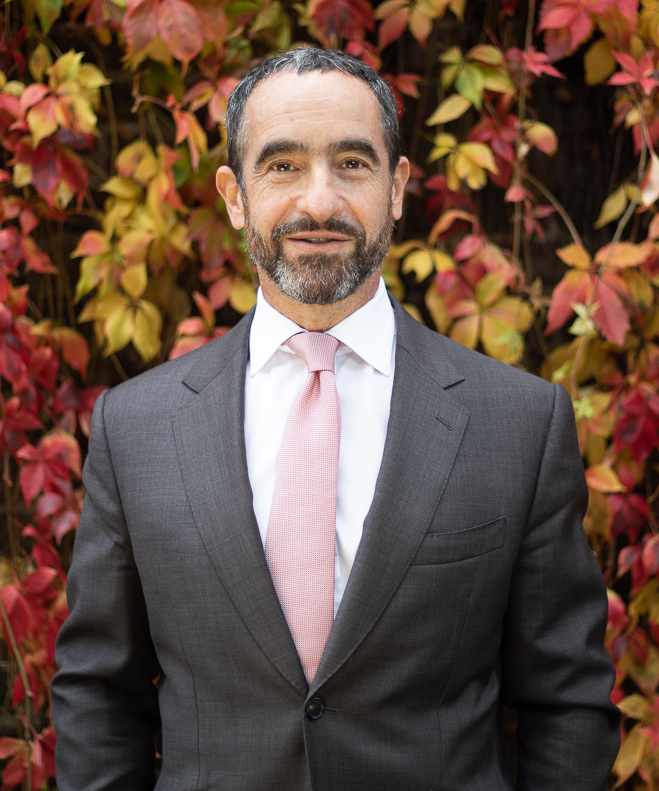
Co-host, Cleaning Up Podcast
Michael is an acknowledged thought leader on clean energy, mobility, technology, climate, sustainability and finance. He is Co-Managing partner of EcoPragma Capital and CEO of Liebreich Associates. Michael is also co-host and founder of 'Cleaning Up' a podcast and YouTube Series.
Former roles include member of the UK’s Taskforce on Energy Efficiency, chairing the subgroup on industry and an advisor to the UK Board of Trade, an advisor to the UN on Sustainable Energy for All, and a member of the board of Transport for London. He is also the founder of and a regular Senior Contributor to BloombergNEF.


