

 Apple Podcasts
 Spotify
 Overcast
 PocketCasts
 RSS Feed
How Microbes Make and Break the World Around Us | Ep269: David Kirchman
Microbes rarely feature in discussions about climate change, yet they play a central role in regulating greenhouse gases through the Earth's carbon, methane and nitrogen cycles. As the climate changes, understanding these natural processes is becoming increasingly important to develop new approaches to clean energy, agriculture and emissions reduction.
This week on Cleaning Up, Bryony Worthington speaks with Professor Emeritus David Kirchman of the University of Delaware, one of the world's leading microbial ecologists and author of 'Microbes: the Unseen Agents of Climate Change.'
They explore how microbes drive the carbon, methane and nitrogen cycles, how climate change is reshaping ecosystems from permafrost to coral reefs, and how microbial science could help tackle the climate crisis, from microbial fuel cells and lower-emissions agriculture to biofuels, methane reduction and even emerging forms of carbon removal and geoengineering
Topics covered in this episode:
- The microbes shaping Earth's climate
- Ocean carbon cycle
- Methane-eating microbes
- Arctic warming impacts
- Coral reefs and climate resilience
- Low-carbon agriculture
- Microbes powering climate solutions
- Climate interventions
Leadership Circle:
Cleaning Up is proud to be supported by its Leadership Circle. The members are Actis, Alcazar Energy, Arup, Copenhagen Infrastructure Partners, Cygnum Capital, Davidson Kempner, EcoPragma Capital, EDP, Eurelectric, the Gilardini Foundation, KKR, Mitsubishi Heavy Industries, National Grid, Octopus Energy, Quadrature Climate Foundation, Schneider Electric, SDCL and Wärtsilä. For more information about the Leadership Circle, visit cleaningup.live
Links:
- David Kirchman’s bio: https://www.linkedin.com/in/david-kirchman-5925b331/
- David’s book: Microbes, the Unseen Agents of Climate Change: https://www.amazon.co.uk/Microbes-Unseen-Agents-Climate-Change/dp/019768856X
- Merlin Sheldrake on Cleaning Up: https://www.youtube.com/watch?v=YC-9ulSTnB4
- Sea ice melting effect on microbes article: https://www.nature.com/articles/s41598-024-77821-9
- Background on James Lovelock's Gaia Hypothesis: https://courses.seas.harvard.edu/climate/eli/Courses/EPS281r/Sources/Gaia/Gaia-hypothesis-wikipedia.pdf
- DMS: Dimethyl Sulphide
- Subscribe to our newsletter: https://cleaninguppod.substack.com/
Chapters:
David Kirchman
So there are places that are not close to continents that are iron limited. In the South Pacific and the Southern Ocean are the two big ones. So these are far from the Sahara, they're far from continents, they're far from sources of iron. So there's been some calculations indicating, yeah, if you flew enough 747s or whatever big plane you have and dump iron, maybe you can get enough carbon dioxide uptake by the phytoplankton to make a difference. But that's where the discussion starts.
Bryony Worthington
Hello, I'm Bryony Worthington and this is Cleaning Up. My guest this week is David Kirchman, Emeritus Professor at the University of Delaware. David has spent his career studying the realm of microorganisms and his book, Microbes: the Unseen Agents of Climate Change, which came out in 2024, inspired me to ask him onto the show. We delve into all of the ways in which microbes are shaping our climate, but also how they're being harnessed to provide solutions. So please join me in welcoming Professor David Kirchman to Cleaning Up.
Hello, David, thank you so much for joining me today on Cleaning Up. I've been looking forward to this conversation for a while and delighted to have you join us. Can we kick things off, as we always do, by asking you to introduce yourself in your own words, please?
DK
Sure. I'm a Professor Emeritus at the University of Delaware, and before I took on that position, I was a professor here at the university for about 30 years or so. I taught several courses in marine ecology, marine biology, microbial ecology, and I did my research on bacteria and other microbes in the carbon cycle, mainly on cruises that took me around the world basically, from the Arctic to Antarctica. So yeah, so now I don't do any cruises, except on cruising the web, kind of keep up with the field, and I try to translate what I see there in recent work into language and words that I hope everyone can understand about the importance of microbes in our natural world.
BW
You didn't mention this in your introduction, but you have written the literal textbook on microbial processes in ecology, right? That is your field. And in that textbook, you start off with a list of all the reasons why we should care about microbes, which is hugely compelling because they're everywhere and they do everything. But what was it about that, what was it that got you hooked on microbes?
DK
Well, that's a great question. I guess it always comes back to having great teachers. For me, it started off when I'm in high school, I had a great chemistry teacher and then a great biology teacher, so I wanted to be a biochemist. And then when I went to college, I had a great ecology teacher. So, I put those together and started to think about ecology. I never really took much microbiology, but I'll make a long story short, I took a course at Woods Hole when I was in grad school and that really introduced me to this field of microbial ecology. And ever since then, that's been my first love.
BW
And we will get onto what are microbes and the various, the kingdom of microbes that you've been studying for so long, which is fascinating. But before we get into that, you've spent a bit of time working on a book, which was about dead zones, as I understand it. But you didn't actually study dead zones, you studied the zones with lots of life. But you ended up writing a book about dead zones, tell me a bit about that process.
DK
Yeah. So, this is my first book I wrote after I say “retired”, I'm still doing a lot of work, I hope. And it occurred to me that I've been doing a lot of work on the last part of my career on the Delaware River and estuary. And I found out that back in the 1950s especially, there was basically no oxygen in upper parts of the Delaware River and that's what we now would call a dead zone. And so, that got me thinking about how widespread these bodies of water are where there's basically no oxygen. And as you mentioned, I worked on the live zone, but the same process, the consumption of organic matter and consumption of oxygen by bacteria contributes to a dead zone. And so, that's how I kind of got into it and got me thinking about the importance of these organisms and creating this rather unique habitat.
BW
This is going to be mostly a conversation about climate change. But how worried should we be about dead zones? Meaning zones that have been deoxygenated and not sustaining life as much as they once did. Is that something I need to add to my worry list?
DK
Yeah. I guess, you know, climate should be one, two, and three. So, I mean, dead zones, you know, there's a connection from dead zones to climate change because of production of one greenhouse gas, we'll probably get to. Yeah, if you live near the Gulf of Mexico, you should be concerned about dead zones. The Thames River was another famous dead zone back in the 19th century. So, if you live near these bodies of water, I think it is something you should be concerned about.
BW
Or if you make your living from those bodies of water, right?
DK
Or if you make your living from the ocean and you're concerned about the quality of water that you're recreating on or trying to fish from or in yeah, it does affect that.
BW
Okay. But as you said, climate should be one, two, and three. And the reason I came across your work was because you'd written this book called Microbes, the Unseen Agents of Climate Change. And that immediately kind of piqued my curiosity and I read it. And I have to say, as a layperson, I really appreciated your efforts to make this a subject that I could understand. And just tell me then, how did you go from this concern about deoxygenation and this focus on marine organisms to then a full book on climate change and microbes?
DK
In some ways, I mean, dead zones kind of followed right after doing a lot of work with oxygen as a tool more than anything. And then when I finished the dead zone book, I kind of stepped back and said, well geez, there's a bigger problem. And, you know, of course, even back whenever I started thinking about it, everyone was talking about climate change, it occurred to me that there is nothing out there about the role of microbes, biology in general, but especially microbes and thinking about climate change. So I thought that there was a real need for a book about that topic. And so I jumped in and tried to do it.
BW
Right. So before we get into the depth of this, then I just should just say, on Cleaning Up, we usually have an acronym klaxon, which is if we get too many, too many three-letter acronyms, four-letter acronyms, we have to explain them. But in this case, this is a field where there are almost no three-letter acronyms. Instead, there are like three and four-syllable Latin names and they're not given a common name. So in botany, for example, people who are clever know the everyday word for flower and they'll know the Latin one. Here, you literally have to know the Latin. And for me, I find it so hard to keep them in my mind, not being a Latin native. So what I'm going to ask you to do is I'm going to have a Latin klaxon and I'm going to try and get you to say things in words anyone could understand or anyone could remember. So the more memorable, you get prizes for the more memorable names that you can come up with. So let's try that. But first of all, let's just cover off what is a microbe.
DK
Well, I mean in one way, in some sense, kind of easy to define. It's anything you need a microscope to see. And so that's roughly less than 100 microns or roughly the thickness of a human hair. But it includes so many different organisms. So basically, nearly all diversity of life is microbial. Bacteria, archaea, protists, protozoa. And we have to throw in and mention viruses. We probably don't need to talk much about viruses, but there are a lot of viruses out there too and they're doing a lot of things also. But yeah, those are the microbes.
BW
And so this is a taxa that could only really have been discovered once we had microscopes. So it's a relatively recent field is that right?
DK
Well, it depends on what you mean by understanding. I mean, because microbes first, microbes were observed back in the 1700s by Antonie van Leeuwenhoek, he worked with fabric and he devised these really primitive microscopes. It's really hard for me to understand how they even worked. But he saw these little, what he called little animals. And so we knew about these microbes, that there were these organisms in wherever we looked, wherever Leeuwenhoek turned his microscope and put his sample on, it was that primitive microscope, that these organisms were there. Now biologists didn't appreciate it, chemists certainly did not appreciate it. It really didn't take off probably until the 19th century. So until we had people like Louis Pasteur and Robert Koch, who really started the field of microbiology. So yeah, the microscope was important, but it was also the development of chemistry I have to say, that also allowed us to see what these organisms are doing.
BW
Just to bring us up to date, though, the microscope has almost been now sort of superseded by another form of monitoring, right? Tell me about that.
DK
We hardly ever use a microscope anymore. Some labs probably still use it for counting organisms. You know, most people maybe they think about electron microscopes, they are only used for very specialised purposes, but the microscope today is a DNA sequencer. And we know a lot more about microbes because we can sequence their DNA and follow other molecules within their cells. So that's what's really given us the biggest impact, the biggest insights into these organisms, much more so than the microscope.
BW
So we're in an era of discovery then, with our ability to do genetic analysis then?
DK
That's right. That's right. And there's several other, there's a whole field called omics, which is based on genomics and metallomics and proteomics. And these are all ways to look at the molecules within a cell. A lot of this is driven by biomedical applications. DNA sequencing is definitely driven by the billions of dollars that are being earned by these companies sequencing our DNA. And we've been able to take advantage of all this technology to apply to microbes.
BW
Amazing. Just as a side note, I'm currently in California and I'm about to start teaching in the autumn at the University of Santa Cruz, which has a really well renowned genetics department. And the lore of the university is that they beat Craig Venter to decoding the human genome because they wanted to keep it in the public realm, and so the genetics department of UC Santa Cruz pipped him to the post despite all his vast amount of private capital.
DK
Yeah. That's a great story about who was the first person or group that sequenced the human genome. Yeah, It cost billions of dollars at the time.
BW
I know.
DK
Billions of dollars to sequence it, but now it's like, you know, a couple of hundred dollars.
BW
Yeah, the pace of technology is incredible. Okay so back to the microbes, which is, you know, the other end of the spectrum, the most ancient life form on the planet probably, and incredibly varied. Now, you've taught me there are three main kingdoms of the microbial world and the bacteria is one which we've probably all heard of. But the other two are, she says, looking at her notes, archaeas and eukaryotes.
DK
That's right, yep.
BW
So why are there three kingdoms? What distinguishes these three?
DK
Yeah. So the one distinguishing feature of the bacteria and archaea on one side and the eukaryotes on the other side is the presence of a nucleus. So eukaryotes basically are plants and animals and all the macroscopic life you see around you, those are all eukaryotes. And so they all have a nucleus. Plants have chloroplasts, which is where photosynthesis takes place, animals have mitochondria, that's where energy is generated. And archaea and bacteria do not have those organelles. So that's a huge division that was discovered with a microscope.
But then the difference between bacteria and archaea was really not discovered until a primitive form of sequencing that was done back in the 1970s, first by Carl Woese, who discovered that one type of archaea, a very important one when we talk about climate change, methanogens, those archaea that make methane, are totally different from bacteria. And in fact, when you look at them in the molecular level, they're more closely related to eukaryotes. So there are these again, the difference between plants and animals is in some ways trivial compared to the difference between bacteria, archaea and eukaryotes.
BW
That's mind boggling. But because I was then thinking, oh okay, so the eukaryotes have got, they're complex systems because they've got all these things you described, and these other things are much simpler. But then you're telling me that the archaea are actually just very complex, but with a different fundamental, different building block of life.
DK
Yeah, I mean the most modern up to date view of the tree of life is basically the eukaryotes are a branch off the archaea. So we have the bacteria over here, and then the archaea come out and then the eukaryotes are branching out of some of the archaea. And so in terms of the organelles, you don't see the organelles and the nucleus and other fancy things of eukaryotes until much later. You know, eukaryotes only evolved about a billion years ago. So you know, life on the planet is about 3.8. So about three quarters of life on the planet was just bacteria and archaea.
BW
So then knowing that, that explains a lot about why they are such important agents in our system, right? They've been around for billions of years, long before complex life as we know it came to be. And so they've shaped, they've terraformed our planet for us.
DK
Exactly, definitely.
BW
And they play massively important roles in at least, well let's talk about, I've learned from your book, the sort of roles that it plays in at least three huge systems, the natural carbon cycle, the methane cycle, and then of course, nitrogen, the kind of fixing of nitrogen and nitrogen balance in the air. So would you say for climate purposes, are those the three main cycles they are impacting?
DK
Yeah, the way I think about it, the three main climate gases, greenhouse gases, are CO2 carbon dioxide, which is of course a carbon cycle, methane is I would say it's part of the carbon cycle, but you could call it as its own cycle. There are organisms that both produce it, others that consume it. And then when you come to nitrogen, the gas to keep in mind is nitrous oxide. Nitrous oxide is part of the nitrogen cycle, it starts off with nitrogen fixation. So yeah, that's one way to think about these three major greenhouse gases.
BW
In terms of my understanding of the climate problem from an energy perspective is that CO2 is by far the largest contributor of the warming, even if it's not as powerful a warming as the methane and the nitrous oxide. So should we do it in that order then? We'll do the carbon cycle first and there, basically the microbes are instrumental in the fixing of carbon, right? The pulling of carbon out of the atmosphere. But talk to me about all the myriad ways that they're involved in the carbon cycle.
DK
Yeah. So we don't have time for all of them, but you mentioned carbon dioxide fixation, which of course its prime production is photosynthesis. So on land, the show is large terrestrial plants. All the prime production, we see nearly all of it on land is done by the big trees and grasses and so on. And we could talk a long, a lot about how microbes are helping them do that fixation. They're the ones feeding nitrogen and phosphorus to these plants, but, basically in terms of carbon fixation, it's large plants. So that's roughly half of global prime production is large terrestrial plants. And then the microbes are the show, the main players when we get to the water, when we get to the oceans. And that's the other half of prime production, another half of CO2 uptake is done by algae, which are eukaryotic organisms and cyanobacteria, the type of bacteria that's able to carry out photosynthesis just like the higher parts.
BW
You just avoided the klaxon there, I saw you with the cyanobacteria, but that's good. So this is a form of bacteria that's ocean-based and it's acting almost like, if plants are the predominant light eaters on land, would you say the cyanobacteria are the largest light eaters in the ocean or one of them?
DK
I guess the best estimate puts it at about 25% or half of oceanic production is done by the cyanobacteria. The other half is by the algae, the eukaryotic algae. So it's not quite all cyanobacteria. I should say there's a lot of cyanobacteria in freshwater lakes, which can be a problem because they form these nasty blooms. So there's cyanobacteria everywhere, growing on your shower, if you don't clean it real closely or carefully. But, you know, when we talk about climate change, you know, it's mainly the oceans and what's happening there.
BW
So you've got this carbon fixing element of their life. And am I right in describing them as light eaters? That is photosynthesis that's the main, the main job that they're doing.
DK
Photosynthesis is basically taking light energy and translate it and converting it to chemical energy in the form of organic material. So, yeah.
BW
And now to bring to life the huge scale of which this is happening. You talk about the White Cliffs of Dover in your book, and I'm going to get this wrong, but the… You say it for me?
DK
Coccolithophores.
BW
Yes so them, we're going to have to give them another name, you see, this is my problem. So these, the chalk producers, they're so tiny, we're talking something that's smaller than the thickness of a human hair, managed to build up such a mass that they create the towering White Cliffs of Dover, which are made out of these dead carcasses of these small bodies. So tell me a little bit about those creatures.
DK
I mean, I'm no chauvinist, but I think anyone would agree that these guys are really, really beautiful. They have these coccoliths on the side, which are basically plates of calcium carbonate, chalk, on the outside. And it's not really 100% clear why these guys make these coccoliths, one idea is just protection against grazers, you know, other microbes, zooplankton are trying to eat them. And so that's a form of carbon, basically calcium carbonate. And when these guys die or when they're eaten, some of those coccoliths make it all the way down to the ocean floor.
And then over time in certain places, they build up and with the right geological forces they form cliffs like you see in Dover. So most of the carbon though that these algae are involved with is the organic part. And so I think first we should talk a bit about them as they're again, light eaters, they're photosynthesising and they're making organic carbon to make more bodies of themselves. And as far as the defence mechanism, they make these coccoliths as you were talking about.
BW
But are they, are they transpiring like, like plants do? Are they both a source and a sink of carbon dioxide? Can things go wrong, can they express more CO2 than they take in?
DK
That's the thing that's a little bit complicated about coccolithophores is any of these organisms that precipitate calcium carbonate, they also release CO2. So you think, oh, this is great, these guys are helping us out, they're putting all this carbon down there and it's been stored for millions of years. But the problem is, is that when they did that today let's say, they release a molecule of CO2. So that ain't so good. So they have this dual role in, in talking about the carbon cycle. On one hand, I mean, again, their main role or the main contribution is to take carbon dioxide out of the atmosphere, make organic carbon, with their little bodies, but they also make this calcium carbonate. And then that process releases a molecule of CO2. But then over time, all that carbon is being stored so that's great because there's so much carbon a limestone and it's huge. And if something would happen that we're totally screwed. But fortunately it's locked away.
BW
Well, something is happening in that we're digging it out and turning it into cement.
DK
That's right, yeah.
BW
We'll come to that. Okay, so we've got the carbon cycle and we've got this huge array, both on land where we did an episode actually with Merlin Sheldrake on fungi, in which we explored this kind of role of that realm in fixing carbon and some of the solutions that come from that. So, we've got that and then we've got the marine side, which we just discussed at such a vast timescale and ocean space that it has a big effect. So, then let's go on to the methane cycle, tell us about that.
DK
So in some ways it's a bit easier to talk about because as I mentioned already, really only one group of organisms that make methane, the methanogens, these are all archaea. There are other sources and whenever anyone finds another source, it's a big deal because of the importance of methane. So to back up methane, everyone should remember that methane is the main part of natural gas. And so when we talk about natural gas, that's mainly methane. So only archaea make methane. And this is one place where the oceans are not a big source because of complicated microbiology we maybe don't need to get into, they just aren't really abundant in the oceans for the most part. It's in fresh waters, marshes, freshwater marshes and also the rumen, the digestive system of cattle, lots of methane from cattle.
BW
And in permafrost, sort of frozen?
DK
Well, yeah so again, a big concern is that as the permafrost melts is that some of that organic carbon could be turned into methane. And so whether it's turned into carbon dioxide or methane, that has huge impacts on, you know, what's going to happen with our climate.
BW
But I interrupted you there and you were just, you're getting onto the story of, it's not cows that cause climate change, it's the little microbes in their gut that are the real kind of villains of the piece, aren't they? And they're presumably in all living entities, but it's when you've got four stomachs of them that they become a big problem.
DK
That's right, especially cattle. So that's, you know, another maybe message is to cut down on your consumption of red meat because of the contribution of cattle to methane production. And so just because the way they digest their food is they produce a lot of methane.
BW
We'll come on to solutions, but just at the moment then roughly speaking when it comes to methane, what are the largest contributions that microbes are making at the moment?
DK
Yeah so again, agriculture overall, not only just from cow stomachs but the manure from cows and other livestock contributes a lot of methane, rice paddies contribute a lot of methane, again, marshes contribute a lot of methane. And in all these organisms, all these habitats rather, there's only one group of organisms that you have to think about, and that's the methanogens, these archaea that make methane. So in some ways that makes this story a little bit easier to understand because it's really only one group of organisms in all these different habitats.
BW
Pause that. We will come to the solutions. So let's then just talk about nitrogen then as this third cycle that's having an effect on our climate and the greenhouse gases.
DK
Yeah. So, the culprit in the nitrogen cycle is nitrous oxide, N2O, laughing gas. But the real problem there is fertiliser, and, and that starts with the Haber-Bosch process. It's a way humans make a usable form of nitrogen. So the backup, there's tonnes of nitrogen gas in the atmosphere, but there's very, very few organisms, only a few bacteria in archaea and cyanobacteria that are able to convert that nitrogen gas into a usable form of nitrogen, ammonium. And so then that ammonium becomes the nitrogen source for all the rest of the ecosystem, basically.
BW
And am I right that those are the microbes, are they symbiotic with plants that are nitrogen fixes then? So meaning that the, say the clover or the pea family who are famous at being able to take nitrogen in themselves, is that because they've got microbial communities within them?
DK
Exactly, exactly. So there's a lot of free living nitrogen fixers, but as you mentioned, a lot of legumes have nitrogen fixing bacteria that are symbiotic with them in their roots. And so it's a very well-studied complex dance between the microbe and the plant and how they interact to form the symbiosis. But sometimes you'll hear about the legume fixing nitrogen. Well, no, it ain't the legume at all, it's not the plant. The plant is just a host and providing the food, setting up the table, but the real work is done by the nitrogen fixing bacteria.
Michael Liebreich
Cleaning Up is proud to be supported by its Leadership Circle. The members are Actis, Alcazar Energy, Arup, Copenhagen Infrastructure Partners, Cygnum Capital, Davidson Kempner, EcoPragma Capital, EDP, Eurelectric, the Gilardini Foundation, KKR, Mitsubishi Heavy Industries, National Grid, Octopus Energy, Quadrature Climate Foundation, Schneider Electric, SDCL, and Wärtsilä. For more information on the Leadership Circle, please visit cleaningup.live.
To keep up with all that's going on in the Cleaning Up universe, make sure you subscribe to our newsletter. Written and edited by my longtime New Energy Finance and BloombergNEF colleague, Angus McCrone, it comes out every second Monday. Angus provides the latest on the episodes we're recording, the events we're hosting, stories we're watching and what Bryony Worthington and I are up to. To sign up for the Cleaning Up newsletter, visit cleaningup.live.
BW
So we've got these three major cycles and they have helped contribute, they have helped create our atmosphere to start with. I mean, they were responsible for oxygenation, weren't they, originally? And they're now been helping sort of keep, I'm a big fan of James Lovelock and his ideas about the Gaia theory, it's not like they're all consciously working together but there is some form of natural balance or there has been a natural balance, which has given us this long period or long in our experience of an environment and a climate within which we operate and have thrived. But now we're into a changed climate really, aren't we? I mean, the latest science that we were looking at with last year's data is that we've reached kind of 1.4 degrees of additional warming from pre-industrial times. And of course, that 1.4 global average masks huge differences in terms of where the warming is experienced. It's three to four times that in the polar regions, which is an area you know well. So what's happening? We're going into this quite rapid period of change. What's that implying for the microbial communities?
DK
Well, that's a big question, isn't it, what's going to happen? And you pointed out, I think the Arctic is one of the best places to kind of wrap your head around what may be happening. The short answer is we don't really know. But we do know that warming temperatures speed up microbes. That's kind of a fundamental fact is that, you know, roughly a 10 degree change in temperature Celsius means rates will go up by a factor of two. Now, so you can calculate how much rates would go up with a 1.5 increase in temperature. But the point is rates go up. The question is whether other rates that say consume methane or consume nitric oxide also increase at the same rate. Will they kind of counterbalance so that there won't be the big disruption? And that's kind of the unknown. You mentioned about methane versus CO2 coming out of thawing permafrost. Again, we know that temperature thaws the permafrost and we know that warming temperatures goose up all these rates. But we don't know quite yet how, what's going to win out, the CO2 producers or the methane producers. So there's tonnes of unknowns about what's going to happen.
BW
And I suppose I remember reading about, you know, when it seemed there was quite a lot of talk about the Siberian, the collapsing of these sinkholes and the permafrost that seemed to be partly responsible, possibly these big bubbles of methane kind of emerging out of the tundra, blowing holes into the landscape. And then there was the bubbling, champagne bubbling of methane coming out into the Arctic Sea. And there's a lot of worry at that time that this could signal a start of something different. But then there were microbiologists like yourself who were saying, well, you know, nature may be helping us here because, not the exploding holes in the ground but the champagne bubbles coming up from the ocean floor, they might be being eaten. You know, there's a certain point at which the microbes are then going to eat, there are methanogens who are eating the methane, right?
DK
That's right. So you began by pointing out that things were imbalanced more or less until we started to screw things up. You know, we could debate, talk a bit more about how imbalanced they were, but certainly they're much more imbalanced than they are now. And so with regard to methane, there's another whole set of other organisms that make a living by consuming that methane. And so there's work showing that much of the methane that is released by some of these warming events is consumed by these, the word is methanotrophs, the methane eaters. And so that's, again, you know, the question is, will they be able to keep up and handle any increase in methanogenesis and the making of methane? When you have champagne bubbles and things like that, those happen so fast that there's not much chance that the microbes can deal with that. But more of a slower release, yes there's a chance they could balance that release.
BW
And I guess this is the really complex thing about climate science is that it's, once it's perturbed, it's the pace, isn't it of that perturbation that determines how quickly the microbes might be able to adapt. Because you know, the optimistic part of me thinks, well these things have got relatively short time, you know, horizon so they are very adaptive. If nothing else, they know how to quickly, quickly speciate.
DK
Yeah, yeah. Certainly, you don't necessarily need to evolve a new species. But just the response of what species are there already could be fast enough to, as I said, to take care of some of this problem. But the worry is, is that the conditions that are ripe for again methane production are better than the conditions for taking up and degrading that methane. So that's kind of a challenge. It's figuring out which of those two processes is going to win out.
BW
Just because my brother-in-law is a marine biologist in Australia, he studies the reefs there. Tell me a little bit about the role of microbes in reefs, because that is a symbiosis of tiny little organisms. And that is another vulnerability, isn't it? That these very, very detailed organisms and ecosystems are going to have to adapt really fast to warming oceans, aren't they?
DK
Yeah. So there are many corals that have a symbiotic type of algae, dinoflagellates, if you must know.
BW
Say that again. What was the name?
DK
Dinoflagellates. I won't say the genus name.
BW
Have they got two little arms?
DK
Yeah, they're really cute, they're really cute. I mean, there's so many different types.
BW
Would you call them? What are cute two-armed things that you could relate to?
DK
Those are flagella that you may be thinking about. I mean, the free swimming guys use those, but these things have lost those. They are dinoflagellates, but they don't have a flagellate anymore.
BW
So we're just going to have to call them coral microbes, coral critters.
DK
Symbiosis or zooxanthellae is the other big two-bit word that's used to describe these organisms. But again, the coral depends on these algae for their food. I mean, the algae are doing what algae do is that they photosynthesise and they provide organic carbon to the coral. The coral eats a bit of zooplankton, but most of their food comes from these symbiotic algae. And the algae in turn get nitrogen and phosphorus from the coral, the animal. And so that's the coral reef. I mean, there's more to it than that, of course.
But of course, the huge danger is that not only the one or degree and a half change in temperature, but these corals are already really close to their maximum, 28/29 degrees C. So you raise it just a bit, and what we're seeing now with the El Nino that's going on, corals are cooked. I'm really pessimistic about corals. And what they do is they throw out, they expel their algae because they can't deal with them, and they have to have them, but the short-term damage of having the algae inside of them is too much, so they expel them. And that's why you get the coral bleaching. The coral turns white because they expel their symbiotic algae.
BW
The question then is, will things stabilise at a temperature which they could adapt to? Because I imagine there is a lot of dynamism because coral reefs are quite a harsh environment to maintain for lots of reasons, right? You've got fluctuations in temperature and salinity and weather events and all sorts, so they've probably got an innate diversity that gives them some resilience. But have we pushed them too far too fast?
DK
Yeah, there's a lot of really interesting work showing that different types of I call them dinoflagellates, but of course there's a great diversity of different dinoflagellates that are symbiotic with these corals. And some are better with dealing with high temperatures than others. And so there's some efforts to perhaps transfer these heat tolerant symbionts to these corals and help them survive. And the question is whether that can be done on a scale large enough to really make a difference on the reefs.
BW
Yeah, or whether Mother Nature's got her own I don't know, driver that, again, not to get too close back to the James Lovelock Gaia thesis, but that there is this somehow innate drive to life that, you know, will keep adapting.
DK
Yeah I mean, maybe your brother-in-law has told stories already about how the reefs are being denuded and devastated by what's already happened. And so perhaps we will go through this period where there won't be many reefs left over, but then future generations will see the reefs come back in a different form.
BW
There is one more depressing thing I just wanted to touch on before we get to the solutions part, which is a recent paper that I sent you, which was looking at what's happened in terms of then the loss of sea ice in the Arctic and what that's doing to the microbial community.
DK
Yeah, you mentioned that paper but I had known already that we're losing sea ice, summer sea ice, it should be pointed out. I mean, the winter will be cold enough, there will always be ice. But even during the winter, there's loss of what's called multi-year ice, you know basically ice that's been there for decades, longer, who knows. And there's a lot of concern that soon we will be having the Arctic ice-free in the summer, which has all sorts of geopolitical implications for trade and relationships between various countries that border the Arctic Ocean, but has of course big impacts on what's with the carbon cycle and nitrogen cycle in these waters. And so the paper that you pointed out to me mentioned and described how these waters before were limited by light. Basically, the ice cut off any light from penetrating down deeper. And so that allowed, because of upwelling and so on, more than enough nutrients to accumulate underneath the ice.
Now you take away the cover, you take away the sunscreen, the ice, and now suddenly the microbes, the algae, the phytoplankton have more than enough light, and now there seems to be turning to be more nitrogen limited. So then, you know the question is, I mean, in terms of thinking about climate impacts, those algae would be taking up CO2, maybe they'll help take up CO2. The other impact of the loss of ice is its darker surface, and it will absorb more heat. And so, yeah, there's lots of implications for the losses, nevermind what's gonna happen to polar bears.
BW
Okay, well, I think we sufficiently alarmed everybody that we now need to turn to our solutions section, I think if our viewers and our audience are mostly energy focused people, and I like to throw in these episodes just to get everyone's imagination and thought process going. But if they've thought about microbes in energy, it will be using the suffix bio right, that the people will know possibly about biomethane, and they'll be perhaps aware of all the efforts have been made to sort of turn algae into fuels, etc. But there are a couple of other ways in which microbes intersect with the energy system, tell me about those.
DK
Yeah, one that I should mention is what's called microbial fuel cells. Maybe some of your audience probably knows better than I about hydrogen driven fuel cells. But these are fuel cells that generate electricity, and microbes are doing the work. So basically what the idea is, is that microbes generally, naturally, part of the way they make a living is oxidised organic material. Those electrons go from the organic material, the anode, to the cathode. And what microbial fuel cells do is take advantage of that electron flow to make electricity. So that very briefly is what a microbial fuel cell is all about. So there's been some work using these microbial fuel cells for applications, trying to show that they're viable and commercially viable, and it could be useful for providing some energy. They're not going to solve our problem with replacing fossil fuels, but they could help in various situations. They've been used in wastewater treatment plants because they help to degrade the organics in wastewater and they also generate electricity.
BW
That's the fascinating thing for me, is that I'm not a chemist, but I'm sure it's obvious to a chemist that there are electron transfers in these biological processes, but the fact that you can harness them and coerce them into a form in which they're generating enough of that electron transfer that you can run electrical devices. Now, they're obviously for small applications, is that right? It's not something that can necessarily scale.
DK
I think there's been some efforts to run not all the wastewater treatment plant, but a good part of it by these microbial fuel cells. The big problem is getting enough organics into the fuel cell so the microbes have enough fuel, enough energy to turn it from electrons into electricity. So that kind of already limits you to where it could be used. But yeah for the most part, we're talking about very localised applications in small scale for the most part.
BW
But two things I heard from you, which made me smile was one, the Glastonbury toilets that some Bristol-based researchers had realised that when you say organics, basically you know, urea or the sort of the chemistry of waste is often quite rich in potential energy, right? That you just need something to unlock. And so what you're taking is that chemistry and giving it to these living creatures that can then turn into electricity. And they did that with an experiment with human urine didn't they, in Glastonbury Festival?
DK
Yeah, exactly. Whatever else goes into a port-a-potty. So yeah, you know, the nice word for all that is organic matter, which covers many different types of material, everything, basically. And as you pointed out, that's really organic. I mean, it's energy rich still. And so microbes, you know they're there, you know, they don't know they're producing energy for us, but they're there to make a living and grow and they're harvesting energy that's in that waste material. And as another application, it just happens to be that right now I'm involved with a project funded by the US Defence Department to make a microbial fuel cell that's supported by organics and seawater. So that's a little bit harder because seawater doesn't really have high levels of organics, even though these are very pretty eutrophic waters off my harbour here in Lewes, Delaware.
BW
Eutrophic meaning?
DK
Very nutrient rich. Yeah, very nutrient rich, not blue water, it's more brown, but naturally brown. And it's not...
BW
Yeah, the blue waters that we love, you know in the tropical beaches or in Lake Tahoe more locally, they're just dead, aren't they? The reason they're beautiful and turquoise is because there's nothing alive.
DK
We call them oligotrophic, they're nutrient poor. They're great for swimming in and everything. And by the way, the paradoxes of corals that they can survive so well because they have the symbiotic algae. But otherwise, there's not much happening in them. And all the fisheries are based in more nutrient rich waters.
BW
Murky waters. Yeah, exactly. So sorry, I distracted us there so we're talking about fuels. We should just mention because in my plight, in my quest to try and get these microbes better understood, there is one strand of yeast that you may know the name of, which I've forgotten because we haven't given it a proper name, which converts biomass into ethanol, alcohol. And that is responsible for, that single kind of organism is responsible for all of the production of Brazil's fuel that currently goes into its car fleet, hopefully will be diverted into some other more useful use at some point. But what's the name of that strand of yeast?
DK
You're probably thinking, well, there is a common name is Brewer's yeast. So it's Saccharomyces is the genus name, I limit myself to one scientific name.
BW
Exactly. And I had tried to come up with a memory trick by thinking of “myces” as mice, but I still couldn't remember it. So say it again for us.
DK
Saccharomyces.
BW
Saccharomyces. We're going to have to give it a better, well, Brewer's yeast, then let's just call it that, but for people to understand Brewer's yeast is a microorganism. It's not a dead thing, it's a live thing. And it is currently playing a huge role in keeping, you know, some of the fossil fuel in the ground.
DK
Yeah. In this country, in the US, 10% of our gasoline has ethanol in it. And that comes from you know, in Brazil it's sugarcane as the ultimate food stock, fuel stock, in this country, it's maize or corn. So that's where it gets a little bit more tricky about whether how green it is because of the environmental costs.
BW
I'm using as an example where we've got a, we've taken a natural Saccharomyces, you see I've got it now and we've converted it into an agent of change that we've harnessed. And I suppose that's the question, how many more of these sorts of things could we dream up as we go through this, this need to innovate?
DK
Yeah, it would be better instead of using sugarcane or maize for the starting material is to use the leftovers from a corn harvest, the stalks and the husks that otherwise we can't really use too much. But that becomes a lot more difficult to do. It's called second generation ethanol fermentation. And so there's a limitation there. But yeah, I mean there's other examples where engineers are trying to harvest the methane that comes from manure and from landfills, other places where microbes are just doing what they do. But we're trying to harvest a little bit of that, those gases to help. Yeah, as you say, it's not gonna solve our problem, but at least it'll help to some extent and reduce our use of fossil fuels.
BW
Yeah, it's just so small, isn't it? I think I remember a stat from your book that all of the money that Exxon and Shell and all the others have poured into algae-based fuel substitutes for diesel or whatever it is, it's less than 1%, 1% it's not scratched the surface really.
DK
You know, it sounds like millions of dollars, they spent millions of dollars, but then they make, of course, billions of dollars. So it's really a small part of their...
BW
Yeah, I think I like bioethanol partly because as a fuel, it's got some good attributes about its fuel density, but also it's in mass scale production already. Therefore, it would tell you that as we reduce our use of fuel, and we're left with harder to abate sectors, there is a source of pre-existing already manufactured alternative fuel. It's not exactly obvious you've got to make it into jet fuel, for example, you'd have to put it through another process, but it's at least a start, right? You're not starting from zero.
DK
Maybe we can just grow maize a bit better or more efficiently that doesn't have environmental impacts.
BW
Yeah. Well, what about using a legume? Could you do that? Take a nitrogen fixer and then turn it into a fuel?
DK
I don't know, I don't see why not. I mean, you'd have to get it, I mean the thing about what's used in this country is the kernels themselves, which are, you know, if you ever had corn on the cob, it's really sweet. And so that's sugar and so that's really relatively easy to translate into, to convert into ethanol. Now you get something like a legume, you don't eat legumes because they're sweet. So the sugar content is much less, probably nothing at all. So it's a bit harder to change that into sugar that can be used by saccharomyces.
BW
So rather than feeding our microbes lots of stuff they won't like, because it's not sugary enough, why could we add nitrogen fixing capability to the crops we currently produce?
DK
And there's some research going on about that, about trying to turn corn maize into something closer to a legume. So we wouldn't have to use as much fertiliser on the corn. So yes, there's work showing that that's occurring and it does improve yields without increasing, with reducing our use of nitrogen fertiliser.
BW
That's a good area of research that we can hope to see some breakthroughs because it, the Haber-Bosch is what, I don't know how many, is it a hundred years old now or older?
DK
Yeah, 110 or something like that yeah.
BW
Yeah. It's time we moved on from that, isn't it really?
DK
Well, I'm not sure we're going to be able to move on, but maybe we can just do a better job of cleaning up after ourselves.
BW
I kind of have hope because that was born out of adversity wasn't it, the Haber-Bosch, because we were running out of natural fertilisers that were coming from bird guano and, you know, all kinds of...
DK
Exactly.
BW
And so phosphorus was the key finding, not it, was it? No, it wasn't the phosphorus. It was the nitrogen, but...
DK
It is nitrogen, yeah.
BW
Yeah. So, we've talked about a few solutions there, are there any other particularly exciting things in the microbial world that, so we've got, we've got this nitrogen fixing that could help with the nitrous oxide. People have possibly heard about experiments to try to, rather than not eat the cows, just make the cow's stomachs work differently. How optimistic are you about that?
DK
Yeah, I've seen a couple of reports about feeding cattle a red alga, a macro alga like a seaweed, and that apparently reduces by mechanism, I don't think it's well understood, methane production. So without affecting yield, of course, that's always the thing, you don't want to cut down or reduce the yield of the growth of the cattle, because there's no way a farmer's going to go for that, of course. But apparently this works without reducing yield.
BW
What about side effects for the animal? I'm also, animal welfare is as big a driver for people's concerns as climate.
DK
I mean, I would say if the growth of the cow is not affected by it, that's a good sign. It's not affecting the cow directly.
BW
Thinking about the other thing with the ocean, let's go back to the ocean, because it is such a vast part of our planet. It's a blue planet, it makes up 70% of the surface area, does it?
DK
Roughly, yeah.
BW
Yeah. And so what happens there will be huge. I think it was you that mentioned to me that there are some algal blooms or little algae that change the reflectivity of the surface of the ocean.
DK
I think you may be thinking about the, getting back to your favourite alga the coccolithophores, because when they make these big blooms, you can see it from space that they look white. And so that would affect algae, the light reflecting, heat absorbing capacity of the ocean. But there's two other ones that I should mention, since you like James Lovelock, is production of DMS, dimethyl sulphide. So what, what these organisms do is, and it's mainly again, the phytoplankton algae that make a predecessor, which I won't mention this acronym, because I'm already hit my limit I think, and it's the heterotrophic bacteria that turn it to DMS.
BW
Oh hang on back up though, what's a heterotrophic, what did you call it?
DK
Oh sorry, yeah we're heterotrophs. We're carbon dioxide producers.
BW
Inhalers of oxygen, exhalers of carbon dioxide, right.
DK
Exactly, yeah and we depend on organic material that someone else made, plants or a cow, if we had a hamburger. So these bacteria, they turn this predecessor or precursor into DMS. And once, once the gas gets up into the atmosphere, and to make a long story short, it helps to make clouds. And so if you have something that makes clouds, you're shielding the earth from sunlight and cooling it down. And so that was Lovelock and with help from Lynn Margulis, had the idea about Gaia before they published a work about DMS. But that really in my opinion, put the idea on the map in terms of people thinking about how phytoplankton in this case could have an impact on our climate. More DMS, more clouds, less heat that shuts down the phytoplankton and so we have this feedback that helps regulate the climate.
So, there's some talk about trying to fertilise the ocean to get more of this DMS to get more clouds. And the other connected to that is just getting more phytoplankton production to take more CO2 out of the atmosphere. So those are, and there's work showing that works in the sense of, it's called iron fertilisation, so the only nutrient that's possible that you could do this with is iron. And in some places in the oceans, iron is the limiting nutrient. It's not nitrogen or phosphorus, it's iron. So if you add iron, and it's been shown, if you add iron, everyone's really happy. Phytoplankton grow like mad, and they potentially take down more CO2 from the atmosphere, and that helps drive down the effect of climate change. But to do that on a scale that can have an impact, then it starts becoming a little bit more dicey.
BW
Well, it's fascinating, isn't it? Because iron is often blown off the continents of say Africa, with sort of trade winds and, and normal weather patterns. And that is the source of which iron arrives into the ocean. The question is, could we, as the godlike species that we've now become, could we do that? Could we do it at schedule? Can we engineer?
DK
It's called geoengineering, engineering the planet.
BW
Yes, but we aren't already engineering the planet, we have engineered the planet.
DK
We are already in the process of doing that in so many different ways. And we already put all these gases out there that are changing what's happening, so we are already doing geoengineering, but not the way that I guess we'd like to have it done.
BW
We're doing accidental or involuntary, yeah.
DK
So there are places that are not close to continents that are iron limited. In the South Pacific and the Southern Ocean are the two big ones. So these are far from Sahara, they're far from continents, they're far from sources of iron. So there's been some calculations indicating, yeah, if you flew enough 747s or whatever big plane you have and dump iron, maybe you can get enough carbon dioxide uptake by the phytoplankton to make a difference. But that's where the discussion starts.
BW
Yeah, and going back to your point about clouds as well, we can wait for the DMS to be, the dimethyl sulphide, I've managed to memorise that one, we could wait for that to maybe be co-produced. But what was interesting about that Gaia theory was that when they looked, it was lovely, it sounded so good, but actually, there was no evidence for it in that. There was some, but not enough to make you think, yes that nature's got this, we've got this self-cooling mechanism. It isn't quite as resilient, it's not quite as obvious as Lovelock would have liked it to have been.
DK
Not as resilient, I think, is a good way of putting it. And that's the whole argument about Gaia is whether, you know, the original forms of the idea was that it was maintaining life, the planet in a form or a condition that's conducive to life. It was homeostasis, maintaining balance. But the thing is, it's been out of balance a lot over millions and billions of years. And so that was, you know, if you start looking at the geological record, Gaia hasn't been doing such a great job in keeping things in balance.
BW
Yes. Well, I think Stewart Brand said, we are as gods we just need to get good at it. I feel like that's, you know, and part of what's fascinating about this period we're going into is it's an era of consequences, era of rapid change and we're an agent within that. But what we're talking about today, though, is all of these other agents that as we get better at science and as we've got all these new tools and new technologies for not just discovering them, but then harnessing them. And maybe it is a symbiosis, but maybe the new symbiosis is humans and microbes get together and solve the problems.
DK
Definitely, definitely.
BW
So listen, I always knew we would never be able to do justice to this topic in an hour and we are definitely approaching the out of time phase. Thank you so much for bearing with me and indulging me in this sort of layperson's walk through this topic.
DK
Oh, it's been a lot of fun.
BW
Well, I've really enjoyed it. Thank you so much.
DK
Oh, thank you for having me. It's been a lot of fun.
BW
So that was Professor David Kirchman of the University of Delaware. We'll put links in the show notes to David's books and to the articles that we referenced in the conversation. I hope you enjoyed it as much as I did. My thanks to Kendall Smith our manager, to Oscar Boyd our producer, to Jamie Oliver our editor, and the rest of the talented team and the wonderful Leadership Circle members who make this podcast possible. Please join us at the same time next week for another episode of Cleaning Up.
ML
Cleaning Up is proud to be supported by its Leadership Circle. The members are Actis, Alcazar Energy, Arup, Copenhagen Infrastructure Partners, Cygnum Capital, Davidson Kempner, EcoPragma Capital, EDP, Eurelectric, the Gilardini Foundation, KKR, Mitsubishi Heavy Industries, National Grid, Octopus Energy, Quadrature Climate Foundation, Schneider Electric, SDCL, and Wärtsilä. For more information on the Leadership Circle, please visit cleaningup.live. If you're enjoying this episode, please hit like, leave a comment, and also recommend it to friends, family, colleagues, and absolutely everyone. To browse our archive of around 250 past episodes and to subscribe to our free newsletter, visit cleaningup.live.
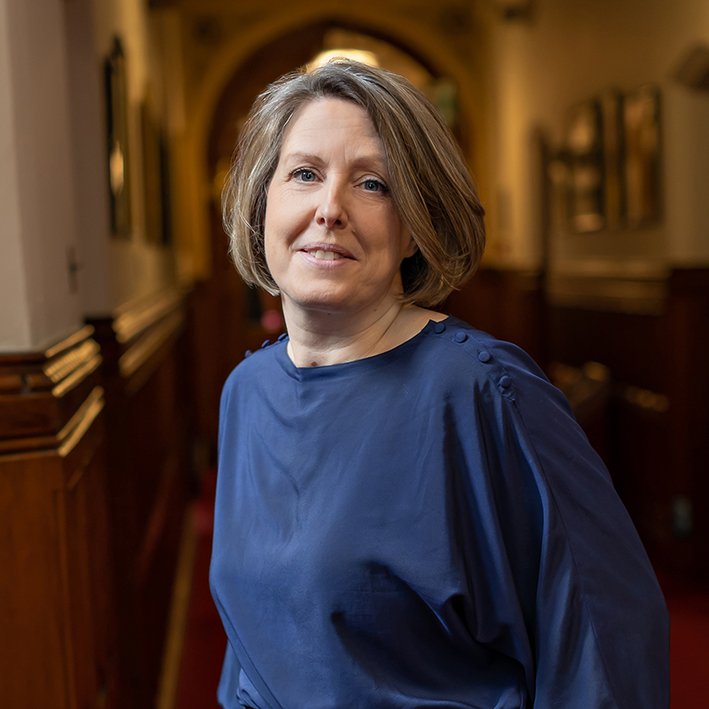
Co-host, Cleaning Up Podcast / Lord
Baroness Bryony Worthington is co-host of Cleaning Up. She is a Crossbench member of the House of Lords, who has spent her career working on conservation, energy and climate change issues. Bryony was appointed as a Life Peer in 2011. Her current roles include co-chairing the cross-party caucus Peers for the Planet in the House of Lords and Co-Director of the Quadrature Climate Foundation.
Her opus magnum is the 2008 Climate Change Act which she wrote as the lead author. She piloted the efforts on this landmark legislation – from the Friends of the Earth’s ‘Big Ask’ campaign all the way through to the parliamentary works. This crucial legislation requires the UK to reduce its carbon emissions to a level of 80% lower than its 1990 emissions. She founded the NGO Sandbag in 2008, now called Ember. It uses data insights to advocate for a swift transition to clean energy. Between 2016 and 2019 she was the executive director for Europe of the Environmental Defence. Prior to that she worked with numerous environmental NGOs. Baroness Bryony Worthington read English Literature at Cambridge University


