

 Apple Podcasts
 Spotify
 Overcast
 PocketCasts
 RSS Feed
How Norway Became Europe’s Largest Gas Supplier | Ep267: Anders Opedal
At the beginning of 2022, Europe was sourcing around 40% of its gas from Russia. By the end of this year, no more gas should be flowing from Russia into Europe.
Much of that shortfall has been replaced by production from the vast oil and gas fields of Norway's North Sea continental shelf. And this year, the closure of the Strait of Hormuz again highlighted the importance of Norway to Europe's resilience. But how does one of the world's largest oil and gas producers balance energy security with the race to net zero?
This week, Michael Liebreich is joined by Anders Opedal, CEO of Equinor, Norway's state-backed energy company. Having spent almost three decades at the company, Anders discusses Equinor's strategy for producing lower-emissions oil and gas while investing heavily in offshore wind, carbon capture and storage, and the technologies needed for the energy transition.
They also explore the impact of fugitive methane emissions, the realities of carbon capture, the economics of offshore wind, and why Norway believes it can continue supplying oil and gas for decades to come.
Topics covered:
- How Russia disrupted European gas supplies
- Meeting Europe's gas demand
- The Strait of Hormuz and energy prices
- Tax, financing and investment
- Equinor's partnership with Shell
- Carbon capture and storage (CCS)
- Can the UK replicate Norway's success?
- Offshore wind development
- Reducing methane emissions and gas flaring
Leadership Circle:
Cleaning Up is proud to be supported by its Leadership Circle. The members are Actis, Alcazar Energy, Arup, Copenhagen Infrastructure Partners, Cygnum Capital, Davidson Kempner, Ecopragma Capital, EDP, Eurelectric, the Gilardini Foundation, KKR, Mitsubishi Heavy Industries, National Grid, Octopus Energy, Quadrature Climate Foundation, Schneider Electric, SDCL and Wärtsilä. For more information about the Leadership Circle, visit cleaningup.live
Links:
- Anders Opedal’s LinkedIn: https://www.linkedin.com/in/andersopedalequinor/
- Equinor: https://www.equinor.com/
- Northern Lights project: https://www.equinor.com/energy/northern-lights
- Sign up to our newsletter: cleaninguppod.substack.com
- Amber Rudd on Cleaning Up: https://www.youtube.com/watch?v=MZOokwqLaRc
- Ben van Beurden on Cleaning Up: https://www.youtube.com/watch?v=jImWveH7Xn0
- Michael Lewis on Cleaning Up: https://www.youtube.com/watch?v=DOD-f6uSPgc
Acronyms:
- TTF: Title Transfer Facility
- BTU: British Thermal Units
- FID: Final Investment Decision
- CCS: Carbon Capture and Storage
- OGCI: Oil and Gas Climate Initiative
- OGDC: Oil and Gas Decarbonisation Charter
Michael Liebreich
I can understand the Scope 3, stepping back from that and saying if society doesn't stop buying this stuff, it's not up to us to stop selling. But the Scope 1, as an industry, surely lobbying to slow down action on Scope 1 can't be acceptable.
Anders Opedal
But then you need to kind of take a look at the whole proposal. And we are, of course, for reducing as much methane as possible, but this regulation is quite troublesome because it also describes, very descriptive, how to measure methane. And the first proposal that actually came, we had to close down the Norwegian continental shelf once a week to measure it. And so it's this practicality.
ML
But there's a very big difference between saying what you propose won't work, if you want no or near zero upstream methane emissions by 2030, then here's how to measure it and here's what we need as an industry. That's very different from something that is called “Stop The Clock”.
ML
Hello, I'm Michael Liebreich, and this is Cleaning Up. It's hard to believe that COP26 in Glasgow was just five years ago. Since then, the world and the energy sector in particular has been on an extraordinary roller coaster and no sector has seen more dramatic change than that of European gas. Just before Russia's invasion of Ukraine, Europe was sourcing around 40% of its gas from Russia. By the end of this year, no more gas at all should be flowing. Much of that shortfall has been replaced by production from the vast oil and gas fields of Norway's North Sea continental shelf. And this year, the closure of the Strait of Hormuz again highlighted the importance of Norway to Europe's resilience.
My guest today leads Norway's largest oil and gas supplier. He took over as CEO of Equinor in November 2020 and has steered the company through turbulent, but at least for Norway, lucrative waters. Please welcome Anders Opedal, CEO of Equinor, to Cleaning Up. Before we start, please make sure that you've subscribed to our newsletter. That will help you never miss an episode and help us keep doing what we do. You can sign up at cleaningup.live. Anders, thank you so much for joining us here today.
AO
Thank you. Thank you for inviting me.
ML
We will start where we always start, which is you get to describe yourself, the short version, but how who are you and how did you get to do what you do?
AO
Yeah, I'm Anders Opedal. I live in Stavanger in Norway, I'm the CEO of Equinor. I've been working in Equinor for 29 years, where I started as an engineer in 1997.
ML
Very good. So you have the short version because 29 years, you probably did a few things before then, but you're an engineer.
AO
I'm an engineer.
ML
And what sort of engineering did you do oil, gas?
AO
No, I actually studied acoustics and signal processing. So kind of quite a lot of hydroacoustics and geoacoustics and so on. And that's why I ended up working a little bit with geoacoustics, and done with it in the oil business.
ML
Well, if the oil business doesn't work out, you can always join the podcast world and work on acoustics and sound quality.
AO
I can do that. And I thought actually I would work with the medical acoustics for a while, so I ended up in the oil and gas industry.
ML
Ultrasound and so on. Now, for disclosure, we should also say that I was on the international advisory board for Equinor and I think it was trying to work out the exact years, it was something like 2018 through till about 2023. So that was where we met. And the board was initially chaired by Sir John Scarlett and then by Amber Rudd, who's actually been on this show. So we have a lot of connective tissue already.
AO
Yes.
ML
But you're back in London.
AO
Yes.
ML
You're back in London during a heatwave we're recording this, which was of course, caused by I'm going to be quite provocative, by your products.
AO
At least when our consumers are using maybe some of our products.
ML
And there's a serious point there, which is that a lot of people would blame the oil and gas industry or fossil fuel industry. And I think it won't be a surprise to this audience, to my audience, to know that I think that's inappropriate to point the finger at just the supply side because we're all using this stuff. So it's much more complicated and I think we'll get into some of that conversation, right.
AO
Yeah, I think so, because this is a common problem we have, a common challenge. And that's why the whole energy transition is something that needs a lot of collaboration and not kind of polarisation.
ML
Now, we had an episode with somebody I think that you know very well, Ben van Beurden, former CEO of Shell and we did explore this question. Equinor is, of course, the Norwegian oil and gas company and perhaps we should give a little thumbnail because you've got a big state ownership by Norway, but you operate in Norway, which is trying to be very progressive and very clean on climate and so on, but is also making an awful lot of money out of oil and gas. So can you give the thumbnail of Equinor, how big and so on?
AO
Yeah, we are owned by the state, 67%. The rest is free flow, we are listed on the Oslo Stock Exchange, New York Stock Exchange. We are around 24,000 people, about 18,000 of them are in Norway, a headquarter in Stavanger. We produce around 2.1 million barrels of oil equivalent per year. At the moment, we produce around five terawatt hours of power every year. And we have a growth strategy on both of those going forward.
We are probably mostly known these days as the largest energy provider to Europe, because from the Norwegian continental shelf, all the natural gas that we produce goes to Europe and UK. And also 90-95% of all the crude oil we produce also goes to Europe, particularly after the war in Ukraine, where Russian oil is not in the market anymore. And then European refineries, they have replaced Russian oil with Norwegian oil.
ML
And what is your split? You gave a number of 2.6 million barrels per day of oil equivalent.
AO
It’s 2.1.
ML
2.1, I'm sorry I misheard. 2.1 million barrels per day of oil equivalent, but is that then the gas and the oil? Can you explain that? Let's make sure the audience and I keep up with you.
AO
Yeah, so that is kind of about 50-50 oil and gas, particularly from the Norwegian continental shelf. So in total we produce, Norway produces around 120 billion cubic metres of gas per year, which is about one third of the demand in Europe. And as a company, we produce 40 billion cubic metres of gas. That means that we supply quite a lot of the demand for natural gas in Europe. So oil and gas production is about 50-50% each of them.
ML
And let's try and put that in context. So globally, there's about 100 million, 103 million barrels of oil used. So you're producing, you said it was about 1%?
AO
Then you need to take away the gas and then we are down to probably 1%, 1.5% of the total production.
ML
Yes, and probably similar to gas, which is smaller, I mean, because you said it's 50-50 and I'm trying to do some conversions. In fact, you probably have a larger proportion of the internet, of the global gas market by percentiles. I mean, it's not much.
AO
Remember the gas market is quite big, particularly on LNG and Asia and so on. So we have probably a smaller part of it but I haven't done that calculation. But at least for Europe, we are the largest provider of natural gas. But Europe is actually not kind of a big demand hub for natural gas compared to Asia.
ML
Right. And the reason I do these kind of comparators is because it's very easy, particularly in energy, people can get very distracted by frankly, some of the things that are quite small and then they can ignore some of the things that are quite big. So I always try and put some kind of comparators. And when you sell into Europe, to what extent are those contracts and to what extent are you selling just on the spot market? In other words, long term prices versus either taking advantage of these price spikes the last few years or failing to take advantage in a sense, because you have already locked in a contract price before.
AO
Now, Europe and the UK, they have developed these liquid hubs for natural gas, meaning that gas can flow freely. And so you have the TTF, the Dutch Hub and all these things. I know you have a rule for this!
ML
Exactly. I'm laughing because I have to now ring the acronym claxon.
AO
I realised that when I said that.
ML
TTF and I'm thinking, I don't know what that stands for. But it is the index at which gas is priced in Europe. It's actually, I think it's Rotterdam something, something, something.
AO
So you have a sales place in Holland. You have one in the UK, you have one in Belgium, in France, and they all have different names. So you relate your prices to one of those indexes.
ML
And I think the most liquid is Rotterdam.
AO
Exactly.
ML
Readers, listeners, call in and tell us what TTF stands for, but we'll put it in the show notes because this will not go out quite live. OK, so how much were you linked to the index or how does pricing work?
AO
Well actually we link everything to the indexes, because also for the long term contracts. We see an increasing demand for long term contracts because our customers want to secure the natural gas for a longer time. While they're transitioning, our customers for natural gas are big power companies or its manufacturers, chemical industries and so on.
ML
Among the power companies, Uniper, we had Michael Lewis on the show, and I suspect that he's somebody that you know quite well as a client.
AO
Yeah, I know him. And he was also on the board of Equinor, so I know him.
ML
We'll put a link in the show notes. If somebody wants to hear the other side of the story, then they can go in the show notes.
AO
Exactly.
ML
So chemical companies as well?
AO
Like BASF for instance, you have distribution companies like SEFE, which means Security for Europe.
ML
That's a German-based, I think a Berlin-based procurer, they buy a lot of gas.
AO
Yeah, and distribute it further. So we have a wide range of customers. They need natural gas and I see that even they are also investing in the energy transition. They need natural gas for longer and they like to have long-term contracts with us. So about 50% of the gas production is about long-term contracts, but they're also linked to the pricing on the hubs, on the indexes there.
ML
So they're still linked to even if it's a long-term contract. I guess the background to the question is, if the gas price for the sake of argument doubles, what happens to your revenue? Does it double? Does it go up 25%? What's the sensitivity of your revenue to a gas price doubling?
AO
Pre-tax, it will increase similar to the same price increase. But since we have 78% tax in Norway on the production of gas, the post-tax will be quite different.
ML
Well, the post-tax percent wise would presumably go do the same. What you're saying is that most of the money will go to the government.
AO
Exactly.
ML
Okay, and we saw that. I saw that, because the invasion of Ukraine by Russia, I was still on the advisory board at that point and clearly, there was a lot of, I'm going to say it, I shouldn't, I'm not going to reveal anything, but there was a lot of running around because the conditions completely changed. The conversations that we were having in 2020 around Glasgow, 2021, those were very different from suddenly 2022, 2023, where there was huge stress in the market. But there was also a lot of money coming in.
AO
Yeah, that's really what happened when it actually started in the autumn of 2021, when Russia gradually choked in the gas supply to Europe and it ended up with the war starting in February 2022. And we started to get a lot of telephone calls from Europe and the UK, can you produce more natural gas because we are receiving less from Russia? That was very difficult for us because you are producing at maximum at all times. But we spent quite a lot of time then to try to increase the gas production. We had, you know, hundreds and hundreds of engineers, our skilled workers, all looking for opportunities. So it's not a big valve we can turn on and produce more. But when you make a lot of new kind of small changes, it can be quite big volumes.
ML
What you're saying is you're not Saudi Arabia, there's not some big valve somewhere in the desert.
AO
No, it's not, it's definitely not. It's almost like when all people, the government, the suppliers, us and others and our customers, we all kind of work together to find a solution to try to replace as much as possible.
ML
Can I ask a question? In 2021, before the invasion, you said that Russia was choking off supply and I do remember that. Do you recall, because I don't recall those conversations, but do you recall with your colleagues, with the Norwegian, with your major owner, but with others, customers as well, knowing that Russia was doing this on purpose for political reasons? Was it just, were you looking at the numbers going, I don't really understand what's happening here? Or were you looking at the numbers and going, Russia is trying to play a political, a geopolitical game here?
AO
In the beginning, it was a puzzle because, you know, we don't control it. So we just saw it in production numbers or import numbers.
ML
And in storage levels, in European storage levels, which were not increasing as you would like them to have that summer.
AO
This was the autumn of ‘21 and this is when you fill up your storages. And suddenly when Europe started to do that, there was less flow coming and so on. So we couldn't figure it out. You know, is it a production problem and so on? But eventually, I think in February 2022, it become very, very obvious.
ML
There came a point where you realised it was a Kremlin problem.
AO
Yeah, at least I think it was definitely a decision to do it and not any operational problems or those kinds of challenges.
ML
And it's really been quite a roller coaster since then. I mean, I very much regret, it would have been a marvellous, interesting experience to continue to be on the advisory board, which I think my impression was that you kind of have enough going on without a bunch of us kind of intervening and telling you how to run your business differently, because there was so much going on. It was so it's been such a roller coaster since then, has it not?
AO
Yeah, it has been. First, if you recall all the discussions around energy in 2020 and 2021, it was all about sustainability. And very few actually brought up the energy security and affordability into the discussion. But I think when the Russian gas disappeared, everyone saw that, oh, energy security, how do I secure this gas? OK, they called us, we tried to do what we could. But also the prices went up and it becomes a cost of living problem as well. And we don't think in the long run, nobody's served by that. You know, yes, we made more money, yes, we paid a lot of tax and so on. But in the long run, we are all best off if there is some kind of a balance in the dilemma between sustainability, affordability and decarbonisation.
So we have worked hard during that period to make sure that when people turn to us for energy security, we need to be that company that can be trusted in those periods. So kind of providing reliable energy is a part of our strategic ambition now, because it's not only for natural gas, it's also for oil in a very volatile world where, you know, the Strait of Hormuz is choked off and then at least, you know, everything of natural gas and oil coming still from the Norwegian continent itself and that part of the energy is secure for Europe.
ML
Because what we've seen since the Russian invasion of Ukraine, there was this enormous spike. I mean, a 10x, whatever, more spike, and then it came down. But the gas price didn't go back to where it was before Russia's invasion of Ukraine. It kind of came back to about double if I'm right, so it was around $4 or $5 per million British Thermal Units, BTUs, acronym, I'm saying acronym on the right side of the acronym rule. But it's now kind of $11 or $12. And then you saw the Strait of Hormuz and it spiked again, but not nearly as much, which I found a little strange. It really didn't spike as much as I think a lot of people thought it would when that Strait was closed.
AO
Yeah. But then kind of the gas crisis in 2022, that was really a European crisis. Asia and other places were not really affected by it. And the price spike you saw in the autumn of 2022 was also because it was mandated to refill the gas storages. So at any cost, it needed to be refilled. And then to be able to refill it, Europe needs to attract a lot of LNG, meaning that LNG that was supposed to go to Asia was turned around and went to Europe.
ML
In some cases literally, the ships were literally sailing to Asia and literally turned around.
AO
They were to some kind of developing countries and that was better off selling it to Europe.
ML
Pakistan, I believe, sold a bunch of it.
AO
And go back to coal again and so on. But what you described, the price changes, before 2022, the natural gas price was reflecting that major source of supply into Europe came from Russian pipe gas. Now, to be able to close the gap between the supply and demand, the pricing is reflecting what it costs to take US gas and import it to Europe as liquid gas. And that is about, as you mentioned, somewhat in doubling the natural gas price in Europe. It's been a structural change due to that Russian pipe gas is out of the energy mix.
ML
Although $11, $12 per million BTU is higher than simply US gas plus the LNG premium. There's something else as well there. It is still higher because that could be $7 rather than $11 or $12? $6 or $7.
AO
The long term price for bringing US LNG to Europe is around $8.5, $9 or something. And we see it's higher prices now and that due to demand and Asia demand.
ML
OK, so let's go back to the thumbnail because there's a couple of other things, just so people understand the nature, I think they get a good sense of the nature of the organisation. We shouldn't ignore the oil, you've got some magnificent oil fields as well. And when I say magnificent, I mean very low cost, very high quality and I suspect you're going to argue very well run.
AO
Yes, I would argue that. Johan Sverdrup, Johan Castberg, very good fields that we have put in production over the last five, six years. Johan Castberg last year, Johan Sverdrup in 2019. And they have been very, very important fields actually these days also for Europe, they've been very much in demand. Johan Sverdrup, when we developed it in 2015 to 2019 we expected that a lot of that oil would go to China. But the quality of that oil is similar to the Urals, the Russian quality. So basically the European refineries, there are no consumers that buy crude oil, the only customer for crude oil is refineries.
And so European refineries have really liked the Johan Sverdrup oil, so that has been very much in demand. And the Johan Castberg field, that oil grade is very good for jet fuels and those kinds of fuels. And you have seen that with the Strait of Hormuz challenges, there are less products coming out of the Middle East, and the refiners had then requested the oil types that come from several of the Norwegian fields. So they've been very important fields for Europe over the last months.
ML
I would love to do an episode at some point on the importance of these different grades of oil and the different uses and how refineries, to what extent they can and can't switch and so on, because you're hinting at some fascinating economic questions we don't really have time to go into.
AO
But it is actually because people think oil is oil, but it's not. It's so many different grades and refineries are so different. So it's a kind of a market inside the market there.
ML
Exactly. In my audience, there will be some tremendous experts listening, but there will also be some people who are not experts. There will also be some people who think that it's all the devil's excrement or the devil's whatever, but I would love to go into that. But not right now, I know we won't have time to do that. But it's really interesting, what I do want to drill in on one area of this oil and gas extraction from the North Sea continental shelf. And that is because it's such a vibrant question, such a current question in the UK, I was looking at one of the charts in your capital markets presentation. We'll come on to the capital markets piece in a second. But in your presentation, you showed the expectation of output from the Norwegian continental shelf oil and gas, it was in oil equivalent, so in other words, it was both.
And it was Woodmac, it was the analysts who have for the longest period made their name in oil and gas analysis, so it's one of the real one of the top expert houses, I'm going to say nearly as good at what they do as Bloomberg New Energy Finance that I created what we did, But it's Woodmac, and they expected consistently declining output, quite dramatically declining. And they've forecast that again and again. So the experts forecast declining output, and Equinor didn't decline, your output has stayed approximately flat now for quite a few decades.
The reason it's such a big discussion in the UK is that there are two political parties, Reform and Conservatives, really want to go all in on North Sea continental shelf extraction and the rest don't. And of course, the current Labour government says it's irrelevant, we don't need to explore. It's pointless because this is an ageing asset. There's no more oil and gas substantially to be found.
So you've defied that. I suppose I'm going to try and turn it into a question, how did you do that? And then I'll have a follow up question which is, could the UK part of the continental shelf do that? And particularly because you now have an interest, a bigger interest than before in the UK part through your JV with Shell. Long, complicated preamble, but how did you defy the experts and keep the output up?
AO
I think, you know, when we make those kind of charts, they have some kind of assumption of a decline rate. But what the analysts have not incorporated is the kind of innovation of our people, the geologists, the geophysicists, the technology development, the new ideas about where we can find oil and around existing fields. There is a reason why this oil has migrated into probably a major trap or something and then you find a big oil. But there has been a migration of oil into smaller traps around as you have many small fields around the big fields. So what we have done is two things. We have tried, worked really hard to increase the oil recovery from the existing fields. Drilled more wells, injected gas, alternating with injecting water, meaning that you kind of over and over time, you sweep the reservoir. And every time you sweep the reservoir with alternating gas and water and so on, you get a little bit more oil out every time.
And then we have new seismic, we drill new wells into pockets where we think there is still the remaining oil in the existing field. Then we take a broader look around that field and the platform and we say there are probably a lot of smaller fields around it, smaller traps. And we have found lots of them. And just to give you an example, over the last three and a half years, we have had 45 discoveries around existing fields. And in total now we have 65 existing projects in sanction and projects that will be sanctioned just by looking around existing fields. New seismic, clever people, better drilling technology, driving down the cost, etc. In that way, keeping up the production, keeping up the job creation, keeping up the tax revenues to the government. And of course, also for us, we can reinvest and reinvest, and with a tax system that is symmetric, meaning that the more you invest, the more benefit is both for us and for the country.
ML
Sanction is a fantastic word, by the way, because it means two things which are completely opposite.
AO
Yeah.
ML
When you say oil fields are sanctioned, you mean they're sanctioned for production.
AO
Yeah, final investment
ML
Final investment, exactly. So that's, I sanction you to extract oil, right. But it can also mean I sanction you from producing oil. So maybe that's just a misunderstanding of the word that in the UK they sanctioned the fields and in Norway they sanctioned the fields. They just meant the different thing because it's so different, the pathway of the UK continental shelf. Can you just with your knowledge and background, how different are these two areas? Is it geology that's different or is it management that's different?
AO
A lot of the large oil fields in the Norwegian, in the North Sea, they are along the border between UK and Norway. And the geology is not different along a geographical border. You know, the geology, the Brent field, the Statfjord field, many fields, the Frigg field, they are crossing the border. So you asked about, you know, can this also happen in the UK? Definite yes, it's the same geology. It's the same big discoveries. It's the same kind of potential around the existing fields. So we think, but it's up to the UK government at the time to say if you want to explore it or not. Definitely in Norway, this has been the very, very decisive politics and long term politics for decades with quite a lot of bipartisan agreement to do so. Stable frame condition, stable tax conditions, constantly giving out new acreage and that we are investing the same amount every year. We create this kind of explore, drill, develop, take FIDs, Final Investment Decision, on these new projects constantly. That is what's kept the production up.
ML
But I'm fascinated by the role of tax in that because you said you've got 78% tax, but that's not the only take to the government or is it? Because there's royalties, there's taxes, how does the Norwegian government get its money? You know, what are the pools of money? Just let me understand that.
AO
So the tax system is that we have normal company tax. And on top of that, we have a special tax for extraction of oil and gas resources that belongs to the whole Norwegian society. So in total, that special tax and the company tax is in total 78%.
ML
78% on profits or is there anything that's driven purely by volume?
AO
No, so what we do, you know, we have our expenses, we subtract 78% of our expenses in that respect, because you take your profit and it's 78% on the profit. So the meaning is that you take revenue minus cost, then you have your cash flow from operate or cash revenues after tax. And then you take before tax and then you take off the tax.
ML
So it's 78% of your contribution after the variable cost, after the cost of running a business and so on. I'm fascinated because it's not a low number and the UK, the discussion in the UK, there's been as I see it, this on again, off again, so there's a big discussion about tax breaks and tax, you know, tax holidays and accelerated depreciation and all sorts of different. But then there's windfall taxes. So when the oil price or the gas price goes up, there's then a big discussion, enormously acrimonious and in the press, about windfall taxes. And then we have windfall taxes. And we've had a number of cycles of this.
I'm really intrigued, I would be very intrigued at the end of it, whether the tax take in the UK has been higher or lower as a percentage of the value creation or some normalised metric, because my suspicion is that it has actually in the end been lower. So in other words, there's been lower investment, the fields have declined and there's been less money flowing into the government, into the state coffers. I don't know whether you would really want to comment on that?
AO
No, I cannot comment on specifically those numbers and I haven't really looked into it. But, you know, what's important for us is the predictability. The kind of, yes it's 78% tax in Norway, but it's been predictable for decades. We can deduct our expenses the same year. So, you know, when you make investments, you deduct your expenses the same year, which creates the incentives to continue investing. What is the worst thing that can happen to us is actually that the tax system and the frame condition changes regularly, because what should you expect them?
Because I normally say, you know, it takes one election cycle for us to kind of do the preparation for a project. When you then start to execute, take the final investment decision, it's another four years and five years and election cycle. And then you need to make your money in three to five election cycles. And if policies and taxes and frame condition changes during all that period, your investment decision basis is no longer true. So what do you do next time you're looking for investment?
ML
In the time that I've been doing not Cleaning Up, but since I've been a clean energy analyst and involved in this space, we've had 16 energy ministers of which one was a physicist, one was a mathematician, and the rest I'm afraid had no science background at all. And each of them had a different idea of the answer to that question. So maybe that's the reason why our oil field output has declined. You are now in a JV with Shell, you've pooled your UK, and you had some UK continental shelf assets before is that right, and you pooled those with Shell?
AO
We have been on the UK continental shelf for decades investing here. Then we invested more by developing a field called Mariner. We had some assets that were cross-border assets, you know, between Norway and the UK, and we also bought a little bit more assets. And then, of course, we bought the Rosebank field from Chevron to develop the Rosebank, so we have invested in the UK. We actually invested much more than we have made money in the UK.
ML
Oh, interesting. So the UK has been a bad experience.
AO
No, not necessarily. But, you know, we have kept on investing because we have a long term view.
ML
And not the worst, because Equinor internationally has had some other not so great experiences.
AO
The UK has been OK.
ML
The UK has been OK. And you now have this Adura where Shell has injected its assets and you've injected yours, and that's Jackdaw, Rosebank and a few others. So I suppose are you hoping, how can I put this nicely? Are you hoping for a change of government at the next election and then your seven consecutive consistent Conservative or Reform governments that are going to let you get to work?
AO
Well, I never have a view on which government should be elected in any countries, we are politically independent, always. We argue for what we think is kind of the best based on the industry we are in. The most important thing for us is actually that when it comes to energy policy, you've probably seen it also Michael, when you have polarisation, you have one government that is supportive of this technology and then there comes another government and they say, no, no, we're going to change it, so what the previous government did, we don't want to do anymore and we do something like this. Meaning that for us as a long term investor, it becomes very difficult. We had examples of that also in Norway that kind of been a little bit challenging.
ML
You're going to have an interesting time through till 2029, the next general election, maybe beyond that, because that is a perfect description pretty much of where we are politically in the UK.
Cleaning Up is proud to be supported by its Leadership Circle. The members are Actis, Alcazar Energy, Arup, Copenhagen Infrastructure Partners, Cygnum Capital, Davidson Kempner, EcoPragma Capital, EDP, Eurelectric, the Gilardini Foundation, KKR, Mitsubishi Heavy Industries, National Grid, Octopus Energy, Quadrature Climate Foundation, Schneider Electric, SDCL, and Wärtsilä. For more information on the Leadership Circle, please visit cleaningup.live.
To keep up with all that's going on in the Cleaning Up universe, make sure you subscribe to our newsletter. Written and edited by my longtime New Energy Finance and BloombergNEF colleague, Angus McCrone, it comes out every second Monday. Angus provides the latest on the episodes we're recording, the events we're hosting, stories we're watching and what Bryony Worthington and I are up to. To sign up for the Cleaning Up newsletter, visit cleaningup.live.
I want to get on to climate and at the time that I was on the advisory board, it was through the I'm going to call them the “Greta Thunberg years” of really extreme, where society was expecting net zero plans and I'm going to say Scope 1, Scope 2 and Scope 3. In other words, not just your own operations or the power that you might buy, but also your product was going to have to effectively go away by 2050 or maybe be sold only to people who would capture and sequester the CO2. And your term as CEO started towards the end of that period, but we knew each other, we were interacting during that period. Take that as a starting point. First of all, what did that feel like to be an oil and gas company during that period of intense pressure to announce net zero, Scope 1, Scope 2 and Scope 3? And how did the company respond?
AO
I think, as I said earlier, there was a lot of focus on sustainable energy and probably a little bit, very much less on the energy security and also on the affordability. We have a view as a company that the energy transition will happen. We stand for a balanced view on it. We know that over time, oil and gas will be less in demand. We see the electrification, the biggest trend we see now in the world in terms of energy is the electrification trend and kind of hoping that all these trends will go away, that's not the right approach.
So we took a view that the energy transition as a company with all our skill sets and so on, can we make that a profitable new engine, a way to make money, be a relevant company also in the future. So in 2020, we had quite a lot of positive market view on several technologies. We decided we cannot be in everything so let's see, where can we be? What should we do? Where we have some kind of a comparative advantage or experience and so on. So particularly, we have captured CO2 and stored it safely on the Norwegian continental shelf for several decades.
ML
One of the only companies who has actually captured some CO2 and put it underground. And it's not been entirely straightforward has it?
AO
No, we had to learn that. And we also learned how to monitor how the CO2 is propagating in the reservoir.
ML
Yes, last year there was some news if I remember rightly, that the CO2 is not staying where you expected it to stay.
AO
Well, I don't remember that, but because I think we have done it very well and it's safely stored.
ML
It was the injection rate that was not perhaps what you had hoped for.
AO
Well, it was one, I know what you mean. There was on Sleipner Field, some of the reported numbers, that was a little bit wrong. But the injection has been fine and it's safely stored there, it's permanently stored and so on. There have been some people that think it will leak and create a dangerous hazard, particularly if you store it onshore and so on. But we have proven that that's fine. So we wanted to build a business on this because we saw there was a lot of industry, heavy industry, hard to abate industry that was looking for capturing CO2. And we could then offer transportation and storage of that CO2.
ML
This is the Northern Lights project.
AO
That was the first project we actually did together with Total Energy and Shell. We had a lot of support from the Norwegian government, such that we were able to create a full value chain of it. The Norwegian government, they went in and supported those that were capturing the CO2, so they could be...
ML
Cement industry.
AO
Heidelberg cement in one of the factories in Norway. Then they supported also the transportation and the storage part of the project. It created a full value chain, capturing transportation and permanently storing. We have now moved on, on a commercial basis with Phase 2, Shell, Total and us. Meaning that we are increasing the injection from 1.5 million tonnes a year to 5 million tonnes a year. And we have sold that capacity on commercial terms, enabled by the support from the Norwegian government in the first phase.
ML
So I've always been a big fan because I do think we're going to need to do carbon capture and storage, right? And it may be on cement or it may be on emissions from, who knows, from steel, but somehow we may have to do negative emissions. So I've been a big fan of CCS, but 5 million tonnes, it sounds like a lot, but it is, you know, we're in an industry where you measure things in gigatons.
AO
In gigatons.
ML
So it's still, you're transporting this still by ship, which feels very homoeopathic in volume compared to having a pipeline and really doing, let's call it at least tens or hundreds of millions of tonnes a year. When will you get to that scale?
AO
But that's exactly back to your point of our ambitions, because we have an ambition to kind of go much further than 5 million tonnes. We actually have storage capacity now for 50 million tonnes a year. But the customers that called us regularly in the 2021, 22 and 23, can you be ready by 2030 with a pipeline to Norway that we can store it? With cost increases, the carbon cost in Europe that is not increasing has actually gone a little bit down.
ML
Can you say what the carbon price... What would you charge if I was, if your old best friends, they’ve ghosted you right, they don't call, but if I called and said, right I want to do, let's call it 10, 20 million tonnes a year. What would one tonne of CO2 removed and permanently sequestered, what would you quote?
AO
No, what we take for transportation and storage of CO2 that we don't disclose. But I think if you really want to have the full value chain and for those heavy industry that want to capture CO2 and the savings is that they don't have to pay the carbon tax. I think the carbon tax would need to be in the order of 200.
ML
200.
AO
And now it's less. There is a value gap there that needs to be closed.
ML
Okay so that's the CCS piece of it. You also had very ambitious goals for renewables, the offshore wind principally, the Dogger, a magnificent, the largest offshore wind farm in Europe, but your plans and I don't know if it's disclosing too much to say, I was always saying, well you know, if Equinor wants to be a top 50 even in the world, you're going to have to do more. You're going to have to do a lot more, get into many tens of gigawatts of offshore wind or of renewables. Can you remember the numbers that you were targeting, and where are you today?
AO
Yeah, we wanted to be around 10 to 12 gigawatts of renewable in 2030. Particularly, we focused on offshore wind and we put forward, we thought that was kind of a reasonable number based on the market opportunities we saw, the cost level we saw. Remember, the levelised cost of energy for offshore wind were coming down and down and down. But we saw increased competition. I think in the lease round, UK round four we saw a kind of a big increase in the cost for getting leases. There was a lease sale in the US and one in Germany, all of them with very, very high cost, meaning that we couldn't find a value in it. We stayed away a little bit for it.
ML
And it turned out that the winners of that round, the UK 4, also couldn't see the value in it afterwards. But they bid the price very low, £37 per megawatt hour and then couldn't profitably fulfil that.
AO
Yeah, so a lot of the offshore wind that we lost has not been built. But in the meantime, we have three mega projects in offshore wind that we are developing at the moment. Dogger Bank, you mentioned, this is what we do together with SSE (Renewables) here in the UK. So we have now finalised all the turbines on phase one, then we'll build Dogger Bank A, then we'll do Dogger Bank B and then C and potentially also Dogger Bank D. We have a project in the US outside New York, Empire Wind, which is a project with some progress challenges due to the change in view of offshore wind in the US.
ML
I was going to say the famous Empire Wind, which was immediately stopped by the incoming Trump administration. And then I think you or one of the partners went to court and it was allowed to proceed, but a pretty difficult environment politically to work in.
AO
Yeah, it's kind of it's back to my point when there are kind of different views on energy and the debate gets a little bit polarised, companies like us that have a long term view that get a problem. And the last one project is in Poland, Baltic 2 and 3. So at the moment, we have six gigawatt of offshore wind in development, but we will not reach our original targets of 10 to 12.
ML
And to put it in perspective, there is a chart in your capital markets presentation about the allocation of capital. So your oil and gas activities are what percent now of capital commitment?
AO
That is 90%.
ML
OK.
AO
On an equity basis.
ML
I was going to say it, but I wanted to give you the chance to say it, so 90%. So I'm trying to remember, I don't recall in earlier capital markets days, how has that percentage changed? If it's 90% oil and gas, 10% offshore wind, what was the ratio at the height of the net zero target, that period when everybody wanted you to do net zero, what was the ratio?
AO
Well, kind of we put forward a target, but that was based on our market analysis and what we thought was possible. Remember that turbine prices have increased quite a lot since then. And the total capex for doing this project has increased by almost 50%. So we kind of adjusted all of this target based on that we're not seeing those possibilities.
ML
Because I don't recall, but it was 20% or 30% was going to…
AO
No, it was actually a little bit higher.
ML
Higher?
AO
So, yeah, because and this is not apple to apple, because what we put forward in this 10% that we put forward now is actually the equity investments. When we put forward previously, we put forward a higher target, but that also included the project financing and all the other ways of financing. And if you compare it, the actual number these days is almost 30% if you kind of do the old calculation. But that got a little bit complicated explaining to investors and stakeholders. So we have just decided, let's keep it simple, we just go out with the equity investments that we do from our own balance sheet. But in addition, we will use project financing and so on. So the actual investment will be higher. But instead of making that complicated message, we keep it simple.
ML
And if anybody posts the detailed analysis, there's probably some equity analysts who know the exact answer that at the moment they're shouting at their computer screen, post it in the comments on YouTube or something, and I'll try and amplify it and we'll get the exact number. But do please address the question of returns, because you have your compound return from the oil and gas business, in fact, from the company as a whole it's something like if I'm not wrong, it's like 17% return on capital employed, but it's lower on the wind activities. What is the delta? Is the oil and gas much higher than 17% and the wind lower, where are we?
AO
These are different numbers that we put out. So it's very much an oil and gas project when we say a project will be having IR of around 30%. That is from kind of the final investment decision and onwards. Then when we talk about our renewable and power, we talk about return on equity, which also then includes project financing. So kind of leveraging up to get the necessary return and then uplift from trading and the 70% is return on capital employed on the totality. So what we are trying to do is to make sure that we allocate capital as efficient as possible and get the highest return on every investment that we do.
ML
OK, but I suppose I'm going to just have one more go to come in a different way. If you have, I was going to say a dollar to invest, but of course since you're an oil and gas company, if you have 10 billion dollars to invest, if you were to put it into oil and gas versus putting it as equity, so equity into oil and gas or equity into wind, what would be the comparative return? Because those are conversations you must have with your investors. But are they telling you to put it all into oil and gas because the number is higher or are you getting the same return so they don't mind?
AO
It's a little bit more complicated than that, because it's also if you get more and more more to invest, do you have enough good projects? That's almost my starting point, because if you have you can also have oil and gas, even if you have more capital, there are oil and gas projects you don't want to invest in because they are not good enough and so on. So that's why the starting point for us is not kind of sitting down and comparing returns from renewables and oil and gas projects. It's really about defining the best projects and then allocating capital. And remember, the risk for the different types of investments is also different. You may have still a lot of execution risk and rest of our risk and market risk for instance on the oil and gas, while you have execution risk, but less income risk on a renewable.
ML
And as you know, I've always thought that it's very difficult to own those two businesses combined.
AO
It is.
ML
And having partial ownership or separating out the renewables makes a lot of sense from a capital markets perspective, we've had this conversation. I've had it with Lord Brown as well and with various other people. But you do own a piece of Ørsted now so you are kind of experimenting with partial ownership of a renewables business as well.
AO
Yeah, so now you're right it's kind of a combined business. What we try to do as much as possible is always demonstrate to our investors a simple, what kind of return are we getting for our projects? And when you have different types of projects, it gets a little bit more complicated, that's what you saw on the capital market, they were very specific. This is how we make money in oil and gas, this is how we make money in power. And in that way, investors can really see it clearly how we create returns for their money.
ML
You know, the capital markets day was very clear. The strategy in terms of the Norwegian continental shelf, the rest of the world, the power and then using trading to try to address that gap in a sense and to increase the returns from renewables. I want to come to, we are in a very different environment with regards to climate today. Those days of focussing on climate, you've talked about how some of the targets have had to come down. But we are now I would say, I've written a lot about the pragmatic climate reset, there's a lot more understanding that there's going to be some there's going to be fossils remaining in the system. But there's also been in the oil and gas sector, there's been a lot of commitments that should survive unchanged on methane, on flaring and so on. And I'm looking at those commitments as well and seeing, you know, some of them are newer. So some of them date only back to the Dubai COP 28, so they're only about two years old, but they're completely off track as an industry, completely off track, which is quite troubling.
AO
Yeah, I think this is Scope 1, this is our responsibility. And we have focused quite a lot on that.
ML
Methane and flaring we should talk about.
AO
Methane and flaring and CO2 emission while producing oil and gas. So what we presented also on the capital market day was that we have been able to actually decouple the CO2 emission from the oil and gas production and the growth in oil and gas production that we do have. We constantly are able to emit less CO2 for producing oil and gas. And our methane emissions are very, very, very low. One tenth of the industry average. The reason for that, you know, methane leakage, that’s a safety hazard, methane should be inside the pipes and not outside the pipes. And since we're coming from the Norwegian continental shelf with very, very strict regulations on this from the Norwegian authorities, very thorough follow up safety standards, measuring any small leakages and so on, we have very, very small methane emission.
And it should be like that. It's a safety hazard and it's a climate hazard. And we need to produce oil and gas, but we should do it with as little CO2 emission and methane emission as possible. And actually we are using hydropower from shore. Cape and Johan Sverdrup for instance is powered from shore, meaning that there is no CO2 emission really while producing the oil and gas. Of course, when it's being used, when a customer is using it, the CO2 is emitted like any other products, but at least it's not emitted while we are producing it. That means that we have now gas customers that actually buy and pay a premium for the natural gas coming from Norway. And we can verify the blockchain technology, because they like to see that emission while producing is much less than the average in the world.
ML
But your industry is going the other direction. So for instance zero routine flaring, which was a decision that the OGCI, the Oil and Gas Climate Initiative, promoted a standard and it was zero routine flaring. Then sometimes in emergencies and safety issues, you may need to flare. And the World Bank has just produced a report, it's up. It's increased by I think 3% in the last year. So you may be virtuous as Equinor, but your industry isn't. And I could ask, does that trouble you or are you doing enough to make sure your whole industry is working on this?
AO
Yeah, it is troubling because I said, you know, Scope 1 is our commitment as an industry. That's why we work very closely with OGCI, the Oil and Gas Climate Initiative. And in the COP in Dubai, the general there for the COP, Dr. Sultan also put forward an initiative that OGCI is now working together with that total decarbonisation charter there to reduce it. So we have progress, but you know we need to make more and more progress, get more and more companies committed to it and have the same attitude about reducing CO2, making sure that methane is not emitted and routine flaring should really go away.
ML
You also operate some assets, but also you've got minority stakes in places like Algeria and Libya, some of the places that have got very poor records on flaring and upstream methane. Those countries are getting worse, not better, and you're operating in those countries. I guess initiatives are nice, but performance in the numbers would be nicer.
AO
Exactly. And that's why in Algeria, we're working together with E&I, they are a partner there. We're working in the same similar way to see that for the plans that we have, that we have the same philosophy. We are a partner in Angola, we are a partner in other places of the world. We are a partner in onshore gas in the US, where we see the operators having a kind of a very forward leaning attitude towards this and so on. So we're using and sharing all the experience we have done on the Norwegian continental shelf and working together with the company, which is the operator. For us, it's normally E&I, Total, Exxon and Shell that we work with in different parts of the world.
ML
And as you're also a member of, I'm not quite sure of the acronym, it's the Oil Industry Producer Group. And they are lobbying in Europe to reduce, because Europe has got a regulation which is on a methane standard in Europe, the EU I should say, not Europe. But there's a standard that says methane upstream, methane emissions should be reduced to, I think it's called near zero and there's no metrics around what that means and when. But they're supposed to publish a regulation by 2030. And the industry, your industry is lobbying to say “Stop The Clock”. And that's surely, I can understand the Scope 3, stepping back from that and saying if society doesn't stop buying this stuff, it's not up to us to stop selling. But the Scope 1, as an industry surely lobbying to slow down action on Scope 1 can't be acceptable.
AO
But then you need to take a look at the whole proposal. And so we are of course for reducing as much methane as possible. But this regulation is quite troublesome, because this also describes very descriptive how to measure methane. And the first proposal that actually came, we had to close down the Norwegian continental shelf once a week to measure it. And so it's this practicality, it's about kind of being fined if the measurements are not correct and so on. So kind of the intention of reducing the methane we have nothing against, but we do have comments on how this is going to be implemented and be measured and so on.
And that's very important, because I'm an engineer. So we cannot have people sitting in Brussels writing about this, and not involving the industry. And that's extremely important. So I kind of push back to you there, because we are totally for reducing it. But we need to see that this is done in a practical way that we are actually measurable.
ML
Listen, I have an engineering background, I hear you completely. And I spend time in Brussels and I definitely wouldn't want them to be writing those regulations in a vacuum, because it would be absurd. But there's a very big difference between saying what you propose won't work. If you want no or near zero upstream methane emissions by 2030, then here's how to measure it and here's what we need as an industry. That's very different from something that is called “Stop The Clock”.
AO
Yeah.
ML
But in other words,”Stop the clock, please allow us more time because it will drive up the cost and we think we can push back the whole issue”. That's very different.
AO
But that's why it's so important to collaborate on this issue, kind of sitting down with the whole industry and define what is the challenge? How do we solve it together? And not only by regulations being imposed, but actually be able to sit around the table and be able to come with those proposals. And that's what we need to do.
ML
But you can see what I'm kind of needling on is that you are in your core activities very, very good. And I've spent enough time with Equinor people and I've seen all the data and statistics, I absolutely accept that. But there is nevertheless a big difference between Equinor and a few others and the generality of the industry who would rather stop the clock and would rather and are actually investing quite a lot of money still pushing back against actions that you have taken, which must be also negative for you. You would rather the standards were high, surely?
AO
And of course, I would like the standard to be the same as what we impose to ourselves and for the rest of the industry. That's why we cooperate on the Oil and Gas Climate Initiative, OGCI. And then you have the OGDC, which is the Oil and Gas…
ML
Climate Declaration?
AO
Decarbonisation…
ML
Decarbonisation Charter.
AO
The Decarbonisation Charter. And where OGCI is actually having the administration for it, and when we sit together, the CEOs in the OGCI, we try to think how can we help the rest of the industry to implement some of the same measures? We are mentoring the other companies and so on, we have had surveys on methane detection, giving feedback to those countries and saying, are you aware of this big methane leakage so they can actually fix it?
ML
What can I say? I don't want to dwell on this particular issue, other than it feels like and sounds like the data shows that clearly more needs to be done, because people are not fixing those leaks. But I want to finish on a different issue, if I might.
AO
Well, we also have very good stories about that they actually are fixing the leak. So I think you should do an episode with OGCI.
ML
And I would happily do that and I think we should call it a draw and say some people are fixing leaks, but clearly not all people are fixing.
AO
And they should.
ML
But I want to move on, there's just one final issue I want to cover, and that is Norway and Norwegians, because we've talked about the polarisation in the UK and actually about the polarisation in the US. But we haven't talked about polarisation in Norway and that has also been a big issue. There's been a real in civic society there's been a real push to say we need to move on, Equinor we made all our money from oil and gas, but that is that we cannot do that for climate reasons. We cannot live by selling carbon that is released into the atmosphere. It has to stop.
And then there's been obviously others in Norwegian society who say, well, we need to be as clean as possible, but we have to continue selling. There's almost nobody who says there doesn't seem to be, how can I put it, a “Make Norway Great Again, let's just pollute” position in Norway. But there is quite a lot of polarisation between those first two or there was. So where is society right now on the activities of Equinor? Is it troubling? Are you worried, as you were at one point, that society was going to really stop you from operating because of climate concerns? Or is there now a new accommodation in Norway?
AO
Well, if you look at a few numbers, if you take the members of Norwegian parliament, I think 70% of the members there are in belonging to parties that kind of want to continue developing the Norwegian continental shelf, but in a sustainable way as possible, meaning that, you know, targets with CO2 reduction, the methane reductions and so on. I think the latest poll I saw about the Norwegian society was above 60% was pro to continue investing in the oil and gas industry.
ML
And that wasn't just 60% in the pub in Stavanger.
AO
No, I think you would go to something like 99% then, you know, at least in certain pubs. But that's more the general public. So I feel a lot of support for what we're doing. But I also feel that people kind of watching very carefully that we are doing it in a good way, that we that we are safe, keeping our people safe, that we focus on environment, that we focus on emission, making sure that we don't pollute and that we kind of develop the Norwegian continental shelf to the benefit of the Norwegian society. So that pressure has always been there and it's still there. And that's something that I think is very important for us to deliver on, because I know that internally in the organisation, that when we keep our people safe, when we don't pollute, when we are focussing on reducing CO2, actually there's some kind of a competition between the different platforms, oil and gas platform to kind of how much can we reduce the CO2 emission by doing energy efficiency? Can we use less energy? Can we produce this gas from this oil maybe by injecting less? Meaning that when you inject gas or water to take out oil, you use energy to push it in.
So we have created that culture, actually. And I think people feel that proudness when they're able to achieve some of those results. So we want to continue developing the Norwegian continental shelf, but in a sustainable manner. But there will always be people that think it should be, you set a date where we should stop producing, we shouldn't produce at all and so on. So that debate is similar in Norway as elsewhere. But the majority wants to keep responsible for the development of the Norwegian continental shelf.
ML
Before I thank you for your time, I want to thank you for one other thing, which is that you've mentioned safety at least three times. And I'm a safety freak, or I'm very, very concerned about safety. I was the chair of the safety committee, a safety panel of Transport for London, which I contrast very negatively to what I experienced when I was on your advisory board. And even in this conversation, the fact that you have brought safety up repeatedly through the conversation, I thank you for that.
AO
It is the first priority because, you know, if you can't keep a business safe, it's meaningless to do that business.
ML
And I was struck finally on your capital markets day, you have a chart which shows your major safety incidents, which is better today, even than five years ago when I was on that advisory board. So congratulations and thank you for that. But now I'd like to thank you for taking the time during your visit to London, your meetings with investors for taking some time out to talk to us, talk to me here today on Cleaning Up. It's been a great pleasure.
AO
Thank you, and thank you for inviting me.
ML
So that was Anders Opedal, CEO of Norwegian oil and gas giant Equinor. As always, we'll put links in the show notes to resources that we mentioned during our conversation. So that would be the episode with Ben van Beurden, former CEO of Shell episode 214, and my episode with Michael Lewis, CEO of German energy company Uniper, episode 206. We'll also put a link in the show notes to sign up for our newsletter at cleaningup.live. And with that, I'd like to thank our producer Oscar Boyd, video editor Jamie Oliver, head of operations Kendall Smith, the team behind the scenes at Cleaning Up, the members of our Leadership Circle without whom none of this would be possible, and you, the audience, for spending some time with us here today. Please join at this time next week for another episode of Cleaning Up.
Cleaning Up is proud to be supported by its Leadership Circle. The members are Actis, Alcazar Energy, Arup, Copenhagen Infrastructure Partners, Cygnum Capital, Davidson Kempner, EcoPragma Capital, EDP, Eurelectric, the Gilardini Foundation, KKR, Mitsubishi Heavy Industries, National Grid, Octopus Energy, Quadrature Climate Foundation, Schneider Electric, SDCL, and Wärtsilä. For more information on the Leadership Circle, please visit cleaningup.live. If you're enjoying this episode, please hit like, leave a comment, and also recommend it to friends, family, colleagues, and absolutely everyone. To browse our archive of around 250 past episodes and to subscribe to our free newsletter, visit cleaningup.live.
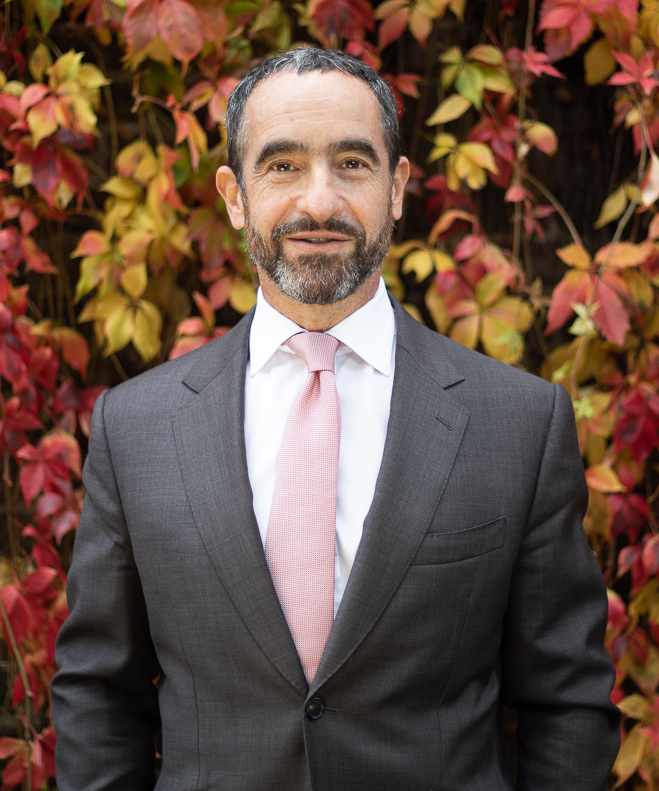
Co-host, Cleaning Up Podcast
Michael is an acknowledged thought leader on clean energy, mobility, technology, climate, sustainability and finance. He is Co-Managing partner of EcoPragma Capital and CEO of Liebreich Associates. Michael is also co-host and founder of 'Cleaning Up' a podcast and YouTube Series.
Former roles include member of the UK’s Taskforce on Energy Efficiency, chairing the subgroup on industry and an advisor to the UK Board of Trade, an advisor to the UN on Sustainable Energy for All, and a member of the board of Transport for London. He is also the founder of and a regular Senior Contributor to BloombergNEF.


