

 Apple Podcasts
 Spotify
 Overcast
 PocketCasts
 RSS Feed
Batteries Are The Killer Tech Of The Energy Transition | Ep267: Alex Shoer
China transformed solar from one of the world's most expensive energy technologies into the cheapest source of electricity in just a couple of decades. And now it’s doing the same with batteries, with prices plummeting around the world.
This week on Cleaning Up, Bryony Worthington is joined by Alex Shoer, Managing Director of GridVest, who spent almost a decade building renewable energy businesses in China before bringing those lessons back to the United States.
They discuss the lessons behind China's clean energy success, the evolution of solar subsidies, and why battery storage is becoming essential for everything from renewable energy to AI data centres. They explore whether collaboration rather than competition will shape the next phase of the global energy transition, and in which technologies the U.S. still holds a competitive advantage.
Topics covered:
- China's blueprint for scaling clean energy
- The impact of ending solar subsidies
- Why batteries are becoming more valuable than solar alone
- Can AI and data centres accelerate the battery boom?
- Ford, CATL and the future of global partnerships
- Competing vs partnering with China
- Financing the next generation of energy infrastructure
- The future of battery tech and U.S. innovation
Leadership Circle
Cleaning Up is proud to be supported by its Leadership Circle. The members are Actis, Alcazar Energy, Arup, Copenhagen Infrastructure Partners, Cygnum Capital, Davidson Kempner, Ecopragma Capital, EDP, Eurelectric, the Gilardini Foundation, KKR, Mitsubishi Heavy Industries, National Grid, Octopus Energy, Quadrature Climate Foundation, Schneider Electric, SDCL and Wärtsilä. For more information about the Leadership Circle, visit cleaningup.live
Links
- Alex Shoer’s bio: Alex Shoer
- Sign up to our newsletter: cleaninguppod.substack.com
- GridVest: https://gridvest.com/
- Seeder Clean Energy: https://seederenergy.com/
Acronyms
- RE100: Renewable Energy 100% Commitment
- PPA: Power Purchase Agreement
- S-REC: Solar Renewable Energy Credits
- I-REC: International Renewable Energy Certificate
- IRR: Internal Rate of Return
- ITC: Investment Tax Credit
- FEOC: Foreign Entity Of Concern
- CPUC: California Public Utility Commission
- NMC: Nickel Manganese Cobalt
- LFP: Lithium Iron Phosphate
- AHJ: Authorities Having Jurisdiction
Alex Shoer
All that to say is like there's this huge demand for battery storage from all sides of the economy right, from those who are building, if you're gonna build solar you pretty much need to have batteries with it If you want to make the economics make sense in most markets in the U.S.
Bryony Worthington
And that's a result of success right because the market for solar is now having to compete with itself. There's a sort of cannibalisation that happens if you all pile in without storage because you're all trying to get revenues during the peak of the day where everyone's generating, right?
AS
Exactly and now the crazy thing I'm starting to see is like we're seeing many, there's a project in Santa Rosa in college just northern California where we're looking at, and just adding batteries is like three times more valuable than adding solar, just solar, which is to me It's like wow, that's such a quick change.
BW
Hello, I'm Bryony Worthington and this is Cleaning Up. My guest this week is Alex Shoer, managing director of GridVest, a company focused on bringing batteries into energy markets in the U.S. But Alex is a serial entrepreneur having spent time in China developing a solar business before solar was cheap. He's a man who's always scanning the horizon for what's coming next. Please join me in welcoming Alex Shoer to Cleaning Up.
Alex, thank you so much for joining us here on Cleaning Up, I'm gonna start with our obvious first question, which is could you introduce yourself please in your own words?
AS
Yeah, great, well thank you for having me really excited to be here. I'm Alex Shoer, I have been working in renewable energy for the last 15 years. My background is in finance, I started my career in banking and very quickly realised that I wanted to apply that same skill set to something that I cared about, and clean energy at the time was that opportunity to have a little bit of an impact, but also because what I saw the world was heading towards which was electrification and the need for power. And so I moved to China in 2011 with the idea that basically the direction that China goes, the rest of the world will follow. Supposed to be a six-week trip, at the end of three weeks I cancelled my return flight and I said this is the place I want to be. I felt the energy, I felt the problem because I was breathing polluted air, and I just realised that after reading the 12th five-year plan which had just come out, how much the government in China was investing in improving their environment basically.
And that happened to be energy efficiency, renewable energy, it was just completely reinventing their electrification or their power generation and I just felt like I want to be a part of that. Didn't know how or why, ended up partnering with a Belgian national who had been there about 15 years but spoke Chinese and knew the whole country very well. He was kind of my mentor and became my business partner, and then I partnered with another friend from college and we started a clean tech market entry company. We're bringing mostly European and some American technologies into China, helping them mostly in green buildings. Things like lighting, HVAC, technologies like that. And that was my first time running a business as well, so that was exciting to kind of getting my entrepreneurial journey started. It turned into a consulting business, which was fun and a great learning experience and we did fairly well but it didn't see the scale, and we were doing so many different things I wanted to focus on one thing.
And so out of that I saw that solar energy was the kind of emerging leader of all the technologies we're working on. This is about 2013 now, and I started a spinoff company called Seeder Clean Energy, and the idea was, financing in China for solar is non-existent. No-one is financing anything and the payback period was too long for most projects to make economic. So Seeder was an attempt at bringing mostly PPA, Power Purchase Agreement Financing to factories in China, and so that was kind of a long journey. It went on from 2013 until really 2019/2020 until Covid, and that was trying to deploy rooftop solar out of all the factories in China.
BW
So just to pause on that bit then because that's super interesting that China had obviously brought in the manufacturing capability, but what you felt was missing was then the finance ability of putting the solar panels into people's homes or into factories or into commercial buildings. And so why was that, because they obviously had a manufacturing capability by then, they were turning out the units, but it was it going into big-scale projects then?
AS
Exactly. It was mostly going into large projects kind of in the middle of nowhere, they had this Golden Sun tariff where basically it was an incentive that you get from the government for no matter what you deploy, you get a dollar amount, so a dollar per kilowatt installed. So people were just installing as much as they could wherever they could, it didn't always mean where they needed it. And so that's what solar had started with in China, and at that time no-one was doing rooftop solar, very little people were doing rooftop solar because it's small and the economics were complicated and the cost of solar was still pretty high then. And so the payback period was like five, six, seven, eight, nine, ten years which for most Chinese businesses at that time, it was too long.
They were like, I can think one, two or three years out, I cannot think anything, because the margins in these factories are so slim. And so we realised that the only way to do this is the same third-party model that works in the U.S. and Europe, which is like someone else who has capital invested and owns and operates that system, and sells power at a discount. And at that time no one was doing it in China. And so we figured out how to do it, like there was a lot of logistical, and you call it regulatory issues around this, but eventually we figured out how to structure it. And in 2014, we did the first one ever in Beijing at a warehouse in East Beijing, and that was such a learning experience and it took so much work to get that first project done.
But then from there we said “hey, this is an amazing model”. There was a lot of education because it sounded too good to be true, meaning “What do you mean? You're gonna put solar on my roof and I don't have to pay for it, and I get savings from the electricity from day one? Like I don't get it.” And so most people didn't believe it and it felt too risky, so there was still a huge education gap, but that's what 2014/2015 we were really pushing, and around 2016 the kind of floodgates opened. A lot more money started coming in, a lot of infrastructure funds, folks like Macquarie and Brookfield they were really going after this market. Started seeing that wow, all these factories, they use so much power, the cost of solar starts coming down, the government started a new subsidy programme in 2014 which was the generation subsidy. So instead of getting money for every kilowatt installed, now you get money for every kilowatt hour generated And so that's really cool because you're actually incentivising kind of efficiency.
BW
Yeah, exactly I can imagine in this kind of you know wild west of, let's get solar panels put up there'd be a lot of slightly, you know, the placement would be maybe not the priority, or you know, the actual units.
AS
As you can imagine the quality of the manufacturing was low. Now they’re saying, hey for 20 years I get roughly 7 cents per kilowatt hour subsidy, that's like doubling. And the cost of electricity in China is roughly 8 to 12 cents a kilowatt hour, so you're almost getting an extra 40 to 50% boost on what you would get from just producing or selling solar at a kilowatt hour basis.
BW
Because this kind of in-situ or on-prem solar, it's now taken off, right? I mean you see the photographs from Google Earth of places in Pakistan, you know several years ago nothing, and now every rooftops got it.
AS
Oh yeah.
BW
Do you think that came out of China, that financing model? It wasn't just the technology that countries were looking at, it was also the model?
AS
No I think unfortunately China was actually a late adopter to the financing models because it was just not as, the whole system at that time was you know contracts were not easily enforced, and just the banks were not sophisticated. I mean getting even a loan from a bank for project finance, it's like it was a foreign concept when I started. I mean there were certainly very traditional kinds of projects, like huge, like building a bridge or a dam, but not for smaller projects and not for you know, people without huge track records or state-owned entity connections. I mean, it was so hard to get, there was no kind of debt or creative equity structures I mean, it was just very simple. It was like you have the cash and you and you put the project in place.
And so just again, that's where luckily my two years in banking helped, and a little bit of knowledge of project finance, and that's where I started seeing this. And again being early it was kind of fun because you could see what was happening. The government literally wrote a very detailed plan about what's gonna happen in the next five years, but most people didn't believe it, you're like, ah, that's never really gonna happen. But I was just like well, that's if it does happen, what would that look like? And that's kind of how the whole premise came around.
BW
That's so interesting, but maybe the factories you worked with understood that they had a new customer base perhaps. Because it is remarkable that you know, Australia is the other example right, where it went from almost nothing to every home’s got it, and then now you've got these emerging economies copying that model. And so it feels like a few things must have come together for that new market to suddenly go so quickly. And now we've got of course another driver which is, you know, the disruption in the Middle East and the Straits of Hormuz being closed, and everyone's desperate to kind of follow this model right to kind of insulate themselves. So are you still tracking this?
AS
Oh, yeah. I mean, I think there's a lot that happened within that. I think it started with Chinese companies were doing it out of, well initially there was not a lot of push from the outside, it was mostly like, I will do this if it makes sense for my bottom line. Then it got to the government push to clean up the environment right, cleaning up. So that was where there were a lot of factories saying “hey, you're not gonna be able to operate on these days if you don't curtail your emissions”, like they actually started capping the amount of emissions that a factory could put out. And some factories were having to get shut down on certain days of the week, they're like, you know, you’ve reached your quota.
So that was a big factor because a lot of factories were switching from coal, you know boilers and things like that too they were electrifying. That was one big thing, electricity prices going up was the other. But the other one was also this the number of foreign factories in China and that was actually our niche because the foreign companies had all started to sign up for the RE 100 commitment, right? Renewable Energy 100% Commitment, typically by 2025 at that time or 2030. And so this was early 2013/2014 so they still had time, but they started really getting this pressure like we need to figure this out, and so a lot of it was also driven by foreign companies.
BW
They were having to audit themselves in a way that they hadn't bothered to before.
AS
Exactly and their Chinese supply chain was being scrutinised in ways that nowhere else was, so they're like, this is the place we have to do it, right? And it's actually the hardest place to do it, because in every other market most other markets like China, I mean India, U.S, Europe, the way that the utilities are structured it was actually quite easy to do off-site PPAs, like VPPAs, Virtual PPAS where essentially you're just you know…
BW
Behind the metre then you can do whatever you want.
AS
Yeah you’re swapping it, the renewable energy never needs to touch your building, right? you can buy it. Through all these structures in China, because of the way the state grid is structured, you couldn't do that, there's no VPPAs available. And because there's no floating rate of electricity, and there's all these number of reasons behind that. So because of that, you're like, the only way to really reach your renewable energy goals is either you put in capital yourself, you invest in a project somewhere in the middle of nowhere and then you say hey, we're gonna consider all that offsetting our electricity. Or you say hey, let's use our rooftop or our huge ground area around our factory. And so there was much more limitation, and the third piece is there weren't renewable energy certificates or credits that were credible like there were in other markets, and you could buy S-RECS or other other programmes, I-RECS. In China they just didn't, the way that it was structured that was not available.
BW
In a way that's a good thing though, because in a sense the more agency you've got over your carbon footprint in the things you actually control in your factories, and I mean I'm happy to have tradable markets and everything, but actually if everyone took responsibility to a certain extent, it would mean, I don't know, like hopefully you just get more and more people trying to solve the problem. And that I guess the closer it is to your own company structures the better. If you can just purchase a load of RECS and not worry about it, it doesn't kind of embed a kind of new way of thinking right?
AS
Yeah, exactly, and so eventually that is where Seeder the business I started there became, it was started with PPAs and actually ended up with a renewable energy advisory, helping mostly large corporates to procure renewables from all different sources. And in the end in late 2018/2019/2020, that's when they finally started allowing for off-site power purchase agreements, where you could actually use like wheeling agreements that work through the state grid, where you could buy power from a big renewable energy project, pay the state grid to potentially wheel that to your factory.
And then that started taking off, which also started changing the dynamics there, but yeah shifted to the whole distributed generation in China started really taking off. Because essentially the ground mounted projects, the middle of nowhere, the land in the middle of nowhere became a lot more scarce and less valuable. And the government started really redirecting resources and energy and the state grid stopped making it so easy to interconnect those projects. And so everyone said, hey, next wave is let's use these rooftops, electricity prices are going up, especially with Covid, that was a big catalyst between switching from these ground mount projects to rooftop projects.
BW
And yeah, there's a lovely communications device I think you could do here, where it's basically wasted roof space. You know you could audit how much roof space is wasted currently, because it hasn't got any kind of energy capture system on it, and that just flips it from the assumption meaning you don't do it, to the assumption meaning you are doing it, you should do it. It makes complete sense,
AS
Exactly, the other thing which maybe ties to where we are today in the U.S. is, in 2018, May 31st 2018, the government stopped the solar subsidy overnight and went from this great generation subsidy I was talking about, around 6/7 cents a kilowatt hour, all of a sudden said “Anything that's not grid connected by tomorrow, no more subsidy.”
BW
What, you mean in China?
AS
In China, right. And so that was the moment, the reason that's important is that was the moment that the price of solar modules dropped like 30% in a few months, because all of a sudden there's all this excess supply of solar. And what that did is, it was like a 6-9 month moratorium. No-one did any projects basically because every project essentially got killed. But what happened is that all these new projects emerged that didn't require subsidies, and all of a sudden it was like we went from this tough market to get projects developed and yeah, the returns were really attractive for the ones that were getting that subsidy, but all of a sudden you're like now all these projects are somehow economic because the cost of the modules have gone down. And this mindset of like oh, I could have gotten a 13% IRR before, now I'm only getting an 8% IRR. But now with creative financing and debt and other mechanisms, you can make that 8%,13% levered IRR pretty easily. And all of a sudden it's much easier, there's less paperwork, there's less risk actually of losing the subsidy.
BW
It's a normal market at that point.
AS
And then all of a sudden if you look at when the distributed generation in China took off that was the moment.
BW
Oh, it's so interesting. So it was the absence of the subsidy.
AS
There was a big pause, in which the cost of solar dropped and then boom all of a sudden. So I don't know, just jumping forward there may be some parallel today with our the solar, the investment tax credit in the U.S. where it's been such a blessing in one sense to get a lot of things started, but I think now it's almost become a curse “Oh I could have gotten the ITC, and now I have to go either with FEOC, Foreign Entities Of Concern” and we'll get into that. It's a whole realm of like, is the ITC holding us back from just like unleashing projects everywhere?
BW
There’s a claxon that goes off when we use too many acronyms, so ITC meaning?
AS
Investment Tax Credit, thank you.
BW
Sorry, but listen, that is fast forwarding because we will get on to the U.S. in a minute, but I want to just carry on with this story. So you're in China, you've had this moment of seeing, you seem to be good at reading the rooms, like what's coming next, but at some point you flip from solar to batteries, so tell us a little bit about that.
AS
Yeah and also that’s the connection why I'm here today is Michael, you know through Michael Liebreich and the work he was doing at Bloomberg New Energy Finance, we would always connect and just share war stories of me on the ground and him coming in at these Bloomberg New Energy Finance conferences. And it was just great to be able to kind of reconnect today and think about all those dinners that we shared together and the war stories that we felt like we were kind of exchanging back then. And now to be able to see another parallel of it happening, but now it's in battery storage.
So to your point, I think you know what happened for my journey was that I was very much in the solar world, Covid happened, I basically got locked out of China essentially I couldn't get back in because the borders were closed. I left for a vacation and ended up back in the U.S. and really seeing like what's the next thing here? And so I started spending time researching and looking and thinking and trying to use my like China framework of what I just saw happen over the last 10 years there, what's gonna happen here?
And I basically saw that storage is about to do a very similar thing that happened with solar. And the U.S. is very well positioned and in need a desperate need of it, if we're ever going to increase our renewable energy penetration, but also if we're ever gonna improve our grid, if we’re ever gonna be somewhat energy independent, and if we really want to have a cost of electricity that is reasonable. And so I just felt like storage was at that precipice and 2021 where we started saying okay, the cost curve is about to get disrupted, you could see what was happening in China and yeah, I think that from there It's been a wild journey.
BW
And is this because you came back to California? Was the duck curve the thing everyone was talking about, you know over production in the sun and then the lull in the evening. So was that playing into your thinking here, what does California need right?
AS
Yeah, it was definitely, I ended up in California in 2020, March 7th 2020 I arrived here and it's like the first week before Covid and everyone knows what that journey was like. It was a pretty weird time to be moving back to the U.S. after 10 years, if what I imagined my return to the U.S. might be like, it was not that. And it was looking at, what is holding back more solar deployment, renewable energy deployment, it's the duck curve was a huge part of it around the fact that basically there was a big pushback against more solar because they're saying it's disrupting the grid and there's all these stories of you know, we've reached max renewable energy penetration and there's just nothing, solar is I think this big thing that the CPUC says,
BW
CPUC is?
AS
Thank you, California Public Utility Commission, which says that I think in general their thesis is that renewable energy you know burdens ratepayers or increase the cost to ratepayers. Which I think is a fallacy, but that's a whole other other podcast episode. And there was just the obvious answer that we could all agree on was battery storage, right? It didn't matter what you thought about politically, it didn't matter where you were in which industry, we all need power, we agree on that. We all need the cost of electricity to go down, and there's not an easy way to solve it in a short period of time, right? Because new generation takes five, almost any asset takes like five years or more besides solar, and it's unclear about which utilities and grids are going to actually upgrade their networks, right? All of the power lines and transformers, all this ageing infrastructure, how are we going to meet the next world, this new electrification paradigm we're going through with EVs and with moving towards electrifying homes and schools and buses and all this stuff. It's like that cannot happen without this other one piece which is missing.
BW
And to what extent while you're in China, had you seen the rise of the big battery manufacturers? Because that's a fascinating story in itself right, in a way they get into batteries through our use of phones and computers and laptops and then they start scaling those little cells to bigger cells, partly for EVs initially I'm imagining. But then realising oh, hang on we've got this static grid technology now that's coming off the back of that too. Was that something you had watched in China, too?
AS
Yeah, but I think interestingly China is another example where like China actually wasn't really leading the world in stationary storage deployment. They were leading in terms of EV deployment that's for sure, and that's where most of the values were going to and that's where most the battery companies you know got their start. But then you could see that while the cost curve is coming down and their efficiency is going you know way up, and their scale of deployment of new factories is just unfathomable. And so you're just looking at okay, this could cost the system. In particular, I think that was the time that they were shifting from more NMC into LFP.
BW
NMC?
AS
NMC, nickel metal cobalt basically, or there's different formulas, a traditional more traditional lithium-ion battery cell. And then moving into this it's called the newer technology, which is lithium iron phosphate, LFP, which is basically using less rare-earth metals, but still lithium which is an expensive part of the chemistry. And that has become the standard I would say in terms of stationary storage, more EVs are moving towards it as well. And it's become the one of the dominant technology for what has been manufactured at scale, so all of the factories are set up to basically print these that at rapid, it really looks like if you ever go to these factors it's like it looks like a newspaper printing press where they're just printing like on these machines just the cells and and they' just going, you cannot see them, they're going so fast. It's almost all automated, there's like two people in there who are occasionally like checking on a robot.
And it's all AI quality checked, like these cameras, multi-million megapixel cameras that are just checking for the most minute defect, and it's just like you go in there and you're like, how is any company going to ever compete with this? And I don't know how at that scale. And so I think we'll get into this but I think my answer in summary is, it's not trying to directly compete on that specific thing, because it's just you're never gonna win. But maybe we can partner in those things that we can't win, and we can figure out where there are competitive advantages that we can win. And I think there are plenty that we can win if we focus on them, but if we don't and we try and compete at a game we've already lost, it’s like?
BW
It's like I mean, there's two aspects of that. Well, there's three components to the supply chain. There's the raw materials upstream part, there's the manufacturing fabrication, and then there's what you do with the batteries that can then be created into businesses, right? So it's kind of becoming a feed into the economy, like these are almost a commodity now and so we'll have a lot of opportunity to build businesses off the back of that. But that bit in the middle, the kind of mass scale production as you say, gonna be very hard to kind of beat that or and perhaps the answer is not to beat it but to collaborate or to have joint ventures. And I mean I'm seeing news stories now around this kind of understanding that the rhetoric is “China's our enemy, we must decouple”, in reality what's happening is some quite interesting partnership models, right? And I know you've been tracking that too.
AS
Yeah, for sure I mean, I think there's a lot of ways to collaborate and obviously it's right now politically fraught and so it's a very sensitive subject. I think you’re seeing,
BW
So that's funny, right? It is a sensitive subject but in reality America's always been symbiotic with Chinese manufacturing right? From from the minute we decided to try global trade, which has a long history of global trade, that there's been this bargain of “we want affordable and we want choice for our consumers and we're gonna keep providing that and we're gonna do it at least cost so that more people can enjoy it”, and that involved a partnership with China, right?
AS
Right, and we made that decision long ago and now we're like wait, I think there's maybe some backtracking on that or the fear of what that means. But I think yeah, we made that decision and I think there is still an angle where we can collaborate in those ways that we're best at, I saw we being the U.S, and that we partner and we collaborate with them in the way that we can offer so much in terms of technology, in terms of know-how in terms of innovation, now you're seeing with AI. I mean the U.S. is leading in those things, right? But we can certainly compete and I think healthy competition is a good thing, but there are ways in which we can offer each other different aspects of this value chain, and I think it will completely change the way, the speed at which we can move.
And I think that's what I'm really trying to get everyone to focus on is, let's focus on solving these huge existential problems that we all have and I think we can focus on domestic manufacturing and we can focus on domestic jobs, and we can focus on the environment as well, like these should be coming from clean supply chains. And those are all super critical and we can do all of those and we should do all those, and we shouldn't just be arbitrarily like shooting ourselves in the foot by saying well we can't use this because it's owned by this company and it's like, that makes no sense. So let's figure out a way to bring them in, let's encourage them to invest in maybe even domestically invest right, have them set up a factory here with a partnership. For example, we Ford and CATL right? There's a big partnership going on.
BW
So CATL being the world's biggest battery manufacturer based in China, thousands of engineers always you know, always bringing out new lines, and so tell me about that partnership then. So Ford as a vehicle manufacturer were sort of sensing there might be a bigger market for electric vehicles, Trump gets into power that disappears. But what they do instead then is pivot into; we still want to make batteries, we still want to be in this game, but we'll now sell into static grid batteries, right? Which is such a fascinating story. You've got a car manufacturer partnering with a big battery manufacturer and now selling into a completely different market.
AS
Exactly and they're having to realise hey, we built this battery factory for one thing and now we need to pivot it and who's the best in the world at that technology, and that is CATL right? They're the best at LFP, they're the biggest manufacturer by far. And so I think that partnership they have a lot of know-how, all the factory, all the things I was talking about earlier around the way that they can set up a factory and they have that process down, Ford I think recognises that. And CATL sees that, hey we need a partner domestically because of everything going on we can't be here ourselves, and so that partnership I think is going to produce some of the probably best stationary storage cells that are gonna be domestically produced in the U.S.
I would much feel much more confident as an investor or as someone who's buying those batteries from a Ford-CATL partnership rather than a brand new American startup who has never done LFP manufacturing and who's doing it themselves for the first time? I have to say I would choose the Ford-CATL.
BW
And Europe tried that experiment, right? We tried to do our domestic battery manufacturing as play and you know put a lot of money into it, subsidised it, and it ultimately didn't work and probably for that reason.
AS
Right, and now I mean, I think like GM just came out, they're doing a partnership with Redwood Materials. And so now we have GM Energy and Ford Energy it's like, you know names that I would have never expected five years ago, or that there's gonna be these two traditional Michigan based car manufacturers that have such a history in this country are now becoming energy companies, and I think that's such a beautiful thing if you think about like where we're going.
BW
I mean that is so interesting how sectors blend right because in the climate world we tend to try and think of sectors as rigidly in their little boxes right, and actually credit to Elon Musk he started this right? He started seeing car manufacturing as a completely different lens that it could blend into like essentially computers on wheels. And I'm not saying this is necessarily healthy, but basically started to not see things in traditional sectoral boxes and it sounds like everyone's catching up with that now. But you mentioned something interesting, the fact that it's Ford is really interesting to me as well, because Ford is such such a big character in the in the story of America and was there a point in which perhaps Ford already understood like when he was making his assembly lines for cars, there's no way he was gonna say we must make the tyres domestically, right? Because presumably our rubber and our tyre manufacturing whatever, like there would have been a component even to that story back then required global trade
AS
Right, exactly
BW
So aren't we just you know, we're just we're still telling the story of why trade works, you know but just in a more modern way.
AS
Yeah, exactly and I think it still allows for specialisation of what each party's best at and I'm still in favour of all kinds of regulatory things of like, even if making things like maybe if Ford should have to be the majority owner right? And if you want to do that kind of structure in the U.S. with it, that to me is fair and reasonable and I think China would do the same, right? China is very sensitive about joint ventures and who has the 51% who has the 49% things like that. If you look at Disney is a great example of you know, when Disney went to China, how did they do it? They did it with a joint venture, right? They didn't go and say I'm gonna open up a Disney theme park, no it's like here's this IP that has been developed and now there's this great market and this opportunity to partner with the companies that can help take Disney and localise it.
BW
Yeah it's so true. I've just been to China on holiday actually with my family, so many lessons learned, but we went to this amazing National Park built around a mountain, Tianmen Mountain in Zhangjiajie, an amazing place. You get to the top of it having gone through the mountain on seven escalators and there's a McDonald's at the top, and you're just like, okay, so somebody somewhere in the history here understood these this symbiotic relationship between the kind of established brands the knowledge share, America has a footprint in China, right? And so it's just you know, it's much more integrated than people realise.
AS
Yeah, I mean Starbucks, it's like one of the best growth stories of all time of any brand ever of how fast it was deployed. I think when I was living there it was like every 30 minutes a new Starbucks was opening in China when I was living there. It was wild.
BW
And that is distinctly different to India I have to say, having spent time in India. They were much more suspicious and not allowing of, I mean they let certain brands in but generally speaking they protected their markets against in a way that China didn't. And I find sometimes there's an oversimplification of when we think about China that doesn't really get beyond the headlines, right? But to see what's actually happening.
AS
Yeah, exactly and that's what I'm hopefully, you know this is a great opportunity to do that because there's a lot more nuance, everything is about nuance, right? It's not about you know, black or white, and they're right and we're wrong or other way around, so I do think it's all about okay, how do we solve these big problems? And I think just tying it back to where we are today, energy independence I think I cannot emphasise that enough, I know you agree with this as well, like if we could just focus on that, how do we solve that, and we could let go of all the other things. I think that would be the first problem that then we can allow us to have a lot more domestic capabilities for things. Because we're also trying to solve these problems without actually having infrastructure in place.
So it's like I think if we're not willing to do the work that's required in order to build that infrastructure, so for example whether it's AI data centres or you know energy, or I don't know semiconductor manufacturing, all those things like the United States can become and maintain the lead and those things and even in the manufacturing side. It's just going to take some time and some learning and some partnering to get there.
Michael Liebreich
Cleaning Up is proud to be supported by its leadership circle. The members are Actis, Alcazar Energy, Arup, Copenhagen Infrastructure Partners, Cygnum Capital, Davidson Kempner, EcoPragma Capital, EDP, Eurelectric, the Gilardini Foundation, KKR, Mitsubishi Heavy Industries, National Grid, Octopus Energy, Quadrature Climate Foundation, Schneider Electric, SDCL, and Wärtsilä. For more information on the Leadership Circle, please visit cleaningup.live.
To keep up with all that's going on in the Cleaning Up universe, make sure you subscribe to our newsletter. Written and edited by my longtime New Energy Finance and BloombergNEF colleague, Angus McCrone, it comes out every second Monday. Angus provides the latest on the episodes we're recording, the events we're hosting, stories we're watching and what Bryony Worthington and I are up to. To sign up for the Cleaning Up newsletter, visit cleaningup.live.
BW
You mentioned the word data centres, there's barely an episode that goes by now where we don't talk about data centres. But in this context it's really interesting because we're sort of seeing a real-time kind of backlash emerge around this lack of taking time to plan right? So suddenly we've got the big hyperscalers becoming energy people. So not only have we got the old school industry good guys becoming energy people, but also the hyperscalers are too and they're now working out how they get access to what is the new commodity. It used to be chips and now it's now it's electrons, and throwing up all kinds of infrastructure really fast to try and keep in that game. But it does feel like it's a little bit like Zuckerberg's tented GPU enclosures don't look like they're built to last, and they're running on power that's kind of fast and cheap potentially, or not even cheap sometimes just fast, and you get the feeling like this is not being done in a particularly structured way, and how sustainable is that really?
AS
I mean, it's definitely the thing I think most of the whole world is watching now, because if you're building a data centre there's huge challenges in how to power it, right? So you're either going completely off-grid in which case you're saying hey, we're gonna build a whole power plant usually with some kind of natural gas turbines and batteries.
BW
And sometimes jet engines.
AS
Yeah, exactly jet engines often, and we're going to build our own whole huge infrastructure here and that's one case. And then the other side is we're gonna use a small grid connection and we're gonna make it bigger by adding generation and storage. Or you finally say hey, we're gonna wait and get in the line for this big interconnection from a utility where we can then just power it all from a utility power line. And it doesn't seem like any, it's not clear on what is the best approach. I think all three are being attempted and you know the one thing coming back to storage where you know I haven't even really talked through about my current work with GridVest and what we're doing with making battery storage a little bit easier, but I think storage is the piece that's unlocking that.
Because without batteries, the generators required are going to be much greater if you're doing off-grid. If you're doing on grid, then the grid capacity that you need is much greater than what you would actually be able to use if you use batteries and a grid capacity, because of the way that the GPUs have huge spikes. They spike up, they spike down very quickly, and those utilities cannot handle that kind of electrical swing. And so that's where batteries can be a buffer to clean the power up, provide additional kind of load when needed, help with demand, charge management, reducing the peak loads from what you're pulling from the grid, and also just allowing a smaller grid connection to seem like a bigger one.
BW
Yeah.
AS
And so that's I think that's to me the easiest answer is like you get connected through the grid, and you add batteries to enhance that grid connection. And that's the same methodology for EV charging. I want this fast charger in my hotel, the problem is the fast charger uses the same amount of power as the hotel. So a single fast charger, a 200 kilowatt hour, 250 kilowatt hour fast charger is basically the same amount of power that a hotel uses. So you're saying hey, I want to double my power usage for this one fast charger, which I think we need more fast chargers, but in order to do that, technically you're gonna need okay the utility cannot, usually especially in California, cannot just come and double your electrical capacity overnight. And so one of the easy ways to do that is adding batteries, so you add in batteries and that can boost and provide that kind of support so that you can still use that same grid connection and still operate a high speed fast charger or multiple and provide that power.
So it's just like the same kind of concept of we've got an ageing infrastructure, our grid is tapped out and there's a huge amount of demand and increase, so how are we gonna solve that. And I don't think personally that this build off grid, do it all yourself, it's definitely not cost-effective and it's not sustainable, because from an environmental perspective or from an operations perspective. Because these are incredibly complex to operate and I think what's gonna happen is yes, you can do it potentially faster and that's the big value, but the downside is the uptime of these sites. I think you're gonna see a lot of data centres that have the best infrastructure, jet engines and gas turbines and everything, and their problem is they're not gonna be up 99.99% like data centres require.
BW
But also if your commodity that you're burning is gas in a world where you know we have got an abundance in the U.S. of gas today, but the prices are rising because it's a global market and we've just seen this constraint which we haven't really touched on, we talked about it earlier. But the gas markets, the effect of Kuwait… Qatar sorry, the long tail of that conflict in the Middle East is going to mean high prices for a long time. So you know it might be quick, but I ain't gonna be necessarily cheap compared to a solar and batteries and grid solution.
AS
Yeah, that's a great point and I think the risk of that is that you spend all this money on infrastructure and you're right then the price of gas goes up and all of a sudden the economics aren't as attractive.
BW
And as I come from the UK and as much as I'm so impressed by the U.S. ability to keep finding more cheap gas, it does run out, right? You maybe have 50 years max of that resource to come out cheaply, and I don't know where we are on that curve. We are a post-gas economy in the UK and when it runs out it does run out.
AS
The corollary to that is though I think the other added benefit of more renewables is that you can actually create gas right, you can clean gas through additional energy, it's not the most efficient use of it but if you have excess or stranded renewable energy, a great use of it is converting it into clean fuel.
BW
Ah well, if Michael was here…
AS
Stranded, the keyword was stranded.
BW
Yeah anyway so back to it, in this world where we've got data centres going up fast, and it absolutely would be sensible to be using the cheapest in the long run solutions which are solar and the batteries, and are you seeing that? I mean, because I think people well, certainly I look at the data for the U.S, we did see a rollback to coal last year and Trump's now got people in the White House talking about how he's investing a billion dollars and getting coal back on the system. But in reality you look at where this turnaround is coming from, there is still this big boom in solar and batteries, right? At every level. And some of it's showing up as negative demand, right? If it's just on the system and taking demand down, it's probably not also showing up. So there's probably a hidden component as well how much this is going in, and so let's talk a little bit about what GridVest is doing. So you're now in the game of helping finance batteries, right?
AS
So yes, GridVest I started in 2022 after my little exploration of what the future of storage is gonna be, partnered with my business partner who is an asset based lender, right? So his background was in mortgage lending and really saw batteries as a strong asset. And I came at this with the sourcing kind of expertise thing. I know all these top-tier manufacturers and it's really hard to get access to them in the U.S. and so let's team up. And so basically that's where GridVest came from and the idea was we're bringing access to those batteries to the U.S. market and we are integrating them with the right inverters and energy management systems. Because it's not just the battery, it's like you need the whole package otherwise, this thing does not work especially if you're doing micro grids where you need backup power. And so that's kind of the background of what we've been doing and I think where we're seeing is each year the market has dramatically increased since we started the business, and what it really is driven by is economics because the electricity prices continue to go crazy, especially in places like California.
And commercial buildings and industrial buildings more and more are spending, a large percentage of their expenses are now electrical, especially as they have electrified and oftentimes have been forced to electrify fleets and large industrial like processes. And on top of that there's this resiliency need right? We're like, hey when the power goes out, what are we going to do? And generators are expensive and unreliable and so at least battery is a backup solution that actually can generate money. So there's all this kind of perfect storm for where it's heading. Projects take so long, especially if we're talking about like a front of metre utility scale, those projects take seven, eight, nine years. And then you know the smaller front of metre distribution level grid, that's like near more urban areas that can be you know three or four years, and then the CNI commercial industrial segment can be like one to two years. And then you know residential could be one year or less.
So it's kind of like you have these different pockets and so you look at a lot of projects that have been in the works the last two, three, four years, and so what I think we're seeing is and we're going to see is a huge wave of new projects coming online. And right now the big challenge is sourcing the equipment because of all the tax credit changes that we've just talked about earlier with this foreign entity of concern FEOC language that has been introduced.
BW
Which is basically, this is the modern era we're in now where we're supposedly everything's coming home right, reassuring. And therefore there's a local provision, we have to have a certain component of your supply chain provided locally, right? That's the new way.
AS
Exactly, so it's like this domestic content piece and it's all about ownership. It's not just about what's made here, it's really about the ownership. And so my preference would be that we focus on the where it's made, not say who owns it as much. And so all that to say is there's a huge demand for battery storage from all sides of the economy right. From those who are building, if you're gonna build solar you pretty much need to have batteries with it If you want to make the economics make sense in most markets in the U.S.
BW
And that's probably a result of success, right? Because the market for solar is now having to compete with itself. There's a sort of cannibalisation that happens if you all pile in without storage because you're all trying to get revenues during the peak of the day where everyone's generating, right?
AS
Right exactly and now the crazy thing I'm starting to see is we're seeing many, there's a project in Santa Rosa in Northern California we're looking at and just adding batteries is like three times more valuable than adding solar, just solar. Which is to me It's like wow, that's such a quick change, like even two years ago we were having a really hard time making a lot of these projects economic like because batteries were it's more expensive, you know the way that the utility rates were structured wasn't as advantageous, solar was so cheap and so now it's like we're having this pivot where demand charges are one of the biggest parts of these bills and if you can fix that, if you can reduce the amount,
BW
Demand charges?
AS
Sorry, demand charges are basically electricity rates that utilities charge for really short-term spikes in electricity. So they say hey if your normal is 50 kilowatts and for a second you use 100 kilowatts, well I as the utility need to be ready to deliver 100 kilowatts, even though it's only for a second. And so your whole rate structure is now gonna change and so that is a huge cost.
BW
Are they doing that by consumer can they disaggregate the data or are they just levelling on everyone?
AS
Yeah, they're doing it by consumer, by the energy metre, and typically it's not for residential.
BW
No, no, commercial.
AS
It's much more commercial and yeah, they know exactly the second you use this spike and it pushes your whole rate structure and all of a sudden, you might even be unaware of it, right? It may have been by accident, like the machine accidentally turned on when it shouldn't have and all of a sudden our whole electricity rate for the year changed. So that is where batteries can help a lot and then obviously we talked about the other benefits of resiliency. But yeah, we're gonna be going into this where there's demand from all sides, again It's bipartisan and it is solving real problems and now it's just like my thing is we need to just get out of the way of the solution. Which is permitting and tax credits and all of the AHJs, Authorities Having Jurisdiction, which is basically anyone, you know, whatever local fire marshal, or a local building code organisation, whoever is in charge of that site, it's put a lot of roadblocks up for battery storage. Because obviously there are some dangers of battery storage with the fires and things like that, but I think we've kind of gone to over restriction and we're using a few cases of bad examples to now just say oh we can't do x, y and z.
BW
And you mentioned that things were cross party or you know bipartisan, but we have got a you know, our head of our energy secretary Chris Wright in the U.S, who will be very vocal about, oh wind and solar are intermittent, and never ever seems to glance at the fact that we've got batteries, right? So he skips from wind and solar are intermittent to, so that's why we need coal or whatever. And I feel like that could be just him being very clever about playing to many audiences, but you know, is it just a blind spot with batteries? Is there just a lack of understanding or is it just people can see actually it's the killer app that gets fossils?
AS
You know, I think there's still a fair amount of lack of understanding. I think there's still like these old narratives that people are just clinging to around renewable energy and look at variable, and it puts stress on the grid and all these things, and there's a cap at how much you can have. And it's like look, all of that kinda goes away in the light of cheap and safe batteries. Which I think that's just back to that last point, batteries have gotten you know incredible, much, much safer in the last two, three, four years. And so a lot of these incidents are still based on these older batteries, which I agree are not safe. Like I am in agreement, a lot of these batteries, especially different chemistries like the previous ones before the LFP chemistries, I don't really trust them.
And so like yes, there are concerns with some of these older batteries. There's still concerns with even newer batteries but they are much better managed and the systems are designed in a much safer way that they're not going to propagate like the previous systems did. The other part of it is solar technically is much easier. It's more, I wouldn't say plug-and-play but relatively speaking to batteries it is much more like installers can figure it out, it doesn't take a lot of engineering expertise. There's much more of like turnkey systems available, battery storage it has not happened yet, like the batteries now work.
BW
Even with people like Tesla with their power wall, they've penetrated a certain segment of society for sure like the Tesla owners.
AS
And that's a good call, residential is figured out. Residential is very easy. I guess what I am alluding to is commercial industrial and utility, right? That is where even the mega packs of the world have not totally figured out. It's not about the batteries, the batteries work just as they should. It's actually the system architecture around that, that allows for the battery to seamlessly provide power when it's needed and to seamlessly, you know provide a micro grid. That's the hardest part, actually develop it, to operate a grid within a grid. That's really where the technology is still like, there's no one out there who's like, oh, I've got it dialled in like 100% is gonna work from day one, it's easy, you can install it, you know any EPC kind of engineering procurement construction company can install it, it just doesn't exist yet.
BW
And you don't think it exists anywhere? Because I'm recalling my, I've mentioned this on a previous episode, I've been to a little tiny hotel in Fiji that got off any kind of imported gas that was running for its generators by a New Zealand company coming in bringing in Chinese technology and it just worked. Like you know you could visit the rack of the batteries, the solar was on every rooftop and I guess is this a function of the U.S. being behind the curve do you think?
AS
No, I think that there are probably anecdotes in cases where it works, but I don't think it's been done at large scale. And I think that the issue is that even if that site worked, I imagine that there was a tonne of work to get it to work if that made sense. Like I'm sure it was so much work to get it to that point where it's that functional. Because there are plenty of examples of microgrids that work flawlessly, but my point was it was not an easy process. It wasn't just like you follow the instruction manual and then it works. There's just I think micro grids are inherently just complex. That's not necessarily a bad thing, and it's getting easier and the technology is getting better, and there are integrators that are more adept at developing these. But it's just the nature of large power projects and especially when you're dealing with data centres, which require insane uptime, super fast switching between you know on grid off grid.
BW
And there is also the problem of course that this batteries are not a source of energy right, they are a storage medium and if you're off grid the right sizing of your demand with battery capability, knowing the discharge and you know, I guess you've got to think through the complexities of how do we optimise their availability so they're up for the whole time, given that you've got a constraint that you have to recharge them, right?
AS
There's a lot of coordinating. And also when you're trying to factor and you're connecting not just the technical side, but you have all this utility that you're trying to coordinate with, and the utility has certain times of the power price is higher and lower, and certain times that you can get more money and less money. And so the ironic thing is and also why I'm so maybe like I'm preaching about how hard it is, is that GridVest and myself are really in the middle mid market right where we're dealing with actually the really big projects, the utility scale projects, are technically much easier. Like you're literally just plugging in a huge battery into the grid and it turns on at set times and turns off at set times. Or at least you get some advance notice of when you need to go on.
That's actually much easier than if you're doing it at like a school or hotel or office building or in a factory where you it's not as predictable, there's multiple variables you're trying to model for between what's better use of the power, do I sell it to the grid, do I use it myself, do I charge with solar, do I discharge for the EVs? Like there's just so many more variables and there's so many more challenges. So those are actually the hardest technically. But I think the interesting thing is when we solve that, it's not a question of if, it's like we're solving and it will be solved, that is gonna be the biggest unlock because every building, every factory, every school, every neighbourhood, it's not just about like individual buildings, that's community solar. That is where this goes where we now have networks within networks. So it's not one big switch where if the power goes out everything's out, no it's if the power goes out, doesn't matter.
BW
You already see it like here in California when the lights do go out and we have extreme weather events and storms and things fall over, and there are always some households still got the lights running, and they're either running their house off their Tesla or they've got a power wall you know.
AS
Oh, yeah, that's the residential equivalent, and now let's scale that out to the community equivalent where you don't have to be a high net worth individual to have this access to power or access to the Internet which is now becoming more of a human right. Right like or access to you know, even community centres that you could go to if your home is out of power.
BW
A friend of mine Daan Walter who works for Ember came up with a lovely analogy and wrote a paper about it where he was like, in the olden days food security was hard, right? You had a certain shelf life of a product that you had to get it to the consumer in a certain time otherwise your whole product was lost right. And then refrigeration came and it actually was the U.S. kind of revolutionised this sort of food supply chain through refrigeration, and it's changed the economics completely of food, and domestic food economics, right? If you had to go to the store every day to buy your fresh produce it is some really different kind of calculus than if you've got a refrigeration unit in your home smoothing out all that for you.
AS
Love that, so batteries are the refrigerator of electricity.
BW
Yeah, batteries are to electricity what the fridge is to food, right?
AS
I think that's true and I think the more that the electron becomes fungible for basically everything else, from money on the crypto side, to data and intelligence on the AI side, to food as you pointed out, because now you can actually with vertical farming and other ways of even lab-grown meats, we're gonna be able to convert electricity into food very quickly. We are already doing it and then also water, like I can capture with electricity I can capture water from the air, or water from salt water, or fresh water from salt water, and so like the electron is going to be I think that the most important piece of the next generation, or already it.
BW
It has been already and it will be. The big conversation now I think is, where could we have competitive advantage, especially in the battery space. And I wondered you know, you're tracking kind of solid solid-state batteries, they're kind of cutting-edge of batteries, where is the UK got a comparative advantage today, do you think?
AS
The U.S.? I mean, I think sodium ion is one of the next technologies that is coming that requires no lithium and it's a salt based system. It's not quite there in terms of the life of the battery yet, it still has some room to go and it's not quite as power dense so it doesn't really make as much sense for EV applications. But for stationary storage, especially in cold climates, very good technology and I think it will become a big part of the mix. But the thing is, it's a very similar manufacturing process as LFP or lithium iron phosphate which is currently dominated by the big Chinese companies. And so they're likely gonna be ones who dominate sodium ion as well, there are some U.S. companies that are working on it and I think the U.S, it's a bigger chance to carve out their niche in sodium ion, but I think it's gonna be hard to outmanoeuvre The CATL's of the world.
So what I think is to what you're bringing up is, a solid state is a really good example where the U.S. actually does have a real meaningful head start technologically. It's a completely different manufacturing process, so it's one that I don't think the Chinese companies are naturally well suited for, and there's just this huge opportunity for the U.S. to say hey, we're gonna invest in this segment and we want to become the best at this technology. Well at the same time we're gonna partner in the areas that maybe we aren't the best at but because we know we need that to deploy to solve energy independence, and cost electricity and all the things we talked about.
BW
Yeah, and the comparative advantage here I think is still that our academic scientific institutions, our technology institutions are still world-class right and spinning out very fundamental science papers that inform this next wave of innovation. We talked earlier about a company that's spinning out of Harvard, Adden Energy, and the reason it's interesting is because the manufacturing process is hard, right? That there's this sort of fragility or brittleness to the process so it's not just as you were saying these big printers that just churn things out. There's a kind of tooling and manufacturing sophistication there that probably won't take a long time to master, but at the moment It looks like the U.S. is well placed, right?
AS
Definitely, and I think that like QuantumScape is another example, there are these companies that you know, the U.S. is also I think much better suited at funding early stage technologies that ironically, you know one of the things I said earlier about China's longer-term view, in the VC world I actually think that the U.S. sometimes is better at taking a slightly longer term view in terms of technologies that aren't commercially ready yet.
BW
I don't know if it's long term, it's just risk tolerance.
AS
Risk tolerance thank you, that's a better way to put it. You’re right, it's not about time. But it is about hey, there is no timeline to when this thing is gonna be ready yet but like if it hits it's gonna be huge. And I think that's much where the US VC market is better at, and so I do think there's a lot more early stage technologies here in the U.S. around solid-state that are coming up plus some that are actually almost commercially viable already.
BW
I think that’s true, I think the weakness is that the whole system is also quite frothy and sometimes gets way beyond the actual physical reality and you know, China's much more directional about its capital but less risk-taking. We're hyper risk-tolerant and sometimes because it can be disconnected from the physical world.
AS
It's true and also there's an efficiency problem where what an American company can do with a hundred million dollars, and what a Chinese company can do with a hundred million dollars is exponentially different. And it's just because you know the cost of labour and the fact that we don't have whatever 30 million engineers graduating every year. You know, it's just like it is a different ball game in that regard, and I think that AI for better or worse is going to speed up everyone obviously. But I think it's actually going to allow, China is the one that has a little bit of an advantage because of their efficiency. Like the U.S. is still stuck in these cost structures and now because of the productivity and the efficiency and intelligence of each like person in that organisation, I think the one that's more already naturally more efficient is gonna get the bigger boost in terms of they're gonna take what they had and be able to, maybe our innovative advantage is maybe not as great as it once was. We still have these great thinkers and maybe risk tolerance and different variables, but I do think we can't stand on that and expect that to last.
Especially with the rate of which there's more inter co-mingling of people from China who study here and live here and then go back or vice versa. I don't think there's as many people, Americans like myself, who went there, studied there effectively and came back. Like I think we need more of that because otherwise it's just gonna be yeah a bunch of people who, we're gonna end up saying, hey our competitive advantages is less. And also understanding and empathy, I can collaborate with a lot of Chinese, I know how to collaborate with Chinese companies because I spent so much time there and understand them, and understand the good the bad and the things that I need to be careful of. But if you don't have that you're always just gonna be afraid of what you don't know, and then you're gonna be like oh, that's dangerous and scary and they're coming to take my jobs or something. And then it's like well, yeah, of course we're in this situation we're in, like we're not actually trying to understand what they are, who they are, and how we can actually potentially work together under the right circumstances.
BW
Well Alex, thanks for joining us and really a pleasure to meet you and have that conversation and well best of luck with GridVest and thanks for spending this time with us.
AS
Thank you, thanks for having me and really excited to be here. And you know, if you ever need batteries, you know who to call, we've got got what you need
BW
So that was Alex Shoer, managing partner at GridVest. My thanks as ever to our head of operations Kendall Smith, to Oscar Boyd our producer, to Jamie Oliver Our editor and to the rest of the Cleaning Up team and the wonderful Leadership Circle members who make this podcast possible Please join us at the same time next week for another episode of Cleaning Up.
ML
Cleaning Up is proud to be supported by its leadership circle. The members are Actis, Alcazar Energy, Arup, Copenhagen Infrastructure Partners, Cygnum Capital, Davidson Kempner, EcoPragma Capital, EDP, Eurelectric, the Gilardini Foundation, KKR, Mitsubishi Heavy Industries, National Grid, Octopus Energy, Quadrature Climate Foundation, Schneider Electric, SDCL, and Wärtsilä. For more information on the Leadership Circle, please visit cleaningup.live. If you're enjoying this episode, please hit like, leave a comment, and also recommend it to friends, family, colleagues, and absolutely everyone. To browse our archive of around 250 past episodes and to subscribe to our free newsletter, visit cleaningup.live.
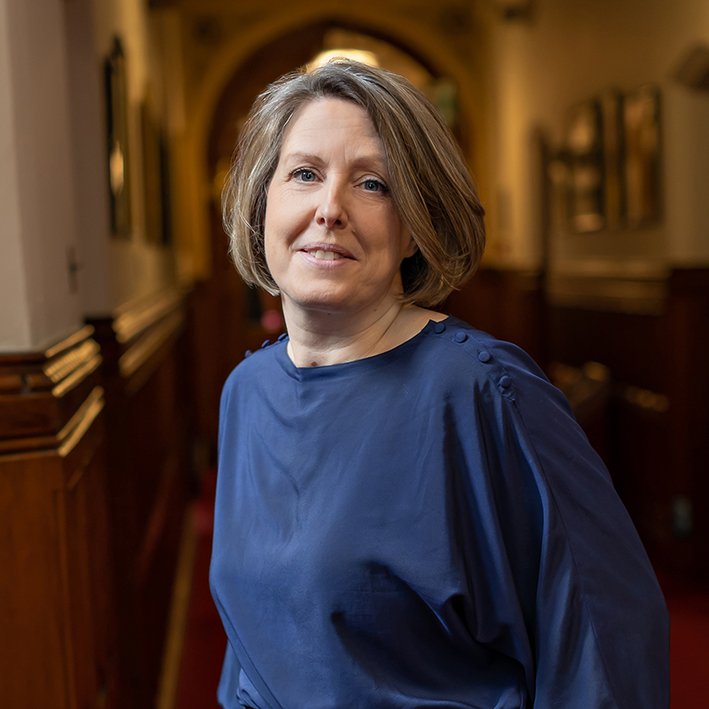
Co-host, Cleaning Up Podcast / Lord
Baroness Bryony Worthington is co-host of Cleaning Up. She is a Crossbench member of the House of Lords, who has spent her career working on conservation, energy and climate change issues. Bryony was appointed as a Life Peer in 2011. Her current roles include co-chairing the cross-party caucus Peers for the Planet in the House of Lords and Co-Director of the Quadrature Climate Foundation.
Her opus magnum is the 2008 Climate Change Act which she wrote as the lead author. She piloted the efforts on this landmark legislation – from the Friends of the Earth’s ‘Big Ask’ campaign all the way through to the parliamentary works. This crucial legislation requires the UK to reduce its carbon emissions to a level of 80% lower than its 1990 emissions. She founded the NGO Sandbag in 2008, now called Ember. It uses data insights to advocate for a swift transition to clean energy. Between 2016 and 2019 she was the executive director for Europe of the Environmental Defence. Prior to that she worked with numerous environmental NGOs. Baroness Bryony Worthington read English Literature at Cambridge University


