

 Apple Podcasts
 Spotify
 Overcast
 PocketCasts
 RSS Feed
The Mother of All Energy Crises | Ep253: Fatih Birol
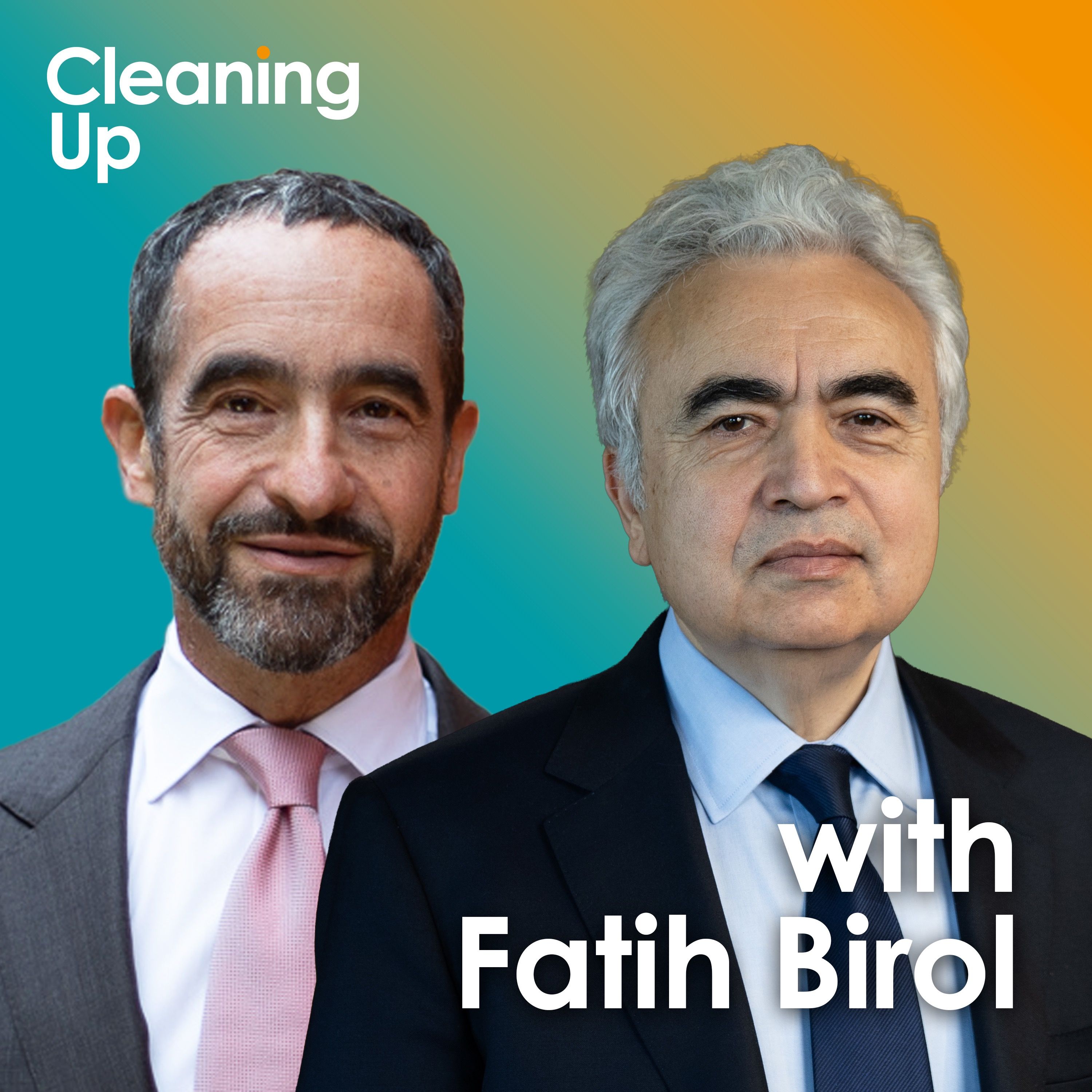
The news agenda this year has been entirely dominated by energy related stories, whether it's the war in Europe being pursued by Russia — formerly Europe's most significant energy provider — the U.S. capturing the head of state of Venezuela — which has some of the biggest oil reserves in the world — or the ongoing attack by Israel and the U.S. on Iran and all its ramifications.
But there is also another story, which is the long term rift between the U.S. and the rest of the world about whether and how fast we should be addressing climate change.
This week on Cleaning Up, Michael Liebreich is joined by Dr Fatih Birol, executive director of the International Energy Agency, for his third appearance on the podcast. He discusses the International Energy Agency’s integral role in trying to steer the world through the current energy crisis, how he sees the global energy system change in response to the crisis, and how his organisation is facing up to criticism from the US over its net-zero scenarios.
Fatih and Michael discuss:
- Why the current crisis could surpass the oil shocks of the 1970s
- How the International Energy Agency is helping stabilize global markets
- Efficiency measures and the need to reopen the Strait of Hormuz
- Why solar, batteries, and nuclear may surge amid the chaos
- Why countries are looking toward coal to fill the gap
- Whether energy security is now overtaking climate as the top priority
- The growing divide between the U.S. and global institutions on climate policy
- And why Birol insists: “Data always wins.”
As Executive Director of the International Energy Agency, Fatih has positioned the Agency at the centre of global efforts to advance a secure, affordable, and sustainable energy system. Dr Birol joined the IEA in the mid-1990s and progressed from junior analyst to Chief Economist, where he oversaw the flagship World Energy Outlook.
He has been included in the TIME100 list of the world’s most influential figures and recognised by Forbes as one of the world’s most influential figures in energy. He chairs the World Economic Forum’s Energy Advisory Board and is an honorary life member of Galatasaray Football Club.
This episode was recorded on March 19, 2026.
Leadership Circle:
Cleaning Up is proud to be supported by its Leadership Circle. The members are Actis, Alcazar Energy, Arup, Copenhagen Infrastructure Partners, Cygnum Capital, Davidson Kempner, EcoPragma Capital, EDP, Eurelectric, the Gilardini Foundation, KKR, Mitsubishi Heavy Industries, National Grid, Octopus Energy, Quadrature Climate Foundation, Schneider Electric, SDCL and Wärtsilä. For more information about the Leadership Circle, visit cleaningup.live
Links and more:
- The International Energy Agency: https://www.iea.org/
- Sheltering from Oil Shocks report: https://www.iea.org/reports/sheltering-from-oil-shocks
- Fatih’s LinkedIn: https://www.linkedin.com/in/fatih-birol/
- The World Energy Outlook 2025: https://www.iea.org/reports/world-energy-outlook-2025
- Fatih’s past appearance on Cleaning Up
- The World's Preeminent Energy Economist - Ep133: Fatih Birol: https://www.youtube.com/watch?v=Xc7ItnBRqXI
- Setting the World's Energy Agenda - Ep28: Fatih Birol – https://www.youtube.com/watch?v=hW5aPlRI44I
Michael Liebreich
But there are some people who say it absolutely vindicates the shift to clean energy. Yeah, we might have done it for climate reasons, but it absolutely vindicates and we should accelerate the shift to clean, nuclear, renewables and so on. But I do get other people who say the reason we're so vulnerable is we didn't invest in fossil. Fossil is the stuff that works and we didn't invest enough. We should now get sensible and invest in oil and gas and resilience of oil and gas. If I can sort of A/B test that those are two extremes, where do you sit?
Fatih Birol
I think the biggest challenge will be for the imported oil and gas for the countries. But I expect that the renewables, which are already growing very strongly, our last data shows that last year — 2025 — 75% of all new power plants installed last year were solar. I’m not saying renewables… solar only. And with the wind, with the geothermal, with the hydro, it's much higher. I think this will get a boost.
ML
Hello, I'm Michael Liebreich and this is Cleaning Up. It seems like the news agenda these days is entirely dominated by energy related stories, whether it's the war in Europe, which is being pursued by Russia, formerly Europe's most significant energy provider. This year, we had the U.S. capturing the head of state of Venezuela, which has some of the biggest oil reserves in the world. We've also got, of course, the attack by Israel and the U.S. on Iran and all its ramifications, the response by Iran attacking countries in the region.
But there is also another story, which is the long term rift between the U.S. and the rest of the world about whether and how fast we should be addressing climate change. One man, more than probably anybody else in the world, sits at the epicentre of all of those stories. He's been on Cleaning Up twice before. We are filming here at his offices in Paris. Please welcome Fatih Birol, executive director of the International Energy Agency, back to Cleaning Up.
ML
Before we get started, this episode was recorded on March 19th, just a week after the IEA’s historic decision to release 400 million barrels of oil from its strategic reserve. It’s before the ceasefire and abortive peace negotiations in Pakistan, and before President Trump announced his blockade of Iran’s ports. The IEA asked us to hold back the episode till today, but I think you’ll find it’s still highly relevant.
ML
Fatih, welcome back to Cleaning Up. And I want to just thank you. I can't imagine how busy your schedule is. And so for taking time here today to talk to me, can we start with what does your schedule look like? Have you been up since three in the morning talking to ambassadors, talking about the situation in the Middle East?
FB
So many thanks, Michael, for coming to Paris to IEA, to visit me once again. It's a pleasure to welcome you here. Yeah, the situation in the world is really very, very challenging, to say the least. It is not just me. I think many people are having shorter sleeping times. I talked just today, I started a bit early because I had to talk with the ministers of the governments in Asia, starting with that. Then I talked with the ministers from the Middle East. Today I received this morning the Chinese ambassador to France. China is a very important country in this equation. And then I will continue with the discussions with my staff, with my colleagues here. Tomorrow we are going to release, in my view, an important report, if you wish we can talk about that. And then in the evening, some other course with the other side of the Atlantic. This is my schedule for today.
ML
Because, of course, as you list those countries, that's one of the features of, particularly the oil market, but also increasingly the gas market, that although in the Strait of Hormuz, the oil and most of the gas goes to China, goes to Japan, goes to Pakistan and India and Bangladesh. But the price signal goes everywhere immediately. And in fact, even in the US, which is a big exporter of oil and gas. So everybody needs to talk to you, right?
FB
I mean, the issue is that we have a global oil price that is going to affect everybody. And in terms of natural gas, you are right. Currently, the immediate effect is on Asia, such as India, China, Japan, Korea and others. But very soon, for example, Europeans will be affected because Europeans have to compete with the Asians for the spot LNG in the markets. And in Europe, as you know, the electricity prices are determined by the use of gas as a marginal supplier there. So it will be really a major economic issue. And this conflict that started as a short-term oil supply disruption may well turn into one of the biggest structural damage on the global economy, mainly for the emerging and developing countries, but for the rest as well.
ML
So when we set up this conversation and I was working with your team, I thought that the big conversation, the big topic, the hot news story was going to be the IEA's role in producing bbaanalysis, scenarios and so on relating to whether it would be net zero or existing policy, current policy scenario and so on. And that still is bubbling along as a story. But of course, this attack on Iran by Israel and the US has just intervened.
FB
It is an amazing thing, Michael. The core mandate of the IEA is energy security, even though the definition of energy security changed from the 1970s to today, it is a major issue. And we have been doing a few things recently in the last three weeks. Because when you look at this, the crisis we are facing, it is the mother of all energy crises. The current, even if you look at only oil, it is much bigger, the challenge than the 1970s oil supply disruptions.
So what we have done, the first thing is we have released 400 million barrels of oil from our stocks to the markets. And as soon as it was heard, the oil prices went down by $18, which is not small. It was good. The second thing that I am doing is, if I may call it so, international energy diplomacy. Going to ministers, governments from the US, I am talking almost every second day, if not more regularly, with the Secretary of Energy of the United States, Chris Wright, or the Canadians, or the Brazilian minister, Abdulaziz bin Salman of Saudi Arabia, or the Japanese and the others, to bring everybody together in order to stabilise the oil markets. This is the second thing.
And the third one is that while we want to bring more supply to the markets, to help the stability in the markets, we have to also see how much we can curb the demand. So tomorrow we are coming with some measures, key measures, how we can, in a hurry, reduce oil consumption.
ML
And is that the report that you alluded to? Because by the time this episode is aired, you mentioned that tomorrow, so that's the day after filming, there will be a report that will already be out, and we can put a link in the show notes. But is that related to the demand side?
FB
The demand side, how we can reduce by practical decisions, I don't know, increasing the number of teleworking, or making the public transportation for free. So we have a couple of examples there, and we look at how much it can curb the demand growth. So we do all these three things. But to be very frank, what we are doing is, I think it is good. But the single most important solution to this problem is opening up the state of hormones. Without it being opened, whatever we do is just reducing the pain for the economies.
And I don't think that what we are doing will solve the problem completely. And I very much hope that there will be a political solution to the transit of oil and gas. Because if you look at it, Michael, there is a lot of oil and gas. It is not a lack of oil and gas. It is a transit of oil and gas. Before these things happened, every day, about 20 million barrels a day of oil was passing through from or coming from this region. And currently, it is only about four.
So this is a big gap there. And not only oil, as you mentioned, it is also natural gas, but also some other critical commodities, such as the fertilisers, such as sulphur and others.
ML
One of the things that I have been looking at is potentially, you mentioned that the, tragically, the situation could be drawn out. And I think I, first of all, I want to say I agree with you. It would be very good to get it diplomatically solved, not least for the people in the region and for the Iranian people.
But if it is dragged out, I have been looking at how oil and gas might behave differently. Because there is 20 percent of all oil goes through the Strait, but 20 percent of LNG, which is only 3 percent of natural gas. So it is actually, there could be some quite big differences if it is drawn out to the end of this year into next year. The gas markets, from my analysis, could respond much more quickly.
We also have wind growing incredibly fast, solar growing fast, batteries growing fast. And actually, the use of gas, particularly in the electricity sector, is not growing that fast. It is now really being suppressed by the shift to clean energy.
FB
There are two things from the immediate response and a bit structural response to that. Immediate response is, I think, the LNG markets, because some of the, at least two major LNG exporters badly hit Qatar and Emirates, both of them. So it will take some time.
They come back to their normal capacity of exports. And in the meantime, we will have some higher natural gas prices, which in turn would provide incentives for the consumers to look at renewables. And in some cases, coal as well. This is another issue.
But if we can talk a bit on the philosophy of the things, when I look at the 1970s, 73, 74, 79, 82 big oil shocks, I see the following. There were some strong policy responses to that. And there are a few of them, at least three of them are very important. One of them is the bad experience with the oil. Many countries took the position of pushing a new technology, big time, which is nuclear power. Today, in many countries, in Europe, in Japan, Korea, United States, Canada, one after the other, nuclear power plants are built. And today, about 40% of the nuclear power plants we have today are installed as a response to the oil crisis there. So this is one thing.
The second thing what happened is the, in the automotive industry, the efficiency of the cars, and this is the how many litres of gasoline used for 100 kilometres. I mean, there was a big move for the efficiency in Europe, in the US, in Japan, and we now use, as a result of this change in the automotive industry, much more efficiently, about 50% of what we were using for 100 kilometres. This was the second response.
The third response was a bit on the geopolitical domain. Countries thought we shouldn't be relying on a region like Middle East that much. We will still get oil and gas from there, but maybe we can diversify. So they have the saga of Europe, looking at Russia more closely, started as a response to Middle East. Now, coming back to today, looking at this response, which reshaped in the last 50 years, the energy markets, I expect similar things to happen. And there are some technologies which can get a very strong push, which are already in motion, one of them is the solar, I expect much stronger together with batteries.
And the second, I'm saying since a few years, the comeback of nuclear power, it can be accelerated. We discussed this nuclear before, you and me. And how the energy security premium in the energy trade will be more important. So who is a more reliable partner, who is not a more reliable partner, which countries can create trouble in the future, which countries are more, how should I say, easy countries to have a trade. This is going to change. I see that some countries, some regions receive a second look from the consumers and importers in the future.
ML
I spend quite a bit of time in Norway and in Canada, and I know that that's a narrative that they're looking forward to benefiting from. I get asked quite a bit the last few weeks, what's the overarching best response to the events in the Gulf? People don't distinguish between short term, long term.
But there are some people who say it absolutely vindicates the shift to clean energy. Yeah, we might have done it for climate reasons, but it absolutely vindicates and we should accelerate the shift to clean nuclear renewables and so on. But I do get other people who say the reason we're so vulnerable is we didn't invest in fossil. Fossil is the stuff that works and we didn't invest enough. We throttled back. We had all these oil gas companies doing net zero plans. We didn't invest in whether it's the North Sea or in the US. There are huge chunks that have been off limits around the world. We've not invested enough. And that was the mistake. We should now get sensible and invest in oil and gas and resilience of oil and gas. If I can sort of A/B test that those are two extremes. Where do you sit?
FB
I think the biggest challenge will be for the imported oil and gas for the countries. But I expect that the renewables, which are already growing very strongly, the last data shows that last year, 2025, 75% of all new power plants installed last year were solar. I’m not saying renewables… solar only. And with the wind, with the geothermal, it's much higher. I think this will get a boost. This will get a boost because when we look at Europe, for example, in Europe, while in the last two, three years, while the attention for the climate change was sliding down, the renewable installations increased substantially as a result of its energy security credentials. After Russia's invasion of Ukraine, the people saw it as a way of reducing the reliance on Russian energy.
The second big push or boost, if I may say so, for nuclear power. I see three ways. One is the lifetime extension of nuclear power plants in many countries. We get a refurbishment and increase. The second, the new nuclear power plants will be designed and also new projects will come in the picture. And third, we may well see the acceleration of the efforts to SMR to make it a part of the our energy system.
But I also expect electric cars can get, I mentioned that in the 1970s, the car manufacturing industry's response was improving energy efficiency, fuel efficiency. In other words, we may well see that electric cars, people may see electric cars as a response to oil security issues. Batteries will get a boost. But in some countries, I wouldn't be surprised if coal gets a boost, especially in Asian countries, gets a boost. And for the domestic oil and gas production increase, whatever the country is, if they have not been developed up to now, to expect that the new exploration licencing, I mean, it will take seven to 10 years to not have to address the current situation, in my view. So it should be a bit of a long shot to expect that those fields will be helpful for now.
ML
So when I started my career, which was in the 80s, all the charts that we produced, if you went back 10 years from when I started, maybe 15 years, then you saw this discontinuity in 1973, where things that were growing suddenly went flat or changed direction. And I have a feeling that that's what you're referring to, that we're going to see in the rearview mirror, we will always see 2026.
FB
Exactly.
ML
If I might, I want to finish with a question. I want to go back to that conversation about the role of the IEA and the very different view. You know, I've seen the Q&A, the public Q&A, I think there was a you and Secretary Wright, Chris Wright of the US, and he was explaining how the IEA shouldn't do anything on, I mean, not sure if it was climate or net zero in his crosshairs. But he was making a very strong argument that the IEA has, I think, I mean, he talked about the organisation having taken a wrong turn.
And, you know, he was extremely critical of some of the things that I was very pleased to see you do over the years, because we've known each other so long. When I started, there was reference scenario and there were no net zero scenarios. No, there were no, not even a stated policies, let alone pledges on net zero.
And he was damning all of that and saying that you should get back to just doing data. And in a sense, your role as the central bank of oil, releasing oil and analysing and talking to the ambassadors about secure, hard security. Where did that conversation, if I might ask, where did it end up? Because we don't know as an outsider, I don't know what happened behind the scenes, where it ended, what's going to happen next.
FB
So, Michael, we have about 55 governments under the roof of the IEA family. Out of these 55 countries, 32 are full members. The US is, of course, one of them, a founding member of the IEA. And in today's world, there are differences of views about energy security, climate change among our member countries, as it was the case in the past. So, you are mentioning our ministerial meeting. It was last month.
Yes, you are right. The US government mentioned that the IEA should focus less on climate change and more on the other issues. This is completely right. And this is the other members of the IEA have a different view, slightly different, some of them strongly different view. Our role is bringing all of them together. Because when we have meetings with all of our member countries, I see that there are much more topics that there is a consensus. And there are very few topics that there are differences of views. And this is one of them is how to tackle climate change.
But giving a recent example, one of the biggest actions we have carried out was our oil stock release. It was a unanimous decision of all of our member countries. I am on the phone with the Secretary Chris Wright on a direct basis almost every day. And this is an area that ongoing process. If everybody was thinking always the same, it could be my job could be a bit boring. So I am discussing with all the countries and try to have a common view of all of our member countries. But I never forget that the International Energy Agency we are, of course, basic is a data organisation. And I tell my colleagues all the time, data always wins. Sometimes it takes some time, but at the end of the day, data always wins.
But we make also analysis, policy recommendation. And this is all done for the purpose of for the betterment of the world, for the entire world. So it can be energy security, it can be energy poverty, it can be climate change, other issues guided by all of our member governments.
ML
So the reason I wanted to come back to that is that a lot of my audience are people who work all day, every day on energy, but on clean energy, on not oil and gas, but all coal, but everything else. And they are under no illusions about the importance of the work of the IEA, your scenarios. And, you know, they are, they're not forecast, they’re scenarios, etc. But they, they are, they are so influential. And so they really want to see those scenarios continue to be produced.
FB
I completely understand you. And when I was telling the we had a press conference after the ministerial, I told them that the World Energy Outlook, the report that you are talking about, which makes projections for the future of energy, there are 18 such reports coming from some of them, national governments, some of them from the oil companies, some of them from the think tanks.
ML
Some of them from BloombergNEF, the team I created.
FB
From BloombergNEF. And I have a lot of respect for all of them. But when the World Energy Outlook comes, it is the news. Why it is the news because we have and for example, we published the last World Energy Outlook last November. They started asking me in December, when is the next one coming? For the others, there is not so much demand, which I only respect and I don't say that we are better than them or they are better than us. The reason is there is one reason for that. It is the credibility of the IEA. And I have no question in my mind, no question at all to put this credibility in question by diverting from our motto of ‘data always wins’ and we work for the betterment of this planet. So, I am very well aware of that. Thank you very much.
ML
Thank you so much for your time. I'll let you get back to those important phone calls. Thank you very much.
FB
Thank you. Bye bye.
ML
So, that was Fatih Birol, the executive director of the International Energy Agency. We've been filming here at his offices. As always, we'll put a link in the show notes to resources that we've mentioned during our conversation. And with that, I'd like to thank Fatih's team here in Paris, who've helped us to set up this conversation. Oscar Boyd, our producer, Jamie Oliver, our video editor, Kendall Smith, head of operations and the rest of the team behind Cleaning Up. Our Leadership Circle who make all of this possible. And of course, you, the audience, for spending some time here with us today. Please join us for the next episode of Cleaning Up.
ML
Cleaning up is proud to be supported by its Leadership Circle. The members are Actis, Alcazar Energy, Arup, Copenhagen Infrastructure Partners, Cygnum Capital, Davidson Kempner, EcoPragma Capital, EDP, Eurelectric, the Gilardini Foundation, KKR, Mitsubishi Heavy Industries, National Grid, Octopus Energy, Quadrature Climate Foundation, Schneider Electric, SDCL and Wärtsilä. For more information on the Leadership Circle, please visit cleaningup.live. If you're enjoying this episode, please hit like, leave a comment and also recommend it to friends, family, colleagues and absolutely everyone. To browse our archive of around 250 past episodes and to subscribe to our free newsletter, visit cleaningup.live.

Executive Director / International Energy Agency
Dr Fatih Birol is the Executive Director of the International Energy Agency. He was first appointed in 2015 and re-elected in 2018 for the second term.
During his time in office, he modernised the Agency, focusing his efforts on involving major emerging economies in the Agency’s works, broadening IEA’s security mandate and making the IEA the hub for clean energy technologies and energy efficiency. Before becoming the Executive Director, Fatih Birol worked his way through the ranks for 20 years: from junior analyst to the Chief Economist. He was responsible for the Agency’s flagship publication, the World Energy Outlook.
After earning his BSc in power engineering at the Technical University of Istanbul, he went to the Technical University of Vienna where he completed his MSc and Ph.D. in energy economics.
He has been recognised globally for his outstanding work: from the Japanese Emperor's Order of the Rising Sun to the highest Presidential awards from Austria, Italy and Germany. And, what probably made him equally happy, an honorary life member of Galatasaray Football Club.
Co-host, Cleaning Up Podcast
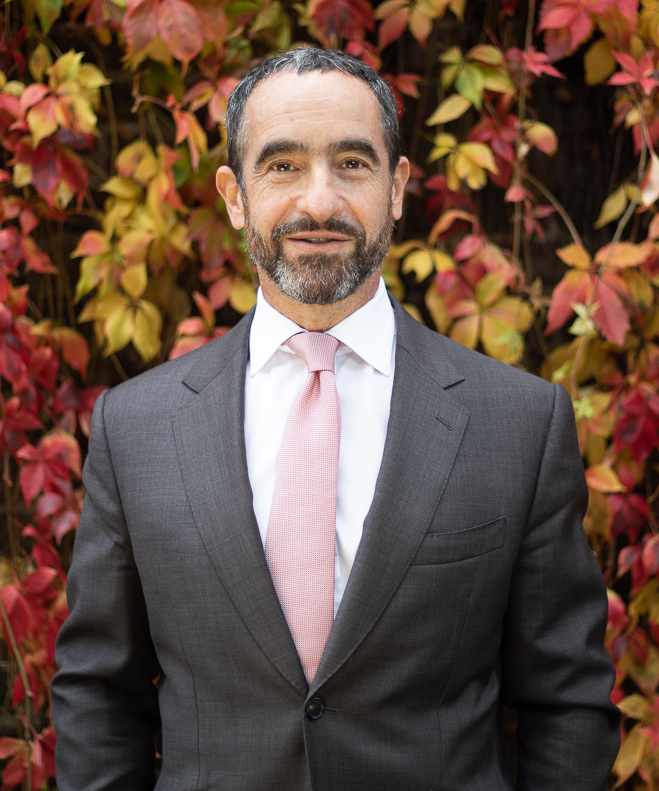
Michael is an acknowledged thought leader on clean energy, mobility, technology, climate, sustainability and finance. He is Co-Managing partner of EcoPragma Capital and CEO of Liebreich Associates. Michael is also co-host and founder of 'Cleaning Up' a podcast and YouTube Series.
Former roles include member of the UK’s Taskforce on Energy Efficiency, chairing the subgroup on industry and an advisor to the UK Board of Trade, an advisor to the UN on Sustainable Energy for All, and a member of the board of Transport for London. He is also the founder of and a regular Senior Contributor to BloombergNEF.


