

 Apple Podcasts
 Spotify
 Overcast
 PocketCasts
 RSS Feed
Why Flexible Power Is Suddenly So Valuable | Ep259: Håkan Agnevall
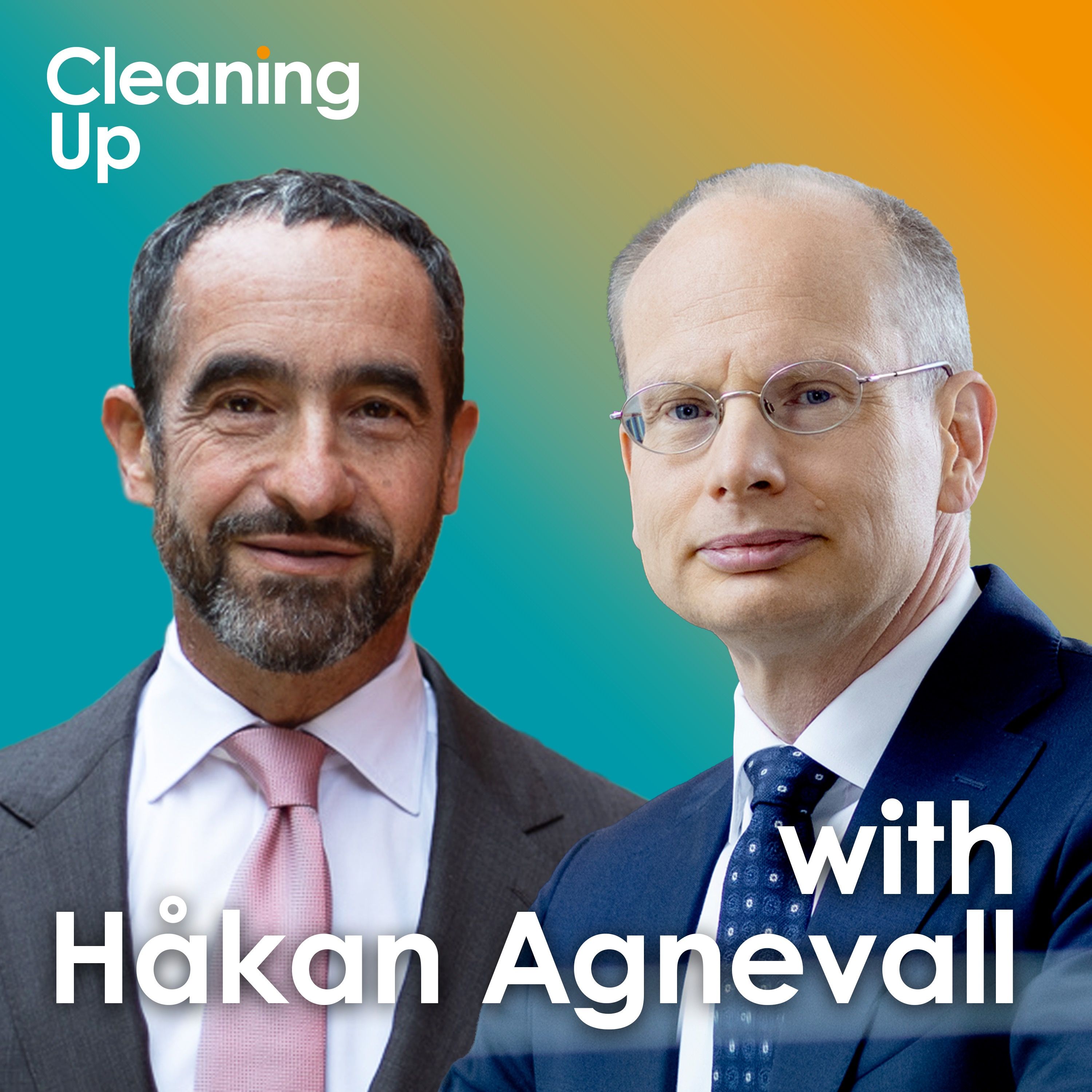
As electricity demand rises and renewable generation continues to expand, the same question keeps arising: how do we keep power systems reliable, affordable and resilient?
This week, Michael Liebreich is joined by Håkan Agnevall, CEO of Wärtsilä, to discuss the changing role of flexible generation in modern electricity systems, the growing importance of grid stability, and why balancing technologies will be critical as renewables become an ever-larger share of the global energy mix.
They explore how rapidly growing electricity demand, including from data centres, is reshaping investment decisions, why flexible gas generation may play an important transitional role, and how batteries, renewables and thermal assets can work together to build a more resilient power system.
The conversation also examines the future of shipping decarbonisation following delays to the International Maritime Organisation’s proposed global carbon-pricing mechanism, the importance of fuel flexibility for vessel owners, and how digital technologies and AI are improving efficiency across industry.
Håkan and Michael cover a wide variety of topics, including:
- Why flexible generation remains essential in renewable-heavy grids
- How growing electricity demand is changing energy infrastructure planning
- The role of gas engines, batteries and storage in maintaining grid stability
- What data centres mean for future power systems
- Shipping decarbonisation and the IMO's delayed carbon-pricing vote
- Fuel flexibility and efficiency in maritime transport
- How industrial companies are using AI to improve performance and reliability
- Energy security, competitiveness and the changing geopolitical landscape
Leadership Circle:
Cleaning Up is proud to be supported by its Leadership Circle. The members are Actis, Alcazar Energy, Arup, Copenhagen Infrastructure Partners, Cygnum Capital, Davidson Kempner, Ecopragma Capital, EDP, Eurelectric, the Gilardini Foundation, KKR, Mitsubishi Heavy Industries, National Grid, Octopus Energy, Quadrature Climate Foundation, Schneider Electric, SDCL and Wärtsilä. For more information about the Leadership Circle, visit cleaningup.live
Links:
- Wärtsilä's website: https://www.wartsila.com/
- Episode 208 with Anders Lindberg, Wärtsilä's head of energy: https://www.youtube.com/watch?v=UtsCCJ4o1WA
- Episode 229 with Professor Tristan Smith of UCL, on the delayed IMO agreement: https://www.youtube.com/watch?v=HdUCidkeDto
- Episode 235 with Rob Dunn, inside the Start Campus data centre: https://www.youtube.com/watch?v=juAyLAUmU3w
Håkan Agnevall
I think it's very clear that the hyperscalers would prefer green energy and renewable energy, but now with the pace they are having, that's not the focus, the core focus. But it's fair to assume that there will be more renewables coming in because it's affordable power and it's green. And then you need to make sure that the system stays stable, so then it becomes a balancing application. You will feed the data centre with renewables, but you need thermal generation and battery storage to make sure that the power generation is stable.
Michael Liebreich
I like this third stage or the summary of the three, partly because it's something that I've been talking about as it's what I believe will happen. So if now what you're finding is your customers are talking about it, that gives me reassurance that it will, which is that in the end the hyperscalers will find it cheaper. They may need to go to gas engines, gas turbines even in the short term, but in the longer term, they'll find it cheaper to switch them off when they can, and use wind or solar with maybe layering in batteries as they become very cheap.
ML
Hello, I'm Michael Liebreich, and this is Cleaning Up. While the war in the Middle East may have seized most of the headlines over the past few months, two slightly less dramatic energy transition stories have been bubbling away under the surface. This time last year, we heard from Anders Lindberg, head of Leadership Circle member Wärtsilä's energy business, about how a small amount of flexible gas capacity can enable the integration of a lot of renewable electricity.
Will the wave of off-grid gas-fired AI data centres, particularly in the US, slow down this trend or could it perhaps act as an enabler? My guest today will be updating us based on one more year of experience in the fast-evolving world of powering data centres. He is Håkan Agnevall, CEO of Wärtsilä, and he's joining us to film here today in London.
Wärtsilä is of course also a major producer of engines for the shipbuilding industry, so Håkan will also update us on another story, how the shipping industry is responding to last year's unexpected delay to the ratification of its carefully negotiated plan for decarbonisation. So, please welcome Håkan Agnevall to Cleaning Up.
ML
Håkan. Welcome to London. Thanks for joining us here on Cleaning Up.
HA
Thanks a lot. It's a pleasure to be here, Michael.
ML
Very good. Now, let's start where we always start, which is, could you describe who you are, what you do, in your own words, the short version.
HA
What do I do? I mean, first, I'm the CEO of Wärtsilä, and I'm sure we're going to talk more about Wärtsilä and what we do to serve our two industries, energy and marine. But I'm an engineer. I'm a Swede. I'm a married man, two kids. Served with, you could say, engineering companies through my professional career.
Three themes in my path.I have had the privilege to work a lot with change and transformations of engineering projects and products companies. I had the privilege to work and live in several parts of the world, so North and South America, Asia, and a couple of countries in Europe. And then I had the opportunity to lead business with a lot of technology content, you could say. So, power systems, robotics, buses, trains, and now Wärtsilä. We are all about engines and digital solutions, so to say. So, really this intersection between people, technology and society. But now as an executive leader, I think that really excites me.
ML
Very good. So, it's always interesting to see how people describe themselves and their role. And of course, Wärtsilä is a member of the Leadership Circle of Cleaning Up. So, I note that because I need to, but also as a way of thanking you for your support for Cleaning Up. And a year ago, almost exactly, we had one of your colleagues, Anders Lindberg, who came in and he talked about particularly the energy side of what you do. And so, if anybody listening to this has not watched that episode or listened to that episode, it's thoroughly recommended. And actually, the starting point is that the last year since Anders came on the show, how do you characterise? Has it been a good year, a difficult year? What are the big themes that you've been dealing with since then?
HA
So, I would say it's been a fantastic year for us and maybe a dynamic year for the world. But let's talk through what has happened during the last year. And as we said, we serve energy and marine. And the big thing the last year in energy is, of course, the breakthrough for data centres and the share growth of data centres, particularly in the US. I mean, half of the world's data centres are in the US and this is where the data centre demand is growing most rapidly. And if you're going to scale data centres, what do you need? You need chips and you need energy. And the need for energy is really accelerating. And I'm sure we're going to talk more. So, that's a big thing on the energy side. On the marine side, it is the vote on MEPC 83.
ML
Håkan, we have a rule about acronyms? They're not allowed. You're allowed to use them, but you first have to explain. So, MEPC 33?
HA
83.
ML
Okay. 83.
HA
Yep. Okay. So, we have the International Maritime Organisation, IMO. I mean, it's a UN organisation. It's the global regulator of the marine industry.
ML
And it's based here in London.
HA
Yes. And they have a Marine Environmental Protection Committee.
ML
MEPC. Marine Environmental Protection Committee. Okay.
HA
That's where that comes from. They meet twice a year. And every year there is a number. So, I guess that was the 83rd meeting. And in October, there was actually a process to vote for a global carbon pricing mechanism, which was, I would say, pretty revolutionary.
And also, a whole industry voting for a carbon pricing mechanism, a global carbon pricing mechanism. The challenge is that not everybody was on board. And clearly, US made a very strong advocacy for postponing it. And eventually, the decision was to postpone. And then the whole process for a year. And now, of course, there is a lot of discussions ongoing. And when we talk about marine, let's talk about what are the implications...
ML
Let me just point out for the audience at this point, we had a whole episode on this. A UCL professor, Professor Tristan Smith, talked to Bryony about some of the mechanics of that vote and what it meant and what it didn't mean. That was around probably nine months ago. So, what has happened since then? Because it was going to come back to the table, I believe, this year. I'm not quite sure when that happens.
HA
I mean, it was postponed basically for a year. MEPC just recently had another meeting. And I think people are still grappling with the situation. I think there are two predictions about what could happen. One is that nothing will happen and decisions will be pushed forward because of the opposition. And then there is another school of thought that says that the different parties try to reach some kind of compromise. Where it will go, I don't have a personal view.
ML
For those who haven't listened to that episode, this was the decision by the committee in question to go ahead with a system that would decarbonise international shipping over a number of a couple of decades. But it would start to cut in and potentially add some costs to shipping operations. And what's odd about the IMO is every country has one vote. So, it's not like some of the other organisations where if the US doesn't want something to happen, they can kind of stop it unilaterally. They had to actually get a bunch of countries to support them to push back. And the question now is, will the original coalition of countries that pushed through the wanted to act hold or will the US's coalition against it hold? That I suppose is what we're working through.
HA
Yes. And it's also, I don't think any party that is involved wants to have, even if there is a mechanism, it's rather technical. If you achieve a certain majority, you can enforce something. But in a second step, the big shipping nations, which have the registers of vessels, they will have a say, et cetera. At the end of the day, what it means that if big influential countries like US obviously is against, it's very hard to take this decision, so to say. So, I think the critical thing in the decision process going forward is that, what's the US position and can you find a compromise or is the world not ready for it now because of the US position?
ML
I think let's come back to talk about shipping in the context of your products, your engines, the technology, because I'm pretty sure you're going to tell us that your engines are fuel flexible. So, in a sense, you don't mind as long as people are buying new ships or retrofitting, then you're okay.
HA
And we'll get back to that because, I mean, what does it mean? If I may reflect, so to say, what is the implication for the industry right now? And it goes back to the fundamentals. I think first, there is a risk that we will go into a number of years here in front of us where we have a patchwork of different regulations. So, the EU will likely keep its ETS, you know, marine is in part of the ETS.
ML
ETS?
HA
Yeah, I mean, the carbon tax.
ML
European trading scheme, carbon pricing. Sorry, I'm doing the acronym claxon. I need to get a proper claxon.
HA
Yeah, exactly. You have a little trumpet here. And then there are rumours that China are contemplating their own framework, a couple of other countries. So, you could actually face a situation where you have different regional carbon regulation schemes. And that doesn't make it easy for the marine industry because, as you know, it's a very global industry operating all over the world. So, it could lead to more complications. Now, the fundamentals are still there. If you build a vessel today, the lifetime of a vessel is 30 years. And I think it's fair to assume, and owners and builders, of course, need to think that through.
What will happen in the coming 30 years? And it's likely to assume regulations will evolve. And I think it's also likely to assume that fuel will become more expensive. The fossil fuel, because there will probably be some kind of levies. And the green fuel is more expensive and will continue to be more expensive. So, if you want to deal with that situation, what are the two critical things?
Fuel flexibility, like you said, Michael, and fuel efficiency. And I think this is the narrative that we and others now, of course, are working together with ship owners and ship builders. Because not doing anything, it's also a strategic choice, which, of course, increases your strategic risk over time. If you only bet on one fuel, and that fuel becomes financially not viable anymore, then you have a big problem. So, fuel flexibility and fuel efficiency, that's also a theme for the future.
ML
And I think what I've just taken away from this, apart from the content of what you've just said, is that I need to get a big shipping company, somebody from a Maersk or an MSC or someone like that, to come on the show. Because your engines, in a sense, it's easier for you to future-proof your product than for them to future-proof the ship. I mean, if it goes to, for instance, ammonia, it's a very different safety system than if it goes to methanol, or if it stays as a liquid fuel, or goes to LNG, or compressed biofuel, or so on. So, I'm going to get a shipping person to talk about the ship.
Let's come back to the engines, because we've left somewhat hanging what exactly it is that you make in your energy business, which you said has been fantastic, and the data centres are driving lots of excitement. Those who listened to the episode with Anders Lindberg last year will know what you make. Can you just describe your product range?
HA
Yeah. So, I'll start talking a little bit, what is Wärtsilä about. So, we are a listed company. We've been around for 190 years. We started in the city of Wärtsilä. That's actually the name of a town in Finland. It used to be Finland, now it's Russia. There is a new Wärtsilä in Finland, but yes.
ML
Keralia, presumably.
HA
Exactly. But we have a proud history, and we love the name. And you could say the core of Wärtsilä, it's about innovation and technology and services. We serve two industries, marine and energy. And if you look at our products and solutions, at the core, you could say, big engines, big piston engines. I mean, they are bigger than this house we are sitting here in London. They're very big equipment.
ML
And just for context, for those who are, you can't see the outside of the house, those in the audience. I mean, this is a five-story townhouse in Victoria, opposite Victoria coach station. It's pretty big.
HA
And these machines, they are all big. And we use them for, I mean, so it's the same type of piston and the same type of technology. And we use them for two industries to basically generate energy. So, we generate energy at sea and we generate energy on land.
ML
Can I ask what might be a distraction of a question? I hope not. 190 years ago, it was not an internal combustion engine. So, presumably it was a steam engine, was it?
HA
No, no. We started as a humble sawmill company. We started as a sawmill company. And then over the years, we became a conglomerate. We were doing everything in those days. We were doing sanitary porcelain. I mean, in those days, Michael, when you expanded the business, you didn't go global. You stayed in the region and you just tapped onto more and more products. So, we build chips, we build sanitary porcelain and engines. And then, of course, there was one era of consolidation and going more global. So, today it's really about the engines, but also the digital technology to support it. Because, yes, we provide the equipment, the engines. That's about 50% of our business.
But service is actually more than 50% of our business. So, it's gravitas to service. And that's the particularity with our industries. I mean, these big engines, they are providing energy with very high uptime reliability, high value assets, the big vessels or high value assets, the big power plants. And to make sure that customers can rely on the energy, we have a very strong service business around it. So, it's not only about equipment services as important. And also now, when we are talking about AI and digital, the major area where we live, or one of the major areas where we really live is on the service business, compiling the data and then providing uptime reliability to our customers.
ML
And these are reciprocating engines. So, these are piston engines, familiar theoretically to anybody who's sort of torn down the engine of an old-timer car, which is something that I did a lot with my dad when I was young. But piston engines that are in competition, and we heard about this in Anders' episode, with gas turbines. And how does the market split and why between turbine type energy providers and the piston type?
HA
So, if we start on the marine side, the piston engine is the dominant technology because of the energy efficiency and also the cost. Gas turbines, they exist in the marine industry, but more for Navy applications where you need a lot of power and you're willing to pay for it, so to say. On the energy side, you could say it's the opposite. The gas turbine technology is the biggest technology in our reciprocating engine. We normally say we have market share 10%, 11%, 12%. I mean, the Siemens and the GEs, they have the really big gas turbines, the combined cycle gigawatt gas turbines, but they also have the smaller open cycle or industrial. And this is where we compete with them.
ML
And I have to mention also, we have another member of our Leadership Circle. When you say Siemens, GE, I have to chime in and say, or of course, Mitsubishi Heavy Industries. Of course, yes. And no doubt some manufacturers in China and some other places.
HA
Absolutely. Yeah.
ML
And then within the reciprocating engines, I mean, yours are the biggest, are they not?
HA
Well, there are two types of these engines. There are the so-called two-stroke ones and the four-stroke ones. And the two-stroke ones, they are the biggest. They are so big that you actually build the engine when you build the vessel. You build-in the engine in the vessel.
The four-stroke ones, they are big, but they're a little bit smaller. And that's where we focus these days is on the four-stroke ones. So the big engines, but they are somewhat smaller than the two-stroke ones.
ML
Okay. So they're medium big and they're medium speed as well, right? So there's a lot of sort of segmentation that engineers will get very excited about in terms of efficiency and the ability to ramp up and ramp down speeds and so on But you've got, in what you do, I guess I'm trying to get you to say whether you're the market leader, and if so, in what?
HA
So in the four-stroke engines, we are the market leader. Clearly on the marine side, four-stroke, that is where we are clearly the leader. On the energy side, we are also the leader of the engine manufacturers, I mean, engine providers, but we are smaller than the gas-turbine guys.
ML
And then let's turn two-stroke, four-stroke, turn all of that into a power output. What is the use case? Do you define the market by, okay, it's this many megawatts and then we win or how do we segment it?
HA
Okay. So on the energy side, you could say we have a sweet spot and the sweet spot, it's loosely defined, but it's normally, I would say 50 megawatts, let's say, to 500 megawatts. I mean, on the upper end, you can build 600, 700. Actually, we got some recent orders from the US, but you need more space.
ML
When you go to 500 megawatts, are you modular at that point? Are you building multiple units or is it just one really big, really big four-stroke?
HA
No, no. It's multiple units.
ML
It's multiple units. And one unit is how big?
HA
If we build 500, 600, the units are normally 20, 25 megawatts a piece.
ML
So you might do 20-25 units. The reason I do this, if anybody listening is sort of losing the will to live because two engineers are having fun, the reason is because it actually speaks to what are your markets. If it's a 20 megawatt unit, you can think of an island, you could think of a mine that has got an energy demand, and that's presumably your meat and potatoes markets that you've been serving for many, many years. But when you start to talk about data centres, you are going to be talking about multiple modules because there, it could be 500 megawatts, could be a gigawatt. And obviously, I'm picturing rows and rows of these things. Is that correct?
HA
That's correct. And I mean, on the energy side, we provide two types of solutions. One is balancing power, and that is balancing renewables. And talking about renewables, we know that renewables are growing. And we talked here earlier about 50% of the capacity in the power generation, electricity power generation capacity, actually renewables, and the journey continues.
ML
Globally, yes.
HA
Globally. And renewables are great, but they're intermittent. The sun doesn't always shine, the wind doesn't always blow. And they need new balancing power to keep the system stable.
ML
I was going to say, that's what the episode, so if I come in, because that's the episode that we talked about that a lot with Anders, about how you can shrink from 25% coal, which is inflexible, and you can use 4% balancing power, gas, using gas engines. And that's obviously a much better outcome cost-wise and also emissions-wise. So there's, the episode last year was very much on that piece of the market. Sorry, continue.
HA
And there the modularity becomes super important, because if you're basically going to follow the wind or the sun and make sure the system stays stable, and then you switch in, ramp down engines, and the modularity is helping you because you switch in one ending at a time, you ramp it up fast, ramp it down. So there flexibility is really, really important now. So that's balancing power.
The other big application is base load, is the traditional generating power 24-7, very stable, very robust. Our traditional markets are, like you said, industrial like mines, so you have big power needs in remote areas, but also island nations like Indonesia, Philippines, South America. US, actually on the base load side, also big. Now, the new base load application is the data centres. And this is a quite recent development for us. I would say two years approximately, we were not even into data centres, but the data centre market has shifted. And I think that's pretty interesting.
I mean, if you go back two or three years, if I take the US as an example, data centres have been around for decades, but they normally require 10, 20, 30 megawatts of power. And the data centre owner, developer would contract, sign a PPI power purchase agreement with the utility. And then they will buy some high-speed engines from Caterpillar or Cummins, and everybody would be happy.
And we were not in the market because our engines are too big and too expensive, but with AI, the size of the data centres are growing. And now if you build a data centre today, you will need at least two, 300 megawatts, sometimes all the way up to a gigawatt. And when the data centre developer approaches the same utility and say, we want a contract here for 600 megawatts, on average, the utility would say that that's a fantastic idea, but then we need to build a new power line, we need to build a new power plant, and we have our processes and permittings. Can you please come back in eight years? And that doesn't work. And this is where the whole concept of off-grid power becomes very interesting. And we're talking hundreds of megawatts, and that's right in our sweet spot. And that's why we are now in the market.
ML
If you go back just a few years, the average size globally of a data centre was 11 megawatts. That was it, 11 megawatts. And of course, now we're hearing about these immense two, three, four, five gigawatt data centres. Those are very exceptional. I mean, there's a few planned, none exist, but hundreds of megawatts to a gigawatt or even two gigawatts is certainly the kind of people talking about. And the training data centres will be maybe a gigawatt or two.
And then the inference, the ones that you and I use when we actually go to perplexity chat GPT and ask it a question, those ones might, it looks like if you haven't got one or 200 megawatts for that, then that's subscale. And then what you said about going to the utility and signing a PPA, power purchase agreement, that is about, at that point, the data centre is connected to the grid. It's drawing power from the grid.
And you then mentioned having some, I think you said Cummins engines. I'm not sure we should mention a competitor, but but that's about saying we need emergency backup locally, but it's very much an emergency backup type solution. Mainly that data centre would be drawing power from the grid.
And I think what you're saying is if you want to build that, it's a normal process, just like a new factory that might, you know, want to just use electrical power, goes to the local grid and says, I'm going to need a connection and I'm going to need some power and ends up signing a connection agreement. So what you're now saying is that these 100 megawatt, 200 megawatt gigawatt data centres, they're too big because there just isn't that amount of extra power on the system. So you can't just go through that normal process. Is that if I summarised correctly?
HA
I think you're done. And also there is another element. And I think we all see it if we follow what is happening in the US, there is an increasing concern by the consumer that, you know, if all of these data centres come in, they drive up the price of electricity on the grid. And then I, as a consumer will have to pay for it. So that was actually a couple of weeks back, there was an interaction on a pledge from, from some of the hyperscalers to President Trump on also, continuing to develop the off grid because it's becoming a, you know, political potato.
ML
I think the pledge was, I think it was initially, if I'm not wrong, it was Anthropic that said, whatever we do will not drive up the cost to consumers. It's quite an interesting one, because it's not just the cost. There's also things like power quality. What we see is weird things like harmonics, the stuff that causes power cuts in Spain and Portugal that also have to be avoided.
And then I think that then became a more general pledge by the hyperscalers via president Trump or to President Trump, because energy price inflation is already a hot button issue and sucking so much power off the system that then the consumer can't afford to run their appliances is going to be a huge problem. So the solution, the way you do that, not to drive up the costs is you can either add huge amounts of capacity to the system, but then, and then suck it back through a new grid connection, which takes time to build, or you just build your own off grid behind the metre capacity. Correct?
HA
That's correct. And that's, that's the first stage, I would say, of the whole data centre power development. But it's also interesting to see when we talk to some of our customers, they think in, I would say almost in three steps. So the first step they build off grid power generation, you know, to support the data centre. But then let's say eight years later, here comes the power line. The utility has now, you know, gone through the process and hooked it up. And then some of our customers, I think, and that's a great opportunity for us.
We will then add a couple of modules to our power plant. We all, so we will continue to deliver power to the data centre, but we will start to export to the grid and we will become a player on the grid. So that's a kind of second step. And then to be a player on the grid, you need this flexible power generation. Then you have a third step and maybe then it's not sequential, but for this discussion, third step, I think it's very clear that the hyperscalers would prefer green energy and renewable energy. But now with the pace they are having, you know, that's not the focus, the core focus.
But it's fair to assume that there will be more renewables coming in because it's affordable power and it's green. And then you need to make sure that the system stays stable. So then it becomes a balancing application. You will feed the data centre with renewables, but you need thermal generation and battery storage to make sure that the power generation is stable.
ML
I like this third stage or the summary of the three, partly because it's something that I've been talking about as it's what I believe will happen. So if now what you're finding is your customers are talking about it, that gives me reassurance that it will, which is in the end, the hyperscalers will find it cheaper. They may need to go to gas engines, gas turbines, even in the short term.
But in the longer term, they'll find it cheaper to switch them off when they can and use wind or solar with, you know, maybe layering in batteries as they become very cheap. So they will try and use those as little as possible once they've got a grid connection. So what you're saying is you get the grid connection and then not only can they still keep the flexible engines that they've got, but they can now use them in a different way. Instead of just running them 24/7 for themselves, they can start to, they can become grid resources, which also enables them then to layer in cheaper resources for themselves. So it sounds, I mean, it's clearly a better outcome than simply running 24 seven with gas.
HA
Let's not forget, I mean, in most parts of the world, you know, renewables is the most affordable source of energy. And we see, and of course we are, you know, very proud to serve, you know, the middle, geographically middle section of the U.S. of Texas and all the way up, as I sometimes say. And there is a lot of renewables going in. Why? Because it's about affordable power. And when you bring in renewables, you need to make sure that the system stays stable and you need to have this balancing. Otherwise you will have blackouts. And, you know, to be fair, we have seen increased amount of blackouts — Spain, Chile, a number of examples — but this only proves it's not nothing bad with the renewables. It's that we need to get formulated and put the right balancing solutions in place.
ML
And where we're ending up is, you know, following the conversation with Anders Lindberg last year, I pulled it all together in this thing called the Pragmatic Climate Reset that said ultimately we're going to do a lot of renewables because they're cheap, with batteries because they're cheap, but there'll be this piece that you can't do. And therefore that was where the grid was going to end up. And I think what's interesting about this conversation is that the arrival of the hyperscalers, these huge data centres, doesn't actually change the destination. You end up there, it's a different path to get there because first of all, you spend eight years just generating with gas, but you still end up at the pragmatic solution because the economics of that and the social acceptance, you know, it ticks all the boxes of where you're going to end up anyway.
HA
I agree. I agree. I mean, the challenge is for us all. It will take time because now there is, of course, a lot of focus on fossil. It's about speed and that over time, this will gradually transfer us. And to your point, I think this is the key point. You know, it's economically viable because we need a development that is sustainable, but it needs to be financially viable as well.
ML
Cleaning Up is proud to be supported by its Leadership Circle. The members are Actis, Alcazar Energy, Arup, Copenhagen Infrastructure Partners, Cygnum Capital, Davidson Kempner, EcoPragma Capital, EDP, Eurelectric, the Gilardini Foundation, KKR, Mitsubishi Heavy Industries, National Grid, Octopus Energy, Quadrature Climate Foundation, Schneider Electric, SDCL and Wärtsilä. For more information on the Leadership Circle, please visit www.cleaningup.live.
To keep up with all that's going on in the Cleaning Up universe, make sure you subscribe to our newsletter. Written and edited by my longtime New Energy Finance and Bloomberg NEF colleague, Angus McCrone, it comes out every second Monday. Angus provides the latest on the episodes we're recording, the events we're hosting, stories we're watching and what Briony Worthington and I are up to. To sign up for the Cleaning Up newsletter, visit cleaningup.live.
ML
Now, you used a word that I want to come back to, which is gradually, because this is a very orderly process that you've described. You do stage one, you do stage two, you layer in the stage three and so on. But there is an enormous focus on these data centres. Texas alone has 400 gigawatts worth of data centre connection requests.
I look at that and a couple of years ago, I predicted that in all of the US by 2030, the need would be something like, I think I said 30, but maybe I was out by 50 percent. So 40, 45 gigawatts. And the connection requests across the whole of the US must be even bigger than just Texas. How much of that demand do you think is going to materialise? And how are you planning? I mean, how on earth do you plan? Because you are the supply chain, right? From their perspective, you are the famous supply chain, which is unresponsive and too slow. So you're under huge pressure from your customers, presumably to expand your supply chain.
HA
And we are expanding, but coming back to the starting point of your question, how many gigawatts will be added to the US system to support data centres from here to 2030? We scouted around and you bring the thought leaders and you look at what they say. And when we did this kind of aggregated study, we saw that the prediction of that growth in the US alone, the prediction varied between, you could say, 40 gigawatts to 120 gigawatts. So our conclusion was nobody knows, but it's going to grow. That's for sure. Now, as a provider, because as you said, one of the key bottlenecks, it's only chips and it's power.
So as one of the problems in this equation, we are expanding and we announced during last year, we will expand our capacity 80% from a baseline in 2025 to a full year 2028, basically. So that is, you can say we are expanding quite significantly. There is certainly time to do so, because it's not only about setting up your factory, you need the whole supply chain to follow. And it's a pretty complex supply chain.
ML
And engines that big, this is heavy engineering. So this is not something that you double or you add 80% very, very easily and very quickly. These are huge castings, huge operations, which I'd love to see, by the way.
HA
You're invited to Wärtsilä, absolutely, in Finland to have a look at them and, you know, see, because as an engineer, it's Christmas Eve, I can assure you. And it is complex and therefore it takes time to ramp up.
ML
When you say it's just chips and energy, I mean, yes and no, because it's also transformers, it's all of the cooling, the chillers, there's all sorts of things. But there's also the people doing the actual plumbing, there's electricians, there's a huge bottleneck almost across the whole data centre industry. So 120 gigawatts in the US of data centres, right now, the US is adding, I think it's something like two and a half gigawatts of data centres per year. So how on earth would you get to 120? I've got to be honest, to me, that is not a, you know, that upper end... We say we don't know, but I think we do know there are some things that won't happen.
HA
Yeah. But I can only, I mean, I think your reflection is right, in the sense that, okay, I talk about the two major bottlenecks, but there will be many smaller ones as well. The only thing I can say, I mean, of course, this is Wärtsilä, I mean, we have now signed orders for 2.4 gigawatts. And the parties that we are working with, they are confident that we are going to deliver, so to say, in spite of everything.
ML
And I think, you know, numbers of that order of magnitude, I think, are much more believable, much more concrete. You know, could it get to the point where the industry as a whole is delivering eight or 10 gigawatts per year by 2030? So once you've done your expansion, and others have done the same, I think that's entirely possible. But when you integrate under the curve for how many gigawatts have been added, I think it's going to be pushing it to get much beyond 40. And I'll listen to this in five years. And we can all have a good laugh at my scepticism about it.
HA
Let's get together and see where we came from.
ML
Very good. And congratulations, because this time last year, I don't know that you had any signed orders. So the actual, that 2.4 gigawatts, if it's more than a year, not much of it.
HA
You're right in the sense that last year was a breakthrough in the US, because you're right, we didn't have any US orders. However, we had three orders in Europe. We actually started our data centre journey in Europe. Three power plants being put in operation in Ireland. So now we clearly, I mean, the growth in the US is exponential. And sorry to say, I mean, in Europe, it's a little bit the theme that we have in many areas, it takes quite a lot more time in Europe.
ML
And you've been, if I'm not wrong, centralising your production, it used to be a number of centres, and you've pulled a lot into Finland.
HA
So basically, earlier to serve, you could say Europe and North America, we had two factories, one in Italy and one in Finland. And that was a tough decision, because, you know, we've been having manufacturing engineering in Italy for decades. But it was a decision we needed to take, because we needed to evolve our competitiveness and, you know, make sure that we can be, you know, a key competitive player on a global scale.
Now, of course, I get questions, a lot of questions about, you know, in the light of where we are right now, was it a wise decision to ramp down manufacturing in Italy? In the short term, probably not. But mid to long term, I still think it was a good decision, because it is about synergies and creating a platform, which you can scale. And that is cost efficient.
ML
And, of course, at the moment, given the amount of demand, there's probably enough, it's a seller's market. But are you concerned about competition? You know, most of these episodes, when I talk to manufacturers, or anybody, it's all about, well, China is coming, China is coming. And that's the big, that's the big scary thought. Are you concerned about that in the longer term? As the supply chain grows to meet the demand, whatever the demand ends up being in a stable, sort of steady state data centre demand? Are you under competitive pressure from China or not?
HA
I mean, China is the dominating force in shipbuilding. I mean, more than half of the world's shipbuilding capacities are in China, we are in China. So we are working in close cooperation with the Chinese.
ML
Selling or manufacturing?
HA
Both. So we are there. And I mean, if you're in the marine industry, I would argue you need to be in China.
ML
But you're only doing sort of the marinized version of the engines in China, is that right?
HA
Correct.
ML
Let's take a moment to talk about the, is it one, you know, how similar are the products? Because they're both piston engines. But have they got to the point where they're very, very different? Or is it the same engine block, the same cylinder head, the same?
HA
Yeah, it's, I mean, as an engineer, you always know it depends on which granularity you're looking at. So they're identical... They are not identical, but they use the same technology platforms and architectures. And I think that's the most important. They use the same, you could say, production system, same supply chain to a big extent. So there are a lot of similarities. But are they completely identical? No, they are not completely identical.
ML
But the models that you're making in China then are the ones that go into the ships. And then in Finland, you're doing both. How does your business split? What's the, is it 60-40, 50-50? What's the split between the marine and the...
HA
So marine overall is about 60% and energy it's about 40%.
ML
And is that going to change now with the data centre boom?
HA
Yeah, it's likely because, you know, marine is also growing, but energy is growing with a faster speed now. So I think gradually this relationship will change. We shouldn't forget, you know, we take orders, right now we have a delivery time of about three years, and then you understand that this gradual shift will take time.
ML
And three years, of course, you've got to compare that to some of the numbers that we hear for the time it takes to order a gas turbine. What does the, what is the current market comparison?
HA
Well, you have to ask our competitors, but I think they would say it's at least for maybe five years.
ML
Yeah. So we've had five, I've heard five to seven years on the turbines and your own lead time. If I ordered, if I place an order today, which I'd love to do.
HA
Yes. Especially for you, Michael. No, no, it will be three years. I'm sorry about that…
ML
Three years, three years. Well, I won't be building a data centre in the next 36 months then. I want to talk about the, you said that nearly half of your business is service and it's a growing part.
HA
Even more than half.
ML
More than half is service and digitisation. When we talk about data, we talk about AI and a lot of these programmes, the focus has been very heavily on the data centre and what it does to the energy system, including this conversation. I hope that AI is going to deliver the goods in terms of improvements, efficiency improvements, making the world a better place, making the energy system a better place. Are you using AI?
Give us some good news about AI, not just that it's so complicated and we're going to have to spend more and it's driving up the energy prices and causing these huge delays in the supply chain. Tell us some good news. What are you using it for?
HA
So I start with, you know, where we're coming from, when, you know, why are people investing so much money in data centres? And then of course I ask our customers the same, you know, how are they thinking? And if I simplify, but sum it up, they say, okay, we are not investing in this for chat GPT. We are investing in this for corporate AI. And what they mean with corporate AI is companies like that, like all the industrial companies, like the banks, et cetera, starting to use AI to evolve our customer offering or to drive internal efficiency. So that's why all these investments are coming in. And I can relate to that.
So what about AI? How do we leverage? How do we use AI ourselves? When we talk about AI in Wärtsilä, we talk about two areas. And the first area is how we can leverage AI as a tool in the toolbox of continuous improvement. And continuous improvement, lean, whatever you want to call it, it's been around for quite some time. And here I would say to be successful with that, it's not so much about, you know, having the fanciest tool, it's the culture around continuous improvement. And a lot of companies are working on this. So this is probably not an area where you can, you know, create sustainable competitive advantage, but you need to move and to be good, you need the right culture.
And do I see in Wärtsilä a lot of improvement? Absolutely, I do. I mean, with so many examples, we used to compile this documentation to give to customers or classification society, it used to take us a day to compile it. Now we do it in three minutes. So there is real efficiency. And we are, as Wärtsilä, we are clearly early in our learning curve, but is there potential? Absolutely. I mean, about the positive message, I think it's for real, it's not a hoax.
Then the second area, when we talk about AI in Wärtsilä that we are working on, is the strategic bets where we are investing quite a lot of money, hundreds of millions of euros, in building the digital ecosystem to support our service business. And what do we want to offer our customers? It's uptime, reliability and reduction of fuel consumption and emissions. So that's the end goal. That's how we create value for our customers.
ML
And slip, and slip.
HA
Yeah, methane slip, you know, that's the mission. So what we are doing...
ML
Sorry, for the audience, they don't know, slip is when it's unburned fuel. And of course, if it's methane, if it's natural gas fuel, it's a very bad greenhouse gas, which is why I always sort of put my hand up and say, ‘don't forget slip.’
HA
So the second area that we are working with AI in Wärtsilä is strategic bets that we are making, investing to create, a digital platform with edge computing, combine it with the cloud and having a data architecture, because you need to have order in your data architecture. Otherwise, you can't leverage all this nice data that you can extract these days. So this is where we are investing a lot.
And we see we have a very concrete customer proposition about uptime reliability and reducing. So those are the two areas, and they are very real. It's nothing, you know, nice to have, etc. We see these two areas are critical to stay competitive. And on the second strand, we want to be best in our industry, not best in the world, but best in our industry.
ML
Are you running, for each engine that you sell, are you running a digital twin back at headquarters? Is that how you, because you're collecting now, so much data, there's sensor data coming out from every engine, I'm assuming. Does that all come back to you?
HA
Well, it depends on customer agreements that we have. So we have different type of agreements. And we certainly have, you know, quite a few of these types of service agreements, to your point, where all the data is coming back to us. But it's not for everything, because you have different customers with different perspectives on this, and you need to adapt to the customer.
ML
So when you say edge computing, that would be where the customer may be running their own digital twin or analysing their own data locally to them?
HA
So edge computing, for me, and you see the same in automotive and in other industries. So you have a physical reality, you know engineering… You have a physical reality. That could be a car, it could be a vessel, or a ship engine. And you normally have a control system running the engine in our case.
But now you want to deploy AI to optimise how you operate in real time, how you optimise the operation of that engine. Now, in our particular case, on the marine side, vessels are at sea, and we cannot rely on satellite communication. It's too slow, basically, and there's too much intermittency. And so the AI algorithm, they need to sit on a separate computer, the edge computer, that is then working in tandem with the control system computer to optimise the process. So when we took edge computing, it's a little bit similar in the car industry. You normally have an edge computer in the car.
So that's the concept. So you create, and then, of course, you have slower movement of data to the cloud, the big amount of data. So you create this platform, control system, edge computing cloud, and you create a data architecture. You need that as a kind of basic infrastructure to be, have access to the data in a consistent and usable way. And once you have that, you combine it with the competence of your people. And then you can really create value for your customers.
ML
190 years, not all of them are doing engines. I'm not sure when you did your first engine. How much more efficiency can be squeezed out as you talk about using AI and with the ability to analyse kind of almost in real time, in great detail, the combustion conditions, et cetera, et cetera. How much more efficient can your engines become?
HA
We are talking at tens of percent. First, we should recognise, and this, you know, when you compile this type of operational statistics, even today, without doing anything new on the technology side, you could have 10-20% potential, just how you operate the current equipment. Because there are still a lot of, you know, behavioural aspects on how you operate equipment. And there is huge potential in that. And you might say, that's a low hanging fruit. Yes, but we're all humans and it's about, you know, who decides what and how we operate and how we learn. So there is a huge potential there. That is actually the biggest potential.
ML
When you say 10-20%, I'm going to, I don't want to go down.
HA
Of the hundred.
ML
Of the hundred. But I mean, you get to Carnot efficiency at some point with it.
HA
Yeah. But then we go to the engine technology, so to say.
ML
Oh, I see. So that's how the engine is deployed. You can improve a lot.
HA
Yes…
ML
And I was asking the question…
HA
And How you operate it, because Carnot process still holds true. The laws of physics still apply. But then, so, you know, today we are at, let's say somewhere between 48% to 50% of energy efficiency. You can probably push that boundary a couple of percentage points more.
But I can give you another example. We have another innovative offering, which is, I mean, combining these types of four-stroke engines with batteries in a hybrid, like a Toyota Prius. I mean, and applying this in a new, innovative way on, for instance, on LNG carriers, you can save 10%. So they're deploying new technologies, combining them and leveraging them in a system way. You know, 10% is a lot.
ML
I wanted to actually just touch on the battery business because you have a battery business and you separated it out. It used to be part of Energy, part of Anders Lindberg's division, but now it's a separate division. You looked at even exiting it. Presumably, one of the thoughts is that the Chinese make batteries so cheaply. Where is that business? How is that business doing? Just to kind of round out, you've got, you talk mainly about the marine engines and the energy engines, but batteries, you're saying, they're being integrated.
HA
So energy storage, as we call it, it's one of our three businesses. And it's clearly the most challenging of the businesses. I mean, the positive spin is that we have a great team that is executing on the order backlog in a great way. And we have, you know, known in the market for consistency and delivery, you know, thermal stability, no fires, you know, how we integrate this into the energy system.
And it actually works in terms of uptime reliability and optimising overall costs. Now, our core challenge, because we do have a core challenge and that is our order intake is not where we want to be. The market is extremely competitive. And I think there are two things that have happened since we concluded our strategic review. When we looked at different ownership alternatives, two things happened.
First, liberation day, the U.S. taxes, which has put a kind of wet blanket on the U.S. battery market, which of course increases competition in other markets. And then the other thing that has happened is that EV sales and sales of electric vehicles has not developed as people have invested for, which means that, you know, battery cell manufacturers, they are looking at, you know, other industries to deploy those batteries and energy is certainly one. And we do see competitors, I mean, our suppliers starting to compete, integrating forward, starting to compete with ourselves. So the competitive pressure is building up and we are struggling a bit here.
ML
So we are, I believe, going to be doing an episode shortly on the U.S. battery market, because there were these gigafactories being built for the EV market, and they're now being repurposed for the stationary market. So I don't know if wet blanket, I'm not sure is the right term for it, but we'll be diving into that one here on cleaning up. So just finally, any, I mean, you said it was a fantastic year and you've explained why. What do you worry about?
HA
Yeah. So I think the key, you know, risk related to the very positive development of batteries is of course, the geopolitical turbulence that we have. And we all read it every day when we open the paper or we look on the internet, so to say.
And, you know, I think for us, as long as the global economy is holding up, personally, I think the global economy has been remarkably resilient. And if that continues, I think we are in a very good position in our two industries. They are also highly strategic. I don't know, Michael, when I started my career many years ago in energy, I think energy was rather perceived as rather mundane.
I think we all took for granted, we got electricity, you know, we couldn't heat our homes, et cetera, et cetera. I would argue that these days, energy and electricity has become the top three items of any nation, because it has become a topic of national sovereignty. We see the ripple effects of the Hormuz, driving energy, inflation, et cetera, et cetera. So, energy and marine and transport is clearly on the top of the agenda.
ML
Speaking as somebody who started his career in studying engineering, I suspect possibly even before you, I have never thought that energy was mundane. I've always found it unbelievably fascinating. And of course, now it brings in not just the excitement of doing the thermodynamics and the Gibbs free energy and all that stuff, but also it is absolutely at the heart of not just the geopolitics, which is also has always been, but societal changes. It is absolutely, I think, the most interesting place to work.
HA
I think, Michael, you and I, we can agree as engineers. I mean, I fully agree with you. I think the general audience are much more concerned about energy today than you could say in a couple of decades.
ML
I think that's absolutely true. Håkan, thank you so much for spending time with us here today. Enjoy London. I understand that you're staying for the weekend.
HA
Yes.
ML
Enjoy everything that London still has on offer. It's a fantastic city. Don't listen to what anybody says, to the contrary. And thank you once again.
HA
Thank you, Michael. It's been a privilege.
ML
So that was Håkan Agnevall, CEO of Leadership Circle member, Wärtsilä, who joined us to film here in London. As always, we'll put links in the show notes to resources that we mentioned during our conversation. So that's last year's episode with Anders Lindberg, Wärtsilä's head of energy, on how a small amount of flexible gas can enable a lot of renewable electricity. Episode 229 with Professor Tristan Smith of UCL, who talked to Bryony about the International Maritime Organisation's shock decision to delay ratification of its decarbonisation agreement. In addition, if you want to know what it takes to build, power and cool a big AI data centre, make sure you've not missed episode 235. That was our visit to Sines in Portugal to film with Rob Dunn, CEO of Start Campus.
And with that, I want to thank our producer, Oscar Boyd, video editor, Jamie Oliver, head of operations, Kendall Smith, the team behind the scenes, all of the members of the Leadership Circle, without whom none of this would happen, and you, the audience, for spending time with us here today. Please join me at this time next week for another episode of Cleaning Up.
ML
Cleaning Up is proud to be supported by its Leadership Circle. The members are Actis, Alcazar Energy, Arup, Copenhagen Infrastructure Partners, Cygnum Capital, Davidson Kempner, EcoPragma Capital, EDP, Eurelectric, the Gilardini Foundation, KKR, Mitsubishi Heavy Industries, National Grid, Octopus Energy, Quadrature Climate Foundation, Schneider Electric, SDCL and Wärtsilä. For more information on the Leadership Circle, please visit www.cleaningup.live.
If you're enjoying this episode, please hit like, leave a comment and also recommend it to friends, family, colleagues and absolutely everyone. To browse our archive of around 250 past episodes and to subscribe to our free newsletter, visit www.cleaningup.live.
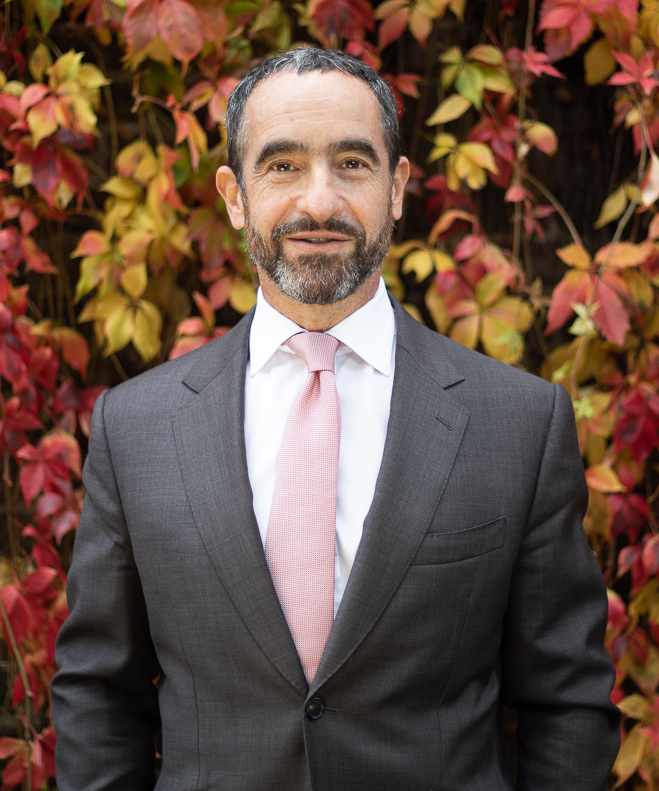
Co-host, Cleaning Up Podcast
Michael is an acknowledged thought leader on clean energy, mobility, technology, climate, sustainability and finance. He is Co-Managing partner of EcoPragma Capital and CEO of Liebreich Associates. Michael is also co-host and founder of 'Cleaning Up' a podcast and YouTube Series.
Former roles include member of the UK’s Taskforce on Energy Efficiency, chairing the subgroup on industry and an advisor to the UK Board of Trade, an advisor to the UN on Sustainable Energy for All, and a member of the board of Transport for London. He is also the founder of and a regular Senior Contributor to BloombergNEF.


