

 Apple Podcasts

 Spotify

 Overcast

 PocketCasts

 RSS Feed

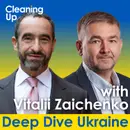
How To Run An Electricity Grid In A State Of War | Deep Dive Ukraine 04: Vitalii Zaichenko & Volodymyr Kudrytskyi
The grid is one of the most important assets in any functioning energy system, transmitting electricity from where it's generated to where it's needed. In Ukraine, that challenge is enormous.
The country is very big, 1,300 kilometers from east to west, almost the distance from London to Rome. And the system is under constant attack from Russia, which targets the grid with everything from tiny drones to ballistic missiles.
In this fourth episode of our Ukraine Deep Dive, we're featuring two separate conversations with guests intimately familiar with the operations of that grid: Vitalii Zaichenko, the current chair and CEO of Ukrenergo, Ukraine's national grid operator, and Volodymyr Kudrytskyi, the former CEO of Ukrenergo from 2020 to 2024, and now co-founder of Negen.
Michael asks each of them how you protect a grid under constant attack. They also talk about the remarkable story of how Ukraine disconnected itself from the Russian grid and connected itself to the European grid in just three weeks at the beginning of the full-scale invasion, how to build more resilient energy systems, and why there's so much political scandal around the management of Ukrenergo and whether Ukraine could be better prepared for winter.
Topics covered in this episode:
- Russia’s attacks on Ukraine’s electricity grid
- Protecting substations from missiles and drones
- Ukraine’s rapid synchronisation with Europe
- The shift towards decentralised power generation
- Batteries balancing nuclear, solar and wind
- Financing and insuring energy projects in Ukraine
- The political controversy surrounding Ukrenergo’s leadership
- Lessons for global energy system resilience
Leadership Circle:
Cleaning Up is proud to be supported by its Leadership Circle. The members are Actis, Alcazar Energy, Arup, Climate Imperative Foundation, Copenhagen Infrastructure Partners, Cygnum Capital, Davidson Kempner, EcoPragma Capital, EDP, Eurelectric, KKR, Mitsubishi Heavy Industries, National Grid, Octopus Energy, Quadrature Climate Foundation, Schneider Electric, SDCL and Wärtsilä.
Links:
- Vitalii Zaichenko’s bio: https://ua.energy/about_us/the-management/chairman-of-the-management-board/
- Volodymyr Kudrytskyi’s bio: https://www.linkedin.com/in/volodymyr-kudrytskyi-45233161/
- Ukrenergo: https://ua.energy/en/
- Negen: https://www.negen.energy/en
- News articles covering Volodymyr’s arrest and bail:
- Wärtsilä’s Håkan Agnevall on Cleaning Up: https://www.youtube.com/watch?v=dUYjGT55g5A&t=2s
- Subscribe to the Cleaning Up Newsletter: https://cleaninguppod.substack.com/
Acronyms:
- TSO: Transmission System Operator
- ENTSO-E: European Network of Transmission System Operators for Electricity
- DFI: Development Finance Institution
- IFI: International Financial Institution
- EBRD: European Bank for Reconstruction and Development
Chapters:
- 00:00 Intro
- 02:34 Ukraine’s Grid
- 08:56 The Need for Flexibility
- 11:18 Protecting the Grid
- 14:10 Repairing the Damage
- 19:58 Connecting to Europe
- 29:04 Ukrenergo Leadership Controversy
- 31:11 Decentralised Power
- 41:20 Kudrytskyi’s Dismissal
- 45:35 Preparing for Winter
- 47:03 Attracting Investment
- 50:54 The Role of Gas
- 53:34 Lessons for the World
- 56:05 Outro
Michael Liebreich
I'm not hearing that the system is protected up and down, all the way down to 35 kV and down to 10 kV.
Volodymyr Kudrytskyi
It cannot be protected that way, it would be too costly. You need to protect the system to the extent beyond which it becomes economically inefficient to protect further and you need to take the risk. This is all about probabilities and the risks and reducing probabilities of being…
ML
And cost, the cost to hit and the cost to protect, okay. Where is the country though, are you confident that the country is in a good place or is it not in a good place going into this winter?
ML
Hello, I’m Michael Liebreich and this is Cleaning Up.
The grid is one of the most important assets in any functioning energy system, transmitting electricity from where it’s generated to where it’s needed.
In Ukraine that challenge is enormous. The country is vast, 1,300km from east to west, almost the distance from London to Rome. And the system is under constant attack from Russia, which targets the grid with everything from tiny drones to ballistic missiles.
Today, in our fourth episode of our Ukraine Deep Dive, we’re featuring two separate conversations with guests intimately familiar with the operations of that grid. First, we’ll hear from Vitalii Zaichenko, the current chairman and CEO of Ukrenergo, Ukraine’s national grid operator. After him, we’ll hear from Volodymyr Kudrytsky, the CEO of Ukrenergo from 2020 to 2024, and now co-founder of Negen.
I ask them how you can possibly protect a grid under constant attack, how Ukraine managed to de-synchronise itself from the Russian grid and synchronise with the European grid in just three weeks from the start of the full-scale invasion, how to build more resilient energy systems, whether Ukraine could be better prepared for winter, and why there’s so much political scandal around energy in Ukraine.
Please welcome, for the first of two conversations in this episode, Vitalii Zaichenko, to Cleaning Up.
ML
Vitalii, welcome to Cleaning Up.
Vitalii Zaichenko
Thank you for having me.
ML
Let's start where we usually start our conversations, which is, could you introduce yourself, who you are and what you do?
VZ
I'm chairman of the management board Ukrainian power company Ukrenergo. We as a company are responsible for transmission system operation. It's high voltage grid starting from 220 kV into 750 kV, we operate grid and transfer electricity from our power plant to distribution system and from our neighbouring TSO, European TSO, to Ukraine also. And we are responsible for system operation, we balance the system every moment.
ML
In preparation I told you there's one rule, which is the acronym rule here, and you said TSO.
VZ
Because it was Transmission System Operation.
ML
So when you said that you are responsible for the links with the other European TSOs, that is the links across the border into other European countries, and you've got 5 or 6 vof those links?
VZ
Yeah, we have transmission links to Moldova, to Romania, to Hungary, to Slovakia and to Poland.
ML
You said 750 kV down to 220 kV. So this is high voltage. This is the high voltage transmission grid and its origins are, they date all the way back to Soviet times.
VZ
Yeah, it's quite old, but it was some process of modernisation from the grid, and we are not so old as a grid. But project of old grid, it was really Soviet time. Our grid was very concentrated because it was industrial country, and very big power plant for understanding our scale. And only in one point of our grid is Zaporizhzhia nuclear power plant, it was 6 gigawatts of generation near the fence of the Zaporizhzhia nuclear power plant. It was Zaporizhzhia thermal power plant, 3.6 gigawatt generation. And close to these two power plants, it also was biggest, I think, in Ukraine, Dnipro hydropower plant, more than 2 gigawatt, and in one point, it was more than 10 gigawatt of generation.
ML
Yeah, so I think this has got to be one of the most, its origins at least, was one of the most centralised grids, so very large power stations. And you still have elements of that today, because you've still got three nuclear power stations that are operating, which are connected to your grid. Zaporizhzhia is now in cold shutdown, and it's also in the occupied area, the hydro that you talked about is not operating, because that was the dam that was destroyed, I believe. And then the thermal power plant, also not working, of those ones that you mentioned. So you have the three big nukes that are still working, but then you have a lot of other plants.
VZ
Yes, in our energy mix, as it was before war, we have near 60% generation on our nuclear. Other generation, it's thermal, hydro. Hydro is very dependent of water resources. Also, we have big share of renewables, for today, I think it's more than 15% in our mix and its share every year is growing up. And also, we have today, I think, also a big share of energy storages. Because last year, it was only 6 megawatts in our grid. For today, it's more than 600 megawatts, and until the end of this year, it will be more than 1 gigawatt of energy storage. And this helped us a lot to change our energy mix. As a country, we're in the process of forcing decarbonisation, because all our thermal power plants were damaged. And for today, we have only I think, 20% of generation of thermal that was before war.
ML
The thermal that's left is gas?
VZ
Not only gas, also coal-fired.
ML
That's new to me, because the huge coal-fired power station is no longer operating I think but you still have some coal. I want to ask you, though, you talked about the wind, the solar, and the batteries as being the big, the rapidly growing resource, is any of that connected to the transmission grid? Or are those typically connected to the distribution grids, which are not your assets?
VZ
Depends on scale of the project. Because we have, for wind power plant, we typically have a big project, it's connected to our grid on the voltage level, 330 kV. But for small projects, like two, three wind turbines, it's typically connected to the distribution grid.
ML
That gives a good snapshot of the grid of your business, and also the challenges, constant attacks from the Russians. You also talked about decarbonisation, how important is climate action to Ukraine today? Because your overwhelming priority, surely, is just keeping the system working.
VZ
Yeah, yeah. Climate is important, because we are people, we live here, and I hope our children and our grandchildren will live here also. But you are right, it's not our priority for today. As I said before, we have forced decarbonisation, but it's also a unique chance for us to change our system and to obtain a more reliable, more clean energy mix than it was before. Because we are in a good starting position, we have a big share of nuclear, it's also clean energy. And only what we have to do now is to build flexibility in the grid, and it's our main goal for today. After protection and good growing system running every moment. But we need flexibility.
We have a big share of nuclear, we have growing renewables, and we need flexibility. That is why our government with us, Ukrenergo, have started a new competition for new construction of flexible generation. It has to be a gas piston, gas turbine generation, not so big as a typical thermal power plant, but which has the possibility to start in minutes and also to stop in minutes, and to provide and work with gas.
ML
The reason I ask about the question about how important the climate is, is because Ukraine is very dependent on overseas funding. Half of your budget, lots of the equipment, we've been hearing about how it's being the equipment and the Energy Community Fund, which is helping to procure equipment and so on. But the money is coming from a lot of it from the EU and EU countries, and I want to know if they are pushing this importance of climate. To what extent is that happening?
VZ
I think for today, they didn't push a lot for us. They understand the share of convenient thermal generation, coal-fired generation is not so big in our grid. And we're trying to be as much reliable as we can. And that's why this funds from European countries, especially that provided to Energy Support Fund, used typically for procurement of equipment, which we need a lot because it's not only Ukrenergo, but also distribution system operator, generation companies, they lose every day equipment on sites. For understanding, one blast of missiles with cluster munition over our substation caused sometimes losing of up to nine circuit breakers. It's cost a lot for us and we're trying to rebuild, reconnect our grid as quick as possible.
ML
I also want to talk about protection of assets. How do you protect them against these attacks? And I'm trying to understand the situation here because, and it's not easy, because on the one hand, Ukrenergo started to protect their assets, but then the CEO who was doing that has been moved on, and you have taken his place and this question of whether the assets were being protected or not seems to have been somehow involved. Where does the country stand? Let's start with Ukrenergo, are your assets protected? When did you start protecting them?
VZ
We're still in process. We're trying to do our best to protect all our assets, but it's not easy. We started construction of protection shelters in 2023, and it was started with protection of the most valuable assets on our substation, it's autotransformers. And we're still in process. And our main goal for today is to cover these shelters of the autotransformers, which would be enough to transfer enough electricity during winter period from transmission grid to distribution grid. And our goal for next maybe two years is to protect all autotransformers. But it's also not enough. We understand Russian hit with missiles and drones, not only autotransformers, it was primary target, but for next steps, they start to hit our relay protection building. It's the brain of our substation without this relay protection. Substation can be in operation, we have to disconnect this substation and try to do something with demolished equipment. That's why we start to build also shelters for relay protection building, it will be underground shelters for this equipment.
Only question for us, how can we protect our open switchyard? Because it's huge territory with circuit breakers, current and voltage transformers, disconnectors, and so on and so forth. And we also start communication with our European colleagues, because they also understand threats. And we together with colleagues are trying to find best cost effective solution, how can we in future will protect our assets. Because we understand there's no safe place in the world. It was terroristic attack in Berlin last year, and also some drones that's flying over critical infrastructure all over Europe. Even small FPV drones can damage equipment which cost millions of dollars or euros.
ML
The other part of this equation is also rapid recovery, rapid reconstruction. What have you learned about how to repair quickly, have you changed the way you do things since before the war?
VZ
First of all, it's people. It's a team which helps the ability to repair. Before the war, it was only 500 people, for today we have a team 1,500 people. It's highly qualified, highly motivated, they work sometimes during last heating season without break, without some holidays during all winter, and we are quick. Main challenge for us during last winter and for today is availability of equipment, such as circuit breakers, disconnectors, current and voltage transformers. And we're trying to obtain this equipment via energy support fund, and also we communicate with our European colleagues in different transmission system operator and trying to obtain used equipment. Because we are very flexible, we can use different equipment in one site, before war, it was typical team with the same equipment on different bay, but for today we change this approach and try to use all equipment that possible to obtain quickly.
ML
Are there any changes in technology, because these are big bits of equipment, but have you seen changes, have you driven changes? Because it is possible to make things quicker to install, easier to install, to be more flexible to use different manufacturers or different specifications, is that happening as well?
VZ
I think innovation is possible, first of all, but it's very slow innovation, especially in production side. But for reconstruction of our substation, we create new decisions, new decisions on how we can install this equipment in different manner.
ML
I want to come back to this question of protection, because we've heard about what you're doing. So you're protecting, it's a program that's ongoing, you're doing it in amongst repairing the current attacks and trying to get ready for the winter. But across the energy system, this question of protection of assets became very controversial, so what's happening outside Ukrenergo? Why is it controversial? Is the rest of the country ahead of you or behind you in protecting its assets?
VZ
I think the rest of the country is behind Ukrenergo. Because, as I said, we were first, we were one of the first targets of Russian attack, because it's Ukrzaliznytsia, our railway operator was the first target, but second was Ukrenergo. And we have started our project of construction shelters in 2023, this year, all distribution system operators and also heat suppliers, water suppliers were forced by government to start and construct the shelters also for their assets. But it was only this year.
ML
Isn't that a huge failure, I'm guessing at the energy ministry, not to have said back in 2020, 2022, you can understand 2023, it should already surely have been clear. It was clear to you that you needed to protect your assets.
VZ
We were under attack. TSO was not under attack, 3 years ago, it was not clear, because it was a question about the price of this attack. Russians started to attack Ukrenergo with cruise missiles and ballistic missiles, it's quite expensive and it was not so precise. Then they started to use this kamikaze drones, Shahed drones, which were very precise and also this second level of protection was aimed to protect from these kamikaze drones, which are very precise and cost not so much. But for today, we have in Ukraine and Russia some arms race because Russia trying to create new drones. And for today, it's a different scale of drones for territory near frontline and also for opportunity to hit a target deep inside the Ukraine territory. And that is why we as Ukraine, I think, one step behind the Russia, because Russia developed drones so quickly and our protection not so quick.
ML
But help me here because your predecessor got blamed for not protecting things for which he was not responsible. So you, at the time, you were working in Ukrenergo under your predecessor and you were protecting your assets and he seems to have been blamed for the rest of the energy system not protecting their assets. Have I missed something?
VZ
I think it's some political issues. He was blamed because of missing the deadlines of construction shelters, not about the full process, but missing deadlines. For today, for me, my main goal is to keep system running and to protect our assets.
ML
Vitalii, there's one story I want to hear about, which is the day of the invasion, you went into island mode. You no longer synchronised with the Russian grid, and then a few weeks later, you synchronised with the European grid. You must have been personally leading that, certainly involved in that. Can you tell the story?
VZ
Yes, it was my responsibility because I was responsible for the system operation. And it was in my and my team's hands, disconnection from Europe, because part of our system, the so-called Burshtyn Island, was connected to the European grid. The first step was disconnection from Europe and connect to Ukraine, with Moldova. After that, we started the disconnection from Belarus and have disconnected til noon, 23rd of February.
ML
All on the same day?
VZ
All on the same day. And after that, we started to disconnect our grid from Russia, and the last transmission line where I disconnected, I think it was 2 a.m. the day the invasion started.
ML
Oh, so you started to disconnect the day before the invasion?
VZ
Yes, and the last line I disconnected on the day of the invasion. And I was in the office and we saw something strange because the flight radar shows no flight at all over the territory of Ukraine and also some specific flight which were flying from east to west and from south to north.
ML
So you knew it was real?
VZ
Yes.
ML
And by two o'clock on the day, 2 a.m. on the day of the invasion, you disconnected?
VZ
And we started a specific procedure.
ML
At that point, your system is islanded, so you are fully responsible for frequency and voltage.
VZ
Yes.
ML
Did you have the tool set really to manage that? Was that an easy something you've practiced, something normal? Or was this kind of everybody is in the control room and making it up as you go along?
VZ
We were prepared. We and our team in control rooms, because it was big preparation for this island mode. And for this island mode, it was some experiment. We have to disconnect some load from the grid and to show that we can cover this loss of load in the grid with the same frequency level and also disconnect some generation from the grid and also to provide evidence that we can operate stably.
ML
So you had practiced parts of this, but you've never practiced the whole thing?
VZ
Yes, sure but not all our guys in control rooms. You have to understand that Ukraine for long period of time, we were totally disconnected from Russia. And we were disconnected by Russian guys and were in island mode long period of time, it was something between 1998 till I think it was 2000.
ML
Then a few weeks later, you synchronised with Europe?
VZ
Yeah, it was a big job, not for only for us as Ukraine transmission system operator, because it's a common job for working group, which were created in Europe with ENTSO-E, European Association for Transmission System Operator. And it was an every day, 24-7 job. and in three weeks, we were connected to European grid.
ML
You know, I feel like somebody should make a Hollywood blockbuster film about this, because it must have been, did anybody sleep during those weeks? I mean, not just in Ukraine, but at ENTSO-E? Am I wrong, or was it an extremely intense period?
VZ
Yeah, sure, it was. As head of this working group, Albino Marques said, it was a work of life. Because no sleep 24-7, maybe not for our European colleagues, but for my colleagues in Ukraine, because it was also transient period when Russian occupied the Zaporizhzhia nuclear power plant, biggest in Europe, and this power plant also lose more than 50% of generation. And we show that we can cover frequency even in this situation, when we lose 50% of the Polish chemical power plant. And it was only very good evidence for our colleagues in Europe, that we can operate grid in different situation, very strange situation for them.
ML
A great example of how learning from here is important outside Ukraine, and I think it's going to continue that way. What you're learning here, these lessons need to be learned outside Ukraine.
VZ
Thank you. We're trying to do our best, and we are ready to share our experience with colleagues.
ML
In most of the countries that I visit, and most of the people I talk to, grid connections are a massive problem, a massive bottleneck. Is it a problem, can you connect things quickly? If somebody comes along and says, well, I can build a 200 megawatt wind farm, I can do it in 18 months, but I need a grid connection, can you connect things quickly or not?
VZ
Frankly speaking, we have, I think, best procedure for connection in Ukraine. We change a lot via our energy regulator, our government, and we are quick. But if we talk about physical connection, we, for today, have some problems. Because many people, many companies, goes with this request for connection in western part of Ukraine, and we do not have free rooms for other connections. But for the left bank, it's possible and possible quick.
ML
Okay, so in the west, which is the area that's perceived as has been safer, has been less prone to attack.
VZ
Too many projects for wind generation, solar generation, energy storages, and also typical gas turbine, gas piston. For example, in Transcarpathian region, I think we have all points affiliated with this new generation.
ML
You've got no free bays?
VZ
Yes, yes. Not only free bays, but for other connection, we have to build maybe transmission grid, a huge transmission grid between Ukraine and Europe, inside Ukraine. But for understanding building of one transmission line, typically it's near 100 kilometers, we need up to 5 years. Because it's land issue, because it's construction issue, because it's money issue. It's not so quick. We have to talk about possibility to connect to the existing grid, and this possibility is in the left bank of Ukraine.
ML
So people just going to have to get comfortable connecting to the left bank?
VZ
Yes. But on the left bank, it's a question about insurance, and question about the possibility to find the loans for big project.
ML
Well, it feels to me like that's the same question, it's an insurance question. Because if you have insurance, then the loans should flow, if you can solve that problem, unless there are other structural issues. But you're saying that you've got the capacity, there's certainly the resources, the wind, the solar, the need for batteries, the ability to put gas piston engines or turbines in. So maybe that's the area for some of our listeners to look at.
VZ
But we have started our discussion with the energy community about this war insurance, that they can provide for our future developers of renewables on the eastern part of Ukraine. And for today, they find some funds from the Norwegian government to start a pilot project for insurance for future developers.
ML
That is fascinating. I want to thank you for your time spent with us today, and I can wish you luck, I can wish you all the best with your efforts, but really, it's been absolutely wonderful talking to you. So thank you.
VZ
And thank you. Thank you for your interest, and thank you for having me, and thank you for understanding and support.
ML
Cleaning Up is proud to be supported by its Leadership Circle. The members are Actis, Alcazar Energy, Arup, Climate Imperative Foundation, Copenhagen Infrastructure Partners, Cygnum Capital, Davidson Kempner, EcoPragma Capital, EDP, Eurelectric, KKR, Mitsubishi Heavy Industries, National Grid, Octopus Energy, Quadrature Climate Foundation, Schneider Electric, SDCL and Wärtsilä. For more information on the Leadership Circle, please visit cleaningup.live. To keep up with all that's going on in the Cleaning Up universe, make sure you subscribe to our newsletter. Written and edited by my longtime New Energy Finance and BloombergNEF colleague, Angus McCrone, it comes out every second Monday. Angus provides the latest on the episodes we're recording, the events we're hosting, stories we're watching and what Bryony Worthington and I are up to. To sign up for the Cleaning Up newsletter, visit cleaningup.live.
ML
After speaking to Vitalii Zaichenko, I sat down with Volodymyr Kudrytsky, the CEO who preceded him at Ukrenergo, between 2020 and 2024. One of the things I specifically wanted to ask him about was why he was fired from his position as CEO, amid a swirl of conflicting claims of corruption and incompetence.
After his firing, Ukraine’s president Volodymyr Zelenskyy accused Kudrytsky of not properly protecting Ukrainian grid assets while in charge of the Ukrenergo, and in October 2025 he was arrested on fraud charges, but released on bail after just two days.
Kudrytsky claims the charges were politically motivated. This year, the Minister of Energy under whom he served, Herman Halutschenko, was arrested over a suspected $100 million fraud, involving Ukraine’s nuclear power company Energoatom. In February, Halutschenko was detained attempting to leave the country, but he too has since been bailed.
Since leaving Ukrenergo, Kudrytsky has gone on to co-found Negen, a company building modular gas engine plants and flexible battery storage systems, raising around €50 million Euros of equity and debt from the EBRD among others, and has ambitious plans.
I wanted to hear Kudrytsky’s side the story of why he was fired. I also wanted to ask him why, after leading the country’s transmission grid, he is now focusing on building decentralised assets that could bypass that grid. Please welcome Volodymyr Kudrytsky to Cleaning Up.
Volodymyr Kudrytskyi
It's my pleasure.
ML
Could you just give the quick version of who you are and I guess what you're doing now, but a little bit on your background, the short version.
VK
So I'm a former CEO of Ukrenergo, this is a system operator of Ukrainian power system. Since ‘20 to ‘24, I was a CEO and now I'm in private business, I'm building what we call decentralised generation, decentralised energy facilities, which are mainly gas piston units, very flexible ones and battery storage stations, which are not large enough to be primary targets for Russian missiles. And our vision is to create a network of relatively small power plants that would be much more resistant and much more resilient to any types, any forms of attacks, and bring much more affordable energy compared to traditional large power plants that were built in 1970s.
ML
Let's take as a starting point the decentralised assets you're trying to build, what is the typical asset and what would it be connected to?
VK
It would be connected to distribution grid on 10kV or 35 kV voltage class. So instead of this large system with large power plants, releasing power to transmission grid and then pushing it down to the distribution grids and to every customer, we are powering the system from the bottom, by connecting those facilities to medium voltage grid. And the typical gas piston unit that we would build would be 10 megawatt, four containers, a transformer if needed. And of course, switch yard is also containerised. So our average rollout time would be 6-8 months. We also built battery storage systems, also 10 megawatts, 40 megawatt hours, so four hour storages for our systems. And we do purely arbitrage, so we charge them in the night because we have a surplus of power in the night, we have strong nuclear, which gives the surplus to the system during the night. Then we cover morning peak by releasing power from the battery, then we charge it during daytime when solar power plants are very active and we have huge surplus of energy. And in the evening peak, we also discharge the battery to the system. So we do two cycles per day.
ML
So I think my audience will pretty much understand that, but I have some questions. First of all, who is we?
VK
So I run the company, which is a managing partner of the project. We have two funds which are investing equity into the project. These funds are filled with money of DFIs and IFIs mainly. So DFI is Development Financing Institution and IFI is International Financing Institution.
ML
We is a fund, or you say you have two funds?
VK
Two funds and the management company, which I co-founded with my partner, and we run the business and fund managers, obviously, which is Ukrainian investment firm, Dragon Capital and British investment firm, which is called Amber Infrastructure. So they are running the funds and we are running the business for these funds.
ML
Have you raised the funds, have you completed raising them, have you made investments yet, where are you in that process?
VK
One of the funds is complete and it's investing already into the projects. We have three operational objects in Western Ukraine, two gas-peaking gas-piston power plants and one battery storage system, and we are finalising another four. So we have a portfolio of medium-sized, so to say but three are operating already.
ML
In other words, they are serving, the electrons are flowing right now.
VK
We are selling energy to the market, to the exchange.
ML
Quite fast, because you've only been doing this for two years.
VK
We've been doing this for 10 months.
ML
10 months and you already have..?
VK
Three power plants.
ML
Did you acquire a portfolio?
VK
We started from the initial investment of equity, which was around €17 million. And we were able to attract a loan from EBRD very quickly in a matter of 6 months, I think. And our rollout time is 6-8 months. So we started building facilities, I would say, last summer and we introduced the first power plant city operation this January and February.
ML
Very good, congratulations. So you've moved very, very fast, you also mentioned that you're doing some solar.
VK
Battery storage systems, not solar.
ML
I thought you said you were doing solar as well, did I completely mishear?
VK
In Ukraine, we have solar which is dominating in the daytime. And that drops the price to literally one Ukrainian cent per kilowatt hour.
ML
So you are doing it, but it's somebody else's solar.
VK
We're injecting somebody else's solar into our battery. And some other investor has invested already in something that we are injecting into battery storage.
ML
But nevertheless, there is a renewables component, because you said that you're doing this the arbitrage model. You're buying electricity cheap, and you're going to sell it when it's more expensive. When it's cheap is meant when it's very sunny or very windy, or you mentioned nuclear at night.
VK
Or nuclear at night, yes.
ML
A question. you've got DFIs and IFIs. I can say the acronym, because we already defined them, I make the rules around here!
VK
Oh, OK.
ML
But we do the development finance institutions and international finance institutions, and then you've got debt, you said, from EBRD, which is also one of the international financial. So it's not private money at this point, it is all concessionary of some sort, is that correct?
VK
It is correct. However, in the lending process, we were choosing between European Bank of Reconstruction and Development and Ukrainian commercial banks, so the lending is available to Ukrainian companies from commercial banks. However, the equity is provided by these institutions, because the scale of equity that we need to build the platform that we aspire to build, is not available in Ukraine and from within Ukraine.
ML
Where I'm going with this, though, is insurance, because we have a lot of investors will be actually listening to this and they will be listening, going, well, this is all marvelous. But if it does get hit, and it can be hit, clearly, I mean, I've been here a few days, things getting hit quite frequently, even irrational, too small, even civilian, all sorts of stuff, right? So they will say, well, this is all very well, but I can't get this past an investment committee, no how, no way, because of the risk of the war risk. Do you use, do you have, war risk insurance?
VK
Yes, we do.
ML
And where's that from?
VK
From Great Britain.
ML
Which bit of Great Britain?
VK
It's from Lloyds, originally from Lloyds. And of course, there is a mechanism of reinsuring for...
ML
OK, so it's private insurance, it's not coming from some, not from the energy community.
VK
No.
ML
Why did you not take it from the energy community? Haven't they been offering you insurance?
VK
It's too slow, and those mechanisms are very picky in terms of investors that they could support. So we opted for market-based commercial insurance, and luckily for us, since 2025 I think, there are some insurance products that are available for Ukraine's energy sector.
ML
And there's enough competition within the Lloyds families, the Lloyds consortia, you've got a good, an acceptable offer on insurance.
VK
Yes.
ML
OK, so this is new news to me that Lloyds, that some of the names at Lloyds are doing that. Now, the final question on this is actually the segue to your former job, which is you're connecting this stuff to the distribution grid, and I can see why in terms of flexibility, it makes total sense. But was part of the rationale that you simply didn't want to deal with Ukrenergo? That the transmission grid, was there part of you that was just saying, I want to go and just deal with distribution grid operators and not with the transmission grid?
VK
Well, the power plants that we are building are too small to be connected to 330 kilowatts.
ML
But you could have built much bigger ones!
VK
We are building a decentralised generation, not only because it's economically more viable, but also because this decentralisation also provides for less risk. So you can only get insurance if you have a diversified, physically diversified portfolio of assets, nobody would insure 200 megawatt battery in Ukraine, it's obvious. So this is a way how to avoid, to a certain extent, the inherent risk that we have here.
ML
OK, so I'm failing to challenge you properly on your business model because I agree with it.
VK
Sorry for that.
ML
And I tried to segue to talk about Ukrenergo, so let's do that directly, though. So your time at Ukrenergo, did it come to a premature end?
VK
Yes,
ML
It was controversial, it's in the news, so can I ask you to give your side of what happened?
VK
It was a political decision of the president. I was probably not the most comfortable counterparty to him, we did not agree on many things. And especially, I proposed this decentralised generation concept in early 2023, so right after the first winter in the war, right after the first time we really understood what would happen to the system when the Russians bombed all big energy facilities in the country, being big power plants that you mentioned and Ukrenergo substantially.
ML
But to be clear, you were the CEO of the transmission grid and you were saying, don't do the transmission grid, connect stuff to the distribution grids.
VK
And when you are a CEO of the transmission grid, you are not just managing transmission grid, you're managing the whole system. So you're the operator of the whole system, and from the system perspective, it was much better to connect to a lower grid level and then maybe inject from the bottom to the top this energy to other regions, etc.
ML
But you got accused of not protecting the grid assets, the transmission grid assets. You got accused of being slow to build physical protection, was there any justification in that?
VK
We were the only company that had protection from Shahed drones, we were the only company that did this protection anyway.
ML
And so you've claimed that it was a diversionary tactic because the energy ministry under, and I'm not going to be able to pronounce the name, Herman...
VK
Halushchenko.
ML
Halushchenko, that the energy ministry had failed to protect assets throughout the system and that you were being blamed.
VK
Yeah, we were too slow. We had, at the time when I resigned or I was fired actually by the board, we had around I think 50 or 60 shelters, huge shelters. And we spent 300,000 cubic meters of concrete in total in one and a half years to protect the 60 facilities out of 80. So that was done in one and a half years, and we had to invent this design from scratch. Invent, not create this, but invent it because nobody did this before ever. And now this type of shelters are done on virtually all types of critical infrastructure objects in Ukraine, like in distribution grids, on the big generation plants, because they also have these transformers to be protected by this concrete shelter. So the whole country now does that.
ML
Was time wasted because you've got winter coming and now you have these jet-powered Shaheds, which seem to be hitting almost at will, and I'm not hearing that the system is protected up and down, all the way down to 35 kV and down to 10 kV.
VK
It cannot be protected that way. It would be too costly. You need to protect the system to the extent beyond which it becomes economically inefficient to protect further and you need to take the risk. And this is all about probabilities and the risks and reducing probabilities of being hit.
ML
And the cost to hit and the cost to protect okay, where is the country, though? Are you confident that the country is in a good place or is it not in a good place? Going into this winter, we've covered, we understand the business model and it feels like the right way to go. But meanwhile, it feels like you're going into winter as Ukraine, not with good protection in place for maybe not the transmission grid. It sounds like it's better protected, but there's big chunks of distribution and assets connected to it that are not protected.
VK
Yes, but the protection will not be an issue. The issue will be lack of generation, lack of decentralised generation, because what Russians will do, they will, as they did like for four winters before, they will bomb big power plants. These 15 power plants that are producing 80% of the output of the country. And the only thing that we can do, because we cannot protect against all ballistic missiles, against thousands of Shaheds, we can build the network of smaller power plants that would back up these big ones that we will lose partially. We did not do this to the extent that was needed. We've built 700 megawatts of gas piston generation in this country, while the need would be at least three to four thousand. And we did it since 2024. So with such a speed of rollout, we will need 15, 20 years to be in the spot that we want to be. And what I mean by saying that I roll out in 6-8 months is that the potential is there, the economic engine of this business is there because the profitability is very good, you can have payback of three years easily in Ukraine, given current prices for the gas and electricity.
ML
If you wanted to be building at the rates you're talking about of 3 gigawatts a year and those sorts of rates, what needs to happen? What needs to happen to step change the rate of rolling out your business model?
VK
Two things, I think. On the Ukrainian side, we need to clean up the mess created in the governance of the energy sector and probably fire those people who are still not fired after the scandal of last year to give a signal to the market that things are cleaned and you can rely on financial data and market data and you will not be dependent too much on the decision of some bureaucrat, which may not be that, let's say, transparent in his decisions or her decisions. And second thing that we need to do, we need to educate external investors, and I think this is exactly what we're doing now. Of course, Ukraine has very high risk profile, obviously, compared to Switzerland or, I don't know, New Zealand even. But the profitability, of course, is also much higher. You can always reduce it to a few numbers when you talk about profitability and risk. But also, what Ukraine can offer is, and which is unique in Europe, at least, the grid has a huge buffer, which is not used. You cannot see this in any country of Europe. I know that in Greece, to connect battery storage, you need to wait 3 years, in Great Britain, I think, you would be waiting one year, two years easily, right?
ML
Well, it depends whether you're connecting to transmission or distribution.
VK
I mean, on average, maybe.
ML
And it's an observation I've made already that I've travelled the world and everybody has a grid connection queue, except for western, in the west of Ukraine. So if you want to go to Zakarpattia, then there's a connection queue because everybody wants to go there, it's safer.
VK
It's not quite like this, I can tell you why a little bit later. But let me say that Ukrainian grid capacity, transmission grid capacity is around 41-42 gigawatts, and our current consumption, peak consumption is 18 gigawatts, average probably 12. Distribution grid has much more capacity than transmission, transformer capacity even. So basically, we have this huge grid, this is a legacy of Soviet Union, of course, when we consumed three times more than now. Now, why in Zakarpattia still physically can connect much more than they would tell you is because we're using very old and rigid Soviet procedure of connection. So what basically the grid operator does, when it calculates whether you can connect your battery storage to the grid, it takes May, Sunday, 12 o'clock, very sunny day. And in the model, it puts your battery storage to generation mode and checks whether you're…
ML
Whether you can destroy, whether you can damage the grid, which of course you would never do.
VK
Yes, and in the same time, it takes winter evening, working day, -15 and you will consume.
ML
Be consuming, yeah okay, interesting.
VK
It takes theoretically worst scenarios possible to check whether your battery would be fitting the grid capacity given that all other generators would generate with you and all other consumers will consume it.
ML
You know, this issue is one that I want to push on in other episodes of Cleaning Up, because I think there's a lot of that going on in other countries as well, just where grid codes are so rigid, so conservative that they are taking worst case on worst case. But anyway, I want to move on, because we're running out of time, and I do have two other questions. What do you say to people who say, look, we listen to Volodymyr, and it's great and gas, but first of all gas, it's not clean, and it's carbon or whatever, and what we should be doing is solar. Solar roofs, more solar roofs, solar projects, and, of course, also wind, and that will solve the problem.
VK
Well, if we would like to build the system when we would put the light switcher, and with some probability the light would be switched on or not, then probably we can build wind and solar all the time. However, if we would like to build the system when we would control our consumption, and we would switch on the light and the light would be switched on actually, then we need something that we can control. You cannot build purely batteries plus wind and solar, because you would need batteries of the capacity that you would not like as an investor. If you build only solar, you will go bankrupt, because in Ukraine the payback would be probably, I don't know, 15 to 20 years if you sell to the market, because, as I said, it's a surplus of solar.
ML
Whenever it's sunny, the price goes to nearly zero.
VK
The price goes to one Ukrainian cent. Today, we had a price of one Ukrainian cent in 12 o'clock, 12 a.m. In the evening, it was 15 hryvnias, so, it was like 1.5 thousand times higher. So basically you cannot currently build the system purely based on wind and solar, because it would collapse. And what is happening with gas in Ukraine, for example? When I build one megawatt of flexible gas generation, I substitute 10 megawatts of coal generation. Why? Because my gas piston machine can be switched on in 6 minutes and can be switched off in 2 seconds, while a large coal-fired power plant cannot do that. It has a range of maneuverability in like 80% to 100%. So, during the night, when the price is low, coal-fired power plant is in operation, they're burning coal all the time. So, I can replace that by wind or nuclear, if I introduce more gas into the system and allow to switch off this coal-fired power plant forever by covering only morning and evening peaks. And this is exactly what we did.
ML
I'm smiling because we covered this exactly in the episode with the head of Wärtsilä’s energy business about Chile, 25% coal gets replaced with 4% gas, according to that model.
VK
My guess was close to that.
ML
I want to finish with one final question, which is about what other countries need to learn from this experience. So, you talked about accelerating here, which is about cleaning up the corruption or the scandal, and then teaching the international investors. But what do the energy sectors outside Ukraine need to learn from your experience through the conflict, through four and a half years, or through any other aspect of what you're doing?
VK
I strongly believe that the era of big power plants is gone. It's gone not only for security reasons, because you can face these sabotage acts in every country in Europe and in the world, and the enemy can take down a large portion of your generation assets in one go if you centralise your generation too much, but also it's economically more viable. Even if you take the rollout time to build a large combined cycle heating plant, you would need probably 4-5 years, you can roll out smaller facilities in 6-8 months. And this type of new smaller modular generation units combined with battery energy systems with controlled demand or maneuverable demand, this network of power plants resembles the internet. You cannot switch on one server to switch it on completely.
And the resilience of the system, but also the affordability of the system is much higher. It's probably a future of all energy systems, because if we need to match, for example, the AI boom, how do we build the generation adequate to this growth of consumption? We cannot use nuclear for that, because we would be building 10 years or 15 years of one nuclear unit. So we need something very quick, very modular, very maneuverable, very flexible. And this is a combination of these technologies that we talk about, solar and wind, plus batteries and gas pistons. Maybe at some point of time, it will be hydrogen powered instead of gas, and it will be much cleaner then.
ML
You were doing so well. I agreed with that system until you mentioned hydrogen. Until you mentioned hydrogen, but we're not going to go there, we're out of time.
VK
Next time. I agree that hydrogen is not commercially viable. So I'm just saying at some point of time.
ML
You were teasing me, I know you were teasing me. Thank you very much for your time.
VK
Thank you.
ML
So that was Volodymyr Kudrytsky, former CEO of Ukrenergo and co-founder of Negen. And before him we heard from Vitalii Zaichenko, the current chair and CEO of Ukrenergo.
My sincere thanks to both of them for taking time out from the Yalta European Strategy conference to speak with me. As always we’ll put links in the show notes to resources we mentioned in this episode. So that would be Ukrenergo and Negens websites, as well as some links to some news coverage of Volodymyr Kudrytsky and Herman Halutschenko's arrests and subsequent bail. I want to thank all those who made my trip possible. In particular, Imogen Payter, Heather Buchanan and their colleagues at UK Friends of Ukraine, as well as Gary Edwards and the team at Frontier Global for keeping us safe.
My thanks to Oscar Boyd, travel buddy, producer and editor on this Ukraine Deep Dive, and special mention goes to Dominic Culverwell at the Kyiv Independent, and Maria Vlokh, for her help with translation. As you can imagine, a trip like this is not easy to organise, so thanks to Jo Jagger for making sure it happened, to the whole team at Cleaning Up, and of course our Leadership Circle, without whom none of this would be possible.
Next week I’ll be talking with Ben Parsons, partner at Oaklin and fellow energy expert and delegate on the trip, about what lessons can be learned from Ukraine when building resilient energy systems. Please make sure you have signed up for our free newsletter at Cleaning Up.live, and join us at the same time next week for the next episode of this Ukraine Deep Dive.
Cleaning Up is proud to be supported by its Leadership Circle. The members are Actis, Alcazar Energy, Arup, Climate Imperative Foundation, Copenhagen Infrastructure Partners, Cygnum Capital, Davidson Kempner, EcoPragma Capital, EDP, Eurelectric, KKR, Mitsubishi Heavy Industries, National Grid, Octopus Energy, Quadrature Climate Foundation, Schneider Electric, SDCL and Wärtsilä. For more information on the Leadership Circle, please visit cleaningup.live. If you're enjoying this episode, please hit like, leave a comment, and also recommend it to friends, family, colleagues, and absolutely everyone. To browse our archive of around 300 past episodes and to subscribe to our free newsletter, visit cleaningup.live.

Co-host, Cleaning Up Podcast
Michael is an acknowledged thought leader on clean energy, mobility, technology, climate, sustainability and finance. He is Co-Managing partner of EcoPragma Capital and CEO of Liebreich Associates. Michael is also co-host and founder of 'Cleaning Up' a podcast and YouTube Series.
Former roles include member of the UK’s Taskforce on Energy Efficiency, chairing the subgroup on industry and an advisor to the UK Board of Trade, an advisor to the UN on Sustainable Energy for All, and a member of the board of Transport for London. He is also the founder of and a regular Senior Contributor to BloombergNEF.


