

 Apple Podcasts

 Spotify

 Overcast

 PocketCasts

 RSS Feed

How Will The Russia-Ukraine War Come To An End? Deep Dive Ukraine 03: John E. Herbst
One of the biggest questions when it comes to the brutal and drawn-out Russia-Ukraine war is how it can be brought to an end, and crucially, could it ever be replaced by a stable peace? To understand this, we have to ask not just where we are now, but how we got here.
For Episode 3 of our Deep Dive Ukraine, Michael Liebreich is in Kyiv with John E. Herbst, Senior Director of the Atlantic Council’s Eurasia Centre and former US Ambassador to Ukraine, to explore the origins of the Russia-Ukraine conflict, the chance for a stable peace, Russia and Ukraine’s vulnerabilities, and the role of NATO. They also examine the changing US approach to military support and negotiations, and the risks of a peace deal that forces Ukraine to surrender territory.
Topics covered in this episode:
- Why Putin invaded Ukraine
- Ukraine’s strikes on Russian oil infrastructure
- NATO expansion and Russian aggression
- The legacy of the Orange Revolution
- The cracks in Putin’s regime
- Trump’s shifting approach to peace
- The risks of territorial concessions
- Can Russia’s regime collapse?
Links:
- John E. Herbst’s bio: https://www.atlanticcouncil.org/expert/john-e-herbst/
- Atlantic Council Eurasia Center: https://www.atlanticcouncil.org/programs/eurasia-center
- Michael’s Substack on Ukraine striking Russian oil refineries: https://mliebreich.substack.com/p/why-ukraine-should-keep-striking
- Subscribe to our newsletter: https://cleaninguppod.substack.com
- MAP - Membership Action Plan
- FSB - Federal Security Service (Russia)
Leadership Circle:
Cleaning Up is proud to be supported by its Leadership Circle. The members are Actis, Alcazar Energy, Arup, Climate Imperative Foundation, Copenhagen Infrastructure Partners, Cygnum Capital, Davidson Kempner, EcoPragma Capital, EDP, Eurelectric, KKR, Mitsubishi Heavy Industries, National Grid, Octopus Energy, Quadrature Climate Foundation, Schneider Electric, SDCL and Wärtsilä. For more information on the Leadership Circle, please visit cleaningup.live.
Chapters:
- 00:00 Intro
- 02:15 The Orange Revolution
- 06:45 Putin’s Ambitions
- 11:00 NATO and Ukraine
- 16:30 US Policy Shifts
- 22:00 Ukraine’s Oil Strikes
- 26:00 Sanctions Hit Russia
- 29:00 Cracks in Putin’s Regime
- 36:00 Ukraine’s Winter
- 39:00 Paths to Peace
- 44:27 Outro
John E. Herbst
I don't rule out, we suddenly read about Putin is the latest senior official who's fallen out of a window. I don't rule out the possibility of Putin himself deciding he needs to make peace. And I could write his speech for him to explain his decision to the Russian people, how I punished those ‘Nazis’ in Kyiv, and they're now so weak, we don't have to worry about him. I could see that speech he could present, although I think he's a true believer in taking control of Ukraine. But it could be, ultimately, political reality could shape a sensible decision for him at this point in time. Any of those things are possible.
Michael Liebreich
I’d presented you only the options of, in a sense, a frozen front line or a Russian withdrawal or collapse, but the other one of course which you raised correctly, is this idea, which I consider to be fanciful, of the Ukrainians agreeing to give unconquered territory to the Russians.
ML
Hello, I'm Michael Liebreich and this is Cleaning Up. One of the biggest questions when it comes to this brutal and drawn-out Russia-Ukraine war is how it can be brought to an end, and crucially, could it ever be replaced by a stable peace? To understand this, we have to ask not just where we are now, but how did we get here? My guest today is an expert on the topic. He is John E. Herbst, Senior Director of the Atlantic Council's Eurasia Center and US Ambassador to Ukraine from 2003 to 2006, serving under US President George W. Bush. John's term as an Ambassador to Ukraine spanned the Orange Revolution, the mass protests that took place in Kyiv and across the country in the aftermath of the 2004 presidential election, which was widely believed to be rigged and influenced by Russia.
John pinpoints that time as the moment that the Ukrainian people started to turn definitively away from Russia and towards Europe, putting the two countries on an inexorable course to conflict. I asked John about how this war might come to a close, what the role of the US and Europe could be in bringing about peace, and how close authoritarian Russia might be to collapsing as the Soviet Union collapsed in 1991. Please welcome John E. Herbst to Cleaning Up. John, thank you so much for spending time with us here today on Cleaning Up.
JEH
My pleasure.
ML
Now, we're here in Kyiv, for context, at the moment, there's no air alarm so hopefully we'll get to chat for a while. Could you start by explaining who you are and why are you in Kyiv today?
JEH
My name is John Herbst. My official title is I'm the Head of the Eurasia Center at the Atlantic Council, a major US think tank based in Washington, DC. A think tank that focuses largely, but not entirely, on national security issues. And again, as the name suggests, I run the Eurasia Center, which means I focus on the countries that make up Eurasia, which is largely the states that emerged from the former Soviet Union.
ML
And you are also a former US ambassador here.
JEH
Correct.
ML
If I'm not wrong, 2003 to 2006.
JEH
Correct.
ML
And you served under, at that time, that would have been George W. Bush.
JEH
Bush. That's correct. But before that, I was ambassador in Uzbekistan and I was nominated for that position by Bill Clinton. And my first year as ambassador, or actually my first six months as ambassador, Clinton was still president.
ML
That's a shorthand for saying that you are a career diplomat, not a political appointee type ambassador.
JEH
That’s right, yes.
ML
Was there any hint when you were ambassador that this would become a very hot ambassadorship, very controversial frankly?
JEH
Hot in terms of American politics, no. Hot in terms of the geopolitical issues with direct impact on American interests, yes. But that was true in the course of my tenure as ambassador. Because I was there during the so-called Orange Revolution. The Orange Revolution was, I hate to say it, I don't want to use the word uprising, but an initiative of the Ukrainian people, as it became clear to them that the initial results of the 2004 Ukrainian presidential election were falsified, as many had anticipated. And so they went into the streets and they forced a third honest vote, which led to a different outcome than the falsified returns of the election. And I was, as a US ambassador, I was heavily involved prior to the election in steps designed to promote a free election, an honest election. And I was heavily involved during the period of turmoil, when you had demonstrations of hundreds of thousands of people, not just in Kyiv, but also other cities.
ML
And this alongside the EU, the foreign..?
JEH
Well, at that time, the EU launched a mediation process. They led a mediation process to try and prevent violence and to try and achieve a political compromise that would satisfy the people of Ukraine. And the United States did not play a formal role in that. But we are the United States, we were the United States, I was a US ambassador. So I was very active in the whole process before the Orange Revolution broke out, meaning steps to help promote a clean election, which ultimately did not happen. And then steps to promote a peaceful outcome of the turmoil that followed the falsified vote.
ML
So it was already a pretty hot, it was a hot seat, there was a lot going on.
JEH
And it was understood, by the way, when they were choosing the ambassador that I became, that this could happen.
ML
But that was a time when not just Russia, but President Putin accepted the borders of Ukraine, going back to my own...
JEH
Well, let's say publicly accepted.
ML
This is my first trip to Kyiv, but I've been an observer for some time because I was actually in the Soviet Union, as was, in 1990. I spent quite a few months there just before the Soviet Union fell apart, and so I kept a watching brief on what was going on, and there was, of course, that culminated in the Budapest Agreement in 1994.
JEH
I was working on those issues from the State Department at that time.
ML
Oh gosh, fascinating. But that included very clear statement that Russia would respect the borders of Ukraine, which now you're saying that that was Putin in 2008, he publicly said that he had no designs on any Ukrainian land, but you're saying that's lip service?
JEH
Of course. He also said, I forget when but I believe it was before 2008, that the greatest tragedy in the 20th century was the dissolution of the Soviet Union. Now, certain things are implied by that, not stated explicitly. And we've seen since then, especially in the period leading up to the Russian big invasion of Ukraine, after, of course, that was what? The big invasion was eight years after they seized, they stole Crimea when they began the actual war. He stated he wanted essentially to restore Moscow's political control over the territory that he controlled at the time of the Soviet Union.
ML
But I think there's been this obviously an escalation from saying the Soviet Union, the collapse was the greatest tragedy, to, but we'll still respect the borders, to then the intervention, the taking of Crimea, and then the full scale invasion. Was it foreseeable? Do you think, in all honesty, if you go back to your time, 2003, 2006, as ambassador, were you writing notes back home saying, look this is going to end with a full scale war?
JEH
No, that was never a prospect at that time. But you might say, there were heralds in my time of the Russian aggression to come eight to ten years later. When I arrived in Ukraine in September of 2003, my major job was to help promote free and fair presidential elections in 2004. And when I arrived, the most popular politician in Ukraine was Vladimir Putin. Obviously not a Ukrainian politician, but he was more popular than the then president of Ukraine, Kuchma, the opposition figure Yushchenko. And you might say that he, Putin, was extremely popular in the east and the south, it's basically a Russian speaking area, even Ukrainians there speak Russian. He was despised in the west, which is probably the most nationalist part of Ukraine, and he was popular, but not in the 70% or 80% or 90% range, in the center of the country, including Kyiv.
Now, in the run up to the election of 2004, and in the aftermath, when you had the Orange Revolution, Putin suddenly became a despised figure in the center of the country, still popular in the south and east, although perhaps not quite as much. And that's because he heavily intervened, albeit not militarily, to ensure the victory of his candidate, Yanukovych. And this was clear to everyone in Ukraine. I think he visited Ukraine four times between August of 2004, the election was, the first round was in late October. The second round, which was the falsified round, was like the 20th of November. And then the third round was two plus weeks after the second round. And he congratulated Yanukovych on his “victory” after the falsified second round, and as the crowds gathered against that falsified vote, he was encouraging the Ukrainian authorities to crack down.
He essentially summoned the still president of Ukraine at that time, Kuchma, to an airport in Moscow, where he read him the riot act. He put that down, and Kuchma famously told him, Ukraine is not Russia, those sorts of tactics will not be successful in Ukraine. And he was right, as the fate of Yanukovych during the Maidan Revolution demonstrated. So Putin's aggressive, let's say paternal slash aggressive intent towards Ukraine was visible in my time, but within very different parameters.
ML
But what this is behind, there's a meta conversation behind what you've just, the stories you've just told, which is, who started this? And there are those, and I'm not going to mention Jeffrey Sachs, but there's plenty of those in America.
JEH
He knows little about Ukraine and not much about Russia. And you know about his failed efforts to reform the Russian economy in the ‘90s?
ML
Thank you for your summary and that means I don't need to go there. But there are those, and there is plenty of resonance of those views that the situation today was started by NATO, and it was started by the promise two years after your ambassadorship 2008, when George W. Bush, your boss or your boss's boss, promised an accession process to NATO to Ukraine. So where did it start?
JEH
The reason for the Russian invasion of Ukraine, an act of aggression, is that Russia refused to let Ukraine pursue its own prerogatives as a sovereign country. So Putin wanted to ensure that Ukraine remained somehow under Moscow's control. The notion that the efforts of George Bush at the Bucharest NATO summit, which was in 2008 not long before the Russians invaded Georgia, their aggression began, actually the aggression began not even in Georgia in 2008, began with the cyber attack on Estonia in 2007. And Putin outlined his expansionist and aggressive designs at the Munich Security Conference in 2006. So there's a long pedigree. But coming back to your specific points, those are Kremlin talking points, you've heard others in the West echo. But people who know NATO, I'm not a NATO-nic, I'm an expert on Eurasia and the Middle East, but I know a fair amount about NATO, will tell you that the Bucharest summit was characterised by Bush's unsuccessful effort to get Ukraine and Georgia a MAP, a Membership Action Plan, which is considered like the apprentice stage for members of NATO.
Every single member of NATO that came in after the Soviet Union died, with the exception of Sweden and Finland recently, came in by becoming, getting a Membership Action Plan, and then fulfilling the requirements of it. Bush tried mightily and unsuccessfully to get it in Bucharest, he was opposed by Merkel and by, I'm forgetting, was it Hollande who was the president? No, Sarkozy was president of France at that time, and others. He failed. The consolation prize was, yes you will become a member of NATO someday, with nothing behind it. And people who knew NATO well, understood that's what happened. And you can be sure that there are smart people in Moscow who understood that that's what happened. In 2008, Putin took advantage of that result to invade Georgia without consequence.
ML
President Bush was pushing for a Membership Action Plan for membership of Georgia and Ukraine in NATO. Was that his own initiative? Was that his analysis?
JEH
As opposed to who?
ML
Well, as opposed to the State Department, you know, you, your successor, saying, you know, Mr. President, this is what we need, this is the only way that they're really going to be safe?
JEH
I have no doubt that people in the government at that time put forward those arguments as they discussed a Membership Action Plan. But Bush ran a very tight interagency process, getting the views of all the relevant actors before he took decisions. But he was very famously and self-proclaimed as the decider. So, reflecting, you know, Harry Truman said the buck stops here in the Oval Office. That was his decision. But there were people in his government who were in favor of it.I can think of at least one person, I'm not going to mention, who had some influence, who was definitely against it. And that person remains wrongheaded to this day. But this was Bush.
ML
I want to push you and get a name.
JEH
You're not going to get that.
ML
The reason I go there is because there is a narrative that it was a somewhat impulsive offer to the Ukrainian NATO ambassador, or possibly to the president in 2008, which has had these ramifications.
JEH
I was working on different issues at that time. I was working on failed states and stability operations. But I know this, and I know this from my time working on Eurasian issues, in fact, from my time in Ukraine, Bush was smarter, as it turns out, on Putin than all of his advisors. Every single, well maybe with the exception of Cheney, Bush understood during the Orange Revolution that Putin was a bad actor. His staff had to catch up to him on that. And he was absolutely right. Knowing that, I think the notion that Bush, off the cuff, without really thinking about it, decided, yes Ukraine needs a Membership Action Plan, is simply false.
ML
Let's fast forward, if we might to, obviously there was the invasion of Crimea, but now the full-scale invasion. And sticking with the topic, though, of the NATO membership, because you've written quite a bit and you've spoken quite extensively about what should happen now, should they be allowed in? And if so, should it be during a conflict? And should it be full membership, or should there be a Membership Action Plan? Where are you now on that question?
JEH
Well, that whole conversation at the moment is moot, which doesn't mean it's moot forever. Biden's policy on the war, in my judgment, was at best adequate. And when I talk about the war now, I'm really referring to things that happened after the big invasion. Adequate because he did enough to make it almost impossible for Putin to win in Ukraine on Biden's watch. But he was intimidated by Putin's nuclear threats, and for that reason, he did not do things which would have improved Ukraine's chances on the battlefield. And had he done those things, the war would have looked differently and better for Ukraine when Biden left the Oval Office. Trump came in with a very different view, and basically took even the consideration of NATO off the table, though. Biden, we tried to come up with ideas short of even a membership action plan that would have represented a step forward. And the administration was too weak, weak because of their fear of Russia to move in that direction.
I infuriated a lot of my friends in the think tank community by saying that, without a doubt, Trump 1's national security team was far stronger than Biden's team. But to be honest, I don't think you could blame the policy only on Biden, although Biden takes responsibility as the man in charge. But also his own instincts turned out to be weaker than I thought. The only person, I think, in Biden's cabinet who kind of understood it right was Tony Blinken, but he was not a great bureaucratic infighter.
ML
President Trump's second term, how would you characterise it? Because it has been, I don't want to say all over the place, but it has been quite hard to read, where does the administration actually want this to go?
JEH
You can characterise the Trump 2 approach as uneven or unsteady. And that's because I think he's been driven by two not consistent impulses. The good Trump impulse is his stated desire, and I think it's real, to achieve a stable peace. And he said during his election campaign, after he won the election, before he became president and since, that he wants to achieve a stable peace, and he would offer ideas to achieve a stable peace. And whichever side rejected them would face serious pressure from the United States. So that's impulse one. Impulse two is his interest in, fascination with, respect for, I'm not certain which of those phrases best captures Putin.
ML
Fealty to?
JEH
Well, some deep cynics or critics would say fealty to, yes, to Putin. And obviously, when Russia is the aggressor state, which it is, and Putin has rejected a half dozen Trump peace proposals which Zelensky accepted, it's clear who's the obstacle to peace. And I can go back to the first day of Trump 2, to this day, and point to periods where one of those impulses seemed to be driving the policy, followed by a period where periods when the other impulse drove the policy. My colleagues who are extremely critical of Trump saying this all proves he's in hock to Putin. But if that were true, Trump would do something which really is helpful to Ukraine, which is end the supply of American military intelligence. So that remains to this day. So the policy is again, it's uneven, it's unsteady, but it's not simply a policy of appeasement, which again some of my colleagues like to say all the time.
ML
You've also written quite recently about the shift in the fortunes, that during this year, Ukraine has had considerable success with its longer-range strikes. It has inflicted very considerable harm, they call it drone sanctions. I'd actually written something myself in 2024 when people said, when in fact, Biden's administration position was, Ukraine should not be allowed to strike refineries because of the impact on the oil price. And I wrote something saying, wait a minute, if you take out refineries, Russia dumps oil on the world, and the oil price goes down, not up, which is so obvious.
JEH
Right. But look, they didn't want to admit that they were intimidated. And they still get mad when they hear people like me saying that, but it's true.
ML
So the whole point about the oil price was a fig leaf for just simply saying, don't go there, it's too dangerous?
JEH
That is my analysis.
ML
Cleaning Up is proud to be supported by its Leadership Circle. The members are Actis, Alcazar Energy, Arup, Climate Imperative Foundation, Copenhagen Infrastructure Partners, Cygnum Capital, Davidson Kempner, EcoPragma Capital, EDP, Eurelectric, KKR, Mitsubishi Heavy Industries, National Grid, Octopus Energy, Quadrature Climate Foundation, Schneider Electric, SDCL and Wärtsilä. For more information on the Leadership Circle, please visit cleaningup.live. To keep up with all that's going on in the Cleaning Up universe, make sure you subscribe to our newsletter. Written and edited by my longtime New Energy Finance and BloombergNEF colleague, Angus McCrone, it comes out every second Monday. Angus provides the latest on the episodes we're recording, the events we're hosting, stories we're watching and what Bryony Worthington and I are up to. To sign up for the Cleaning Up newsletter, visit cleaningup.live.
ML
So this year however, the longer-range strikes, the damage to the refineries, to the oil infrastructure, to the exports, has clearly harmed Russia's economy. But also, it has taken the war to most Russian people who seem to have been not oblivious, but to have not been affected by it.
JEH
They were perfectly fine with the war, as long as they were not inconvenienced.
ML
But suddenly, they have these queues for fuel, and it's come home to them. Now, has that changed the calculus permanently? Or now you have Russia's response, we're sitting here, again not yet under an attack alert as we speak, but is this a pendulum that swings to and fro or is Ukraine really on the up now in this war?
JEH
The war is fluid, right? And I still believe that Ukraine is right now in a better position than Russia for the war. The strikes that we have been feeling, and actually you might say that the Russian bombardment of Ukrainian cities has been their constant response to Ukrainian success on the battlefield or beyond the battlefield, we've been talking about deep strikes since the Ukrainian counteroffensive, which was successful in 2022. That's when they began to ramp up their bombing. And of course, they've ramped it up a hell of a lot more in the last few months, because A, they're producing more ballistic missiles, B, North Korea is providing additional ballistic missiles. C, after we gave them Patriots, the Ukrainians, we're now unable, because of the scarcity of Patriots, partly because actually, in large part because of the Iran war and the profligate use of Patriots against drones. So that makes Ukraine more vulnerable than it was when it had a fair number of Patriot intercepted missiles, so this is the response. But much of the Russian response, not all of it, much of it is simply murdering Ukrainian civilians. And that's awful, it's a war crime but it's not really going to impact the war. You know, the Nazis tried to bomb the Brits into submission in 1940, and it didn't go so well for them.
ML
Also later in the war, with the doodlebugs, which are very reminiscent of what's happening here.
JEH
Correct, correct, that's not going to work. And to put this in an anecdote, a senior Ukrainian official from the Kherson region, who was captured briefly by the Russians after the initial big invasion, said to me it's bad to live under Russian bombs, but it's far worse to live under Russian occupation. Because as our CIA correctly predicted, the Russians were going to set up concentration camps to filter out the Ukrainians who need to be dealt with harshly. And they've tried to essentially russify the Ukrainian population in occupied Ukraine. So the Ukrainian people will suffer with the bombing, but they understand it's that or surrender, and surrender is not an option. Whereas in Russia, the Russian people did not sign up to a war that was going to inconvenience them, right? Suddenly it does. So the sanctions, Zelensky's idea of sanctions that he's imposing on Russia, creates political problems for Putin, that the suffering Putin imposes on Ukraine does not pose for Zelensky. And that's a vulnerability, which will only grow.
ML
Now you say the vulnerability will grow, I was in the Soviet Union. I spent some of it actually working on Perestroika in 1990.
JEH
I was a diplomat in Moscow, ‘85 to ‘87.
ML
So I arrived, I was there actually in ‘88 for skiing. But in 1990, I was there working
JEH
Cross-country or downhill?
ML
I was a mogul skier in the British team. In 1992, I actually went to the Olympics, but that's a different story.
JEH
Ah good for you,
ML
It's a good story, but it's a different one. But I was there in 1990, working after Harvard Business School, I did a stint working on Perestroika, with the Ministry of Aviation Construction, and…
JEH
But you're not a Russia guy. So you were these technocrats who came in, is that right?
ML
I don't know what I'm a guy of, I mean, so I'm a finance, I'm actually an energy guy. So by academic background, thermodynamics, nuclear, etc. I also then went to Harvard Business School, I'm a finance guy. But my family background is Central European, so Czech on one side, Austrian on the other. And so I was at business school when the Soviet Union was losing its grip of Czech Republic, or Czechoslovakia as was, Velvet Revolution, Hungary, East Germany, unification in Germany. And I decided I had to be there as an observer. So I was in Moscow, in 1990. And it's very easy, with benefit of even one year's hindsight, it was very easy to say, well, it was clearly extraordinarily brittle, and it was clearly on its last legs. The economy, the fact that you could have a police car as a taxi if you just held up a packet of Marlboro cigarettes would get you a lift in literally in a police car or an ambulance, extraordinary. Obviously brittle, but at the time, I wasn't sitting there saying, we're in the last year of the Soviet Union. So how brittle is Russia? Because that's what you're sort of saying, you're saying Russia cannot pursue this war much longer because…
JEH
Well, I haven't said that yet.
ML
Oh, okay, what are you saying?
JEH
From 2014 up until this April, so we're talking about 12 years, I'd said that as long as Western support for Ukraine remains at a certain level, Ukraine will win this war, but it's going to take a hell of a long time. In April, as a result of a variety of things, stemming from the extraordinary tech breakthroughs they've made here on weapons, I could see this war ending within two years. I didn't say it'll definitely end within two years, but I think that's a reasonable prospect. And even sooner than two years, because Russia is a harsh authoritarian state, it's not totalitarian, but it's a harsh authoritarian state, it's become harsher as a result of this war. And in such states, there's an impression of a solid edifice where you don't see the cracks. But I said, in fact, we've seen in recent months, and in fact what I said in April is even more true today, despite the fears now about the Russian jet drones and of course, their efforts although apparently not very successful, to develop their own Starlink system and their clear ballistic missile advantage, despite all that, what Ukrainians are doing to Russia is far more damaging to Russia's ability to prolong the war than what Russia is doing to Ukraine.
Although Russia is also, besides murdering civilians, they're going after some infrastructure in a serious way, the ports, I've just been hearing this week about railroads. So, the notion that Putin could be kaput is now, I think, a legitimate one. We see military bloggers, the Voenkory saying, and these are the most chauvinist, not just nationalist, but chauvinist elements of Russian society who want to take Ukraine, publicly criticising not just the generals, not just Gerasimov, but also Putin himself, making fun of claims that Russia has taken this village or that village. Girkin, perhaps the most famous of them, is saying the notion of mobilisation is ridiculous, because you'll just be slaughtered. And we're seeing senior officials, senior businessmen, senior academics, saying the economy can't take much more.
These things were unsaid until recently. And so, this means there are clear cracks in the regime, its elements of control. Now, again, because we don't see the inside of this regime, and even Russians on the inside only see a portion of it, I can't tell you, therefore, the regime is going to be gone tomorrow. But as you said, you gave a very apt analogy, you know, Moscow 1990. Things clearly weren't good, but the notion that it was going to die, who knows? Right now, I'm seeing things that, again, I would not be surprised if Putin disappeared tomorrow, but I'm not predicting it, right?
ML
Yes. And there's a long history of authoritarian states just cracking, because they don't tend to reform slowly. And there are examples of that as well, but far, far fewer. So it does feel like it could be brittle.
JEH
Right. Girkin just did a piece that appeared in Telegram. Girkin is a former lieutenant colonel, I believe, in the FSB, who was active in Moscow's taking control of Crimea and trying to take control of Donbass. Because that was never an uprising of outraged Ukrainians. It was a Russian operation from start to finish. He began to criticise Putin years ago for not being sufficiently tough on Ukraine. He wound up in jail now for three plus years, and from jail he wrote that the options facing Putin today in the Ukraine war are unpalatable. Mobilisation will only lead to these newly mobilised souls getting slaughtered by Ukrainian drones. And so he compared the situation today to what happened to the Tsarist regime in February of 1917, when it essentially disappeared overnight.
ML
In a few days.
JEH
Yes.
ML
So he is raising this question of brittleness. What does that potentially look like? What does Putin do? I mean, there's one scenario, which is somebody else takes over and Putin is sidelined, something happens to Putin, let's say. But doesn't Putin, if he anticipates that, is he likely to make peace in some way, or is he likely to double down in some very nonlinear and unpleasant way?
JEH
One more sign of disarray was reported two, three weeks ago. Putin telling someone that if he stopped the war, he'd be hung the next day. Now, did Putin actually say that? We don't know. But even if he didn't say it, someone put it out, and what would be the reason for that? The reason could be Putin explaining to the Trump administration, you know, you may like me to the end the war, but I can't do it because political circumstances, and you like me President Trump, so you don't want to see me hung. Or it could also be him or someone of his guys putting that out, so that we would understand, the West would understand that for Putin, this is do or die. Therefore, he'll go to any extreme to maintain this, to make himself in power. So it could be any of those options. But the point is, it's out there and so someone of some influence in Russia saw a need to put it out there, meaning that there are problems that the regime faces that have to be managed in some fashion.
ML
And it feels unlikely that he would have, he may want to point out that he, I don't want to say that he's cornered, but it seems unlikely that he would have put that out there, but it does suggest that a certain amount of fracturing going on.
JEH
Well, there's no doubt about that. But on the cornering thing, I have a different view. You had the famous or infamous Putin biography that was written five or six years after he became president, which talked about him as a tough kid, tough guy, and like a cornered rat he will never give up. Well, that theme began to reappear as things after the big invasion weren't going so well and he was talking about nukes.
ML
Yes, it's just, you know, it's a different thing saying, I'm a strong guy and this is my background, I was a tough kid, but I'm in control from actually changing places and becoming the cornered rat.
JEH
No, no, but here's the point. Here's the utility of the cornered rat analogy for Putin as his war is not going so well, he wants to make sure it doesn't go even worse by preventing additional weapons and weapons from flowing to Ukraine. He's saying, well if you think I'm in a tough spot, well, I'm like that cornered rat who's not going to accept being in a tough spot.
ML
So it's trying to promote the anti-escalation.
JEH
“Don't you dare move because I'll go nuclear.”
ML
Now, we are approaching another winter, four and a half years in, I think that makes it the fifth winter of this conflict. This was a very tough last winter, it was very, very tough. What is it going to be like? Are you now, are you optimistic? I mean, it's complicated and there's fracturing and there's all sorts of things going on, are you optimistic? And how does Ukraine get through this winter?
JEH
Last winter was clearly the worst, principally because it was an extremely cold winter, but also because the problem of ballistic missiles and interceptors began to be felt. This coming winter, most people are saying it will be worse. And they're probably right, because I suspect the winter won't be as cold but the ballistic missile problem will be greater. Now, before every winter since the big invasion, so the winter that begins with the winter of ‘22/’23, somewhat in Ukraine but more in the sympathetic West, people are hyperventilating about how difficult the winter was going to be. And Ukraine managed every winter, even last winter. The first, I guess we're talking about three, they managed fine. Last winter, I wouldn't say fine, it was considerable suffering but they managed.
And I am confident that they'll manage this winter too, but the pain will be greater. And some people are talking about apocalypse in terms of destruction of energy supplies and the electricity grid, water supplies and such, and that could happen. And I know that there are serious preparations underway. Now, people who I think know more about this than I do say, well, they're not as good as they should be. I don't know enough to say about that. But Ukraine has demonstrated an ability to squeak by, because they don't have an option of surrendering.
ML
And Ambassador, if I can finish with, in a sense, the obvious last question, how does this end? Does it end with negotiation and loss of big chunks of Donbass? Or does this end with Russian collapse and a withdrawal and some proportion of the territories currently held by Russia being returned? How does it end, what is your scenario for the end of this?
JEH
Any of those things are possible. Now, first point I want to make after that general one is the notion of Ukraine handing to Russia the fortified area of western Donbass that the Russian military has been unable to conquer in four and a half years, actually more than four and a half years of war, is a really bad idea. Sadly, it seems that the American negotiators have embraced this. For Ukraine, that's of existential danger, for us, it would be a serious blow against American national security. And that was presented to the Ukrainians in November, they rejected it, it seemed that the administration backed away from it. But the fact that this keeps on appearing suggests that maybe the administration has backed away.
But we don't see, at least publicly, the administration pushing it because it's such a bad idea, including for us. Trump says, and I don't think it's wrong. I don't think it's false. He wants to achieve a stable peace, not a paper, a threadbare peace. And giving Russia territory it can't conquer and territory to its west, which is easy to move through, ensures that it's not going to be a durable peace. But I can't absolutely rule that out, and if we were to put all of our pressure behind that bad idea, it would make it harder for Ukraine to fight this war, though not impossible. I also think that a Russian collapse is more likely than that. Because again, I suspect if there are people in the administration who like that very bad idea, they'll find the politics of it don't work, because Trump will be called on it. And that does not project peace through strength.
But there's also the possibility that even Putin himself could realise that his war is not going so well for him. He seems to be oblivious to that fact right now, although he does maneuvering, which suggests he understands there are some issues there, which he has to manage. I don't rule out, we suddenly read about Putin is the latest senior official who's fallen out of a window. I don't rule out the possibility of Putin himself deciding he needs to make peace. And I could write his speech for him to explain his decision to the Russian people, how I punished those ‘Nazis’ in Kyiv. And they're now so weak, we don't have to worry about him. I could see that speech he could present, although I think he's a true believer in taking control of Ukraine. But it could be, ultimately, political reality could shape a sensible decision for him at this point in time. Any of those things are possible.
ML
I presented you only the options of, in a sense, a frozen front line or a Russian withdrawal or collapse, but the other one of course which you raised correctly, is this idea, which I consider to be fanciful, of the Ukrainians agreeing to give unconquered territory to the Russians. So that's perhaps those are the full option set.
JEH
Look, this would not be in play if at least at one point had not been embraced by the president's negotiators. But it seemed back in November, because it was presented here, it was A, they were told no by the Ukrainians, but B, the information became public, and the administration then backed away from it. The next political engagement was with Rubio in charge in Geneva. And he presented 20 points as opposed to the 28 points that included that dreadful idea.
ML
I'm going to have to draw it to a close there, not because it's not fascinating, because it very much is, but because we are out of time. And I'd like to thank you, John, Ambassador, thank you so much for spending time here with us today on Cleaning Up.
That was John E. Herbst, Senior Director of the Atlantic Council's Eurasia Center and US Ambassador to Ukraine from 2003 to 2006. As always, we'll put links in the show notes to resources mentioned during the episode. I want to thank all those who made my trip possible, in particular Imogen Pater, Heather Buchanan and their colleagues at UK Friends of Ukraine, as well as Gary Edwards and the team at Frontier Global for keeping us safe. My thanks go to Oscar Boyd, travel buddy, producer, cameraman and editor on this Ukraine Deep Dive, and special mention to Dominic Calverwell at the Kyiv Independent, and Maria Flock for her help with translation. Thanks to Jo Jagger for making sure that this trip happened, to the whole team at Cleaning Up and, of course, to our Leadership Circle, without whom none of this would be possible. Next week, we'll be diving deep into the Ukrainian grid, talking to the current and to the former CEO of Ukrenergo, Ukraine's national grid. Please make sure you've signed up for our free newsletter cleaningup.live and join us at the same time next week for the third episode of this Ukrainian Deep Dive.
Cleaning Up is proud to be supported by its Leadership Circle. The members are Actis, Alcazar Energy, Arup, Climate Imperative Foundation, Copenhagen Infrastructure Partners, Cygnum Capital, Davidson Kempner, EcoPragma Capital, EDP, Eurelectric, KKR, Mitsubishi Heavy Industries, National Grid, Octopus Energy, Quadrature Climate Foundation, Schneider Electric, SDCL and Wärtsilä. For more information on the Leadership Circle, please visit cleaningup.live. If you're enjoying this episode, please hit like, leave a comment, and also recommend it to friends, family, colleagues, and absolutely everyone. To browse our archive of around 300 past episodes and to subscribe to our free newsletter, visit cleaningup.live.
Co-host, Cleaning Up Podcast
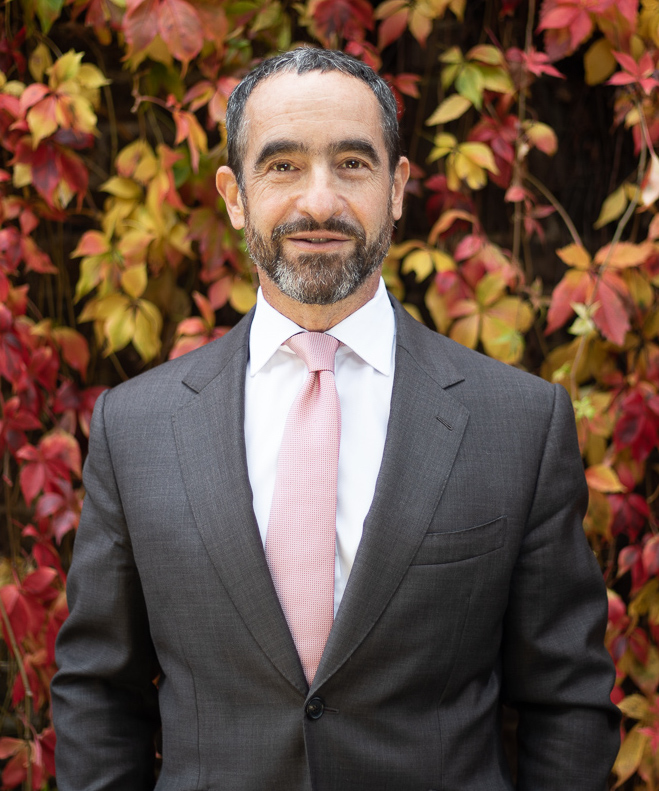
Michael is an acknowledged thought leader on clean energy, mobility, technology, climate, sustainability and finance. He is Co-Managing partner of EcoPragma Capital and CEO of Liebreich Associates. Michael is also co-host and founder of 'Cleaning Up' a podcast and YouTube Series.
Former roles include member of the UK’s Taskforce on Energy Efficiency, chairing the subgroup on industry and an advisor to the UK Board of Trade, an advisor to the UN on Sustainable Energy for All, and a member of the board of Transport for London. He is also the founder of and a regular Senior Contributor to BloombergNEF.


