

 Apple Podcasts

 Spotify

 Overcast

 PocketCasts

 RSS Feed

The Race to Rebuild Ukraine's Energy Infrastructure | Deep Dive 02: Andrii Gerus & Dmytro Boroday
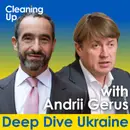
Can you make energy investments work in a country at war? Since Russia’s full-scale invasion in 2022, repeated attacks on Ukraine’s energy infrastructure have devastated its power system. By spring 2024, the country’s dispatchable generating capacity had fallen from 38 GW before the war to just 12 GW, leaving electricity in short supply and heating disrupted for many households.
For this week’s Deep Dive Ukraine, Michael Liebreich is in Kyiv speaking to Andrii Gerus, Chair of the Ukrainian Parliament's Committee on Energy, Housing and Utility Services, and Dmytro Boroday, Partner at Horizon Capital, about the race to rebuild Ukraine's energy infrastructure, and the capital needed to make it happen.
They examine how Ukraine is attracting international investors into wind, solar and battery storage, why distributed generation makes commercial as well as strategic sense, and how political risk insurance and development finance institutions are helping unlock projects. They also discuss the regulatory reforms needed to attract private capital, the challenge of corruption, and the potential for Ukraine to export electricity to neighbouring European markets.
Topics covered in this episode:
- Ukraine's energy system under attack
- The shift to distributed generation
- Why renewables strengthen energy resilience
- What winter is like to live through
- Financing energy projects during war
- War risk insurance for private investors
- Attracting international capital into Ukraine
- Ukraine's future in European electricity markets
Leadership Circle:
Cleaning Up is proud to be supported by its Leadership Circle. The members are Actis, Alcazar Energy, Arup, Climate Imperative Foundation, Copenhagen Infrastructure Partners, Cygnum Capital, Davidson Kempner, EcoPragma Capital, EDP, Eurelectric, KKR, Mitsubishi Heavy Industries, National Grid, Octopus Energy, Quadrature Climate Foundation, Schneider Electric, SDCL and Wärtsilä. For more information on the Leadership Circle, please visit cleaningup.live.
Links:
- Andrii Gerus’ bio: https://forumkyiv.org/en/speakers/andrii-gerus
- Dmytro Boroday’s bio: https://www.linkedin.com/in/dmitryboroday/
- Horizon Capital: https://horizoncapital.com.ua/
- European Energy Community fund: https://www.energy-community.org/Ukraine/Fund/overview.html
- Subscribe to our newsletter: https://cleaninguppod.substack.com/
Acronyms:
- CHP: Combined Heat and Power
- TSO: Transmission System Operator
- DSO: Distribution System Operators
- IRR: Internal Rate of Return
- IC: Investment Committee
- GP: General Partner
- LP: Limited Partner
- EBRD: European Bank for Reconstruction Development
- IFC: International Finance Corporation
- DFI: Direct Foreign Investment
- PPA: Power Purchasing Agreement
- BESS: Battery Energy Storage System
- MIGA: Multilateral Investment Guarantee Agency
Chapters:
- 0:00 Intro
- 1:06 Ukraine's Energy Crisis
- 3:29 Soviet Energy System
- 6:46 War Damage
- 10:09 Distributed Energy
- 13:31 Attracting Investors
- 17:03 War Risk Insurance
- 21:19 Corruption and Reform
- 27:04 Investing in Reconstruction
- 35:16 Financing New Renewables
- 41:03 Investing During War
- 47:26 Insurance Against War
- 51:26 Invitation To Investors
- 53:58 Outro
Dmytro Boroday
This winter in Ukraine was the harshest winter out of anything we have experienced. I remember during the months of February, when I would meet with the team in the morning, my day would start with asking out of the three things, electricity, heating and water, what do you have? You never had all three. You were lucky if you had two, most likely you had only one. And if we get to electricity, I still show the screenshot from my utilities app on one of the days in February, where we had electricity three and a half hours, two and a half hours at night and one hour during the daytime. But when you have something meaningful to work on and you understand that what you're doing has actually real impact on the lives of Ukrainians by bringing you energy, that gives you an extra motivation. So whenever we get a no on something, we never take it for granted. We always work, how can we turn it into yes and make these things happen?
Michael Liebreich
Hello, I'm Michael Liebreich, and this is Cleaning Up. Since the start of Russia's full-scale invasion of Ukraine in 2022, Russia has made a particular target of Ukraine's energy infrastructure. Before the war, Ukraine had a total dispatchable generating capacity of 38 gigawatts, according to the International Energy Agency. Six gigawatts came from the Zaporizhzhia nuclear power plant. The country also had around nine gigawatts of wind and solar. By spring 2024, following successive waves of attacks on energy infrastructure, the dispatchable total had fallen to just 12 gigawatts. Zaporizhzhia had been seized by Russia and was in cold shutdown. Across Ukraine, many residents had electricity for only a few hours a day, and those connected to combined heat and power plants often lost their heating. This year in August, Energy Minister Denys Shmyhal reported that the country had recovered slightly and, barring further Russian attacks, should have over 20 gigawatts by the end of the year.
But that's a big caveat, especially since Russian President Vladimir Putin is already signalling his intention to intensify attacks on Ukraine's infrastructure. Today, the majority of Ukraine's electricity comes from its remaining three nuclear power plants, which have so far not been directly attacked. In this second episode of our Ukraine Deep Dive, we'll be hearing from two people intimately familiar with Ukraine's energy system. Later, you'll hear my conversation with Dmytro Boroday, partner at Ukraine's largest private equity firm, Horizon Capital, about how his company is investing in energy projects around the country. But first, I spoke with Andrii Gerus, a member of Ukrainian Parliament and Chair of its Committee on Energy, Housing and Utility Services. Please welcome Andrii Gerus to Cleaning Up.
ML
Andrii, thank you so much for making time for us today on Cleaning Up.
Andrii Gerus
Thank you for coming to Kyiv. Thank you for coming to Ukraine.
ML
So now we're going to talk about what has happened to the energy system and how you've responded. But we need to take a step back because this was a Soviet energy system until fairly recently. Could you describe what it was like before the war?
AG
Yeah, you're right. We have a Soviet-style energy system. We tried to change it, but we still have some kind of such system, because our four biggest generation units produce more than 60-65% of all our electricity. And our top 10 substations of our transmission system operator, Ukrenergo, they transport more than 60% of all electricity. That's why Russia tried to attack the biggest generation units and the biggest substation, and we had a lot of problems because of that. So now we try to change our architecture, to change our energy model in order to build more distributed generation. And obviously, it will be based on renewables, on green energy. I mean, solar, wind, battery storage, this is our main goal and this is our strategy.
ML
Give us a sense of the geography, not of the country which we have a sense of that, it is very big and we know where it is. Everybody, I think, has been watching the news, we know. But in terms of the energy, where are your big sources of supply, sources of demand? And also, energy is more than just electricity. So how is your industry powered and where is it, and heating and so on?
AG
So historically, we had some big industries like metals and mining, chemistry, as they need a lot of energy from electricity, also from gas, if we're talking about chemistry. We also have big agro, so we have quite big potential for biomass, for biogas, for biomass we have quite good potential even for export. Even now, taking into account all the attacks from Russia in August and in July, we exported more electricity to EU countries than imported. And it's because we have a lot of solar, we have a lot of wind. And during the summer, we have a surplus of electricity and we can export it to Poland, to Hungary, to Romania. But we have some problems during the winter because we have quite cold winters and our demand is 1.5 or even 1.8 higher than during the summer. So we need additional electricity, that's why the winter is the biggest challenge for us.
ML
OK, so that gives a snapshot. And you've talked a little bit about where it's going because of the war. But I see it as being lots of agriculture in the west, lots of industry in the east, lots of sun in the south, wind pretty much everywhere. So a lot of resources not necessarily quite matching where they're needed, and then the war has destroyed, what has been the impact of the war?
AG
Yeah, you're right. We have industrial consumers and big industrial consumption at the eastern part of Ukraine and also Kyiv. We have many of our generation units in occupation. For example, the biggest nuclear power plant in EU, the Parisian nuclear power plant with six gigawatts of capacity, it is occupied right now. But we have a lot of potential of solar, of wind and we have very good development of battery storage in 2025 and also in 2026. Last year and this year, we will have an additional 1000 megawatts of solar. And I would say about 800 of megawatt of wind and probably more than 5000 of megawatt hour of battery storage, which is also very good for us because we need more flexibility for our energy system.
ML
And the heating is, how much of the heating is electrical or is most of it gas-based?
AG
It's mostly gas-based. We have centralised district heating in our cities, and even if we're talking about some villages, they use gas to have heating in their homes. So there are some cases with electrical heating, but I would say it's less than 5%.
ML
So the problem with heating is to do with combined heat and power. It's when the heat comes from a power station. It's not gas heating that's the problem. Gas heating is resilient, but CHP, combined heat and power, then the heat, is that correct?
AG
Yeah, yeah. It is correct. And we have three big CHP in Kyiv, they all were attacked. And in Kyiv, we have this heating from the CHP, so we had big problems. If we're talking about some villages, so we had gas in all villages, and then people in homes can just use this gas for heating for their own needs. But if we're talking about some cities, when we have CHP, so it is a big risk for next winter as well, I would say.
ML
What about cities like Kharkiv?
AG
Yeah, the same situation.
ML
These ones are CHP cities, so they have this problem of non-resilient heating.
AG
We tried to build some network of new, smaller generation of heating and electricity in order to decrease risks if a big CHP will be destroyed. But it is not easy to create full reserve for this big CHP. So the risk is really quite big for next winter, but we will try to minimise it.
ML
The reason I wanted to bring heating into it, because a lot of attention goes on electricity, but heating is actually life-threatening if you don't have heating, the temperatures that it gets to in Ukraine. But also, the question of resilience. You already said that what you're adding is wind and solar and batteries, and you didn't immediately jump to adding gas generating capacity. I think you're also doing some of that, but you say that the wind and the solar and batteries are more resilient? What's the spectrum there?
AG
They're more resilient because you can connect solar and even wind to the grids, not to TSO, but to DSO, to distribution system operators.
ML
So we have a rule on cleaning up about acronyms, and TSO, transmission system operator, DSO, distribution system operator, so they can be connected locally rather than centrally to the big high voltage grid.
AG
Exactly. And if you connect it locally to a smaller substation, so the risk is quite lower because it's very difficult to attack smaller points, some smaller units. That's why if you have many, many points, many, many units of solar, of wind, of battery storage, and of gas pistons generation, your risks will be much lower.
ML
So this is fascinating because Ukraine has had more physical attacks on its system anywhere else in the world by a long way, and what you're finding is you have to break it into smaller units. This massive Soviet centralized system turns out to have been a huge weakness. So you do it for cost reasons, but then you end up with an incredible vulnerability. And it feels to me like this is something we all everywhere really need to learn from.
AG
Yeah, maybe if you live in Australia, you can build something very big and have some economy of scale. But in the case of Ukraine, so we definitely need to build some smaller generation, some distributed generation. We need more and more different investors in different regions, that's why we try to decrease all bureaucracy, to make all procedures as simple as possible. And we already see quite good results. We see a lot of new projects in different regions in the south part of Ukraine. The western, especially the western part of Ukraine, because military risks are quite lower. So our strategy is also to attract private investors, private business, because I believe that private business can build something quicker and can launch some projects I know before this winter, before next winter, because usually state-owned companies are not very flexible. That's why we try to change our legislation in order to create some conditions, some good favorable conditions for investors in our energy system.
ML
You are attracting overseas investment. There are investors operating. So it's not just domestic companies or Ukrainian state operators, you've got some international investors. What sort of organisations? Who's investing right now from overseas?
AG
There are investors who invested in Ukraine previously, before the war. And if their investment was successful, they are trying to do it again and again. They are looking for some projects with high IRR. Because you know, during the last two years, we were in top three in terms of the highest price of electricity. We had quite expensive electricity on our wholesale market and so we understand why, because after all these attacks, we have a shortage of generation capacity. We have a shortage of electricity.
ML
Andrii, I have to come in and say IRR, internal rate of return, is the returns on the project.
AG
So this high price for electricity, it's bad for consumers, but it's good for investors. The second, we try to simplify, to make it as easy as possible, some bureaucracy, some procedures, some permits, how you can get access to the land, to start some building, to launch it. And I think our bureaucracy is much easier than in many EU countries. Now we see new investors from Norway, from Germany, from Poland, from many other countries.
ML
And do you have grid capacity? Because the big problem outside Ukraine, in a lot of Europe, it does take a long time to get all of the permits to build, but it also is taking a very long time to get grid capacity.
AG
Yeah, we have a lot of new projects in wind, in solar, in batteries, storage, in gas generation. And it means that we have capacity now in grids. And sometimes it costs, but if you have projects, I don't know, for 100 million, and you need to spend 1 or 2 million more for some substation for connection to grids, usually it's not a big problem if you still have good internal rate of return.
ML
And the supply chain in terms of the cabling and the substation, the transformers, I mean, everything's under such pressure, partly because of artificial intelligence elsewhere, but you seem to be able here, you seem to be able to get those things. Are you making them domestically? Are you importing? Are you doing both? Where is that coming from?
AG
It depends. If we're talking about transformers, yeah, so we make it domestically. We make domestically some cables, some equipment we need to import and we also just killed VAT tax for imported equipment for energy projects. It means that investors will save 20%, because investor will not pay this VAT tax to the budget and it will be a little bit cheaper to build something, and you need less capital to build the same project.
ML
But the big concern surely has to be just the physical risk, and then the political risk, the outcome. Because first of all, there's the attacks. You could build something and parts of it get destroyed the next year. But also the risk that this war drags on, that there's a bad outcome in part of the country or all of the country. How do they get insurance, who protects their downside?
AG
First of all, Ukraine is a very big country. And we have very different areas, very different regions. If we're talking about eastern part of Ukraine, it's closer to frontline and risks are much more higher. If we're talking about western part of Ukraine, it's not so risky. So mostly new investors are building their projects at western part of Ukraine, where risks are quite low. But you're right, many investors want to have some insurance. Such insurance could be from the countries that provide some equipment to the projects. For example, investors from Denmark, they can finance the wind turbines, and they also can provide some insurance for the wind turbines. Also, we have fund managed by Energy Community, if something is destroyed, you can send just letter and then they can buy new equipment.
ML
And this is something called the European Energy Community, which is one of the European institutions that I think a lot of people have not heard of. And we'll put a link in the show notes, because I was reading what they do and thinking, I don't know much about this. But they're helpful, are they?
AG
Yeah, they're a very big fund, which is financed by European countries and also Canada, Australia, Britain. And they buy some equipment for us and then provide equipment in order to restore some destroyed energy assets.
ML
Now, there is also a big push for new nuclear plants in Ukraine. Are you involved, is your committee also working to get new nuclear built, or is that on hold for the duration of the war?
AG
If we're talking about big nuclear generation, I think it is on hold. If we're talking about small modular reactors, we already prepared draft law for fast reading, and we are going to vote it in order to prepare some legislation. But right now, we are mostly focused on distributed generation and probably until we have industrial usage of this small modular reactors, which I believe will be, I don't know, in the next maybe three, four, five years.
ML
Because, of course, people talk about data centres, what a fantastic location for data centres. That feels to me like something that probably will have to wait.
AG
If we're talking about opportunities, right now, so data centre is good, but again all our risks, we understand maybe it will be a little bit after the war. But if we're talking about opportunities, so near Ukraine, there are very big, big European energy markets. And we already voted draft law about market coupling. So we have the same rules as in EU, we have the same procedures how you can export and import electricity. So actually, if you build some project in Ukraine, you can sell your electricity domestically here to Ukrainian consumers, or you can export it easily to Romania, Hungary, Poland, Slovakia, you can sell it to any countries in the EU.
ML
Which you're doing, as you said, in July and August, but only in two months of the year. There is one issue which I want to just raise, and I want your views or your insight into. And that is the question of corruption, and it's very difficult for an outsider to get a very clear understanding of what's happening. But there are repeated stories, and they are energy stories. They're from within the energy system, and they involve some of the very big players, and they involve some of the players very close to the government. Is that a fair perception of what's happening here in Ukraine?
AG
Your question is very important, and we should understand that mostly such stories about some corruption schemes, they are about state-owned companies, state-owned assets. The more private companies we will have in our energy sector, the better it will be, and the more transparency we will have in our energy system, and the less corruption we will have. Because again, corruption mostly was connected to the state-owned company when they bought something or sold something at a not fair price. The second good news is we have this investigation from anti-corruption bureau. It was quite a serious and quite deep investigation. And it's good that they raised this problem, because I think that after some of such investigation, the level of corruption will go down. And it's probably impossible to imagine, to understand, to see the same situation for example in Russia, because I'm sure they have much more corruption, but no investigation about corruption.
ML
But the investors I'm thinking of, they're not choosing between investing in Ukraine or Russia. They're looking at, well, should I do Ukraine or Holland or similar questions, or Canada or the US or Germany. But I suppose the question comes down to, is it historic corruption that's being cleaned up, or is it a kind of endemic corruption that will always be going on? Because you talk about the anti-corruption agency. And when I've seen these stories about corruption at the very top of the energy industry in Ukraine, I kind of like to see those stories. Because like you, I say, well, at least it's coming out, at least the agency is on top of it. But then about 18 months ago, there was a real push to stop the agency, to remove the powers or to reduce the powers of that agency. And then I find it very difficult to understand where that ended up. Does the agency have real teeth, or was it pushed back from investigating? And ultimately, will these scandals stop?
AG
Good question. So first of all, I want to say that I did not vote for this draft law to stop the work, to stop the investigation. And I think it's good that this law was cancelled, it's good that it was cancelled. So the better, it was not even, it should not be voted and I did not vote. And I believe that this anti-corruption bureau should work. After their investigation, corruption will go down because we should build the rule of law in our country. In your question you asked, was it some historical problem or some new problem? I believe it is a historical problem. And of course, we had some problems with corruption 10 years ago and 20 years ago. But maybe we had less investigation. But actually, the problem was now we have more investigation, we can discuss it, we can read about it in some articles, even in the UK, in some articles. The more private business, the more private investors we will have in the energy sector, the better, even for our anti-corruption, because mostly, all these corruption schemes were connected to some state-owned companies.
ML
I hope you're right. And that the vast bulk of what we hear about is still historic and not current. Thank you so much for spending time with us today. I don't know if I can call it an optimistic view. It is a vision and I hope that you can execute the vision of more distributed energy, bring in foreign investors, reduce corruption, start to grow energy demand, bring back industry, and then, of course, look forward to a future when the war is over, and you can really get started on some of the big projects that the country is clearly capable of.
AG
Thank you. Thank you for our conversation and thank you for coming to Kyiv, to Ukraine.
ML
My pleasure. Thank you.
ML
Cleaning Up is proud to be supported by its Leadership Circle. The members are Actis, Alcazar Energy, Arup, Climate Imperative Foundation, Copenhagen Infrastructure Partners, Cygnum Capital, Davidson Kempner, EcoPragma Capital, EDP, Eurelectric, KKR, Mitsubishi Heavy Industries, National Grid, Octopus Energy, Quadrature Climate Foundation, Schneider Electric, SDCL and Wärtsilä. For more information on the Leadership Circle, please visit cleaningup.live. To keep up with all that's going on in the Cleaning Up universe, make sure you subscribe to our newsletter. Written and edited by my longtime New Energy Finance and BloombergNEF colleague, Angus McCrone, it comes out every second Monday. Angus provides the latest on the episodes we're recording, the events we're hosting, stories we're watching and what Bryony Worthington and I are up to. To sign up for the Cleaning Up newsletter, visit cleaningup.live.
ML
After speaking to Andriy, I heard directly from a local investor about how you go about building new energy infrastructure in a country in the midst of war. What is investable? How do you protect it from attacks? How do you insure it? How quickly can you build? How quickly can you start supplying people with energy? And can you make any money doing it? I sat down with Dmytro Boroday, who's a partner at Horizon Capital, a Ukraine-based private equity company, and who leads the company's Catalyst Fund, investing in critical infrastructure, including energy, construction, and digital networks. Please welcome Dmytro Boroday to Cleaning Up. Dmytro, if I might call you Dima, thank you very much for making time today to join us on Cleaning Up.
Dmytro Boroday
Thank you Michael for having us.
ML
Could you start by explaining who you are, what you do?
DB
Yes. So my name is Dima Boroday, I'm a partner and IC member at Horizon Capital, and Horizon Capital is the largest private equity fund in Ukraine. We have 1.8 billion in assets under management. We have been operating here in Ukraine on the ground for more than, for 30 years already. We're a generalist investor in Ukraine, we have adapted our investment strategies to the evolving Ukrainian economy, and currently we have two active funds out of which we are investing.
ML
And I think you've listened to some of the episodes, you will know the acronym rule, and you already broke it. What is an IC?
DB
Investment Committee.
ML
Investment Committee. And some of our audience are financial, they know what that means, and some are not and so I'll interpret: decision-maker. The Investment Committee are the people who say yes or no to investments. Now, you've got a fund specifically around reconstruction, and that is, I think, what you're spending a lot of your time on. Is that right?
DB
Yes, that's right, yes, So we have raised a fund dedicated specifically to Ukraine's real assets, because as I mentioned Horizon Capital, we have adopted our investment strategy over the years, and I think this is one of the key elements of our success. And we are our 2017 and 2021 vintage funds are in the top 5% by Cambridge Associates in terms of the performance and all key metrics. And more recently, we saw a huge opportunity with Ukraine's real assets, and energy is the biggest pillar of that strategy.
ML
Okay, so let's back up just a little bit, because 30 years, and you've done very well, 1.8 billion under management, and a very good track record, but not doing real assets. So what sort of deals? There was a big telecoms deal, as I understand.
DB
Yes, yes. Actually, this is what was the, I would say, kind of the trigger or gave us the inspiration to go and do this. So what we have done is we, in 2024, we have closed the deal when we attracted a leading European investor, Xavier Niel. He's a French entrepreneur well known for his investments in telecom and tech space. So he partnered with us to acquire a telecom business in Ukraine. And that's a very large transaction. That's more than 700 million in acquisition price only in 1.5 billion together with a CapEx. The significance of this is that it's the unprecedented deal when there is a commercial investor, where the very well-known and high regarded investor entering the country at the state of war, paying a fair price for this asset. And it shows basically that with the right partners, with the right deal set up, with the right asset quality, you can do really world-class transactions in Ukraine.
ML
I want to move on now to the reconstruction fund because that's the one that is investing and has already done transactions in the energy space.
DB
That's correct. That's correct.
ML
How big is that fund? What's the background to that? Who have you raised money from and so on?
DB
So we have raised that fund. We're very proud that we launched the fundraising in the summer of 2025 and we managed to get to the first closing in record six months. This is for real assets in Ukraine, that's a record time. And we're extremely grateful to our limited partners who joined in the first closing to make it happen. So the fund target size is 300 million euros, we have already raised 152 million euros from six LPs.
ML
Let's do terminology for the sake of the audience. The GP is the general partner. That's the person, that's the organisation that runs the fund, that's you. And then LP, limited partners, they have limited involvement liability, I don't know where it comes from. But the LP is then a financial institution or a family office or whoever, a pension fund, and they put money in the fund alongside you. So you have put in a GP commit, a general partner commitment, you might want to tell me how much it is you might now. And then the LPs, the limited partners, have come in as well. Who are they and what is the mix between you and them?
DB
Yes. So the six LPs who came in the first close, these are blue chip institutions. That's international financial institutions like EBRD and IFC, and these are the national development financial institutions of European countries. So we had Swedfund, Proparco, Norfund and FMO at the first closing. And the way it works with our fundraising is that it's really important to have the anchor LPs who would establish the fund and basically validate the model. And then we do subsequent closings, so of course, we're not stopping at 152 million euros, we will raise more and we are raising more. And they're when many of the private LPs come in, and we're extremely proud that over the years, Horizon Capital was backed by a number of really blue chip, world-class private LPs.
ML
So you mentioned EBRD and IFC. I'll let you get away on the acronyms, but it is the European Bank for Reconstruction Development and the International Finance Corporation. And these are what are called multilaterals. So they are, that's a pool of money put together by multiple countries, Europe in one case and part of the World Bank in the case of IFC. And then you have a number of national development finance organisations. FMO is the, I don't know what it stands for, it's in Dutch because it's the Netherlands. And then you said there was the Swedish one and there's a few countries. So those are either multilateral, multiple countries or single country development finance. But now you're moving into a phase of trying to attract money from perhaps some pension funds, some insurance companies, maybe some sovereign funds, maybe some very big families. Don't tell me what's secret, but presumably that's the sort of people that you're talking to.
DB
Yes, yes, you're absolutely right. We continue talking to, of course, other national DFIs because not all of them could have joined based on the timelines, the first closing.
ML
DFI?
DB
Development Financial Institutions. Yes, yes. So, but of course, we're now expanding the LP base to private LPs.
ML
The reason I clarify all of this is it's very interesting to see you are evidence that money is flowing into Ukraine despite the war. And it's very interesting to see whose money is it. And so far, it's your own from your own general partnership, your money, presumably some of your actual money yourself, but also your partners, but then multilateral and national development finance institutions. So far, it's kind of the insiders and public money, but now you want to broaden that and bring in a broader set of finance. And so you've started to deploy, you have 160 million, you said already?
DB
152.
ML
152 million already committed. And you've done your first transaction or transactions, talk to me about those.
DB
Yes, so we have closed already the first transaction, and we're very proud that we managed it, it actually shows the demand. So we signed at the World Economic Forum in Davos the first closing of our fund, Catalyst Fund, and also the first transaction out of that fund. That was a partnership between us and Notus Energy, which is the large European renewable energy player, to help launch their first project in Ukraine. And that project is a 124 megawatt wind farm in Ukraine. And we're very proud that we managed to pull it off, this project. Also, it has some unique features for the Ukrainian market. You know, we managed to get the corporate PPA, power purchasing agreement.
ML
So a corporate customer that's buying the energy that comes out, the electricity that comes out of the project?
DB
Yes, yes, absolutely right. That's a market standard for your audience, it's a kind of a market standard in Western countries, right? But unfortunately, Ukraine's market is not as developed in that particular aspect. There is no market for corporate PPAs, there are almost no precedents of having the corporate PPAs. But having such an instrument is extremely important for the market. And we're extremely pleased that here we're setting a benchmark and basically an example that such contracts are possible in Ukraine. We have also secured a warrant political risk insurance, which is extremely important for this market dynamics and environment in which we are operating obviously, and long-term financing, debt financing, because again, this is the market standard you need to have on a project finance basis long-term debt.
ML
So let's unpick that because that's the capital stack, that's how you finance the project. So first of all, Notus, you said that they're a renewable energy player. Okay, lots of people are players, what sort of player are they?
DB
They're a developer and operator. So they do the full development cycle, which was the case in this project, and it was very important for us that the development of this wind power project was done to the Western standards.
ML
So they have a portfolio of projects outside Ukraine in Europe. And did you originate the project or who did the work on the ground to develop the project, get all the permits, sell the PPA, etcetera, was that you or was that them?
DB
So that was Notus. The way we partner is we need to have a strong operator, and in that case was Notus. So they developed the project, they get all the permits, all the licensing, everything you need to get ready, to get the project ready to build stage.
ML
So you are the local expertise, local financial expertise, and presumably lots of connective tissue with government, et cetera, et cetera, and then they were the development experts. So they did the project development. And you took a piece of what they did, essentially their project?
DB
Yes. So we became a minority shareholder, which is a standard position for us in pretty much all of the transactions which Horizon Capital does. We become a significant minority investor, in this case, it was a 45% stake in the project. And then we raised additional financing from debt providers, which was IFC, EBRD, and then we had a Swedfund and the Belgian DFI, and Green for Growth, this is a fund dedicated for green energy in Europe.
ML
So the same people that put money into your fund are actually equity holders, but they also put in debt. So just to be clear, it's still in the kind of multilaterals and governmental taxpayer funded funding space. Okay, so that's that project.
DB
And actually maybe just to unpack on this, it actually shows how important it is. So we're operating in Ukraine, ee understand the elevated security risks and unprecedented environment. So the winning formula actually to do the projects and to do large deals in Ukraine is this partnership between public finances, which come from institutions like EBRD, IFC and national development financial institutions but you need private players because unless you have the initiative and the capital to risk, you cannot rely on reconstruction to be done only by the public finances.
ML
You're preaching to the converted, at least in this seat, because I think that the only source of really large scale finance for whatever it is you're trying to do is going to be the private capital markets, but also pension funds, sovereign funds, insurance companies, and so on. But you've got to get into that space otherwise you're limited to a kind of silo of money, which is inevitably going to be limited.
DB
Yes. And the critical element is that these institutions, they send a very strong signaling effect which then private equities can follow. Just like with our fundraising, we have the IFIs and DFIs to come into the first closing. And then we can go to the private piece can unfold, because with the first closing, we can show how we transition from a theoretical pipeline into actual deals. And then the private of peace can evaluate us as a fund manager based on the deals, which we have done. And then they can seek commercial merits and then they have much more comfort coming in with their capital.
ML
And that's a theme actually that we have explored in other episodes. It's a well-trodden pathway, but not usually done in a time of war. Because while you were working on those transactions, you were based in Kyiv?
DB
Our team is based in Kyiv, yes.
ML
And what were the conditions like? Because I understand when you describe all of this, I've met, I'm going to say thousands of people who work on those sorts of transactions, but they don't do it in a situation like this, so what was that like?
DB
You work with extra motivation and it really helps to endure some of the challenges which we face kind of in Ukraine. Because this winter in Ukraine was the harshest winter out of anything we have experienced. I remember during the months of February, when I would meet with the team in the morning, my day would start with asking out of the three things, electricity, heating and water, what do you have? You never had all three, you were lucky if you had two, most likely you had only one. And if we get to electricity, I still show the screenshot from my utilities app on one of the days in February, where we had electricity three and a half hours, two and a half hours at night and one hour during the daytime. These are the realities. But then it's so harsh on maybe on the personal level, but when you have something meaningful to work on and you understand that what you're doing has actually real impact on the lives of Ukrainians by bringing you energy, that gives you an extra motivation. So whenever we get a no on something, we never take it for granted. We always work, how can we turn it into yes and make these things happen?
ML
Are you worrying about the same things again this winter? Is it going to be better, is it going to be worse, what do you think?
DB
Yeah. You never know what the future holds, of course, but Ukraine is getting more and more prepared for this. So although currently it's really challenging here, I mean, you hear this drone attacks and ballistic missiles. I think businesses and companies are getting more and more prepared for this. So I'm actually, I mean, we all prepare, like, you know, we have a shelter in our basement in the office, what we're doing is we're expanding it to make sure that we can work full time, like without interruption, take confidential calls in our basement. And this is what we're doing. This is what our portfolio companies are doing, this is what broadly the business community is doing in Ukraine. So we will not collapse. We'll stay strong and, you know, Ukraine will continue working as we are.
ML
And for context, right now there is actually a yellow alert as we speak. We're sitting here. The system has been segmented into red alerts, which are ballistic missiles and cruise missiles, and yellow, which is only in air quotes a Shahed. So we have made the decision before recording this that we're going to sit and record it. So presumably those decisions you're making all the time as to whether you can go to a meeting or whether you're not going to go to a meeting and so on, extraordinary working, extraordinary circumstances. So you've done your first deal, which is the wind, the Notus wind farm, 120 megawatts. You've done a second deal, can you talk about it? And then what sorts of projects do you want to do beyond that?
DB
Yes. So we're very much focused on renewables, it makes a lot of sense in the context of Ukraine. So first of all, this renewable energy is by its nature is distributed energy. And here it's very important in the context of the security environment in which we operate. Second of all, Ukraine is blessed by fantastic natural conditions for doing renewables in Ukraine, specifically wind. So out of all European countries for onshore wind, we have one of the highest wind capacity factors in specific regions of Ukraine, so basically the commercial model works very well. And third of all, this is the most sensible approach to do from a commercial standpoint, given how much the cost of the renewables have gone down relative to what it was 10 years ago, so we're extremely bullish on everything that has to do with renewables in Ukraine.
ML
And in the south, I don't know what the wind is like, but there's a lot of sun around the Black Sea coast, so are you doing solar projects? And then will you do batteries? What's the envelope?
DB
Yes. So we started with wind. Our first transaction is wind, we're evaluating in a very advanced stage for another wind projects in Ukraine with a very experienced European player. And we're actively evaluating solar plus BESS, and the market environment in Ukraine doing solar just standalone is a bit tricky.
ML
BESS is technically an acronym.
DB
Yes, which I think the audience of your podcast knows very well. It's battery energy storage systems.
ML
Very good, thank you. So they would be it, but you would probably be looking to do solar plus the battery energy storage systems, the BESS. What about vehicle charging? Do you do charging infrastructure, are you looking at it, is it outside your remit, is it inside?
DB
We definitely can do it, this is within the mandate of the fund. There it's more of a question of finding the right partner with whom to do it and clearing some of the elements of the risk model, but Ukraine has fantastic potential. What maybe the audience doesn't know is that we have one of the highest adoption of electric vehicles in Ukraine. So because we have a very favorable tax regime until the winter of this year, so we actually have a large fleet of electric vehicles.
ML
And what about geography? You've talked about the project that you've done being in the west. So it's a very agricultural region, but it's also not been as affected by the conflict since 2022, at least, as the front, which is largely around the east and the southeast. Do you do the whole country, do you stay away from the front? Where are you geographically?
DB
Yes. We evaluate this case by case and it depends on the nature of the asset of course, whereas the kind of more single asset concentration risk, we would do central and western parts of Ukraine or south. But many of the deals which we're considering are very distributed in nature. And then, of course, it's a nationwide platform but there is a no single asset concentration risk.
ML
You mentioned that you've got insurance. Who provided that? That's war risk insurance. Who provided it and how easy is it to get that? Because I can see high electricity prices here, you've got an extreme urge to do things quickly, everybody working under this motivation. All those are positives to get things done, but they're still your financiers. At the end of the day, nobody wants to put money at risk against the extraordinary war risk, the risk of the asset being attacked, being destroyed, the customer, the offtaker, perhaps being attacked and their facility being destroyed. So who provided that insurance?
DB
Yes. So in general, I would say there has been a very good progress. Maybe not sufficient, but already very good progress made on the availability of war and political risk insurance. Honestly, this is a number one topic when it comes to the discussion when we have with our international partners, operating partners whom we want to attract to Ukraine is availability of these instruments. And we have seen increased availability coming from international financial institutions like the World Bank Group through their MIGA program.
But also specific European countries, governments providing it to their investors. Or whenever the sponsor is acquiring equipment, purchasing equipment from their country of operations, then you can apply and get this insurance.
ML
MIGA is part of the World Bank Group. I don't know what MIGA stands for, but I've come across it as being a provider of foreign exchange risk insurance, but not bombs and bangs war risk insurance. But have they expanded to do that?
DB
Yes, yes, that's possible. There is a menu of options of what you can tick in terms of this. And obviously for Ukraine, what you need is the war risk as well.
ML
So it must be tempting to go to the limited partners you want to get into the fund or into the debt providers, into the asset and say, look, the only difference here between Ukraine and name your country, Greece or Romania or France or wherever is, there is a war, but that risk is taken by this facility, we've closed that off and it's not a risk. And then it's a very attractive market. But is there not a scenario where the war really goes badly? I don't want to jinx anything by saying it's likely, but what happens if the war really takes a bad turn, whatever that might look like?
DB
Of course, hope is not a strategy. And as you can understand, we would not have been a successful fund manager if we had not contingency plan and business continuity plan for our firm, for each specific asset. So we have tested that in 2022 when the war started, and we raised the fund in 2022, our first fund after the full-fledged innovation. So what we have the thinking and the planning, which we have put in place, it actually worked very well, which gave our LPs confidence to back us again. And of course we're doing here the same. Because the shock which we have experienced during the first months of the war, this is kind of unconceivable, unimaginable and the businesses survived. Pretty much all of our portfolio companies have surpassed the 2021 pre-war levels in terms of their operational and financial metrics. So actually it's the performance and the resilience and the actions taken by entrepreneurs, by the management teams, which give us the ultimate trust that whatever comes our way, we will find the way. Of course, we do the war on political risk insurance, the legal kind of, and the financial instruments to de-risk it. But I think at the end of the day, it boils down to the people who are here on the ground, they are very adaptable. And whatever the new curve ball is being thrown at us, we find a solution very quickly.
ML
Now, we know that there'll be lots of investors out there listening to this of all sorts. And supposing they're listening to this and thinking, well Horizon, Dima and his team, they've really cracked the code and we should be investing more, maybe we've got a allocation meeting coming up and I'm gonna say we ought to be putting some money into Ukraine because it's top 5% and you can ensure the risks and we should be doing this and so on, and there was a flood of investors coming to Ukraine wanting to do what you do. Would that worry you or would you welcome that?
DB
We would definitely welcome that because our model is Horizon Capital is a significant minority investor in most of the deals. So we actually, a big part of our job is looking for strong operators, funds, strategics with whom we can partner and attract them coming to Ukraine. So we very much welcome large infrastructure funds, large energy players out of the Western world for them to come to Ukraine and we would be their local partner. And the great thing is that it's a win-win scenario. It's a win-win for them because they would find a strong international in terms of source of capital and principle of doing business, but local in terms of their support, partner in Ukraine and we would attract a world-class investor into Ukraine. And we have the same objective. We want to develop amazing projects here in Ukraine and capitalise on them and exit. So we very much welcome and we're happy to engage and help to bring the case of Ukraine for this because if Ukraine is successful as an investment destination, we would be successful as well.
ML
Very nicely done. I also know that you've got a first close you've done, but you have a fund that's open, you managed to do that without talking about financial investors. I may infer that you want to talk to them as well, but you're not allowed to say so, so very well done. And all I can do now is really wish you luck, luck with each of your projects, with the fund, with obviously the luck to the country that's taken as red, but also luck with your heat, water, electricity this winter. Thank you very much for spending time with us here today.
DB
Michael, thank you so much for coming to Ukraine, for having this episode actually filmed in Ukraine. And thank you so much for having me.
ML
It's a great pleasure. So that was Dmytro Boroday, partner at Kyiv-based Horizon Capital. And before him, we heard from Andrii Gerus, chair of the Ukrainian Parliament's Energy Committee. My sincere thanks to both of them for taking time out from the Yalta European Strategy Conference to speak with me. I want to thank all those who made my trip possible, in particular, Imogen Payter, Heather Buchanan and their colleagues at UK Friends of Ukraine, as well as Gary Edwards and the team at Frontier Global for keeping us safe. My thanks go to Oscar Boyd, travel buddy, producer, cameraman and editor on this Ukraine Deep Dive, and special mention goes to Dominic Culverwell at the Kyiv Independent and Maria Vlock for her help with translation. Thanks too to Jo Jagger for making sure this trip happened, to the whole team at Cleaning Up, and of course, to our Leadership Circle, without whom none of this would be possible. Next week, we'll be talking with John E. Herbst, former US Ambassador to Ukraine, about the origins of the war and how it may, one day, come to a close. Please make sure you've signed up for our free newsletter at cleaningup.live and join us at the same time next week for the next episode of this Ukraine Deep Dive.
Cleaning Up is proud to be supported by its Leadership Circle. The members are Actis, Alcazar Energy, Arup, Climate Imperative Foundation, Copenhagen Infrastructure Partners, Cygnum Capital, Davidson Kempner, EcoPragma Capital, EDP, Eurelectric, KKR, Mitsubishi Heavy Industries, National Grid, Octopus Energy, Quadrature Climate Foundation, Schneider Electric, SDCL and Wärtsilä. For more information on the Leadership Circle, please visit cleaningup.live. If you're enjoying this episode, please hit like, leave a comment, and also recommend it to friends, family, colleagues, and absolutely everyone. To browse our archive of around 250 past episodes and to subscribe to our free newsletter, visit cleaningup.live.

Co-host, Cleaning Up Podcast
Michael is an acknowledged thought leader on clean energy, mobility, technology, climate, sustainability and finance. He is Co-Managing partner of EcoPragma Capital and CEO of Liebreich Associates. Michael is also co-host and founder of 'Cleaning Up' a podcast and YouTube Series.
Former roles include member of the UK’s Taskforce on Energy Efficiency, chairing the subgroup on industry and an advisor to the UK Board of Trade, an advisor to the UN on Sustainable Energy for All, and a member of the board of Transport for London. He is also the founder of and a regular Senior Contributor to BloombergNEF.


