

 Apple Podcasts
 Spotify
 Overcast
 PocketCasts
 RSS Feed
How Renewables Are Replacing Australia's Ageing Coal Fleet | Deep Dive Australia 07: Paul Simshauser

Australia has one of the world's fastest-moving electricity systems. It leads the world in rooftop solar, has deployed grid-scale batteries at extraordinary speed, and is now starting to replace its ageing coal fleet with cleaner sources of energy. But as renewable costs rise and electricity demand grows, can the transition remain affordable while maintaining a reliable power system?
This week on Cleaning Up, Michael Liebreich is joined by Paul Simshauser, CEO of Iberdrola Australia, and one of Australia's leading energy economists. Drawing on decades of experience across electricity markets, networks and policy, Paul explains what makes Australia's power system unique, and what the rest of the world can learn from it.
They discuss why rooftop solar has become so successful in Australia, how batteries are transforming electricity markets, and how the country's energy-only market encourages investment. They also explore the economics of replacing ageing coal plants, the costs of new renewable generation, the role of electricity pricing and demand tariffs, and what will be needed to build a resilient, affordable power system as Australia moves towards net zero.
Topics discussed in this episode:
- The rooftop solar revolution
- How batteries are reshaping the grid
- Why solar is cheaper in Australia than elsewhere
- The challenges of retiring coal
- Whether renewables can stay affordable
- Building a resilient power system
Leadership Circle:
Cleaning Up is proud to be supported by its Leadership Circle. The members are Actis, Alcazar Energy, Arup, Copenhagen Infrastructure Partners, Cygnum Capital, Davidson Kempner, EcoPragma Capital, EDP, Eurelectric, the Gilardini Foundation, KKR, Mitsubishi Heavy Industries, National Grid, Octopus Energy, Quadrature Climate Foundation, Schneider Electric, SDCL and Wärtsilä. For more information about the Leadership Circle, visit cleaningup.live
Links:
- Paul Simshauser’s bio: https://www.linkedin.com/in/paul-simshauser-00106713/
- Iberdrola Australia: https://www.iberdrola.com.au
- Link to Paul’s articles: https://experts.griffith.edu.au/18942-paul-simshauser/publications
- Malcolm Turnbull on Cleaning Up https://www.youtube.com/watch?v=t9CUGRHCswU&t=5s
- Marc England on Cleaning Up https://www.youtube.com/watch?v=1tKVSJcS_SI
- Darren Miller on Cleaning Up https://www.youtube.com/watch?v=iBhkBTZ9lSI&t=2s
- Tony Abbott on Cleaning Up https://www.youtube.com/watch?v=_39HmAgq9RY&t=1s
- Subscribe to our newsletter: https://cleaninguppod.substack.com/
Acronyms:
- STC: Small-scale Technology Certificates
- CFD: Contract For Difference
- PPAs: Power Purchase Agreements
- IBGYBG: “I'll be gone, you'll be gone.”
- OEM: Original Equipment Manufacturer
- AEMO: Australian Electricity Market Operator
- LNG: Liquefied Natural Gas
Chapters:
- 00:00 - Intro
- 02:28 - Paul's Background
- 04:07 - Iberdrola Australia
- 06:42 - Australia's Power System
- 09:15 - Battery Revolution
- 12:36 - Energy-Only Market
- 14:35 - Why Solar Succeeds
- 18:21 - Commercial Solar Challenge
- 24:30 - Ageing Coal Fleet
- 28:49 - Carbon Markets & Pricing
- 35:00 - Renewable Costs
- 39:18 - Future Demand
- 42:45 - Grid Resilience
- 48:00 - Outro
Paul Simshauser
There's a couple of interesting characteristics about the Australian market. The first is Australia's love affair with solar. So we have the highest take-up rates of solar PV in the world. In the state where I come from, in Queensland, on detached homes, more than 50% actually have a rooftop solar system. And if you swing around to South Australia, the numbers are very similar. So that's the first thing. Secondly, we've had a fast-moving utility-scale market as well. So we went from a power system with 92% coal market share, it's in the 50’s now, so 44% renewables as we stand here today, driven by a combination of utility-scale wind and solar. And of course, rooftop solar is 14% of total market shares.
Michael Liebreich
Hello, I'm Michael Liebreich and this is Cleaning Up. We're recording today in Sydney so I would like to acknowledge the Gadigal people, the traditional owners of the land and pay my respect to their elders, past, present and emerging. My guest today is somebody who has been referred to by one of my previous guests, and that is Malcolm Turnbull episode 222, who referred to Paul Simshauser who's my guest today, as the most brilliant analyst of the power system, the energy system, but specifically the power system in Australia today. So it gives me great pleasure to record here at the Arup offices in Sydney, live in front of a live audience with Paul Simshauser. So let's please welcome him to Cleaning Up, Paul, hello.
PS
Thank you, Michael. After an introduction like that, I can't wait to hear what I have to say.
ML
Well, me too, me too. It was high praise indeed from Malcolm.
PS
Too kind, it was.
ML
Yes and I don't know whether it's somebody you've worked closely with, but presumably, yes you've had your touch points with him when he was Prime Minister.
PS
Actually, different points over but probably more after his time in political office.
ML
Because he now runs the Turnbull Renewables.
PS
Yes.
ML
So why don't we do the usual thing, we'll start with your introduction to yourself, in your own words. It's always interesting to know what part of your storied background you're going to pull out for us, so who exactly are you Paul?
PS
So energy economist by trade, CEO of Iberdrola Australia and pretty freshly minted in the role, so I've only been in the role for about five months now. Prior to that was the CEO of Powerlink, which is the state grid of the Queensland region of Australia's national electricity market, and I moonlight as a professor of economics at Griffith University.
ML
Very good and we need to bear in mind, we've got three audiences today. We've got our live audience and if anybody hears them sort of chuckling or something, if we say anything that's funny or make a ridiculous blooper, more likely in my case. But there's also within the online, within the Cleaning Up audience, you've got Australians, that's about 12% of the audience. And they would, I suspect, be people who know quite a bit about clean energy because in fact, all of the audience knows quite a bit if they are regular listeners. But the Australians will know the Australian system and the non-Australians will know very, very little. We're doing this mini series to bring them up to speed so we just need to bear that in mind. And we also have the acronym rule. And I've got to be honest, Australia is acronym soup more than any other market that I have done this in so let's see how that goes. Now, on those lines of Iberdrola Renewables, just say a few words, because not everybody, we have leaders of civic society, we have people in markets where maybe Iberdrola is not operating, if there are any. Just tell me, what does Iberdrola do?
PS
So it's the world's second largest listed utility headquartered in Spain. Has big businesses in Spain, in Great Britain, United States and Brazil, a number of smaller businesses in Western Europe and Australia. And their primary investment profile, very big in networks and of course, renewables has been a big push of theirs over a long period of time. And I guess the key thematic inside the organisation is networks in particular, I guess, has been quite a focus, largely driven by that inevitable drive towards electrification.
ML
And when you say networks, you mean distribution networks. They're not in the transmission part of the grid.
PS
They're in both.
ML
They're in both.
PS
Yeah transmission and distribution.
ML
But some people may not know that they're using Iberdrola. They may not know that their utility is Iberdrola, because not everything is branded Iberdrola yet, I don't know how that works.
PS
So locally in Australia, our primary set of assets is really what we'd call a small but perfectly formed generation portfolio; wind, solar, batteries, gas, turbines. It's almost like a vision of…
ML
So here you don't have a network?
PS
So over here in Australia, network is part of our business and is just starting to move. We've been involved in contestable transmission.
ML
So contestable is not an acronym, but we do need probably to explain. That's where third parties can build some lines where it's not a monopoly. In the UK, you've got National Grid and nobody else gets to build lines, that's not the case here.
PS
Exactly right. So there are some transmission lines that are made contestable open to market. And of course, the idea is to get different players doing different things and sort of the theory of course goes, get a better result for consumers.
ML
And so as part of this Australia miniseries that we're recording as I travel around, I've spoken to Marc England, who's the CEO (of Ausgrid), most likely by the time anybody's listening to this, it would be the previous episode, depending on the order they come out. And of course, that is if you want to, if anybody wants to know what it's like to run a distribution network in Australia, that's a really good starting point. With your excessive brilliance, as we've heard, could you perhaps just characterise what is happening here in Australia? How is the power system developing, what does it look like?
PS
Yeah, so I think maybe if we go back to over the last say, 20 odd years in the reform or the post reform era, we had a power system that was low cost, 92% coal fired. So we all say, I mean, by any measure I think that made the East Coast of Australia, the most coal intensive power system in the world. It also meant, of course, if you were going down that path of cleaning up, you've got the toughest job in the world to do so. I mean, that's an enormous plant stock to turn over. And of course, that coal fleet over time, it's been ageing. We haven't commissioned any new coal plants for a couple of decades now.
There's a couple of interesting characteristics about the Australian market. The first is Australia's love affair with solar. So we have the highest take up rates of solar PV in the world. In the state where I come from in Queensland, on detached homes more than 50% actually have a rooftop solar system. And if you swing around to South Australia, the numbers are very similar. So that's the first thing. Secondly, we've had a very fast moving utility scale market as well. So, you know, we went from a power system with 92% coal market share. It's less than, you know, so it's in the 50%s now. So 44% renewables as we stand here today, driven by a combination of utility scale, wind and solar. And of course, rooftop solar is 14% of total market share.
ML
Let's just slow there for a second, to tap the brakes there for the audience. So you've got 40 something percent of homes nationally have got solar, and they're providing 14% of the electricity.
PS
Yes and of course, you know, to put that into perspective as well, households are only, you know, 25%, maybe 28% of total electricity demand. So we've got a very large industry and industrial base, mining base. So for rooftop solar to be knocking out that much of the total market's quite a feat. The other thing, I guess, that's been interesting about our market has been the rapid rollout of utility scale batteries.
ML
Very recent.
PS
Very recent, extremely recent. So just over the last couple of years.
ML
Yeah. So the international audience probably will know about one of those batteries, which is...
PS
Big battery, right?
ML
The Elon Musk's original, and that was Mike Cannon-Brookes, your local software entrepreneur. I mean, I'm going to say billionaire, I'm very much hoping he still is. But he challenged Elon Musk to build one in...
PS
A hundred days.
ML
A hundred days, Elon Musk offered to do it in a hundred days.
PS
Or it was free. And he did it.
ML
He did it. And also it's been extremely profitable, has it not?
PS
Yeah, it has. And so those batteries have been increasing in their rollout over the last couple of years. And there's a couple of drivers for that. One is, of course, we're a solar rich nation. So you would expect that we'd have good arbitrage possibilities. So difference between the price you charge it and the price you discharge it. And as it turns out, when you rack and stack the world's electricity spot markets end to end, based on the one or two hour intraday price spread between bottom and top, the top three markets in the world, by quite a margin, are Queensland, South Australia and New South Wales.
ML
So batteries can get very complicated very quickly, and that is the intraday. So that's charge it today, use it tomorrow. So you can see that the prices are going to be high tomorrow, so you charge today?
PS
No, within the day.
ML
Okay, sorry.
PS
Yes. Intraday.
ML
Brilliant, there we go. Malcolm was right, you caught me. I made a mistake and you caught me, very good.
PS
Yeah. So typically we would see batteries charging in the middle of the day when you've got that very solar period.
ML
So this is the duck curve then. This is where the prices go zero or even negative midday and then you get to use them in the evening. Okay so intraday, not interday.
PS
Correct and in Australia, we don't have a duck curve. We've got a swan curve. It's much bigger. And the background behind that is rooftop solar. So if you think about the duck curve in California where it was made famous, largely driven by utility scale solar and of course, rooftop solar in the US is a bit more expensive than it is here in Australia. Australia is quite cheap.
ML
But that's something I want to come back to. Finish your thought and I want to come back to that point.
PS
So in Australia, we've got an enormous market share of rooftop solar and it's quite price insensitive. Most systems, the overwhelming majority of systems do not respond to what's going on in the wholesale market. They're installed for the household, not to play in the market per se. And what that has meant is just rooftop alone has created a duck curve. And then when you add utility scale in, it certainly has quite an impact and it's just made it so, and then so that gives you the opportunity to charge and then discharge. I think what's been really helpful for our market is its design is an energy only market. As distinct from electricity markets, we've got a capacity and energy market. So we have, you only get paid when you produce in our spot electricity market. What that means is we have an extremely high market price cap, it's a little over AU$20,000 a megawatt hour on a bad day.
ML
And we should translate that into what people's bills, if you do that on a kilowatt hour basis, it is AU$2 per kilowatt hour, where normally your prices that you'd pay, your average for the year would be 25, 27 cents. Electricity markets can get very, very complex. And there'll be people listening who'll be like, I don't really understand what is a capacity market and so on. So in the UK, for instance, we have a capacity market and that's how you get gas peakers, peaking plants built that will keep the lights on when it's not sunny and windy, particularly in the UK, windy. Nobody's going to build one and then only have it run 1,000 hours a year out of the 8,700. So therefore, you pay them just to kind of sit there and wait for the moment they can generate. That's a capacity market.
PS
That's right. They get paid an insurance payment every week or every month.
ML
And you don't have that. It's an energy only market.
PS
Yeah. So it's an energy only market, there's no administrative body that's going out there and making those reservations.
ML
And just to come back to the battery point, what that means is the wholesale price is more volatile because you don't have all this stuff sitting there waiting to come in and operate during the time when it's needed. The price just goes up and then you kind of see what happens. And what happens is people build batteries.
PS
Correct. And the old saying, the best cure for high prices is high prices, you'll get a market response. And I think we've certainly seen that here in Australia, there was a growing distance between the low and the high prices each day and batteries have come in to gobble up that arbitrage, so to speak.
ML
So let's stick with the particularities of the Australia market and we're on the kind of what Australia does well, because that price signal of the energy only market is driving innovation. And I said that we'd come back to these solar rooftops, you said they're cheaper than US, and I looked it up and it's not a bit cheaper than the US. Even if you look at a place like Arizona or Nevada, I mean it's got similar insulation, similar amount of sun as here, they are two and a half times more expensive to install than Australia. Why is that?
PS
Yeah, it's a good question. I think there's probably two key drivers. One is I think we've managed to get a good flow of trade with panels between China or Australia.
ML
You haven't had a trade war with China over panels. Not over panels.
PS
No, not over panels. And the second thing is, the installer markets, it's a pretty fit and healthy market. I mean, it's been hyper competitive for a long time and I know from a former life in utilities, trying to compete in that market is very difficult. You know, only the absolute fittest will survive, we're all specialists.
ML
So the American installers would say, “we're fit as well”, you know, “we're very good”, but then there's some particularities. So there is a support mechanism, but it's very, very simple. So the installer just gets the, what is the support mechanism called?
PS
STC, yes. STC, short term, what are they? Solar-
ML
In this situation, we always say, well, we'll put a link in the show notes because we can't remember what the acronym stands for.
PS
We'll have to go and Google it again. But those certificates have been slowly declining in value over time.
ML
But the installer banks them and only charges the post support mechanism price.
PS
Correct.
ML
Whereas in the US, you have to pay the full whack and then you have to go in and you have to go through your federal taxes and through some state incentive programmes and all of this is just friction in the system. And to be honest, I ought to flip the question around and say, installing solar is really cheap here in Australia and any Americans listening to this, you should explain why yours is so expensive rather than asking you what the difference is. But just as an aside, I spoke to a British friend actually yesterday who had put a nine kilowatt solar system on his roof. And he said it was so simple and he started explaining it all. And he got this far away look in his eyes, you know there's the birth of his children and the day he got solar in Australia.
PS
Yeah, the average size of systems has just been getting bigger and bigger over time on the install. So if you go back to any time before 2017, installation sizes averaged in any given year less than five kilowatts. And of course, started out maybe one kilowatt back in 2009. The marginal installation sizes at the moment are around 13 kilowatts.
ML
That's a big roof.
PS
It's a big roof. I mean, we do have the world's second largest houses here in Australia so just by floor space behind the United States. So we do have big roofs and of course, Australians have made it a sport of putting solar on their rooftops.
ML
But they must be exporting the majority of what they're producing at that point.
PS
At that point, absolutely. And which is, of course, where we get our duck or our swan curve from that enormous amount of rooftop solar.
ML
Let's talk about some of the things that are either not so good or very particular. Not so good is commercial and industrial. So whilst houses have got solar on the roofs, the warehouses, the box retailers, the factories, the bus stops, the car parks don't have solar on them. So what's going on there?
PS
Yeah, it is curious, and you notice that when you're flying into any of our airports that there's far less solar on industrial rooftops. Look, I mean I'm no expert on rooftop solar, particularly at the C&I scale. I know that most organisations that do sort of pursue some combination of rooftop solar and batteries, they'll work out how to make it work. But quite often there'll be sort of split incentives between leasehold and owner. It might be that they're on a demand tariff and the investment is starting to look like it's non-core, so there can be all sorts of frictions or transaction costs that prevent it.
ML
Let me just double click on that word, those words demand tariff, because I did not realise until actually we chatted about this, what we're going to talk about, and the words came up and I looked into it, and a demand tariff, can explain what a demand tariff is, because this is fascinating.
PS
So demand tariffs have their origins you have to trace all the way back to Sir John Hopkinson's classic paper that he delivered for the Royal Institute of Young Engineers or something.
ML
Junior Engineers Society.
PS
Junior Engineers Society, thank you, in 1892. And he, of course, Sir John was the engineer who cracked three-phase power. He was also observing that the world's first utilities in both London and New York were starting to struggle financially. They had set themselves up, they were quite good, profitable businesses, largely supplying industry, then there became a proliferation of what he would describe in his papers, short use customers. Of course, he was talking about mums and dads or households. And they were at the times, reading through the transcript, seems they were only turning on a few appliances at night.
ML
They were very peaky users because none of them were working from home. So there was a morning and they were presumably waking up in foggy London, having to switch the lights on, then coming back to work probably after dark, at least for much of the year. So there were these two huge, enormous peaks.
PS
So, and of course, the power system had to expand to meet the peak demand, but the use rates were very low for that incremental investment. And these electricity, our first electricity utilities were starting to struggle financially and ending up sort of perilously close to bankruptcy. So John's solution was to alter the way we charge for electricity rather than just a single kilowatt hour rate, which was designed that way to compete with alternate fuel sources, move to a two-part tariff where you had a demand charge measuring the kilowatt consumption, the maximum demand, and that would be the majority charge and then a small kilowatt hour, which reflected the incremental cost of burning coal or whatever the electricity generator was at the time.
ML
So one observation is there's nothing new in the world, in our world, because this issue of the peakiness is absolutely firmly back on the agenda. Because the peak demand is what drives the network costs. And we're now going to one third and probably going to get to half of all the costs in the system are going to be network transmission distribution or behind the metre networking for some industrial clients, and how do you pay for that? And this becomes incredibly relevant. But so you've got these are the sort of oddities that Australia has got. You've got an energy-only market, but then you have these demand tariffs, the two-part tariffs.
PS
Yeah, so they're quite common in amongst the commercial industrial base, but not so much at the household level for all of these reasons.
ML
This Australia Deep Dive was made possible by the support from a number of organisations. The Australia Renewable Energy Agency, Race for 2030, the Energy Efficiency Council, and the University of New South Wales Energy Institute, for whose support we are extremely grateful. Cleaning Up is proud to be supported by its Leadership Circle. The members are Actis, Alcazar Energy, Arup, Copenhagen Infrastructure Partners, Cygnum Capital, Davidson Kempner, EcoPragma Capital, EDP, Eurelectric, the Gilardini Foundation, KKR, Mitsubishi Heavy Industries, National Grid, Octopus Energy, Quadrature Climate Foundation, Schneider Electric, SDCL and Wärtsilä. For more information on the Leadership Circle, please visit cleaningup.live.
To keep up with all that's going on in the Cleaning Up universe, make sure you subscribe to our newsletter. Written and edited by my longtime New Energy Finance and BloombergNEF colleague, Angus McCrone, it comes out every second Monday. Angus provides the latest on the episodes we're recording, the events we're hosting, stories we're watching and what Bryony Worthington and I are up to. To sign up for the Cleaning Up newsletter, visit cleaningup.live.
Paul, it's great geeking out and you know, you're as brilliant as you were meant to be. But let's come back and talk about, you've also got the particularity in Australia of these ageing coal plants. And when you say ageing, how ageing?
PS
Yeah, so if you take the average fleet at the moment, so we have about 21 gigawatts of coal fired generation left on the East Coast. And the fleet average age is about 39 years. Now to give that some perspective, there's about 11 coal fired power stations which have retired. So they've closed during this transition, totalling up to about 7 or 8 gigawatts. And at their closure date, 44 years was their weighted average, so sort of deduct one from there, like gee, it doesn't sound like we've got a lot of time, but now there's nothing magical about 44 years let's go back to engineering and economics. So back in the Electricity Commission days, which was, you know, where we all originally came from in our sector, coal fired generation had a design life of 200,000 operating hours. And when you sort of stretch that out, it's about a 30-year engineering design life.
Now in the late 1990s, early 2000s, when we were doing mergers and acquisitions of these assets, the spreadsheet would have 50-year economic life, a little acronym IBGYBG, “I'll be gone, you'll be gone”. And so much to my horror, I'm now around to see some of these assets that I put bids in for, and they are now cruising towards the 50-year mark. So I think, again, there's nothing magical about the 44, the 30 and the 50, but there is this gravity that, you know, as they age, and there does seem to be, you know, as they get closer to 50 years, they start to exhibit all the fatigue you'd expect. The outage rates of our coal fleet are quite interesting too, when you break them down by 10-year block. And by the time you get to the machines that are in their 40s, the average outage rate is up in the mid-20s.
ML
Unplanned outage.
PS
So total outage rates.
ML
Total outage rates.
PS
And there's a couple of things behind that. One is just more sort of unplanned outages, more sort of unexpected or forced outages, as we call them. But also too, in the current environment, it is getting harder and harder to find the people to actually do the overhauls, so they're taking longer, they're costing more. So, you know, our coal fleet have got a lot of headwinds. There are some machines that, of course, that are, you know, they're still, you know, in relative terms, the fleet average is 39, you've got a bunch that are 50, then it tells you.
ML
And all of this is happening within an envelope of Australia having committed to net zero 2050. And in a sense, never mind what Australia has said, individual states, so New South Wales has got a commitment to net zero 2050, as an example, and energy is regulated almost more by the states than by the federal level.
PS
Yeah. So in our constitution, it's silent about who controls energy. And the history has been that the states have been the public administrators of the energy.
ML
So that's a norm, not a constitutional decision.
PS
Yeah so I wrote once in one of my academic papers, you know, states have a responsibility for energy, and the blind review was evidently an expert in constitutional law and said you can't say that. So untested. Now, there is, of course, a national market, but it's federated. So you've got a bunch of five states that make up the national market here in Australia.
ML
For the audience, the non-Australian audience, you've actually got a kind of Western Australia market, and then you've got the rest.
PS
Yeah, that's right. Sorry, I should say, you know, Western Australia has its own market, and that's just an artefact of geography. It's a long way between, jump on a plane from Sydney to Perth, it's close to five hours so it's quite a distance. So we have an East Coast market and a West Coast market.
ML
And so you've got the net zero, I don't know, I'm going to call it target. I nearly said aspiration. We'll get back to that. But you have a kind of carbon market for industry, which is this safeguard mechanism, which gives, and we talked about it in the episode with Darren Miller of ARENA, the Australian Renewable Energy Agency, stick to my acronyms, and also with Marc England. That gives a glide path, and then there's penalties above and benefits below. So there is kind of a carbon, I'm not allowed to say this in Australia, you've kind of got carbon pricing for industry, but not for those coal-fired power stations.
PS
It's curious. So we have had seven or eight policy attempts at putting a price on carbon in the electricity sector, and all have eventually failed. One attempt got a carbon price away, it was initially a three-year tax then scheduled to move to an emissions trading scheme, but it didn't survive the politics of our country. And it's just been one of those things
ML
I was on the UK Board of Trade with a certain Tony Abbott.
PS
So during Prime Minister Abbott's term, it came to an end.
ML
Tony has been on this show. So I would go so far as to say he's a mate, and he's been on this show so we've dived in a little bit, we'll put a link in the show notes to that episode. But seven attempts. I mean, the reality is, it's not a Tony issue, the politics is against carbon markets here, right?
PS
That's right. So the one sort of policy that had historically enjoyed a level of bipartisan support was our renewable energy target. It was a certificate scheme, much like the, and in fact the rooftop solar scheme fell out of that, we split the market in two. And it was just a standard renewable portfolio, I was about to say standard renewable portfolio standard, that's the technical description of it. Retailers were handed a liability, renewable generators could produce a certificate, retailers would buy them, and it would have been terribly successful. And it was like, I guess, a surrogate carbon price.
ML
How much does it remunerate, roughly?
PS
So it was a market that traded primarily between AU$30 and AU$40 a certificate. Every now and then it went…
ML
And a certificate was a megawatt hour or a megawatt hour. So $30 or $40 Australian dollars, that's about $20 US dollars, about two cents per kilowatt hour. So a nice little sweetener, and it focuses the mind.
PS
It did, and it was what drove renewables in the Australian market for a very long time, up until about 2018 or ‘19.
ML
OK, so if we kind of take stock, you've got a system that encourages renewables. You've got these ageing coal plants, but there's kind of a gap, right? If those coal plants get old and fall off the system, I believe you're going to tell me they're not building enough renewables to fill the gap. Is that right?
PS
So the renewable target has been met, and those certificate prices are now down to just a few dollars a pop. So the very price that was driving most of the activity over the last sort of 20 years has now largely retired as a policy in so many ways. What's stepped into the gap has been, I guess, government CFDs, to use generic terms, contract for differences. So they're classically called CFDs, but a contract for difference is just a fixed price that's paid to a renewable generator, and in exchange, the renewable generator hands over the spot price.
ML
And when you say government, do you mean state government or federal government?
PS
Actually, both. So there's been contract for difference schemes orchestrated by the New South Wales government. The South Australian government's just started its own scheme for a specific purpose, dealing more with firming capacity. So trying to find the…
ML
To keep the lights on, we're going to come back to that.
PS
And the Commonwealth has had its own scheme called the Capacity Investment Scheme.
ML
So for the audience, Commonwealth around here means the federal government. But is there a gap? Are you building enough and are you building enough? You've got... because solar seems to be going well, but wind seems to be, actually, the numbers are coming down, are they not?
PS
Yeah, they have been. In fact, even solar is starting to slow up a little bit at utility scale. Now, what sits behind that? There's been a couple of prominent cost dynamics in our market. The first has been the cost of wind. If you go back to 2019 here in Australia, it was most PPAs, Power Purchase Agreements for fixed price agreements for wind projects were being done between AU$45 and AU$50 a megawatt hour. it was very cheap. In fact, cheaper than our marginal coal and gas fired generators. So we really had hit this moment in time where, to be honest it looked like the trilemma was perfectly navigatable, so to speak. Over the last, I guess, five or six years, if you were trying to do a wind power purchase agreement right now, I think your median price would be AU$110. It's such a huge increase.
ML
And we're really now over the, I'm going to say the interesting bit of the conversation, but it's all been interesting but this is the nub of it, which is it's not cheap. So all these politicians have been running around saying, it's cheap, it's cheap, there's no trilemma. There's no tension between resilience and cost and dealing with climate. But actually, people are seeing high bills because of the network charges and various other things. And now even building this stuff is, what is that? That's a factor of, if it's gone from AU$40 to AU$110, that's nearly three times. Even just building your wind or building your solar has gone up by a factor of somewhere between two and three times. It's not cheap, is it? How do we do this and keep the costs down?
PS
Okay, so why don't we work out how we got from A to B in the first place. So first of all, inflation probably accounts for AU$15 or AU$18 a megawatt hour over the...
ML
Of the delta. So you're looking for about a...
PS
From AU$48 to AU$110. So it was about AU$14 or AU$15. As it turns out, interest rates has probably contributed AU$24 a megawatt hour increase, and we went from almost zero interest rates in 2019, back to I guess what you'd call a historic neutral at 4.5% or so. But the credit spreads, the margins that banks apply I don't think have changed much at all, but the underlying interest rates have. The original equipment manufacturers, their supply and install of turbines has probably gone up by AU$18 to AU$20 a megawatt hour over that period. And they probably weren't making a lot of money back in 2019. And presumably they're at least washing their face now.
ML
And now they're off talking to all the AI hyperscalers and you're last in... you, Australia, for boring things like providing electricity for Australians, is last in the queue.
PS
Yes. And then there's just transmission and balance of plant, nothing to see there since I was involved in the transmission side, Michael. But on a serious note, even the transmission costs, I mean, they've gone up tremendously. Just to give you a visual picture of what that looks like, we could buy a 275 kV transformer which you'd use for connecting up a big wind or solar farm in Queensland or South Australian regions, it'd be AU$3.5 or AU$4 million back in 2019. There's no change out of AU$11.5 million now. So that's an increase, inflation has gone up 30%, transformer prices have gone up by about 196% over the last seven or eight years. It's like 40 years of transformer price inflation in four or five years.
ML
I like what you did there, you said “about” 196. Three significant figures there, you know what you're talking about.
PS
I've got a number there somewhere.
ML
Very good. But it's important because that's driving up the cost of installing the wind and the solar, the big projects, the generating site and the distribution equipment, but not the batteries. Batteries have gone a different direction.
PS
Yeah. So solar's been pretty good, it's drifted sideways.
ML
It's gone sideways.
PS
So it's faced all the same headwinds as wind has, interest rates and inflation and so on. But the panels have got, they're more efficient. The way we install them there, we basically use bordering on robots to install them across those big solar farms. So that's been good. They've gone sideways and as you flagged, batteries have just come down, they've been a bright spot.
ML
That's what's happening. But the question then is how do you, the coal it sounds like it will fall off because it's old and falling apart, so you're not worrying about the coal disappearing, but how do you replace it? Can we just say, well, solar is going sideways because I mean, in a sense, that's a combination of inflation and costs reducing, batteries getting cheaper. So do we just walk away from wind?
PS
So I mean as a country, we just need to turn our minds to what does it take to get wind back down? And there are a couple of options. One is to go back to finding, you know, the blistering wind speeds that we do have now. Now, one example of that is, you know, Central West, New South Wales, so rather than doing the coastal winds, go to sort of a little bit further inland. Now that will have a transmission cost penalty, but the wind speeds out there are quite phenomenal. They're in the 40s that will naturally bring costs down, so getting better utilisation. And then I think, you know, thinking, you know, being a bit thoughtful about some of the manufacturers that we have coming into the OEMs that are supplying into Australia. I'm aware of one, one of the Chinese manufacturers that's getting ready to start mobilising here much cheaper.
ML
So we've got some ideas for how to push down that wind because it's useful because it doesn't correlate with the solar. So you kind of want the wind, you don't want to walk away from it.
PS
Yeah, an anti-correlation.
ML
Two more issues that I'm just conscious of time that we need to cover. And one is the demand side and the other is resilience. So that's what we're going to do in the next sort of five or so minutes, we're going to have to do that pretty fast. The demand side matters for the cost because that is the denominator. And it's all where we could get the energy into the system, the wind and the solar, we got so far without mentioning nuclear, but let's not go there, its illegal in Australia. But more and more of the costs are the big fixed costs, which means the denominator, the demand is incredibly important. The Australian Electricity Market Operator, AEMO, has been promising demand growth for the 22 years that I've been doing this. Is there going to be demand growth?
PS
It's certainly looking like it. The states that comprise the national electricity market do run at different speeds. So Queensland over the last decade or so has had continuous load growth, it's been a little bit more patchy as you move further south, but further south is also where you're starting to see the first of the demand centres really starting to sign up to those connection and access agreements and get rolling.
ML
So the demand centres, when you say demand centres, the data centres?
PS
Apologies, I meant data centres so exactly right. The other thing too, I suppose, is we are sort of seeing that drift in households from gas to all electric. It's slow, but it's moving.
ML
The non-Australian audience will think, well what is he talking about, Australia doesn't have a heat load because it's Australia. But of course, it does have a heat load. In fact, we're here in Sydney and it's been horrible weather, very British, while we have a heat wave in London. And there's definitely been a heat demand, I can tell you here in Sydney the last few days that I've been here. So there is a heat load and you're saying that it's electrified. One of the things that if Australia is world champion at cheap solar rooftops, it's not even in the Premier League when it comes to electrification of transport.
PS
No, that's right. And I think, although the one thing I've observed is we are seeing a lot more EVs and hybrids hitting our shores. One of the difficulties though, is we probably haven't kept public charging infrastructure up to speed.
ML
And subsidising the use of diesel will do that, right?
PS
It will do that. Yeah, it's a curious anomaly.
ML
Because Australia is also world champion at use of diesel per capita, I notice.
PS
When you see the charts, they're stunning aren't they? They're big numbers. And there's great opportunity in our mining sector to unravel some of that. And I don't mean to...
ML
So now I'm going to come back to some of those issues later in the mini series, there's some other folk that I'm going to be talking to. And I can tell you, I'm going to be pushing them on subsidising diesel and whether therefore one can become resilient or be more resilient by producing more diesel, or in fact probably buying more from Singapore and so on. There's lots of issues around that that we won't go into today. But resilience, we do have to talk about resilience. So I can see emerging from what you're talking about a system where the coal falls off, you get the wind, you get the solar, the rooftops, we fix the commercial and industrial agency issues, they come in lots and lots of batteries.
But the long duration outage possibility, I was talking to somebody about, the Germans have this thing called the Dunkelflaute, when there's no wind and no sun, and people obsess about how they're going to keep the lights on for two weeks. And I said, oh wait a minute, what's the Australian word for Dunkelflaute? And he said, oh, we just call that shit weather mate. But what is the thing you worry about in terms of resilience, keeping the lights on, keeping industry working? What's the situation you worry about?
PS
So it's renewable droughts, as we'd call it, so Dunkelflaute. And I guess they're most likely in our country to happen unsurprisingly during winter when our solar resources are at their nadir. As it turns out, our coastal winds, and these are all onshore wind farms I'm referring to, but they're near the coastline, within a couple of hundred kilometres from the coastline, they also have a very distinct trough during the winter months.
ML
When you say winter months, you're talking about? June, July, August.
PS
June, July, August.
ML
Right.
PS
And it's most pronounced, to be honest, it probably starts to drop off in May, June and July.
ML
Okay and so what is the solution, what is the affordable solution? Because I've just come from Singapore and was talking to people from various Asian countries, South Asian, Southeast Asian, and what they're looking at is making coal more flexible because they've got coal and anybody who is saying, oh we'll use LNG for that following the events in the Gulf and the current conflict in the Gulf, is now rethinking that, but they can just go back to coal, make it more flexible. They've got young plants, they’ll retrofit them, you don't have that option. Your plants are old, they're not going to play that role.
PS
Yeah. It's going to be much harder for us. There might be a few machines dotted around if you look further north, but overwhelmingly we're going to be in a different place. And I think that really means we're going to have to rely on gas turbines.
ML
So we're going to have to build a fleet of gas turbines that makes up the delta for those renewable drought periods.
PS
Yeah, that's correct. And the alternative is you overbuild renewables, which can, eventually you get to a point where that becomes prohibitively expensive.
ML
We know that what happens there is that at some point the cost is an asymptote to infinity.
PS
They sure do. Particularly, of course, when it's high renewable periods there, the catalyst rates become unbearable to all players.
ML
Because you have a great researcher called David Osmond, and he does the calculations and shows well, we could do 99% of days with this much battery. But 1% of days is still three and a half days a year with complete national power cut.
PS
Yes. Yeah, that's right.
ML
Not good.
PS
The other thing is too, and David's works are obviously always fascinating to watch, but there are a lot of transmission constraints that don't get picked up. And of course, we've got a very imperfect transmission network, so it makes it hard to move.
ML
We don't consume energy on average, we consume peaks.
PS
Yes, exactly.
ML
Very good. Paul, we're going to have to leave it there in the interest of time, it's been absolutely as fascinating as Malcolm threatened it or suggested it would be. I'd like to thank you very much for joining us here today on Cleaning Up.
PS
Terrific. Thanks for having me, it was good fun.
ML
So that was Professor Paul Simshauser joining us here in front of a live audience at the Arup offices in Sydney, Australia. I'd like to thank particularly our cameraman here in Sydney Rob Moorman, Kendall Smith and Jo Jagger for helping to set up this tour, our producer Oscar Boyd, our video editor Jamie Oliver, the team behind the scenes at Cleaning Up, the Leadership Circle without whom none of this would be possible, and of course not just our live audience, but also you out there in virtual land for joining us, spending some time here today. Please make sure that you have signed up for our newsletter at cleaninguppod.substack.com to make sure that you get alerts and know about the next episodes in this Australia miniseries and also our normal episodes of Cleaning Up. Thank you.
Cleaning Up is proud to be supported by its Leadership Circle. The members are Actis, Alcazar Energy, Arup, Copenhagen Infrastructure Partners, Cygnum Capital, Davidson Kempner, EcoPragma Capital, EDP, Eurelectric, the Gilardini Foundation, KKR, Mitsubishi Heavy Industries, National Grid, Octopus Energy, Quadrature Climate Foundation, Schneider Electric, SDCL, and Wärtsilä. For more information on the Leadership Circle, please visit cleaningup.live. If you're enjoying this episode, please hit like, leave a comment, and also recommend it to friends, family, colleagues, and absolutely everyone. To browse our archive of around 250 past episodes and to subscribe to our free newsletter, visit cleaningup.live.
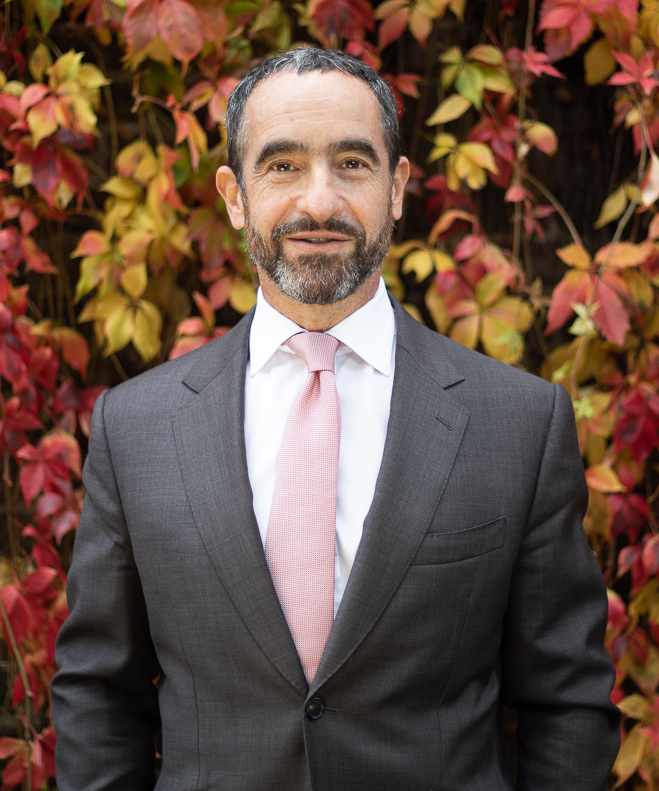
Co-host, Cleaning Up Podcast
Michael is an acknowledged thought leader on clean energy, mobility, technology, climate, sustainability and finance. He is Co-Managing partner of EcoPragma Capital and CEO of Liebreich Associates. Michael is also co-host and founder of 'Cleaning Up' a podcast and YouTube Series.
Former roles include member of the UK’s Taskforce on Energy Efficiency, chairing the subgroup on industry and an advisor to the UK Board of Trade, an advisor to the UN on Sustainable Energy for All, and a member of the board of Transport for London. He is also the founder of and a regular Senior Contributor to BloombergNEF.


