

 Apple Podcasts
 Spotify
 Overcast
 PocketCasts
 RSS Feed
How Much Better Can Solar Get? Deep Dive Australia 08: Martin Green
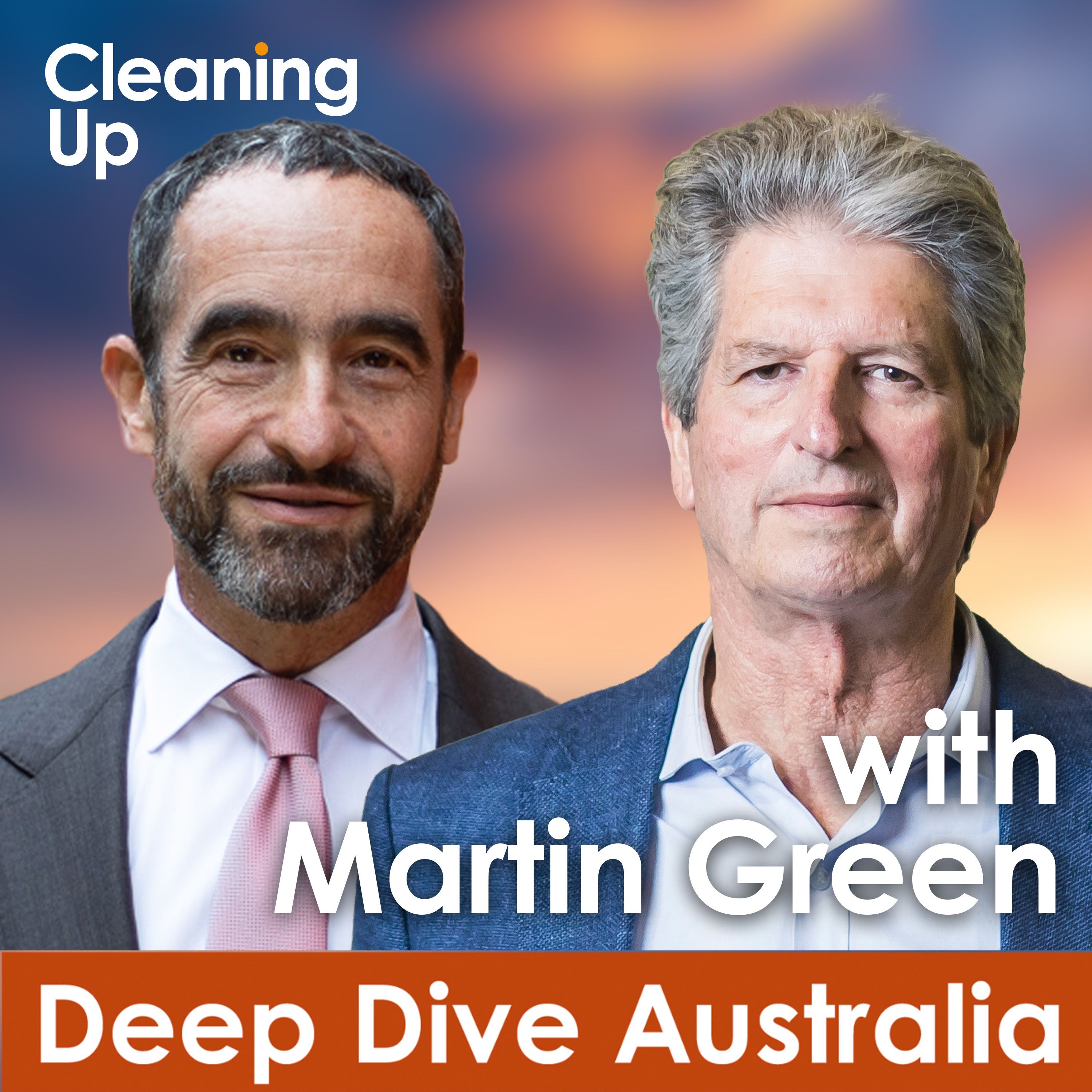
Solar was once dismissed as a marginal technology. Today, it is transforming the global energy system, and few people have done more to make that possible than Professor Martin Green. Innovations developed by Green and his research group can now be found in over 90% of all the solar panels in use today
One of the pioneers of modern solar power, Green’s research has helped make solar panels dramatically more efficient and cheaper to produce. He joins Michael Liebreich to discuss how he got into solar, the breakthroughs that helped drive its extraordinary rise, and the remarkable story of how research carried out at an Australian university helped create the global solar manufacturing industry. They also look at where solar goes next, and whether the next generation of technology can make it even more powerful.
Topics discussed in this episode
- The breakthroughs that changed solar
- Understanding solar cells and efficiency
- Racing NASA to new efficiency records
- Pioneering PERC and TOPCon technology
- How solar technology reached the market
- Suntech and the rise of Chinese solar
- The future of solar and batteries
- Which solar technology will dominate?
Leadership Circle
Cleaning Up is proud to be supported by its Leadership Circle. The members are Actis, Alcazar Energy, Arup, Copenhagen Infrastructure Partners, Cygnum Capital, Davidson Kempner, EcoPragma Capital, EDP, Eurelectric, the Gilardini Foundation, KKR, Mitsubishi Heavy Industries, National Grid, Octopus Energy, Quadrature Climate Foundation, Schneider Electric, SDCL and Wärtsilä. For more information about the Leadership Circle, visit cleaningup.live
Links
- Martin Green bio: https://www.unsw.edu.au/staff/martin-green
- Australian Centre for Advanced Photovoltaics: https://www.acap.org.au/
- Professor Stephen Chu on Cleaning Up: https://www.youtube.com/watch?v=SPmgA5cjhfk
- NREL National Renewable Energy Lab chart: https://www.nlr.gov/pv/interactive-cell-efficiency
- Subscribe to our newsletter: cleaninguppod.substack.com
Acronyms:
- PERC - Passivated Emitter and Rear Cell
- TOPCon - Tunnel Oxide Passivated Contact
- NREL - National Renewable Energy Laboratory
Chapters
Martin Green
And one of the nuclear scientists involved said the impact of solar would be like a flea on an elephant's back, which is a quote from that.
Michael Liebreich
How extraordinary, because what happened last year, literally at the end of the year, solar, your technology actually produced more electricity than nuclear. I don't know if you're aware of that, the lines crossed at the end of last year.
MG
Yeah, and the other thing, solar also surpassed wind. So wind sort of caught up to nuclear and solar just got past them last year, according to the Bloomberg figures. And then in 2031, solar is projected to get past black coal.
ML
Hello, I'm Michael Liebreich, and this is Cleaning Up. We're recording today on the land of the Gadigal people of the Eora nation. I'd like to acknowledge the traditional custodians of the land and pay my respect to their elders, past, present, and emerging. As we record this, about 10% of all the electricity being generated around the world is from solar power. One man has been at the forefront of that technology for over 50 years. Innovations developed by him and his research group can be found in over 90% of all the solar panels in use today.
Martin Green is the Scientia Professor at the School of Photovoltaics and Renewable Energy Engineering at the University of New South Wales. He's also the founding director of the Australian Centre for Advanced Photovoltaics, which is funded by the Australian Renewable Energy Agency. Please welcome Professor Martin Green to Cleaning Up. Professor Green, Martin, thank you so much for taking time today to talk to us.
MG
No, it's a real pleasure, Michael.
ML
Let's start, we always start in the same place, which is tell us who you are, what you do, the short version, it'll have to be because you've been so accomplished, but the short version of who you are, what you do, in your own words.
MG
Yes, I'm Martin Green and I'm a professor at the University of New South Wales in Sydney, which is one of the first technical universities in the states going back to the late 1940s. And I started the solar photovoltaic group at the university back in the 1970s. And we've had quite a bit of success, notably in improving the performance of silicon cells and developing the technologies that are now being used commercially. And also through our educational activities in training the students who are responsible for the modern photovoltaic manufacturing industry and for the cost reductions and things we've seen over the last two decades in particular. And also undergraduate students that have gone on to populate the ever expanding manufacturing industry.
ML
So you started with a research group, but it's now considerably expanded so it's a whole school of photovoltaic and renewable engineering?
MG
Yeah, no, no, exactly. So, you know, initially we were very dependent upon research funding, but that's a very risky business. The research contracts only lasted so long and then you've got all this infrastructure built up that you're likely to lose very quickly. So we decided to get into the educational aspects just to provide a more solid foundation for the group because we were doing stuff we thought was quite useful. So we didn't want to see that just disappear overnight if we had a bit of bad luck in getting research grants.
ML
Right. And so that that led to the creation of that, we were practising this before because I'm going to flum it again, but it's the School of Photovoltaic and Renewable Energy Engineering, SPREE. And that's now because that's now got so you say that that's got then the teaching function all the way down to undergraduate, which gives you some stability of the revenues, but also a bigger footprint in terms of your influence.
MG
No, exactly, it was actually the first, we were actually the first university worldwide to offer an undergraduate engineering degree programme in photovoltaic engineering, like other universities offer, you know like engineering, mechanical engineering. But it was all along with all those, our university has offered a photovoltaic engineering degree since the year 2000. So there might be another university in China now offering the same thing but in the Western world, it's all just graduate degrees that are generally in the renewable energy area.
ML
And so give us the metric, so how many, I don't know, graduate students, doctorates and undergraduates over the entire time with UNSW from the beginning of the program?
MG
Well, I personally have supervised 130 plus PhD students. So there's 130 there and then there's been other academics that have supervised, you know, probably similar number combined. So we have, you know, several hundred PhD student graduates, but we started this undergraduate program in the year 2000 and we've had over 2000 graduates from that undergraduate degree program that, you know, many of them are spread out through the industry.
ML
So a few hundred PhDs, a few thousand undergraduates and while we're on metrics, how many solar panels have got your technology in them?
MG
Well, yeah at the moment, since about 2016 the majority of panels made commercially have used technology that we developed, you know, largely in the 1980s and 90s, you know, within our research activities.So, you know, at the moment, you know, from 2016, over 90% of the panels that have been made commercially have our technology in them.
ML
And those are manufactured in China, but they're using the Australian technology.
MG
Yes, no, that's right. So we were keen to see our technology used worldwide. So I guess when I started the work, I could see the enormous energy demand increase that was going to occur in China and India in particular. So I was hoping we could develop cells that were inexpensive enough to meet that demand rather than those two countries having to rely on fossil fuels to reach the same energy intensity as in the West.
ML
So now let's take a step back. We're going to come back to the sort of the modern industry and the geographic sort of the distribution where they're manufacturing, where they're being installed and the impact that effectively your work has had. But I want to go all the way back and ask, how did you and when did you decide that this was, you've spent your career doing this from very early on? I mean, you decided quite early that it was photovoltaics was just this thing that you could contribute to and that was that was worth doing, right?
MG
Yeah, well, I did my undergraduate degree in the late ‘60s and microelectronics was just sort of taking off then. It was in electrical engineering and microelectronics was the most exciting thing that was happening in the electrical engineering field, so I got very interested in microelectronics. So I sort of decided that that was going to be my career. But as I matured, I got a little bit disillusioned with it, you know, like I missed out on the impact that microelectronics has had with the internet and all that's followed from that. But, you know, I could think of as better TV sets and things like that back in the ‘60s was going to be the result of improved microelectronics.
So I said, you know, I want to do something a little bit more social with a bit more social impact than that. And then the timing was pretty good because we had the oil embargoes of the ‘70s and solar was suddenly thrust into the limelight as a possible long-term prospect for generating energy that wasn't dependent on fossil fuels down the track. So I realised that my training in microelectronics set me up very well for working solar.
ML
Where had you done your undergrad and your graduate studies?
MG
Yeah, I was born in Brisbane in Queensland and I did my undergraduate studies at the University of Queensland. And then I won what was known as a Commonwealth Scholarship. So all the countries of the British Commonwealth offer scholarships to each other. And I won a scholarship to study in Canada. And so I studied at McMaster University in Canada for my PhD.
ML
So is there a parallel universe when, Martin, you went over to the US, continued with microelectronics and became one of the great sort of pioneers of the chip fab industry out of Stanford and in another world, you're some billionaire eminence grise of the computing industry?
MG
Yeah, I possibly could have headed that way. When I graduated with my PhD, I was looking around for jobs and so I was looking at applying to the semiconductor industry within the US. But I landed this job at the university straight after my PhD, which was a little unusual in that area because they wanted people with a bit of industrial experience, but times were changing a bit and research was getting higher priority in appointments.
ML
I want to write the play where you met, I don't know, either Hewlett or Packard they brought you over to California and the rest is completely different. And how interesting. But you came back here and really you've been with UNSW ever since.
MG
Yeah, we had a bit of early success in the photovoltaics area. So the group sort of has this history of growth. And then we were leading the world in the development of solar, so there was nothing I could learn from travelling overseas, at least not in the solar area.
ML
Okay, so now let's come back to you said that there were innovations of the ‘80s and ‘90s that are now in 90% of all the cells being manufactured. So first of all, what were the innovations? And the second question is going to be, what took them, what took you so long for them to become so widespread?
MG
Yeah, well when I started my PhD, you know, there's a process called quantum mechanical tunnelling. And it's not digging tunnels like Elon's interested in, but it's to do with electronics. But, you know, the quantum mechanics showed that electrons could go through barriers that traditionally they weren't allowed to go through. And Nobel Prize in ‘71 or ‘73 was awarded to three researchers that had been working on tunnelling so it was quite a hot topic in that era. So my PhD was to look at the properties of a specific tunnelling structure. And it turned out that it's very useful in photovoltaics and is now used in 90% of the solar panels that are being used, but it dates right back to then.
So when we first started our work at the University of New South Wales, NASA had just started a programme to try and improve the efficiency of silicon space cells. And they figured, you know, everyone had done pretty well with the voltage. This is in 1974, there'd just been a big jump in the ability to get current out of the cell by doing things like texturing the top surface of the cell to reduce reflection and a few little tricks like that. So NASA realised that we needed to look at improving the voltage output of the cell, because it was a lot less than what calculation showed should be technically feasible. And these tunnelling structures that I worked on for my PhD actually solved that problem of getting a high voltage from the cell very effectively. So NASA had a lot of contractors. We weren't initially one of them, but they had Motorola and they're doing work in their own labs, they had about 10 contractors working on improving this voltage. And in our then very primitive lab at the University of New South Wales, we managed to beat them all.
ML
And declare victory.
MG
And declare victory, exactly. So we were creaming all these NASA contractors and so that brought our work to international attention just through our ability to do that.
ML
And is that then, when you talked about the innovations that are now in every cell, was that that? Was that what happened next? Because you then entered a period at some point where you won the cell efficiency kind of world record for, I don't know how many years it was, 25 years in a row, something like that?
MG
Yeah, yes, no, exactly. So in 1983, we used that tunnelling structure to set a world record and then we found a simpler way of getting the same type of voltages out of a cell, which was just making the contact areas very small on the front and the back.
ML
Right, so that's one of the trade-offs and there's some physics trade-offs and so on. But then there's also just, how do you stick the contacts on the cell in order to get the current out? And then if that covers up bits of the cell, you're going to lower the efficiency of the cell. Is that fair?
MG
Yeah, that's right. So we set all these records with the voltages, and then the pressure was on us to convert these improved voltages to improved efficiency. So then we had to develop all the technology for extracting all the short-circuit current from the cell we could.
ML
An old cell, if you look at it, it's got these metal, it's got the conductor rows on the top, which are all stopping more light from falling on more of the area. So you got rid of all of that and put it somewhere else.
MG
Yeah, we actually worked on making them finer and finer. And they also have to be very conductive when they're fine. So we did a lot of work in refining that sort of trade-off.
ML
Is that why all the silver is now being used in photovoltaic cells?
MG
Yeah, the silver is a really good conductor. And copper is similar, but it's more reactive than silver. So it's a little bit more problematic when you're talking about a product that's got to last 40 years out in the sunlight. But progress is being made, and eventually all the cells will replace silver by copper, only a matter of time. So we started developing all this technology and fortunately, the US started big programmes in solar probably from 1974 onwards. And then when Jimmy Carter got in, he could see that renewables was the future and he increased the funding, like President Nixon actually started the programmes that led to the interest in solar, although most of the interest was in nuclear in that era. And one of the nuclear scientists involved said the impact of solar would be like a flea on an elephant's back, which is a quote from that era.
ML
How extraordinary, because what happened last year, literally at the end of the year, solar, your technology, actually produced more electricity than nuclear. I don't know if you're aware of that. Lines crossed at the end of last year.
MG
Yes, yes.
ML
Globally.
MG
I've used your reporting. I gave a talk this morning, and I used the figures from your New Energy Outlook report to-
ML
You say mine, I haven't produced one of those since 20- well, I was an executive role at Bloomberg New Energy Finance, my last one was 2014, and then I was sort of chaired the advisory group until 2017. But it's still the team that I trained, so I can kind of take credit. If there were good numbers, then I'll take credit, but I still write for them.
MG
I take credit for all the achievements of students I trained.
ML
Exactly.
MG
But yeah, and the other thing, solar also surpassed wind. So wind sort of caught up to nuclear, and solar just got past them last year, according to the Bloomberg figures. And then in 2031, solar is projected to get past black coal so that's the next important milestone.
ML
Renewables as a whole, if you take wind, solar, all the bits and pieces, bio, geo, and so on and hydro, actually got ahead of coal also last year. So that's, I think, 32% against 31%. But you need a bit of help for hydro to claim that one. And of course, yes, so it's very clear it's going to keep growing now.
MG
Yeah, yeah. And the history is it's growing faster than forecast. Like I've been accused of being too optimistic throughout my career, but I've been too conservative in my projections.
ML
Let's come back to the innovations, because there's a few that have got acronyms, which you know we're not allowed, we have to explain. But there's PERC, and there's TOPCon, and what do they stand for? When did you come up with them, what do they do? When did they get into the market?
MG
Yes, well, the TOPCon stands for Tunnelling Oxide Passivated Contact. And that's really what I did my PhD on.
ML
That's the stuff we've been talking about, okay, right.
MG
So we made our first TOPCon in 1981. It requires depositing polysilicon, which is quite standard in the microelectronics industry, but it requires quite specialised equipment, and it requires doping gases like phosphine and things like that-
ML
Ouch
MG
Which our laboratory being sort of underfunded, you didn't feel you had the required funding to invest in the infrastructure required to keep the students safe and everything. So I always was averse to having anything dangerous within the labs.
ML
Yeah, phosphine is quite nasty stuff.
MG
Yeah, so we made some sample devices using facilities outside our lab, and then just showing proof of concept that the polysilicon and dope with phosphine and other stuff worked. And then we found this simpler approach, which is called the Passivated Emitter and Rear Cell (PERC). So emitter just means top, so passivated top and back. So we just improved the surface properties on the top and the back, and the contact properties were largely where the improvements were. So just by growing layers on the silicon and depositing different layers, you can control the surface properties of the silicon, so we put a lot of work into that. And then the contacts are really bad in terms of the voltage output from the cell in particular. So we made them really small so that was a much simpler approach. And that our second world record, we got our first world record in 1983 with using TopCon essentially.
ML
Is that 17%?
MG
Yeah, our first record was the first 18% efficient. So the industry fortunately has a history of having results independently confirmed, which stems from the US programme in the ‘70s.
ML
There's a very famous chart that was produced by the National Renewable Energy Lab in Colorado, NREL, which showed all of the progress of different types of technologies. And we're going to put a link in the show notes. We might try and find which ones were yours and annotate them, you might have to help us with that. So 18% in 1983, and of course, now you can buy an off-the-shelf standard panel, what would it be today?
MG
21% to 25%.
ML
21% to 25%, yeah. At the panel level, not even at the cell level.
MG
Yeah, at the panel level. So we're using this simpler structure. We took that through to 25% in the lab, although it took us a better part of 25 years to do that. So it's an increment, we had 14 increments over that period. So you get an increment every year or two and bottles of champagne and everything every time you've got a new efficiency record. But we're very fortunate that in the US programme, it was run by the Jet Propulsion Laboratory and they had some really good research management techniques in progress but they're subcontractors whenever they reported a cell result that was supposed to be an improvement. They used to have to have the result confirmed at one of the US national labs just to show they weren't…
ML
So the Jet Propulsion Lab in Pasadena, if I'm not wrong?
MG
Yeah, yeah. So they managed the solar photovoltaic programme from the mid '70s to the mid '80s.
ML
And did you go and visit it? It's a nice part of the world.
MG
Yeah, yeah. So we visited them.
ML
So you've got these records going on. And then the commercialisation of that technology, how did that get into, because you're an academic group, and you've got these PhDs and so on, how did the technology get into the market?
MG
Yeah, yeah. Well, everyone said what we're working on was a waste of time because the structures were too complicated and never be able to be manufactured by industry, needed something simpler. But that's proved to be wrong.
ML
And a certain Zhengrong Shi among others said, hold my beer.
MG
Yes, essentially. So we'd set off a spinoff company, not to commercialise the standard silicon wafer cells, but we developed this approach to making cells from the normal type of silicon that you deposited onto glass. So there'd been a big push with a material of silicon that was deposited, it had a lot of hydrogen within it, and that had different properties from the normal silicon. It had about 10% hydrogen in the composition, so it had completely different properties from normal silicon. But we were after more traditional silicon deposited onto glass.
So that company ended up getting into production in Germany. And Zhengrong was my second PhD student from China, and he showed a lot of talent and he was deputy research director of this spinoff company. We got our funding from the biggest utility in New South Wales at the time, but it was state government owned. And our board that got put in charge of our spinoff company was very conservative. And we wanted to get into production and all that, and they said, no, no, not ready to go. So a lot of the guys were getting a bit antsy and wanted to go out and do something. So Zhengrong prepared a business plan, he was originally from China, but he'd already been 14 years in Australia, and his family were born in Australia and so on. So he's an Australian citizen, but he went back to China with his business plan and approached several of the city governments there about setting up within their region. So he didn't have much luck, his sixth one I think was the Wuxi government. And one of his co-founders knew someone in the Wuxi government, and they took an interest in the business plan and got some of the local companies that were profitable manufacturing washing machines and refrigerators and things, twisted their arm and got them to put in a million each. So Zhengrong started with $6 million.
ML
And that was Suntech?
MG
That was Suntech. And that's the birth of the modern low-cost manufacturing industry right there. So he managed with his $6 million, like our lab had always worked on a low budget. So all our equipment was bought secondhand from the US, from the microelectronics industry, where there's big warehouses full of all this old junk from the industry and you wander around and say, oh, how much do you want for that?
ML
And what percentage of Suntech did UNSW or you own?
MG
Well, Zhengrong did it sort of as a private initiative. So he put in, I think the figures are either $200,000 or $400,000, I can't remember how much of his own money he put in. And as well as the technology, and he got 25% of the company, and for their $6million the local white goods companies got 75%.
ML
And I'm being mischievous because you've had this humongous impact, I mean 9 out of 10 panels have got technology that came out of you personally and your group, but the industry is in China and you didn't get a piece even of Suntech, the first and sort of seminal company that took that technology into the world.
MG
Yeah, that was just the beginning. But in Germany, there had been the feed-in tariff programme set up about the same time.
ML
People like Qcells.
MG
Yeah, Qcells was one of the startups in Germany that started as a result of that. But there's this growing market within Germany, and the German programme was not parochial, it allowed modules from all countries to be part of the purchase option. And so Zhengrong started selling his modules into China, into Germany from China.
ML
Suntech was created which year?
MG
Either 2000 or 2001. I've seen different figures.
ML
Slightly before I started New Energy Finance. So when I started, and that was already one of the companies that we were tracking, but there were quite a few. There was Sharp in Japan and then there were a bunch of German companies, there's a few French companies, and then there were these kind of Chinese challengers. But it wasn't at all clear just how much it was going to become a Chinese industry.
MG
Yeah, so Sharp was the biggest when Zhengrong started, and then Qcells took over.
ML
There was even BP Solar and there was all sorts of oddities.
MG
Yeah, BP Solar was the biggest in the late ‘90s and then Sharp took over. And then Qcells took over, and then Suntech took over. But the important thing was Zhengrong was selling his modules into China and feeding all the profits back into expanding production.
ML
This Australia Deep Dive was made possible by the support from a number of organisations, the Australia Renewable Energy Agency, Race for 2030, the Energy Efficiency Council, and the University of New South Wales Energy Institute, for whose support we are extremely grateful.
Cleaning Up is proud to be supported by its Leadership Circle. The members are Actis, Alcazar Energy, Arup, Copenhagen Infrastructure Partners, Cygnum Capital, Davidson Kempner, EcoPragma Capital, EDP, Eurelectric, the Gilardini Foundation, KKR, Mitsubishi Heavy Industries, National Grid, Octopus Energy, Quadrature Climate Foundation, Schneider Electric, SDCL and Wärtsilä. For more information on the Leadership Circle, please visit cleaningup.live. To keep up with all that's going on in the Cleaning Up universe, make sure you subscribe to our newsletter. Written and edited by my longtime New Energy Finance and BloombergNEF colleague, Angus McCrone, it comes out every second Monday. Angus provides the latest on the episodes we're recording, the events we're hosting, stories we're watching and what Bryony Worthington and I are up to. To sign up for the Cleaning Up newsletter, visit cleaningup.live.
Can I ask, you've been working in Pasadena, you're working with the US government, did nobody, were no US companies, did nobody ever knock on your door and say, we want you or at least we want your technology? Because there were also American companies, I'm struggling for the names but there were American companies.
MG
ARCO was a big one.
ML
ARCO, yes.
MG
They were bought by Siemens.
ML
Did they never ask and never pursue you and try to get the technology into US hands?
MG
Yeah, like I regard the industry of the ‘90s as a boutique industry, like it wasn't a true commercial industry in that...
ML
Texas Instruments. I had a little solar thing on my calculator, they had no interest in improving it?
MG
Yeah. Well, a lot of the solar companies were owned by the oil companies and it was just a bit of a PR exercise. Their budget came from the PR department in BP, for example, effectively. And Zhengrong was, I guess the German programme was the first market development opportunity that provided real opportunities for companies to grow organically and so on. So Zhengrong was able to take advantage of that and he was feeding all the profits back. He could undercut the Germans with the labour in China and he was buying all this secondhand equipment, whereas the Germans were buying all this flashy new equipment so could install factories a lot more cheaply. And he got noticed by investment banks like Goldman Sachs and Morgan Stanley approached him in 2004. So his first production line was opened in September 2002, I was there, I got to cut the ribbon. But by 2004, he was attracting international attention through his activities, the rate he was growing and so on.
ML
Martin, he let you cut the ribbon, but he didn't give you options in his company. Is that right?
MG
Well, he did at the next stage. So the next stage is Morgan Stanley and Goldman Sachs organised a management buyout of the original Chinese investors. So they got paid back, I think it was 18 times what they invested, so they were all happy because they sort of kissed that money goodbye they were just forced to put it in at the start. So they were happy as larry. And then Zhengrong ended up with 60% of the company after that management buyout. So then when they listed, he was free to give options to whoever he wanted to. So I got some options.
ML
So you did OK, I'm just looking out for your interest here. And then other companies…
MG
I was officially Chief Scientific Officer so that was the reason I got the options.
ML
Entirely appropriately so, given you mentored Zhengrong and had developed so much of the technology yourself so that seems appropriate. But then it goes into a whole bunch of other companies and PERC, I'm not going to try and do the acronym thing. You've already explained it, and TOPCon. But PERC especially becomes just general widespread in the industry and you've got Canadian Solar, which is of course not Canadian but Chinese, and you've got Longi and all these other companies, and presumably there's also there's the end of the Suntech story, which is actually unfortunate, right?
MG
That's right. Yeah. I guess with the management buyout, they were grooming Zhengrong for listing on one of the US exchanges. And Zhengrong picked the New York Stock Exchange because he thought it was a bit classier than NASDAQ. That's the reason for picking it, he told me. So he listed on the New York Stock Exchange in December 2005.
ML
I remember it well.
MG
And it's reported as, you know, Red Herring reports it as the biggest technology float of 2005. He raised $400 million through the listing, it was only a small part of the company on offer. So he became overnight the first solar billionaire and it triggered, and I think Goldman Sachs like just looking at the figures and what they paid and everything for the management buyout, they made at least $200 million on the listing as well. So it created this rush of US investment banks looking for other Chinese companies they could pass off as Suntech clones. And then only the many companies in China are only too willing to get a windfall cash injection from US stock listings.
ML
How did your technologies, was it a licensing approach? How did those technologies that came out of your group get into those other companies?
MG
Yeah, it was. Well, Zhengrong was originally just using stock standard technology that was developed in the US in the 1970s, which was very rugged technology, so it took a long while to displace it. But when he was doing his roadshows and everything for his listing, he was talking about all the improvements that were down the track, you know, particularly technology that had been developed at UNSW. So that was always on his agenda was to get these improved technologies into production, although he's just starting with the basic stuff. So around 2009, I guess he started selling some of the improved technology then. So it took a few years to get it into production and everything, once he had settled with his basic technology, he started getting on the more sophisticated stuff.
ML
But now, OK, so 2009, and we're going to fast forward because I mean, it's a fascinating story but just in the interest of time, you go through to today, all of these companies are using technologies out of your group. That's why 90%+ of solar panels, not just in China, but coming out of all of the countries that are manufacturing. So how did the technology get into those into those other companies, were they licensing it directly from UNSW or some other way?
MG
No, we invented PERC or I invented PERC in 1983. So the patents sort of expired.
ML
The patents expired! Gosh.
MG
Well at one stage we had the option, we had one to file new patents and our licencing branch of the unit said, you know, we've got to pay all these renewal fees on your old patents if you want to put some new ones in, you've got to decide which of the old ones have got some legs and which don't. So we looked at PERC and we said, oh, it's going to be too long so we were sort of right. So we let the patents lapse and they would have expired before the industry really got stuck into making them anyhow.
ML
But thereby essentially creating the modern solar industry in some ways, because then everybody could dive in, use them, optimise them, build on them and so on.
MG
Yeah, if the technology is unencumbered, it makes it more attractive to the manufacturing industry in China.
ML
And so are there a bunch of technologies that you developed, because those are your 1980s and ‘90s technologies, what have you been doing the last 26 years? Do you just dine out on the achievements of your earlier career or is there another turn of the screw, another set of technologies that are going to, again, revolutionise the sector or is it now incremental?
MG
Yeah, we started a centre in the early 2000s called Centre for Third Generation Photovoltaics and we looked at all the ways that you could get a big jump in efficiency.
ML
These the ones that work at night?
MG
Yeah, including those, the ones that work at night. They don't work all that well at night, but they do work. But, you know, the oldest, probably the oldest of these ways of improving technology is just to stack cells of different materials on top of each other. So if a cell is specialised for converting the blue photons and you stack it on top of a cell that converts the red ones better, you can get an improvement in performance due to the higher voltage from the top cell.
ML
For the last, I'm going to say, 15 years, I've been hearing perovskite, perovskite, perovskite, and we're finally actually maybe seeing something. Would that count as one of a third generation?
MG
Yes, yes. So we concluded that the cell stacking, even though it was a well-known idea, was the most viable option in the time scale that the improvements were going to be needed by the industry. So some of these other ideas, you know, maybe in 30 years' time, they might emerge as a competition for the tandems. But finding a cell like silicons...
ML
Tandem being layered with different materials.
MG
Tandem is used to describe cells stacked on top of each other, you know, like horses in tandem sort of thing. But finding a material that's like silicons, abundant, non-toxic, it's stable and it gives high efficiency. So finding other materials that have got those four properties is a bit of a challenge. So perovskite does really well on the high efficiency, it's 30% layered, so that's not great. But stability has been the weak link with the technology.
ML
It gets a whiff of water and that's it.
MG
Yeah, it doesn't like water too much. But some of our students, like we, as I said before, we've graduated over 1,000 undergraduate students. But two of those set up a company called MicroQuanta in China, and it's the world's biggest manufacturer of perovskite modules. And last month, I visited the world's biggest perovskite module system.
ML
And when you say perovskite, am I right in thinking that's perovskite on a silicon layer? So it's still not pure perovskite, it's the tandem.
MG
There's two ways of going. So one's the pure perovskite and one's the perovskite stacked on silicon. But to solve the stability problem, you've got to solve within the pure perovskite first. So you've got to get those cells working well before you've got a chance of getting the tandems working well. So we're working with this company, they've been operating 10 years now on commercialising perovskite so they've got a long way. And we visited an 8.6 megawatt field of perovskite modules, which is the biggest one operating at the moment, and seems to be going OK.
ML
And that would be pure perovskite. How easy will it be then to stack it? Is that done and is that easy to then stack it?
MG
Yeah.
ML
So it stays exactly the same construction, but then it gets presumably, what, laminated in some way?
MG
Yeah. You can just deposit the perovskite straight on the top of silicon as some of the other layers are deposited. So that's one approach, and that way there, you can have the cells connected in series so you don't need any extra connections. You just get better power output from the same connections, essentially. And the cells don't look too different when they've got the perovskite on them so it's hard to tell a panel that has a perovskite-coated cell on. And then the other way is to just stack the two modules, one with perovskite, a pure perovskite module and a pure silicon one, and operate them independently. But physically stack, but the electrical operation is independent.
ML
Separate. So the one that you visited was the latter? It was the two?
MG
No, it was just the perovskite.
ML
Just the perovskite. And so what does your gut, based on a lifetime of this, which one is going to end up being the world-dominating technology?
MG
Well, I think the combination is the best. So that, because you can use all the infrastructure of the big silicon industry, where everyone's selling billions of dollars or so a year, and get all the marketing worked out and everything, got the marketing, the resources.
ML
But deposited on the silicon, or separately?
MG
Yeah, probably deposited on the silicon is probably the way most of those are looking.
ML
Feels more efficient to do it that way ultimately, if you can solve all that.
MG
Yeah, I think it's got to be lower cost. Although a lot of studies don't show much difference, but I just feel intrinsically it's got to be lower cost.
ML
How can I put it? If I was going to have to make a bet on anything, if your gut says that, I would probably bet on that, given your track record. And talking of track records, I looked at your Wikipedia page. And normally, at this point, you've been honoured with some marvellous honour, but you've got 46 separate honours and awards, so that's way too many to list. Do you have a favourite?
MG
Oh, yeah, I have several favourites. So, the first big one was called the Right Livelihood Award, that's very well known in Germany in particular, but the guy who put up the money for that wanted it counted as one of the Nobel Prize categories, but he couldn't convince the Nobel committees that this was a sensible idea. But it's for doing good deeds, and some of the people have done really brave things that have won that award. But Hermann Scheer won it one year, and he nominated me the next year.
ML
I have to explain, either you or I have to explain, Hermann Scheer was a German lawmaker who pushed through the first feed-in tariff laws in Germany and was absolutely convinced. Nothing that we see around us today with renewables providing, wind and solar providing 20% of global electricity, none of that would be a surprise to one person in the world at that time, and that was Hermann Scheer. He really believed this stuff.
MG
Yeah, yeah. So, yeah, that was really critical to the development of both solar and wind, I think. Without that initiative, we'd be…
ML
Sadly passed away far too young so he's the late Hermann Scheer, sadly.
MG
Yeah, and Hans-Josef Fell was his off-sider that pushed that legislation through the German parliament. But, yeah, that was really important in the development of solar.
ML
So, the Right Livelihood Award, that one you remember fondly.
MG
Yeah, I remember that one very fondly, and I still have contact with the group that awards that. But the Millennium Technical Prize that's awarded in Helsinki, I've enjoyed that one, and that's a very prestigious award. The Japan prize is, there's this group that rate all these international prizes, give them a score compared to a Nobel, so the highest rated one is the Japan prize, which is rated as 66% of them.
ML
So, well, but if you add all of your prizes together, you've got the equivalent of probably three or four Nobels, but you haven't got the Nobel. And I'm not sure, would it be for Nobel, it doesn't really qualify as peace, it would have to be physics, I guess. And do you think you have done, because a lot of your work has been, and the name of your group at UNSW has got engineering, and the Nobels tend not to be given to engineers, but to physicists. Have you done enough physics?
MG
Yeah, yeah, there's a couple of Nobel awards, like the light emitting diode got a Nobel, and that's probably got less physics in it than our solar cells do. And charge couple devices is another microelectronic device that a Nobel was awarded for.
ML
And also I mean, it's not too late of course, because Professor John Goodenough, he won in 2019. I believe he was 97 years old so, you're enormously sprightly. I'm not going to share with the audience how old you are, but enormously sprightly and still got many, many years of research. So, you're not beyond hope for a Nobel.
MG
Yeah, yeah. So, there have been, the whole conference is often in Sweden like just checking people out for possible Nobels, and they've had some photovoltaic ones, screening people for Nobels I believe, and I've been participating in those. So, you know, maybe there's a chance something will happen down the track.
ML
Professor John Goodenough, of course, was one of the real pioneers behind the lithium-ion battery, the cathode materials there, I should say, just for the audience. But I would love to see you progress to the Nobel level.
MG
Yeah, yeah. So, another prize I've really enjoyed is the VinFuture Prize, which is offered by Mr. Pham, who's head of the Vingroup in Vietnam, which is a big conglomerate like, you know, Reliance or Tata or something in India. He does everything, you know, including electric vehicles, hospitals, education, the whole gambit. But he puts up this prize, and I shared it with two of the Nobel Prize winners for the lithium battery just in 2023. So, that was a really nice prize to win.
ML
Because a combination of your innovations turned into economic reality, largely in China, but not exclusively, together with the batteries, Professor John Goodenough's batteries, they're taking the world by storm. It must feel good. Does it feel good?
MG
Yeah, yeah, no, it does feel good to have done something useful. And, you know, particularly to see the uptake in India and China being so strong, because that was my original target for the research was we had to get these technologies up to speed before the demand for energy in those countries grew to what it has grown to now. We sort of missed out a bit on China we were a bit too slow for that. But India, we caught it a good time, I think. So, solar is playing a big role in the electricity generation.
ML
So, China had that coal surge, and then you came in at the end of it rather than before, which maybe will be different in other countries. I just want to finish on the question of the supply chain, because we're recording this here in Australia and Australia has not captured, I'm going to say much, but it's really captured very, very little of the supply chain.So, in batteries, it does the lithium, I think, the spodumene, the lithium precursors, but in solar, almost nothing. Do you regret that? Do you think, wouldn't it be nice if also in your country, you could have generated more in the way of not just the use of the technology, which is transforming the energy scene, but actually provided the manufacturing jobs and more of the value chain?
MG
Yeah, well, I'm very familiar with the way the industry grew. And China was probably an essential part of that growth, both through the interest of US stocks, the US stock exchanges in Chinese stocks, at the turn of the century, that was an important part in the growth of the industry. And then China just being able to capitalise on the start they got through all that US investment, like part of the story, Zhengrong listed in 2005, but between 2005 and 2010, there were nine other Chinese companies that listed on the US exchanges and all did pretty well and six of those nine were in the top 10 of manufacturers as recently as 2021. I haven't seen the recent list, but in 2021, there were six on the top 10. So they formed the backbone of the manufacturing industry that came from this US investment. So I can't see the US getting so excited about Australian stocks as they did get excited about Chinese stocks.
ML
So I think what you're saying is, had you tried to keep any of the manufacturing and supply chain in Australia, it probably would have actually hampered the industry.
MG
Yes. And the Chinese industry is so vibrant. Like staffing exchange is really very rapid, which I don't think would have happened in Australia in the same way so technology gets transferred very quickly. And as I said, we've graduated, I might have said the figure, but we've graduated 1,000 Chinese national from an undergraduate programme. And they have a WeChat group in China, and they're only allowed 500 in a WeChat group so they've started a second WeChat group. But our alumni hold sort of monthly functions in Shanghai and Beijing so these people from different companies get together and exchange job opportunities and technology and everything.
ML
It's almost a British story where we kind of invent technology, and you have the Rutherford Labs, and you have all these things and then we don't benefit from it. It goes overseas to be turned into products and value and money. I mean, it doesn't detract from your achievements, but it must be a little bit bittersweet.
MG
No, well, I see Australia, you know, best position to benefit from the technology because we're in the Sunbelt. And, you know, we get relatively low interest lanes and so on compared to other countries in the Sunbelt, so we're in a really good position to capitalise on these cheap solar panels that the Chinese are only too pleased to supply to us. So as long as that continues, we're, you know, exploiting the technology. I think I see where our strength is. And then there's a lot of interest in minerals processing, so processing the polysilicon, refining it is another possibility.
ML
Australia has had a huge payoff in terms of using the technology. So you should feel enormously, I'm sure you do feel enormously proud. What can I say? It's been an absolute pleasure talking to you, hearing the story. And I guess I wish you luck for the remaining many decades of your career, you don't look like you're about to hang up your photovoltaic research boots anytime soon.
MG
Yeah, no, thank you very much, Michael. Yeah, I'm really enjoying the work at the moment and still plenty of work to be done.
ML
Very good. Martin, thank you so much.
MG
Thank you.
ML
That was Professor Martin Green, Scientia Professor at the School of Photovoltaics and Renewable Energy Engineering at the University of New South Wales and founding director of the Australian Centre for Advanced Photovoltaics. As always, we'll put links in the show notes to resources that we mentioned during our conversation. I'd like to thank Jo Jagger and Head of Operations Kendall Smith for their Herculean efforts in setting up this Australia miniseries. Also our cameraman in Sydney, Rob Moorman, producer Oscar Boyd, video editor Jamie Oliver, the team behind the scenes, the Leadership Circle, without whom none of this would happen, and you, the audience, for spending some time with us today. Please make sure you subscribe to our newsletter on cleaninguppod.substack.com to make sure that you don't miss the next instalment of this Australia miniseries or our normal episodes of Cleaning Up. That is cleaninguppod.substack.com.
Cleaning Up is proud to be supported by its Leadership Circle. The members are Actis, Alcazar Energy, Arup, Copenhagen Infrastructure Partners, Cygnum Capital, Davidson Kempner, EcoPragma Capital, EDP, Eurelectric, the Gilardini Foundation, KKR, Mitsubishi Heavy Industries, National Grid, Octopus Energy, Quadrature Climate Foundation, Schneider Electric, SDCL and Wärtsilä. For more information on the Leadership Circle, please visit cleaningup.live. If you're enjoying this episode, please hit like, leave a comment, and also recommend it to friends, family, colleagues, and absolutely everyone. To browse our archive of around 250 past episodes and to subscribe to our free newsletter, visit cleaningup.live.
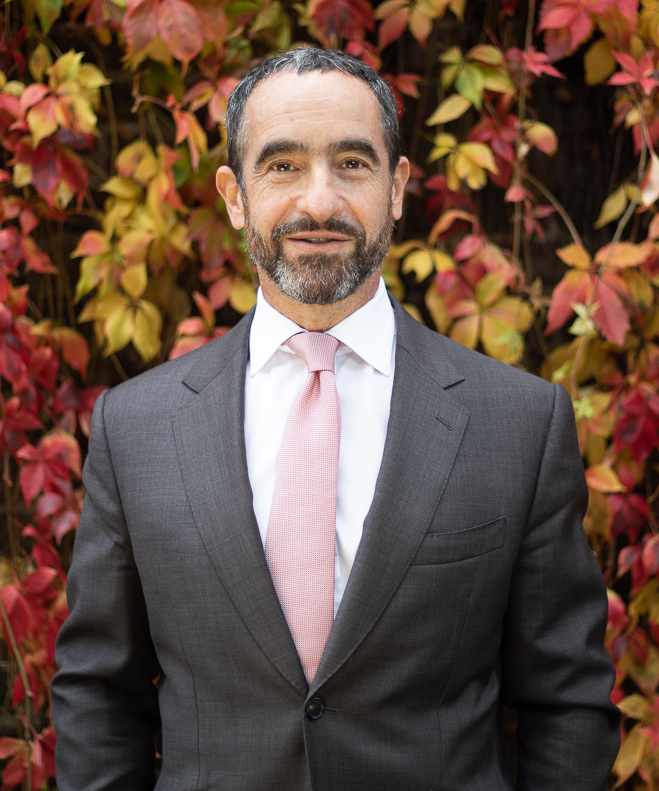
Co-host, Cleaning Up Podcast
Michael is an acknowledged thought leader on clean energy, mobility, technology, climate, sustainability and finance. He is Co-Managing partner of EcoPragma Capital and CEO of Liebreich Associates. Michael is also co-host and founder of 'Cleaning Up' a podcast and YouTube Series.
Former roles include member of the UK’s Taskforce on Energy Efficiency, chairing the subgroup on industry and an advisor to the UK Board of Trade, an advisor to the UN on Sustainable Energy for All, and a member of the board of Transport for London. He is also the founder of and a regular Senior Contributor to BloombergNEF.


