

 Apple Podcasts
 Spotify
 Overcast
 PocketCasts
 RSS Feed
How China Became an Energy Superpower | Ep262: Professor Ning Li
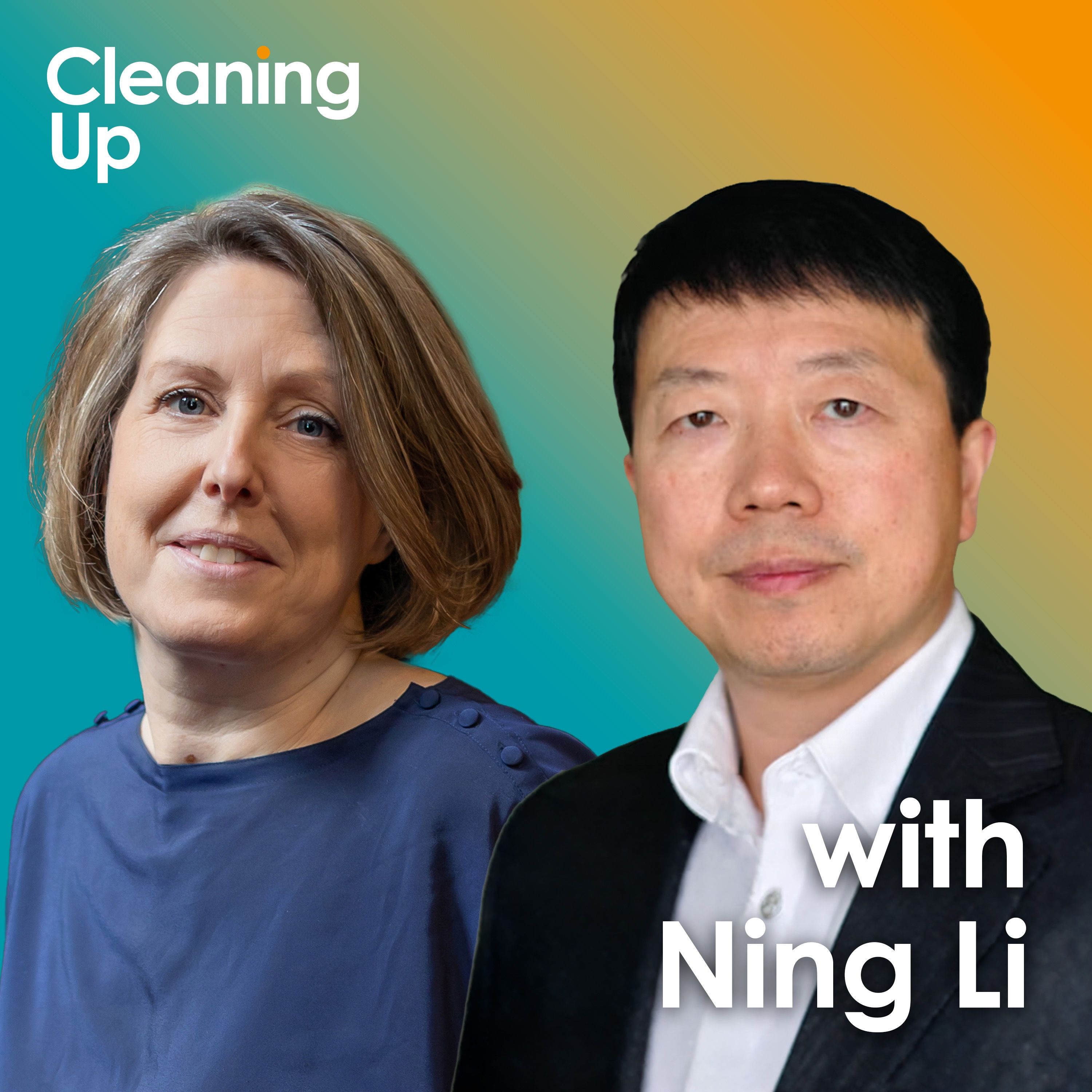
Professor Ning Li has spent decades at the intersection of energy, technology and industrial strategy. A nuclear engineer, complexity scientist and founding Dean of the School of Energy at Xiamen University, he is also credited with coining the term "Small Modular Reactor" nearly 20 years ago.
In this wide-ranging conversation with Bryony Worthington, Ning Li explains why China has weathered recent global energy shocks better than many expected, how electrification is transforming economic resilience, and why solar panels, batteries and electric vehicles have become China's most important exports.
They explore whether the world is really swapping dependence on fossil fuels for dependence on Chinese electrotech, why modularity has become the defining feature of successful modern technologies, and what lessons other countries can learn from China's rapid industrial scaling.
The discussion also covers the future of nuclear power, the role of coal in supporting China's grid, the untapped potential of heat pumps, and why the energy transition should be framed not as a burden, but as an opportunity for growth.
Topics include:
- Why China has been relatively resilient to oil and gas disruptions
- The rise of the "electrostate"
- China's new energy exports: EVs, batteries and solar
- Why modular technologies scale faster
- The origins of the Small Modular Reactor concept
- The changing role of coal in China's power system
- Heat pumps and industrial electrification
- Nuclear power's future in China
- Climate action as economic development
Leadership Circle:
Cleaning Up is proud to be supported by its Leadership Circle. The members are Actis, Alcazar Energy, Arup, Copenhagen Infrastructure Partners, Cygnum Capital, Davidson Kempner, Ecopragma Capital, EDP, Eurelectric, the Gilardini Foundation, KKR, Mitsubishi Heavy Industries, National Grid, Octopus Energy, Quadrature Climate Foundation, Schneider Electric, SDCL and Wärtsilä. For more information about the Leadership Circle, visit cleaningup.live
Links:
- Ning Li bio: https://thebreakthrough.org/people/ning-li
- Octopus’ Fiona Howarth on the EV partnership with BYD: https://www.youtube.com/watch?v=YL64XW5ZRBA
Ning Li
So, China has sort of started preparing for this kind of problem or risk from quite a while back. And so, you know, after this, the Middle East conflict, China was originally sort of reacted quite strongly, limited sort of export of petroleum products and fertiliser, etc, and started using its strategic petroleum reserve. Turns out, China has sort of diversified its supply and domestically was beginning to reduce reliance on petroleum as a fuel source or energy source from several years ago. So, the impact was while it originally was sort of quite a scare, it turned out to be not much.
Bryony Worthington
Hello, I'm Bryony Worthington, and this is Cleaning Up. My guest this week is Professor Ning Li, Dean of the School of Energy Research at Xiamen University. Professor Li and I were together recently at a conference in Beijing, focused on the challenge of replacing China's huge fleet of coal stations. And as the disruptions in the global energy system have persisted with the closure of the Strait of Hormuz, I wanted to ask him how this was being viewed in China.
And as he's worked on numerous nuclear power projects in China and is credited with coining the term small modular reactors, I wanted to ask him about the prospects of these ever making it to market. We also touched on China's embrace of modularity and efficiency in its drive for economic development. Trump's recent visit to China and the question of whether people are right to say switching from fossil fuels to Chinese electrotech is really swapping one vulnerability for another. Please join me in welcoming Professor Ning Li to Cleaning Up.
BW
Professor Ning Li, thank you so much for joining me this evening. We are recording on the 30th of May, which is a Saturday for you. And we should probably start by warning our listeners that we might hear some construction sound in the background. That's right, isn't it? But that's because China's busy building things.
NL
Subway, a subway station nearby.
BW
OK, and it's got to be done on time. So they're working on a Saturday.
NL
Yes, sometimes annoying. But I think overall, you have to do these things fast. Otherwise, the annoyance just lasts longer.
BW
Exactly. Well, China certainly knows how to move fast. So I'm really delighted you could join me. But I wanted to start by asking the question which we always begin with, which is, could you introduce yourself in your own words, please?
NL
I'm Dr. Ning Li, professor and the founding Dean of College of Energy, Xiamen University, in a beautiful coastal city in southern China. And I'm also have been advisor to Innovation Labs and board of director for public companies in energy and chemical industries. I was a member of the technical committee of SNPTC (State Nuclear Power Technology Corporation), a Chinese nuclear power company that was working with US Westinghouse to build the world's first four AP1000s. So I've sort of seen quite a bit across the industry over time.
BW
And so as well as kind of being at the centre of watching China's energy transition from China, you also spent some time in the States. Isn't that right? Earlier in your career, studying complexity theory. Was that what you did?
NL
Yes, I went to Santa Barbara, University of California in Santa Barbara and studied a branch of science that back then was called non-linear dynamics. But now it's more popularly known as complexity science, the science of complex adaptive systems. And this helps a lot for me to frame my thinking and also guide me how to sort of operate in this complex world, both in energy industry and in economics, in society. And then I worked in the US National Laboratory for some time working on civilian nuclear technologies like nuclear waste transmutation, generation for nuclear energy systems. And I did some sabbatical at MIT and had an adjunct appointment at UC Berkeley. So I had pretty broad exposure in this space.
BW
Yeah. And perhaps we should talk about this early because one of the things that you're quite well known for is you're accredited with actually coining the phrase small modular reactors. And I find that fascinating. And this is quite a long time ago, wasn't it? This is maybe a couple of decades ago. Tell us about that.
NL
Yes. OK, well, you know, I want to acknowledge that the technical founder, co-founder of NuScale Power, José Reyes, for doing that. When I first sort of called it SMR, it was nearly two decades ago. And I started sort of during my sabbatical at MIT during 2005, 2006, I started looking at sort of beyond the nuclear in technology and industry, looking at other technology and industry and trying to understand why they can grow while nuclear seemed to be in stagnation and decline.
And one of the things I find out is that technologies, especially since the mid 1980s to 90s, have become more and more modular. OK, and the modular technologies just can scale faster. And so I sort of started thinking about it and looking through the history, looking at the industry data and stuff. And I think, OK, if we do nuclear the next round, we have to do it modular. And we have to be make, if you want to do modular, you have to make many of them.
And so we make them smaller. And smaller nuclear systems are also intrinsically safer because it's much less likely — and we can, by design — eliminate the possibility of a meltdown. So, you know, Three Mile Island, you know, Chernobyl and Fukushima, those kinds of things are physically impossible to happen in these smaller, safe and modular systems. So that's when I sort of started thinking a lot. So that's almost two decades ago. But, you know, I was ahead of time, so nobody sort of picked it up. Until now, it's become the hottest thing, It's where everybody's going into.
BW
We certainly will come back to nuclear, I'm sure. But before we do that, I just wondered if, well, here we are. What is it, day 91 or 92 of the troubles in the Middle East, the Strait of Hormuz being closed. And there's been a lot of commentary about who's most exposed to that, the impact on the oil and gas flow. And it's actually, you know, Asia is obviously one of the biggest buyers. And there was a lot of speculation that China would be affected by this, but it doesn't seem to have had that big an effect. And how much is this being discussed in China? Is there an active discussion about getting off oil and gas faster? And how is it that the prices are not so high? Is it because China's got just huge stockpiles?
NL
Yeah, so China has sort of started preparing for this kind of problem or risk from quite a while back. And so after this, the Middle East conflict, China originally reacted quite strongly, limited sort of export of like petroleum products and fertiliser, et cetera, and started using its strategic petroleum reserve. But it turned out China has sort of diversified its supply and domestically began to reduce reliance on petroleum as a fuel source or energy source from several years ago. So the impact was, while it originally was sort of, you know, quite a scare, it turned out to be not much. So this impact is much, much stronger in Japan, in South Korea, Southeast Asia, in places like Vietnam and other places, where the factories had to stop working full time. And they ask people who don't have to go into factories and offices to work from home just to save fuel. But there are places where they are missing, even in the U.S. are missing sort of the fertilisers for the growing season. So the impact is pretty broad. But China has, almost over decades, had sort of a preparation for these and weathered this storm quite much better than lots of others.
BW
And really the secret to it is this huge push into electrification, right? So your power grid is absolutely huge now and not just providing power, but also then having electrified a huge amount of transport and now started to electrify industrial heat and heat sources. So I think… I don't know the exact statistics, but I think China is amongst the most electrified economies now in the world.
NL
Yes. And so this is sort of a really interesting historical story that will be studied and told. Because when China started developing the heavy industry and getting to the World Trade Organisation and developing renewables, storage, electric vehicles, the actual number of technologies or industry are being sort of promoted because industrialisation, urbanisation, modernisation was the overall goal.
But throughout the process, those that sort of benefit from like modularity, from rapid learning and networking effects won out. And so over time, renewables with batteries, electric vehicles and storage, have grown so fast. And China has sustained sort of a double digits, high double digits growth for over two decades. And now last year alone, China added over 260 gigawatts of solar and wind, which is more than most countries, probably other than the largest, like the US, you know, the total installed base in one year. So China has quickly risen.
The electricity, you know, it's become so oversupplied in some places that the swap prices become negative a couple of hundred hours out of a year. But because China did not stop constructing and operating coal-fired power plants, especially adding a lot more nuclear, China's grids are very, very stable. So even if there's a lot of intermittent renewables coming to the grid, the stability and reliability of China's grid is stable. So that sort of these factors combined making China is, yeah, it's emerging, becoming probably the first electrostate in the world. It's, yeah, it's a fascinating story.
BW
Is that a phrase, ‘the electrostate’, that you hear in China, or is that just something you hear in Western commentators?
NL
Yeah, it's probably more from Western commentators. These kinds of ideas and stuff often emerge in the Western media at think tanks, et cetera. And so coining these terms, really, you know, China is sort of more focused on doing things. And so lots of things were done without a name or category. But once they find it's effective and efficient, they start doing it very, very quickly. So oftentimes, it becomes a hindsight to study them, rather than sort of a foresight to sort of think it through and do them. Because there's so many things going on, you will never really quite understand what human creativity will lead to. It's only during the process of competition evolution, the winning ideas, the winning concept, the winning technologies emerge. And then, you know, you will give it a name.
BW
Well, there is a kind of new name, isn't there, that's been coined in China, which is the three new industries, which has got its own kind of characters.
NL
In China, it's called the new three exports.
BW
Ah, even more specific.
NL
Yeah, more specific, because there are lots of things. The new three exports are solar panels, power batteries, especially lithium batteries and electric vehicles. Because these things are growing so much faster than the overall Chinese economy on exports.
China's exports would have declined quite significantly in the last several years without these three new exports. And there's a good reason why lots of countries, especially developing countries, the global south, are coming to China for these, because they are really good technically, and they are very, very affordable. And once you have them, you have power for decades, you have transportation for decades, and you don't have to rely on constantly buying and supplying burning fuels and stuff.
So this is why this sort of electrification is picking up pace in developing countries, in the global south, more so than in the developed economy.
BW
Yeah, and have you seen evidence? I mean, there are graphs that have circulated, I've seen on social media, of the last three months of exports of Chinese electrotech, if you want to call it that. And it has really spiked, hasn't it? There's been a massive surge in demand for these products.
NL
Yeah, and this picked up very quickly. So last year, you know, there's a very significant event in Spain and Portugal, the blackout. And then a lot of the European countries and companies suddenly realised they need energy storage to back up their renewables. Many countries have very high percentage, high penetration renewables. So that started picking up already. But then at the end of February, the US-Israel-Iran conflict suddenly broke out.
And then all these petrols, the gas, the natural gas, the petroleum, 27% of the world's export of trades has been disrupted by this. So now all of a sudden, the order for solar panels, power batteries, and electric vehicles spiked. I think in March, the exports of the Chinese EV has more than doubled. And the solar and batteries are also sort of nearly doubling. And then it sort of kept at an elevated space because this is just all of a sudden people sort of the shock or the crisis shocked people out of the comfort zone or whatever the step, the inertia, and suddenly start realising using these systems, you have more reliability and security. And energy security fundamentally is the basis of national security. So you don't have energy security, you can't have national security. So these things are becoming suddenly, you know, lots of countries and companies are waking up to these possibilities and started importing these.
BW
Is China now kind of at maximum capacity? Or could we expect these, can this be sustained? Was there a stockpile because domestic demand was slowing and therefore you could just ramp up export? How can it keep going? Can it get even, can it increase? Can China keep increasing?
NL
Increase the supply of these? Well, so yeah, let's look at the data, the domestic side. China last year built, putting so much solar and wind that this year has a dramatic drop in the domestic installation. I mean, the grid and the demands are only so large, you cannot sort of keep building them sort of infinite. So they are slowing down. The electric vehicle slowdown is less so, but it's also slowed down. Because last year, China's new car, new auto sales over 50% is electric, or you call it a new energy: pure electric or hybrid. So you cannot keep that pace for very long. So these things are slowing down. But the production capacity is still there. So if anybody needs them, China can supply them. So that's something that is ready if, especially the global south, when you want to leapfrog the fossil fuel stage of development, that solution is available.
BW
There are some markets though, who are being a little bit less enthusiastic about purchasing, let's say EVs, for example, the US has put a 125% tariff on Chinese vehicles. And there's been commentary in the European Union, certainly the German car manufacturers have famously been quite defensive. There's quite a lot of commentary about, well, we're just switching one vulnerability, one dependency on fossil fuels for another dependency, which is a dependency on China. And I wonder if that is a conversation that's surfacing in China. Is there a fear that you could lose access to these big markets? Well, the EVs have not yet gained access into American markets. So what's China's response to this kind of, well, we don't want to be dependent on you. We don't want to switch dependencies.
NL
Yeah. So first of all, there is certainly, if you have an existing industry and labour force that is depending on something, you cannot really sort of take them down very, very quickly. In the US, in Europe, there's a very advanced internal combustion engine auto industry and our people working on it. It shouldn't switch them off because they become stranded assets or unemployment, which will become a significant social problem, not just economical.
So I wouldn't advise these countries to go all in like, you know, China or some other countries, developing countries are picking up electrification much, much faster because they didn't have that, the other sort of the legacy system in place. So that's just to say that countries with a significant sort of thing do have to protect their industry employment and their assets. So that's not a universal solution to everybody. But that said, if electrification provides so much more efficiency, cleanliness and low carbon and ability to accelerate transformation of the economy and society. That's something that should not stop doing.
So you can learn something here, you want to protect the old, but don't sort of sink subsidies and all these other things into them, because what you need to invest in is into these newer technologies and newer systems and building it up. China is learning its lessons too, because while it's very powerful to have these technologies and systems with great performance and prices, it's not a good way to work with the neighbours by breaking down their industry and economy and employment. So there's a lesson to be learned on both sides.
But that's not something that unique. There are many technologies where productions are centralised: Middle East petrol states. Automobile were usually mostly built in America, in Europe, and then Japan and South Korea now. Aeroplane is even more highly concentrated. You know, Europe and the US are about the only country plus a little bit of it from Canada and Brazil on large commercial jet lines. So we can work these things out. So you have to figure out, in terms of economic efficiency and also some kind of a social development and sort of like just transition, et cetera, how to dynamically balance these. But my proposition is you have to skew toward the more efficient, the cleaner, the lower carbon sort of way, because if you skew too heavily on the protection side, you'd be left out. And then, you know, a generation or two later, it'd be so far behind. You become the underdeveloped. But because this development is so fast, we have to increase our ability to learn and to update, to innovate, scale faster, because otherwise, you're bound to have some people who are left behind in this.
BW
Just going back to something earlier you said about the power system still having coal, because that's another difference about China, right? That it gets a lot of attention and a lot of misinformation about China's kind of building two coal power stations a day or whatever it is. It has carried on adding new coal capacity. And as you said, it's part of the reason why the grid is relatively stable. There's a lot of large lumps of metal still spinning on this system. But they're having to flex, aren't they? Is there now a move towards coal providing more of a backup or a more flexible system? And how is China achieving that?
NL
You're right. China was historically known for scarcity in petroleum and natural gas. So it had to rely on what it has most, which is coal. And coal is a technology that China has really mastered. And China builds the most advanced, cleanest, the lowest carbon intensity, ultra-supercritical coal-fired power plants in the world. So that China has done. But China used to rely nearly over 80% on coal-fired power plants. And today it's about 50%. The dramatic increase in renewables and nuclear has reduced China's reliance on coal significantly.
Coal-fired power plants are traditionally designed for 5,500 hours out of a year operation. Most of the average Chinese factory coal-fired power plants operate under 4,000 hours. It's marching toward 3,500 hours out of a year, which is less than half of the time. And so China's coal consumption has been dropping. But why can't coal sort of shut down, phase out so quickly? Because our systems, our energy and power system, including the modern economy and societies, heavily rely on the intrinsic capacity for fossil fuel to store energy in the fuel itself.
So when you have fuel itself as sort of a fuel energy storage, which is very cheap and at large scale, and then the burnings, the combustion system and the spinning generator, the turbines, the generator also have this inertia in them, which makes the modern sort of power system so reliable. These things won't get shut down very, very quickly. You keep them in place. But if you shut these down and just switch to renewable too quickly, you run into problems like Germany has. Germany shut down and phased out coal and nuclear before its solar, wind and energy storage really can sustain itself. So China is basically turning coal-fired plants. One is increasing their capacity charge to keep them in place. So when you have weeks without sun or wind, you can turn these things on. You can keep them on as a very reliable, so dispatchable, a firm power. And also adding nuclear. So the coal-fired power plants increasingly become a great sort of a firmer or stabiliser rather than the main source of a power supply. That's something that, you know, I think China has done right.
So China, all the while, has lots of coal-fired power plants. The burning of coal has reduced. So while China still has lots of ICE cars, the use of petroleum has dropped. OK, so that's how you sort of manage the transitions. Before you dismantle the old, you have to build the new first so that you don't have disruptions in your system.
BW
And also not just dismantle, but adapt, right? Because the coal stations are being invested in to make them more flexible. And one of the things we learned, I've been learning by visiting Beijing, is that the adding of storage to the coal stations, including large scale thermal stores, is allowing those coal stations to provide different services and to ramp up and down in a way that gas might do in Europe, for example.
NL
Yes. And so, yeah, many of the coal-fired plants have turned into, first just become coal-gen plants. They started sort of, instead of focussing on power generation, they're focussing on generating heat steams to supply to local industries. OK, you know, the one sort of power plants we went to visit after the Beijing meeting, it used to be a small coal-fired plant. And then they added municipal waste and biomass. But now they are entirely sort of a switch toward providing steam to the local factories. And that replaced a lot of the coal boilers. You know, steam cannot be like a national grid shipped all over the place. It's more local.
And so you use these to supply heat to these industries. And then, you know, the power is being replaced by other things. OK, and it's much more profitable for the company as well. They generate so much more profit than they would have generating power alone. So power has become secondary. Heat or steam is that primary output.
BW
Yeah. And I think it's something like 50 to 60 percent of coal-powered stations now. Coal-fired power stations in China have got some kind of heat component. There's a huge amount of CHP (combined heat and power), right? And so replacing that heat is the challenge. And the other thing we visited was that very high-temperature industrial heat pump, right? So you've got a surfeit of electricity now being able to use heat pumps very efficiently. Do you think heat pumps are going to be the fourth export industry? That will go from three to four as heat pumps start to become modularised?
NL
Well, it's already gone to fourth. The wind turbines become the new fourth. So the heat pump might become the fifth. But there was a sort of a mini, a wavelet of a heat pump export after the Russian-Ukraine war broke out, because Europe suddenly started realising heat pumps are a way to do heating when gas supply and gas prices got so high. A heat pump has a very high efficiency of moving heat. So if you use electricity to generate heat directly, at most you get 100 percent heat. But if you use electricity to power a heat pump, it can move heat from one place to another. And the typical sort of a COP, coefficient of performance, is from three to five, meaning one unit of electricity can move three to five units of heat. OK, it can increase the quality of heat and thus make the heat more valuable. So you can recover lots of the low-grade heat and turn it into the higher-grade heat for making things.
BW
There's two things about heat pumps I think are not really properly communicated. One is that you buy one, get three free, is how we should sell this, right? Because you're putting one unit of electricity in and getting three back. And the second thing is that we spend a lot of time in Europe talking about energy efficiency and often in people's minds that’s putting some loft lagging in, or insulating your radiators. But the single biggest efficiency measure you can make is to switch to a heat pump because of that lovely coefficient as you just described it. And so, you know, I feel like, yeah, there's just some education needing to be done because it's not just an appliance, you know, it's actually saving you a huge amount of energy in the process. But it all depends then on the price of electricity. I mean, that's the problem we have in Europe. Our electricity is very high. Is there a similar affordability challenge in China?
NL
Yeah, so China was dominated by coal burning, you know, whether for power or for heat. And so using a heat pump in China has to compete against those solutions. But it's beginning to emerge because renewables become so abundant and at times so cheap at a negative price that you can think of using them to drive heat pumps to either store heat, you know, or do air conditioning or heating, et cetera, that kind of service.
And this option will rapidly become available for lots of other countries as well, because in places where you have large amounts of renewables during the day, for instance, lots of solar, and you cannot consume them, instead of dumping them, you know, drive a heat pump to do whatever thermal storage you need. That way you can use the existing lots of the buildings and the cold chains, et cetera, for storing energy while you cannot consume it by electricity alone at the time.
Electricity has this instantaneous nature, whatever produced has to be consumed or stored at the same time. But by turning into heat or cold, it's very easy to be flexible in these systems. Now, and here's also another sort of insight that might help people understand. When you think about efficiency improvement, people often think in incremental ways. Okay, add a little bit of insulation, increase the efficiency of air conditioning or utility. I mean, appliances and stuff a little bit. But there are structural efficiency gains that gain from adopting new technology and systems.
You know, going from heating from whatever you use to heat pump, the efficiency jumped not by like 10% or 20%, but by several folds. The same thing with transitioning from like ICE autos, ICE vehicles, to electric vehicles. Electric vehicles from well to wheel are doubling the efficiency of well to wheel in the ice vehicle. From renewable to wheel, electric vehicles are nearly 90% efficient, compared to about 20% well-to-wheel efficiency of ICE car. These are dramatic step increases. And I mean, why would people fight against this kind of dramatic improvement? When you fight for like one or two percentage points of improvement in incremental. I mean that, you know, when you have such step improvement options in place, sticking with incrementalism is a losing proposition, right?
ML
Cleaning Up is proud to be supported by its leadership circle. The members are Actis, Alcazar Energy, Arup, Copenhagen Infrastructure Partners, Cygnum Capital, Davidson Kempner, EcoPragma Capital, EDP, Eurelectric, the Gilardini Foundation, KKR, Mitsubishi Heavy Industries, National Grid, Octopus Energy, Quadrature Climate Foundation, Schneider Electric, SDCL, and Wärtsilä. For more information on the Leadership Circle, please visit cleaningup.live.
To keep up with all that's going on in the Cleaning Up universe, make sure you subscribe to our newsletter. Written and edited by my longtime New Energy Finance and BloombergNEF colleague, Angus McCrone, it comes out every second Monday. Angus provides the latest on the episodes we're recording, the events we're hosting, stories we're watching and what Bryony Worthington and I are up to. To sign up for the Cleaning Up newsletter, visit cleaningup.live.
BW
Electrified transport is an input upon which a lot of value gets created. So if you can, as you say, cut down the wastage by two-thirds, so that you're reducing your overall material consumption and making it so efficient, then that's going to be a boost to your productivity, right? We seem to be worrying about, well, but what about certain jobs in certain factories in certain parts of the world? That's a very local political issue.
But at a macro level, if you want your economy to be boosted and you want to do well and become more productive, you've got to embrace this efficiency, but you just can't not. And I'm kind of glad that the UK at least is seemingly understanding this. And we are seeing Chinese BYD vehicles now on the streets. We've got showrooms opening up. We've got many Chinese brands being brought in with, you know, not with any punitive tariffs. And it's going to be a great experiment to see how British people respond? Will this do what we hope it will do, which is overall be a very net positive for the economy?
NL
Yeah, and you know, this is, you just mentioned a great sort of win-win example of working between countries and industry. Now, so the BYD, okay, obviously, what I just mentioned about electric vehicles efficiency, now, there's a large battery in the car that stores like almost a week worth of power for a typical family in the car. And it's not used all the time. So now here's a really interesting sort of a win-win solution. Okay, the UK company called Octopus Energy.
BW
Yeah, they came with Kier Starmer to visit with Xi, didn't they?
NL
That's right. They came with the Prime Minister, came here, and they went to BYD, saying, look, you have a huge mobile energy storage in your cars. And you actually had a design feature of V2G (vehicle-to-grid), meaning instead of just taking power from the grid, you can reversely sort of charge the grid when the grid needs more power. So long as you connect it, you get a V2G. So you turn that feature back on. So then our customers in the UK with electric vehicles can lease the battery from us.
And then we use the batteries as a mobile storage for flexible demand response and flexible generation, et cetera. And then you get to drive your car for free because the power used is a small fraction of the mobile battery pack as energy storage in your car. Now, by doing this, both sides win. The BYD wins, the Octopus Energy wins, and the UK people win. Because now all of a sudden, large amounts of renewables, whether it's from wind and mostly from wind, can be utilised much more effectively. And you have to spend less on energy storage as a separate item. The car itself is energy storage for you. It's a mobile as well. So, you know, these are the things that, you know, if you break down these siloed barriers to think about, you know, it just opens up.
And that all comes from this dramatic improvement in the fundamental technologies efficiency. If the fundamental technology is not efficient, you don't have much space and you have to fight for it. It becomes a zero-sum game. But when you have such a large step up in efficiency, it creates so much space for everybody to benefit from using this. So that's how it should go, I hope. So the UK and China are setting up really great examples for the rest of the world, how these things can work together.
BW
Yeah, I hope so. And I also hope it acts as a kind of a living example of how some of the conversations about vulnerabilities to taking Chinese products, you know, that we talked about jobs. But the other thing is, oh, but what about kill switches? What about designed software that can be activated in a hostile environment? If we ever ended up hostile, what would be China's control? And I often wonder, well, why single out electric cars and solar panels or inverters when we're all carrying around, you know, phones? We all use laptops. We will have all of this electronic equipment that is very fundamental to our economy, which is also fabricated in China. It's just that the proper safety procedures and safety checks and safety and the right specifications were put into those products. So while we can't do the same secure tests and procurement rules for these products, surely it's possible.
NL
Yeah. In fact, you know, the communication system is less sophisticated than our mobile phones. So whatever you do with the mobile phones, you can make the electric vehicle safe as well. And so here's the thing that I think, you know, we have to face the hubris and the ideological sort of rigidity, sort of building to these political thinking that you're trying to use these to scare up things. But that, you know, these things can work for a while. But fundamentally, they are working against self-interest because that locks yourself into a more efficient, you know, a better way of doing things.
So the more sort of a productive way, a constructive way of doing this is acknowledging their safety problem and working together to solve it. In the process, you'll be able to develop better tech and better security, more reliable system stuff. And then it'll become the next round of innovation. Over time, we build a better world, a better civilization because of that. If everything becomes treated as a threat, then, you know, we go back to really sustainable, which is pre-agricultural. You know, then it's really sustainable. But we don't want to do that.
BW
There's a lot of discussion about autarky or, you know, becoming more self-sufficient, reassuring everything, becoming more nationalistic in our production. But that really only works if you're happy to have a massive curtailment in consumer choice. You can't do total self-sufficiency and maintain this amazingly luxurious lifestyle that we've all become used to. So you're going to have to choose. And my guess is that consumers will choose more choice over self-sufficiency. That's what we've been doing for decades. And I can't really see us switching away from that.
NL
Well, yeah, this is what's happening. So even with the high tariffs and all these conflicts and stuff going on, companies are still buying and trading and doing all these things. Because who doesn't want to get life better? Okay. I think the past, you know, half century's development is sort of a showcase, doing commerce, doing trade is much better than war and conflict. And having open trades, free markets, you know, it's better than a closed system. We all live better because of that. Now, there's bound to be problems in those systems because nothing is perfect. But solving these problems would be so much better than just shutting these things down so that these problems don't occur. Because when these problems don't occur, lots of the benefits are gone.
BW
And just thinking about this technology sharing and developing together, there's a great example of this in reverse where Westinghouse came to China with their new reactor design and wanted to get it built. And China didn't say, ‘oh, hang on, we don't want American reactors. What if they switch them off?’ China said, ‘great, you've got a new technology. Let's see if we can work on it together.’ And you were involved in that project, weren't you? And it wasn't necessarily straightforward either, was it?
NL
Yeah. So that's a story of how the US and China worked together to make a new generation of technology actually workable. So when Westinghouse first came to China to sort of push the prior design, which is AP600, it wasn't a mature design. It wasn't commercializable. But by 2005, 2006, the US decided to approve this export and Westinghouse scaled it up to a larger, 1,200 megawatt unit.
And then China decided to pay up for the technology transfer and then adopt its design. So SNPTC (State Nuclear Power Technology Corporation), the company I sort of helped advise, and then Westinghouse worked together. There were thousands of people going back and forth because the design at the time of the approval of the deal, the design was an accelerated NRC (Nuclear Regulatory Commission) approval. It's not finalised. It took a couple of versions of iterations before it got finalised. And some of the main components had not been scaled up to that.
So during the initial sort of manufacturing and testing, they ran into a problem. So the two companies worked together. I saw the CEO coming to China and the chairman of SNPTC going to Westinghouse, Pittsburgh, stayed there for months on end to solve this problem together. And in the end, it become something workable.
Now, think about it. Before that deal, the Japan Steel is about the only company in the world can make these large steel vessels. And then after that cooperation, China has two suppliers that can do these things. And then one of those designs in the AP1000 is in the hope of improving the lifetime and reducing the point of failure and maintaining sort of maintenance for these.
These have like one and a half diameter pipes without welding, long pipes that bent and shaped into these things by casting a rod instead of sort of cutting them and sort of shaping them and welding them together. The Chinese company spent millions of dollars and went through 23, 24 iterations before they got it right. And that's something that helped both sides.
Now, AP1000, it's a much simplified design. It's safer. It's truly one of the most advanced sort of large water reactor designs in the world. And that's only capable because the US first invented and then worked with China to actually realise it. Now, it's able to scale. So that's a really good example.
BW
Well, but that is kind of the way it's worked. Designed in America, but built in China because China's got that tooling and engineering capability that we have exported. We've let it fall away from being the way that we generate wealth. The way we've been generating wealth has been through financialization and through digital noughts and ones, the kind of digital revolution. And then through a service based economy.
I mean, it was kind of remarkable, wasn't it, that when Donald Trump came to visit China recently, the things that they were selling were agricultural commodities and large aeroplanes, which haven't changed in their design for probably the best part of 40 years. So it didn't feel like they were arriving with the next generation of technologies to sort of sell to China. It's not that everyone has to do everything the same, right? But there is this risk that the falling back to fossil fuels in particular locks you into a very old way of doing things and you miss that whole next wave of development, really.
NL
Yeah, that's certainly true. I mean, you know, studying and working in the US, sometimes it sort of breaks my heart to think that you're selling to the rest of the world soybeans and corn, those types of things. Why not other things?
China these days, in addition to these new exports, it also is one of the largest exports of electronics, including semiconductors. So this is something that, you know, I mean, I wouldn't offer the US because of this and it's because the US is probably one of the first countries that has gone so far in industrialisation that it had to figure out, it had to innovate what to do next. And unfortunately, the financial engineer took over and then de-industrialised rather than keep investing in the sort of advancing the industrial technologies and manufacturing, et cetera, so that you can keep those.
Financial engineering sort of just looks at the capital efficiency and sort of started globally doing this and de-industrialised the US, which is very unfortunate. And hopefully, you know, this will be corrected. There are signs of this being corrected. So the AI build out, the new SMRs and all these things, the reshoring. So this is working. But there's something also needs to be said is that while you're doing this, China’s lessons learned should not be sort of rejected out of hand because it's all, you know, ‘it steals from the West’.
And China had innovated because innovation does not just come from our thinking. Lots of innovation come from doing things. When you do things, new ideas, a new way of doing things emerge. So, you know, the paper you shared with me about China being the first country to be modular native, this sort of thing was actually a hindsight. Even in China, a lot of people have figured out that to do these things modular so you can superscale, you can scale super linearly. And this is also how, you know, two decades ago, I sort of started thinking of why nuclear couldn't work and then came up with this SMR, small modular reactor, trying to make modular reactors more like gas turbines, solar power, you know, wind turbines, etc.
So it can scale super linearly as well. And that's something that we all can learn from this. So everybody learns from each other and then overall, the world gets better.
BW
Do you think China will start to produce large numbers of modular reactors? Because so far, China's been building pretty standard, large pressurised water or light water reactors, but it's got various test reactors or pilot reactors of different scales. And I think I recently learned from you that there's even a nuclear ship that's planned, right? So very, very modular, as in just a nuclear powered ship. But is China doing what it normally does, which is just let the best technology emerge, like do a few experiments and see which one thrives? Is that the plan?
NL
Yeah, in a way it is. So, you know, I mean, China has sort of learned the skill to scale. So it's really good at it. And modularity is one of the most powerful tools for super linear scaling. And so China is doing this. Now, you know, when I first sort of proposed the SMR sort of a concept, I studied almost all the nuclear construction in the world.
Two decades ago, China hadn't even started its nuclear build yet. So I said, OK, you know, China is so great at construction. Maybe it'll do better. I mean, it turned out it has done considerably better than most other countries in construction of these large reactors. But compared to factories making solar panels, wind turbines, batteries, electric vehicles, it's also losing out. OK, so that's something that China has to think about.
In the nuclear space, China is almost the best, because it has the largest and fastest building nuclear programme in the world. But compared to solar and wind, electric vehicle and power battery, energy storage, it's nothing. It adds 5 to 10 gigawatts to the grid every year, as opposed to 200, 300 gigawatts of wind and solar a year, or a couple of million electric vehicles a year to the market.
So, you know, this is how powerful this manufacturing paradigm can be. And so China, you know, even though it looks good in the nuclear space, it's losing out to the other ones. And it'll learn, and it has multiple technologies and the development are suitable for these. And there are some prototypes that've already been sort of designed and built, right? Including the world's first sort of commercial ACP 100. It's not small enough, but it's 10 times smaller.
I mean, it's one tenth of the large reactors. It's IAEA (International Atomic Energy Agency) certified, you know. It's about to finish. So that's something that China will learn to do. But once they learn how to do it, it'll do it very, very quickly. Yeah.
BW
And it always strikes me that, well, yes, but adding 250, whatever gigawatts of wind and solar a year, I mean, even China will eventually run out of space, right? I mean, you've carpeted so much of the land now that it's even having, I think you told me this, it's even having a regional cooling effect. The amount of PV that's gone into mountainsides, it's affecting the temperatures and actually cooling it, it seems, which is interesting in itself.
So, but you just can't imagine that carrying on forever. Whereas with nuclear, because the energy density and the footprint is so small, once you decide to do it, it could go everywhere, couldn't it really? But there needs to be a relaxing of the rule at the moment that you can't put it anywhere other than the coastline. And I think that's been a natural break on nuclear, hasn't it? But almost probably deliberate. But will that be lifted, do you think?
NL
Yeah. First of all, that was more of an executive order than a policy or a law. So fundamentally, it can be changed. But because of China right now, China, in some ways, it's in a sort of growth term, it's not lacking power. In fact, sometimes it has too much power. So it doesn't have the urgency to do that. But eventually, it'll come to realise, yeah, you cannot keep on adding solar and wind without adding significantly to the system cost. Because now, you know, you have to overbuild a lot of solar and wind plus storage to make the system as reliable as before. And the policymakers and industry are beginning to realise that. So that's something that'll change.
About the coastal sort of restrictions. Yeah after Fukushima, you know, China's populations, the inland populations are living on a major river, on the riverbanks. So if you have inland nuclear power plants have a disaster like Fukushima, the impact is going to be tremendous. So there is certain thinking along those lines.
BW
Yeah, I hear that. But you're not going to get a tsunami hitting an inland river, are you? So, these things are quite robust. I always think it was probably politically expedient to limit it more than really a safety issue, because as you say, the disruption of replacing everything fast, you're rolling out renewables fast.
If you also roll out the nuclear fast, the coal will be lost and there'll be social and presumably system challenges associated with that. But that's kind of why we were in Beijing, right? Just to get right back to the beginning, we were in Beijing to talk about why nuclear, especially modular nuclear, especially high temperature nuclear, might be the perfect solution for replacing the heat load. Because you're right, there's too much power, but there's probably not enough heat, clean heat, right, yet.
NL
That's right. About over 60% of the end-use of power is in the form of heat, especially 60-70% in the industry are in the form of heat. So, you know, heat will become sort of, you know, it's an important area to look into. So the project we are collaborating with, which is called Coal to Nuclear, it's looking at, given that we have this end use demand for heat, we have this large grid infrastructure already in place, you know, using coal-fired power plants. Why don't we swap out the coal boilers and put in these modular nuclear reactors? So we now put clean and low carbon heat into the system.
We can use the existing infrastructure to the highest degree, but then we kind of make the transition, sort of, we have reduced the resistance because, you know, just like Terra Power is doing in Wyoming, okay, Wyoming welcomes its nature because it's coal-fired power plants that are going to be decommissioned, but the grids and the local labour force can be reused for new nuclear power plants. So reduce the resistance to these transitions, reduce the amount of stranded assets. All these things are still in place, we can use them. And then we achieved energy transition, okay. So these are sort of, again, this is a sort of a step change in efficiency, carbon intensity, efficiency, et cetera. And that's something that, you know, that's the stuff that we are working on for a couple of years, go to nuclear repower is by turning these, you know, existing coal-fired plants into nuclear generations. And then in the process, we achieved what we need to achieve.
BW
Yeah, great. Well, I think we've covered a lot of ground and it's been so fun to catch up again. And I mean, just perhaps one last question, which is, do you ever think China will… taking a big step back, one of the things that I found so reassuring when we were in Beijing was that we were on a panel with a representative from a state-owned utility who just said, ‘well, of course, we've got to do this because climate change, and we've got to reduce our emissions.’ And I just thought, ‘oh, wow, how refreshing to hear someone in industry saying climate change is a driver and not feeling embarrassed about it and we're not having to hide this. Because in the US now people just don't say the words climate change anymore. And, you know, that's another thing that breaks my heart.
I'm sure it breaks yours too. But I suppose the question is, can you ever see China stepping forward and becoming more of a leader on climate change, being a nation of engineers, being grounded in science, believing science and caring about the stability of society? Because there's a big gap at the moment. The US has moved out and there's no one replaced them yet. And Europe is not really united enough to do the job, unfortunately. So, yeah, what do you think? Can you, crystal ball gaze, could China ever take on that leadership role?
NL
Well, China is already beginning to in terms of actions rather than words, right? You know, since the COP two years ago, China has become sort of the de facto sort of, on the ground, leader in doing these things because of renewables, storage, electric vehicles, and also sort of a low carbonisation of all these coal and related industry and technologies. But it will take time for China to learn how to do these things on a world stage. And so that takes time.
And also because of the geopolitical conflicts, had kind of broken down, some of the pathways that we could have done these things much more sort of efficiently. Now it becomes an ideological geopolitical conflict to talk about these things. Now, I think one of the things that when I observe in the US, in Europe, and also early stages of China development is, if you frame a transition on these climate mitigation, et cetera, as a cost issue, as a preservation issue, it's very difficult to get more people around it.
Okay, you need to, you know, people just want development. I mean, we've debunked the idea of limited growth and degrowth and this stuff through decades of development and without destroying the world. So we know that's a bad idea. People naturally, nature by itself, wants to evolve, wants to grow, okay? So if you think about when you're looking at an issue, instead of framing it as an existential threat that we need to, yeah, sure, it's a problem we need to solve. But the solution is how we grow, okay?
And then you suddenly realise, for instance, China two decades ago, it was fighting, you know, all these climate responsibilities and stuff, and suddenly come to realise, well, growing solar, wind, the renewable electric vehicle is a great economic engine, okay? And same thing, you know, when China first started doing, like, environmental protection, it was considered, you know, a cost. But over the years, once you start doing, realise you frame it as a development, sort of a rather than a mitigation and prevention issue, it suddenly, you know, it opens up, okay? There are times to be preserving things, but oftentimes you need to innovate and build things and grow things. And, you know, the energy transition give us sort of a global opportunity to grow things together. And that's something that I hope, you know, it's a lesson that we all can learn and implement.
BW
Yeah, I completely agree. Even the phrase burden-sharing, you know it turns out it was all wrong, right? It's just about sharing the benefits of what we build that's new and more efficient and better.
NL
That's right. Creating more opportunities, you know, more growth, you know, sharing the benefits. Yeah, it's not a burden.
BW
Well, we'll end on that positive note. Thank you so much for your time. And I look forward to seeing you again in Beijing or in Xiamen, maybe next time.
NL
Maybe in the US. I'll be in the US after the middle of June.
BW
Oh, great. Well, we'll hopefully see you there. Thank you so much.
NL
Thank you.
BW
So that was Professor Ning Li, Dean of the School of Energy Research at Xiamen University in China. My thanks as ever to our manager, Kendall Smith, Oscar Boyd, our producer, Jamie Oliver, our editor, and the rest of the Cleaning Up team and leadership circle that make this podcast possible. And thanks to you for listening. Please join us at the same time next week for another episode of Cleaning Up.
ML
Cleaning Up is proud to be supported by its leadership circle. The members are Actis, Alcazar Energy, Arup, Copenhagen Infrastructure Partners, Cygnum Capital, Davidson Kempner, EcoPragma Capital, EDP, Eurelectric, the Gilardini Foundation, KKR, Mitsubishi Heavy Industries, National Grid, Octopus Energy, Quadrature Climate Foundation, Schneider Electric, SDCL, and Wärtsilä. For more information on the Leadership Circle, please visit cleaningup.live. If you're enjoying this episode, please hit like, leave a comment, and also recommend it to friends, family, colleagues, and absolutely everyone. To browse our archive of around 250 past episodes and to subscribe to our free newsletter, visit cleaningup.live.
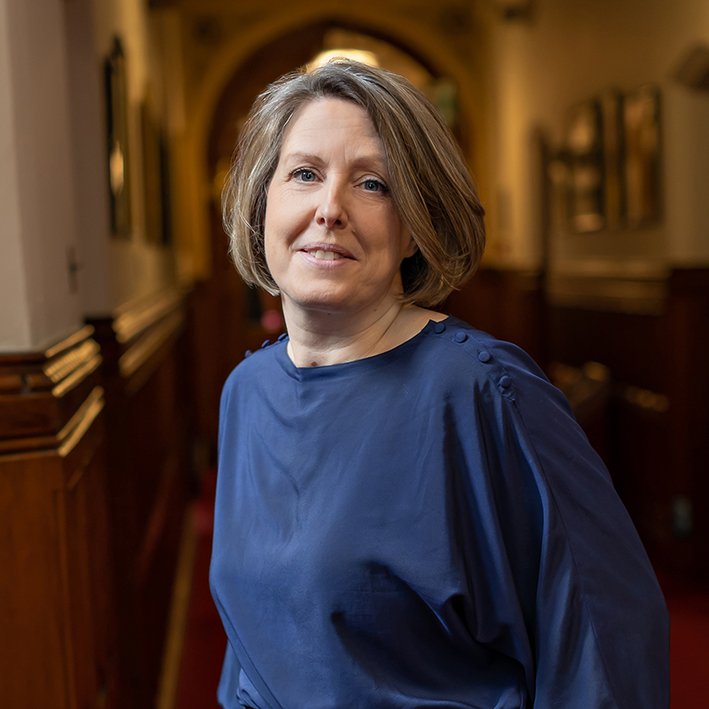
Co-host, Cleaning Up Podcast / Lord
Baroness Bryony Worthington is co-host of Cleaning Up. She is a Crossbench member of the House of Lords, who has spent her career working on conservation, energy and climate change issues. Bryony was appointed as a Life Peer in 2011. Her current roles include co-chairing the cross-party caucus Peers for the Planet in the House of Lords and Co-Director of the Quadrature Climate Foundation.
Her opus magnum is the 2008 Climate Change Act which she wrote as the lead author. She piloted the efforts on this landmark legislation – from the Friends of the Earth’s ‘Big Ask’ campaign all the way through to the parliamentary works. This crucial legislation requires the UK to reduce its carbon emissions to a level of 80% lower than its 1990 emissions. She founded the NGO Sandbag in 2008, now called Ember. It uses data insights to advocate for a swift transition to clean energy. Between 2016 and 2019 she was the executive director for Europe of the Environmental Defence. Prior to that she worked with numerous environmental NGOs. Baroness Bryony Worthington read English Literature at Cambridge University


