

 Apple Podcasts
 Spotify
 Overcast
 PocketCasts
 RSS Feed
Mexico Wants To Build An $8,000 EV For Everyone | Ep273: Roberto Capuano
Can Mexico build an electric car for $8,000, and use it to create an entirely new domestic industry? This week on Cleaning Up, Bryony Worthington visits Mexico City to sit down with Roberto Capuano, director of the Olinia Project, and discuss the state-backed effort to develop a new generation of affordable electric mini-vehicles.
Roberto explains why Olinia is designing small EVs specifically around the needs of Mexican cities, how partnerships with Chinese suppliers could accelerate technology transfer, and why price rather than subsidies could ultimately drive EV adoption. They also discuss Mexico's ambitions beyond its domestic market, with potential demand across Latin America and even East Africa.
Topics discussed in this episode:
- Why Mexico wants its own carmaker
- Electrifying Mexico City's public transport
- The rise of electric mini-cars
- Building an $8,000 Mexican EV
- Why Olinia is partnering with China
- The state's role in carmaking
- Building a Latin American EV market
- Can Olinia deliver by 2027?
Leadership Circle:
Cleaning Up is proud to be supported by its Leadership Circle. The members are Actis, Alcazar Energy, Arup, Climate Imperative Foundation, Copenhagen Infrastructure Partners, Cygnum Capital, Davidson Kempner, EcoPragma Capital, EDP, Eurelectric, KKR, Mitsubishi Heavy Industries, National Grid, Octopus Energy, Quadrature Climate Foundation, Schneider Electric, SDCL and Wärtsilä. For more information on the Leadership Circle, please visit cleaningup.live.
Links:
- Roberto Capuano’s bio: https://www.linkedin.com/in/roberto-capuano/
- Olinia Project: https://www.olinia.auto/
- Subscribe to our newsletter: https://cleaninguppod.substack.com/
- OEM: Original Equipment Manufacturer
- BRT: Bus Rapid Transit
- R&D: Research & Development
- ICE: Internal Combustion Engine
Chapters:
- 00:00 Intro
- 02:15 Electrifying Mexico City
- 10:33 Olinia's Origins
- 11:58 Mini Electric Cars
- 18:48 Made in Mexico
- 21:25 State-Led Industry
- 30:33 Chinese Supply Chains
- 36:31 The $8,000 EV
- 40:01 Charging Infrastructure
- 42:54 Global Ambitions
- 45:43 Scaling Olinia
- 48:40 Software and Autonomy
- 50:01 Political Longevity
- 55:31 Outro
Roberto Capuano
GM, Ford and Chrysler from that moment were all bailed out by the US government in 2008. None of them would exist today if the US government had not taken a direct equity stake in the companies. But this is normal.
Bryony Worthington
I guess also, you know, we're in an era where, what did Mark Carney say, you know, all the norms have been broken, there's been a rupture. And so actually, this concept of countries trying to be more self-reliant or direct the industrial kind of complex of the country more directly, because, I mean, Mexico is the home of a huge amount of car manufacturing, but none of it's owned by Mexican companies. That's the point.
RC
Yeah. So the first thing to say is this is not a crazy idea. This is not like a dogmatic, extreme, radical idea at all. That's the first thing, and the second is...
BW
Hello, I'm Bryony Worthington and this is Cleaning Up. My guest this week is Roberto Capuano, the director of the Olinia Project in Mexico, an ambitious idea to develop a state designed and state built company to bring electric vehicles to the masses. Please join me in welcoming Robert Capuano to Cleaning Up. Roberto, thank you so much for joining me here today on the Cleaning Up podcast. We're here in Mexico City in your offices, but I'm going to start by the first question we always ask, which is could you introduce yourself to our audience please, in your own words?
RC
Sure. And thank you very much for having me. My name is Roberto Capuano. I grew up and was born in Mexico City. I have lived, I studied in the United States, so I've lived in the US and I've also lived in the UK, I lived in London for two years. I'm in charge of the Olinia Project, which is a project that was put forth by the president of Mexico, Claudia Sheinbaum, and with the goal of building our own OEM for mini electric vehicles. And when I say our own, I mean Mexico's own OEM.
BW
That's quite a bold challenge, isn't it? And we're going to get into all of that, but tell us a bit about how you came to be leading this project. You've worked on solar initially, is that right?
RC
I'll go back without making this too long, but I was not part of the government in 2018. I was just finishing, I was closing a cycle in my professional life, I was selling my company to a firm who had purchased it, and I was not able to compete in the sector anymore. And it was precisely when Claudia Sheinbaum's government was elected for Mexico City, and I was sort of by fate, a little bit by luck, I was invited to participate in her government as the head of Metrobús. Metrobús is Mexico City's BRT system, the Bus Rapid Transit system, which is very popular in many parts of Latin America. It is a bus, they are articulated and bi-articulated buses that are running in the street in confined lanes.
BW
And you know what? I just took one to get here, Linea One. And it was much faster because it feels a bit like a tram, but it's a bus. You know, it's got dedicated entry and exit points, right?
RC
So yeah, it's very similar to a tram in terms of how many people it can move. But it does not require all the infrastructure that a tram regularly requires. So it's a very, very efficient way of moving people. And the reason why I'm going into this is because that project was developed in, I can't remember exactly the year, but that project was Claudia Sheinbaum's project when she was the Minister of the Environment for Mexico City in between 2000 and 2006, with the man who is her predecessor as president, Andrés Manuel López Obrador. So he was a mayor of Mexico City or the Governor of Mexico City, she was in charge of this project and she brought BRT to Mexico City with Linea Uno, with Line One. So I was in charge of Mexico City's Bus Rapid Transit system, seven lines, 1.6 million people moving it every day. And when we began the government, we had this view that the best way to electrify Mexico City was with the trolleys. So Mexico City had a really big trolley system.
BW
Trolleys is not a phrase I'm familiar with, but do you mean a tram?
RC
Trolley buses.
BW
Oh, okay.
RC
So these are buses that look like regular buses, but they have like two antennae on the top.
BW
Okay, right. So electrified buses?
RC
Yeah, but they are connected to a power line that runs above it. So before, there was a really big trolley bus system in Mexico City, and it was sort of disarticulated by the view that it was better to use just regular petrol buses, and this was run by a government-owned agency. The president has a strong belief, which I share, that the government can do a good job operating. So she thought that the best way to electrify Mexico City's public transportation system was obviously dedicating money to the subway, al metro, and also to bring back the trolley bus system. However, one of the first things I did when I was in Mexico City when I headed the Metrobus, was that I went to London because I had lived there, and I knew that TFL's system to tender their bus routes was very interesting, and I wanted to learn about that.
So I was there, and they told me, we really want you to come see our electric bus depot. I was like, you know, “I'm not really into electric buses”, “you have to come see this”, so I was a good guest and I'm like, well, I'll just go. I humored them, and they took me, I don't remember where it was, but what was the first interesting thing about this was that the bus depot was in the middle of a very, I wouldn't say suburban, but it was like an area full of houses and right in the middle of a place where a lot of people lived. And that's the first thing. And when they showed me the buses, I realised that what they were telling me was a very big update on the information that I had. So I thought that buses, technology was not there, it was expensive, the batteries were fail-prone. And what they told me was, no, this is working fine, our buses have been doing a lot of mileage with no problem. And they told me people are much happier with the electric buses, like that's something I did not expect. Drivers are a lot happier with the buses, that was something I also did not expect.
But then what really struck me, and then that's when it all clicked for me, was that they told me, and the neighbors are very happy with the buses. And I thought, well why were the neighbors happy? And they showed me that all along the street, from where the buses disincorporated from their route or route to the depot, all of those houses had been paid, the bus company had paid for their double…
BW
Noise.
RC
And now they were really happy because all of that noise had gone. So it was, I understood the electromobility as a way, you know, the passenger wins, the driver wins, the people that interact with these buses win. And then you obviously have the very clear benefit that you don't have this exhaust fumes that are really terrible for us as pedestrians.
BW
Yeah. And air quality in Mexico City is an issue, right? Because it's this high elevation with the mountains around it where it kind of fills up with pollution. So I guess that must have been a co-benefit.
RC
Exactly. So we are like a bowl and the smog rises up. And because of the way the temperatures work, it's basically like you have a coating of smog and you can see it sometimes when you're coming down on a plane, you literally cross through it.
BW
So round about when was this then, what era? Because I mean, I'm here and I saw at least two electric buses, but there are still quite a lot of, the Volvo I came in on was quite noisy, quite dirty, so it's not completely electrified yet, is it? What proportion do you think?
RC
So I started with Line Three, you used Line One. And what I guess the main issue for me to tell you why I'm leading Olinia is that I went to the Governor and I told her I was in London, they showed me this and they really updated my knowledge of what this technology can do. And because she is a scientist, she's not dogmatic at all about her beliefs on technology, she listened very carefully and she allowed me to start developing the idea of electrifying one of Mexico’s lines. Which is very complex because you need to develop the framework technically, legally, operationally for it to work. And we eventually did, we were able to electrify Line Three, which was around 60 articulated buses. That line was moving at that time around 400,000 people per day and it still is.
And what we did was we developed a new business model, business and legal model for electric buses to be incorporated into Metrobus. So now you see a lot of Metrobuses becoming electric. Line One is the trickiest one because it is the one with the highest number of users, around 600,000 people move on those buses every single day, which is huge. They are biarticulated, so biarticulated battery buses are not as commonplace as articulated buses are. So that's a challenge. I don't mean to speak for what the current government is doing there, but I think what was great was that we were able to give that project which she created in the early 2000s, we gave it a new sort of view that allowed it to electrify its fleet in a way that hadn't been able that we hadn't been able to do before, at the same price that we were paying for mileage for diesel buses.
BW
So when did that end then? So when did Olinia start? What's the year?
RC
So 2022, I went to the mayor, to the Governor, and I told her I think I'm ready to go back to the private sector. And well, what do you want to do? Well, I don't know, I want to go back to a private sector because I've done what I need to do, here's the electric line. She told me, well stick around while you find something to do. But in one of those conversations that I had with her as an external agent or consultant to the water utility, where by the way, we lived through the worst drought that this city has ever lived through. But one day I came across a mini vehicle and I told her that it was, we were discussing the technology and she really was interested by it. This is very interesting, I told her it's very cheap to buy, it's really cheap to operate, The technology is not as complex as a regular vehicle. She looked at it, she says, very good. And then she laughed, she told me, well, when I become president, will you help me with this? And I said, yes of course. And then two years later, almost precisely to the day we were sitting in her office, she had been elected president and she said, “I want to build a mini car for Mexico, do you want to take on that challenge?” “Yeah, I do.”
BW
But before we go further, a mini car isn't something you see on the streets of London very much. I mean, we may all have the kind of Italian little Cinquecento in our minds, but I think there are in other parts of the world, these cars are quite common and they're almost a class on their own. But can you just tell us what makes a mini car a mini car?
RC
So a mini car, mini vehicle, it actually has a special category in Europe. So the best way to understand it is a car has a big license plate, a motorcycle has a little license plate and the mini car has a medium license plate. So it's not a car and it's not a motorcycle, it is something on its own. And the category is basically, at least the way that we're building it, a mini car or in our case, it is electric. It is lightweight, so it weighs less than a subcompact car, considering also the batteries. It is low speed, so generally it is topped depending on the market between 40 and 80 kilometers per hour.
Generally, they're small, much smaller than a subcompact. So the Cinquecento actually, our car is a couple of centimeters shorter than the Cinquecento, which is already a very small car, but our car looks bigger because we don't have a hood. What is required in terms of safety and crash tests for a vehicle that is moving at 120/130 kilometers per hour is very different than a car that is moving at 50kmh inside the city, so this car will never go out into the highway. Obviously, if the user breaks the law and does it. But they are not designed for the highway. So that means that the design can be done with areas that don't require so much impact. So the reason why you have these frunks, these front trunks in electric vehicles, many times it doesn't necessarily have to do with the actual architecture of the vehicle and the battery and the drivetrain, but rather you need what is called the crunch, the crumple zone.
BW
Crumple zone, yeah.
RC
So that's what that is. So we don't need a big crumple zone, our crumple zone can be very small. And so mini vehicles can look and be very different. Two examples that are popular in Europe, mostly as leisure vehicles, so I don't think people use it as their main vehicle, you have the Fiat Topolino from Stellantis and you have the Microlino I think it's called from Micro, the company that does the scooters. And that car is actually very particular because it opens from the front, like you open the front of the car and that's your door.
BW
Novelty cars, really. And you do see them, but they're urban, their ability to move, it is a true hybrid between a motorbike and a car isn't it, in the sense that you're covered, but the power and the size is much more maneuverable like a motorbike and suited for urban.
RC
So the way that it's mostly marketed in Europe is you use the term, but it's sort of like an accessory, it's like a fun vehicle for the beach, maybe. But what we saw is that in Asia, particularly in China, mini vehicles were being used as actual vehicles, not just for fun, but actual vehicles to solve mobility problems. And that's what was really interesting to me and to her, because these cars do solve mobility problems for people who can't afford a regular vehicle, but they do give people mobility.
BW
And also weatherproof mobility. I mean, I've been here a few days and it's obviously the season where you get this big downpour at the end of the day. And there's something about getting into a car and not having to be on a motorbike or some other vehicle, that there's a space that you can feel you're protected, aren't you, from the elements and it gives you a different experience.
RC
So one of the things that we did to design our vehicle was we, because we have people from all over Mexico, we sent them out with a job. We use the design thinking methodology to help them observe and live and interview the users and we have this manual for our vehicle. And one of the things they came up was we want our users to be able to travel in a confined or protected area from the weather. Also, we have a very hot climate here, so not from the hot, from the heat, from the rain, not so much from the cold. Obviously, we do have some cold areas in Mexico, but mostly it's the heat and the rain. That's one of the things that we could also do with a mini vehicle.
What we're trying to address, the problem that we're trying to address or which we are addressing has to do with what is called, I've heard it being called popular mobility, which is short, urban trips, mostly done by women not in the peak hour of the day, to tend to the home. Either to take the children to school, go to the market, take their parents to the doctor or in general move around the neighborhood. And that's done a lot in Mexico in very makeshift cars, they are sort of like the Indian tuk-tuks. So we do have a lot of those, but we also have a lot of improvised vehicles. So they're just regular motorcycles where they build these structures around them so that you can carry goods or people. They're very practical, but they have two problems, at least two problems. The first one is they're unsafe and the second is they're unregulated.
BW
And they pollute, I guess.
RC
And they pollute.
BW
Yes.
RC
So that's what we said. We want to really create a very good alternative for that specific market.
BW
Bolivia's got a car, the Quantum, that's sort of similar, but that was very much a Chinese imported design wasn't it for Bolivia, and Bolivia now manufactures it. But which was the one that inspired you?
RC
It was Quantum, I know the founder, he's a good friend. They introduced me to him during this period after I left Metrobús. And it was he who showed me the mini vehicle, so it was actually that that was a picture I showed to her.
BW
Let's get into the philosophy of why it has to be made in Mexico and be a Mexican car. And you didn't just say to your friend, hey, why don't you franchise into Mexico, we can work on this together. Where does the desire for Mexico to build this come from?
RC
The idea is and we have to, I want to be very specific because I will also share with you that we are working with companies that are not in Mexico and we're fine with that. What we think is that the design and the problem that we look to solve is our problem. So we don't want to bring a Chinese vehicle or an Italian vehicle, we want a vehicle for our problems. And when I say we went out and we did this design thinking view of trying to identify what the problem was, we realised that vehicles were being used in a way that they were not meant to be used because they were not fulfilling the needs that we were seeing here. So that's why we designed our vehicle the way that we did, that design is ours. And then when you build a vehicle, we started learning and very humbly, I can say that I didn't know how to build a vehicle when I said yes to this project but I learned very fast. That's one of my big strengths.
So what we realised is you can be VW, you can be GM, Peugeot, any company, they use a lot of outside engineering to help them build the vehicle but they are the owners of the concept. So are we, we are the owners of the concept and we have used help externally to help us do the design. So a way to understand it is, you know, your aunt can be a great cook, but that doesn't mean that she can be great at building a restaurant or perhaps a great cook also needs people to execute his vision. Sort of like because a Michelin star chef, nobody's asking him if he chopped the onion for the onion soup. It's like, you know, this onion soup is my concept, I made this recipe, I wanted to go for this taste or that taste and this feeling or that feeling. But you're like, hey, did you chop the onion? No, somebody else chopped it for me, OK, then it's not your soup. That's the way that I sort of try to explain to people what it is to model.
BW
But to be clear, though, what the current government of Mexico and previous government, the party's view was, the state can do things. The state is not just here to administer taxes and allow the neoliberal economy to decide, it's quite a nationalistic view of how you engender economic growth right, that the state is involved. So there's the kind of ownership, which I'm guessing is part private, part public or mainly public, part private?
RC
We'll see. We definitely want the government to have an important stake in the company if we're willing to have it be 100% public if we don't find the right partners. But what you're saying is really the heart of the issue with Olinia. And I want people to understand something that's very important, and it is that the car industry has never been a market driven industry, never. You go all the way back to the beginning, car companies are very tightly related to the government of the country where they belong to.
BW
I mean, the obvious example being Volkswagen, right?
RC
That's the most obvious one. But you would think, you know, Peugeot and Renault, they're very linked to the French identity, to the French government. And if either of them has a problem, they will definitely be helped by their governments, as Nissan has been helped, Toyota, Kia, Hyundai. You look at the story of these companies, I recently read the story of the founder of Hyundai, this guy is amazing. If you can read and learn more about him, he's a really amazing person, but his venture was strongly, strongly supported by his government directly.
BW
Yeah.
RC
So the government was like, you know, we need to build a car, can you do it? Yes. OK, you do it, we'll help you. He ran risks, but he got a lot of help from the government. And this is like a very present example that I have because I just read about it. But if you go into the story of any of these car companies, they have all at one point or another, or are currently, being helped by their governments. GM, Ford and Chrysler from that moment were all bailed out by the US government in 2008. None of them would exist today if the US government had not taken a direct equity stake in the companies. But this is normal.
BW
I guess also, you know, we're in an era where, you know, what did Mark Carney say? You know, all the norms have been broken, you know, there's been a rupture. And so actually this concept of countries trying to be more self-reliant or direct the industrial kind of complex of the country more directly, because, I mean, Mexico is the home of a huge amount of car manufacturing, but none of it's owned by Mexican companies. That's the point, right?
RC
Yeah. So the first thing to say is this is not a crazy idea. This is not like a dogmatic, extreme, radical idea at all. That's the first thing. And the second is we are in the top seven countries of car manufacturers in the world, and either we're six or seven, depending on the year. But from those seven, we are the only one of them that does not have its own OEM. That doesn't make sense, at least to me, it doesn't to the president either. So we say, well, let's let's do something, let's use all of this know-how, all of the supply chain that has been built and the expertise, because we have very expert people in the subject, let's build on that.
I think that what we are doing is we're taking a lot of very talented people who know a lot and we're just creating, we have a method to work together. That's something that hadn't been done before from the academic institutions. So we said, let's go to the big academic institutions and centres in the country, and let's ask who are the top people in car design, manufacturing, supply chain quality, where are they?
BW
But you went to academia rather than competitor companies, interestingly. But why was that? Why didn't you just think, well, let's get the talented engineers out of Volkswagen or?
RC
So we are also doing that, but we got going with academia first because the president believes a lot in academia, as do I, because she herself was an academic. And I think one of the things that are very clear in academia is like if it's not correctly harnessed, academia can just go around in circles and do nothing.
BW
Well, that's why I questioned it, because academics are famously allowed the freedom to think great thoughts and wonderful designs, but there's no bottom line of profitability or practicality applied to a lot of that.
RC
So yeah, but consider the institutions who we are working with are technical.
BW
They're technical colleges and institutes of design and engineering, not conceptual. And this is to build the design and the prototype, which in fact yesterday you unveiled your second type of vehicle. So there's the first one, which is a kind of people focused car, and the second one is more of a cargo focused. So you've got these concepts, you've got these prototypes, but isn't now the hard part because now you've got to start manufacturing them and get them off the production line. And don't you have a deadline? Isn't it 2027 next year?
RC
The Summer of ‘27.
BW
So every month counts, I'm guessing.
RC
Yes. Well, you just said that but when we launched the project, I announced it, we had been discussing with the President between October and December 2024, and we announced it the 5th of January ‘25. And I don't remember how this happened, but somebody said we need it before the World Cup. So I said I said in January we're going to have it before the opening of the World Cup. That was June 11th, and so what we started doing is I said, you know, June 11th, that's our date. It's like a very precise date in the calendar.
BW
This is to get a prototype?
RC
To get the prototype in our offices. We had a day remaining to the 11th of June and every day was somebody's job to just bring the number down one by one by one. And we were able to deliver four days before the 11th of June. I believe a lot in having very clear deadlines and working very hard towards them. So you say the hard part, I think the hard part, everything is the hard part, it's just that the wager becomes higher.
BW
Where are you, have you got like a factory?
RC
No, we're working out of our, we built like an office. It's a very cool office, I would say, like feel very startup-ish, I like it, so we're working inside of the university campus of one of the institutions who supports us with researchers. And we work in that campus and that's where that's where we are working out of right now. But we are now building our office also in Puebla, a larger space very near the Volkswagen industrial campus facilities. So what I want to say is we are very aware that production is very difficult and that it is a big challenge. But the other thing that is not visible now is that, yeah you know, anyone can build a prototype and yeah, you know, that's not true, that's the first thing. And the second is we are building a prototype is really not that difficult if you're not intending to make them…
BW
Mass produced?
RC
Mass produced, yeah. And our prototype has been engineered from the get go to be able to be mass produced.
Michael Liebreich
Cleaning Up is proud to be supported by its Leadership Circle. The members are Actis, Alcazar Energy, Arup, Climate Imperative Foundation, Copenhagen Infrastructure Partners, Cygnum Capital, Davidson Kempner, EcoPragma Capital, EDP, Eurelectric, KKR, Mitsubishi Heavy Industries, National Grid, Octopus Energy, Quadrature Climate Foundation, Schneider Electric, SDCL and Wärtsilä. For more information on the Leadership Circle, please visit cleaningup.live. To keep up with all that's going on in the Cleaning Up universe, make sure you subscribe to our newsletter. Written and edited by my longtime New Energy Finance and Bloomberg NEF colleague, Angus McCrone, it comes out every second Monday. Angus provides the latest on the episodes we're recording, the events we're hosting, stories we're watching and what Bryony Worthington and I are up to. To sign up for the Cleaning Up newsletter, visit cleaningup.live.
BW
So you've got this recipe and you've got an ownership model in your minds, it's going to probably involve a bit of private money, but state keeps a role. So the supply chain then, how much of that is going to be actually Mexican? And I mean, there aren't that many parts in an electric vehicle, let's be honest, you've got your batteries, your controllers and that's pretty much it once you've got the body of the thing designed. So have you gone out to presumably China, which is the source of all batteries really currently? And how much of this is now going to be able to be located into Mexico? Are you going to be importing the cells? What's the vision for that?
RC
So when you have a project like this, you have to choose what to optimise for, and we are optimising for cost and time. And that seems very logical to certain people. But you should also consider that this is a project that is sponsored by the government. So you could say, well we will optimise for Mexican parts. We have chosen not to do that, we have chosen to optimise for time and for cost. So when we started building the project and going back to the chef analogy, you're like, I need to make a great onion soup, I'm going to go find the French chef. We want to build the best minicar possible, we went to where the biggest minicar market is, which is China.
So the thing with the car industry, and it's very obvious when you see it from this side, you need scale. That's why it is so difficult to get a vehicle company going, because the only way that you can make money out of selling the car is if you produce them truly at a very, very big scale. So how do you start a company that has, you know we're doing 10,000 cars our first year, which is tiny for any OEM, how do we make it so that we can actually sell it at the price that we're doing? Well, we need to use somebody else's scale to our benefit. And we're doing that with Chinese car parts suppliers for mini vehicles.
So some of the elements of our local supply chain are useful to us here for our vehicle and we will do that, but we are leveraging a lot on the alliances we have built in China to make sure that we can get all the car parts at the best possible price, as if we were building hundreds of thousands of vehicles, but rather with a first year round of 10,000 vehicles. So I believe in that very much, the day that we launched the first model, Linea Uno, Line One, we invited the Chinese ambassador. I mean, we've never been coy about it, we very openly collaborate with the Chinese companies, and I believe that it is the only way to do what we are doing. That's obviously an opinion.
BW
Because China does have an established mini vehicle segment. And actually, they've just entered the Japanese market because Japan is also a famous adopter of these vehicles for obvious reasons. Very dense, cities are very dense and hard to navigate. But did you never just think, oh, why don't we just take that already made vehicle, perhaps do something to make it more Mexican? Would it not have been cheaper to have just said to China, as long as you put a factory here and we've got part ownership, we're good to go. There was just enough difference in the model that you need, what was the…
RC
We did explore the idea because we explored everything. As I said, we're very I have not said it, but we are very pragmatic and because we're optimising time and money, we say well let's try to understand what if we could just buy someone else's design and then modify it ourselves. And what we realised is that you don't save that much time, it doesn't cost that much less money. But the most important thing is we're not achieving one of our goals, we are not developing the local capabilities that we need to build.
So the way that we work with Chinese suppliers is that we literally moved to China. A portion of my team moved to China and they worked literally besides, like sitting next to our Chinese counterparts, which is really how technological transfer is done in my experience. I've read a lot about it, it's so misunderstood. People think that technology transfer is basically like, here's the USB drive with the plans and you're like, OK, thank you, technology has been transferred. And that's definitely not the way things happen. Technology is transferred as it was transferred to the Chinese, as it was transferred to the Japanese 100 years ago, as it was transferred to the Koreans 60 years ago, which is you start working with those companies and those countries who know how to do it and you make it your own.
But that work has to be done by human beings who sit next to each other, who learn about each other, who become friends with each other, who are in close contact with each other and that is what we wanted to do. And that's what we did. That's why we believe that we're doing something that's very unique. Maybe it will be understood in the short term, but I believe that in the long term, it is the only way to get going. We need to find a way to absorb the best practices of the industry in which we are trying to compete.
BW
OK, so we've talked about the sort of narrative and the philosophy of why it needs to be Mexican. You talked about the two goals, which is speed and price. Are you going to be able to hit a price point, are you going to require subsidies to get these first 100,000 off the out into the customer's hands or can you do it without? What's going to be the policy that you need around this vehicle?
RC
The company should be financially self-sufficient. I believe we can hit the price point.
BW
And the price point is what? $9,000 or?
RC
We have announced our price point starting at 150,000 pesos, roughly at 16 or 17 pesos per dollar. That's around $8,000. But I believe we can hit the price point. Will we need help to do? I mean, we've done all our R&D and all our development with government funds, we will capitalise that into the company, not at an aggressive valuation, our view is not we should really aggressively value our startup. And if this were me as a startup founder, maybe I would say this is worth a billion dollars, let's raise a billion dollar valuation. But that's not our view. We really want this to be a project that grows in a way that is sustainable for the company, for the investors.
BW
But are there policies that support EVs in Mexico? Is there a kind of tax incentive or even just a parking incentive? I'm thinking about how Norway got their massive uptake, it was a combination of all sorts of incentives really wasn't it?
RC
Yeah, I'll give you an interesting fact about Norway's adoption, which is first Norway, a very small country. Norway's total new vehicle market is around 100,000 units per year, that's less than the total number of vehicles, new energy vehicles that were sold in Mexico last year.
BW
New energy, you mean electric or hybrid?
RC
Yeah, or plug-in hybrid. We are a very big market and we're a very big country. We're not China, but we're much bigger than Norway. So yeah the uptake has been very large, but also because it's a very small country and small market. There are certain incentives, but I think that the most important incentive, as it happened with solar energy…
BW
Is the price.
RC
It's the price. I mean, the price to operate the vehicle.
BW
Because that tracks through to everything then in terms of if you want to lease it or the financing that sits on top of it. It is the price, isn't it?
RC
So we've seen private companies with private money build funds to finance electric only fleets with the view that this very big difference between the price of the electric mile to that of gasoline, that gives you almost like an arbitrage. You know, I can give you exactly the same service at a much lower price.
BW
Yeah.
RC
Then my financing can be special for this type of vehicle. And that has not worked with, I wouldn't say zero because there are certain incentives, but mostly it has been market driven, which for me is very exciting.
BW
Great. Can I ask a question then about how the utility part of government is going to respond to this? Because CFE is the state owned electricity provider and I'm guessing, let's imagine this is hugely successful, we're selling hundreds of thousands of units across Mexico and out into the wider South American market hopefully, how is the utility viewing this? And are there ways in which we've now got these agile tariffs in Europe where the vehicle is being incentivised to charge at the right points when we've got more energy on the grid? There's all this kind of integration now into the energy transition. Have you had conversations with CFE about tariffs that can help consumers?
RC
Not at this point, but I think that it's a conversation that they're open to having. They're very interested in the business opportunity because they are also a company. I think that conversation is an interesting conversation to have, but I think it has to happen at the right time. Sort of like what happened in the California grid with solar energy and the duck curve they used to call it because demand really for baseload went really down when solar energy was peaking. So they thought this is going to bring the grid down.
BW
But what they solved it with, there was a lot of static batteries.
RC
That's correct.
BW
And there hasn't been a very sophisticated integration of electric vehicles into the way the utility company talks to you. I'm a PG&E customer, they don't really understand, I've got an electric car and keep sending me letters saying, your consumption of electricity is a bit high. And I'm like, well, it's because I have an electric car, you should know that and you should be incentivising me. So we've got we are on an agile tariff now, but it's taken them a while. You can skip that stage potentially.
RC
You're right. I think it's my main concern right now with the utility and where I want us to focus our money and our energy, because we have to sort of focus where we want to spend our political and financial capital, I want to make sure that we deploy a lot of charging points. And then once we have that, then we have a problem, I'll be very happy that we have the problem with the charging, like, “we need to charge in a more coordinated manner because we have so many electric cars”, I'll be really happy when that happens.
BW
Okay.
RC
I want to make sure that we have enough places for people to feel safe, that there will always be a charging spot for them.
BW
It's interesting, isn't it? Because it depends on your demographic of who buys it. If it's being bought by people who can charge at home, but if it's multi-occupancy tenancies who are buying this, they will be charging in a public charger infrastructure rather than at home. And the agile tariff really works when it's your own home charger.
RC
Yeah.
BW
Yeah. So we've got through quite a lot of time without ever mentioning your neighbors to the North, which are the USA. And we've talked about California, but that's a separate part. But so you've been serving, as Mexico, the North American market, right? That is, that's where all these OEMs are selling into. But we're in turbulent times right now, can you imagine this market that you're trying to sell into ever going into the North American market? Or are you focused now more further South into markets in the rest of the Americas?
RC
I believe that this product is more suited for cities that look like Latin American cities. So when I went to Bolivia and I was exploring Quantum and learning about it with Jose Carlos, I was in three cities in Bolivia, I won't say they're identical because we all have our own identities and our cities, but surprisingly similar in terms of how they are built, the density. And that's why a mini car works so well in Cochabamba, where Quantum is based. So we've seen and we have identified a demand for these types of vehicles, and we know they're being sold in other Latin American countries. So we believe first our vehicle will be interesting to our Central and South American neighbors, but also we have seen there's quite a bit of interest for a vehicle in Africa, that was surprising. And this we found out because of the way that we work with our Chinese suppliers. But we have received express interest in our vehicle from Eastern African countries.
This vehicle serves a need that is Mexican, but it so happens to be that it looks a lot like what people in other Latin American countries also need. I'm very excited about that because that gives us a different view on how we can grow this industry rather than saying, well you know, let's sell it to our neighbor in the North because they're very big and they have a lot of money. I think let's find the problem that we share with our Latin American countries and find a way to solve it.
BW
Yeah, well, that is true South to South collaboration, isn't it? Which we're seeing more and more of if you count China as South. And there's a whole ecosystem of world trade now that's kind of not reliant on the big markets of US and Europe as much because there's these emerging middle economies in which Mexico is a classic example where you're big enough for your own domestic market and then you'll have these partnerships with others. So what do you wake up at night worrying about when you're thinking, right I've got this deadline, Claudia is watching me, I've got to deliver this, what's the biggest challenge at the moment?
RC
Long term? No, at the moment, the biggest challenge you've mentioned that we have to get to our deadline, the Summer of ‘27. That's definitely our biggest challenge.
BW
And to remind everyone, that's to get a production line up and running, cars on sale, units of what, did you say 100,000 in the first year?
RC
10,000. Ramping up to 50,000 in four years, which is a pretty big ramp up. But we believe we can make it happen.
BW
You've got to be open for business on June ‘27?
RC
Not June, Summer.
BW
But the cars will be coming off the production line by then?
RC
By then. We should have our first vehicles on the road in the Summer of ‘27. That's my very, very imminent challenge. The other thing which I think a lot about is, I think this has a really big challenge, and I think we've done a good job, and we're going to do a good job. But my view is, how do we really make this company future-proof in a way that we're very successful in this administration, but we set ourselves up for success after this administration? Because I really want this to work, in a way that drives me, because I want to prove that the theory is right, that we can build a company where the government participates, it's successful, people want to buy their products, and we are selling products in other countries.
And one thing that I think a lot about is that we have to start building our ability to make this a technology company. So you were mentioning that supply chain, how much of a competitive advantage is it for us to have a supply chain as we do? I'm not sure, because I think that electric vehicles, as you know and as you've said, don't require so many parts. But the most important aspect of an electric vehicle is not so much the parts themselves anymore, it is the technology, and how you integrate that technology, and how you make it attractive, and how you move towards vehicles that can eventually drive themselves effectively. And that's where I believe that the mid and long-term challenge for me as a leader of this project and future company, hopefully I have the possibility to continue leading this project into the future, and making sure that we build these capabilities, so that we build a company of 21st century, and not one that would still looks like a company of the 20th century.
BW
It's been fascinating watching that evolution of cars being software, you know, they're driven by the software rather than the engineering now. They're computers on wheels, and as you say, autonomy or self-driving is going to become, well it's already happening. And so to what extent are you going to have to become a software, maybe focused on the physical aspects of the car for now, but have you already got the software in place that's going to enable that next step?
RC
The software that we require right now is relatively, to a regular vehicle, simple, and we are developing that ourselves. But as I mentioned, the idea is we do this incrementally. So, we're doing simple software for a simple vehicle now, but I want us to be able to move fast in this area, which I consider to be the most strategic one of them all, which is obviously we need very good quality and cheap tires, and rims, and steering wheel, everything has to be. But then, where I believe that the real differentiating factor is in building the technology for the vehicles. We're getting there, but it is a stepwise process, and it's always important to have the right strategy, but also to have the right timing.
BW
Well, how much of that is because, I mean Mexico politically is relatively stable compared to some of your neighbours, including to the North. And so, Claudia's got a six-year term, she's two years in, is she? You've got four years, at least of some hopefully stability, but I suppose you're trying to make sure you're future-proof in case there is a shift of politics. It feels like at the moment, Mexico like many countries, is focused on this idea that we've got to be more self-reliant, the neoliberal dream that we all kind of grew up through is being challenged. But it could easily go back, couldn't it to, no scrap all this, it's all private, and we only follow the market. So, I guess that's the challenge, isn't it? You've got to get up to scale, prove the concept in case of another political flip.
RC
Yeah, and you know more than a political flip, which is always a possibility in a democracy. I believe the President will be very popular when she finishes her term. That's my view, because I know how she works, and the results of her work will be very evident by the time the next election comes. But also, I want to make sure that this is seen as generally a good idea. And I don't know if that's clear enough, but it should transcend me, it should transcend her, it should transcend the moment. It should be just a good idea so that anyone, whether from the same or a different political party comes to power, they look at this and say regardless, this was a good idea.
And that is something that I've seen it happen in governments. You know, there are projects that move forward from one government to another, even when there is a change in the party that's in power, because the new government looks at it and they're like, well you know, that was not a bad idea. So now that I am in the government, I will help it move forward, because not everything that my predecessor did was terrible.
BW
Well, let's hope that Mexican government and Mexican politics does take that kind of more enlightened view of how to view the future, because the difference between the Western economic view and the Chinese view is time, it's short-term thinking versus 50-year thinking. The reason China has been so successful at its industrial growth pattern and the fact that it's built out this incredible now dominance in the electro-tech if you like, is because they've had a long-term vision and they've stuck at it. There are many problems, I'm not saying China is the poster child for everything, but our Western switching on and off of plans really undermines this idea of trying to build back some domestic capabilities and some domestic benefit from these transitions. So let's hope Mexico can, A, that you can help Mexico prove that this works and then that it's going to last long into the future.
RC
Yeah, well, look, a good example would be how the US government, regardless of party, looks at the car industry. It's generally seen as a good industry. It's not like, well GM was a democratic or republican idea. That's something that I want to achieve here as well, this is a good idea, it doesn't matter if I'm a democrat or republican in terms of the example that I was giving. It's just a good idea. Let's continue supporting this idea, supporting this industry.
BW
Yeah, I agree that they do think that, but there's a huge difference between the Biden era where there was definitely an incentive structure put in place to make the transition to electric and now the current system where it's kind of back to old fashioned just keep doing what we're doing. The risk for the North Americans, I believe, is that they've become a large Cuba where everyone's driving their huge ICE vehicles and everyone else has moved on. But at state level, I think the US understands they've got to keep moving into this new world.
And actually, interesting, you may already have heard this, but the Ford motor car, there's no more bigger symbol of cars than Ford. They've invested in a gigafactory to produce electric vehicle batteries but then with the sudden change, they've now selling those batteries into the static battery market, where there's a huge demand because of growth in electricity. And so they've pivoted from being a car company into an energy company just to ride out this kind of period. So I'm guessing being as you are now a company in the electro-tech world, hopefully agile enough and irrespective of political change, you'll be able to navigate through because electrons really are the future of now energy.
RC
So we very strongly agree on that. Yeah, we'll see, food for thought. And hopefully we will look back at this conversation in four years and say, well, you know…
BW
it was a great, well actually, I'm hoping that by June, I keep saying June, I mean Summer ‘27, which could stretch well into September probably, but I wish you all the best. And I look forward to seeing those cars rolling off your production line at the price point you're hoping for.
RC
Yeah. Thank you very much.
BW
Thank you. So that was Robert Capuano, director of the Olinia Project here in Mexico. My thanks to you for watching and to Oscar Boyd, our producer, to Jamie Oliver, our editor, to Kendall Smith, our manager, and to the wonderful Leadership Circle members who make this podcast possible. And thanks to you for listening. Please join us at the same time next week for another episode of Cleaning Up.
ML
Cleaning Up is proud to be supported by its Leadership Circle. The members are Actis, Alcazar Energy, Arup, Climate Imperative Foundation, Copenhagen Infrastructure Partners, Cygnum Capital, Davidson Kempner, EcoPragma Capital, EDP, Eurelectric, KKR, Mitsubishi Heavy Industries, National Grid, Octopus Energy, Quadrature Climate Foundation, Schneider Electric, SDCL and Wärtsilä. For more information on the Leadership Circle, please visit cleaningup.live. If you're enjoying this episode, please hit like, leave a comment, and also recommend it to friends, family, colleagues, and absolutely everyone. To browse our archive of around 250 past episodes and to subscribe to our free newsletter, visit cleaningup.live.
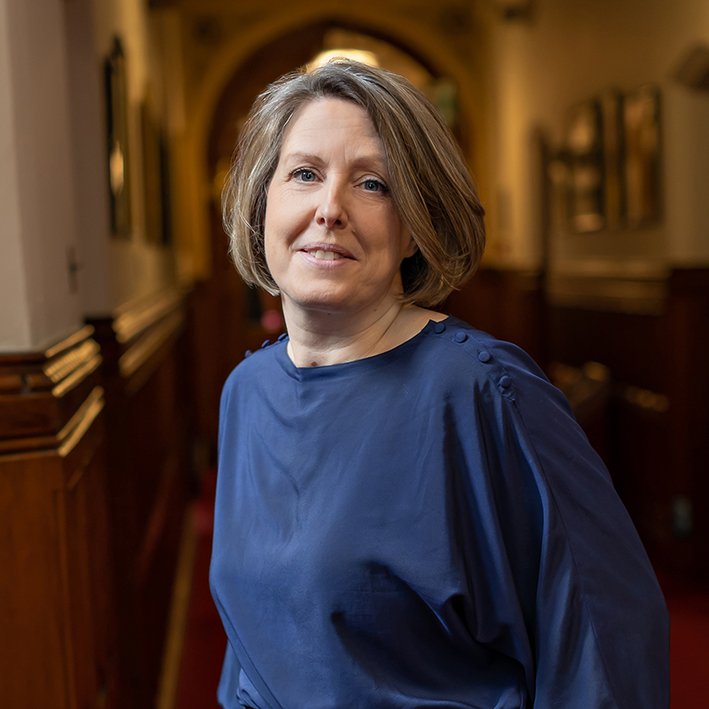
Co-host, Cleaning Up Podcast / Lord
Baroness Bryony Worthington is co-host of Cleaning Up. She is a Crossbench member of the House of Lords, who has spent her career working on conservation, energy and climate change issues. Bryony was appointed as a Life Peer in 2011. Her current roles include co-chairing the cross-party caucus Peers for the Planet in the House of Lords and Co-Director of the Quadrature Climate Foundation.
Her opus magnum is the 2008 Climate Change Act which she wrote as the lead author. She piloted the efforts on this landmark legislation – from the Friends of the Earth’s ‘Big Ask’ campaign all the way through to the parliamentary works. This crucial legislation requires the UK to reduce its carbon emissions to a level of 80% lower than its 1990 emissions. She founded the NGO Sandbag in 2008, now called Ember. It uses data insights to advocate for a swift transition to clean energy. Between 2016 and 2019 she was the executive director for Europe of the Environmental Defence. Prior to that she worked with numerous environmental NGOs. Baroness Bryony Worthington read English Literature at Cambridge University


