




India’s Solar Revolution Is Bringing Cheap Energy To Millions | Ep257: Harish Hande






The energy system is not about supply and exports and generation and distribution. It's about how we use energy in our daily lives and workplaces.
The so-called energy trilemma, affordability versus reliability versus environmental performance looks very theoretical in the boardrooms of an NGO or a consulting company. But it's not theoretical at all for someone struggling to run their life, do their job and pay their bills. What we need is a system focused on usage, not on supply.
Joining Michael on Cleaning Up this week is Harish Hande, a Bangalore-based social entrepreneur, co-founder and CEO of the Selco Foundation, which focuses on decentralized solar energy solutions for underserved communities.
A graduate of IIT Kharagpur with a master’s and PhD in energy engineering from the University of Massachusetts, Harish has over three decades of grassroots experience using sustainable energy to drive poverty reduction in rural India. In 2011, he received the Ramon Magsaysay Award for his efforts to make solar power accessible and affordable for the poor through innovative, livelihood‑linked energy services.
Leadership Circle:
Cleaning Up is proud to be supported by its Leadership Circle. The members are Actis, Alcazar Energy, Arup, Copenhagen Infrastructure Partners, Cygnum Capital, Davidson Kempner, Ecopragma Capital, EDP, Eurelectric, the Gilardini Foundation, KKR, Mitsubishi Heavy Industries, National Grid, Octopus Energy, Quadrature Climate Foundation, Schneider Electric, SDCL and Wärtsilä. For more information about the Leadership Circle, visit cleaningup.live
Links:
- The Selco Foundation: https://selcofoundation.org/
- Impact Investing Has it Backward: https://nextbillion.net/impact-investing-backward-time-prioritize-needs-social-enterprises-not-just-investors/
- How Solar is Saving 100s of Lives in Sierra Leone — Ep204: Project Bo: https://www.youtube.com/watch?v=z-5QjSfy2SM
- A Life of Energy Access and Inclusion - Ep20: Richenda Van Leeuwen: https://www.youtube.com/watch?v=8tyk1xcf7nQ
- What India Gets Right About The Energy Transition | Ep226: Dr Arunabha Ghosh: https://www.youtube.com/watch?v=qMrn-JewoCo
Harish Hande
That's the most democratised way of making everything accessible at the doorstep of the poor who want to actually create livelihoods. It's such a powerful tool. And when people talk about economics of solar, they lose out the powerful:‘how do you put a value to the democratisation? How do you put value to so much x reduction in the drudgery? How do you actually, even the cost of unreliability, sometimes it's only looked at that delta cost of loss of business. But that loss of business means another safety net gone. So they might not come out of poverty, right? Or a baby, I'm going to a hospital for a maternity ward. Oh, I don't have the electricity for the baby warmer that day, the cost of that, right?
Michael Liebreich
Hello, I'm Michael Liebreich, and this is Cleaning Up. Over the years, I've been lucky enough to meet some extraordinary people who've helped me get to the heart of the world's energy challenges. In the end, the energy system is not about supply and exports and generation and distribution. It's about how we use energy in our daily lives and workplaces. The so-called energy trilemma, affordability versus reliability versus environmental performance looks very theoretical in the boardrooms of an NGO or a consulting company. But it's not theoretical at all for someone struggling to run their life, do their job and pay their bills. What we need is a system focused on usage, not on supply.
But this is not an episode about energy statistics and the primary energy fallacy. It's a conversation with the one person who brought this home to me more than any other. Harish Hande is a Bangalore-based social entrepreneur, co-founder and CEO of the Selco Foundation, whom I had the privilege of meeting nearly 20 years ago. Please welcome Harish Hande to Cleaning Up.
ML
Harish, so wonderful to see you. Thank you for joining us today.
HH
No, thank you. It's an honour to come here in front of you, Michael.
ML
Tell me, where are you? I can't tell anything from your background.
HH
I am now in Bangalore as of now, Bangalore, India, yeah, in South, yes.
ML
OK, and we'll start where we always start, with you explaining who you are and what you do. Because you are who you are, we need the short version. So only a few of your amazing awards and incredible initiatives. But let's have that short version.
HH
So I belong to an organisation called Selco Foundation. I started the whole Selco family way back in 1994-95. The primary goal of the organisation, so the family, is to make sure how do you democratise the utilisation of decentralised energy in a manner that makes essential services like health, education, livelihoods, affordable and accessible at the doorstep. So making it as the most inclusive way of removing poverty. And I don't see any other way, but that's what I do.
ML
Harish, you're being characteristically modest. I love the way you say, I'm with an organisation called Selco. I mean, you're just this powerhouse and you created Selco and you've just been, you've been, I mean, I'm going to say it, an inspiration for me and many, many others. So you should lean in and say that.
HH
No, no, thanks. No, Michael, it's a, no, I mean, I'm an expert of failures. And the issue is that, yes, I mean, the privileges that I would have gotten over the years, making sure that how do we create an ecosystem or a level playing field that everybody else actually enjoys. And then it all depends on how hard they work and how they go forward.
So Selco has now turned into more than 500 to 600 people. Depends on which part of the organisation. The foundation has 325. The social enterprise has around 600. And equalising and saying that how do we blur the boundaries between caste, creed, colour, education. I don't care whether somebody's PhD. It's like, Michael, if you and me did a PhD on sugarcane, we would be called an expert. But a farmer doing 45 years of sugarcane actually on the ground will never be called an expert, right? How do we, how do we democratise that learning or experience? That's what Selco tries to do.
ML
And that really sets up the conversation, because I think one of the themes is this sort of tension between top-down initiatives and bottom-up initiatives. For me, you're the champion of the bottom-up and of really integrating energy into solutions. You know, if I know anything about that, and I've done a few things in my time, I honestly think it dates back to when you and I were together at the World Economic Forum on the Global Agenda Council for alternative energy, which we refused to serve on until they called it clean energy, and stopped calling it alternative. If you remember those happy days.
HH
Exactly, exactly. Yes. And in a rightful place called Dubai. So anyway
ML
I'm going to tell an anecdote. And this is kind of when you really made an impression on me. You may not know this, but we were in Dubai. I think it was 2008. The financial crisis was in full flow. And Klaus Schwab, you know, bless him, hanging onto WEF by his fingernails now. He did this global reset agenda. And we were there, you know, developing ideas. And we ended up coming up with one around clean trade. And I don't know if you remember that. But you went off. We were all kind of happy to be there, courtesy of WEF. And we went partying and eating. And there was this marvellous entertainment.
But you went off and visited some of the guest workers in their quarters to see how they lived and to see how they got energy. And you turned up all sort of bleary eyed the next morning. And I thought, my goodness, this is a human saint. This is somebody… I wish I'd thought of doing that because it's such an interesting question. Do you recall that?
HH
Oh, yeah. Now I recall because I also went and saw a play that was being played in the labour quarters on that day. So which was a very emotional moment, seeing that. Then how do you define developed country and a developing country? Right. You could have an extremely underdeveloped part of a developed country. Right. And we blur it. And we basically differentiate us. But and then the people in London, for example, or New York, lose out. The poor people lose out. And same in the rich people in the developing part of the world actually gain more because they hide behind the poor. Right.
ML
Absolutely. And this idea that even in the developed world, there are lots of people, particularly right now, and we are filming this at the time when there is this hot conflict going on in the gulf, and energy prices have gone up. And, you know, I'll be honest, it's not going to affect my life very much, whether it costs twice as much to pay my bill or fill my car. Actually, I fill my car with electricity.
But even if that price goes up, but, you know, for many, many people, even in these developed countries, they're still living, I don't want to say hand to mouth, but very exposed to energy prices. Can I ask you, what did you find when you went into those workers quarters? I mean, how were they living? You know, at the time, even then, Dubai, glittering hotels, some people living incredibly well, Lamborghinis, Bentleys and so on. What did you find when you went into the workers quarters?
HH
I mean, you could clearly see the subsidisation of cheap labour. Right now, in terms of that, you live in a 10 foot by 10 foot or 20 foot by 20 foot or eight or 10 people, which would have been right. You're basically 18 people are subsidising in many different ways. Instead of two people staying, there are 20 people staying. And now those people are subsidising the heavy constructions like the glitz. Right. So you are a double whammy. You basically earn from the people who pay for it. And but on the input side, you are actually paying less for the people who subsidise. So you see a clear demarcation of who is subsidising. Right. It's the poor who are subsidising the rich.
That was very clear because they were not earning what they should have been earning. They were not living in the condition they were supposed to be living. And so where was the benefit actually going? Right. On one hand, I would say the conditions were very poor. But the other hand, we don't give them the credit that they were actually subsidising the rich. Right. So very obviously cramped.
ML
But on the other hand, I suspect they were living and earning better than they could have been in wherever they came from, Bangladesh or Nepal, or I'm not sure whether where they were from, the ones that you visited with. And so, I mean, things I guess one could say it is complicated. It's not instantly obvious who's right, who's wrong and how to fix it more to the point.
HH
No, absolutely. But the question for me is, at what point do you say that they're earning more versus exploitation because of the choice they don't have? So for example, one is how do we make sure that the conditions back home are created because there's so much of philanthropic money? There are so many tax dollars that you would have created that would have prevented them from coming. Number one. Number two, am I also exploiting their helplessness? Right.
So that's what I mean. And on a very different analogy, also, I would say that somebody who is getting 10 out of mathematics and I do tuition 10 out of 100 and he or she gets 20 out of 100, which is 100 percent more. But you have failed. So is it that what I define, Michael, is that are we actually truly creating safety nets? They are sending more home. But at home, is there a safety net being created or it's just that it's a survival?
And what I mean by safety nets, for example, you and me, we have education, our savings, our family, our friend circle and our network. There are multiple. If I have to jump off a cliff of poverty, there are 10, 20 nets that will make sure that we don't go into poverty. Right for them. Even then, it's not creating safety nets. One child sickness at home for them means I have to work for 10 more years. Right. So that's where I see a lack.
ML
And I was embarrassed when I found that you had been out and sort of investigating and sitting because the very first responsibility, even if I say, oh, it's complicated. The first responsibility is to at least know about it, at least learn about it, at least be aware. I think that's kind of step one is for us all to be aware that there is this kind of iceberg and there's the bit under the water of people that are keeping this whole system. And it's not just Dubai, not by any means.
HH
It's everywhere.
ML
But let's come on to because when you talk about the safety net and the conditions back home, I completely agree that the overwhelming way to to to fix all this or to to address it or to improve it is the conditions back home have to be better. And then that feeds into your vision, which is not I'm going to do clean energy, but it's that you're going to through SELCO work on in a sense each business process. You talked about whether it's health care and or whether it's food production or whether it's farming. So talk to me about that philosophy, if you could.
HH
See, Michael, the philosophy for us is that clean energy and decentralised energy like solar, individual solar is like salt, it's an enabler. And I'm not going to give you a presentation on the salt. I'm going to give a presentation on fish and chips. I can give you on pasta and roti and daal. Right. The end goal is that and how do I make daal better? Right. And it becomes an enabler. How do I institutionalise the issue?
I always see from the energy side is, ‘OK, let me start with solar panels.’ But solar panels mean nothing to a rag picker, for a street vendor, for a dairy farmer or for a seamstress. Right. OK, am I getting am I able to milk the cows at the time I need it and do I have the electricity and can I reduce my drudgery by using a solar electric automatic milking machine? Or can I have a sewing machine that instead of doing two shirts a day, I'm doing eight shirts a day because of energy input? Can I have a Xerox and a machine and a printer to serve the college students who want to take printouts so that I don't lose out electricity for two hours and I lose so much of income?
By the way, they're all non-solar, not making solar as a centrepiece, but making it institutionalised by the way. So I don't have to talk about it, but they are all running. So that what happens is the most beautiful part of that is you are scaling up much faster. And that's the most democratised way of making everything accessible at the doorstep of the poor who want to actually create livelihoods. It's such a powerful tool. And when people talk about economics of solar, they lose out the powerful. How do you put a value to the democratisation? How do you put value to so much X reduction in the drudgery? How do you actually, even the cost of unreliability, sometimes it's only looked at that delta cost of loss of business, but that loss of business means another safety net gone. So they might not come out of poverty, right? Or a baby, I'm going to a hospital for a maternity ward. Oh, I don't have the electricity for the baby warmer that day, the cost of that, right?
And then again, to add to that, Michael, when people say X number of people are electrified, I mean, this again is a notion, right? I have electricity at home, okay, which is six hours, but you have counted that I have now electricity, I'm now counted. But when my wife goes to the hospital, there's no electricity. When my kid goes to the school, there's no electricity. So do I have electricity or no? According to your statistics, 600 million people have electricity. But I don't have it when I need it. How do you look at a holistic way of thinking? When do you have electricity when you actually need it?
And how? And that's where I think Selco was coming at. And also making solar as a de facto, as something that you shouldn't talk about. When you have a TV, you have a remote. What do you mean you ought to buy a report somewhere separately, right? It's institutionalised in your thinking.
ML
Okay, so this is, in a sense, radical focus on the demand side. And it resonates with me, right? I think, you know, I did this project with a bunch of friends, with actually a mutual friend, Richenda van Leeuwen, who's also, by the way, been on this show. But we raised money and designed a system to put solar power and batteries into this neonatal intensive care or special care unit. There's a lovely episode. I don't know if you had a chance to look at it, but we'll put a link in the show notes.
But that is really saying… our starting point was, what does the baby need? And the baby doesn't need electrification, certainly doesn't need electrification at home. What they need is 24-7 bulletproof electrification in that unit. And I was, again, it was for me, this has all been a huge, you know, sort of learning experience. I said that I learned from you. But also, that process in Bo, Sierra Leone, taught me that all the stuff, I've been involved in Sustainable Energy for All at the UN, even before it was called that, and SDG7.
And you're right, we used all these statistics, like what proportion of people have electricity? And then I realised when I started to work with the hospital that it's kind of, it doesn't answer the question. That baby doesn't care whether there's electricity at home or what percentage and so on. So radical focus on the demand side, I get it.
What do you say, though, to those people who say, OK, but you end up with a balkanized and very inefficient system? Because you'll end up with a little system in the hospital, you'll end up with a little system for the person who's rolling rotis or whatever, you know, in that use case, you'll have one system on the roof of the cow barn, then you'll have somebody else who's got to somehow find some power for an electric delivery van. And it's just this completely, you know, we wouldn't put up with it in London, because it's all these bits and pieces. It doesn't fit together. And it's very high cost because it's lots of individual systems. How do you answer that?
HH
My question is because you are looking at high cost, only looking at from a per unit electricity production perspective. Now, for example, if I am going to a rural area with 150 solar power, solar is again a by a roti rolling machine or a bread making machine, right? 100 of them financed. I am not talking about I'm saying that you are getting 20 years of units of electricity together, but taking a bank loan at 14 percent interest rate in five years, you are actually owning the whole asset. By the way, it's on solar. How is it inefficient? I now own the whole product, right?
ML
Well, I suppose. But the question is, if you had a grid, you could have larger centralised production, you know, a few big batteries instead of lots of small batteries. And so the unit cost would be lower. And it could also, by the way, not just do roti rolling, but it could also charge the delivery van and you could run a line over to the clinic and so on. And so overall, the cost will be much less. Are you locking these rural distributed energy areas to high costs of electricity forever?
HH
No, I am. I am actually saying the opposite. The grid electricity is the you're locking them into high electricity costs over the years. For example, as you make the grid more and more reliable. It becomes more and more expensive. OK, and as you start reducing the transmission and distribution costs, I mean, if you add to the… Say, for example, average in the whole developed world, whether you look at Philippines, you look at other places, it's around 25 plus in terms of the transmission and distribution costs. Now, as in the most reliable areas where electricity is being turned to grid, it is very high. If you look at Philippines, if you look at parts of India, it's very high. Solar at today, including battery, is actually the cheaper form of electricity.
So the argument before 10 years ago, I was defining argument of the cost of unreliability or 20 years ago, cost of not having energy. OK. And as the grid became more mature, we started talking about cost of unreliability. And today I talk about cost of reliability. And that's not cheap. Actually, electricity is not cheap to the grid. And it's a trick is in financing and not the grid costs.
ML
But now India has rolled out the grid and connected, I don't know what percentage it is now… There's some incredible statistics. Ninety nine percent of your railways are electrified, which beats us in the UK. And also some enormous percentage of houses or certainly at least the villagers have now got access to the grid. And Bryony, my co-host, did an episode with Mr. Ghosh, who I understand you know well and you've done projects with him. Now, he would say, you know, you've really got to get the grid. It's the grid. It's a centralised and we're going to put clean energy. Yes. So he said there were two revolutions. One was clean energy, but the other was the grid. So is he wrong?
HH
Yeah. I mean, in the sense of if I look at from a 10 to 15 years future horizon, right, I don't think I would agree to that argument at all. OK, had it been 10, 15 years ago, I would have maybe agreed in a sense partially. But now more and more, I see the cost of solar, the cost of batteries, the cost of sharing of electricity via batteries and the cost of today. What happens is, Michael, the issue is you're also comparing very inefficient demand side products, which is actually making solar more expensive. OK, so, for example, a baby warmer, what we used to supply in the hospitals was around 1000-1200 watts.
You are getting them at 150 watts today, right? Previously, I had to defend solar to power 1,000 watt baby warmer. That means then I had to defend why solar was expensive because of the inefficiency of the appliances, right? Now, what we are trying to do, Michael, is that with the team here, and I don't know, you'd be surprised, Michael, the 250 people, I have only one energy person, right? We look at the complete building design. We completely look at the efficiency of the appliances.
And in that case, at the distributed level, it does not make sense for the government, if the government wants a taxpayer, and a taxpayer means how do I increase the livelihoods of the poor so they become taxpayer, decentralise energy makes more sense for them, rather than giving this electricity at 26% transmission and distribution losses, that expensive electricity that is being distributed across to the rural areas at a subsidised cost could have been allocated to other places. It's not happening. And this is where I believe that today, that's exactly what the government is incentivising is that don't give it back to us. You have your own solar powered for your own roofs.
It actually saves me from giving you this expensive electricity far out into the rural and decentralised in the manner that you need it. I will now give it to the big industries which are actually concentrated. Economically, previously, many years ago, it was hurting the end user. Now it is hurting the supplier. And the supplier, if it is government owned, it makes sense for government to actually look at decentralised options.
ML
Interesting, because what you've got, and I think the loudest proponent of the alternative view is actually the Secretary of Energy in the US, Chris Wright. So he says people need energy. Wealth comes from energy, life, quality of life, lifestyle, health, everything comes from energy. And therefore, he immediately jumps to you've got to push more energy into the system from the supply side. And that's not a rare perspective. He's incredibly articulate about it. And certainly, if you want the argument laid out, he's brilliant at it.
But it is mirrored by governments after governments after government that fundamentally, we've got to have, and this is reflected in the IEA as well with their primary energy statistics. It is all about get more energy into the system. And you are completely at the other end saying, no, get more energy into not just people's hands, but into very specific applications that they want to do the actual things that they need to do. Correct?
HH
Yes. And, you know, if you look at the present prime minister's government, some of the programmes that has happened, whether it's the PM-KUSUM scheme or the PM Surya Ghar, or even for example, the PMFME for small and small scale industries, it's all pushing for decentralised energy. See, they have realised that it's not about energy, but how do I link to upliftment of economic development and better health services, right? That's where they're coming from. And suddenly, you got away from the whole concept of energy supply, but how do I increase livelihoods and health?
ML
And certainly your example of the oxygen concentrator, you know, 1.2 kilowatts instead of a few hundred watts. When I was designing the system for Bo, for the Sierra Leone system, we didn't have access to any oxygen concentrators that were in a sense appropriate for that use case. They were all, it was an oxygen concentrator, could have been for a miner in Kentucky who's got emphysema or for a hospital in the UK, but there was no super efficient oxygen concentrators.
Now, I remember you and I spoke about this and you had this part of some of the hundreds of people that you've got were actually designing things like oxygen concentrators. And I remember we talked about sewing machines. And since then, you've done a whole bunch of other use cases. Talk us through some of the use cases where you've designed these very efficient, solar compatible pieces of equipment.
HH
So the thought process, Michael, came from a different angle and to the future listeners also, don't take me literally. It's like I'm saying that if the Ministry of Energy is shut down, okay, and you create Ministry of Energies into every other department, right, in a subset of Ministry of Rural Development, Ministry of Women and Child Care, Ministry of Education, et cetera, et cetera, right? Now, I look at Ministry of Agriculture.
Ministry of Agriculture says that we have 18 value chains, the millet value chain, the rice value chain, the wheat value chain, or the Ministry of Animal Husbandry says I have the dairy value chain and a piggery value chain, etcetera, right? Now, let's take the example of a dairy value chain. Dairy value chain is from hydroponics in terms of, sorry, the fodder, then you have the cow shed, then you have the milking, then you have the chiller, then you have the sweet making.
How do I have solar powered hydroponics? How do I have restructured cow sheds so that the heat stress is low so the cows can actually produce milk? And the fodder is high quality fodder for better quality of milk. Then you have milking machine, solar powered milking machine. Then you have solar powered chilling for the storage. Then you have solar powered sweet milk. Think of it like a value chain of dairy and you have solar entering it, right? So then I go to the milk federation who has 3,000 farmers, that other milk federation of 10,000 farmers, the other had 20,000 farmers. Between three, I have 60,000 to 70,000 farmers who can use solar one way or the other.
The best way of strategising of scaling up solar, number one, if that's your and mine interest, right? Secondly, the milk federation has got a win-win that it is actually providing high efficient milk chillers to milk this one, to milk storage, to increase the income of the poor, the people who are actually owning the cows, right? But this could only have happened if there is a technical and the energy department within the design system, right?
And that is what I'm saying, even in education. If I was in the education department right now, okay, how do I make these remote schools, semi remote schools, urban schools, 2035 ready? Oh, well, I need to do AI. I need to do digital education. And with the high internet server, can I create those packages of better design of classrooms and better packages of digital education to happen and supply them through decentralised energy, right?
That led to, Michael, this thinking, how do I now work on high efficient milk chillers? How do I work on hydroponics for drought area farmers to get better fodder for their cows, for example, right? How do I work on oil pressing mills for people who are doing 10 litres per day to 100 litres per day? Suddenly you're opening up all the livelihood applications, making them aspirational, making them highly efficient, and making them livelihood ready for poor to get financed from the bank. That's how we started to develop.
ML
And you just jumped in right at the end there. You did the segue that I wanted to, which was, and how do they get finance from the bank? Because what you're doing, I think, if I've understood it rightly, is that millet farmer that is now going to have a press and is going to have better output at lower costs, be able to press more millet for more oil or whatever it is that one does with millet. I'm not the expert. They're going to make more money. That farmer who's now the dairy farmer is going to get more yield. You said if you deal with heat stress, you get more yield, and therefore you should be able to get money and finance. Are you providing the finance in this business model, or does that just happen automatically?
HH
No. So what we do is we are very clear that it needs to work without us. How are the ecosystem that you're putting in place? So India has a very strong, what you call it, rural banking. And now the mistake that we did in the early days was that we would go to the bank and said, you need to create solar financing. Now, bankers, as you know, are absolutely risk averse. So you get champion bankers who said, OK, let me do it, Harish, and then we scaled it up. But it's a strategy that takes energy and time. How do you actually make it?
So what we started to look at in the 15-year, then what are the products they already have? Why should I go and tell them to create a different portfolio? So they have livelihoods loan products. They have women-related loan products. Now, I have this 20 loan products. I'm asking my team, just like looking at the milk dairy chain, I'm looking where can solar play a role. Look at the loan portfolio and see where can solar play a role. What is the incentive for the bank? He has to get his loan back. And more loans have to be given because the bank has to be profitable.
I said, if you're packaging it in this way, the unreliability decreases. It's a cheaper option for them. They will actually pay you for the loan. So we do the pilots — 10, 15, 20 — then ask three or four more banks to do replication. Then we go to the chairman and say, can you, through your 600 branches, create a circular that in your loan product 2, 3, and 4, solar-powered milking machines, solar-powered, this can actually be financed. That's how we started scaling up, using their products, basically incentivising the banks that it's your own product. I don't want a new one to come up with.
ML
Cleaning up is proud to be supported by its Leadership Circle. The members are Actis, Alcazar Energy, Arup, Copenhagen Infrastructure Partners, Cygnum Capital, Davidson Kempner, EcoPragma Capital, EDP, Eurelectric, the Gilardini Foundation, KKR, Mitsubishi Heavy Industries, National Grid, Octopus Energy, Quadrature Climate Foundation, Schneider Electric, SDCL and Wärtsilä. For more information on the Leadership Circle, please visit cleaningup.live.
To keep up with all that's going on in the Cleaning Up universe, make sure you subscribe to our newsletter. Written and edited by my longtime New Energy Finance and Bloomberg NEF colleague, Angus McCrone, it comes out every second Monday. Angus provides the latest on the episodes we're recording, the events we're hosting, stories we're watching, and what Briony Worthington and I are up to. To sign up for the Cleaning Up newsletter, visit cleaningup.live.
ML
So when you and I first met, you were doing a lot of solar roofs. And I remember we also interacted around the time of, it was at the time it was called the Zayed Future Energy Prize. And the first winner was Grameen Solar, actually from Bangladesh. But that was a model that was, it was about, you'll put solar on your roof, and it will do lighting, and maybe you'll charge your mobile phone, and then you pay that off over two, three, four, five years.
But it always felt like a great model, but very marginal in its profitability, very operationally intense, lots of small sales, lots of small amounts being administered. So what you're saying is there's the new model, what you're essentially doing is focussing, if I understood it rightly, much more on businesses, on small businesses, and then providing the actuarial data that says, if this farmer has solar, they will be a better risk. And therefore, the bank ought to, so you do some of that, provide the data, and then hope that the bank kind of realises it and pushes it out across their network.
HH
Yeah. So to give you an example from last financial year, just an example. In a certain area, these are rotis that are made that can actually last you for six months, because these are rotis that are kept for six months, right? And so we designed the roti rolling into three parts, one for 100, 200, and 500. We also made it for people with physical disabilities to motivate, like some were hand, some were legs, some for the blind, some were, right? In the beginning, for example, in September, October, we must have done 10, 15.
And between January and March, 1,500 roti rolling machines were financed, right, of 2 kilowatt. Suddenly, 1,500 multiplied by 2 kilowatt systems were installed for roti rolling machine, right? Because the bank started financing it.
ML
Harish, can I just stop you for one second? My audience is not going to know what a roti rolling machine is, maybe, or what a roti… I think it's important for them to understand how central this is and how many people would be rolling rotis and so on.
HH
So especially in the area that we come from in North Karnataka, where maize is grown, and what people do is they actually press the maize and make a dough by hand. And then they basically knead it by hand, and then they put it on the cook-stove for one minute, 25 seconds, and then they dry it. And that roti, which is hard, unlike what you eat, naans, which are soft, the hard roti, which is made of maize, can be stored for six months, right?
Now, the whole process per roti basically takes three minutes, and they do maximum of 200. What we did with the machine was, you put your leg, and it presses down, and it makes the whole roti thing, instead of one minute, 25 seconds, it takes 25 seconds. And then you put it on the stove, and instead of three minutes, 25 seconds, you do one. So people who were doing 200 were doing 500, okay? And the entrepreneurs who became a little more mature, we brought in a roller, which actually started to make 10,000 rotis a day, right? And so you supply to the local restaurants, you actually put it on buses and give it to the cities, so there's a large market.
But I'll give you one example of innovativeness here, Michael, right? This is where we confuse between intellectual poverty and financial poverty, right? This was a lady who bought one roti rolling machine, financed. After two months, and normally the breakeven of the roti rolling machine solar powered is one year, okay? She bought it after two months, one more, and after two months, she bought one more, and now she says, I want, in seven months, was three roti rolling machine making three and a half thousand rotis. How come in a small village that she jumped? So we went and asked her, she went to a nearby town, and she went to the printers who print wedding cards and other parties. And she said, if you get an order, can you tell me?
Then she would go to the house and said, you are having a wedding, can I supply you rotis? And if it clicks, she gave a 10% commission to the printers. She had 20 printers in her portfolio. Can you, I mean, come on. Everybody would do a case study, right? It’s brilliant.
ML
This is- It's fabulous. That's fabulous. I'm just sitting here, of course, with my, you know, advanced economy Western hat on going, oh my goodness, the data protection GDPR implications of the printer telling the baker, the roti roller that there's a wedding, you know, that doesn't bear thinking about, you'd have a huge lawsuit in the UK. But I hear you, absolutely. So it's about enabling an entrepreneur. What you've done is you've unlocked an entrepreneur. It's not about the solar on the roof. It's about the entrepreneurship.
HH
Exactly. And solar got scaled up, right? Yours and my selfish goal, right? In a sense, yes, livelihoods are happening. Automatically mitigation is happening and inclusivity because you're also designing for people with disabilities, for people who are blind.
ML
Let's take a step back now to your organisation. I think that, you know, we've got a good window into what you do, how you think about it. The people that you've got, so there's a whole bunch of people who are designing machines, sewing machines, roti rolling machines, chillers for milk, et cetera, et cetera. How many people do you have doing that? And what do the other groups of people in the Selco family do?
HH
So the question is a lot of the technology work is also done via partners, right? So because we will not be able to solve a millet grader, a machine that helps the grading of millets, which a lot of the women actually do different type of millets. Or I need to work on a different type of silk weaving, depending on the thickness of it, right?
ML
Very specialised. These are very specialised machines, which you wouldn't necessarily master.
HH
How do you do? Or people who actually have converted a four motion, four limb motion, silk weaving machine to one limb motion, right? To reduce drudgery, right? So now we work with partners who are good at it. The teams that are here, Michael, we have 250 or 260 here. We have people who cross across. We have say 10 or 12 come from the agri space, 10 or 12 are architects, 10 or 12 who come from the systems thinking place, 8 or 10 come from the finance background. And what we say, but there's a difference between low cost and affordability. Low cost need not be affordable, by the way.
Like for example, a great sewing machine, which only does the sewing actually, might be more expensive than a little more expensive sewing machine, which also does 26 designs. Her market value increases, which helps her to pay the loan. So having an architect, having a finance person, having a technology person and a project manager in the same while you're evaluating, starting, oh, wait, wait, what we could do is for four hours, it's daylight.
I would rather have a tiled roof with glass tiles, reducing her need for solar lighting during daytime, right? I could modify that. Okay, then how do I increase the efficiency of the sewing machine by talking to the manufacturer so we can make it more efficient? The finance person is sitting, these are the different four financial products that can actually make it happen. Then we have a partner who has an expertise of market linkages, right? Now, we don't do it every time. We are basically saying that, how do you create a template by template? Our sewing machines, four out of the five Lego pieces can be used for a rotary rolling machine, right? The finance, the product.
So if a banker is convinced, I'm asking him to add all the products, not like I go back again for the product, right? So we mostly work with partners on the technology side. But think of this group that knows where to reach out for what problem to solve. And can we get the Usain Bolts of problem solvers?
ML
And so how many people are in that group? I mean, that's essentially, I mean, what you're doing is, it's almost like business consulting, but then also integrated with product design. And you said architects. So it's a problem solving team. But is that your whole organisation, or is that just a part of it? Because you've also got a foundation, and you've got different pieces that you mentioned earlier.
HH
It's 30 people who do that, actually come up with 30 people in the organisation who can crosscut. And they have targets. OK, next year, we're going to do four or five value chain in the agri space, two or three value chains in the animal husbandry space, two or three different trade and crafts, and take up eight and 10 in the SME sector, like the welding machine or those, right? Those are delivered. So we have three teams, basically, if I divide the foundation into the scale one is the innovation team. Scale two is the replication team. And scale three is the amplification. What policy has to change? Where can I institutionalise it? And actually, it goes further, where SELCO is no longer required. It actually goes through, right? So those are the three teams that we have.
ML
You said innovation and scale up and then amplify. Really interesting question, I think, how many people are in those? Do most of the people sit in innovation? I think you said there's only 30 on innovation. So the rest are all doing amplification and then scale up and amplification, right?
HH
See, the middle part, scale is critical for us to prove the innovation side and the amplification side, right? So it's like, if you look at the organisation, it's 25% on the first, but 40, 45, 50% in the middle. And the amplification is curated 25, like 15 to 18% who have connection to the government, who has connection to funders or connection to the wallet. How do I amplify?, it's like a relay race, right?
ML
And so you have, how can I put it? People with screwdrivers, people out in the villages, and then people in suits.
HH
Is that right? Absolutely. Yes. And to add to that, if I draw a x-axis and a y-axis, okay? And if I look at the most rightmost quadrant, is my ecosystem problem, okay? And how do I define ecosystem? Ecosystem means, okay, say, how do I, my problem statement is 100,000 people to be sustainably living in central part of London, as if the London is clear and you are given that statement. Then there are programmes. Now I diagonally move down towards the zero, zero, right?
In the middle, I have the programmes. And programmes are transportation, education, livelihoods. Under transportation, you need to build two bridges across the Eiver Thames because you have entertainment and you have education.
Yeah, this is the ideal way. And then again, I found out those are projects. And what are projects? Those two bridges to be built, right? The guys who are building the bridges, don't tell me 100,000, how they are going to stay, et cetera, et cetera. You told me to build bridges, I'll build bridges, right? So the project has to be connected to the programme that has to be connected to them. Today, what happens, Michael, in the funding scenario is that, Michael, you're great in building bridges. Can you build four more? Do I require four more? No, right? So the project thinking is not led to a programme, to the ecosystem. So that's how we basically play the game.
ML
And let's talk about health care, because that, I think, makes it very concrete that you're also putting… I fell into the old way of thinking, you're also putting electricity into clinics, but that's not what you're doing, right? You're providing, you're enabling health care, right? Can you talk about that programme?
HH
See, our goal is, if I choose an area and saying that our goal is that 1 million people by 2030 are going to get the most affordable doorstep health services. So now I break the health services into a thousand pieces, right? Now, the first piece is like you and me, a temperature measurement. And the last one is heart transplant, OK? Now, if I look at in a lifetime of a human being, now I have two matrices, two other columns.
What can I do in the next five years? And how is technology going to improve? And especially I'm talking of 2026, I'm telling you, top 30 can actually be decentralised and AI driven, right? Now, with you having temperature and everything on your watch, everything, the BP, if I use an ATM machine type of in a rural area where the tribal person comes and sits, his temperature, blood pressure, blood test, everything is done. And AI powered stethoscope. And you have access to five doctors online. Doctors say, no, no, no, don't waste your time. Don't come now. You're perfectly fine. Take this medicine.
You're reducing his or her time of three days to go to a nearby public health centre, right? You're democratised. The beauty today, we are talking of health, Michael, is like the beauty is how do I make it downstream rather than sending people upstream? With AI and with thought process. And that's what we are saying that like post offices are no longer required, right? Email destroyed it the same way. Don't look at health centres as infrastructure. Look at services. I need infrastructure for what maternal delivery rooms, right? I need it for operation theatre.
Others, I can democratise it, right? Rethink the way in a certain area of 45 million people, how can I break it into such health services, daily services, larger infrastructure, AI, and everything is powered by solar. So you're putting future today.
ML
So we just need to zoom out a little one step because for the audience, they need to understand where you're operating, where in India, because India has a space programme. India has New Delhi skyscrapers. It's starting to be very advanced. Of course, it's such a huge and diverse country. Where are you working? When you talk about a tribal, in other words, a rural person living miles from any towns, where are these people? Where are you operating?
HH
See, we are looking at India as two. Making India as an R&D centre for sustainable development for the poor to create safety nets across the world. How do I use different parts of India? Where can I leapfrog? For example, I'm mostly working in the Northeast, which is terraneous, which has different climatic conditions, which has 250 different tribal languages. Because of the terrain, a lot of accessibility, but they can leapfrog.
For example, we work in South Odisha, which has a huge tribal population or parts of Karnataka. We have strategically chosen those places as a map. Those problem statements and the solutions, like for example, what I do in rural Assam, where the floodplains are, the solutions I come up with for resilience in terms of solar, in terms of both housing, livelihoods, and because of floods, that can be easily replicable for Philippines during the cyclones or Tanzania during the floods.
The same thing, I look at Mizoram, which is highly terraneous. Today, I had a group from Rwanda basically saying that, how are you lowering the transaction cost of health delivery mechanisms in areas that are mountainous? That is why we picked up Mizoram, which is highly mountainous, which takes two hours to go for a 30-kilometre. How are we looking at transaction cost if something goes wrong, of a whole? How are you doing after sales service? What are the four different models that I can tell Rwanda or can I tell Nepal, which has a religion?
So using those parts of India to blur, Michael, country boundaries, to blur is basically, how do I look at the sector? And hopefully, philanthropy also blurs its boundary and saying that I'm funding organisation A, B in this area. I'm funding to move the sector forward.
ML
So this resonates with me. I started a conference 13, 14 years ago in Switzerland, and it was all about sustainability of mountain communities. It's actually still going. I'm just on an advisory council now. But it was clear to me even back then that the same issues in Switzerland, how do you deliver really leading-edge health care? How do you deal as people get older? A lot of people move out of those communities to work in the cities, but they keep a link back to their original village. And then maybe when they get older, they want to move back, but they don't have the services.
It's totally different in terms of GDP per capita, but it's the same issues. So learning across different countries and geographies, I think, is fascinating. So now the million people that you want to get good health care to digitally, take the services to them. Presumably, those ATM machines, the cash machine, but it's not a cash machine. It's a diagnosis machine that needs solar power. Where are you in that process? Have you built them? I mean, is this all just ideas and theory? Or where are you in the actual delivery?
HH
No, so thanks you put that up. Three years ago, we conceptualised it with iCare Foundation, saying that can we influence 25,000 health centres in the country for reaching out to 150 million people? And then we said, that's 12% of India's population, right? And we said, we should be able to get a buy-in from different governments. So fortunately, what has happened, because of the experience that we had during COVID, where people had a lot of, a lot of the government officials got faith in that, oh, actually solar works and it works when we need it. So as of today, if you look at March of 2026, we have actually completed 8,500 health centres.
And this year we have a target of doing 6,500. And by December 2027, we are delayed by one year, we should be able to directly do 16,000 and influence the other state governments to put in resources to do approximately together 25,000 by December 27. So 25,000 health centres running it. But the way we have changed our strategy, we started with solar powering, but the way we have changed our strategy a bit in the middle is, we broke, just like I was telling you about the rice value chain and millet value chain, we broke it up into five sectors, maternal and delivery rooms, NCDs, emergency cares, for example, on highways and accidents, for example, and two other, like cancer and tuberculosis, right? And saying that, okay, if you come to me tomorrow, well, if you're from the energy side, great, or from the health side, I'll show you health centres.
No, I'm 20 maternal gynaecologists want to see how it has helped. I can show you the best and in the worst conditions, the most modern way where solar has been used to modernise. You want to come to a cancer hospital, I will show you that cancer hospital, right? So we looked at the value chain of health and started integrating solar. And that's my next 6,000 in the next one and a half years is going to be perfecting these five value chains of health.
ML
That resonates because when I was visiting together with Oscar, the producer, we went off to Bo and we talked to the chief nurse and she said she went to a conference and they were talking about neonatal special care, these very sick babies. And there was a conference on sharing best practice. And she said the only thing the other health centre, the people from the other locations wanted to talk about was they didn't have reliable electricity. They were talking about electricity, electricity. And she was sitting there, she said, I just told them I have solar, I have solar. And so, you know, it was so she was not.
The point was that the energy was the enabler, but it completely, what it really enables is the medical services. But without it, of course, you can't do anything. So what you're talking about, you've taken it to an absolute different level, thousands and thousands of locations. Can I ask, how do you fund it? You talked about the IKEA Foundation. Is this a charity or are you getting revenues as well? Are you selling the products that your innovation team design? What does your P&L look like these days?
HH
No, no. So I'm talking about the foundation level right now. I'll tell you here, the revenues obviously go to the local enterprises in the northeast where the SELCO enterprises in the northeast. We have basically incubated five enterprises in the northeast, and they actually do it because they are able to service it within eight hours, 24 hours in the train, number one. Right. And IKEA Foundation gave it for the replication part.
But a lot of the scale up part was actually provided by the government because that is their mandate to actually do that, providing health services. Right. Now, two things have happened, Michael. Not only the governments have put in money, the beauty is three of the governments out of the six have institutionalised the dashboards inside their portfolio. Now, each of the NHM, they call the National Health Mission, the directors in a screen are able to see the eight, sorry, in one area, I suppose, thousand health centres. He's able to see red and green, which are the health centres that are working, how many savings that is actually happening, what part of the system they are working, is the baby warmer being more used.
So his designing of training of nurses also change because he's able to get those data from the RMS as well as from the remote monitoring system that's embedded. So these health services and to top it, one government for Meghalaya, now we are working on two other because of the inputs and the data that has come from this, we are creating 10 FRUs, first referral units. Now, we have data on why maternal deaths are happening. Now, the first referral units was to cut it down by 75 percent. Right.
And the other aspect, the government said, can you relook at designing one health where human health and animal health comes in one? Can we redesign this one health programme for the whole state, Harish? Because now we look at energy as a democratic thing, I can put it anywhere else. Right. This is where the government innovative guys have come up with it. Now, I'm not worried about the Internet. I'm not worried about energy. Can I rethink my supply chains? Right. That's what we want to do. Right, Michael?
ML
It's an extraordinary story. I'm enormously, I'm always just so inspired when I talk to you. And it's absolutely amazing. You know, there is a world in which you would now, you know, if our values were a little bit different, there's a world where you would now be doing an IPO on the Nasdaq and you would be worth, you know, instead of it being open AI worth 720 billion dollars, it would be you were 720 billion or maybe on IPO on the Bangalore Stock Exchange.
Sadly, I don't think that the cash flows and our values are aligned, but I'm absolutely thrilled to see that, you know, you have since we last spent a lot of time together. You've really scaled what you're doing to, I don't know, I'm thinking it must be two, three orders of magnitude more than those early days, certainly when we were hanging out in Dubai with the World Economic Forum.
HH
But it's been fascinating to see that because there's two things now. One thing at that point of time, decentralised energy. Now, with decentralised energy, AI and Internet, the innovations of inclusivity completely increases because the barriers of thinking that even saying to people now is in rural Mizoram, which is one of the most remote states in this country. My challenge to the colleagues is that what will in 2031 Mass General will learn from it?
ML
I think you're absolutely right, because one of the worries I have as I look at AI and as I use it, I've been vibe coding and creating an app and it just sort of so I can say from experience whether it works or not, it does. And my worry is a smart Indian kid who would have learned to be a programmer and then maybe got a job with Infosys and that would have set him up, probably him, but maybe her for life. That route is being closed off. That person is going to have to come and ask you for a job doing something. And there needs to be a value proposition in a way of paying the salary. But that person is not going to be sitting in a, you know, neither in a call centre nor in a programming booth in the way that maybe, you know, until now or five years ago or 10 years ago, they would have been able to do so. You should see a lot of talent coming your way, I hope.
HH
No, absolutely. So, for example, why did the architects come in? For example, they could have done beautiful design for other rich people. Right. So we created a programme called Work at 45. Right. What are the like, for example, people who make puffed rice, people who heat oil, people who make jaggery. If you go there, it's work at 45 degrees. So instead of waking up at four, they start working at one o'clock in the morning in summer times. Right. It's ridiculous. It's actually spoiling the whole ecosystem of their life patterns in many ways. And work at 45. And unfortunately, because of cheapness, the tin sheds the outside, the temperature is 42 inside. It's 50 degrees. Right.
We came up with a whole programme of redesigning. OK, in the next five years, what are the 10,000 applications or interventions where we look at Work at 45? OK. And suddenly architects come and let's redesign the spaces, make it more aspirational so people don't have to go to the urban areas. You're actually controlling migration because this facility is now available. Redesign the cooking, the heating, the oil. You have to rack your brain cells to make it happen. It's not a charity. It's not a ‘I'm doing good.’ You have to rack your brains.
ML
OK, now we're reaching the end of our available time. I got one final question. I have a modestly sized but very influential audience. A lot of ministers, a lot of civic society leaders, a lot of investors, a lot of big corporates. What message would you like to leave them with if you had, you know, let's call it give them one minute. What message, what do you want them to do either with you or in their lives and in their general activities?
HH
So the question, my question is very quickly, you can reverse the gloom and doom. And this is for me an excitement because of decentralised energy and AI, we should be able to solve a lot of the issues that people are thinking cannot be solved within the 1.5 degrees in 2030, right? Provided we start thinking in terms of systems, provided we start thinking in looking at how do I replicate the South-South relationships and how do I democratise that thought process that the poorest can also give you solutions. If I look at it in these three manners, we could solve many of them rather than the gloom and doom, gloom and doom. There's anyway, I don't think so there's any way that you cannot solve it.
ML
Very good. And it is this radical focus on demand. And I started by saying that this is going to be a lot about whether we do top down or bottom up solutions. And I think you made an incredibly powerful case for the bottom up, the user-based solutions. Harish, thank you so much for spending time with us today. It is truly an inspiration. Thank you.
HH
Thanks, Michael, for calling and so on. We should meet soon, man.
ML
Absolutely, let's do that.
ML
So that was Harish Hande, CEO and co-founder of the Selco Foundation, winner in 2011 of the Ramon Magsaysay Award for his pragmatic efforts to put solar power technology in the hands of the poor. He's a relentless innovator in bringing modern energy and modern services to the poorest people in India and around the world.
As always, we'll put links in the show notes to resources that Harish and I discussed during our conversation. So that's the episode with Richenda van Leeuwen, former executive director of Energy Access at the United Nations Foundation. My co-host, Bryony Worthington's episode with Arunabha Ghosh, policy expert, institution builder and CEO of thinktank: the Council on Energy, Environment and Water. And the episode on Project Bo, the solar and battery system providing reliable electricity to the neonatal unit in Sierra Leone's second biggest city.
And with that, it only remains for me to thank our producer, Oscar Boyd, video editor Jamie Oliver, head of operations, Kendall Smith, the team behind Cleaning Up, and of course, the members of our leadership circle who make all of this possible. And you, the audience, for spending some time with us here today. Please join us at this time next week for another episode of Cleaning Up.
Cleaning up is proud to be supported by its Leadership Circle. The members are Actis, Alcazar Energy, Arup, Copenhagen Infrastructure Partners, Cygnum Capital, Davidson Kempner, EcoPragma Capital, EDP, Eurelectric, the Gilardini Foundation, KKR, Mitsubishi Heavy Industries, National Grid, Octopus Energy, Quadrature Climate Foundation, Schneider Electric, SDCL and Wärtsilä. For more information on the Leadership Circle, please visit cleaningup.live. If you're enjoying this episode, please hit like, leave a comment and also recommend it to friends, family, colleagues and absolutely everyone. To browse our archive of around 250 past episodes and to subscribe to our free newsletter, visit cleaningup.live.
Co-host, Cleaning Up Podcast
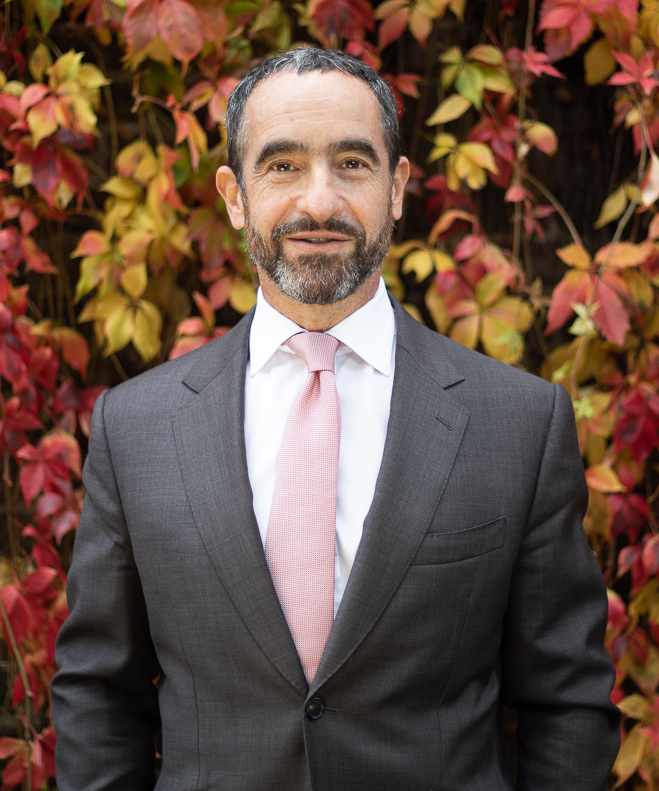
Michael is an acknowledged thought leader on clean energy, mobility, technology, climate, sustainability and finance. He is Co-Managing partner of EcoPragma Capital and CEO of Liebreich Associates. Michael is also co-host and founder of 'Cleaning Up' a podcast and YouTube Series.
Former roles include member of the UK’s Taskforce on Energy Efficiency, chairing the subgroup on industry and an advisor to the UK Board of Trade, an advisor to the UN on Sustainable Energy for All, and a member of the board of Transport for London. He is also the founder of and a regular Senior Contributor to BloombergNEF.