



The World Decides: Clean Energy or Oil & Gas? | Ep243: Damilola Ogunbiyi
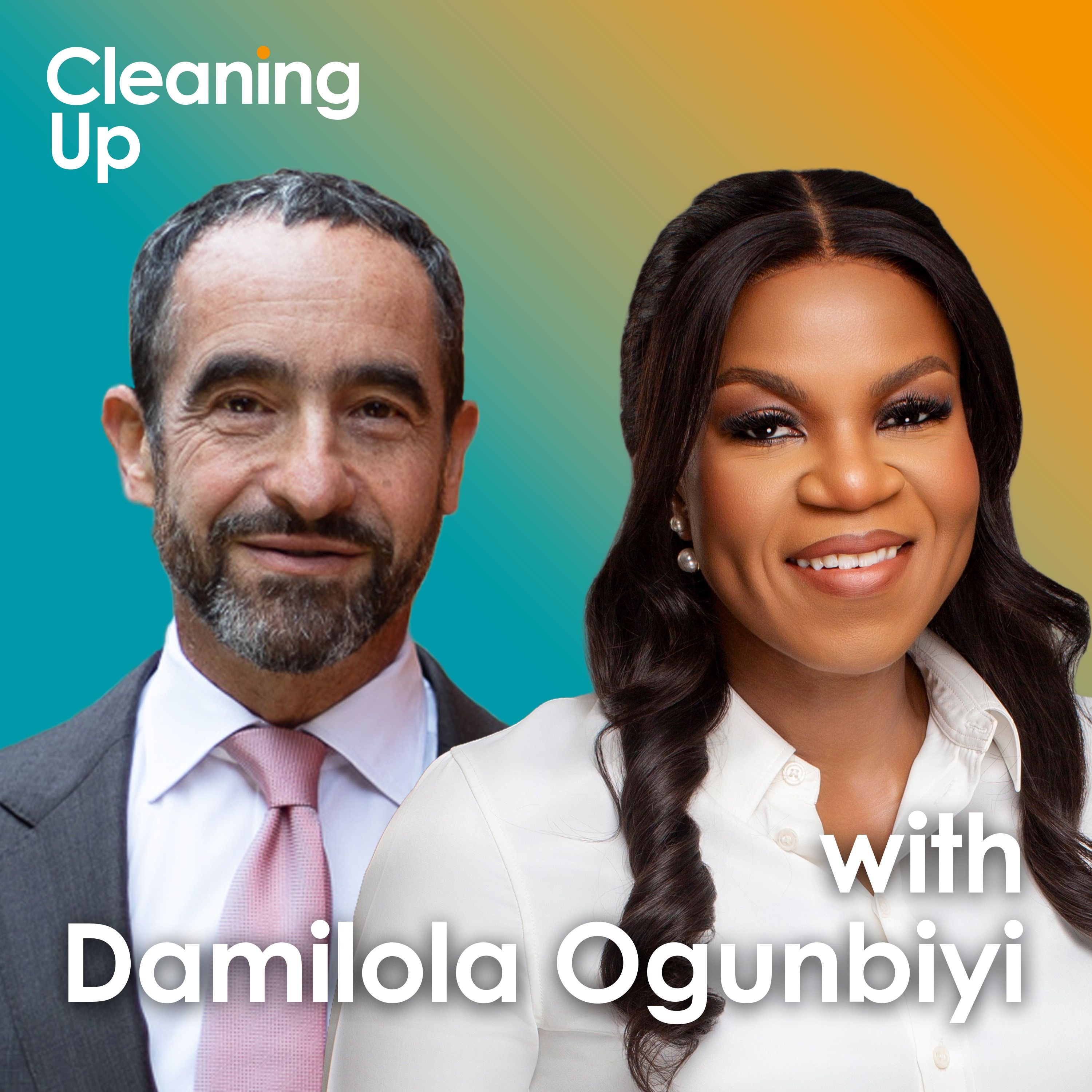


What if the future of clean energy isn’t decided in Washington, Brussels, or Beijing, but in Lagos, Nairobi, and Addis Ababa? Are we underestimating how fast the Global South is leapfrogging fossil fuels? And what happens when clean energy becomes the cheapest, fastest path to development, not a climate sacrifice?
In this episode of Cleaning Up, Michael Liebreich is joined for a third time by Damilola Ogunbiyi, CEO and UN Special Representative for Sustainable Energy for All and Co-Chair of UN Energy. Together, they explore how Africa and the wider Global South are quietly reshaping the global energy transition, from rapid growth in solar, storage, mini-grids, and EVs to bold policy moves that many developed economies haven’t dared to make.
They dive into why energy access is about dignity, health, and gender equality; why finance, not technology, is the real bottleneck; and how local capital, data, and innovation could determine whether “Most of World” powers its future with clean energy or fossil fuels.
Leadership Circle:
Cleaning Up is supported by the Leadership Circle, and its founding members: Actis, Alcazar Energy, Davidson Kempner, EcoPragma Capital, EDP, Eurelectric, the Gilardini Foundation, KKR, National Grid, Octopus Energy, Quadrature Climate Foundation, Schneider Electric, SDCL and Wärtsilä. For more information on the Leadership Circle, please visit https://www.cleaningup.live.
Links and more:
- Sustainable Energy For All: https://www.seforall.org
- Damilola’s past appearances on Cleaning Up:
- Ban Ki-moon on Cleaning Up: https://youtu.be/B14_MeRhfBw
- The Sierra Leone Documentary: https://youtu.be/z-5QjSfy2SM
- Clemens Calice on Cleaning Up: https://youtu.be/urmP7zN6n04
- Alain Ebobissé on Cleaning Up: https://youtu.be/ISTvp0BQz3E
Michael Liebreich
Is that electrification of the economy built in? Is that how you're thinking about it yet, or is that something that needs to be kind of, you know, we need to up our game on that?
Damilola Ogunbiyi
No, I think a lot of countries are thinking about that, and I think some countries are even more far ahead. It's like you spoke about Ethiopia literally passing legislation, not just encouraging EV, but like telling people not to have combustion engine buses. That's huge. I think there's very few places in the developed world that have been able to put strong regulation. In Kenya, and in parts of South Africa as well, where any kind of water heating systems for any new build has to be solarised from the beginning, or they don't get building approval. So I feel like, when sometimes people think about the Global South, they don't really understand just the innovation that they're adding into the spaces and the audacity they have and some very strong political points that they're bringing across that will never be possible in the Global North.
ML
Hello, I'm Michael Liebreich, and this is Cleaning Up. The world's energy analysts spend a huge amount of time obsessing over what the U.S., China and Europe are doing. But 70% of the world's population don't live there. The average young person most certainly doesn't live there. And despite soaring demand from AI data centres, the majority of new energy demand is not happening there. Where those people live is in what Lord Brown in the final episode of last season called ‘Most of World.’ The future of the world's energy system will in fact be decided by whether ‘Most of World’ buys lots of oil and gas and a bit of clean energy or lots of clean energy and a bit of oil and gas.
One of the priorities we've set for Cleaning Up this year is to really dig into that question. What is happening in ‘Most of World’? That's why I'm particularly delighted to be joined by today's guest, who's been on the show twice before in 2021 and 2023. Damilola Ogunbiyi is the CEO and UN Special Representative for Sustainable Energy for All. She's also co-chair of UN Energy. Please join me in welcoming Damilola Ogunbiyi to Cleaning Up.
ML
I'm delighted to announce we've just relaunched the Cleaning Up newsletter. Now written and edited by my longtime New Energy Finance and Bloomberg NEF colleague, Angus McCrone, it will come out every second Monday. Angus is going to be diving into all the latest from the Cleaning Up universe. The episodes we're recording, the events we're hosting, the stories we're watching and what co-host Bryony Worthington and I are up to. To sign up to the newsletter and get all the Cleaning Up latest straight to your inbox, visit cleaningup.live.
ML
Damilola, welcome back to Cleaning Up.
DO
Hi, Michael. Great to see you again.
ML
Now you are in Lagos right now and I'm here in London. The wonders of technology, we can do this, but what's the weather like in Lagos today?
DO
It's fantastic. It's about 31 degrees.
ML
Oh, you make me jealous. Here it feels like minus 31. I mean, it's not quite that bad, but it's not good.
DO
At least you're not caught up in snow, like the East Coast.
ML
No, the big storm, of course, by the time this comes out, that will be fading in people's memories, but it's been quite extraordinary to the point where it has an impact on gas prices even here because the LNG exports are now being diverted around the world and the US is trying not to fill the ships, but to use the gas themselves.
DO
No, it's really important to kind of highlight how everything links to energy at the end of the day.
ML
Exactly, and we're all interconnected. Now, what we need to do to start with, we will have in the audience far more people, I'm glad to say, than on your last two appearances, but what that means is you need to start by explaining who you are, the short version, and what you do, Sustainable Energy for All and also UN Energy, but the short version.
DO
Okay, great. Thank you. So, my name is Damilola Ogumbiyi. I am the CEO and also the UN Secretary General's Special Representative for Sustainable Energy for All. I also, with my co-chair, UNDP Administrator, am the co-chair for UN Energy. Put in the simplest form, we are an organisation designed to make sure we achieve SDG7: provide access to affordable, reliable, and sustainable energy for all, making sure that we reach our targets of doubling energy efficiency and also increasing the share of renewables around the world, and that is my role. I focus mostly on the Global South, because that's where we don't have access to electricity and clean cooking, and we have a big team behind us pushing everybody to make sure they achieve their targets.
ML
So, this is very interesting the way you describe that, because, as you know, I've been involved from a long time ago. In fact, from before it was Sustainable Energy For All and before SDG7 existed, and there was a phrase you used. You said, ‘We help to make sure, you know, we're designed to make sure that we reach the SDG7 goal.’
I would say, well, hang on a second, because the SDG7 goal arose out of SEforALL and out of the work, the preparatory work. So, it's very, it's interesting to see how SDG7 has become institutionalised, and now SEforALL is supporting that, when SDG7 actually arose from SEforALL.
DO
Absolutely, and what is, you know, so important about SDG 7 is that it really affects two-thirds of the 169 SDGs. So, it's one of those SDGs that, if you don't, you know, achieve, it affects so much more. It's also important to me, as a black African woman, not having access to electricity and clean cooking is a difference between life or death for many millions of people. So, the ties between gender, health, and fundamentally living a dignified life, you know, all come together. I always say we're one of the few organisations that we're trying to get ourselves out of the job. Like, we're not meant to exist in 2030. So, we have to work very, very hard now to make sure we achieve that and achieve the SDG7 target.
ML
And now, we have a hard rule on cleaning up about acronyms. So, SDGs, most people will know, but it's the Sustainable Development Goals set in 2015, and then supposed to be achieved by 2030. And the point about SDG7, that's the one, that's the development goal around energy. And Ban Ki-moon, whom I work closely with, when we were putting all this together, he used to call energy the red thread that holds it all together. And what I would say, if anybody in the audience wants to know more about those times and that process, there's an episode with Ban Ki-moon, we'll put a link in the show notes. And also, you've been on twice and explained in a lot more detail how the organisation fits together and so on. So, it's great to see you again.
When you were last on, we were in the middle of a ferocious energy price spike, and we were just coming out of, I would say, the back end of COVID. And it was not obvious that the momentum of all of the above had been maintained. You were quite concerned that the world might have other priorities. In fact, the last time you came on, as I say, the energy price spike, but that was because of Russia's invasion of Ukraine, and the world and the energy world were quite distracted. Has the world become less distracted now?
DO
Absolutely not. The world is still very distracted with the many crises that's happening around the world. Unfortunately, we have a lot of wars going on, not just in Ukraine, but also on the African continent. So, there's a lot going on. However, what we have seen, because of some of these crises and the energy security issue, is that we've seen for the first time, at least last year's figures, showed us that more money was spent on renewable energy than fossil fuel equivalents. So, I think about $2.2 trillion was spent on clean renewable energy compared to the fossil fuel equivalent. The other thing that has been really great is to finally see that renewables now, at least utility scale renewables, are cheaper than the lowest cost fossil fuel equivalent as well. And, you know, some of these things is taking advantage of a good crisis as well. People are now saying it's cheaper, it's cleaner. And if so, if you don't even think about the climate, which we would love you to think about, it's just a good economic bet.
ML
And we start to hear stories. And really, actually, something that I would love to get out of this conversation is your sense of whether this is all just kind of a thin veneer of PR about how Africa is starting to kind of come into its own and starting to buy lots and lots of solar panels from China. There's good data on that. We hear about the number of EVs in Ethiopia. There's good data on that. I've had a number of episodes of cleaning up with investors in various parts of the Global South, some which, you know, might not need a lot of your help anymore, like Brazil and Mexico. But some definitely are investing. We just did an early episode this year already with Clemens Calice of Cygnum Capital, which is all about Africa, one of the main continents that I think you still have to focus on within your Global South remit. So there are stories about lots more money flowing and lots more clean energy being built. But is it really a pattern or is that just a bunch of sort of, as I say, an overlay of people trying to sort of talk it up, but there isn't really substance there?
DO
I think we need to step back and realise that the African continent would need roughly 20x the amount of energy it has today in terms of installed capacity, right? If that happens in a dirty, polluting way, that affects the Commonwealth. It's not just about Africa. So I think sometimes when people think about the development of Africa, you do have to think about that. The second thing is that people also don't realise, to do a development or development infra project or even an energy infra project at scale in Africa costs roughly seven times more than it costs if you were doing it in Europe. So that is the unjust part of it, because you have people, a lot poorer and a lot more vulnerable, than you do in the developed world.
But coming back into the investment side, like you said, rightly so, I'm here in Lagos and the stats from Nigeria are showing that there was about maybe 400 megawatts of solar panel capacity, and I can't remember the battery capacity that was traded with China just here in Nigeria, which is a great sign because it means that a lot of people are self-generating because unfortunately some of the grids are failing. However, instead of self-generation, just focussing on, you know, fossil fuel, diesel and petrol gensets, solar plus storage, and when I mean storage, I mean batteries, are now becoming a good alternative organically.
This is not necessarily with government funding or government subsidy, and that's where things are going. So that's why, back to my first point, like economically it's making sense, not just at the high-level large-scale projects, but all the smaller-sized projects. I think African governments are stepping up as well and realising that they have to provide electricity and possibly clean cooking to the people of their countries. We've been working very closely with the World Bank and the African Development Bank on a project called Mission 300, which aims to connect 300 million Africans between now and 2030. There's still about 400, sorry, 560 million Africans that don't have energy, so I don't want to say that's everything, but that is huge. And the 300 million means every government has to sign up to a set of reforms, right?
So we're working with the banks almost like a secretariat, and so we're going to see, you know, we're going to see a scale of $30 to 40 billion of concessional financing coming to the continent over the next few years, driving clean energy transition, integrated grid, utility reform. So it's generally just an exciting time, especially, you know, on the continent. So while, you know, I said everybody's distracted, it's great to see that, you know, Africa now is holding to the largest public-private-philanthropic partnership that we're going to see in the next few years.
ML
It's great to see your optimism there, because as I said last time, it was a very fractious time, and the world was very distracted. And at the time, I think Africa was absorbing, or it was being, there was 1.5% of global energy investment was going to Africa. And your line very memorably from that episode was, because I asked whether it mattered whether people would invest in gas or in renewables and so on, and your line was, you know, for goodness sake, just invest in something.
And I just, in preparation for today, I asked, actually not ChatGPT, I use Perplexity a lot more, but I asked what percentage of energy investment is going into Africa, and it said 3%, which is, of course, tiny, but that's double what it was. I mean, does this sort of match? It does seem like the stories that we're hearing match together with your optimism and the results from Perplexity, that maybe we are seeing a little bit more easing of investment flows and some physical solutions arriving at scale. Am I allowed to be optimistic as well?
DO
Absolutely. You can be optimistic, but it doesn't mean we should be optimistic enough to say that that's 3% is okay. You know, we still need, we still need a lot more money. And, you know, that's why at Sustainable Energy For All,, we really kind of bogged down to the granular data as well, because a lot of the data that we normally get is from large scale projects or grid or utility scale renewables and things like that. But there's still a lot going into, like you said, EVs, e-bikes, you know, are huge here now. We have a lot of money going into the DRE space as well, which is Decentralised Renewable Energy space as well. And then this household adoption of solar energy, you know, we're thinking very hard about how do we start capturing that information a little bit more? So we get a true sense. I don't think, I guess what I'm trying to say is at least for the African continent and many places in the Global South, I don't think we have the full scope of just how much renewables and clean energy is affecting our lives and how much we actually have installed.
ML
So the example there would be Pakistan, where suddenly the economy seemed to be growing, but electricity demand on the grid seemed to be dropping. And they obviously had an unreliable grid. And then this was a conundrum. And I talked to the former head of solar at Bloomberg NEF, Jenny Chase about it. And she was doing all this kind of trying to work out where, what was happening. And it turned out that it was just huge imports of solar that weren't really turning up anywhere other than ultimately in the import statistics. But then if you actually, if you actually look from the satellites and you see this incredible flowering, and the farmers in Pakistan are using it to pump probably too much water, frankly, for the aquifers, but it's been incredibly fast. The grid, it's something like an addition of 50% to the capacity of the grid in a year and a half, just incredible speed. I don't know if that's been on your radar screen.
DO
And in Pakistan, especially, I think we're just about to start the energy transition plan. So we're super excited because we haven't done a full one for a specific Asian country. And then we also have, well, they're doing the planning for ASEAN.
So it's more like, you know, what is your green growth trajectory? What should you invest in? What does your transportation sector look like? What does your agriculture sector look like? Instead of us seeing electricity as a way to just turn the lights on. I'm here in Lagos.
If I turn my screen around, you will see my 15 kilowatt inverter storage system just from my office space. Again, I'm very lucky that my whole home runs on solar and it has done so for the last 12 years. And I'm always testing technologies. But what we have to realise is that I am one of the very privileged that can do that. And we have to think of technologies to bring costs down. So I think the push for solar as a service has been huge.
So people installing solar and paying over time two, three years, that's been much more welcome than having to have the upfront costs of the solar system, which is really just three pieces of equipment, to be honest. You have your panels, you have your inverter, and you have your battery capacity. But paying for it up front is still a lot.
And the cost of borrowing is a lot as well. So it ties into that. But once you have solar as a service and things like that, you see a bigger push of penetration within all countries in the Global South.
ML
I'm an investor, actually, in one of the very first solar as a service businesses, a company called Azuri. And it's been a bit of a torrid ride, I think, because there's been so many of this kind of, well, we're now calling them in this show, we're calling them distractions. And so it's been a bit tough. I think it's still operating. I don't expect to be made rich by that one. But we do see there was a big transaction, the acquisition of the Engie business by Ignite Solar. And that's a pretty substantial transaction in that space. So again, it's a question of, is this finally the part of the S-curve where things really start to take off? And those islands of electrification, the individual roofs start to be knitted together at the village level, at the town level. We start to be able to get more reliable supply for mining operations. There's a lot of activity around individual mining companies now electrifying. Is it the start of the S-curve or the uptick of the S-curve?
DO
I think for mining and industry, it's already there, I think, which is your C&I customer, commercial and industrial. I think you could definitely build a mini-grid or a hybrid system there and be fine and make money. I think for the DRE space, which is Decentralised Renewable Energy, the next part, and yes, the Ignite-Engie relationship was quite important.
But what I'm most excited for is the consolidation of mini-grids. So I think what we're going to find, like in my country, Nigeria, where you have 200 plus mini-grids, I don't think you're going to find 200 owners anymore. I think there's going to be a consolidation into four or five bigger companies. And basically, when they form that, they're basically utilities. They're going to have upwards of millions of customers each. And that just makes it more of an attractive customer base.
It allows you to add more energy for things like productive uses, connections of cell towers. And some people are even talking about servers for AI and things like that, helping drive things. So I think we will see a lot of innovation there.
But what I do know is that we're also seeing a lot of interest from the tech industry as well into the energy industry. So not typical energy players. And this is because they see energy as an enabler to sell so many services. So if you look at market clusters and things like that that have communal energy, what you find is that a lot of them are run by tech companies who are offering micro-pensions, micro-loans, IT services, enabling that, which is fantastic, right? Because we've always thought, how do we merge the digital with energy? And we're seeing a lot of that now.
A lot of countries are going from 2G to 4G. They're going to have more appliances, more things, more energy needed. How do they focus on 4G? So there's so much I can talk about that is happening in real time, but it's happening also organically and homegrown. And I think you need some of that to really create a market. I don't think until now we can actually say we have a renewable market. And I think we're getting to the tips of like, yes, this is now a marketplace.
ML
Right. But you do also have much more structure in your power pools now, the Southern Africa power pool, Western Africa, which is, a lot of it, there's all this talk around the big hydro projects and so on. And I don't know exactly how many power pools, but that seems to be coming together. But I'm fascinated by this idea of the mini grids sort of consolidating because it all sounds terribly kind of, you know, new age and exciting. Of course, it's exactly what happened in the US and in Europe when electricity first came along. It was not some centralised plan.
You know, in the UK, the Central Electricity Generating Board was a consolidated existing. I don't even know how many dozens or even hundreds of smaller systems. So in a way, it feels like I wonder whether what we did, we went through lots of systems, then consolidation, and then tried to apply that model through the development process to Africa and other places which were just simply not mature enough and couldn't fund that. There wasn't the tax base, there wasn't the governance and so on. But now maybe we'll end up, I don't know, maybe I'm being too optimistic, but is there a leapfrog going on where what you're actually seeing is the sort of a modern version of that consumer centred electricity demand or consumer centred energy demand, because it is the tech company or, you know, or the hospital or the rooftop of a person or whatever it is that's demanding the energy service, and then getting an innovative solution rather than just a big centralised, Eskom in South Africa, owning everything, doing everything in a much more patriarchal way, which is kind of how we spent decades looking at it.
DO
I think you need both. You have to have a grid. It's important to have a grid, but it doesn't, you don't have to wait till a grid to get energy to everybody you are working with. My background when I was in Nigeria was all the mini grids that all the standards that we had, had to be able to integrate the grid when the grid came. So the equipment is already installed for when a grid comes. That is really, really important.
It's different from solar home systems, but it's important that you set those standards because, you know, your villages become towns, your towns might eventually become cities. And we're still working in a space, at least on this continent where, you know, the majority of people still live in cities. So you still need to invest in your grid.
You need to make sure your grid is viable, but you also need to understand that your grid might not be the way that you have to get to everybody in the country, right? So you're seeing models now where the utilities are investing in, or the utilities are partnering with decentralised renewable energy companies to build out the grid, right? So they become little like DisCos as well and integrate.
That's the model that I see working, not just in Africa, also in parts of Asia like the Philippines, we're working with them with their islands and things like that. That's what I see, you know, growing up, you know, it's not okay to say, oh, I have this master plan. And in 10 years time, you will get electricity in this community.
Like, no, you know, but what is important is for you to understand the quantum of electricity needed there. So if they need like, I don't know, 200 kilowatts or something, it's not worth the investment of bringing the entire grid there. So it's that kind of modelling, working a lot with AI, which is what we do now with countries that allows countries to say, what is your least cost development pathway to energy access instead of what do you do? Because somebody just wants energy. And, you know, I think it's exciting times. You spoke about the power pools, you know, especially the Eastern and Southern power pool and West Africa, why the power pool story, even though it's so complicated, it's so exciting to me.
It's because I think that's the first, it's one of the first things that Africa can give to the rest of the world as well. Asia has been trying to do their power pool for decades, you know, let's start with two countries and add another country. So it's one of the things that as a continent, we've done, we're still learning, but in some places doing well. It's one of the only ways that you're going to be able to integrate large scale renewables because of the intermittencies across countries. And yeah, it's a good time. It's also part of this mission 300 that I spoke about that the World Bank and African Development Bank is championing.
So I guess in a nutshell, we, unlike the developer, we don't have the time and the, and the resources to say, this works, this fails. That was, we literally have to be doing everything at the same time and then see what sticks. But again, that's what makes it innovative and an exciting time.
ML
And just to be clear, I'm not suggesting it's so exciting that you don't need a grid because you'll just focus on linking up a bunch of mini grids and it'll all be fractal and new. And so clearly the grid is key to move around the large amounts of electricity because renewables do involve sort of generating them where the generation resources are good, where the generating is good and using it where you want to use it. It was just more about getting much more focus on the actual user needs and seeing what, what people need and then supplying that.
So instead of having a kind of push of a centralised model that you actually spend much more time thinking about the edges and that feels right. You know, I'm drawing on, you know, the experience, the Brazil when I started to do this, there was a programme called Luz para Todos (Light for All), which was president Lula in his first administration. And then of course, also in India, we saw this tremendous push to connect villagers. But of course, what happened was that you end up with a village being ticked off on a list, but not necessarily the electricity getting to the household and being used. And then you have to do a lot of work at the level of the community, at the level of the actual user, whether they're business or consumer. So the two, the two eventually have to meet in the middle. There's no question.
DO
No, absolutely. I think you're right. I think what we're seeing is just that push for better information and better data. And that's what we've been focused on, you know, so to be able to tell the government that this is your least-cost plan that 50% of your population without electricity have to still be connected to the grid. 35% can be connected to a mini grid, 20%, maybe you just give them a solar home system.
You know what I mean? Like that level of information and that level of data is critical for their development. And by the way, there's, you know, 2000 hospitals around the way there's, you know, it all really lies in data. And I think we don't have enough of it, but this is the best amount of data that we have so far. Marrying it with affordability data and also willingness to pay completely changes things. And for someone who's done this for a long time and, you know, when I started my career, I'm like, where is everyone they're saying that doesn't have electricity, be able to pinpoint it on a GIS map and literally see that, ‘oh, but that person has a cell phone.’ If they have a cell phone, they have a way they're paying, you know, it's great. But we need to improve on those systems and we really need to support governments in getting these things done.
ML
Cleaning Up is proud to be supported by its Leadership Circle. The members are Actis, Alcazar Energy, Arup, Cygnum Capital, Davidson Kempner, EcoPragma Capital, EDP, Eurolectric, the Gilardini Foundation, KKR, National Grid, Octopus Energy, Quadrature Climate Foundation, Schneider Electric, SDCL and Wärtsilä. For more information on the Leadership Circle, please visit cleaningup.live. If you're enjoying this episode, please hit like, leave a comment and also recommend it to friends, family, colleagues and absolutely everyone. To browse our archive of around 250 past episodes and to subscribe to our free newsletter, visit cleaningup.live.
ML
Since we last spoke, I had my first actual visit to West Africa. I'm really embarrassed that I'd never been before, but I went to Sierra Leone with Oscar, the producer of Cleaning Up. And to see how people actually use energy, not this binary, you know, does this house have electricity — yes, no — but to see how people live, to see how they charge a mobile phone. And then in the unit, we helped put electricity and a solar and battery system into this neonatal unit in Bo, the second city in Sierra Leone. When we started to do that project, we couldn't even get data on how many power cuts there were. We just didn't know, had no way of knowing. Now, of course, we've got a system and I can look on my mobile phone and I can tell you exactly how many power cuts there are in Bo, because it registers on the system that we've got.
DO
That helps with things like climate finance and getting carbon markets running, because you can actually see how much you save, you know, because we haven't spoken about that. Innovation in finances also happened as well. In countries like Sierra Leone, a lot of West African countries are heavily dependent on generators. When you're swapping out generators for solar plus storage solutions, that is savings. Those emissions, the carbon saved can be translated with the well-formed regulation to carbon credits that don't only benefit the developer, but also benefits the community. So we're very big on pushing that.
The framework was just passed here in Nigeria by His Excellency the President, but also pushing the boundaries from voluntary markets to Article 6 and to the compliance market. I think Africa has a huge opportunity. But back to what you're saying, you know, for me, I don't believe in poor solutions for poor, most vulnerable people. I believe in the solutions that are actually going to give them a better life. So I don't believe in one light bulb and a charger and call it electricity. I think it's light and, you know, it can be transitionary, but there's no way we could do that or see that and say that, oh, that means somebody is electrified. So like what you're saying, you know, when we solarise people's homes, especially women led households, that becomes where they do business, then they need more of it. And then you've got this small system. And then the cost of transitioning to a larger system. So, you know, I think it's important for us to go back and look at our tier frameworks on how we looked at electricity access. I don't think solar lanterns should be there at all. I think they're a form of lighting and they're useful, but it's not electricity. And just realise that with phones and internet and life, people just need more energy and we have to be ready to give it to them. But we have to think about affordability as well.
ML
So when we started the project in Bo, the neonatal unit, electrifying it with solar and batteries or giving the reliable power system. And I said that I wanted it to have the same power reliability as Queen Charlotte's in London. And there was pushback. There were people saying, oh, you know, you have to understand, you know, that these are people who only earn $200 a year. And there was all this sort of, it was just very, I got a very, what I consider the kind of odd reaction instead of saying, great, that's absolutely the right way to think about it. Of course, having been there, I can see why there was this sort of surprise. But then, you know, setting that aside, these are women giving birth to babies. The babies are unwell. Of course, they should have the power supply as good as anybody else in the world. Of course, it's clear.
I think I want to move on because there's another topic which is very dear to the hearts of certainly me, but also I think the Cleaning Up audience, which is electrification. We talk about it in Europe, US, China, and so on. Not in the countries that you focus on, not in the Global South, which is about electrification of transportation, electrification of heating, electrification of industry, the pushing out of fossil fuels. I would like to think mainly through economic forces, but also through policy. Are the countries that you deal with on that journey, so you talked about doing a plan for an Asian country, the first plan, but you've done plans for other countries. Is that electrification of the economy built in? Is that how you're thinking about it yet? Or is that something that needs to be kind of, you know, we need to up our game on that?
DO
No, I think a lot of countries are thinking about that. And I think some countries are even further ahead. It's like you spoke about Ethiopia literally passing legislation, not just encouraging EV, but telling people not to do not to have combustion engine busses. You know, that's huge. I don't think there's very few places in the developed world that have been able to put strong regulation. In Kenya, where, and in parts of South Africa as well, where any kind of water heating systems for any new build has to be solarised from the beginning, unless they don't get building approval. So I feel like when sometimes people think about the Global South, they don't really understand just the innovation that they're adding into the spaces and the audacity they have and some very strong political points that they're bringing across that will never be possible in the Global North. So for us, it's also very important to support them on what an energy transition and investment plan actually look like for you? Because it is a whole of economy document.
And in countries like Sierra Leone that don't really have that much energy to transition out of anything, if we're being really honest, it's more of a green growth pathway. Right. And that's what makes it so cool. Like you are really developing how people will grow green instead of start using fossil and then come back. Because we haven't really seen anybody, even in the Global North, do that successfully yet. We're still looking for the template, right, on how to do that.
But I want to make it clear that it's really important that even if countries commit, and a lot of them have, the cost of capital and the investment needed does not match. It just doesn't. For Nigeria to transition, it's going to need $1.9 trillion to get to a point of net zero by 2060, of which at least $400 billion will be above business as usual spending. That means you're talking about $15 billion every year from now. Let's just say everything was in place. You know, we had really great political cycles. Everything around the world stayed in place. So if the quantum of money that is needed to do these transitions, that is the reason why last time I was like, just invest in something..
But you can't. It's really, really unfair to tell a bunch of countries to do what I say, but not what I do. And the money is going to come somehow when, if anything, there's kind of less money for some of these things. So that's why for us, instead of looking at the doom and gloom of what's happening around the world with reduced aid and things like that, it's how do we make sure that the money that is in the system and the money that's coming is utilised to the max. And one of the ways that we're doing that as well, because we're working more on the energy transition, is looking at African money as well.
We are working with African sovereign wealth funds. We're working with Africa50. We're working with Africa Finance Corporation. And for the first time, you know, we're developing a decentralised renewable energy fund, a Nigerian sovereign wealth fund. Sovereign wealth funds don't invest in DRE renewables. But they also see, since they're meant to be the ones, you know, they're meant to be the ones protecting the future of Africans. Like, you need to start investing in them now, you know, with Africa50, bringing some of the pension funds involved. Yeah. Again, it's different because Nigeria has a capital market.
Not every other country will be doing it. But it's just for us to not, for us to realise that we have so much innovation in technology. We have all the technology we need to make sure anyone has access or they get to net zero. But what we don't have is enough innovation in financing. And this is for you, Michael. You know, you speak to a lot of very clever people and you're very clever yourself. It would be good if we focus a bit more on things like, what are the different instruments that we're going to use to really add that innovation and financing? Because like the example I gave you last time, I didn't know the tech industry would ever be interested in energy. Is there another sector that we're missing that we should bring in? There are things that, you know, happen organically, but there are things that you can plan. And, you know, for the next few years, we really want to focus on what are the different innovations in finance that we can bring to the space in order to achieve the Sustainable Development Goal 7.
ML
That's so interesting. Let's just drill into a couple of things that you said there. First of all, one of the things that we found when we did this thing called the Climate Scope, which was a review, it's annually done by Bloomberg NEF, still done to this day, of which countries are the most attractive for clean energy investment. And one of the key factors that correlated with money flowing is the availability of local capital. So, capital formation locally is one of the most important indicators. You know, you had it in South Africa and then they built a whole bunch of wind and solar. You have it in Nigeria, but that hasn't taken off to the same extent, but maybe it is now. But certainly, getting the local money flowing is really important. And you mentioned a couple, just for the audience to know, Africa50 is, I think it's something like 30 or 35 different countries. It's a sovereign initiative, but it's an infrastructure fund of a number of billions put together by, I think it's 30 or 35 African countries. And African finance...
DO
Yes, but it's chaired by the African Development Bank as well. So, chaired by... Yeah, but it's kind of like has this sovereign money and pension funds money, but it's private sector managed. So, it's a really good in-between. And it's one of our best performing funds for infrastructure, large infrastructure, like transmission lines and things like that, that people won't typically invest in. So, I have a lot of time and respect for Africa50 on just how they're pushing the boundaries of finance and innovation. Yes.
ML
And we had Alain Ebobissé on the show. It's about three years ago now. I probably need to check back in with him and see how he's doing.
DO
Yes, he's doing good.
ML
And then the other one you mentioned, African Finance Corporation, and that one was a Nigerian initiative, I believe, but has now also got a number of countries, including, if I'm not wrong, a big investment from Turkey, which is fascinating.
DO
Yes. I mean, that's just the African Finance Corporation again. It wasn't really a Nigerian initiative. I think a few African countries came together. I mean, they're managing, if I have it correctly, $12 to 15 billion now of assets. So, they've gotten quite big quite quickly.
It's based here in Lagos, but, you know, they're the ones championing the Libido Corridor and things. So, I think it's also important for people to realise that it's not just funds from outside the continent that are doing large scale infrastructure projects. And some of these funds are funding developers outside the continent to even come into the continent.
So, there's a lot happening in infrastructure. But like we said, more money is needed. And we also have to think, while we think about the DRE spaces and stuff, we have to think, how do we scale that? I mean, we have to stop this pilot mentality. There's no time for pilots anymore. We need to scale and we need to know if we make mistakes, it's just called lessons learned, we keep going with it. But we don't have time and we don't have enough money to be in this continuous pilot world.
ML
But that was why I wanted to drill in on Africa50 and Africa Finance Corporation, because if anybody listening to this thinks that this is just a continent without its own institutions and its own pools of capital and its own professionalism and skills and so on, that's simply not the case. And it is very important, as we found out with ClimateScope, that those things exist, because very often, overseas partners don't want to see only the Africa Development Bank and the World Bank and the IFC making all the running. They want to see a mosaic of different providers. I want to just, there's something else that you talked about, which was the cost of clean energy, particularly in Africa. You used a figure of seven times more expensive. I want to just, there was a calculation that I did. I was in Egypt and I...
DO
Sorry, they were seven times more expensive, just to correct you, on doing large-scale development projects.
ML
Rather than get into where the seven comes from, because it's a big number, it's definitely more expensive. And one of the big factors driving that is the cost of capital. And I was in Egypt late last year and I did a calculation. I said, if you are sitting there and you have a million dollars and you need electricity, because your economy is growing, Egypt's growing at about 4% per year, 50% bigger economy every decade. Nigeria, similar growth rate. Of course, we'd like it to be higher, but still 4-4.5% to this European sounds pretty good. But you do need that energy. And so if you have a million dollars, what should you buy? Should you buy oil and gas that you're going to burn, a one-off purchase? Or should you do wind, solar, nuclear, or even infrastructure? And the answer is, you get vastly more energy. We're talking 10 to 15 times as many joules or megajoules or calories or therms or kilowatt hours by buying the asset.
Don't buy the thing that you burn, buy the thing that you invest in that produces year after year. Great, that's a wonderful calculation. The problem is it requires finance. It requires finance because at first, you have to build a lot more of it to get the same energy. You have to build a lot more because the oil, the gas, you burn it all in one year. Fabulous. You can do your thing. Whereas the solar, you only get one 25th of the 25 years of output.
So it's all about finance. And as we see, the cost of finance is much too high. So is that a good summary of the challenge?
DO
I think what makes it even worse is that we need both international and local people coming to the space just to develop the projects, right? If I'm a local person and I have to borrow money to do any of these World Bank or government projects, it will cost me between 25 and 30 percent. I'm an international company coming in. I've raised my series A, B, C, D, and I get money, I'm not going to say which partners, at 2 percent. Even that causes some hostility because it's just unfair all around. So it's not just unfair that, you know, it costs more to do projects on the continent.
Even people coming in bring cheaper money, which crowds out sometimes of the local people when we need everybody on the table. We don't have enough international, we don't have enough local. So when we talk about financing, when I stress it, it's not a ‘when there's money, people will spend money.’ No, the way we spend money, how we allocate money, how there's a lack of equity to really invest in these companies makes a difference about the output and the scale. And like we said, or like I said earlier, this is something we are focused on. This is something that we're encouraging. I mean, we do training for things like pension funds now, just so they understand the space a lot better and they can become comfortable.
And later in the year, I would love to invite you, you're probably going to launch like a developer platform that answers a lot of the due diligence questions right up front, because a lot of people also don't invest in places that they just don't know, and they don't understand, and they haven't seen track record in. So we as SEforALL and the global community, we have to be able to break down those silos to make these things more attractive. Everyone's not going to invest anywhere, right? But if you are just interested in Mozambique, I should have: Here's a deck, this is the people you need to invest in. This is what it looks like if you want to do industry. This is what it looks like when you want to do DRE. This is something that looks like when you want to do EV. And that's what I think is what is going to crowd investment.
ML
I was going to challenge you on, you used the word innovation, but you've just explained what you really need is the growth of networks and knowledge and capacity. It's not necessarily something new and innovative. It's just liquidity arriving and people and skills and so on. Just before you go, if you can, you've got some big things upcoming during the year. Just tell us what are you, because I think in summary so far, very optimistic, but it's still got a lot of work to be done. That's clear. But what are you going to be doing during the year? What do the tentpoles of your year look like? The things that are going to really kind of move your mission, your activity on?
DO
So first and closest, I just wanted to thank you, Michael. You're always looking for me. You're always interested in the space and you've also put your money where your mouth is and invested in the most vulnerable people. So thank you. And hopefully your message can get across to more people like you who want to just give back to the space, either with technical assistance or just with brainpower or just with networking like you do so well. So for us, I think the next big thing we're going to do is, again, support the World Bank and the African Development Bank at the AU Summit, which is happening mid-February.
ML
AU, acronym, you need to...
DO
Sorry, African Union Summit with all the African presidents. There's also going to be an Italian-Africa event there. But we're going to just talk about the Mission 300, which is to power 300 million people. What governments have done so far? What's been working well? What can work better? And how do we continuously track and push that goal? So we have that.
The big thing that we're working with with all my UN colleagues is the high level political forum that's going to happen in July in New York. And this is where we really take stock of where we are with everything we do in energy at the UN, but globally. And what do we have to do better? And what do we have to stop doing to make sure we can really push forward in these last few years of achieving not just our energy access targets, but also our energy efficiency targets, access to clean cooking that we haven't spoken about as much, but it's really, really important, has lots of emissions to deforestation, and then also increase the share of renewables.
And then that brings us to the General Assembly. General Assembly, we always have a series of events focussing on our UN energy compacts. And this is exciting, because this is where, you know, we look at what's the private sector doing? What are companies like Google doing in terms of their clean energy goals? What are the companies like IBM doing? And what are traditional energy companies doing? And we track that process. And we put that forward as well.
There's going to be a bunch of other things that I'm sure that I've missed. A lot of panel sessions. But what makes me truly excited about this year, especially being back on the continent, is just visiting and seeing firsthand the impact of projects and impact on people. I think sometimes when we're in these high level forums, we forget that the most vulnerable people are who we serve. And they are the most important thing at the end of the day.
ML
So having been out in Bo and looked at the project that I worked on for seven years before actually seeing it, I can absolutely testify, it looks very different when you're sitting there talking to a nurse who's able to do her job because of what we have done. It feels very different than sitting in some air conditioned conference room in New York or in London or even in Lagos, perhaps in the conference rooms. But thank you very much for sharing some time with us here. I do hope that along those events that you've got lined up, that our paths will cross. Maybe at the end of the year in Antalya, you didn't mention COP31. I missed Baku and I missed Belem. So I'm going to go to Antalya and, you know, let's go and cause some trouble.
DO
Fantastic. I look forward to catching up with you before then. And please let me know if there's anywhere I can support with your great work.
ML
Thank you very much. Thank you.
ML
So that was Damilola Ogunbiyi, the CEO and UN Special Representative for Sustainable Energy for All and co-chair of UN Energy. And she was back for her third appearance on Cleaning Up. As always, we'll put links in the show notes to resources that we mentioned in our conversation. So that would be my previous conversations with Damilola, episodes 62 and 124. The conversation with Clemence Kaliche of Signum Capital, episode 241. Episode 59 with Alan Ebubise, Chief Executive Officer at the Africa50 Group. And of course, Oscar and my documentary on Project Bo in Sierra Leone, episode 204. And with that, it remains for me to thank Oscar, the producer; video editor Jamie Oliver; head of operations, Kendall Smith, and the team behind Cleaning Up; the Leadership Circle, without whom none of this would be possible; and you, the audience, for spending time with us here today. Please join us at this time next week for another episode of Cleaning Up.
ML
Cleaning Up is proud to be supported by its Leadership Circle. The members are Actis, Alcazar Energy, Arup, Cygnum Capital, Davidson Kempner, EcoPragma Capital, EDP, Eurolectric, the Gilardini Foundation, KKR, National Grid, Octopus Energy, Quadrature Climate Foundation, Schneider Electric, SDCL and Wärtsilä. For more information on the Leadership Circle, please visit cleaningup.live. If you're enjoying this episode, please hit like, leave a comment and also recommend it to friends, family, colleagues and absolutely everyone. To browse our archive of around 250 past episodes and to subscribe to our free newsletter, visit cleaningup.live.
Co-host, Cleaning Up Podcast
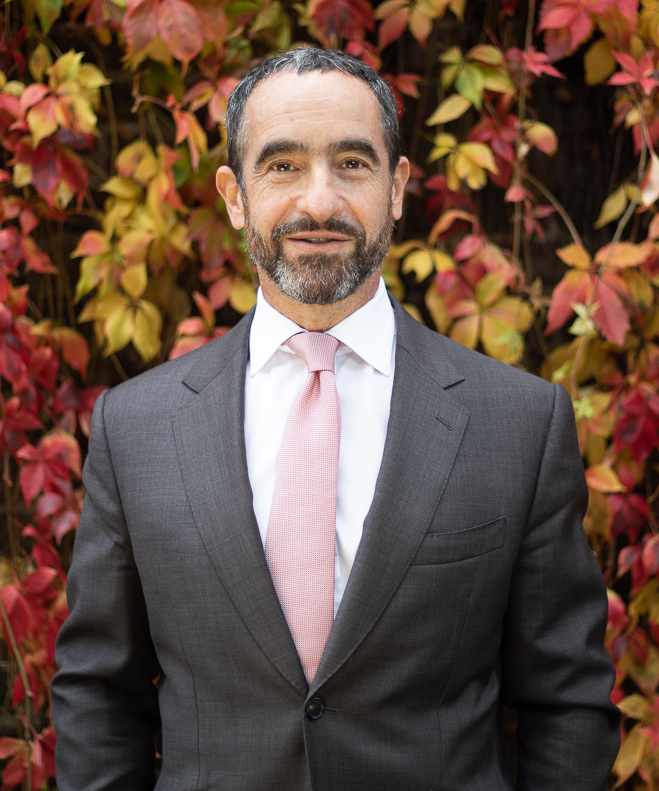
Michael is an acknowledged thought leader on clean energy, mobility, technology, climate, sustainability and finance. He is Co-Managing partner of EcoPragma Capital and CEO of Liebreich Associates. Michael is also co-host and founder of 'Cleaning Up' a podcast and YouTube Series.
Former roles include member of the UK’s Taskforce on Energy Efficiency, chairing the subgroup on industry and an advisor to the UK Board of Trade, an advisor to the UN on Sustainable Energy for All, and a member of the board of Transport for London. He is also the founder of and a regular Senior Contributor to BloombergNEF.