



The Billion-Tonne Promise of Carbon Dioxide Removal Isn't Working Out | Ep244: Robert Höglund


This week on Cleaning Up, Michael Liebreich sits down with carbon removal insider Robert Höglund, CEO of Marginal Carbon, co-founder of CDR.fyi and architect of MilkyWire’s Climate Transformation Fund, for a deep dive into what’s working and what’s not in carbon dioxide removal and corporate climate action.
Drawing on five years of hands-on experimentation funding everything from biochar to direct air capture and policy advocacy, Höglund challenges the dominant “speed and scale” narrative. Instead, he makes the case for a new phase: prove and learn.
Together, Michael and Robert unpack why the highest-impact climate interventions are often the least measurable, why corporate net-zero targets are more conditional than we admit, and what it will actually take to make carbon removal credible, scalable, and worth paying for.
Leadership Circle:
Cleaning Up is supported by the Leadership Circle, and its founding members: Actis, Alcazar Energy, Davidson Kempner, EcoPragma Capital, EDP, Eurelectric, the Gilardini Foundation, KKR, National Grid, Octopus Energy, Quadrature Climate Foundation, Schneider Electric, SDCL and Wärtsilä. For more information on the Leadership Circle, please visit https://www.cleaningup.live.
Links and more:
- Marginal Carbon: https://www.marginalcarbon.com/
- CDR.fyi: https://www.cdr.fyi/
- MilkyWire Climate Transformation Fund: https://milkywire.com/
- Carbon Gap: https://carbongap.org/
- Julio Friedmann on Cleaning Up: https://youtu.be/DX7k6qnTxE8
RH
I think companies are increasingly only wanting to do things that they can account for, so that they can put on their emissions inventory. And carbon removal, at least on the design space target initiative, can't be counted. A lot of the things that we think have the highest expected impact is really, really hard to measure.
And that's something that also holds back, I think, companies to want to support them. For example, that kind of long-term policy work. Even if you're successful, like we funded Human Rights Watch with allies that were able to postpone a new licence for a coal power plant in Bosnia.
It was a long, long thing. And we just contributed part of the funding to one organisation working on it. It's millions of tonnes that are avoided, but saying exactly how much we contributed is hard. And that's a best case solution.
ML
Hello, I'm Michael Liebreich, and this is Cleaning Up. Carbon dioxide removal, CDR, plays a huge part in every model of the global economy that gets us anywhere near to keeping temperatures, whether it's to one and a half degrees or two degrees, of the temperatures before the industrial revolution. Over the past few years, a whole industry has sprung up and investors have opened their wallets on the premise that carbon dioxide removal is needed and therefore it will happen.
And as it scales, its costs will come down. However, the world has changed. We're now in a world where there's much more scrutiny on the solutions that work and on how much they cost and who's going to pay for them.
My guest today is an expert on all things carbon dioxide removal. He runs a number of companies. I'm going to let him introduce them that are all focused on information, but also on investing in and learning from experiments in carbon dioxide removal.
Please welcome Robert Höglund to Cleaning Up.
ML
I'm delighted to announce we've just relaunched the Cleaning Up newsletter. Now written and edited by my longtime New Energy Finance and Bloomberg NEF colleague, Angus McCrone, it will come out every second Monday.
Angus is going to be diving into all the latest from the Cleaning Up universe. The episodes we're recording, the events we're hosting, the stories we're watching, and what co-host Bryony Worthington and I are up to. To sign up to the newsletter and get all the Cleaning Up latest straight to your inbox, visit cleaningup.live.
ML
So Robert, thank you very much for joining us here today.
RH
Yeah, thanks. I'm really glad to be here.
ML
Why don't we start where we always do, which is you explaining in your own words who you are and what you do.
RH
Thanks. So Robert Höglund, I work in carbon removal and climate strategy more broadly. I have my own company, Marginal Carbon, at the bottom and do a lot of writing under that name.
And then I spend most of my time with the impact platform, MilkyWire, kind of impact firm helping companies reach their environmental targets and manage the climate transformation fund. We can talk more about later. And then I also co-founded CDR.FYI, which is a data platform for carbon removal, tracking everything that's going on in the market. And then it's a bit of this and that across different advisory groups and so on, trying to work on these two big topics of carbon removal and then how can companies best contribute to climate action, basically.
ML
Okay, so a good portfolio. And I hear where you're coming from, and sometimes it's difficult to say very succinctly exactly what you do. You have a complicated portfolio there of activities, but it's largely around, as you say, carbon removal, advisory, some NGO stuff, but also really interesting is that fund.
So why don't we unpick, unless you want to dive into some of the advisory work. I'm really fascinated by the fund.
RH
Yeah, no, that's a good place to start. So we set this up at MilkyWire in 2021 with the FinTech Klarna as the kind of anchor customer for it. And the basic question that we're trying to answer was really, what should a company do if they want to be best in class in climate and contribute besides reducing their own emissions?
So we designed kind of a fund that companies can put their philanthropic money or their climate budgets into. And then the fund tries to help reach global net zero and looking at kind of what's the biggest expected impact that we can reach. So it's both been supporting NGOs in emission reductions, like policy work, stopping new coal power plants or creating new alliances around the low emission cement across the global South.
It could also be NGOs stopping deforestation or doing restoration work, and then also carbon removal, being like an early customer in new solutions where there is a lot of potential, but very nice. And so they need someone to go in and help fund these solutions. And we've been running it for five years now and have, I think it's about 25 companies that have contributed to it.
Spotify, another big one, and it's $17 million that we've dispersed to 68 products, I think now.
ML
Now, the big fund that was set up to do carbon removals was, of course, Frontier. And then I think the, I'm not sure whether Microsoft is part of that or separately, has been doing some fairly large scale stuff. So Frontier is over a billion dollars.
Were you set up, I mean, who came first, you or Frontier?
RH
I believe that, I'm not exactly sure, but Stripe was buying first by themselves and they set up Frontier later. So in any case, Stripe was first. And I think that made it a lot easier to support carbon removal for us because they were already started doing this.
And then Frontier, I think launched about the same time, but I can't swear. And they're bigger, but they, on the pre-purchase side, when they support novel technologies, it's similar sizes of support. Then they also do offtakes and that's where the real money goes in.
ML
And it's sort of, it's an interesting piece of history when both your fund, but also Frontier was created because five years ish ago, we were in a really different world. And so Frontier was Stripe, Alphabet, which is of course, Google. Shopify, I think is in both funds.
If it's in your transformation fund and then they've got Meta and McKinsey Sustainability, and then a whole bunch of others that joined. What sort of companies, you talked about Klarna being the first, but you've now got 20 companies. And how does that map back to, have any of them joined more recently or was there this kind of rush of excitement about removals and philanthropy and so on that has now petered out?
RH
Yeah, I agree. It was quite a different world. We were in the middle of the net zero decade, you could say, where there was a lot of companies that kind of had jumped on the bandwagon and wanted to do something on climate, but weren't exactly sure what.
And kind of just buying traditional carbon credits with all the kind of negative attention that had been around them, didn't seem like the highest ambition thing to do. So there was this gap for something new where companies wanted a solution that could be seen as best in class. Some of the ones that we have, it's not Shopify, it's Spotify.
So the music company, we have a lot of Nordic and Swedish companies as well, like Avanza, that's a financial platform, a bank, BioGaia healthcare company, and a lot of actually investors, VCs and so on that kind of get the idea behind the fund. But most, I would say most companies, both in our fund, but also that support Frontier and that buy carbon removal in general, most of them are in this category of relatively low emissions and high profit per tonne. So those are the ones that can afford to do it and have the kind of discretionary spending available.
And they can take that leadership without it costing them so much. I don't think it's strange. I think it's natural that those types of companies can kind of open up beachhead markets.
But yeah, that's something that we have continued to see, not really seeing kind of big companies that have a lot of emissions start to buy carbon removal, for example.
ML
Now you've been doing quite a bit of writing this year. It feels like you're having a little bit of a, I don't know, rethink or you're five years in and so a bit of a strategic moment. And I want to come back to this question about what sorts of companies are doing removals.
When you talk about a high profit per tonne, what you're saying is it ain't the steel companies, it ain't the chemicals companies, it's the media, finance, and so on. I want to come back to that question, in a sense, looking at it through the corporate lens, because in your writing, your five year look back, you've got some absolutely fascinating experiences from the frontline of CDR, carbon dioxide removal. So can you, you wrote a piece, it was called Corporate Climate Action After the Net Zero Decade.
Yeah, you know, it's going to be that, but learnings from the Climate Transformation Fund. We'll put a link in the show notes to those who want to dive in in more detail, but can you summarise what did you find five years in? What have you found?
What works and what doesn't?
RH
Yeah. So one of the biggest learnings I think, and I mean, we could have maybe be accused of, it should have been known about this earlier, is that the biggest problem is not to find great products to fund, but to motivate companies to do something in the first place. And when you have the kind of bandwagon rolling, it was easier to bring them along.
But now I think the biggest question is why, like if no one is forcing the companies to fund climate action, then relatively few will actually do so. And now it's a few places down on the kind of list of things that they feel is most important. So it's definitely harder, I would say, to attract companies with saying like, this is the best in class solution.
If you want to maximise your climate impact, many would just say, well, we'll just do whatever we're supposed to do or asked to do and where we feel like a strong pressure to do. So that's one learning.
ML
Robert, if I can just clarify, there's sort of a distinction that you made in some of your earlier writings about companies are still doing an awful lot in their own supply chains. I mean, what you're talking about mainly with the fund and so on is activity beyond that supply chain. And I think that's because I live in a world where companies are still ferociously doing what they can with their own supply chain, largely because it makes sense financially.
So it may be, I don't know, in your world, it may be cheating, but they're doing all of that. But here we're talking about outside the supply chain removals or perhaps some lobbying or whatever it is to try to reduce emissions somewhere else. Correct?
RH
That's correct. So, I mean, the most important thing is for most companies to do what they can to reduce their own emissions. And there's another strong learning and a strong trend that I think companies are increasingly only wanting to do things that they can account for so that they can put on their emissions inventory and carbon removal, at least on the design space target initiative, can't be counted on those emission accounting.
So that's why it's something that they don't buy. And it's the same for funding NGOs and so on. That's, of course, not something you can you can account for.
And companies need to do both. Like some will need to have to spend most of their money internally. But there's a good chunk of companies that don't maybe have that large investment needs internally.
And they could spend money on external solutions. And it is that kind of beyond value chains, beyond inventory, things that I deal with mainly. Yes.
ML
OK, so the first learning is it would be good if there were more companies trying to do things beyond their own value chains. That's the first thing that you learn. Most importantly, you said what what else came out of the review?
RH
So a lot of the things that we think have the highest expected impact is really, really hard to measure. And that's something that also holds back, I think, companies to want to support them, for example, that kind of long term policy work. Even if you're successful, like we funded Human Rights Watch with allies that were able to postpone a new licence for a coal power plant in Bosnia.
It was a long, long thing. And we just contribute part of the funding to one organisation working on it. It's millions of tonnes that are avoided.
But saying exactly how much we contributed is hard. And that's a best case solution. Other things that we found take much longer, kind of working with utilities in Africa to be able to onboard more renewable energy, things that are like unlocking great change.
And that's really needed. And few others are really funding that kind of things. But those are really, really hard to measure.
So that's that kind of thing is difficult. But we think that that type of systemic work that can remove roadblocks is one of the most important things to do. Also, I mean, connected to what you often write about, there's such a large share of emission reductions that actually are cheaper now.
But we see a lot of things happening, but there's a lot held back as well by various roadblocks. And we think that there are interventions that can be funded to help unblock those. But then you have to accept that it's uncertain exactly what you contributed with.
You can't tie that back to your inventory. So it sort of means that you have to accept kind of a different idea of what your funding is for and what you can expect from it.
ML
So in your fund, you have not just said, we buy tonnes, bring us tonnes, we buy tonnes. It sounds like you've done just a much broader set of almost like, let's put, and these are presumably if you've done 17 million and you've done 70 projects, they're relatively small grants per project. But it sounds like you've said, let's just kind of cover the terrain of removals or avoided emissions.
Is that fair?
RH
Yes, we wanted to set it up as a blueprint that could be scaled up also by others, the kind of basic idea. So even if it became hundreds of millions of dollars or billions, the kind of basic idea would hold. So that's why we wanted to support all the different types of solutions needed for global net zero and not limited to just one type of pathway like carbon removal, for example.
So yeah, it is both emission reductions, advocacy policy, restoration and protection of forests, and then these new types of carbon removal solutions. So intentionally broad, yes. But of course, you become more diluted, but hope to inspire others to jump on.
ML
Okay. And so it's kind of seed capital for solutions, as I understand it. And when you call it a fund, is it intended to make money or is it intended to sort of have the biggest carbon removal or avoided emissions per dollar, but it's essentially donations?
RH
Yeah, correct. So it's a philanthropic fund. There's no equity investments.
So the impact, the payment is impact for the world essentially.
ML
But you have been trying to count how many tonnes per dollar, but that's what you're saying is that some of the most obviously impactful things were also some of the ones where it was hardest to actually count.
RH
Exactly. And that's a mismatch because often companies are asking, so how do you know that you spent this in a good way if you can't put a number on it? And then you have to basically buy into the fear of change and think that what we're doing here and how we're selecting projects and how we're following up on them, it's a good strategy, even if we can't account for all of it.
Some projects are easy to count. Like if someone is doing a forest restoration work, for example, like that you can see how much carbon is being bound in those plants. But that's not something that you get multiples out of.
You sort of know what you get. It's not going to get 10 times more effective than you thought it would be. So there's that kind of measurability versus impact.
ML
So there's also a question of it might be sort of few tonnes now, but if it's a technology, it might ultimately deliver more. Look, I love this because I'm a big believer in learning by doing. I mean, sometimes we learn by doing and it just makes no sense at all.
And we've seen a lot of that. I'm going to try. I don't think I'll be able to get through the whole conversation without using the word hydrogen.
That seems to be my life. But, you know, sometimes I don't, I actually, when people say, oh, such and such has been funded, that must really annoy you. I actually never say that.
I'm like, no, no, no, fine. As long as, you know, preferably not my money. But we have to do in order to learn.
And so my suspicion is you've funded, it looks like you've funded a lot of different things and been quite quantitative about trying to figure out which ones work. So from that perspective, I'm, I'm a, I'm a big fan. There's no question.
I'm a big fan of what you've done. Some of that has been in actual, in a sense, I would call it hard removal technologies or techniques. So the, what I would call classic CDR rather than lobbying and barrier removal on, you know, renewable energy models, what proportion of your investments were, what, what, what more classically might be called CDR, carbon dioxide removal?
RH
So for, for the general donations, we have kept it about a third per pillar. So carbon removal, forest restoration protection and emission reductions, kind of just to keep it simple. Then we have some donors that wished to allocate more to carbon removal.
So like in total, I think it's, you know, maybe it's 40, 45% for CDR because of kind of donor intentions.
ML
Okay. And so now what I call the $200 billion question, which is which carbon dioxide removal techniques or technologies or approaches work. The reason I call it the $200 billion question is because we did an episode with Julio Friedman, the carbon wrangler, he calls himself.
And he was convinced that there would be two gigatons of CO2 removals every year. And if it was a hundred dollars per tonne, I let him get away with claiming that that would be where they were going to end up, which I'm very sceptical about. It works out at $200 billion per year.
And he was absolutely convinced it was three or four years ago. He was absolutely convinced that society would spend that money. So the $200 billion a year question is, Robert, what works?
RH
Yeah, that's what we've been working to find out the last few years. And we see that there is a bunch of solutions that work. If you talk about work as being financially viable, then, you know, it becomes more interesting as well, right?
It's one thing is physically work and another thing works in the market. So we have solutions like BioShare where you take crop waste, for example, heat it up to over five, 600 degrees, becomes stable form of carbon. You put it in soils together with manure or some kind of fertiliser and it stays there for hundreds of years and it gives co-benefits and it costs about $150 per tonne today.
So that works. It can be scaled to over a gigaton with all the kind of waste biomass flows that exists now, maybe two gigatons, and it has a lot of co-benefits. So that's kind of a bread and butter of removing carbon today.
Then there's a lot of other things being kind of explored right now. So one is enhanced rock weathering, taking, it can be limestone, but it can also be silicate rocks like basalt or olivine, grinding it up to a little bit finer, spreading it on fields, having it react with rainwater and it taking away that dissolved CO2 into the oceans. This could become cheap, but currently there's a lot of costs involved in trying to quantify this.
And we're still, I would say, maybe a year out from having really, really clear answers on how effective it is, what are the best rocks in what locations and so on. But it's a good contender. And then we have like 10 methods, so I can talk here forever.
But another one that a lot of people talk about is direct air capture, which currently is quite pricey, kind of very early stage technology. But if we're ever going to do really large scale carbon removal, like we're talking many gigatons, then we're going to need probably direct air capture because all the other ones run into constraints. Like BioShare has constraints with access to biomass and has rock weathering, needs suitable land, for example, and access to rock.
So that's one of the reasons why direct air capture has been tried out by a lot of different teams. It's over a hundred companies trying it out. And there's many, many different approaches in direct air capture being trialled.
Some of them are quite different from the ones you hear about. And I do think that a few of these companies could come down to the cost level of BioShare, for example, but there's still a bit away from that.
ML
I'm sceptical. I'm on the record of being sceptical about direct air capture. And the reason I am is a very, well, there's some thermodynamics about, you know, very, very diffuse CO2 just requires energy to remove, but also the volume of air and the calculation I do is I say, okay, we are right now, we've added 50% to the CO2 in the atmosphere from 280 to 430 or whatever, it's about 50%.
And so if you have a process and as you pass your air through the process, it removes, let's say 10% of the CO2 because it doesn't remove all of the CO2. Then if you wanted to remove all of the excess CO2, you've got 50%, you would need to pass half of the air through your machine 10 times to remove 10% each time. But of course you won't because it'll remix.
So, you know, or there are different ways of flexing the calculation, but you could end up having to pass all the air on the planet through your machines multiple times to make any meaningful impact. And I just look, so you've got the volume of air that needs to move. And then you've got the thermodynamics.
So I just look at it and go, I just don't see this being meaningful. I don't see how it becomes feasible.
RH
Yeah. There's a lot of constraints to direct air capture right now, but it actually, I mean, it works. People are trying it out now on a smaller scale and removing kind of hundreds, single hundreds or single thousands of tonnes.
And there's a plant that's going to be ready any month now at 1.5, I think it's initially 250,000 tonnes. And it works. If you're going to do it at a very large scale, it's going to take quite a lot of energy.
Actually energy is a bit over-talked about when it comes to direct air capture. CapEx is a bigger constraint than the cost of capital, like energy is the number third or fourth on the list, but yeah, there are definitely constraints there, but I think some of the approaches that people are trying out, some of them actually quite passive without even the need to move that much air, could turn out to work out well, but I think we should be agnostic, fund the things that show potential and then let whoever has the most kind of palatable and low cost solutions while still being safe, be the ones that capture the markets. I don't think we should kind of pick winners in that sense.
ML
Have you funded direct air capture approaches?
RH
Yes. We have made some early purchases from a bunch of them. Yeah.
ML
And I mean, cause if you take, I'll have to do the calculation, 17 divided by 70, you're going to end up with what? Two, $300,000 per solution. Can you move the needle for a direct air capture?
You're going to need this to move, as I say, all the air in the world, multiple times, and you're offering $200,000. I mean, I'm sort of poking fun, but I'm trying to get what's the theory here.
RH
Yeah. We're coming in at a very specific stage, right? So you proved it, proven it in the lab, you have a team, you show that it works, you know, kind of demo facility, benchtop maybe.
And then you want to build it in the real world and remove maybe, you know, a couple of hundred tonnes per year, something like that. That's where we typically have come in. And then these are like grant style purchases, basically.
Right. It's very early. It's been in the form of a purchase because that's how suited the companies and something that others have done as well.
And then I think it had a huge effect. The cash itself, yes, but also the signal value and kind of helping them get a story around that there's more people that believe in it and that's helping investors and so on. But of course, like the small amounts of cash pales in comparison to the scale of the problem.
But if you place it well enough in the right stage, I think you can help a little bit at least.
ML
Presumably it's things like doing the legals of what a contract needs to look like and how do you verify and all sorts of good questions that because it's a purchase of the tonnes, you have to go through some. It's not just write the check. Thank you very much.
Have a good time. See you next year.
RH
Correct. So we have a foundation as 51C3 foundation in the US and then a charitable foundation in Sweden as well that make the purchases kind of for the benefit of the planet. So the contracts are like enforceable, but if a company goes bust, of course, there's nothing to recover.
And that's kind of a risk that you take. And the timelines are quite long.
ML
What about another one that people talk about a lot, which is ocean CO2 capture? And have you, have you, I know you've looked at it because you analyse, you've got this huge sort of data set as part of, it would presumably be cdr.fyi on your date, on your information service. You've got this great, you know, enormous amounts of data.
Have you actually funded any ocean carbon removal approaches?
RH
We funded one direct ocean capture called CO2 in the Netherlands, which is, I mean, it's similar to direct capture in a way to, to broaden ourselves. We may fund more this year. We are a relatively small team and have to kind of split our time wisely and ocean, we're waiting for some of the science.
And I think now we are closer to being able to be confident about what to fund there. I was just listening into EU's, EU commission's workshop on, on ocean CDR yesterday. It was on direct ocean capture, but they have had on alkalinity enhancement before as well.
So EU is looking into it. We have a lot more answers on what work and we're definitely interested in the kind of alkalinity enhancement and see if there's any kind of grants or purchases that could make sense there.
ML
That one strikes me as being tough because as soon as you extract water, do something to it, and then you squirt the water back out, the risk to my mind, speaking as a sort of, you know, how can I put it? I'm educated in this, you know, not, I'm not, I'm not in this space, but as an engineer, it's very hard to see how that water doesn't mix. You know, if you do it at volume and you mix the water, you've got this kind of, you've made a little bit of water that's got low CO2, but as soon as it mixes, why, why would you expect lots of CO2 to immediately cross the barrier from the air back into the ocean in order to, in a sense, replace it?
So it feels to me like you end up having to spray your decarbonised water on the surface. And of course, spraying takes a huge amount of energy. That's just, you know, it just strikes me as being very early stage.
Let's put it that way to be charitable.
RH
There is quite a lot of science being done on this, like, not only by startups, but by oceanographers and kind of scientists. And my understanding is that the upper layer that, you know, equilibrates with the atmosphere is not like a centimetre or something like we're talking metres, even if it sloshes around, that's kind of still the layer that gets into equilibration. If the water is downweld, like, so it goes to the deep ocean.
Yes. Then it cannot capture any CO2. And there are plenty of locations where that happened.
Like outside of Iceland, for example, is a really bad location to do this kind of work because there's a lot of downwelling going on. But in many locations, you do have that kind of equilibrium where like metres of water would come into contact with the atmosphere and reach equilibrium. So you take out the CO2 from the seawater and then it acts like a sponge basically to take up the same amount again, almost.
It's not one to one, but most of it, like 0.8, I think for a way.
ML
I guess my issue is if you take one lead, if you take, if you take a litre out of that top metre, you decarbonise it and then you mix it back in with a thousand litres, then the drop in CO2 concentration is one thousandth of what you thought. So just let me say, you know, the pressure that across the boundary that then sucks the CO2 out of the air feels like it's going to be vastly reduced. So I, you know, I don't want to belabour it because I'm not, I'm not the expert, but I would be, I'd love to see somebody who, who can put numbers on that, that lack of mixing as it well, that, that, that, the, the ability of that sponge to read.
Cause at the end of the day, what we need to do is suck the CO2 out of the air, not out of the water. It's still got to come from the air back into the water in order to make any difference to the climate.
RH
Yeah, no, for sure. And you know, there's plenty of good oceanographers and ocean scientists that could be much better than I am at explaining this and explain why they believe in it. I mean, at least I think there's no real like lack of consensus here.
It seems to me like most scientists are pretty sure that you can use the ocean as a contactor, so to say, like to, to capture CO2 in this kind of manner. But yeah, there's still more and more work to be done on exactly how to do MRV, for example, measurement reporting and verification for these solutions. So there are sensors being developed and so on, but the basic idea, I think we're, the scientists are pretty sure about.
ML
If there's anybody watching or listening, who is, you know, screaming at the radio, screaming at the TV at this point, please write in, put some comments into, you know, whether it's YouTube or whether it's, you know, on LinkedIn or find me somehow and tell me what a fool I am because I don't understand how the obvious, you know, solution or the physics or whatever. But there's a couple of other solutions I want to just ask you about. What about, you know, we have in the UK BECCS, biological energy with carbon capture, huge plant, Drax.
It's been very controversial because they've been caught several times, apparently burning, you know, burning full trees and there's all this kind of controversy around where their biomass comes from. It seems like the majority of it actually is wood waste, but there may have been some exceptions at certain points. Is that a viable, is that one of the solutions?
Is that too mature for what you do with the fund? And in any case, where does it sit in the sort of spectrum of potential removal solutions?
RH
It's one of the kind of original carbon removal solutions that were talked most about, like, say 10 years ago, and it's figured a lot in the IPCC reports as a stand in for all types of CDR. So instead of saying like how much carbon removal the world needed to do, they said, this is how much BECCS you needed to do. And that actually brought a lot of flack onto BECCS from people who looked at the numbers and said, that's not sustainable from a biomass perspective. But yeah, I think that may have been a mistake, but it was the only method that was widely understood and knew how it could be scaled up.
It is the biggest volume, actually, by far, the biggest contracted volume of durable CDR comes from BECCS. And that is facilities like Drax, for example, where like Stockholm Exergy, I live in Stockholm and they're right now building a carbon capture unit on that combined heat.
ML
And what sort of price point do they look to hit? If it's BECCS, how much is it per tonne of CO2 captured? Is it $200?
Is it $500? Is it $50? Where does it come in that sort of spectrum?
RH
So the literature says it should be like $150, but in reality, including transport and storage, we're closer to $400.
ML
Is that just lack of scale? Because there's this, you know, at the moment there's a, you know, moving CO2 around on ships because there isn't the scale to build a pipeline. Is that the sort of the difference between the $400 and the $150?
Is that the sort of issue?
RH
Partly. Yeah. If you have a pipeline, things get cheaper.
There's people who are working to try to get that to happen in the Baltics, actually. But then you need quite a few plants that have a final investment decision. And then building this multiple times, it's hard when you retrofit facilities because they may be slightly different every time.
So it's not like you churn out modules as easily as when you make solar panels because, you know, if each project is a retrofit, it's harder to bring down the cost with scale. But yeah, there are definitely some learning by doing. But then everything is just getting more expensive.
And this is not the estimate where the literature is quite different from reality.
ML
Yes. I mean, I'm trying to do this without being too mean to Oxy, where the people behind, what's it called? Carbon Engineering.
They produced this very optimistic white paper that said that they can get to, I think it was under $100. And of course, you know, they're nowhere near that.
RH
Yeah. And the capex is a huge, like Stockholm actually, it's I think 1.3 billion euros for a capture capacity of a net capture capacity of 800,000 tonnes per year. So like, that's a lot of money to be paid up front.
And if you have to take a loan for it, and you have the financing cost becomes really big as well. I mean, if the government would write you, give you a loan for like 3%, you can bring that cost a lot. So that's really a very big part of it.
And we supported some BEX, not the hugest plant, because we don't think like a few hundred thousand would make a difference. But we've done, for example, carbon removers that capture the fermented CO2 from whisky distilleries, and then take that. And it's a very easy capture because it's so high in CO2.
ML
That's right. Because it's already a very concentrated CO2 stream. Because, you know, where I am on CO2 capture is, you know, we're going to need it for process emissions for cement, you know, from ethanol manufacturing, otherwise known as whisky distilling.
I mean, it's such a, it's so much cheaper because you don't have the whole separation stage. Now, you used an acronym, and I don't think you explained it. And we have a rule against that sort of behaviour here on Cleaning Up, which is MRV.
And you need to explain that. And I think it's a particular challenge in carbon dioxide removal space. What is MRV?
RH
Measurement, reporting, and verification.
ML
Okay. So it's all of the accounting side of things. And the reason I think it's so difficult is because you may have to wait hundreds of years.
So your biochar, the number one solution that you reached for and said, well, that's pretty well understood. And we, you know, and it stays down there for hundreds of years. How on earth do you know that it stays hundreds of years when we've only been doing, we've only been measuring, I mean, we've done biochar in the Amazon, some of the, we now think that some of the original peoples have been doing that for thousands of years, but we've been doing modern biochar only for a decade or two, maybe.
And so how do we know that this stuff, and the other one is enhanced weathering. I mean, it's great to do, to spread olivine sand on your field and it absorbs CO2, but it then ends up decades later in the ocean. What the hell happens to it?
How do we know?
RH
That's a really important question. And like some solutions like BEX and direct air capture, you can, you know, exactly how much you pump underground and the error rate is really small. So you know that it's securely stored.
So some of the things that are really easy to measure, and then you have other issues like costs and biomass supply and so on. Let's take biochar first, like the permanence of biochar is something that's been hotly debated like for the last five years at least. And one piece of evidence is what you mentioned.
There is thousands of years old biochar still around. So we know it doesn't all go away. Then there's these incubation studies where you like aggressively try to make it go break down.
And you can see that there are volatile parts of a chunk of biochar, and there's parts of it, which is pure carbon essentially. Now scientists are calling it inertonite, like a coal-like form. And the belief based on both kind of incubation studies in the lab and then kind of field studies is that this stable form of carbon, not the volatile part, which you discount for anyway, that that stays for hundreds or even thousands of years, but you can't really rule out a different type of mechanical breakdown and fungi or so on over a very long time.
But you have to extrapolate a bit. You can't have field evidence of hundreds of years, but there is relatively strong consensus, I would say, among researchers that we're talking at least about hundreds of years, not decades.
ML
I slightly worry because there was a time when there were no bacteria or fungi that could in any way digest lignin. And that's when all the coal, the carboniferous period, when the coal was laid down, not because trees fell over and were suddenly covered, but because trees fell over and there was nothing that could eat them. And then of course, what happened is evolution, you know, nature found a way.
And my worry is that we capture lots of biochar and then nature finds a way of saying, ha ha, I'll fool you and I'll win. I'll put that back in the atmosphere. So but I suppose that would be thousands of years.
Let's put it this way. I will not be around when that happens, but I do worry. I worry anyway.
RH
Yeah. Especially if you want to be absolutely certain that the carbon is removed for thousands of years. Yeah.
Then you put yourself a high bar and then there's only a few solutions that can meet it. Not all of them. So that is an important point.
But if you think that it's okay to have hundreds of years at least, then, you know, you can use certain types of solutions.
ML
Cleaning Up is proud to be supported by its Leadership Circle. The members are Actis, Alcazar Energy, Arup, Cygnum Capital, Davidson Kempner, EcoPragma Capital, EDP, Eurolectric, the Gilardini Foundation, KKR, National Grid, Octopus Energy, Quadrature Climate Foundation, Schneider Electric, SDCL and Wärtsilä. For more information on the Leadership Circle, please visit cleaningup.live. If you're enjoying this episode, please hit like, leave a comment and also recommend it to friends, family, colleagues and absolutely everyone. To browse our archive of around 250 past episodes and to subscribe to our free newsletter, visit cleaningup.live.
ML
Let me run through another couple of solutions just to get your thoughts. One is there's a company called Graphite that makes a kind of biomass briquette, pretty much like something you might want to put on your stove as far as I can see, but it puts a plastic watertight sheath around it and then stacks these in disused quarries or mines or whatever. I was joking with the CEO that if I discovered one of those, I could make a lot of money by removing his briquettes and selling them as fuel.
But is that going to be part of the solution, do you think, this kind of briquettized biomass, or is that far-fetched?
RH
There's a bunch of companies that are doing different versions of this. It's cheaper because you don't really need to do much with the biomass. You can just bury it under control forms.
And if there's no oxygen and no moisture, it stays inert. The question is, can you guarantee that? And can you guarantee that people won't come and dig it up into the future?
It's a relatively scalable and cheap solution if you just want to do a lot of carbon removal now. You may not have the same certainty it's going to stay away forever, literally, or for thousands of years. I would maybe liken it to a forest that is very well protected and where there's no risk of wildfire or very low risk of wildfire, but you can't rule out that the forest will be destroyed.
So not fully permanent, but relatively low risk of reversal.
ML
And there's another one that every so often gets an enormous amount of coverage, and that's some kind of algal... Create an algal bloom and then either maybe turn it into a carbonate or just sink it. So spreading, whether it's iron filings or spreading something that creates an algal bloom, a fertiliser of some sort for algae, which then sink.
What is the current science on that? Because it kind of comes along, then it gets debunked, then it comes along and then it gets debunked. Where are we in that cycle?
RH
There are a couple of new companies that are pushing it now again. So maybe we're in a new cycle. Iron ore fertilisation was really hot one or two decades ago, and then it went away because the science was disputed.
And also, there's a lot of people who don't want to do large scale experiments with the ocean. I think there is a lot of uncertainty what happens with these microalgae if they actually sink all the way to the ocean. And also, if you make some other types of changes, then other nutrients that are needed for these, if there's a shift on a very macro scale, so that the net carbon removal may be smaller than you think.
And then there's always the risk of ecosystem disruption. But yeah, at the same time, I'm not against doing more science on it. And then maybe someone finds a good way of doing it.
And other people were trying to do macroalgae like running tide, for example, that went out of business and growing kelp, essentially that then sinks by itself to the ocean floor. But that has also issues like getting it to go.
ML
It's quite a kind of colourful space for strange entrepreneurs and ideas. So running tide, they were going to grow kelp on buoys. I think the Americans would call them buoys.
We would call them in the UK that would then degrade somehow and sink. And then the kelp would be sunk. And they ended up polluting a whole or launching a bunch of these things that sort of drifted around until the company went out of business, as far as I can see.
It is a space that's plagued with some, I don't know, colourful characters and solutions, it seems.
RH
Yeah. I mean, I don't think they were fraudulent. They shifted to sinking wood chips instead of growing the macroalgae. So there was definitely.
ML
That's right. And then there were these sort of wood chips floating everywhere. And some of the locals in those areas were kind of annoyed by that.
But you wrote a piece. I want to, you know, sort of zoom back out because you wrote a piece about how the CDR, the carbon dioxide removal sector, needs a new narrative. And I'm going to see if I can sort of paraphrase the old narrative, which is climate change is catastrophic and urgent, et cetera, et cetera.
Number one. Number two, there are some really difficult things to abate, maybe aviation or maybe cement production or something. And we're going to need it and therefore it's going to happen.
And this is kind of the, I'm paraphrasing the Julio Friedman perspective. And the final piece of the old narrative was, and we need scale because scale will solve everything on the cost side, learning curves, stuff that I've worked on my whole career, frankly, but learning curves will solve everything. And so we got to go big.
And this is why Frontier at a billion dollars is worth doing. And the climate transformation fund at $17 million, you know, whatever Scandinavians, let them have their bit of fun, but it's irrelevant. Now, you have come to a different perspective.
Do you want to just lay out what the new narrative that you're calling for needs to be?
RH
Yes. So I called it from speed and scale to prove and learn. I think that the role of the carbon mobile ecosystem...
ML
Robert, say that again slowly because I think it's so important.
RH
From speed and scale to prove and learn. Prove and learn. So yeah.
So what you said is right. Like also the need to remove legacy emissions to go back to 1.5 degrees. That's where the huge numbers comes from because then you need to remove many hundreds of gigatons of carbon So that's one of the reasons why the six to 10 gigatons is something that's in IPCC reports to reach at one point, to stay within 1.5. Part of it is for hard-to-break emissions and part of it is to remove the excess because the budget is going to be exceeded. So then the idea was like in order to reach this, we need to start to scale and it needs to maybe linearly grow from here to 6 to 10 gigatons. Now we see that that's not happening. Carbon removal is conditional on climate policy and emission reductions.
So unless emission reductions is on a path to staying within 1.5 degrees and there's policy to deal with all these hard-to-remove emissions like the EU ETS and the UK ETS, if they were in all the countries in the world and heavily enforced them, I think CDR would be maybe on this pathway to a larger extent.
ML
EU ETS is the European emissions trading scheme. In other words, carbon prices.
RH
Yes, correct. Correct. So sorry about that.
But since we're not really on that trajectory, I think the role that carbon removal sector can have is to really prove out the solutions, see which ones are the best, the ones that could be cheapest in the long run, most sustainable, have the most co-benefits, and really prove them out at relevant scales, millions of tonnes per year. And to have that toolkit ready for the world whenever we really actually want to reach net zero and maybe even want to remove these legacy emissions, we have it all laid out. It's all proven out.
And the ones that make it possible is paying for this beachhead proving out scenario. It's companies like Microsoft, it is countries like Sweden and the UK that are giving some support to carbon removal. But that's like very far away from gigatons.
It's still a meaningful role here. But that's essentially what I would argue.
ML
Can we just double click on gigatons and million tonnes? Because these are just huge numbers. So for a lot of people, and I think probably also for me, before I started to dive into this stuff, a megaton, a gigaton, who's counting?
So the number that I used for my $200 billion challenge was two gigatons. A gigaton is a billion tonnes. And you've just said that in order to retroactively remove CO2 meaningfully, we need to get to six or seven gigatons, six or seven billion tonnes per year.
Can you put in perspective, how many tonnes, million tonnes or gigatons are we currently removing from the air every year? Where are we now? What's the starting point?
RH
So with these new durable solutions, we're talking about single million tonnes, like about a million tonnes per year. So we're very, very far away.
ML
So we need to do multiple billion tonnes, and we're doing one million tonne. So we're three orders of magnitude or more too small, maybe three and a half, even.
RH
Right.
ML
Well, three. Yeah.
RH
Yeah. And that's the kind of narrative that, you know, the car removal sector have been using as well to motivate change. And 44 million, million tonnes have been contracted, but it's for the future, like 10 year agreements and so on.
So still like a meaningful scale and people are going to try this in the real world, spend real money, set up infrastructure and so on. But yes, it's not climate relevant in that sense. Like I think that proving it out is one thing, and then it also gives an opportunity for companies to make credible claims.
Like if you want to say I reached net zero and you still have fossil emissions, being able to say that while we removed, durably removed carbon makes it possible for you to make a credible claim. So it has that kind of role as well in corporate accounting and claims making.
ML
Of that 44 million tonnes contracted, how much has been contracted from Climeworks in Iceland?
RH
I think it's 300,000 tonnes or something like that.
ML
Because that became very controversial where there was a news story last year that they had actually removed less carbon than was embodied in their own equipment. So the whole of Climeworks, which has been around for 13 or 14 years, has actually been net an emitter of CO2, not an absorber of CO2. So I guess I'm probing on the difference between removed and contracted, which is still only 44 million tonnes, right?
RH
They sold 420,000 tonnes and removed, I think it's 2000 tonnes or so. But I mean, they have like one and a half plant, I think. They're still very early in building things out.
And you could say if a wind power company, you know, they just erected their first turbines, like their history and all the emissions that they have before, of course, will be bigger. So I think it's not necessarily the kind of relevant comparison. If it still was emitting more when they were at scale, then yes, of course. But that's not what it looks like.
ML
You're more forgiving than many, and I think in this case, more forgiving than me. Because what I'm poking at is the difference obviously between removed and committed. And you're right, there are timing issues.
Although, you know, wind turbines and solar plants now restore, they recover the embodied carbon in somewhere between six and 18 months, not 13, 14 years. But really, the big stark difference is difference between any number of millions or tens of millions, and these billions of tonnes that the industry has been talking about endlessly in the press, and in a sense, promoting at the COP meetings. And it's in, you know, the billions of tonnes are in the IPCC models, they're in the IEA models, and so on.
And yet, I mean, I suppose I can ask you, when do you see a billion tonnes a year? What is the likelihood of that? Or when might that happen?
Or even 100 million tonnes a year?
RH
In the future, much can change. So it's hard to speculate about it. If you look at what exists today, in terms of commitments and plans from companies and countries, it looks far away.
Then a billion tonnes would maybe happen in the second half of the 2040s or 2050 or something like that. But actually, if you just look at the curves, the durable CDR ecosystem has not underperformed. It's exponential growth.
It's just that we don't think it's going to continue because Microsoft is behind a lot of that. And you need like multiple Microsoft to continue the trend. And now it looks like, well, it's probably going to taper off a bit.
So like the disappointment, of course, the numbers are always really, really small in the beginning. But the growth rate has been, to be fair, pretty impressive. But yeah, Microsoft is behind a lot of it.
ML
Yeah. And it's very difficult when you look at very small numbers, they always kind of, exponential growth from nearly nothing to not quite so near nothing, it will be exponential. But what you've done, which is very interesting, I think, is a lot of work and thinking about how corporates can be encouraged to actually back this stuff.
Because for all that it may be disappointing, in my view, disappointing, and certainly against the narratives of the past few years. But still, it's so important to do things like your fund and to prove and learn. And so you've written about the new lens on corporate net zero, because there's also been, in a sense, a bias against these removal solutions in things like the science-based targets initiative.
So there's been people saying, don't let the corporates do removal, because then they won't reduce their own controllable emissions. So it's been, in a sense, it's been a friendless sector, because even the people who want to see dramatic climate action, don't want to see carbon removals. And you've tried to unpick that.
What's your solution to that? Where are you today? And what are you telling people?
RH
So this piece tried to kind of take a little bit broader view of things and look at like, what is actually going on in net zero targets? Like a lot of companies have them. I think it's, I mean, it's several thousand big companies now.
And we should use the fact that they have them as a way to motivate them to do things as well. But one thing I introduced in this article is the idea of conditional targets, that for essentially all companies, a net zero target for all their scopes, like scope one, emissions that they pay for directly, that they have on their own facilities, and scope two paid for electricity and heat, and then scope three, everything else like in their supply chain. If they have a net zero target for all of it, which is then required to have a science-based net zero target, for example, you're going to have to rely on pretty massive change outside of your own control.
So like reaching those targets is conditional on a lot of things happening. This varies a lot between different companies, like someone that makes their own products, have like a vertical integration, maybe they can control a lot more and their net zero target is not super conditional. Maybe they have a lot of margins as well, so they can pay green premiums and so on.
But for other companies, like the conditional part would be huge. So there is quite a lot of emissions where there's either no agency because they really can't get in there and make the choices that would reduce it, or there's no financial ability, like for a cement company could instal CCS anytime, right? But if they're in India or jurisdiction where there's no climate policy for that, that would be really hard and they have to pay it out of their margin and that's not going to work on a large scale.
So by highlighting this, I think it kind of both makes it clearer what type of policies change and so on is actually needed, if companies can be very upfront with that. And it also highlights that companies need to finance the type of things that enables them to reach their net zero target. And that's, you know, it's financing policy and so on, but carbon removal is another part of it, where if they actually want to make a claim, that's a good use for carbon removal.
And it's not realistic to think that they're going to get down to zero by themselves. So they need these other things as well.
ML
So you're also a member of the expert advisory group of the science-based target initiative. People will throw around the acronym SVTI, that's what that stands for. So are you telling them, look, it's great to be really strict, but be strict about the things that the companies can control because that's where they need to be pushed.
But there's no point pushing somebody to buy green steel if there is no green steel being made. And so on that, maybe let them be more flexible about their approaches, including potentially carbon removal. Is that a good paraphrase of where you're going?
RH
Yes, essentially. And I think a lot of the problems were introduced with net zero, actually, because when you have short-term targets, all the focus was on things that were actually in corporate control, like it's a five-year target. We're going to do efficiency improvements, like some shifting of the things that we buy, very concrete.
But when you're talking about a long-term net zero target, then you're introducing all these other things. And if you simultaneously say that, oh, you can't use carbon removal, you can't use these things to reach your target, then you made the targets unreachable. I'm kind of surprised that so many companies set net zero targets anyway, even though they realistically didn't really have any chance to reach them.
But now that we have them, we can use it as a way to increase ambition, to fund things that are outside of value chain as well. And just another point that we talked about before about accounting, I really see that there is becoming a more and more clearer trend towards keeping climate accounting clean. So this is the physical reality of your accounting and keeping interventions as a separate thing.
And there's been a lot of mumbling and jumbling with renewable energy certificates, for example, is a great example where companies buy these certificates so they can counter electricity emissions as lower, even if their physical electricity is really high. And I think we're going towards a place where emission accounting will be clean, and then interventions will be something that you report on the side of it. And then I argue that as part of those interventions, it shouldn't just be like carbon credits.
It could also be these other things that we talked about, like systemic work and carbon removal.
ML
As we're recording this, there is a process to refine the carbon accounting protocol. I can't remember the technical. This is something that I think...
RH
The greenhouse gas protocol.
ML
The greenhouse gas protocol, exactly. Because right now you have companies that say, well, we're using 100% renewable energy, and they're buying lots of solar. They're running their process at night and counting solar against it.
And it's completely ridiculous. And they're arguing we must be allowed to do that because it's too difficult to hit net zero otherwise. Well, I would say, I think it's more important to be honest, even if you can't hit net zero, at least be honest, because then maybe it shades over into some of the things that you're talking about, where you control what you can control, and then you're expected to do other, I don't know what to call them, softer things or harder to verify things, or maybe removals that don't scale for another 10, 20, 30, 40 years, but at least be honest.
RH
Yes, exactly. Yeah, I agree.
ML
Very good. So look, it's absolutely fascinating. I guess I want to finish by asking kind of what happens next.
Now, I didn't know you five years ago when you set up all of the above. And when you started to make investments, were you super enthusiastic and very upbeat because you come across as being very measured and quite aware, how can I put it, of the challenges ahead? Now, were you always very phlegmatic and very aware of the challenges, or are you reaching a point now where you're thinking, that was an interesting five years.
Was it the best use of the talents of Robert Höglund?
RH
Well, personally, I think I had a very productive five years doing a lot of different things, and I think contribute to this toolkit that the carbon removal system can be, and also the idea of how we can contribute, how companies can contribute to global net zero. I think we made really meaningful contributions in proving it out, not just theory, not just writing papers, but actually like funding things and getting stuff built. So you can show that this has been done. You want to do it too. Here's the blueprint. You just need to follow.
So I feel really happy about what I've been doing and with my colleagues. And I'm motivated by solving problems that the carbon removal and this corporate accounting and what's the next way of doing the type of financing has been a goldmine because there are so many things that people don't agree with, or don't have clear answers for. So it has been very, very productive.
I mean, we're moving into maybe a little bit new phase. The net zero decade is over. Now, we're standing on this cusp.
So are companies going to keep their net zero targets or how they're going to do that? So that's something I want to continue to explore, continue to write about this conditional targets. I could use set one.
Can you quantify this actually? How would that work? And write some papers about that.
And then I'm always open to see what are interesting problems that I could make some marginal contribution to.
ML
I could be cheeky and ask, well, if the last decade was the net zero decade, and I think it was from 2015 Paris agreement through till the Trump second term election, that was basically a decade. And it was characterised by all of these net zero 1.5 mania, as it were. I could be cheeky and say, are we now in the pragmatic decade where we sort of differentiate much more carefully between things we can control and things that are cheap and things or things that are negative cost and things that we don't control and are more expensive.
So is this a, I mean, are you looking forward with, are we going to make as much progress? Do you think in the next five years, as we've made in the last five years, are you confident overall on climate and the sort of things you look at the difficult, which is basically the difficult stuff?
RH
Yeah. I mean, I read your programmatic climate reset part one and two, and I agree with, with most of it. I think it's a great way of phrasing where we are in the pragmatic.
ML
Yes. Okay. Sorry. Go ahead.
RH
So, so I agree with that. Most focus should be on what we can do now. And I agree that focussing on the last 10 to 20%, like you shouldn't over focus on, on the hard things and like stare yourself blind at how we're going to able to, to do CCS and carbon removal and kind of focus more on dissolving roadblocks for already cheap solutions that should happen, but don't happen fast enough.
So I, I do think that economics are doing a lot of the work for us right now, right? Look at like Texas and the extreme growth in China of electric vehicles and so on. So I'm relatively optimistic, right?
That we're going to continue to see a lot of large scale exchange. And are we going to see companies open up the wallet and then start paying a lot more for, for carbon removal and other things? I don't know.
Like it's not impossible, you know, and I'm trying to, to, to make more of it happen.
ML
Robert, on that note, I wish you the very best. Cause I do think, as I said, I'm firmly behind the idea that we learn by doing. So I don't know where you are in your fund raising, whether you need another $17 million.
If I was a multi-billionaire, I would certainly, you know, double down and let you continue doing what you're doing. So I hope you're having good conversations with your funding partners because I think that what you're doing is actually incredibly important and you're so thoughtful about it and you're documenting it and communicating about it. So what can I say?
I wish you the very best of luck going forwards.
RH
I'm very glad to hear that. That's, that's really great to hear. And we're always open for more companies and individuals that like what we're doing and want to support these types of solutions.
And the fund is going into a new call for proposals now. So we're getting a lot of interesting climate products writing to us. So we're definitely open.
Yeah. Thanks a lot for having me on as well. It's been a great discussion.
ML
Very good. And we'll put a bunch of links in the show notes to the various initiatives that you're involved in, whether it's the informational CDR.FYI or MilkyWire, Carbon Gap, and the Climate Transformation Fund and some of your writings. So thanks so much for joining us here today.
RH
All right. Thank you.
ML
So that was Robert Höglund, the CEO and founder of Marginal Carbon, who runs a number of initiatives, MilkyWire, Climate Transition Fund, CDR.FYI and Carbon Gap. As always, we'll put a link in the show notes to the various resources that we mentioned during our conversation. So that would be the episode with Julio Friedman, as well as the various initiatives with which Robert is engaged.
And with that, it remains for me to thank our producer, Oscar Boyd, our video editor, Jamie Oliver, head of operations, Kendall Smith, and the team behind Cleaning Up, the members of the Leadership Circle, without whom none of this would be possible, and you, the audience, for spending some time with us here today. Please join us at this time next week for another episode of Cleaning Up.
ML
Cleaning Up is proud to be supported by its Leadership Circle. The members are Actis, Alcazar Energy, Arup, Cygnum Capital, Davidson Kempner, EcoPragma Capital, EDP, Eurolectric, the Gilardini Foundation, KKR, National Grid, Octopus Energy, Quadrature Climate Foundation, Schneider Electric, SDCL and Wärtsilä. For more information on the Leadership Circle, please visit cleaningup.live. If you're enjoying this episode, please hit like, leave a comment and also recommend it to friends, family, colleagues and absolutely everyone. To browse our archive of around 250 past episodes and to subscribe to our free newsletter, visit cleaningup.live.
Co-host, Cleaning Up Podcast
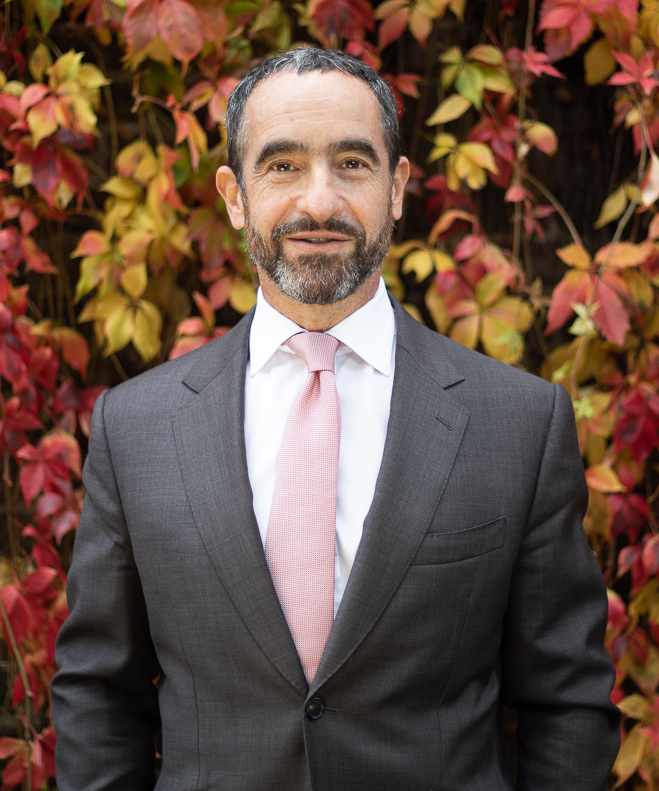
Michael is an acknowledged thought leader on clean energy, mobility, technology, climate, sustainability and finance. He is Co-Managing partner of EcoPragma Capital and CEO of Liebreich Associates. Michael is also co-host and founder of 'Cleaning Up' a podcast and YouTube Series.
Former roles include member of the UK’s Taskforce on Energy Efficiency, chairing the subgroup on industry and an advisor to the UK Board of Trade, an advisor to the UN on Sustainable Energy for All, and a member of the board of Transport for London. He is also the founder of and a regular Senior Contributor to BloombergNEF.