



Is Africa Poised To Be A Clean Energy Powerhouse? Ep241: Clemens Calice


Why does Africa, home to 18% of the world’s population, receive just 1% of global energy investment? What’s stopping money from flowing to the continent when it has such good wind and solar potential? And what would it take to unlock an energy boom that benefits both Africa and Europe?
Spread across 54 countries and with a combined GDP the size of Italy, Africa's population is young and growing rapidly. It is set to grow from 1.5 billion people today to 2.5 billion by 2050. And it could reach 4 billion by 2100, accounting for two out of every five people on the planet. Africans want and deserve the same prosperity shared by richer parts of the world. And that means investment. So why is investment not flowing?
This week on Cleaning Up, Michael Liebreich speaks with Clemens Calice, CEO and founder of Cygnum Capital, which invests around $1.3 billion in Africa’s energy transition. Together they explore why risk perception and outdated models are slowing investment across Africa.
From rooftop solar for factories and mines, to electric motorbikes, power pools, and the geopolitics of gas, this episode makes the pragmatic case for how Africa can leapfrog to a cleaner, more resilient energy future.
Leadership Circle:
Cleaning Up is supported by the Leadership Circle, and its founding members: Actis, Alcazar Energy, Cygnum Capital, Davidson Kempner, EcoPragma Capital, EDP, Eurelectric, the Gilardini Foundation, KKR, National Grid, Octopus Energy, Quadrature Climate Foundation, SDCL and Wärtsilä. For more information on the Leadership Circle, please visit https://www.cleaningup.live.
Discover more:
- Cygnum Capital: https://www.cygnumcapital.com
- Episode 196, Lucy Heintz of Actis: https://www.youtube.com/watch?v=nhGDI_0QIHg
- Episode 216, Daniel Calderon of Alcazar Energy: https://www.youtube.com/watch?v=WMhFOWO4C84
- Episode 120, Ana Hajduka, founder of Africa Green Co.: https://www.youtube.com/watch?v=ktWh_G6Sw_g
Michael Liebreich (ML)
Looking in as an outsider, it ought to be really exciting because you've got these fantastic wind and solar resources, you've got lots of land area and you've got very low penetration of wind and solar to date. So why is it not attracting more capital?
Clemens Calice (CC)
So one of the big issues that needs to be overcome and that's really at the heart of what we do is shortening the period it takes to put infrastructure in place because the most expensive commodity in Africa ultimately, everywhere, but in particular in Africa, is time. The most expensive power you can have is the power you don't have. And so at the moment things take too long for a variety of reasons and the infrastructure around creating or building these plants is still fairly inefficient.
The excitement comes in because there's a number of things happening and they're happening so quickly that if you don't look at it, you kind of miss it. And then you have these large areas of land that have deserts or dry areas that have fantastic solar conditions or wind conditions. And so you have both the ability to go far and wide, but also you can then think a little bit more about what's the role of North Africa and how can it power really all of Europe pretty much, but also the rest of Africa.
ML
Hello, I'm Michael Liebreich and this is Cleaning Up. Africa makes up 18% of the global population, but uses less than 4% of its energy and it only attracts around 1% of global energy investment. It's a stark mismatch and it's headed in the wrong direction. Africa's population is very young. It's set to grow from one and a half billion people today to two and a half billion by 2050. And it could reach 4 billion by 2100, accounting for two out of every five people on the planet. Africans want and deserve the same prosperity shared by richer parts of the world. And that must mean investment. My guest today is an expert on the flows of capital into Africa, what is working and what isn't. Clemens Calice is the CEO and founder of Cygnum Capital, a member of our Cleaning Up Leadership Circle. It's a financial organisation focused almost entirely on Africa with 100 professionals, half of them based there. We're going to talk about how Cygnum is deploying over $1 billion of capital across Africa to speed the energy transition. Why most developed world organisations are failing to allocate the capital to Africa that the opportunity deserves and how that might change in the coming decade. Please welcome Clemens Calice to Cleaning Up.
ML
Clemens, thank you so much for joining us here on Cleaning Up.
CC
It's great to be here.
ML
Now, we're going to start where we always start with the short bio. It needs to be short because you've done so much, but the short bio, and obviously also Cygnum Capital and what you do.
CC
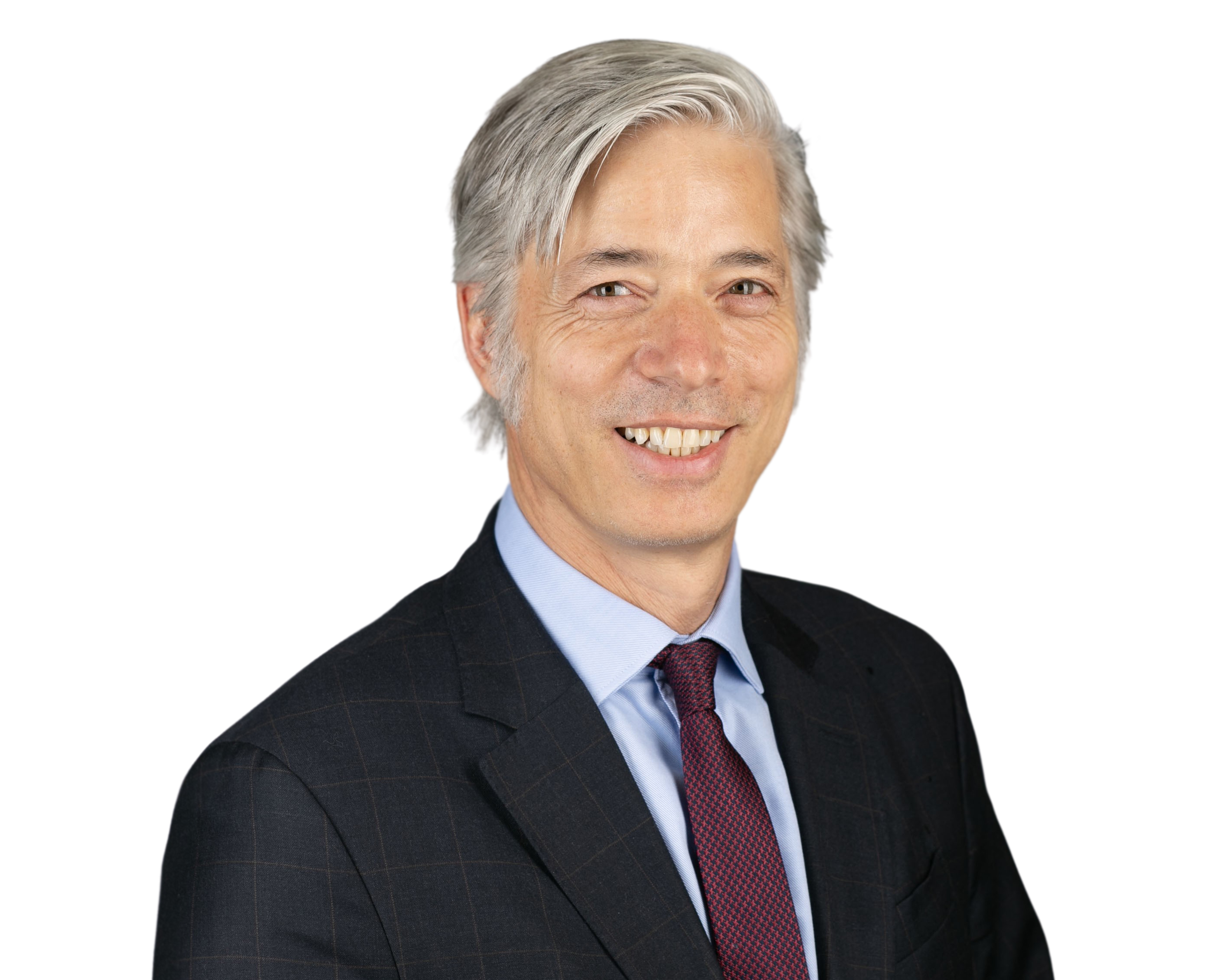
Of course. My name is Clemens Calice. I'm the CEO of Cygnum Capital. I'm Austrian. I started my career in banking straight out of university in a somewhat accidental manner, but have been in finance ever since. After working at Goldman Sachs, I founded what was then called Lion's Head Global Partners with two of my former colleagues. This business changed its name. It's now called Cygnum Capital and is an investment bank and financial services business that focuses on frontier growth markets. For us, that's predominantly Africa, the Middle East, and certain Central Asian countries.
ML
Okay. Now, you went pretty fast for some of our audience. Some of our audience are highly financial. They might even know your organisation, but they'll know exactly what investment banking and financial services. So, you've got a banking function, which is helping to raise money and helping to put money to work, but it's not money that you manage. You also have an asset management piece. Is that right?
CC
Correct. So, on one hand, we are intermediaries and service providers to people that are looking for money or seeking to invest money. We also help them accomplish their strategic goals. They could be making acquisitions or divesting certain businesses, the traditional sort of corporate finance activities. And then on the other side, there's an asset management business where we raise money from institutional investors that, based on a certain strategy, entrusted money to us, and then we go out and invest it on their behalf.
ML
And how much have you got under management in that second strategy?
CC
We currently manage around $1.3 billion for across seven funds that all focus on Africa with slightly different strategies. The main focus is renewable energy and energy transition. There's a fund that invests in agriculture and natural capital solutions. And then there's a financial institutions avenue where we try to strengthen local capital markets and channel money into the economies that we work in by investing through banks.
ML
We have this disparate audience and some will go, $1.2, 1.3 billion. I mean, that's tiny. And some will be going, gosh, that's huge. And of course, that is all in Africa, which is a relatively modest market. So, it's quite significant.
CC
Yeah. I mean, it is both tiny and it is both huge in some ways because it is tiny in the global context of money being invested. But in an African context, a billion dollars plus is a sizable amount. I mean, roughly speaking, foreign direct investment into the private sector, which is what we focus on in a year, is around $50 billion these days. So, against that backdrop, it's a meaningful number.
ML
It's meaningful. And we're going to dive today mainly into Africa. What percentage of your activities are Africa? I mean, you mentioned that it's emerging markets…
CC
It's probably 75 to 80 percent at the moment.
ML
OK. So, we're going to focus on that. But before we do, can you make it really concrete and give a couple of examples of transactions or businesses that you work with just to make sure that – and what did you do for them to make it really concrete?
CC
So, I mean, as I mentioned, the big focus of what we do is being involved in the renewable energy, energy transition and energy efficiency sectors across the continent. And there's a couple of areas where you've seen tremendous movement over the last few years. One example would be that the so-called commercial and industrial renewable energy markets, that's essentially solar panels on the rooftop of factories or solar plants that supply specific industrial customers, have really taken off.
There could be mines, but it could be any manufacturing facility. And with the price of solar panels dropping rapidly, as we all have seen, plus now more recently battery prices coming down at an equally rapid scale, you now suddenly have a solution that is very competitive, can be delivered in small and in large quantities and in very remote locations.
ML
Let me just make sure, just clarify, because it's so interesting to get into some of the details. So, this would be an industrial company that's doing some manufacturing, has got a roof, wants to put solar on it, but doesn't want to use their existing balance sheet. They don't want to use their current funds. Or a mine that has lots of space, wants to do solar, probably with some batteries to replace presumably diesel, is that? Right.
CC
I mean, in general, if you're running a factory, you're not in the business of generating electricity. You're used to getting that delivered by the grid. That's not always available in Africa.
So, some people are forced into generating their own power. They would buy diesel generators. But if somebody else can deliver this to them at a cost-effective price, then that's the preferred method. And that's true for almost anybody. So, a mine would otherwise have to find someone who delivers either heavy fuel oil or diesel power generation, or it goes to one of the companies that we finance that delivers a solar solution.
ML
So, that would be a third party, not the mining company, but a third party that will sign a contract with the miner, a power purchase agreement, and then you help that company to raise the money for the solar.
CC
Right. So, for example, I mean, we've been working with a company called Cross Boundary Energy for the longest time that started off delivering smaller solutions for smaller manufacturing sites and has more recently pivoted towards replacing the large scale diesel and heavy fuel oil power generation that is being used to provide electricity to mines. So, individually, you're going from hundreds of thousands of dollars of investments to hundreds of millions of dollars of investments to deliver power to these clients. And we are providing the financing or part of the financing that allows these companies to grow.
ML
Very good. Actually, I know Cross Boundary Energy. I've met Jake Cusack, who I believe is one of the leadership team, if not the leader, I'm not sure.
CC
Yeah. I mean, Cross Boundary does a few things, and he is one of the founders of it. There's a separate team that deals with the Cross Boundary Energy part of the business. But yes.
ML
You also, it's not just renewables. You do some other things around other forms of energy and around infrastructure. Any other examples, notable examples to give?
CC
Yeah, I mean, a big trend, not just here, but also in Africa, is to electrify transport. And what's interesting about these markets is that most of the transport there, a lot of the transport is in the form of two-wheelers. So small motorbikes that are very pollutant in general and run on fairly inefficient engines. And that is increasingly being replaced with electric motorbikes, once it is adapted for an African context where the loads tend to be higher, more people sit on the bike and carry around more stuff and the roads are worse. And that has a number of benefits.
It reduces CO2 emissions, but also this entire logistics value chain of moving fuel from the port to countries that are far away. All of that is being bypassed by switching to renewable energy. So there's multiple benefits. And it's one sector that is rapidly converting from fossil fuels to electricity. And it's very, very exciting.
ML
So I was at an event two weeks ago where there was, how can I put this very nicely to the gentleman, an old school energy professor who said we were talking about electrification. And he said, you have to understand, you must understand in Africa, they're never going to use electric vehicles. And so first of all, the two wheelers are going very fast. But also I think it's in Ethiopia, 60% of new cars being bought are electric. I mean, it's an outlier in Africa, but 60% is clearly not nothing.
CC
No, no, absolutely. And I think that's really the interesting and the exciting thing about this whole renewable energy story. Because unlike here in Europe, where we're trying to fix a problem that we created 100 years ago, in Africa, you're trying to leapfrog, bypass a potential problem and make economies, if you will, fit for the future. And we know that the future is going to be moving towards more carbon neutral development. And so you have a lot that needs to be built, a lot of infrastructure that has to be constructed. And you can look at it with a forward looking perspective and saying: ‘okay, so we know where we end up. How do we construct our infrastructure, our interdependencies so that we're ready for it?’
ML
The word you use, leapfrog, I have commented quite frequently in the past about how, particularly in the climate negotiations, that word, which should be absolutely pivotal for, particularly for Africa, but also Southeast Asia and even Latin America. When I started, it seemed really clear that the goal should be a leapfrog. It should just be like East Germany, when they got telephones, they went straight to mobiles. They just didn't bother with landlines. And getting these countries or helping them — not getting them, because that implies some kind of coercion — helping them to jump to a better system and to the future system is a leapfrog. And yet the debate is very often around, oh, we must stop this or prevent that or reduce the other, which has no resonance whatsoever locally.
CC
No, of course. I mean, it's the Africans and it's a generalisation because there are 54 countries and they're all very different. They are interested in development at home and how they can move up the development curve, as it were.
The problems that we have in Europe are of no concern to them. Africa is not a particularly large contributor. Actually, it's a very small contributor to global CO2 emissions. So all they care about is they need power. They want to move around. These are fundamental requirements to build an economy and they want to have this in an efficient manner.
And so we talk a lot about transmission in Europe and that's born out of a system where you have large power stations on one end and large consumers on the other end. That model for Africa is not suitable because you have much more decentralised electricity generation. Wherever there's sun, you can put up a solar power plant. And so you're building your grids from the start in a very, very different manner.
ML
Let's take just a second to do sort of, I don't want to call it the geography lesson on Africa, but there are a lot of people who would have some vision, some understanding of Africa, obviously, but it probably doesn't… you know, for many people and for myself as well, it doesn't kind of span the full range of countries. It's diverse. It's very diverse. You've got everything from the sort of President Trump view of Somalia. He's just been very extremely rude about Somalia. But then you've got all the way through to pictures of skyscrapers being built in Accra or in obviously, we all know, in South Africa. But how do you get your arms around this thing? You say, ‘okay, we do Africa,’ but it's very big and diverse, right?
CC
Yeah. I mean, it is, certainly. And I mean, that's why companies like Cygnum Capital exist, because we can make, or we can sort of construct the bridges between the outside world and Africa and within Africa. Because as a continent, yeah, it has a GDP of just under $3 trillion, which is sizable. It's the size of Italy, if you will. But then it's spread out over 54 countries. And the distances, the geographic space is massive. Just to put this in context, the distance between Nairobi and Dakar, so east to west Africa, from Kenya to Senegal, is the same as from Moscow to Vladivostok. And everybody knows that's a seven day train journey.
ML
A famously long distance. And this is, you're talking east to west. And then north to south is even longer, of course. I sometimes think that Mercator has got a lot to answer for, because the Mercator projection shows, you know, Europe as this kind of big thing. And it's obviously always in the middle of the map. And then there's Africa, which is a sort of blob underneath it. But if you get rid of the Mercator projection, if you look at it on a globe, you find that Western Europe is about 5%, literally one twentieth of the size of Africa.
CC
Yeah, I mean, the Democratic Republic of Congress is about the size of Western Europe. But it's also, I mean, there you realise you have countries like Kenya, Tanzania, which on the map looks relatively small. But I mean, Tanzania is the size of France, Germany, and Benelux. So it's quite sizable. But then you have a lot of countries, especially in West Africa, Togo, Benin, Guinea-Bissau, the Gambia. They're very, very small countries. So you have size and fragmentation at the same time. And somehow all of that needs to be tied together. And that's the big challenge that lies ahead, but also the big opportunity, I guess.
ML
So we did an episode in West Africa and Oscar, our producer and I, got stuck overnight and we missed a plane in Casablanca. We ended up going through, I think it's the Gambia.
CC
Yeah.
ML
I'll have to check that. But it's literally a little tiny strip of land alongside one river.
CC
Correct.
ML
And then you've got these other places like Niger, and they're absolutely colossal. But also in a very different states of development. I mean, if you include North Africa, then you've got countries like Morocco with quite considerable amounts of industry, Egypt. I've also just been to Egypt. Very considerable manufacturing industries, but you've also got much poorer countries and countries that are in conflict zones. So do you have a sort of list of countries that you deal with and a whole bunch that you say are too hard or are you open to pretty much anything?
CC
So nothing is really too hard for us. We've invested in 35 of the 54 countries and there's some smaller islands where we haven't gone to. And then a few places where we can't invest. Very few like Somalia, where there's no government and no rule of law. But it's interesting because in the past, Africa used to be sort of a tale of two ends. You had the North, which was reasonably well understood from a European perspective.
And you had South Africa, which was a fairly developed country. And so part of the bricks compared itself more to China and Brazil than to the rest of Africa. But it's the middle where you have a lot of people. Nigeria has 220 million people. Ethiopia has 170 million people. This is where all the growth is coming. And so over the last 10, 15 years, I think the focus has shifted more towards looking at Africa, not just as two ends and a lot of space in the middle, but as a big continent with lots of opportunities coming from different places.
ML
And then you've got these two bookends of what investment in Africa looks like or should look like. One is that it's this vast continent full of opportunities, mostly around mineral extraction. So it's about a resource and extractive, you could say a very exploitative view of investing in Africa. And then you've got the other end. You've got the various UN agencies because there's a whole bunch operating in Africa that would say it's all about, it's a development model of trying to bring people up to the Human Development Index. So which is quite a sort of, I'm trying to do this without using the word post-colonial, but it's quite a sort of, in some ways, a patronising view as well. And that's very closely linked to the climate view, which says, oh, we must make sure that they do geothermal in Kenya and wind in Kenya, but not gas and not oil. And we're not going to finance pipelines. We're not going to finance gas exploration. We're not going to finance a whole bunch of things that in a sense, the developed world, it's a developed world preference view.
CC
Yeah. I mean, obviously we've just come out of a relatively long period that was driven by a strong ideology around certain themes. And I'm pretty hopeful. And we see some of the signs that we're moving towards a more pragmatic approach to looking at how we engage as Europeans with the African continent and growth markets in general. So there was a period where everybody said you can't touch anything that involves hydrocarbons. Now that's a bit of a self-defeating strategy because Africa has a lot of gas, which by the way, Europe wants or needs, but also we were approaching the whole debate from the question, so how can we create resilient climate resilience because weather patterns are changing and so on. But we can't forget that resilience and protecting against climate shocks only really makes sense if you also create economic resilience. And so these countries need to continue to grow. And for that hydrocarbons are, in some instances, a necessity.
ML
Well, so you'll know that I like the word pragmatic. I've tried to own the word ‘pragmatic.’ So I've got Eco-Pragma capital, which is one of our Leadership Circle members, also something that I co-run, but also Pragma Charge, a charging business and the pragmatic climate reset.
I'm a big fan of pragmatism. And for me though, pragmatism is, first of all, it is dealing with climate change because climate change is real, but it is doing it in not an absolutist way. So a bit of fossil, if it enables a lot of clean, so it's not fossil for fossil's sake, which I think, certainly you look at the Trump administration and you look at some of the voices actually in Europe as well.
It's like, okay, now we forget climate and we just go and do a whole bunch of fossil because that's where the money is. And that's what Africa and Africans need.
CC
I don't like approaching things from sort of too far on the bookends of a spectrum because I think it just creates a lot of unintended consequences where it leaves a lot of opportunities by the wayside that are ultimately benefiting the ultimate goal. And also, I mean, as you know, fossil is not fossil, right? There's coal, which is a big part of what South Africa uses, but for the rest of the continent, natural gas is probably the more promising feedstock for a certain type of power generation. And as you construct an electricity system that runs across lots of countries, that has to bring together a lot of countries, that we've seen a lot of progress in Africa, where you have these power pools that develop, that create really interesting opportunities of moving power between countries and between users. There you can think about combining, starting off with a renewable generation basis, but then supporting it with a bit of fossil to bring stability into the system. And I think that's necessary.
ML
So we had a very good episode on that with Ana Hajduka from Africa Green Co, who's been working incredibly hard on the Southern Africa power pool, actually pushing, promoting it and bringing skills into Africa and sort of being one of the leading players that wants to use that pool, but actually doing some of the hard yards of helping to get it built. And we'll put a link in the show notes to the episode. We also had an episode with Alain Ebobissé, who's the head of I think it's called Africa50. It's an infrastructure multilateral of African countries. And he was certainly bemoaning the idea that you just couldn't do any oil and gas and that Europe was being, I don't think he used the word hypocritical because Europe is using gas. And in fact, since the Russian invasion of Ukraine, Europe is actually building gas import infrastructure, but not funding Africa to build gas export infrastructure, which seems the height of hypocrisy, to be honest.
CC
Yeah. I mean, I think that's absolutely spot on. Yeah. I mean, you can't sort of preach one thing and do something else. But also you have to recognise where you're operating. And I mean, you mentioned Africa Green Co. We've been working with Ana from the very first day. And she's a great example of seeing a business being created, but then also evolving against the backdrop that is incredibly dynamic. I mean, in South Africa, as many people probably have heard, had had a big issue with power outages, ageing infrastructure, and that created this massive boom of new solutions to provide electricity. And the South African government at some point basically gave the private sector free rein and said, ‘you figure it out.’ And that's been a real drive of innovation and opportunity. And lots of people have invested and it's been, broadly speaking, a success story.
ML
So I've been doing not this, not this specific thing, hosting Cleaning Up. But I've been around this area for long enough to have seen the full pendulum swing from around 2007-8, when I was trying to say, actually, solar and wind get really cheap and Africa and specifically South Africa should do a whole load of it. And being told that that was a sort of post-colonialist trying to impose a Western solution on South Africa, which clearly had every right and should just build coal. And the World Bank pushed the two big coal plants, Medupi and Kusile, which were catastrophic, catastrophic performance, catastrophic black holes for money and bankrupted Eskom and led to these rolling power cuts and so on. And then the pendulum go all the other way of saying, ‘well, all you are allowed to do is wind solar.’ But I suppose we're hoping, both you and I, if I interpret the last few minutes of our conversation, that the pendulum sort of stops in the middle although pendulums just generally kind of don't.
CC
Yeah, I mean, it's definitely sort of coming back the other way in many ways, driven by more and more success stories around renewable energy, but also an appreciation that renewable energy is just part of a larger system that needs to be integrated.
ML
So hopefully it's thesis, antithesis and then synthesis and the pendulum does stop. But let me ask, how do you stop, for instance… if you say, OK, there's going to be gas around being extracted in multiple countries in Africa, how do you ensure that what's not built, I have to do this very carefully without it being a European would prefer if Africa didn't build and trying to impose my values… but it would be a mistake to build big CCGT inflexible gas fired power stations in Africa, because so much of the time they would have access to cheap wind and cheap solar, which means that the plant will not run and is a waste of capital. So if you're going to build gas, they should be building flexible gas, peaking gas that is an enabler for lots of wind and solar and integrates lots of batteries because they will still be cheaper than gas.
So Africa should be doing as little gas as possible domestically and exporting as much as possible. Is that what you see happening or are countries saying, great, we're going to get gas and we're going to have reliable power, big CCGT plant brackets, probably Chinese technology.
CC
And I think this is one example where if you talk about Africa, you're kind of generalising too much. So you have East Africa, which has very little gas fired power generation, and there's no rush towards building large CCGT, even though they're very large gas reserves off the coast of Mozambique, Tanzania. In West Africa, you have a gas infrastructure network that's a little bit more developed, but also a lot of heavy fuel oil power generation, which you can repower by replacing diesel or HFO, so heavy fuel oil with gas.
And that's what's happening. And then you have in South Africa, which has a very large fleet of baseload coal fired generation, and they kind of need a little bit of everything to move away from just being dependent on coal. But what's interesting is the power market, as you know, always has an element of government intervention, because the national utility plays an important role in buying power and moving it around. And so government policy drives, in some ways, in which direction the market goes. But the majority of the new generation capacity is privately funded. And so private investors, they ask the same question that you ask.
And so there's a little bit of a checks and balances system in place where you're currently not seeing at least a rush into something that then may become obsolete in five years' time or only serves a certain part of the country. So I think it kind of works. It still could be much better, but because it is capital that's not necessarily government-directed, you have a slightly more sensible approach to things.
ML
Looking in as an outsider, it ought to be really exciting, because you've got this fantastic wind and solar resources. You've got lots of land area, because these technologies, wind and solar, they're land hungry. But you've got lots of land area, and you've got very low penetration of wind and solar to date. So all this stuff about, ‘oh, we've got curtailment and so on,’ you don't have. Although I suppose if you don't really have a sophisticated or a fully built out grid, then even relatively low penetrations can cause problems. But it feels to me like, I don't want to say there should be a bonanza, but it should be a very attractive market. So why is it not attracting more capital?
CC
So one of the big issues that needs to be overcome, and that's really at the heart of what we do, is shortening the periods it takes to put infrastructure in place. Because the most expensive commodity in Africa, ultimately, everywhere, but in particular in Africa, is time. The most expensive power you can have is the power you don't have.
And so at the moment, things take too long for a variety of reasons. And the infrastructure around creating or building these plants is still fairly inefficient. So there's massive gains to be had. The excitement comes in because there's a number of things happening, and they're happening so quickly that if you don't look at it, you kind of miss it, that will fundamentally change how these markets work. So on one hand, it's the ability to put solar plants anywhere, even in remote areas, and not having to worry about moving power long distances. On the other hand, you now can move power very large, very long distances. There's all this high voltage direct current, HVDC technology, that's being built. And people talk about the world at some point having a ring of transmission infrastructure that connects everything. And then you have these large areas of land that have deserts or dry areas that have fantastic solar conditions or wind conditions. And so you have both the ability to go far and wide, but also you can then think a little bit more about, OK, what's the role of North Africa? And how can it power, really, all of Europe, pretty much, but also the rest of Africa?
ML
On that one, I'm still smarting, because I am an investor in Xlinks, which was Morocco to the UK, which our government tragically decided not to back. My own view is it'll happen, because the logic is so compelling. But it's not the only link across the Mediterranean. What is the role of risk slash risk perception in slowing down what ought to be a very rapidly growing investment flow?
CC
Yeah, I mean, it's a very interesting question, because the first instinct of everybody that is in the finance world that thinks about putting money to work in Africa is that it's very risky. And it is risky, but lots of places are risky. And there's a lot of evidence, actually, that the risk is generally overstated, that the perception of risk is not congruent with reality. And recent data that has been published on default rates, especially as it relates to infrastructure, really substantiates this. But people have a point in that there are other non-financial barriers that make investing in these markets risky from an investor's perspective. It takes a lot of time to figure out the different legal regimes when you have 54 countries. You do have macro shocks that have an impact on governments. Governments change, there are military coups and so on. Getting money out again. These are all things that keep people on the sidelines. And it's, to some degree, our job to both explain to them that it's manageable to also find structures that work around it or work alongside these issues. And so risk perception is an important part of it, but it's also creating the access so that money can flow more freely.
ML
If we kind of unpeel what does risk mean, there's the sovereign risk, the risk of the country. There's the foreign exchange risk. A country could be actually doing fine, but its currency is devaluing. And therefore, you may get paid for your electricity in a currency that can't cover the cost of the equipment and the capital. There's also the risk of the offtaker, of the company that buys the electricity. Where is the misperception? Where is the problem? What are people worried about? Are they worried about sovereign? Are they worried about currency? What's stopping? What would you need to do to unblock this?
CC
Well, I think in some ways, everything is kind of mixed together and in a maybe slightly too simplistic way declared as risky. Because if you think about power generation, in particular, a power plant may stop running, but it's not going to disappear. And as a piece of infrastructure, it maintains its value. And so I think this part of the risk is probably overstated, or we don't have the mechanisms or the instruments, financial instruments to deal with that risk, because we take a very traditional approach to financing infrastructure that's driven by European models.
ML
And that's a point made by Lucy Heintz of Actis on this show, and also Daniel Calderon, Alcazar Energy, that fundamentally, if you're talking about countries that need a lot of electricity and have a high domestic electricity price, probably because it's set by fuel oil or some imported fuel, then they need that asset. So the asset is not going to disappear, as you say. And they're actually going to look after it, make sure it does continue to produce, and that requires being paid. But the perception of risk… I guess I'm fascinated by the question of how asset managers, not yourselves, but big, big asset managers, allocate so little to this part of the world because of a perception of risk. And when you really talk to experts, you find that the perception is just simply either wrong or manageable or much more nuanced.
CC
Yeah, I think this is the area where people talk a lot about risk, but there are many other issues why, as an asset manager in Europe, I guess it's the same for the US, you're hesitant to deploy capital. Think about it this way. If you manage a trillion euros, which is the size of many of these asset managers, and then you're looking at investment opportunities by European or global standards are small and distributed across 54 countries, how much time are you going to devote to put $100 million to work, which will take you a long time, in a place that you don't have a base, you don't understand the legal system, there's compliance and everything you need to sort out. So, even if you can convince someone that the returns are fabulous, they still may be hesitant because they can't deploy enough capital. The vehicles to move larger amounts of money into these markets don't exist. And this is where we come in. We're trying to figure out ways to take a dispersed set of opportunities, individually quite small, bundle them together, do some de-risking along the way, and then allow larger investment flows to go through them.
ML
But there's a huge chicken and egg problem, because as long as there's only a few billion, of which you're managing, I can't remember if it was $1.2 or…
CC
$1.3 billion.
ML
So you're managing $1.3, but until there are tens and tens of billions or hundreds of billions, that whole ecosystem of lawyers and resource consultants and insurance companies and so on, there's a whole ecosystem that needs to be drawn in. And as long as there's just this sort of drip, drip, drip of resources, it's going to be slow.
CC
Yeah, I mean, that's certainly true. But that drip, drip, drip has to become a raging river, if you will. And it's people like us and people like Actis and many others that try to create the critical mass here.
ML
Cleaning Up is supported by its Leadership Circle. The members are Actis, Alcazar Energy, Arup, Cygnum Capital, Davidson Kempner, EcoPragma Capital, EDP, Eurelectric, the Gilardini Foundation, KKR, National Grid, Octopus Energy, Quadrature Climate Foundation, SDCL and Wärtsilä. For more information on the Leadership Circle, please visit cleaningup.live. If you're enjoying this episode, please hit like, leave a comment, and also recommend it to friends, family, colleagues and absolutely everyone. To browse the archive of over 200 past episodes, and also to subscribe to our free newsletter, visit cleaningup.live.
ML
What proportion, roughly, of either the banking work, the advisory work, or the investing, what proportion of it involves multilaterals of one sort or another? So World Bank, Africa Development Bank, or I guess it would be EBRD from Europe, or the equivalent for Asia, or the BRICS Bank, and so on.
CC
So that's still, especially as it relates to infrastructure, the largest pool of capital. But what's interesting, five years ago, the answer would have been, it's basically 80% of the multilaterals, the World Bank, the African Development Bank, the European Development Banks, and then a little bit of institutional capital. That is now changing because the two have come together to work together in a way that creates interesting pathways for institutional, i.e., private sector money, to co-invest with those multilaterals that provide a certain degree of stability. And so we've seen a dramatic rise in activity. I mean, us alone, over the last 12 months, we've raised north of a billion dollars for companies active in Africa, which is a big number for our markets. And half of that money is institutional money. And so there are institutions, there's an insurance market that is starting to take note of things that are going on in the ground. And interestingly and importantly, you also see some of the local capital providers, which would be the Pan-African banks, and some of pension funds and insurance companies that manage African money, taking a keener interest in what's happening with infrastructure that really should be owned by them and not by European investors.
ML
And there was always quite a big chunk of capital in South Africa. South Africa always had savings and it had banking institutions and so on. Is that now generalising out from South Africa?
CC
Yes. And that's another thing that's changed, I would say, over the last five years. South Africa always saw itself as being South Africa. And then there was the rest of Africa with which they had very little in common. And that's changed because the two have converged. But also the South African banks have become larger and they are overexposed to South Africa. And so they're looking for opportunities across the continent. And you see them now in most deals very actively and with reasonably sizable tickets as participants.
ML
What I suppose one's looking for is capital formation, whether it be Nigerian banks that could do a big slug of what's happening in Nigeria or Ghanaian banks in Ghana. And of course, there are a whole bunch in North Africa as well already. Are you seeing that? Or insurance companies, not just banks?
CC
Well, you have local capital, whether it's banks or pension funds or insurance companies that invest within their borders. And they are also getting a little bit more accustomed to investing in infrastructure, which in the past they wouldn't have done so much. But what really is needed is money that can go pan-African, because a lot of the companies that create these solutions want to be diversified. They see opportunities in multiple countries. And so that's another bridge that has to be built. There's talk about an African free trade zone that's still some years away. You have regulation that restricts local banks from investing outside. Certainly pension fund regulations are still very tight.
ML
And it's important to remember the metric that you gave, which is in aggregate, this is an economy the size of Italy, and it's divided into 54 countries. So you can't have a bank that can be really, truly globally competitive if all it does is one Italian province. Individual markets are too small. Looking at it another way, the deals that you do, so they still do involve multilaterals. I think it's a falling number. It would have been 80, now I think you said it was sort of 50%. But what about the person who uses the energy, if it's an energy deal, is that a Western company? Is that a mining company? To what extent is this all underwritten by effectively demand from the developed world? Or is it endogenous African demand?
CC
First of all, keep in mind, you're talking about 1.5 billion people, soon 2 billion people. And they consume and they have needs. And so domestic demand is by necessity going up. There's no way around it.
ML
But they pay in local currency. So there's some risk issues around that. That's my question.
CC
Yeah. But the power sector is still largely dollarised. But yes, it's correct that that is a local currency market. But on the back of it, you have a demand pull from outside resources locally. And so there's an increasing focus on having manufacturing capacity on the continent that can serve faraway markets. The classic example would be fertilisers, where at the moment, potash is mined, goes off, and then maybe comes back through a European and American company. Now, with the whole — your favourite topic — hydrogen debate and green nitrogen and so on, people are starting to think about manufacturing fertilisers within Africa. And so you have a little bit of everything pushing the market along.
ML
I wasn't sure whether we were going to get onto green hydrogen, whether we should bother with it. Because in my view, almost none of those projects will happen. Because they're all, those are not, first of all, if it was for local African demand for fertiliser, green ammonia, green fertiliser is just simply going to be twice the cost of anything that is made out of fossil. And so it's not for the local market. It can't work for the local market. It could only ever be exported to Europe. But the carbon price in Europe is not high enough to justify even that. So I don't think any of that's going to be built. I actually look at those, to be honest, I look at Namibia, and they've got these signs by the side of the road saying, ‘Green Hydrogen Is Our Future,; and they've got that and so on. And that's just a smoking crater of a strategy.
CC
I mean, this would be an entire different podcast, I guess, and you've had many around that topic. I mean, there's some people that do disagree with it. I think that broadly speaking, people have come to realise that as the panacea for stopping climate change, green hydrogen is not going to be the solution. But I mean, you have certain pockets, and I think Namibia is where this debate can be had, where you might find solutions that work. But I was taking more the example of further value addition to natural resources that is being pushed very heavily.
ML
Of the billion that you said that you'd raised, you know, relatively recently, for clients, those clients, what sort of organisations are they? Are they big multilateral mining companies? You talked about some of the kind of manufacturers that are putting solar on their roofs and so on. What sort of companies are there? What's the mix?
CC
Yeah, you have a mix of people that provide electricity, and then you have to ask, where does the electricity go? There's a mix of, there's a lot of focus on mining, there's a big consumers of power. And at the moment, this is still a very extractive model. So you get your copper and you ship it out, and then it gets treated offshore. But I think you will see more onshore treatment of value addition. And then you have a lot of local industry. Because in the end, I mean, if you look at another number, the average age in Africa is 19. I think there's some staggering numbers of how many young people enter working age every year, they need to be employed in large numbers. Not everybody can be an influencer or be engaged in the gig economy.
ML
So working in, what's the Nigerian equivalent of Bollywood or Hollywood?
CC
Yeah, Nollywood as it's called. So you need large scale manufacturing, and really capitalise on the human labour pool that you can tap into. And that ultimately needs cheap electricity, right? And this is where these two worlds come together.
ML
Taking that sort of flow of money, cutting it a different way, how much of it is coming from Europe versus the Americas versus Asia of the flows that I suppose the ones you handle, but also the flows that you see going into the economies? I mean, shorthand, how is Europe doing?
CC
I mean, it's interesting, because obviously, this is a very dynamic world. And there's a very simplistic picture you can paint that says, okay, the US with its current administration is very clearly focused on two objectives. One is countering China, and the other one is getting access to resources. And that's increasingly state driven, if you will, with the way the government is investing in the private sector. And then you have the Asian economies that are still operating, and that also applies to the Middle East, largely on a government to government basis. And then you have the private sector, which is really as it relates to foreign companies, largely dominated by European players. And I think this is where it's frustrating to me, the debate in Europe about Africa is always defensive, we have to keep people from coming to Europe. But there's a huge opportunity. Europe already has a base. And if you build on it, it could be a growth engine for many years to come. And so I think the private sector, Europe has a huge role to play, basically.
ML
It's funny, because if you go through the Draghi report, or the background to the Draghi report, you look at all the problems that Europe has, in terms of low growth, demographic problems, extremely high environmental rules that make it hard to manufacture. And then you kind of look, just go, just head south, just look a bit south, and you get these enormous opportunities, you know, huge numbers of young people, a dynamism in some ways, and entrepreneurship unleashed, because when you do see things happen in Africa, they happen very fast. And they can be very impressive. If you look at telecoms, or the programming community in Nairobi, and so on.
CC
I mean, we really need a shift in narrative, because there's all this sort of official development assistance topic, where Europe spends money for development purposes in foreign countries, people saying, we shouldn't do this, because we have all these problems at home. Now, which is true, we have Ukraine to deal with, and we have social issues that need to be addressed. But if you think about an investment in Africa, just as ‘we're giving away money for the greater good,’ I think you're missing an important aspect. By developing Africa in conjunction with a European, aligned with the European model, we're also safeguarding our own future, because where is growth going to come from? And what is Europe's role ultimately going to be 20, 30 years from now?
ML
I couldn't agree more. On a previous episode, actually with James Cameron, who also chairs our editorial council, I was very annoyed by the COP in Baku, where the European essentially environment and climate ministers, because there were relatively few heads of state or finance ministers, they went off there, and they signed a document saying that Europe would be investing $300 billion per year in countries which, frankly, are going to be our global economic competitors, without this sort of vision of saying, well, actually, what are we trying to achieve? You can see it just through a climate lens. And it just felt very tin-eared to me. It felt very inappropriate. Instead of understanding that there's a whole load of goals for Europe that include, that really ought to solve core problems of Europe, but that also involves helping Africa to develop, but in a way that is, how can I put it, not just seen through the climate lens or this defensive lens, or let's just stop them coming to Europe, because that's the number one objective. And instead, this vision that you laid out is very compelling.
CC
Yeah, I mean, we have this sort of schizophrenia. And as an Austrian, I can say that we never had any colonies. But on one hand, yeah, we don't want to be seen to be too forceful as Europeans because of our colonial past. And that limits our ability to create this win-win narrative. But I think that these can be reconciled. We can contribute to the development, and at the same time, explain to citizens in Europe why this makes sense for them, ultimately. And there's just not enough effort. People are too distracted. And politicians are, in general, too much on the back foot, I think.
ML
I was always very aware. I worked on Sustainable Energy For All, and worked very closely with Ban Ki-moon back then. And I was very, very aware that as a Brit, I couldn't rock up anywhere in the global south and say, ‘here's what I think you should do.’ That's completely inappropriate. But it is a question of saying, what sort of world do we all want to live in? And how do we then work together to build it and to make it cleaner and more resilient? But also, we've got to find huge numbers of jobs in both of our regions, frankly.
CC
And the question should be, what can we do for you? What do you want us to do, really, more importantly? And then look at it through the lens of, does it make sense for us?
ML
So to close then, we see that as the goal. So we've now solved the geopolitical problem. But you're running an organisation, Cygnum Capital. What do you do in the next, let's call it, three to five years? Is that the direction of travel that you see? Can you influence it? And how are you going to build your institution with that in mind? Or if it's not going to happen, then how else are you going to continue to develop?
CC
For sure. I mean, our trajectory has to be, we need to grow. There's a huge opportunity set. We're still a relatively small organisation. And growth means that we need to manage more money. And then we need to be able to support more clients as financial advisors to raise money. And we do this by creating a bridge between being regulated in the UK and in the Netherlands and all sorts of places. So we operate through international standards, but we have a local presence. We understand local markets. So this bridge that we create, that's one important aspect. We just know what's going on. We have 150 investments all over Africa.
At some point, you can pick up the phone and get some information everywhere. But also, we need to create these vehicles that deal with some of the problems that are causing people to stay on the sidelines. We have to make it much easier for money to flow. And this could be through funds or through investment companies. And so we want to grow this. And as institutional capital takes a closer look again at emerging markets, because as you know, there's been a big outflow of funds in the past 10 years. We need and we want to be there with the solutions that allow that capital to flow somewhat seamlessly.
ML
So if you look at the growth rate of Africa over the last decade, which is something between 3- 4%, that means that the African economy, currently the size of Italy — as we now know, thank you — is going to be 50% bigger in a decade. And if our vision comes true, then maybe it's more than that.
CC
Yeah, it should be twice as big. It should be growing at 7%.
ML
It should be growing at 7%. And it should be twice as big. Will Cygnum Capital be 50% to 100% bigger? Or will you be able to outgrow the rate of growth of the African economy?
CC
Definitely. I mean, we've been growing at 20-25% a year over the last few years. And as a financial institution, you should always grow faster than the underlying economic growth. So for us, I mean, we definitely need to double the size of our business and it can't be 10 years. So we will outpace this growth if the fundamentals stay correct. And if we do a good job, I'm convinced of that.
ML
Very good. Well, I look forward to checking in with you. We're not going to wait a decade, and I'll check in with you. And I'm sure you'll be able to maintain your growth rates and do a good job.
CC
Thank you. Thanks for this. It was a very, very good conversation.
ML
So that was Clemens Calice, CEO of Cygnum Capital, a member of the Cleaning Up Leadership Circle. As always, we'll put links in the show notes to resources mentioned in our conversation. So that's my conversation with Lucy Heintz of Actis, episode 196. Daniel Calderon of Alcazar Energy, episode 216. And Ana Hajduka, founder of Africa Green Co., episode 120. With that, it remains for me to thank our producer, Oscar Boyd, video editor, Jamie Oliver, the team behind Cleaning Up, the Leadership Circle, who make all of this possible, and you, the audience, for spending some time with us here today. Please join me at this time next week for another episode of Cleaning Up.
ML
Cleaning Up is supported by its Leadership Circle. The members are Actis, Alcazar Energy, Arup, Cygnum Capital, Davidson Kempner, EcoPragma Capital, EDP, Eurelectric, the Gilardini Foundation, KKR, National Grid, Octopus Energy, Quadrature Climate Foundation, SDCL and Wärtsilä. For more information on the Leadership Circle, please visit cleaningup.live. If you're enjoying this episode, please hit like, leave a comment, and also recommend it to friends, family, colleagues and absolutely everyone. To browse the archive of over 200 past episodes, and also to subscribe to our free newsletter, visit cleaningup.live.
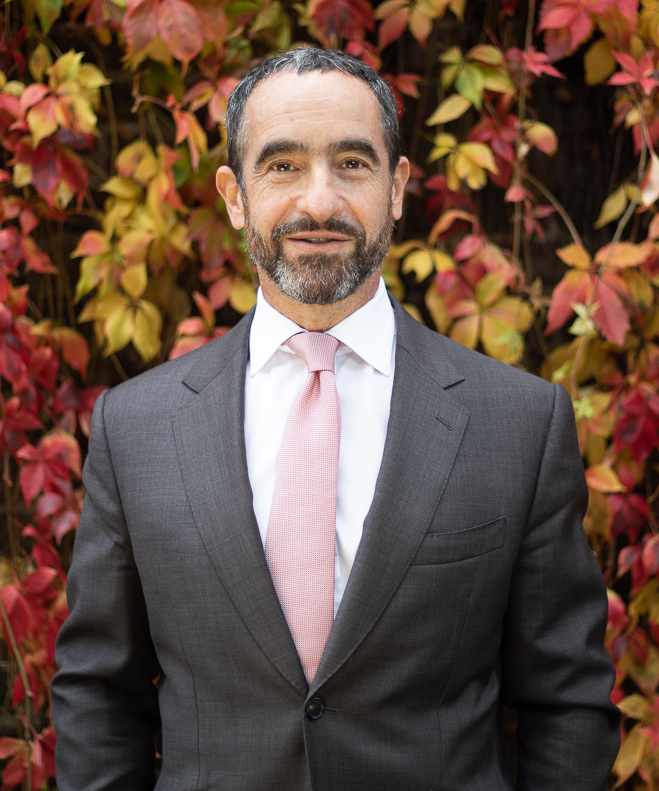
Co-host, Cleaning Up Podcast
Michael is an acknowledged thought leader on clean energy, mobility, technology, climate, sustainability and finance. He is Co-Managing partner of EcoPragma Capital and CEO of Liebreich Associates. Michael is also co-host and founder of 'Cleaning Up' a podcast and YouTube Series.
Former roles include member of the UK’s Taskforce on Energy Efficiency, chairing the subgroup on industry and an advisor to the UK Board of Trade, an advisor to the UN on Sustainable Energy for All, and a member of the board of Transport for London. He is also the founder of and a regular Senior Contributor to BloombergNEF.
CEO, Cygnum Capital