



How To Build Quickly In An Era of Fossil Fuel Shocks | Ep247: Hilde Tonne


How can we build out clean energy and infrastructure faster? Is Europe engineering its way to resilience, or pricing itself out of competitiveness? And can we redesign the entire system fast enough to keep up with AI, electrification and rising demand?
This week on Cleaning Up, Michael Liebreich sits down with Hilde Tonne, Chair of Arup and former CEO of Statnett, to explore the hard realities behind the energy transition. From offshore wind and nuclear to grid bottlenecks and data centre demand, Hilde brings a uniquely systems-level perspective shaped by decades leading infrastructure transformation across telecoms, energy and engineering.
They dive into:
- Why grid investment, not generation, may be Europe’s biggest constraint
- Whether hyperscaler AI companies should foot the bill for massive grid upgrades
- The hidden bottlenecks in regulation, permitting and procurement • How ‘total design’ thinking can cut carbon by 40% before construction even begins
- Whether electrification makes Europe more resilient, or more exposed
Hilde argues that this transition is no longer just about climate. It’s about security, competitiveness, affordability and economic growth. But achieving it will require rethinking regulation, redesigning infrastructure and the bureaucracy around it, and aligning public and private capital at unprecedented scale.
Leadership Circle:
Cleaning Up is supported by the Leadership Circle, and its founding members: Actis, Alcazar Energy, Davidson Kempner, EcoPragma Capital, EDP, Eurelectric, the Gilardini Foundation, KKR, National Grid, Octopus Energy, Quadrature Climate Foundation, Schneider Electric, SDCL and Wärtsilä. For more information on the Leadership Circle, please visit https://www.cleaningup.live.
Links and more:
- Arup’s website: https://www.arup.com/
- Inside Europe’s Largest Data Centre: https://youtu.be/juAyLAUmU3w
Michael Liebreich
Do we need to find some way of sending the bill to the hyperscalers though, because they're the ones with all the money that are putting the big challenging loads, centralised, incredibly difficult loads.
Hilde Tonne
Am I still in the mindset of the CEO of Statnett?
ML
Oh, you can be.
HT
Yeah.
ML
You can be.
HT
Because then I would say, yes, there is a need for that.
ML
Because I believe there is a need for that. I believe that the deal is, okay, you want to have these data centres, you want them quickly, that's fine, but you're going to pay for the grid upgrades.
HT
You need to pay for backup. You need to pay for the extreme cost of accelerated services and the balancing of the grid. It's so costly in the new world. And that is not, remember, who's paying for the grid? It's you and me and everyone. It's the taxpayers.
ML
Yeah. And I think we're agreed there that we need to send more of the bill to the people causing the trouble.
ML
Hello, I'm Michael Leibreich, and this is Cleaning Up. This episode, we are recording live from the offices of Arup. We're welcoming Arup to the Leadership Circle today. It gives me great pleasure to be here. Now, Arup, I knew as, and probably a lot of people in the audience know as, the engineers, the designers of fabulous buildings, but it turns out they do a lot more than that. And we're going to be hearing about that today. My guest is Hilde Tonne. Hilde is the chair of Arup. She's also a former CEO of Statnett, the transmission operator in Norway, and has done a lot of other things in her career, lots of telecoms, and that's going to inform our conversation. So please welcome Hilde Tonne to Cleaning Up.
ML
Before we get started, please note that today's episode was filmed on the tenth of February, just over two weeks before the US and Israel began their dramatic military action against the regime. Like all of us Bryony and I are watching the events unfold and trying to make sense of them. Our thoughts at this point are with the innocent victims of the Iranian regime, and of the violence being visited on the regime. As well as with all those already struggling to pay their energy and fuel bills which are now going to be higher, even if only temporarily. Bryony and I will soon be recording a special episode in which we explore the implications of the conflict on our world of energy, climate and geopolitics. IN the meantime please stay safe, stay focused, hope the best possible outcome, and I hope you enjoy this week's enormously engaging episode of Cleaning Up.
ML
Hilde. Thank you so much.
HT
Thank you for having me.
ML
Very exciting to be recording here at Arup's offices live with you today. We should start the way we always start, which is with you providing a bit more detail than I've provided during my short introduction about who you are and how come you've ended up in this role.
HT
Yeah, thank you. Thank you so much, Michael. And it's a pleasure to be here. Let me start by saying that I am obviously an engineer. I was educated in Norway and Germany approximately 150 years ago. I started out in the oil and gas industry, as all Norwegians do or did. Then I moved into telecommunications and I moved into what I like to call purpose-driven businesses, where I was always part of building societies, whether it was telecommunication infrastructure or whether it was with Ramboll Group or at the later states with Statnett and now with Arup, very focused on the purpose of our business. It's been about technology. It's been about transformation and it's been about people. So my 30 years in business, that's what I really focus on. And to have the pleasure of being the chair of Arup Group, I have to say it's an honour.
ML
So I like that you said you were obviously an engineer, because I'm not sure I suddenly... I can dwell on that. I panicked and I thought, well, am I obviously an engineer?
HL
You are.
ML
But it is one of the things that I'm trying to do through Cleaning Up and in my other work is actually get the voices of engineering to be heard more loudly and more consistently in I would call it the energy transition, because quite often it's led by policymakers and it's led by investors and the engineering can get left behind a little bit. So it's a great pleasure to have you here and also to be working with Arup. Can we take as a starting point on Arup though, what does it do? Because I know the founding story, right, which is all about the Sydney Opera House and how there was this marvellous sketch by the architect and nobody knew how to build it. This was the architect Jørn Utzon and nobody could work out how to do it without it falling down.
HT
So Ove Arup had to do it.
ML
So Ove was brought... Ove Arup. You taught me how to say his name properly just before this.
HT
His mother was Norwegian. Ove Arup.
ML
And he was brought in to do that. But these flagship buildings is not everything, is it?
HT
No, it's not. And this really impressive Pompidou Centre, we're talking about very symbolic, iconic buildings, the skyline of Hong Kong.
ML
The Shard in London.
HT
Yes. And you can travel the world and be very emotional, especially as a chair, I think, when you see these things. And it's absolutely something to be proud of. And structural engineering and design of buildings is absolutely at the core of our business still. But we have broadened over the last decades. We are actually 80 years old this year. We're celebrating our 80th birthday and our birth year. And the whole breadth or the broadness of our activity has increased very much. We're in transport, obviously, we're in aviation, we're in energy, we're in water, we're in different utilities, we're in what you could say, you could sum it up to say mega infrastructure projects where approximately 150 disciplines come together across Europe. And we deliver a totality through what we call total design and engineering and technology solutions and advisory on processes, as well as regulatory frameworks and how to actually make it happen.
ML
This diversification, you call it total design, total architecture, that actually goes all the way back to Ove’s vision. So that's not an accident. It's not kind of diversification after he moved on and the business grew. This is actually, this is very intentional, as I've learned, because I read...
HT
You read the key speech.
ML
I read the key speech. And it comes back to the purpose. It's been quite kind of interesting getting to know Arup, you know, I wouldn't say from the inside, but a little bit more closely as we've gone through this process. So that total architecture, total design approach is very integral. It's drawn Arup into energy. Can you just give a thumbnail of the activities in energy? What is it that Arup does?
HT
First of all, we see and we know that design, engineering, technology solutions takes energy transition and energy into every solution nowadays. So if we're doing a building, if we're doing a city, if we're doing a transportation system, it will take renewed, sustainable energy solutions in order to deliver something that goes into the future, which is what we do. So when we start designing, we start with the beginning. We start being very holistic and we choose solutions that we believe will be future proof. And then the services we do, we deliver the design of transmission systems. We deliver advisory on framework for regulatory basis. We deliver societal analysis of how infrastructure may be part of a society. And we do, for instance, a huge things like the Olympics master plan in Brisbane currently, where everything comes into play: Energy, water, buildings, everything.
ML
So thank you. And one of the methods, I'm going to say it's a challenge. You can tell me, no, it's not a challenge. It's easy, but…
HT
It's very complex.
ML
It's very complex. And 10 years ago, the big thing was smart cities, right? You remember smart cities, particularly with your Telenor. I don't know whether you were doing Telenor at that point. But smart cities, people had this marvellous thing, you do this and that, and it was all integrated and you could give a much better systems thinking solution. But in the end, the problem was there was nobody to sell smart city solutions to because the water department bought the water stuff and the mayor bought almost nothing. And the transport department bought something and the sewage system they bought. And so there were these marvellous visions of integrated systems, all sharing, blah, blah, blah. But there was no procurement director who could sign off on a purchase. So how do you navigate that? Because I'm guessing, I mean, I know that you're the chair, so you just sort of, but you must coach the management team through how they think about, because the systems thinking is great, but how do you help them think about how to actually deliver that?
HT
First of all, I believe it's a core competence and it's in our DNA to think ‘total design’. And that's what you have to do. You have to think across disciplines and you have to be able to work together in teams and you have to work together across geographies and cross projects sometimes. You need this to be led through the organisation on a continuous basis. It's not like you can write the key speech and then it's there forever. It's part of our DNA, but it needs to be led out. And this is a way of, we have a strategy, we have a governance and it starts from the top, as you allude to. And it starts with the Arup group board that I chair and it continues with the executive board and it continues cascaded throughout the organisation. This is our strategy.
This is the way we work. And this will actually, and here comes the incentive for people to actually want to do this. The people of Arup love complexity. They love to solve problems and they love to work together across different disciplines on this in order to deliver on those complex projects. That can be a bit unruly to lead because people would like to be empowered to do this in their own projects or in by themselves. And I think the main focus from me and the board would be to enable, to be sure that we have professionalised what needs to be professionalised and then release capacity for people to be empowered.
ML
Now, I've led you down a particular direction of explaining Arup and the philosophy and how you approach it and what you do in energy. And 2021, the decision to only, you know, or not to only, but to commit to decarbonised energy and decarbonise our systems, thinking around decarbonisation. But I want to shift the vision to, you know, you've actually got to sell these solutions and in the real world with what's going on in the real world. And in the real world, there's this messy thing called the transition, which some people say is not happening. And I think I can mathematically prove it is happening. We're just not quite sure how fast. How do you see, let's switch to that if we could. Where are we in that process? What is happening in the world on the transition at this moment in time?
HT
First of all, let me just say that the rationale for Arup to do this and to believe in the transition and to be a driver for the energy transition is that we are here to shape a better world. That's our purpose. And it's very much part of our way of thinking and very central in our strategy. So what do I think about the energy transition? I believe it's happening. I believe if I take a global view, I believe it's happening quicker somewhere than others. Some are going backwards. Some are moving very with, you know, with high pace, very decisive. And others are, you know, some regions are moving from a place which is fairly mature to start with. But there's some hurdles there in order to move. For instance, if you look at Europe, Europe has been quite impressive in its investment in power and renewable power generation. Repower EU, which happened in the energy crisis some years ago, really drove the need for investment in renewable energy. Great. Check. Continue with that. Then it kind of stops a little bit because of the grid and because of balancing of the energy system and because of the need for seeing this system as a holistic system. And then we have Spain and Portugal and difficult situations.
ML
You mean the power cuts you're referring to?
HT
Yeah. So I think in order to make this move quicker in Europe, you need to take a perspective that is more holistic. We can drive power generation. No one is asking if there's a lot, at least no one is asking, will there be private capital into the needed investment in power generation? The answer to that is yes. Their private capital is there. Then we can ask ourselves, will there be private capital into the transmission investments? Yeah, it's highly regulated. It's very national. And the regulatory framework is from the 1960s. And it's difficult to see that anyone will earn any money on that with the pace of this. So that's Europe.
Then you see China. They have just decided that this is their strategy due to energy security, due to affordability, due to competitiveness and due to the need for energy for AI. So they're doing it. US standing a bit still, rest of Asia, I'm pretty sure it will leapfrog quite well. So, yes, it's happening, but with different pace and different methodologies, maybe.
ML
Yes. And I should say that I omitted in my introduction to mention that you also are a non-executive director of Copenhagen Infrastructure Partners, senior advisor and non-executive director. And so when you say private money is flowing on to the generation side.
HT
Or very much like, yeah.
ML
Yes. But the transmission side, is it the availability of funding, though? It's not about private money. I mean, I've had John Pettigrew, former CEO of National Grid. And Tim Meyerjürgens, Tennet Germany. And they're spending 50 billion each. So the money seems to be available.
HT
The money is there
ML
But you seemed much less bullish about the transmission. And your background with Statnett suggests you know what you're talking about.
HT
I know a little bit about glacial pace.
ML
You have scar tissue from that.
HT
I think, first of all, this is not the TSOs in my view. There is a need for a mindset shift.
ML
We have a rule, no acronyms, or you can use it.
HT
Transmission system operators. This is not necessarily the transmission system operators going slow. Of course, they come from a very regulated place. They're used to being told what to do in a certain pace. So there's a need for a mindset shift there. And it's happening. The capital is there, either private or national. But there is a need for private capital into this equation. Because if you foresee approximately 1.5 or up to 5 billion euros in need of investments in the grid and distributions, this is not something you can put on the shoulders of the consumers of the industry.
ML
Billion? In which geography? Or do you mean?
HT
Europe.
ML
So a trillion?
HT
Trillion, I mean, sorry.
ML
I was going to say, that's on the cheap. I mean, I know you're.
HT
That's really cheap.
ML
I know you've been capital efficient at Statnett, but not that capital efficient.
HT
So, yeah. So in order to make that happen, you will probably need or you will need private capital coming into the investment. And you will need to totally change the regulatory framework in order for that to happen. The pace, the permitting pace, the regulatory framework and the regulated return is not interesting enough for private capital. But it doesn't take that much to actually do it. But it has to happen.
ML
But if we could solve that, isn't there just an inherent problem, particularly in northern Europe, where a huge proportion of the renewable energy, because Europe is very committed to renewable energy, some nuclear, but even, sorry, same problem with nuclear. It's going to be expensive. And if we look at offshore wind, we've got this tremendous development, very exciting, all these countries getting together around the North Sea, meeting great intentions. But, you know, offshore wind is going to be 70, 80, 90, 100 euros per megawatt hour, expensive, in other words. Nuclear is going to be expensive. So even if we can solve the transmission problem, don't we just lock in a competitiveness problem in Europe by going down this route?
HT
First of all, Europe is not the only place where offshore wind will be utilised, in my view. And there's still technology development happening.
ML
I take it you're not referring to the US.
HT
In the short term. But Japan, Korea, China, absolutely. And Europe as such, both North Sea, but also the Irish Sea, you have the Baltics. So I believe in both bottom fixed and floating offshore wind, it will happen. It will have to happen if we see the need for renewables and energy security in the different regions. So I believe that will happen. Technology will take the cost down. And I don't think you can compare offshore wind costs with nuclear costs. If you look at different comparisons, solar is obviously there.
Then you have onshore wind, which is difficult due to the area. And then you will have offshore wind, which will probably be a big part of the solution. And then you have nuclear. So I believe we need to take into account all of the energy solutions, also nuclear. But some are more expensive and will take longer than others. If you look at what the UK came up with the last couple of weeks, 8.3 gigawatts of offshore wind, high interest. Professional companies are there. It will happen.
ML
I don't disagree. It'll happen. I guess I'm worried about the cost. I'm worried about whether it locks in high cost electricity for Europe, I suppose, because, you know, Europe is in competition.
HT
Compared to import of LNG?
ML
Well, compared to China with costs of, you know, 30-40 euros per megawatt hour or the US 30-40 euros per megawatt hour delivered to the customer, to commercial businesses and Europe investing in offshore wind, large amounts of offshore wind at much higher prices at the wholesale level, two or three times as high. That worries me. But you see, you think it can come down really dramatically.
HT
I believe we're in the middle of a technology development on floating, which will take things down immensely.
ML
You think floating will be cheaper than fixed base?
HT
The bottom fixed, depending on depth and how far from shore, still has potential in going down on the technology route. Floating will have to go down. We see that. But there are people here and we both know that technology development will still happen. So that's one part of it. Another part of it is what do we pay for? We pay for energy security, which gives Europe or China or whatever region local energy, which is so you take down the need for import. You take down the need for not only import of fossil fuel, but import as such. Then you increase your competitiveness and you take down the energy cost for people and the energy cost for industry by electrifying.
So the total system thinking here, having offshore wind as part of its energy mix is going to make the whole thing more competitive and better. But we need to do a couple of things to get there. And I think this thinking on cost of offshore wind and then you can add nuclear to it. I think it's too discreet. It's too incremental thinking, because if you think holistically, what kind of energy system gives us the best solution? And if for investing in AI and data centres for taking down the cost for people and industries and through that have value creation in our region. If you take all of that into account, it is a good investment.
ML
I don't disagree with the need for it, I think. But just because where else does one get a lot of electricity? In Europe, in southern Europe, you do a lot of wind. You can do a lot of wind, but you could do a lot more solar and batteries are really the wild card. But in northern Europe, it's hard to know where else. If you don't do offshore wind, it's hard to know where you are going to get homegrown electricity, which is actually needed. Hydropower for Norway. But you know, how can I put it? It would be nice if Norwegians were a little more generous and share it a little.
HT
Come on.
ML
And do I agree with you? And actually, I was thinking that one of the potential solutions for that, for Finland, Norway, Sweden, is sell it to the rest of Europe and put the earnings into the sovereign fund. We're actually doing that already. With the oil and the gas. But if people, if the Scandinavians don't want to see their electricity prices go up or they're resisting because of that, say, fine, your electricity will get a bit more expensive, but you'll have a sovereign fund that will pay your pension.
HT
But we're actually doing that already because we have 15 interconnections in Norway. So whatever. If the prices are higher on the outside of Norway, the electricity will be exported immediately.
ML
OK, well, in that case, somebody's not communicated that to enough Norwegians. But let me come back to something else, which is we've talked a lot now about electricity. And of course, the transition, though, is not about the 30 percent of the economy, which is driven by electricity. It's about the whole thing. And so you've got parts of that that will go very fast, like transportation or space heating, the heat pumps. But parts of that are very difficult because, you know, high temperature, industrial heat, for instance, or industrial processes. How does the transition work in those spaces?
HT
Now, again, then I'll go back to the design, because I believe you talk about procurement, you talk about materials, you talk about hard to abate areas. If we start from the beginning by design and have a long term plan and kind of a system thinking from the start where you find innovative solutions through being holistic and thinking across different elements of, for instance, planning a city or planning a plant or industrial processes, which is what we do. If you really take that seriously and optimise whatever you can do, find materials early and procure them early, they might be costly now, but into the future, you can find a business case for it if you do this from the start. So that way of thinking and bringing electrification as a basis into the starting point, I believe that at the end or we will see, we actually see through our calculations that the scenario coming out on the other end is lower energy cost, possible material choices that are sustainable and lower cost. You see a system that goes together and work, but you have to start early. You have to do it by design.
ML
I'm going to endorse this message entirely because I was on the board of Transport for London when we were building the Elizabeth line, Crossrail as was then.
HT
We were actually designing it.
ML
I was going to say, let's not talk about the cost overrun. Which was, of course, not caused by you or me or Arup. I could go there, but I won't. But what was really fascinating was we were building, it was at the time, Europe's biggest construction project, this huge amount of tunnelling and reinforcement being put into the tunnels, lots and lots of concrete and cement being used, concrete being poured, reinforcement, and none of it was digitised. So there were basically rules of thumb on the strength required and the amount of concrete that had to be poured with enormous overdesign for safety reasons, because that was the only way to be safe was to overdesign.
HT
You need buffers everywhere.
ML
And now everything has sensors and everything has data and everything has or will have, of course, AI.
HT
And I have another example, which is probably better. And that's the metro in Copenhagen. Have you ever been in the metro in Copenhagen? It's a wonderful experience. I used to live there. You don't need a car in Copenhagen. The metro is everywhere. And we were part of the M4 line. There's one, two, three, four. We were part of the M4 line and we were challenged and we took it on the M5, which will be there in 2035. So it's the fifth line. And that line, we were challenged on the carbon footprint embedded in the building and the running of the operations of the metro. And then, of course, you have the effect on transportation in the city as such, but embedded or embodied in the system of the metro. We took that down by 40 percent in the design that we put in. And you know how we did that?
Because we actually thought of the digital from the start. We did it across different elements that went into design through total design. And then we said, we don't need that buffer. We don't need that buffer. We don't need that buffer, because when this goes together and we're excellent designers, we can take down the risk by seeing that system holistically 40 percent lower.
ML
Cleaning Up is proud to be supported by its Leadership Circle. The members are Actis, Alcazar Energy, Arup, Cygnum Capital, Davidson Kempner, EcoPragma Capital, EDP, Eurolectric, the Gilardini Foundation, KKR, National Grid, Octopus Energy, Quadrature Climate Foundation, Schneider Electric, SDCL and Wärtsilä. For more information on the Leadership Circle, please visit cleaningup.live. If you're enjoying this episode, please hit like, leave a comment and also recommend it to friends, family, colleagues and absolutely everyone. To browse our archive of around 250 past episodes and to subscribe to our free newsletter, visit cleaningup.live.
ML
One of the things when I was on the Board of Transport for London, we were procuring trains. And I was very interested in, in that procurement process, how do we value the carbon footprint of the trains? You're buying a train, the train is going to be used for 40 years. And it's really important to get that decision right. And I was essentially told, of course, the trains will be carbon efficient because the energy requirement, the running cost is taken into account. Just the running cost, not the embodied carbon.
HT
Exactly. When was this?
ML
That was in, that would have been in the 2015-16 period
HT
Ages ago.
ML
But what was very interesting was that that was how it had to be done according to the government green book. There's a green book that says this is the calculation and you can't do anything else. And that brings me to something else, which is how do you speed things up? We talked about transmission being slow, but all of these micro inertias are built into the system, the green book, the way people make decisions. And I mean, it's a great example in Copenhagen that you were allowed to do something that broke the mould 40% better. But it feels like, in a sense, China is doing that stuff fast, almost just because it just is. It's just, it is operating at walk speed. They're decisive. And how can I put it? Not having to do environmental impact assessments or consultations probably helps.
HT
That helps, I think.
ML
The US is off doing its own thing. But in Europe, how do we speed this up? How do we really dramatically speed things up?
HT
First of all, I believe in consultation. First, let me start with the regulatory framework, the permitting processes, all of the bureaucracy in the decision making around this, because that's where it lies. That's where it lies.
This is not about technology development or capital or project directory or development, because that is moving, if we want to. This is about decision making. This is about regulatory frameworks and permitting and bureaucracy.
So part of that in a region where we pride ourselves on predictability and rule of law and humanity and what have you, sustainable solutions for people, is also about consulting. And it's about taking societal conversations. And we advise on this.
There is actually 100 psychologists working in Arup. This is about talking to people and creating infrastructure development that is good for people. So I'm not against that.
I'm very much for that. And that takes some consulting, and it probably takes longer than in China. Having said that, I'm pretty sure we could stop the walking in circles and things laying on shelf processes that we have a lot of.
And we're pretty sure we can go through the regulatory framework from 1960 and 70, maybe, and see, is that really relevant anymore? Is that question that you had in 2015, something we can take out and act upon? Is it possible for us to renew the thinking in the decision processes given new technology, and that the world is actually digital now?
You know, all of these questions could be very much improved. But we're coming from a place where a lot of this part of the infrastructure has been decided upon on behalf of the people and national budgets. It's not yet privatised. It's not private capital in the equation that much. And it's a lot of decision making done by civil servants and some politicians. And I think we have to move this into a more public-private collaboration, where we find regulatory and decision making processes that are more fit for purpose to make things quicker.
ML
When it comes to the transmission grid or distribution grids, frankly, then I agree with you. But, you know, if you're looking across the transition, and you look at, let's say, the technology that, I don't know, a glass company uses, or a manufacturing company of some sort, or what type of heating solution is in the shopping mall, these are private decisions. Why is there so much inertia in those decisions? Those are private decisions.
HT
Well, actually, there, I think the speed is picking up. And I actually think that and we already talked about power generation, we already talked about hard to abate, we already talked about initiatives on procurement in private sectors and in industries. That is moving. The difference between if you take the difference between China and Europe currently, it is actually the grid, and the balancing of this energy system and the investment in making that happen.
ML
But also infrastructure build, whether it's public transport or water adaptation is also got to be part of this. I'm just going to give you an example of where I'm going with this. We had an episode with Professor Rob Miller, who runs the Whittle Laboratory. And one of the things that they had done is innovations in these are aero engines, aerothermal engines, and it's the lab that has won more prizes for technology innovation than any other lab in the world. It's in Cambridge. And he had led a process of saying, we have an innovation, and it takes I don't know what the number was 10 years to get into an engine. How could we do this so that it takes three months?
HT
But what's blocking it?
ML
Well what's blocking it was that, you know, what they did was things like lots of 3D printing, using lots of modelling and simulation, but also the regulatory processes and getting things through certification. Now, I don't know whether they've hit three months. And I don't know whether the starting point was 10 years or seven years. But it sort of feels like, you know, I'm all for consultations. But why? Why does a consultation need to take two years, three years, before a civil servant or 12 years for the piece of transmission grid? I mean, can we not re-engineer this process completely?
HT
Yes, I fully agree. I feel we can still do consultation, we still have to consider nature, we still have to, and, you know, sustainable solutions. And it should look beautiful after we've been there. And we have reindeer issues in Norway, I can assure you, and we have different other issues in other countries. I believe we have to consult, but you have to go through the whole right, this is not really the hampering part. The hampering part is the regulatory systems are taking into account things we don't have to take into account anymore. Technology has moved, digital has moved. Decision making does not have to be within the bureaucracy. That's my point. I think we can move it to be more flexible, where it meets the willingness to invest in a better way.
ML
So now there's one sector or one, and I'm thinking of a specific country and sector where that's absolutely what happens. And that is AI, big data centres in the US, where I'm not going to say that rules are being broken, but norms are most definitely being broken. Very rapid building of temporary gas fired generation to serve data centres, and then deals, private deals, nimble deals, very quick deals being made to, you know, in some cases, acquire, you know, there's there's examples of acquiring nuclear power, existing nuclear power stations, providing large quantities of clean electricity, being acquired, instead by data centres, they're moving at warp speed. I suppose I'm going to turn that into a question, you know, are there lessons that we need to learn outside AI or outside or in Europe, you know, to move at those sorts of speeds?
HT
First of all, I think, yes, absolutely. I mean, finding shorter medium term solutions that are possible now, where not everything is perfect, we could do more of that, let flowers grow a little bit more. And on the digital side, on the tech side in China, for instance, they actually did that they leaned back and did not regulate when the different companies moved forward. US the same. This is not a habit in Europe, or at least not everywhere. And I'm thinking, yes, we could learn from that to a certain extent, then the description you have of the situation in the US sounds to me a bit desperate, a bit uncontrolled.
ML
I believe they call it the Wild West.
HT
Yeah. I was trying to be polite. But you know, you come to a certain point where that's not possible anymore, where you do not have the energy you need, you do not have the water, immense water need that you have for AI, you do not have the infrastructure needed in order to take on a more structured long term plan that could have been done instead, as the Chinese are doing. So in order to make this date, and I truly believe that data centres and AI very much go together with the energy transition. And the energy transition goes together with AI and the data centres, you cannot have a decarbonisation of the world without dematerialising through digital. And you cannot have digital and AI without the energy transition in order to make it efficient enough. So in my view, you have to look at these two elements in one system, and you need to optimise it through a system thinking there too, early enough, and with a long term vision of new technology, optimised technologies on both sides.
ML
I agree, but I think that may be too optimistic. And I'll tell you why. Clearly, right now, all the discussion about AI in the energy space, most of it, not all, but most of it is about data centres. And actually, there's this other piece, which is what does AI do for the energy system? How does it optimise?
HT
Exactly. But that's what I mean. Exactly.
ML
So it will allow new pricing mechanisms, very, very granular pricing that will collapse processes. Absolutely.
HT
Dematerialise what we sit and do today.
ML
But those benefits will be distributed across the whole network. They will be every heat pump a bit more efficient or every, every charging network of every car charger or EV charger and so on. So the benefits will be all across the energy system. But in a sense, the difficult bit, which is the data centre, will be big chunks centralised. So there'll be these kind of distributional challenges. Overall, it might be net-net and it will be a good thing for humanity. But there will be some real problems. And if you were running Statnett today, would you not be having pretty much emergency meetings about how to meet this demand for data centres?
HT
Data centres is high on the agenda for the transmission system operators. There's a grid queue from here to eternity for all TSOs or transmission system operators. And in order to arrange that queue, in order to make it happen, it's a contractual issue. Who takes on the risk? Who ensures backup? Who, is that the big tech companies that would want a grid connection? Or is it a shared risk in that perspective? What does it mean with, you know, what can we do with latency? How much can that be optimised on the tech company side?
How much can it be covered by the power producer and the grid provider? So I'm still back to this is a holistic topic that we need to discuss in a little bit of a new way, where we see that the one is dependent on the other, both ways. And there's a need for optimisation in the tech side. And it's a need for optimisation on the energy and water side. And we can help with all of that. And I would say, and there's a need for sharing the risk in a way that gives the right incentives on both sides.
ML
Sharing the risk, but do we need to find some way of sending the bill to the hyperscalers, though? Because they're the ones with all the money that are putting the big, challenging loads, centralised, incredibly difficult loads.
HT
Am I still in the mindset of the CEO Statnett?
ML
Oh, you can be. You can be.
HT
Because then I would say, yes, there is a need for that.
ML
Because I believe there is a need for that. I believe the deal is, okay, you want to have these data centres, you want them quickly, that's fine, but you're going to pay for the grid upgrades.
HT
You need to pay for backup, you need to pay for the extreme cost of accelerated services, and the balancing of the grid. It's so costly in the new world. And that is not, remember, who's paying for the grid? It's you and me and everyone. It's the taxpayers.
ML
No, I think we're agreed there that we need to send more of the bill to the people causing the trouble. But let me come back to one other thing, which you touched on, which is security and resilience. We talked about risk, and you talked about the power cut in Spain and Portugal. Is the energy system that you are describing emerging from this, is it inherently more resilient or less resilient than the conventional, let's call it the old energy system from your days at Statnett and before?
HT
I'm going to start a little bit helicopter and then come to your question. First of all, it used to be about climate and taking down emissions and the carbon footprint. And a little bit altruistic, immoral, we need to save the world.
Now it's about security and energy security. It's about competitiveness. It's about economic growth and it's about affordability for people. When we take that into account. The whole, if we do that investment needed in power generation, in the grid, in flexibility, the whole system. Let's say three trillion in Europe.
On the other side, you will have lower energy prices and you will have a much more resilient system. The reason being you produce your energy close to home. You're not dependent on anyone sending it to you. So you have local production or regional production that you can lean on. You can steer that yourself and you can balance it across different nations, if you're still talking about Europe or regionally, and you can optimise this cost-wise for people and industries and through that get economic growth and resilience. I would say totally it's much more resilient. There's a lot of non-resilience in need for imports.
ML
There is, but we're moving from a world where there were piles of coal and then there was gas, line pack in the gas pipelines or gas storage. Or Norwegian gas.
HT
Much safer.
ML
Much safer, of course. But there were strategic petroleum reserves and we're taking out with an electrical system, not just the existing electrical system, but also transportation and space heating and lots of industry. So we are taking out the buffer. And how are we providing the resilience? I agree, we're on-shoring or we're home-shoring a big chunk of supply.
HT
And we are investing in flexibility and storage, and that needs to happen. That's part of my system thinking. Of course, you cannot, grid is not enough. You need batteries, you need maybe electrolysis. We're not going to go there, but maybe. I do actually believe in that. I believe in flexibility in the grid and in interconnection and resilience through that. If you study meshed grids, some people do that. Again, you know, if you study mesh grids, it's immense how the resilience increases when you have hybrids and you go different directions and you have access to different ways of delivering the power. So that's part of it. Having said that, in order to get to this state, you need huge investments in digital solutions that will be exposed to cybersecurity issues. And you need a new way of thinking with respect to critical infrastructure security, because these are exposed physical assets. So, yes, there's a balance, but I would also say the risk that lies in oil platforms offshore, that lies in fossil fuel production is huge. So all in all, I'm absolutely sure that this is more resilient.
ML
So very confident, but it did sound like intentional investment required to deliver the resilience. It's not inherent. It's not happening by itself. And that was so unfair because you and I agreed not to talk about hydrogen. I know. And then you mentioned electrolysis.
HT
I couldn't help it.
ML
Which is cheating. OK, now let's come back to Arup's role in all of this. We've talked about what the system of the future is going to be. 2030 is just five years away. What do you see as the kind of the big thrusts of what Arup will be doing to help deliver that? Are there any big chunks that you see Arup able to work on? Because it's very well, you've used the word systems thinking, I don't know, many times. And design. And design. But there's also there's planning and there's accelerating these planning.
HT
Engineering.
ML
So many different ways. What are you telling the team? What are you telling the executive team to sort of focus on? Or is that how you approach this?
HT
What I would say that we would all agree to, whether it's the group board or the executive team, is that at the core of our strategy and our long term vision is that, yes, we're shaping a better world. And as part of that, in everything we do, the energy transition is included. We do this through, as you started out with, larger mega infrastructure projects where we sometimes have the master planning, we sometimes deliver part of it, but we're usually having many disciplines and many engineering tasks in one project that goes on for a long time or many projects that goes on for a long time in a total portfolio. Let me mention Brisbane again, the Olympics, the investments there are for the future. That's how we do the Olympics nowadays. That's how London did it, where you invest in something that will be long lasting and longer than you ever thought about. And when we do that, the footprint will be impacted on us taking into account innovative, future proof solutions at the start of the design thinking. And then we put together experts from different disciplines, whether it's electrical engineers, whether it's structural engineers, whether it's societal experts, whether it's, you know, everyone coming together in exploring complex projects and taking down the buffers and then making it cost efficient, sustainable and with a less or lower carbon footprint at the same time. I think I'm back to the design part and the holistic thinking and what we can deliver across in a total design thinking.
ML
Thank you for the time you spent with us here today. And I found it really interesting. My biggest takeaway is thinking back to the time when I was on the board of Transport for London and I was intimately involved in some of these decisions about big chunks of infrastructure that would cast an emissions footprint or a shadow on the emissions for many, many decades. And these issues were almost not present in the conversation.
HT
In 2015? Today it would be.
ML
In 2015, the board practically never talked about emissions. I can't remember a single board conversation. And to go from there to the decision by Arup in 2021 to work on system decarbonisation with all the tools that you describe and to be here today with your voice in this conversation, it actually it's warming my heart. So thank you very much.
HT
Thank you so much. Great to be here.
ML
Thank you. So that was Hilde Tonne, the former CEO of Statnett, the transmission operator in Norway, but much more importantly, as we've heard, the chair of Arup. And so I'd like to thank our live audience here today at Arup's office, but also Oscar Boyd, our producer, Jamie Oliver, video editor, Kendall Smith, head of operations, all of the members of the Leadership Circle, because without them, none of this would be happening. And of course, you, the audience out there in Internet land, watching or listening to this for the time that you spent with us here today, please join us this time next week for another episode of Cleaning Up.
Cleaning Up is proud to be supported by its Leadership Circle. The members are Actis, Alcazar Energy, Arup, Cygnum Capital, Davidson Kempner, EcoPragma Capital, EDP, Eurolectric, the Gilardini Foundation, KKR, National Grid, Octopus Energy, Quadrature Climate Foundation, Schneider Electric, SDCL and Wärtsilä. For more information on the Leadership Circle, please visit cleaningup.live. If you're enjoying this episode, please hit like, leave a comment and also recommend it to friends, family, colleagues and absolutely everyone. To browse our archive of around 250 past episodes and to subscribe to our free newsletter, visit cleaningup.live.
Co-host, Cleaning Up Podcast
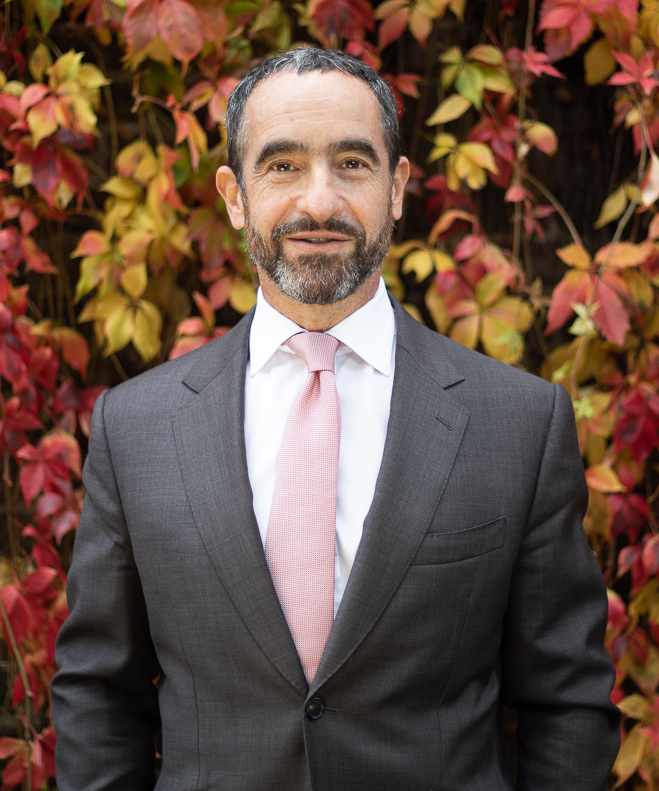
Michael is an acknowledged thought leader on clean energy, mobility, technology, climate, sustainability and finance. He is Co-Managing partner of EcoPragma Capital and CEO of Liebreich Associates. Michael is also co-host and founder of 'Cleaning Up' a podcast and YouTube Series.
Former roles include member of the UK’s Taskforce on Energy Efficiency, chairing the subgroup on industry and an advisor to the UK Board of Trade, an advisor to the UN on Sustainable Energy for All, and a member of the board of Transport for London. He is also the founder of and a regular Senior Contributor to BloombergNEF.