



Heavy Engineering Solutions for High-Emission Problems | Ep250: Emmanouil Kakaras



This week on Cleaning Up, Michael Liebreich is joined by Emmanouil Kakaras, engineer, academic, and Senior Advisor at Mitsubishi Heavy Industries EMEA, for a grounded, technical conversation about the intersection of emissions and engineering: gas turbines pushing the limits of thermodynamics, the trade-offs between hydrogen, ammonia, and synthetic fuels, and why carbon capture keeps coming back into the conversation.
Kakaras draws on decades in both academia and industry to explain how decisions actually get made inside large engineering companies, and why the energy transition isn’t about picking a single “winner,” but deploying a mix of solutions at scale.
Leadership Circle:
Cleaning Up is proud to be supported by its Leadership Circle. The members are Actis, Alcazar Energy, Arup, Copenhagen Infrastructure Partners, Cygnum Capital, Davidson Kempner, Ecopragma Capital, EDP, Eurelectric, the Gilardini Foundation, KKR, Mitsubishi Heavy Industries, National Grid, Octopus Energy, Quadrature Climate Foundation, Schneider Electric, SDCL and Wärtsilä. For more information about the Leadership Circle, visit cleaningup.live
Links and more:
- Mitsubishi Heavy Industries: https://www.mhi.com/
- Iron-Air Man - Ep144: Mateo Jaramillo: https://www.youtube.com/watch?v=Ih0gBGCkROM
- Cracking the Geothermal Code - Ep58: John Redfern: https://www.youtube.com/watch?v=MU8TDupVvjM
- The Dane who Harnessed the Wind - Ep139: Henrik Stiesdal: https://www.youtube.com/watch?v=7rjuZ_aCsFQ
- Ep121: Prof. Rob Miller "Jet-Zero Hero": https://youtu.be/zqMHiyyWlZo
- Padeswood CCS: Decarbonizing cement production in the UK https://padeswoodccs.co.uk
- Primetals: A decade of pioneering green steel solutions
- Large Heat Pumps and the future of district heating https://spectra.mhi.com/energy-transition/the-untapped-potential-of-district-heating
- The geothermal plant behind Europe’s lithium push https://spectra.mhi.com/energy-transition/the-geothermal-plant-behind-europes-lithium-push
- What role will ‘new nuclear’ play in the energy transition? https://spectra.mhi.com/energy-transition/what-role-will-new-nuclear-play-in-the-energy-transition
Michael Liebreich
And some people really hate CCS, Carbon Capture and Storage, and I just say get over it, because we're going to need it.
Emmanouil Kakaras
As I am in this business quite a long time, I remember seeing people hating desulphurisation plant in the, when I started my career back in the late ‘80s, nobody was believing that we were going to retrofit all these coal plants we had at that time with desulphurisation. And at the end, because it's an end-of-pipe technology, and because there was a societal commitment for that, it becomes the standard state of the art technology.
ML
Hello, I'm Michael Liebreich, and this is Cleaning Up. Climate change is often characterised as an environmental problem, or a policy problem, or a finance problem, and of course, it is all those things. But it is perhaps first and foremost, an engineering problem.
Most emissions are caused by the stuff that we build and use in the physical environment. So it gives me enormous pleasure to note that of the organisations that we've brought into the Leadership Circle of Cleaning Up over the past year, they include some of the world's preeminent engineering companies, Wärtsilä, producer of the largest and best reciprocating engines in the world, Schneider Electric, extraordinary electrical engineers, Arup, the built environment, and our most recent member, I'm delighted to welcome Mitsubishi Heavy Industries. And joining me today, Emmanouil Kakaras, who is their technology evangelist. He was recently their vice president for the green transition. Please join me in welcoming Emmanouil Kakaras to Cleaning Up.
ML
Emmanouil, welcome to Cleaning Up.
EK
Thank you very much for having me here, Michael. I'm delighted to be here and enjoy the conversation with you.
ML
And it's absolutely tremendous to have you on board the Leadership Circle. We're becoming quite an engineering powerhouse. What I want to do is let's start where we always start, which is if you could say who you are in your own words, you as an individual, and then we'll get on to Mitsubishi Heavy.
EK
Thank you. So, I'm an energy professional. This is how I would characterise myself. And I'm also a researcher by education and training. I'm an engineer. I have something like 30 years of experience after my PhD in energy engineering. I'm also a university professor in Athens and different places of the world. And I am also working or advising Mitsubishi Heavy Industries in that context.
ML
And you've got some patents. I understand.
EK
Oh, thank you for mentioning that. In fact, that's part of the research mission of an academic guy having an engineering background. And yes, I am quite proud of that. And that was on the power to fuel. So, it was a field of specialisation because I was, for 20 years, a university professor in Athens. And during that time, I got myself familiarised with the energy transition business. And the power to fuel is a key pillar for that. Whether this pillar is strong enough or not, it remains to be seen in our discussion.
ML
We're going to get into that power-to-X stuff. But just to be clear, because your role is now a technology ambassador, but you have been the executive vice president for the transition, for transition technology. So, you must have been pretty much full time for a while with Mitsubishi.
EK
Yes, I've done, although I don't like to speak about myself too long, but I've done the opposite path than usual. I was very early fortunate enough to become a chair professor in Athens. And then I was fortunate enough to do a career turn some 14 years ago when I was invited to join the industry again, mainly because of my track record on energy transition. And then I went up the executive ladder. You're familiar with the term yourself. And I was managing energy transition until very recently for MHI in Europe, Middle East and Africa. And now I'm continuing my collaboration with MHI as a senior advisor on the same agenda.
ML
And I very much like the story which you told me just before we started filming about being plucked by, at the time, it was Hitachi before it became part of Mitsubishi and being immersed in in the Japanese business and technology culture. But let's let's jump to Mitsubishi Heavy, which then acquired that Hitachi business that plucked you out of your professorship Mitsubishi Heavy. Now, my audience will probably not know all the different bits of the different Mitsubishi Group. So let's kind of peel the onion down from Mitsubishi Group's got all these different bits. Which bit is Mitsubishi Heavy?
EK
So in this corporate family of Mitsubishi's, because there are many Mitsubishi's, especially after the Second World War in Japan, there was a breakup of the Mitsubishi conglomerate in different pieces. Mitsubishi Heavy Industry is the machinery part of the Mitsubishi family. And the family shares the common name Mitsubishi and the common sign, the three diamonds, but nothing else. So Mitsubishi Heavy Industries is a technology company, an engineering company fully independent from the rest of the Mitsubishi's that you have heard of. Mitsubishi Bank, Mitsubishi Corporation, Mitsubishi Electric and so on and so on. So Mitsubishi Heavy Industries is a technology company, above all, an engineering company doing different sorts of machinery and this sort of production capabilities.
ML
It's a fascinating type of relationship organisation, which we don't really have in the UK or in the US, where you have sharing the brand and very often working together, but without any corporate ownership. It's not part of a... No, no, it's completely independent. Completely independent. And just to give an idea of the size of it, how many people have you got in Mitsubishi Heavy?
EK
78,000 people.
ML
78,000, I'm assuming a bunch in Japan, but also around the world.
EK
It's a global company. It's a global company. Of course, it has been founded in Japan. Lots of production facilities are in Japan. And we have to speak a little bit about the technology and the Japanese quality aspect on the technology and the production lines. But we are quite active all over the world, in the US, in China and in Europe as well, with a multitude of products and services over there.
ML
Right. And that Japanese DNA of quality and manufacturing, now, of course, enormously helped by the better exchange rate, because for a while, Japan was enormously expensive.
EK
No, I think, of course, the financial situation and the exchange rate helps a lot, as it helps tourism in Japan as well. But it is the quality that matters.
ML
Now, let's just, as I say, peel the onion a little bit deeper. So you've got divisions. And then we'll move on to just complete the thumbnail of MHI, because you sit in the energy part, but that's not all of the company, is it?
EK
Not at all. Energy is the biggest part of MHI, but we also have logistics and infrastructure. We have machinery and we also have defence and aerospace. And aerospace is kind of the crown of the jewel, the rocket launchers, the satellites and all this stuff.
ML
OK, so this is really one of the absolute sort of Japanese, I would say, industrial aristocracy, one of the technology flag bearers for Japan. And I associate or used to associate Mitsubishi Heavy with gas turbines. So let's start there.
EK
And I think that's the best of the world, you know. No, I think that's a very, very important product, but it's like a flagship product, I would say, in the sense that Mitsubishi Heavy Industries is weak. We claim that we have the best gas turbines in the world. Of course, there are other OEMs who will say the same. But we have several things that we have achieved very quickly, like the scaling up, like the 1700 degrees combustion temperature, the high efficiency, the high reliability, the multiple fuel use.
ML
I've got my thermodynamics antenna is just, you know, is I don't know what the antenna do, but it's ringing or doing whatever it does. 1700 degrees centigrade. And of course, higher temperatures, just for those who are not thermodynamicists, right? The higher the temperature, the higher the efficiency, just or at least the higher you can achieve. You can then you can then ruin it in other ways. But at least your Carnot efficiency is.
EK
Carnot found it before us, I guess.
ML
Right. But starting, how do you get to 1700 degrees? I mean, most metals would be melting at that point.
EK
That's with special alloys and coating, to say it very simply. And of course, this goes together with a very sophisticated combustion system and combustion technology because you achieve this high temperature, but you maintain a very low level of noxious, which is the usual advantage of the gas turbines, which made them, in fact, in the energy generation business, the main product, the cornerstone of the energy system worldwide.
ML
Now, we have a rule on cleaning up. We're not allowed to use acronyms. So when you say NOxs, that is nitrous oxide. And the problem with going to a higher temperature, you get a big benefit for efficiency, but you are likely to produce more thermal NOx.
EK
So that means more nitrogen from the atmospheric air is converted to an O during combustion. And then we have we are doing a number of tricks which are highly sophisticated. And it has been a matter of research for decades from the 80s to the very, very lately to control this NOx.
ML
OK, so let's get into the fun stuff. So you're doing the big gas turbines and you're controlling your nox going to higher and higher temperatures. And then suddenly the world goes, I don't want to say climate mad, but then the priority shifts from air pollution to climate. And you've got these turbines. And let me guess, at some point around the time that you joined Hitachi, then Mitsubishi, around that time, hydrogen bursts onto the scene and everybody, all the research efforts go into turning these turbines into hydrogen turbines. Is that right?
EK
That's correct. I think it's a wider perspective. I would use the word decarbonise the gas turbines or the fossil power, because there are a variety of methods to do that. One obviously would be to use a carbon neutral fuel if you have that. And for that, you need to develop or adapt the technology without making compromises on efficiency and also on the environmental performance. That means, yes, MHI was, I think, among the first or even the first one that developed the hydrogen fired gas turbine. And we still continue to develop that towards the 100 percent and so on. But we have other goodies to do the decarbonisation of the fossil fleet.
ML
Well, I was going to say, because we first met at the Financial Times Live hydrogen conference. And we were on a panel and I thought, oh, no, there's going to be this chap, Emmanouil, and he's going to be banging on about hydrogen, hydrogen and how it's the future. And of course, what I discovered was that, in fact, you're much more and we would say Catholic in terms of I don't mean religiously, but in terms of, you know, you don't mind what you do.
EK
Being Orthodox, right?
ML
I had to think twice before using the word, but that means in English usage, it would just be you don't mind what you do as long as it's as long as it meets the need. And so that we had an excellent conversation even back then. But I'm really interested to what extent was the choice to sort of dive into hydrogen and going taking these turbines towards hydrogen or now doing other things? To what extent is that an internal decision? You as the technology strategist within Mitsubishi Heavy. And to what extent is it that customers ask? Do you wait until the customers ask or do you push the technology proactively?
EK
We always listen to society. And this is a kind of corporate credo for Mitsubishi. So we always respond to societal needs. And this is what we are doing. And we're doing it with respect to the customers. So that's a bad translation of a Japanese credo, which is 140 years old, by the way.
But in the specific case of decarbonising the fleet, this is a continuation of a long path, because even the use of gas by itself was the low hanging fruit of decarbonisation, as we have discussed last time, because of the high efficiency and the specific footprint, carbon footprint of the combined cycle. So we have already achieved a considerable reduction of CO2 emissions. So to achieve the complete decarbonisation of the fleet, you can do two things.
Either you take the CO2 out of the flue gas or you burn zero carbon fuels. And we could not choose, in fact, and we have developed both. And this is not because we have done two mutually exclusive things. It's because there are applications where you can opt for a zero carbon fuel, rather difficult and expensive ones. I already agree with you in advance. And there are other applications that we need to have an end-of-pipe technology.
And these two have been adopted since 2019 in MHI, because MHI has taken the commitment to become a carbon neutral company already years ago. And we are consistent into that. We are doing scope one, scope two and scope three emissions reduction by 50 percent up to 2030. And we are going to be carbon neutral by 2040. So to achieve that, we need all sorts of goodies, not just hydrogen. And I think that we will have the opportunity to explain what comes to what use.
ML
Let's come back to the targets and the 2040 and what that would mean. And also to the carbon capture. I want to just push on the sort of, in a sense, the main turbine business and then decarbonising the fuel part of it, because Japan, you talked about the Japanese tradition, 140 year Japanese tradition. They also have a tradition of talking about ammonia, which may also maybe for the next 140 years, they'll be talking about that. But who knows? Maybe you'll be able to deliver it sooner. What have you got in terms of technological progress towards ammonia combustion? Because that's quite interesting, isn't it?
EK
That complements, in fact, the previous discussion on the emissions of nitrogen oxides, because ammonia by itself has more nitrogen in the fuel itself. So you have not only the so-called fuel NOx, the fuel coming, the nitrogen oxide coming from the fuel conversion, on top of the thermal NOx, which we discussed in that. So by definition...
ML
I'm going to do my schoolboy chemistry. So ammonia is NH3, so it's three hydrogen molecules or hydrogen atoms, hydrogen atoms, which is what you want to burn. But it comes with N, so you've got a nitrogen problem.
EK
So in weight terms, you have 14 out of 17 grams of nitrogen. And inevitably, some of that, when combusted, forms nitrogen oxide. So the difficulty that you very correctly touched upon earlier on the high temperature, which is a gas turbine business in combustion terms, it's augmented when you burn ammonia. And that's a really difficult challenge. And in fact, only very recently, we managed to master our combustion technology to make real progress into that. Until very recently, lots of my colleagues in my material, in my scientific cycle, wouldn't believe that we can burn ammonia in a gas turbine without cracking it or doing something.
ML
So there's a lot of activity, or at least there's been a lot of noise around, when you say cracking ammonia, that means perhaps importing ammonia into Europe from Namibia, Canada, all these things that aren't going to happen, by the way, which is a separate sort of problem with ammonia, but then extracting hydrogen from the ammonia and then burning or fuel selling the pure hydrogen.
EK
Yeah, that's the point. And in fact, ammonia comes into picture only if we are thinking on zero carbon fuels in terms of commodity, that means production of hydrogen somewhere else and consumption somewhere else. And to bridge the distance, which is several thousand kilometres, you need a carrier. And ammonia is an energy carrier. And the explanation about Japan is that Japan has a longstanding tradition of being an energy importer. And that means that they are very keen to investigate importing decarbonised fuels in the first place. So historically, that explains the affinity that Japan had in favour of ammonia, because they thought that this is a zero carbon energy carrier. And what would be the best? Then use it as is without paying the additional energy penalty to crack ammonia, which brings another couple of steps down your ladder, and correctly so.
ML
Yes, there's no question that being able to burn ammonia rather than having to do the extra step with all of the capital equipment and the maintenance and so on, that's clearly going to help. But a few years ago, I was in Japan. I was invited to talk about hydrogen because the Japanese plan at the time and pretty much still today was for transport to go to hydrogen fuel cells, for heating to go to synthetic methane, and for power generation to go to ammonia. And it felt when I went there like nobody had actually calculated the economics of that. It was just kind of almost an article of faith that that was the future. But the economics were absolutely horrendous. And it didn't seem like that was in the public.
EK
Maybe because Japan is used to having expensive energy. That's something that we have to bear in mind. As I told you, there are energy importers. But the mixture, there are a number of explanations, for instance, for the use of ammonium power. And for instance, in the post-Fukushima era, where the nuclear has to be shut down, Japan was forced to build new coal plants in order to sustain the energy security of the country. And that means that if you wish to bring down the carbon footprint of a coal plant, you try to decarbonise the fuel. And so bringing ammonia, and we are talking about green ammonia, carbon-free ammonia, as a drop in fuel in a coal plant is, I would say, a sustainable way to reduce the CO2 emission. But not economically. It comes at a premium, no doubt about that. And that has been proven because the amount of ammonia that has been imported very recently in Japan was much lower than anticipated because of the price. Well, so I did this very simple calculation.
ML
I said, well, if you look at, if it's green ammonia, you start with green power. And then you have to make hydrogen. And then you have to do the Haber-Bosch to make ammonia. And then you have to liquefy it. And then you transport it. And then at the other end, you have to gasify it. And in the end, the amount of, then you have to use one of your wonderful turbines. But in the end, you get about 20 percent of the electricity back out that you put in at the front.
EK
The round-trip efficiency is not the best thing if we compare it with other energy storage. It's the seasonality that counts. It's the availability. And of course, we have to remember that this comes as a last mileage application. Before that, there are a number of things that have been done. First of all, green ammonia has to be utilised where it makes sense in fertilisers, above all. And maybe using, as a fuel in the shipping industry, maybe. And at the end, the discussion of the round-trip efficiency back to power, as we say, I don't like the word luxury, but it's the last part of the equation. And honestly, between you and me, it remains to be seen whether we will run this last mile at all or if it is necessary to run it and when it will be necessary to run. But there are other, and I think that I like the parallelisation of ammonia, carbon-free ammonia with biodiesel, for example. So there are other zero-carbon energy carriers that have to be compared with green ammonia. And if you do this type of comparison, then green ammonia is not that bad. That means it's finding already its position in the energy mix, but it's not one-size-fits-all, not for everything.
ML
And in the end, it's not a question of efficiency, it's a question of cost. Absolutely. And I suppose I did all sorts of calculations and it came out to be something like if you use coal-fired power in Japan is probably, I don't know, I'm going to guess something like $80 per megawatt hour and the ammonia, green ammonia electricity is going to be $400 or something. But I want to get onto it because one alternative in the power sector, even in Japan, would be actually to import LNG and then export to capture the CO2 and then send the CO2 back where it comes from. Now, that also could be Mitsubishi-heavy technology, correct?
EK
Absolutely. And it has been practised already. Japan is having a very ambitious national programme on carbon capture, one of the most ambitious and also target-focused that I know of. And there in this national programme that has been launched a couple of years ago, we are checking in the real conditions all different alternatives like what you mentioned, having carbon capture. Carbon capture, as I mentioned earlier, is equally important than zero-carbon fuels. Not to say even more important because it deals with the so-called hard-to-abate sectors. And of course, what you say makes sense. But we have to remember that for Japan, the possibilities of carbon storage are there in the country, but rather limited. So there will be this cross-border transport of CO2. And we have also technology for that, not only for capture, but also for CO2 shipping. As I told you, Mitsubishi Heavy Industries is an engineering company. We have technologies for literally everything.
ML
Yeah, I'm assuming I already, as I said, I think you would need to bring in the LNG and then send the CO2 back.
EK
There was some discussion on dual use of ships, not with LNG. Maybe ammonia can be one of these easier in terms of configuration. But I'm not a shipping engineer. I will stick to my thermodynamics.
ML
I looked at it and you've got different densities and you've got different temperatures.
EK
And it's not that easy. It's easier said than done. Looks good on a McKinsey PowerPoint. Exactly. But you hardly convince a Greek shipowner to put money directly into that. They will put their money in a variation of that.
ML
But now the carbon capture and storage, it's not just about Japan, because you've got projects in the UK and in Italy. And one of the things we can do, by the way, we'll put links into the show notes to some of the projects that you're doing. But you've got the cement factory in the UK, in Padeswood. And you've got Ravenna, where you're doing CCS post-combustion capture in Italy. How are those projects going?
EK
You start from the very recent addition. We have just announced that we were awarded the contract for Padeswood. So Padeswood, it's a very interesting project. Liverpool area.
ML
In the Liverpool area. So it's connected to Highnet.
EK
Exactly. Yes. Exactly. And it is a 800,000 tonnes per year project. We are very happy that we are building this facility, which is, by the way, not the biggest one. The biggest carbon capture project is Petra Nova in the US. Back in 2016, we captured there 1.5 million tonnes and use that for EOR in the US.
ML
Acronym?
EK
Enhanced Oil Recovery in Texas.
ML
Right. So that's using CO2 to get more CO2 out of the ground.
EK
Exactly. But the first part, the checking and the viability of the carbon capture is a universal technology. But that's the biggest plan.
ML
Now, I don't know the Petra Nova. That's also cement?
EK
No, no, no. It was a coal plant belonging to a utility. So it was capturing CO2 from a coal plant and then putting the CO2 in the pipeline. So more like the Ravenna project, post-combustion capture. The Ravenna was a very interesting one because although it's small in size, it has been selected and constructed as a full industrial project by our partner there, ENI, the Italian oil and gas major. And it was linked together with the reactivation of the Ravenna carbon storage project, which is the second European carbon management infrastructure project after Northern Lights in Scandinavia. So we are very proud that these two things, I mean, the start of a second storage facility and the first capture was done with our technology.
ML
And Northern Lights is the one over on the other side of the UK?
EK
In Sleipner, Norway. The three storage sites in the northern part of the North Sea.
ML
I think also the UK, there's also supposed to be CO2 coming from the northeast of the UK.
EK
I'm not sure if that's still on. Shipping that would be an option. But the UK is developing also their own storage infrastructure, which are very important.
ML
So let's go back to the pagewood because that's interesting. It's cement, but it is absorbing the CO2 from the... Because in cement, you've got two things going on. You've got process emissions. So when you make cement, the process of decalcination produces CO2. You've also got CO2 that comes out from potentially the combustion of the fuel used to provide the heat. And those are, in the case of pagewood, they're mixed. And you are then... It's a little bit similar to post-combustion separation.
EK
It is a post-combustion separation. It is a scrubber. And that's why the reason for selecting the amine scrubbing technology of MHI in the particular project is because it dealt with both emission sources, the inherent CO2 emission from the calcination process and also the combustion CO2, so to speak.
ML
And you've got these marvellous, I guess they're some types of amines with wonderful names and acronyms.
EK
Yeah, that's also something that MHI is very proud of because it is a liquid solvent. And I think the saying that it's simply an amine, it's an understatement for this type of solvent. This is the famous, or soon to be famous, because of this show, KMCDR21.
ML
The KS21. And the process comes. It's a Kansai Mitsubishi process. Long story short, it's very efficient in terms of regeneration because we have an energy penalty to regenerate the amines by releasing the CO2. Here's my question, though.
ML
If you used electricity to do the cement process, then only the process emissions would come out. Would you still be able to use this marvellous?
EK
Why not?
ML
You would be able to?
EK
We would. Of course, in that case, there are other, I mean, there are other technologies that for the calcination itself might be applicable. Depends, for instance, if you have oxycombustion, if you have pure oxygen inside, then you produce CO2 at a very higher concentration. And that can be captured in other ways.
ML
Because I know other people are looking at using electrical, you know, using electricity for the heat and then a heat battery so there's no combustion. So then I think what you get out is a pretty pure CO2 stream.
EK
You have high concentration CO2 and you can condense CO2 and separate from that. The heat battery is a very nice point that you mentioned. Heat battery means using electricity stored in the form of heat into some type of inert material. That is something that we have also in our technology portfolio, for instance, for the steel business. But still for the cement, the amount of energy needed on the calcination process is huge. It's an emerging technology. It's not state of the art right now.
ML
No, and I certainly, my ingoing assumption is that for cement we're going to need to do carbon capture and storage. We call it hard to abate. And some people really hate CCS, carbon capture and storage. And I just say get over it because we're going to need it.
EK
As I am in this business quite a long time, I remember seeing people hating the sulphurization plant in the, when I started my career back in the late 80s. Nobody was believing that we were going to retrofit all these coal plants we had at that time with desulfurization. They all said that it will ruin the economics. What are you going to do with all the gypsum that comes out and this and that? And at the end, because it's an end of pipe technology and because there was a societal commitment for that, it becomes the standard state of the art technology. I'm not saying it will be oversimplistic to claim that carbon capture, post-combustion capture is one-to-one to desulfurization. But for certain technologies, it definitely is. And I'm not afraid to pay the penalty or to put the price of capturing and managing the CO2 into the equation. At the end of the day, this is why we had the ETS made for, to benchmark ETS against the capture and handling cost.
ML
And I've said elsewhere that-
EK
ETS emission trading system, sorry.
ML
Thank you very much. You caught your own acronym there. I was saying that I have said elsewhere that I think we're going to need to do carbon capture and storage for blue hydrogen, because it's going to be cheaper than green. So we better get used to doing it for that. Also for process emissions like cement. And we're going to get onto bio carbon removal, because that will allow us to then emit small amounts in other sectors.
ML
Cleaning Up is proud to be supported by its Leadership Circle. The members are Actis, Alcazar Energy, Arup, Copenhagen Infrastructure Partners, Cygnum Capital, Davidson Kempner, Ecopragma Capital, EDP, Eurelectric, the Gilardini Foundation, KKR, Mitsubishi Heavy Industries, National Grid, Octopus Energy, Quadrature Climate Foundation, Schneider Electric, SDCL and Wärtsilä. For more information about the Leadership Circle, visit cleaningup.live
To keep up with all that's going on in the Cleaning Up universe, make sure you subscribe to our newsletter. Written and edited by my longtime New Energy Finance and Bloomberg NEF colleague, Angus McCrone. It comes out every second Monday. Angus provides the latest on the episodes we're recording, the events we're hosting, stories we're watching and what Bryony Worthington and I are up to. To sign up for the Cleaning Up newsletter, visit cleaningup.live.
ML
Before we get onto the bio side of things, where I know that you've also got activity, I love, it's one of the reasons I love Mitsubishi Heavy, because you do, you know, I don't want to say a bit of everything, but you do quite a lot of everything. And you mentioned steel. Yes. And that's another area where you've got very substantial activities and also low carbon steel activities.
EK
Yes, that's correct. Mitsubishi Heavy Industry has a subsidiary which is called Primemetals. It's one of the leading engineering companies on the steel making business, both upstream and downstream. That means both in the furnace and the production of iron and also in forming steel products and so on. And in that context, we have been very active in what we call green steel. That means reducing the carbon footprint during steel production.
By the way, you know that steel production is one of the biggest emitters of CO2. And not only by using scrubbers like the carbon capture, but also by decarbonising or moving more and more into electric car furnaces. That means electrification, a topic that I know you like very much. And also using hydrogen reduction for the reduction of iron oxide by what we call direct reduction process. So there is a portfolio of technologies and we see demand on green steel picking up because of different branding and quotas and public procurement issues. And also as a characteristic of European made in Europe production and green steel and made in Europe can go well together hand in hand. So that is also a point of activities of MHI.
ML
So a couple of years ago, certainly three years ago, it was all about green steel was going to be zero carbon. It was going to be hydrogen. Of course, there's a big project up in Sweden, Stegra. I don't know exactly where they are today, but perhaps we're not quite sure economically. I'm not quite sure if they're going to get there. But very much the trend has been towards saying, well, we'll go to DRI.
Of course, we'll do the electrification, right? If you have electric arc firms, but that's really recycled steel. It doesn't solve the primary steel problem. DRI direct reduction does solve that. But there seems to have been quite a retreat from hydrogen direct reduction and towards just going with natural gas. And you get most of the climate, most of the emissions reduction benefit. So have you, Mitsubishi Heavy, also have your customers and you therefore decided not to go all the way to hydrogen and pure hydrogen and fully green steel?
EK
It's always the same discussion about hydrogen. We have the technologies for the hydrogen used, but we don't have the hydrogen. So it's a question of the availability of hydrogen.
And in most cases, and this is a nice thing on the DRI, that you can start with natural gas. In fact, that goes very well together with CCS. And you need anyway a bit of carbon for the reduction purposes anyway. And you can gradually substitute if and whenever natural gas with hydrogen without changing anything else in the technology itself. So it's not a gas, simply speaking, a gas driven DRI plant will never become a stranded asset, even if you have abundant hydrogen available around there. So that's the main driver. And we see customers and partners all around the globe following this path.
ML
And so the approaches in those projects that you've got, they are, in a sense, forward compatible. So you can start with 100% natural gas, but you could gradually switch and you could gradually switch. And is that your own steel technology? Because you work with partners. Everything is with partners in these huge projects. Who's doing what in those steel projects?
EK
The steel technology, the furnace or whatever, it's prime metals. In the DRI itself, we have a licence from Midrex. The original technology comes from Midrex. But I mean, this is a prime metals technology. Primemetals is a licensee of Midrex.
ML
Because one of the things that I was reading in preparation is that it's flexible to different ore qualities. Because what I had heard is that this DRI, directly reduced iron, one of the problems and the problem in Sweden is that it can't use lower quality ores. So are your partners or your technologies different?
EK
Yes, and not only that, but we also have a very big R&D, research and development product. Prime Metals is having this programme on producing different, we call it HIFOR, that means producing different parts of different types of iron ore or particulates, which are better suitable, for instance, with a smaller size and things like that, that benefit with DRI. Long story short, there are technology developments not only around the DRI, but also around the preparation of the material and so on. And because now the university professor speaks and the researcher, you have to remember, and I am giving that as a topic for the next ladder, the use of metal oxides. You mentioned the Carnot-battery, the high temperature battery. Think of the metal...
ML
The heat battery?
EK
Yes, sorry. I'm calling it Carnot, it's the same thing. Think of the metal oxides and the rapid oxidation as a power cycle, and then think on the metal oxide reduction as charging a huge metal battery. What I'm going to say is that in the future, maybe in the next decades, there will be other alternatives on zero carbon and metal oxidase, metal oxide power cycles, which is now a very low, it's still on the R&D and very low technology readiness level. That might combine together with a reduction process and form a closed loop which has zero carbon power production on the one side and renewable electricity storage in the form of the ore on the reduction side.
ML
Also, there is, of course, a company called Form Energy, which is doing the iron batteries, iron air batteries, and they've just signed a big deal with Google. Yes. We did an episode. I spoke to Mateo Jaramillo, who's the CEO.
EK
Oh, I didn't know about that. But I am personally very much interested in this oxide cycle. Is it alumina or iron?
ML
It's iron, and I have to be completely honest that I'm not a big believer in the economics of that, because 100 hours to charge and 100 hours to discharge very much reduces the number of cycles per year. And it means you can't charge quickly when there's a rapid drop in the power price and be ready for a long discharge.
EK
Obviously, that's a long-duration charging. It's another animal, so to speak. But metal battery, maybe it's not the best cycle. But that is something that I feel that it may bring something different in the future.
ML
I am very interested in the electrolytic process for iron winning. So there's Boston Metal, Fortescue's got a process that's on it. But the general point, I think, behind is that isn't R&D wonderful and what problems yield to it?
EK
There's, I think, safety issues on the power cycle. Also, you know, you have the explosions, the fire protections scaling up. The knowledge that we have in this rapid oxidation is very minimal. But I'm thinking even more generally than that.
ML
If you look at, you know, when I'm told, oh, you can't make glass using just electricity. You have to use gas or bricks. You can't fire bricks because they don't end up looking right and so on.m And, you know, I just look at it and say, you know, how many researchers, how many engineers, some problems? OK, if you've got a fundamental sort of second law of thermodynamics or Carnot efficiency problem or irreversibility problems, you're not going to be able to solve that. But so much will yield to research over the next decade, two decades.
EK
I think that's a valid point. And I am a great believer of electrification. That was maybe your surprise the first time we have met. But I do believe in electrification. That means lots of these are coming together with electrification. And of course, electrification has to be pursued in a variety of ways.
Electrification calls also not only on the different processes, different consumers behaviour, different, you know, active, active consumers, demand side response. There are a number of things that could be achieved with electrification. No doubt about that.
ML
And another of your businesses that I want to make sure gets a mention because I love them, heat pumps. Is it the biggest heat pump in the world?
EK
Oh, yeah, yeah, yeah. That's the Turboden heat pump that we have inaugurated very recently and made the news. It's a fairly big heat pump and produces steam. And it's the core. It also has Mitsubishi technology because the compressor there, it's a Mitsubishi compressor running in this isobutane and things like that.
ML
And that's 12 megawatts. And it's in Finland, which means I guess it's in the wood pulp or something industry.
EK
Yes, that's correct. And I haven't visited myself after they put it in operation, but I have subscribed. You have. We have now it's so popular that we have a priority listing and we have six slots, I think I was told, so that we can try to, you know, go with elbows who is going to see. So it's a fantastic business, the heat pump business. And it's you know, it's one of the things that there will be lots of improvements in the future.
There will be improvements not only on the use cases. Nobody would have thought that we will produce steam from a heat pump some 10 years ago. It will be the use cases. It will be. I'm not speaking to make myself clear. I'm not. We are not so much in speaking about domestic heat pumps. That is another product. We have it in our portfolio. Others have as well. But I'm speaking here on the industrial scale. So I have a Mitsubishi heat pump. Is that one of yours?
EK
Maybe it is Mitsubishi Electric, one of the Mitsubishi cousins or something.
ML
It is Mitsubishi Electric. Somehow. But the one you're talking about in Finland, just to be clear, that's 12 megawatts. It's producing steam. And I think it's four bar.
EK
It's 180 degrees centigrade.
ML
It's got a coefficient of performance of 2.2 or 2.4.
EK
Fantastic. Yeah. And the challenge, and this is about economics. I mean, remember that in the domestic sector, COP, the coefficient of performances of 2 is considered very low.
In the industry sector, because you are competing with a gas boiler to do the job, COP of 2 is fantastic.
ML
Right. And you're taking the waste heat from the plant and then recycling. So it's kind of the circular economy. At its best. Inside a factory. The company that did that big project in Finland is Turboden. So it's a subsidiary of yours. Also very active in geothermal. I've come across it because they are involved in the Geretsried project of Eavor, whose former CEO has also been on the show.
EK
Oh, that's I didn't know about that, but I know the Geretsried project quite well. It's in Germany. And of course, Turboden originally comes from the organic ranking cycle, which goes hand in hand in geothermal applications. We are very happy that we are traditionally geothermal has been a field for MHI, Japan, geothermal energy. If you travel to Iceland, you will see geothermal plants of MHI producing next to Blue Lagoon, for example. But in the case of Turboden, we deliver big organic ranking cycle facilities for geothermal applications like we are doing Fervour in Utah, in the US. Fairly big plant, 300 megawatts. Gerritsried you mentioned. And there are more plants coming out. And this is a very happy coincidence because geothermal is one of the favourable energy generation techniques which delivers 0.24 with no carbon footprint. So that's another sign of the broad range of products that MHI is bringing in the decarbonisation business.
ML
We started off talking about 1,700 degrees centigrade and Turboden with the organic ranking cycle. 35. Well, operating at not quite 35. The intake temperature would be 200, 300.
EK
But the working medium, I was referring to the working medium, which can be very, very low. ORC, it's a very interesting technology. And it's one of the examples I'm using to my students, which is a technology that has a very poor thermodynamic efficiency because opposite to the gas turbine, it goes down in the Carnot ladder. But because it exploits zero cost waste heat, it's highly efficient, highly economic, and very important in terms of balancing services. In a decarbonised grid.
ML
Everybody is going data centre crazy. And you also have a data centre proposition. What is it?
EK
Yes, the data centre for us, it's one of the signs of the technology company that we are. Our ambition is to offer a one stop shop solution for the data centre. So we also launch a containerised data centre application in a 20 feet container, which we call DiaVault, which is a small scale, very small scale data centre, fully integrated. And in this data centre supply, we have lots of bits and pieces of interesting technology. Obviously, even in the bigger with the big size data centres, we are taking care of the energy supply, obviously, not only with gas turbines, with gen sets, with batteries, with whatever. But we are doing the cooling and we are doing both refrigeration and energy recovery from refrigeration. But we are also offering direct cooling to the chips with the proprietary technology that we have. So we are offering different bits and pieces so that the hyperscaler will not go shopping in the supermarket of technologies and trying to put everything together. They just shop in the Mitsubishi stand and get the full solution.
ML
In the company store.
EK
Exactly.
ML
You recently acquired a company called Concentric in that space. What does Concentric do?
EK
Yeah, it's about energy management because the glue around this data centre business is the energy management. And Concentric is a company in the US who specialised in doing energy management in data centres and things like that. So we have both the hardware and I would say the software to manage the whole thing.
ML
OK, so from the EPC, the engineering... Procurement and construction.
EK
So you do that, but you also then have various other components. We prefer, in general terms, we prefer the EP of the equation and we leave the construction obviously to more competent partners which are on the ground.
ML
The more E, the better.
EK
The more energy.
ML
The more E, of course.
EK
Procurement is also nice if you think about the financial returns.
ML
Now, in the interest of time, you've got a nuclear business, but it's not kind of... It's the balance of plant, we'd call it. It's the stuff around the nuclear reactor, not the nuclear itself.
EK
There is a nuclear business. I'm not a nuclear guy myself, but I'm very proud that Mitsubishi has contributed to ITER, for example, to the nuclear facility of the EU in ITER.
ML
The fusion?
EK
The fusion. So the pressure parts of that. And of course, nuclear is a very important part in our business. We are doing all the pressure parts for nuclear reactors we have. And I don't think that even if I'm allowed to say that I'm a big supporter of nuclear energy, although professionally, in my professional career, I never had anything to do except the possibility that we can use nuclear energy to create the so-called pink hydrogen, if you remember our chat last time.
ML
I think expensive or inexpensive perhaps would come to mind. But look, I have a...
EK
Gas-cooled reactors in the future could deliver hydrogen as a byproduct, but that is in the future.
ML
At the cost of then not making electricity, which is, of course, more exergy, higher value, etc. I have a nuclear engineering, a small amount of nuclear engineering background, so you won't find anybody, at least in this room, upset about the fact that there's... But nuclear, it is having a resurgence, there's no question. And it requires turbo generators, it's got heat management, heat loss, heat that needs to be recovered and used. And so clearly a fertile area for the sorts of skills you've got. But I want to get on to, I want to go full circle in your career and get back to power to X. OK. You are not going to get away without talking about power to X. OK, so you've got activities in that space. I think, you know, you and I have already agreed that the hydrogen economy is really probably not going to happen, that it's not going to happen. But parts of it could happen. Which parts do you think are likely to be viable?
EK
Yeah. The ones that combine hydrogen as a storage, that means the precondition for everything is that you have abundant renewable electricity and you can have some competitive hydrogen. The ones that combine, for instance, biogenic CO2 with hydrogen. And I think in that context, synthetic fuels in whatever form, methanol to start with, which is the simplest molecule. But also the whole discussion about synthetic fuels, especially when you use biogenic CO2, they will have their place in the mixture. And methanol, you mentioned about methanol. I have done the first power to methanol project within MHI. We have done it. We have a facility in RWEs in the German utilities plant in Niederaussem .
I have done, I have started that already back in 2015, 2016. So we know the economics. We know the technology. We have also new technologies that are facilitating this co-processing of CO2 with hydrogen. I am very proud being a member of Mitsubishi family because Mitsubishi launched this solid oxide electrolyzers and we made an announcement that we have done, for example, co-electrolyses of CO2 and steam, which could render a mixture of CO and hydrogen, which already is a precursor of whatever synthetic fuel business. So there will be applications.
And in the future, I think co-electrolyses is a very promising technology. But before that, we have to agree on the basics of the methanol, maybe on having methanol as a building block, either for chemicals or the usual, I mentioned that already, the comparison to biodiesel, I always, the way I have convinced myself on doing power tweaks is by comparing, and that's in a very interesting ladder that I would suggest to you, the CO2 avoidance cost ladder. And in that ladder, the biodiesel is very, very expensive in terms of the CO2 avoidance cost. So alternatives to biodiesel or biofuels deserve a place in the market. And synthetic methanol is one of them.
ML
So it's quite funny because I get quite a few requests to do different ladders and so on. I did the hydrogen ladder. I've done the electrification staircase. And one of the upcoming episodes, I'm going to go over to Brussels and talk to a number of people and kind of launch it or relaunch, or not relaunch, but really try to publicise it. But there's also CCS ladders people want, biocarbon or biogenic carbon ladders and so on. What you'll notice is that in the most recent version of the hydrogen ladder, which is still version 5 from, I think, 2023 or 2024, it's quite long in the tooth. And actually, aviation fuel is fairly high up, but not hydrogen in aviation. But it was biogenic carbon with hydrogen. Absolutely.
And Rob Miller, I went and visited the Whittle Lab in Cambridge, and he persuaded me that that might be a thing. I actually now think it probably won't be a huge thing because carbon removal looks like it would be cheaper than that kind of even that. He called it PBTL, power and bio to liquids or power to X, but using biogenic carbon.
EK
Yes, that's correct. I think there will be a number of usages of biogenic carbon. And it's, you know, we are in the so-called biomass energy CCS, the BEX.
If you have scale, if you want to produce hundreds of thousands of tonnes of bio CO2, you can do it only by means of carbon capture of biogenic combustion, which is a very interesting alternative. For instance, if you look to waste to energy plants, if you wish to decarbonise waste to energy plants, this type of CCS and, you know, discussing biogenic CO2 is interesting. And of course, carbon removals there play a role because at the end of the day, it's about the finances and the equivalent pricing that CDR is paying opposite to ETS, especially nowadays where ETS is not in the best form in Europe. So CDR, carbon dioxide removal, ETS, Europe, the European trading system, emission trading scheme.
ML
And yes, I think that's really interesting. And it was certainly in the piece that I wrote last year called The Pragmatic Climate Reset. One of the things that I was saying is that we really need to go back to value for money tests. And the value for money in this space is in terms of the climate solutions has got to be dollars per tonne of CO2 avoided or absorbed or removed or whatever. And you're right, biodiesel, kind of, you know, very expensive compared to some of the other things we can do because we've kind of chosen our solutions by their political acceptability. You know, doing E-jet fuels at 12 times the cost of kerosene is not going to be a thing.
EK
But keeping the farmers happy is also an important part of the equation.
ML
It is. But the problem is when the numbers get so big, you don't have enough money to keep the farmers happy. And that's where. But what I like in terms of power to X, I will be honest, if there was another version of the hydrogen ladder, I like what Henrik Stiesdal, another former guest on the show, is doing. And that is in Denmark, where there are already biodigesters, which Denmark is full of biodigesters, and they produce CO2, which little known and dirty fact is it's mainly just vented to the air. But you could actually use enzymes or bacteria to combine that CO2 with electrolytic hydrogen and increase your yield. It's kind of yield enhancement.
EK
Absolutely. And I'm confident that this will take its place, especially this bacterial way of treating, which at the end of the day is mimicking nature and mimicking nature is always a good thing.
ML
Well, yes, except that it's mimicking nature using bacteria from the Mariana Trench, not actually bacteria you would ever find outside of Copenhagen.
EK
Not exactly Danish bacteria.
ML
But I must say, you know, I do think you're right that power to X, there could be applications that are kind of cheaper than some of the other stuff we're doing. And that might be enhancing biomethane yields. It might be in methanol. I actually have always held a bit of a candle for methanol. I quite like methanol.
EK
Yes, everybody likes methanol because of the simplicity, which is the first step. It's always the basic chemical, as we say. But I need to remind you what we were talking in the different processes. When you produce synthetic methanol, you have to be careful what you wish for because you get it with 90 percent water in some cases. And that's not exactly the fuel we are opting out. But definitely methanol as a basis fuel or other solutions, synthetic gas. There are these two competing paths towards synthetic fuel. And honestly speaking, I don't know which one will win. There is the methanol path and there is the Fischer-Tropsch, the more traditional synthetic gas path. But I don't know which one is going to win.
ML
You talked about co-electrolysis. So that is taking CO2, probably, well, I would like to think biogenic CO2, rather than just from combustion. And then using electrolysis, co-electrolysing it with steam and it produces... CO and hydrogen.
EK
So you have the first step. You have syngas. Syngas is a very nice thing.
And that's why historically it has been the fuel of preference, even in the times of scarcity of raw materials. I'm not saying that nowadays, with the crisis in the Gulf countries, we have to go back to syngas. But it's a very interesting path, this CO-hydrogen mixture, very well known.
ML
But can I ask you this? OK, so syngas, which is essentially town gas, I mean, this is what we used to use in the past. And of course, you can then Fischer-Tropsch it and make a diesel, make kerosene, make whatever, right? But can you not just store it and then use it in one of your fabulous turbines? And why wouldn't you do that?
EK
Of course we do it. Of course. We've been doing that for decades, but we don't make publicity. All our industrial gas turbines, and that's why we were so good placed to adapt the hydrogen and the alternative fuels, our industrial gas turbines, which are using different off gases from industrial processes, from the steel industry. We are doing that since 30 years or something. Once again, we are very proud of our gas turbines. I need to say that once again.
ML
So what I'm taking away from this last bit of our conversation is I need to do another deep dive into the biogenic carbon, how best it's going to be used. I know that's I flagged that as something I need to dive into more. I probably need to update the hydrogen ladder one last time.
But everybody will hate what I say anyway on that one. And also syngas or synth gas. I want to understand it a little bit better and how we might use it.
EK
Yes, because you already mentioned synthetic methane, for example, SNG, synthetic natural gas. All these components are in competition within each other. And at the end, whenever you have competing solutions, something is going to win. And maybe, why not, syngas, which has been around for how many years now? More than a century. Much more than a century. Maybe has also a position in the carbon free, provided that we have to be very knowledgeable and remember that, provided that we keep our appetite for decarbonisation. That's a driver that is not, I would say, negotiable or you cannot make discounts.
ML
Yeah, I think that's a salutary point, because if you look at electrification, there's a whole load of stuff where it can actually be cheaper than the fuel based alternatives. A lot of what we've been talking about, it is going to have a carbon price. It could be higher, it could be lower. But if the carbon price is zero, there's a lot of stuff we won't do. It's enormously fun for me to talk to you. It's enormously interesting. I am an engineer who never worked as an engineer. He's doing this instead. I can't wait, Emmanouil, to get you together with some of our other Leadership Circle members, people you know, Schneider Electric and Arup on the building and energy systems side of things. Wärtsilä, you cooperate with Wärtsilä on all sorts of shipping, marine type projects. I really look forward to working with you.
EK
Yes. Thank you. Thank you for having me. It has been a tremendous pleasure to exchange arguments with you. And I look forward to our next meeting.
ML
So that was Emmanouil Kakaras, until recently, executive vice president for the Green Transition at Mitsubishi Heavy Industries. Now, they're technology evangelists and also professors of mechanical engineering at the Technical University of Athens. As always, we put links in the show notes to resources that we mentioned during our conversation. Too many to list here. Go to the show notes and you'll find them. And with that, let me thank our producer, Oscar Boyd, our video editor, Jamie Oliver, head of operations, Kendall Smith, the team behind Cleaning Up, the Leadership Circle without whom none of this would happen. And of course, you, the audience, for joining us, spending time with us here today. Please join us this time next week for another episode of Cleaning Up.
ML
Cleaning Up is proud to be supported by its Leadership Circle. The members are Actis, Alcazar Energy, Arup, Copenhagen Infrastructure Partners, Cygnum Capital, Davidson Kempner, Ecopragma Capital, EDP, Eurelectric, the Gilardini Foundation, KKR, Mitsubishi Heavy Industries, National Grid, Octopus Energy, Quadrature Climate Foundation, Schneider Electric, SDCL and Wärtsilä. For more information about the Leadership Circle, visit cleaningup.live
If you're enjoying this episode, please hit like, leave a comment and also recommend it to friends, family, colleagues and absolutely everyone. To browse our archive of around 250 past episodes, and to subscribe to our free newsletter, visit cleaningup.live. To browse our archive of around 250 past episodes, and to subscribe to our free newsletter, visit cleaningup.live.
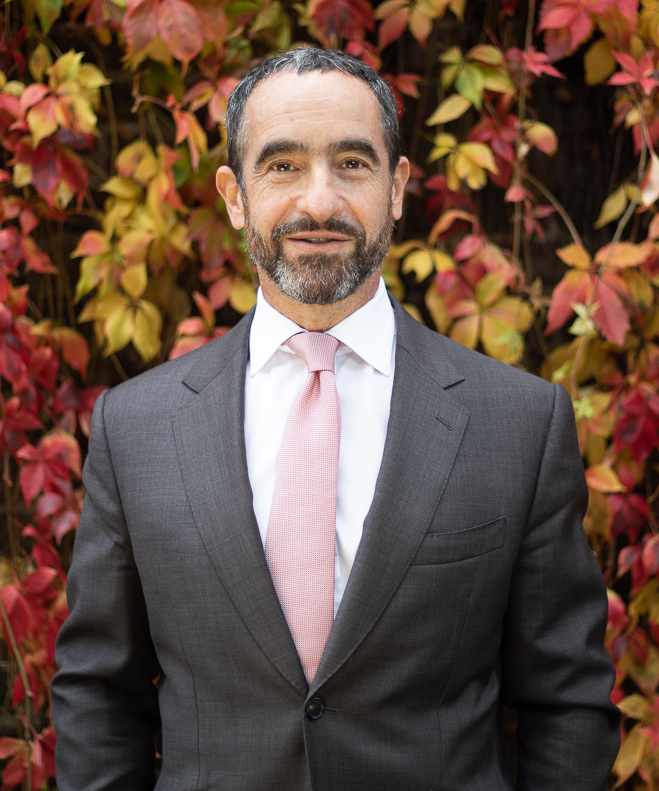
Co-host, Cleaning Up Podcast
Michael is an acknowledged thought leader on clean energy, mobility, technology, climate, sustainability and finance. He is Co-Managing partner of EcoPragma Capital and CEO of Liebreich Associates. Michael is also co-host and founder of 'Cleaning Up' a podcast and YouTube Series.
Former roles include member of the UK’s Taskforce on Energy Efficiency, chairing the subgroup on industry and an advisor to the UK Board of Trade, an advisor to the UN on Sustainable Energy for All, and a member of the board of Transport for London. He is also the founder of and a regular Senior Contributor to BloombergNEF.