



Can We Stop Data Centres Breaking The Grid? Ep249: Varun Sivaram & Steve Smith
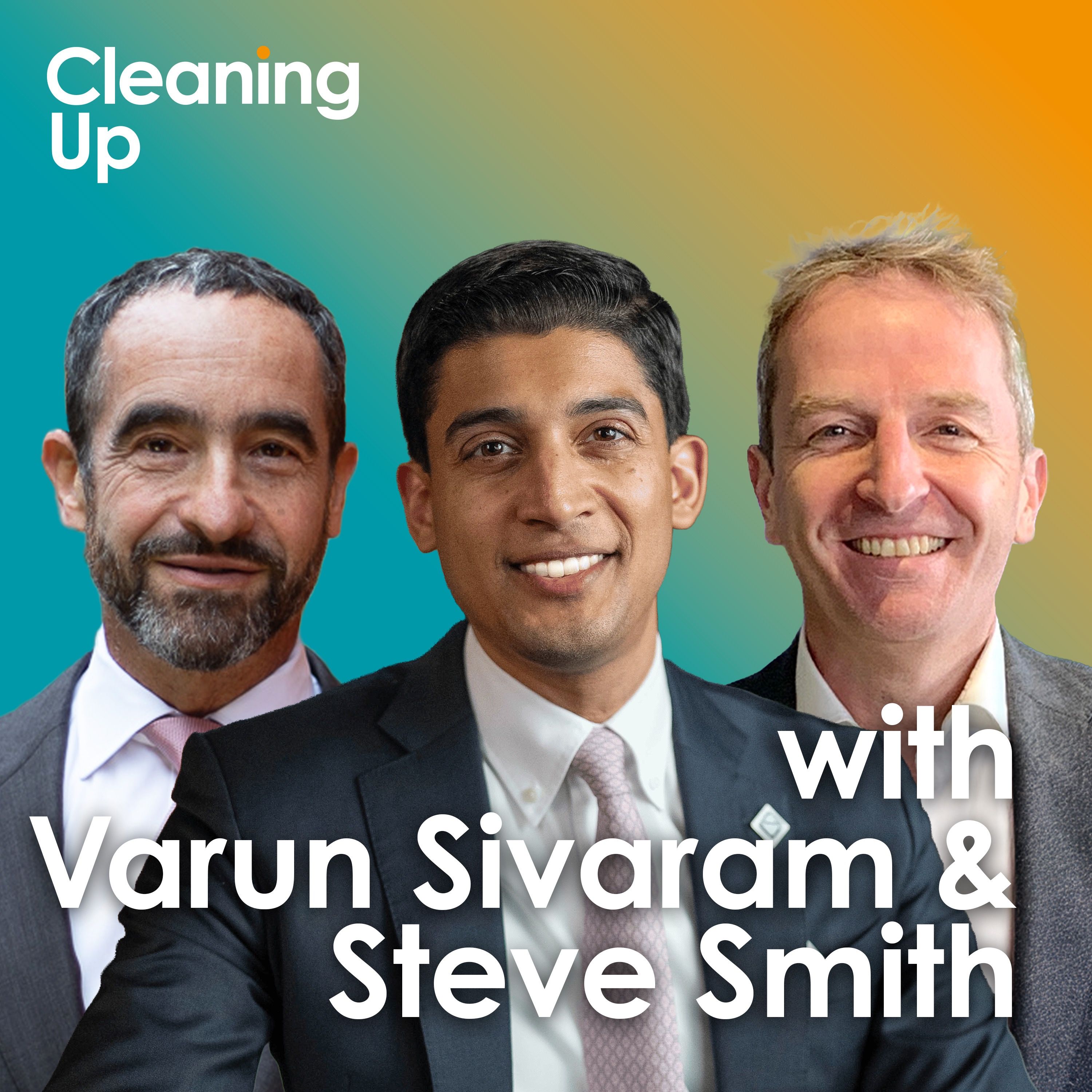


This week on Cleaning Up, host Michael Liebreich sits down with Varun Sivaram and Steve Smith to explore one of the most urgent, and overlooked, challenges of the AI revolution: how to power it without breaking the grid.
As AI demand explodes, hyperscale data centres are emerging as massive, inflexible loads, rivaling entire cities. But do they have to be a burden on the grid?
This conversation dives into a groundbreaking trial led by Emerald AI in partnership with National Grid and NVIDIA—demonstrating that data centres can dynamically adjust their power consumption in real time using software.
Key insights include:
- How AI data centres could reduce grid stress instead of increasing it
- The concept of “flexible demand” and why it’s a game changer for AI data centres
- Real-world trial results
- Why “speed to power” matters more than cheap electricity in the AI race
- How software, not infrastructure, could help unlock billions in grid capacity
- The hidden flexibility inside AI workloads (and why not all compute is equal)
From kettle spikes during football matches to lightning strikes on the grid, this episode reveals how intelligent systems can respond in seconds, turning a looming energy crisis into a massive opportunity.
Leadership Circle:
Cleaning Up is proud to be supported by its Leadership Circle. The members are Actis, Alcazar Energy, Arup, Copenhagen Infrastructure Partners, Cygnum Capital, Davidson Kempner, Ecopragma Capital, EDP, Euroelectric, the Gilardini Foundation, KKR, Mitsubishi Heavy Industries, National Grid, Octopus Energy, Quadrature Climate Foundation, Schneider Electric, SDCL and Wärtsilä.
Read more:
- The Emerald AI/National Grid white paper: https://www.ngpartners.com/stories/emerald-ai-whitepaper
- The $60 Billion Plan For Europe’s Largest AI Data Centre | Ep235: Robert Dunn: https://www.youtube.com/watch?v=juAyLAUmU3w
SS
This industry was built on the idea that demand was inflexible. So the engineers were brilliant. You know, they would sit there and say, we will build a system that if suddenly a million customers put their kettle on, we can deal with like these two gigawatt ramps.
And how did we do that? I mean, we blew up the inside of a mountain in Wales and built pump storage, which as an engineering feat is unbelievable.
ML
This is Dinorwig?
SS
Yes. But in this new world, both on the residential side, but now on the industrial side, you're realising, well, actually with software and modern technology doesn't have to be like that. Demand could be super flexible. So this is bringing that same thinking to, well, actually, you know, a gigawatt data centre is the size of, you know, bigger than a large city, you know, so we need to think how do we get these companies to be able to provide the same services, because otherwise the solution will be really expensive, which is to build unbelievable amounts of super flexible generation. And we know what that costs.
ML
I've said many times that it's incredibly lucky that just at the time when our supply is becoming intermittent, digitisation enables us to control the demand side, because if that wasn't happening, we'd really be in trouble. And of course, I think AI puts that on steroids. Hello, I'm Michael Lebright and this is Cleaning Up.
And this is an episode that I've been really looking forward to recording. We're going to be diving into how to make data centres play nicely with the grid instead of being a problem for the grid. And I'm joined by two people.
One of them is an old friend of mine, going back a number of years, sparring partner indeed, Varun Sivaram. And he is the CEO of something called Emerald AI. And the other is Steve Smith.
And he is the president of National Grid Partners. National Grid is, of course, one of the Cleaning Up leadership circle members. So please welcome Varun Sivaram and Steve Smith to Cleaning Up.
Welcome.
SS
Thank you, Michael.
VS
Thanks for having us.
ML
Well, let's start. You've got a press release about a trial that you've been running. Emerald AI is in the business of helping data centres and grids play nicely together.
But before we get on to the press release and the trial that you run and the white paper, which I've been reading, as you'd expect, let's start where we always start, talking about yourselves in your own words. Varun, we'll start with you because I've known you the longest. Who are you and what is it exactly that you're doing now?
VS
Thanks, Michael. It's so nice to see you. And you've long been an inspiration for your work in the field.
I now am the CEO and founder of Emerald AI. We are a startup supported by National Grid. We're actually here today to present to National Grid Partners Day, as well as NVIDIA and a range of other investors.
And what we do is, as you said, we make AI data centres grid-friendly, assets, not liabilities, on the power grid. Before that, Michael, as you know, I was the group chief strategy officer and chief innovation officer for Orsted, a large multinational power producer. And before that, I served in the US government as a diplomat.
I ran a clean energy diplomacy for the government.
ML
Working with John Kerry.
VS
Working with Secretary Kerry. That's right. Exactly. Exactly.
But briefly, what does Emerald do and how do we do it? We take these data centres and by making them flexible power users, for example, by slowing down some of the computations they're running or moving some of their computations from one location to another, we make data centres consume less when the grid is strained, providing that relief during the moment in Phoenix, Arizona, when a million air conditioners are running so that you can fit more data centres onto that Phoenix grid. And today I'm delighted that we're working with National Grid here in the UK to bring some of that same functionality to the UK, but in a very British way, helping to offset the kettle spike at halftime of a football match.
ML
So thank you very much for joining us here. And we're going to dive into all of the above. Steve, you are – so it is the full title.
The full title is actually Group Chief Strategy and UK External Affairs Officer and President National Grid Partners. So which bit do you want to sort of pull out?
ML
Which is the main bit?
SS
Well, it rolls off the tongue, doesn't it, Michael? So, yeah, as you said, like, think of it as three hats.
So, running strategy for National Grid as a group, running UK External Affairs, but the bit we're really focussing on today is National Grid Partners. So, National Grid Partners is our corporate venture capital arm. Founded seven years ago in Silicon Valley, we've invested just shy of $600 million in over 50 startups.
The thesis and the idea was that there was this huge revolution going on in software and hardware as it applies to really the whole value chain of electric and gas utilities. And we wanted to bring the best of Silicon Valley into National Grid and then hopefully help these companies scale globally. Because when we talked to the startups, they said, utilities are just really hard to work with.
We're conservative by nature. We're used to dealing with big OEMs and manufacturers. And the average startup would probably have run out of cash by the time they'd got through our processes to work.
So, we wanted to give them an opportunity to get live deployments on real networks, prove their products, prove their services, and then help them on that path to scale. And obviously, as an equity investor, if we put that effort in, we'd see some of the benefit from the equity investment as they were successful.
ML
But it's not an incubator. It's not kind of a building anywhere where you kind of enforce them. You've not reeled Varun in to sit in desk 46.
I mean, these companies are out there doing what they do, but you've created the network and you invest in them.
SS
So, typically, we go in at series A. So, you need to have a product and something that is ready for deployment. This is not, as you say, skunkworks and people with ideas.
So, I think that's really our sweet spot. And then what we're doing is if you take the sort of hardware and software, we will get them live deployment on one of our networks. And that then allows them to then get that traction.
And one of the other parts of the National Grid Partners ecosystem, we have something called the Next Grid Alliance, which is an organisation where we've got over 500 utilities and other partners. So, we can then showcase what we're doing. So, because, you know, at the end of the day, the problems we're trying to solve, like decarbonisation, you know, no use if National Grid does it and nobody else is doing it.
So, we're trying to share that best practise and learning.
ML
You've got a good background for this because you've got both finance, I think, with Lloyds and also regulation. You were with Ofgem. So, that must be pretty useful.
And we'll no doubt get into what the regulator might think of all this. Did he have a product when you – and did he have deployment and things like these uncomfortable things for start-ups like revenues when you came in?
SS
So, we will always bend when something's compelling. And this was compelling because, look, you know, we were sat there going – and I know we're going to come onto this – data centres are an enormous opportunity for us as electric utilities, but also they pose challenges. So, the enormous opportunity is any sane business when it gets a sudden gold rush of customers coming to say, I'd like to use a lot more of your product, would say, happy days, please do.
Where can I sign? And the problem we were seeing was that although we could sort of see how helpful, you know, data centres could be and what great customers they could be, they were presenting these challenges in terms of speed of connection. And when Varun and I first met, you know, and he pitched his product, I was like, if I'd sort of sat there and tried to invent my perfect product, this would be it.
So, at that point, I was like, I'm really keen to get involved in this. I think there was a meeting of minds. And particularly in the UK business rather than our US business, this was such a clear and present challenge for us.
I just desperately wanted to see if we could get Varun to come and do some trial and do some work in the UK quickly.
ML
So, I'm being a little bit cheeky because, you know, I've known Varun a long time and he, I've interacted with him actually, you know, along his different incarnations and he pops up and he has a sort of website and he has the ideas and he has a huge valuation, which of course is not disclosed. But of course, he's got the word AI, it is Emerald.AI. And so, I was wondering at what point you'd become involved. But you've seen the same problem, which is that these data centres are incredibly, they can be really uncompromising and difficult loads.
So, it's great to sell electricity, use your product as a transmission operator, but they can be difficult. A bit of context from my side is I met a friend of mine, I'm not going to say which country, but he was the energy and telecoms minister at different times in an EU country. And about five years ago, that country put a moratorium on new data centres.
You know which country it is. And I met him within a day or two of that and he had a big argument, I think, with one of the hyperscalers who'd said, you don't understand, we need millisecond latency and we're only prepared to build data centres in town centres. And to me, this seemed like a completely absurdly sort of over rigorous requirement.
So, we've moved on from that, haven't we? And that's the journey that, that was sort of five years ago, when probably you were starting to think about this stuff. What's been your journey?
How did you get to the product and the company that you've got now?
VS
Absolutely. And let me first say, Michael, in many of our interactions over the last couple decades, you and I have talked about technologies in the clean tech space that take decades to go from lab bench to commercial deployment. In fact, I think one of our first arguments was over how long perovskite solar would take to get to market.
And you were right and I was wrong.
ML
I never thought I would hear Varun say that. You have to understand there's this sort of long history when I was still on Twitter a lot. And Varun's typical post would come in straight behind mine and it would start, yes, but.
And then he would show how incredibly brilliant he is as a physicist background.
VS
Well, I appreciate it. And for me, you know, I was always obsessed with how do we get a technology into the marketplace far faster than these normal innovation and diffusion processes take? And whether it's, you know, the next generation solar panel, the next generation nuclear reactor, these take two decades.
ML
That's right, because your yes buts were generally, I was saying this is inevitable and you were saying, yes, but it's taking too long.
VS
Yeah, precisely. Well, so in this case, you know, why this company? Why now?
I thought, first of all, there's a tectonic shift happening. AI is the biggest new customer, I think humanity has seen on the power grid. That's not true yet.
That's bombastic. And I think you'll call me out for that. But give it five years, give it 10 years.
And suddenly the pace of A.I.'s power growth, I think, will be unprecedented, even beyond air conditioners.
ML
The pace, yes, the word biggest, I would I would I would raise a flag on that. I think EVs and I think electrification of heating are going to be much bigger. And that would I think that would be borne out by national grids scenarios.
But the pace and the big chunkness of it, right, because that's really the heart of the problem is it's big chunks on single locations.
SS
That's exactly right. So EV is distributed low, distributed across the distribution system and across millions of assets and also highly flexible, as we've learned. And as is heating.
As is heating, you know, potentially a bit less flexible. But again, you know, that's manageable. As you said, I mean, some of the hyperscalers are looking at sort of, you know, ramping to gigawatt of size and to put that into context.
So, you know, peak demand on UK transmission system at the moment about 42. So one gigawatt of 42. I mean, that single load is huge.
And that's the challenge. But as I said, you have to flip it around. If you think about the UK's problems, you know, we have a massive affordability challenge.
And, you know, put simply networks are largely fixed cost businesses. So the more electrons you can throw at them, the lower the unit costs. So we just inverted the problem on its head and said, look, it's in the UK's interest to try and attract these loads if we can use flexibility.
So we don't have to build lots more grid to accommodate them. It's that simple.
ML
100%. And I've been banging that drum and I'm going to be doing it actually in a few weeks. We're going to be over in Brussels recording about the electrification staircase and electrification is the answer to the answer to high electricity costs is to use more of a bigger denominator.
But come back to plough on and tell us the story of how you got to where you are today.
VS
So as I said, why this company? Why now? As you and Steve agree, this is a remarkable trend, first of all, to see AI's power growth.
Second, how do we get to compress that timeline from two decades to two years? Emerald AI sought to advance a technology, a software based technology that we could rapidly iterate, prototype and get out into the market. And so today, what we'll talk about later is a critical proof point.
And then later this year with NVIDIA, we'll launch the world's first 100 megawatt power flexible commercial scale data centre that's gone from literally that the company was incorporated 16 months ago to a full scale commercial deployment. So the first thing is pick the moment. It's right now AI is growing.
Second, pick something that we can get into the market as fast as possible. And third, pick an asset class that I believe is transformatively flexible. As you said, typically the data centre industry is quite inflexible, right?
They very rightfully have said these are critical customer loads that we are stewarding. We want extremely low latency. We want to minimise the risk of any disruption.
But times are changing and folks need power quickly. And it's also critical that we solve, as Steve said, this affordability problem. And I believe that inverting this problem, like Steve said, and saying data centres actually could be transformatively flexible because they're electronically controllable.
They're large loads and they're connected at the speed of light from one data centre to another in a way that no other load is. Those three factors suggested this was the right moment for this company.
ML
So one of the things that I've been doing is trying to communicate that the hyperscalers and what we're going to get onto, the NeoCloud, the people around the hyperscalers that are also providing infrastructure, a number of countries are trying to attract them with low electricity costs. And I think this is completely wrong. I think we should be saying, no, you're going to pay a lot.
But what you're going to get by coming to country X is speed because what they care about is speed, right? They want to build quickly. They're under immense competitive pressure themselves.
VS
Completely, Michael. Look, I'll speak more about the United States where we're headquartered and where I have a great deal of experience. The cost sensitivity right now, it's relatively inelastic demand, right?
Many data centres are just looking for power as soon as they can get it. And so that bottleneck is the critical one that Emerald AI is helping to solve. Today, I think you know these statistics.
The United States, there's demand for 50 gigawatts of data centres in the next three years and 25 gigawatts will be able to be plugged in by 2028, right? So we're clearly not meeting the demand that there is in the private sector. And we're leaving as a result, hundreds of billions, if not trillions of dollars of investment on the table as a result of not being able to get that investment onto the grid.
So to your point, the service in the United States that we are helping our utility partners, our data centre partners with is let's get you both a faster interconnection and a larger interconnection across the country where there is excess capacity to be used almost all of the year.
SS
But I think to that point, I mean, watch what people do rather than what they say. You're absolutely right. I mean, sadly, the UK is not blessed with very competitive, you know, internationally competitive electricity prices.
But if you look at the interest in this country now, that's, you know, that's partly to do with, you know, the university sector we have, you know, there are various other reasons. But the single thing that comes through is the thing that will enable us to unlock this is speed to power. That's what they care about is how quickly can you get me onto the grid?
How quickly can you get me energised? So that's an enormous opportunity for us as a country to say, well, let's embrace that. Let's lean into some of the strengths we have and the fact they want to come here and let's get them connected quickly and Emerald and other sort of innovative solutions can help us do that.
ML
And I hate to sort of, I don't want to sort of cast a poll on anybody's business, but, you know, we are recording this as there is, you know, the gulf is, I don't want to say in flames, but, you know, we've got this incredibly fluid situation with the US attacking Iran and then Iran attacking the countries around it. And of course, some of those countries have been, you know, extremely ambitious in their plans for AI data centres. So you've got particularly the UAE and also Saudi Arabia and both have been attacked.
And I wonder whether that also kind of puts the focus back on maybe the UK doesn't have the cheapest power, but maybe we kind of want to have more of our data centres there.
SS
I don't know. Obviously, it's a tragic situation. My overarching sense is that when you do some basic dimensioning of this, the potential demand for these things is just extraordinary at a global scale.
So there's more than enough for everyone. I mean, one of the things that doesn't really get focused on, and EPRI have done some good work on this, Agentic. I mean, Agentic as a workload, you know, the numbers you can get to there in terms of data centre load is huge, because if you've got enterprises that are running Agentic processes 24-7 to run their businesses, that's very different from what we're doing today with large language models and inference.
ML
We have a rule on...
SS
Yes, I should explain.
ML
The no acronym. So EPRI is the Electric Something Research Institute. Yes.
VS
Electric Power Research Institute.
ML
Electric Power Research Institute. Arshad Mansoor, a good friend who runs it. And that's actually a partner on your trial, which I want to get to.
But you're right. I have a whole list of countries. I have a whole list of...
And it's countries, interestingly enough, you know, it is places also like Malaysia and India that have got ambitious plans as well. And, you know, I do hope that after the current events die down, I do hope that the Gulf is able to pursue its plans. But just before we get on to what you've done in the detail, what is it?
Can you characterise the nature of the challenge that is placed on the grid by these data centres? Because, you know, you've got different sorts. You've got training, you've got inference.
And it's not just, oh dear, they're big. It's also they behave in certain ways. So what are the... Can you list the sort of top challenges that they pose to a transmission or distribution or whatever grid?
SS
I'm happy to do that. So I should declare it out. So unlike...
I'm not a physicist and I'm certainly not an electrical engineer. But so to grossly oversimplify, you've got two problems. First is the physical connection to the grid.
As I said, if you are coming in at hundreds of megawatts and want to ramp to a gigawatt, that is a transmission level connection that will require a bay at a substation, potentially if it's a new location, a new substation. And it's no different the challenge to connecting that to the challenge to connecting everyone else who wants to connect, whether that's renewable generation, battery storage, et cetera, et cetera. And we know at the moment that we've got huge pressure on, you know, the transformers you need to build new substations, you know, so that's the supply chain, the workforce consenting all of that.
So that's challenge number one. How do we actually physically hook them up? Now, one of the things we've done there, and this comes back to, you know, thinking creatively is, you know, we've said to them, if you've got any flexibility over location, there are various parts of our grid where we have lots of spare bays where, you know, we used to have large industrial clients or we used to have coal-fired power stations.
So last year we made the announcement about a major, you know, data centre at Blyth in Northumberland. That's where we've got existing infrastructure, you know, and so if you can go into those areas, then actually we're saying that problem's solved.
ML
Energy folks will know Blyth because it plays a huge oversized role.
SS
So that's problem number one. So two things. If we can get you into existing substations where we've got spare capacity, great.
The second thing is thinking how could we build new substations really fast? So how could we, you know, engineer them in a way that we could, you know, build them in, you know, 18 months, two years? So that's the first thing, physically hooking you up to the grid.
But then once we've hooked you up to the grid, you know, you are potentially going to be drawing a gigawatt of power and that power's got to move from where it's produced to where it's consumed. So this is where flexibility comes in. You know, the basic maths of a transmission system is it's only stressed for a few hundred hours, you know, probably less than 100 hours a year.
You know, the average utilisation of the transmission system over the course of the year is probably sort of 30, 35%. So most of the time there's lots and lots of spare capacity.
ML
And that's because you have to build it for the peak.
SS
Yes. So at the moment, and we talked a bit, this will change with the transition, but at the moment it's a very peaky system. So those 100 hours will typically be in the winter between 4 and 7 p.m. when everything's on and, you know, you've got heating load, etc., etc.
ML
So that's... And of course, the point at which the UK is booted out of the World Cup in a penalty shootout.
SS
Indeed, indeed. So what Varun's solution helps with is that if we can be confident during those peak hours that actually the data centre can modulate, then when we run our power flow studies saying, do we need to put more pylons in? Do we need to build more capacity for that period?
It's going to say, no, we don't, because actually for most of the year, the capacity is there on the system. And just through those small number of, you know, hours when we're stressed, we know we can get the response. So that's the big unlock.
It just enables us to say, actually, we can accommodate this load without the need for, you know, massive infrastructure upgrades to move the power from where it's produced to where it will be consumed.
ML
Now, I may have to bring in our physicist, our resident physicist, Varun, because it's more than just that as well, because there are these things called ramp rates and there are harmonics. There's all sorts of, you know, sort of in the detail. Well, the ramp rate is just how quickly you can go from 100 megawatts to a gigawatt, because, you know, I have this picture of a training data centre sort of crunching away for a month, getting to the end of its training run, and then just switching off in 10 milliseconds, suddenly just a gigawatt of demand just falling off the grid.
And that also has to be a worry.
SS
Yeah, so you're right. So I've talked about the problems for us as the transmission company. So basically, I'm saying, is my transmission system good to accommodate this load?
Then you're thinking about the system operator who's like, OK, well, I've got a transmission system, but I've got to keep the lights on second by second. And that's where you get into issues like, you know, falling out the World Cup and TV pick up as everyone flicks the kettle on. So they are worried about, you know, voltage stability.
They're trying to balance second by second. That's where, again, you get the second string to Varun's bow, because then you've got data centres as actually supporting that. So at the moment, typically, if there's a shock on the system, then we're typically getting a gas-fired power station to ramp up if the wind stops blowing suddenly, if the clouds come across and solar drops off.
If these data centres can ramp up and down, then suddenly the NISO, the National Electricity System Operator, has got another set in its toolkit in terms of an ability to just deal with those, you know, variations on the system and something that's ultra-reliable because, you know, as Varun said, it's software. You know, you just know this thing's going to respond.
ML
I know it's been a few years since you were a regulator, but these issues of ramp rate and power quality, frequency, voltage, are data centres regulated to fit within certain constraints? Is the pressure here regulatory or is it physics? Maybe, I don't know, Varun, if you want to comment on that.
VS
Happy to jump in. So I think we're talking about a lot of things at the same time, and it's important to break these up. So as Steve did, on a time axis, we can start with milliseconds and go all the way up to hours or even days, right?
And on the milliseconds to seconds scale, there are these, as you mentioned, transients, harmonic fluctuations, low voltage ride-through events, et cetera. A lot of this is just, hey, these are ground rules for being connected to any grid, whether you're in the United States, in the United Kingdom, in the U.S., for example. In every system operator region, there is a set of rules that you have to follow.
And data centres are grappling, as you mentioned, with the fact that GPUs can ramp. When you checkpoint in your training run, for example, the load just drops off a cliff. Now, the set of solutions for that is going to be different.
For the set of solutions for the first problem Steve brought up, which is how do we fit more data centres on the grid by utilising our transmission system that's built for a peak, but otherwise it's 30 percent utilised? Emerald was founded mostly to focus on that latter point. But in this trial, as we'll talk about, we've also demonstrated the seconds-level response.
And actually, in some of the research work of our chief scientist, we've demonstrated the ability to follow, let's say, a four-second regulation reserve signal to help with frequency response, frequency modulation. So this concept that Steve was talking about, how software is extremely versatile, we can help a data centre to provide both the basic good citizenry of enabling the power system to remain stable, as well as fit more data centres onto the grid through that minutes and hours domain solution, such as, hey, can you reduce power for the next three hours by 25 percent? Because otherwise, we're going to hit this peak load.
Or, hey, for the next eight hours, can you reduce by 10 percent? Because we're feeling one of those doldrums where the offshore wind just isn't blowing very hard for a long period of time. And those are the long domain problems that I think it's a critical unlock to get more data centres connected in faster speed to power.
ML
So I think that's really useful. I'm going to just, if I can try and recap and correct me if I'm wrong, I think it's really useful to think about this, that whole sort of time horizon from, you know, where are we going to put assets with 40-year, 50-year lives in terms of these substations and connections? All the way down at the other end, you've got harmonics, you've got the transients.
And there is some data out of, I think it's out of the U.S. saying that data centres are not playing nicely with the grid almost at both ends, right? They're putting huge amounts of demand, which we talked about, Steve. But then also down at the transients level, there's some data that says that power quality, in other words, whether it's a nice sinusoidal wave, is actually worse near to data centres in the U.S. There was some research actually Bloomberg published on this at the end I think 2025 or 2024, so a year or two ago, that the closer you are to a data centre, the worse the quality of your signal. So there's problems at the millisecond level, but that's not what you're focused on, maybe in research. But mainly you're saying you're doing, and this test we're going to talk about, the trial that you did was seconds through to hours, was it not? So it was things like ramp rate, turning things up, turning things down.
So do you want to tell us about the trial? What did you do? These 200 events that you trialled, what did you trial?
How did you trial it? And what were the results?
SS
Just before we do that, just to take a step back, because the thing that's important to explain is this industry was built on the idea that demand was inflexible. So the engineers were brilliant. They would sit there and say, we will build a system that if suddenly a million customers put their kettle on, we can deal with these two gigawatt ramps.
And how did we do that? I mean, we blew up the inside of a mountain in Wales and built pump storage, which as an engineering feat is unbelievable. But in this new world, both on the residential side, but now on the industrial side, you're realising, well, actually with software and modern technology, it doesn't have to be like that.
Demand can be super flexible. So retailers are proving that if you aggregate a million households, you can get massive flexibility. This is bringing that same thinking to, well, actually, a gigawatt data centre is the size of bigger than a large city.
So we need to think, how do we get these companies to be able to provide the same services? Because otherwise, the solution will be really expensive, which is to build unbelievable amounts of super flexible generation. And we know what that costs.
ML
I've said many times that it's incredibly lucky that just at the time when our supply is becoming intermittent, digitisation enables us to control the demand side, because if that wasn't happening, we'd really be in trouble. And of course, I think AI puts that on steroids. And we talk a lot about data centres, I actually really want to see the flexibility in those distributed assets as well. The EVs, the heat pumps and so on.
ML
Cleaning Up is proud to be supported by its Leadership Circle. The members are Actis, Alcazar Energy, Arup, Copenhagen Infrastructure Partners, Cygnum Capital, Davidson Kempner, Ecopragma Capital, EDP, Euroelectric, the Gilardini Foundation, KKR, Mitsubishi Heavy Industries, National Grid, Octopus Energy, Quadrature Climate Foundation, Schneider Electric, SDCL and Wärtsilä.
For more information on the leadership circle, please visit cleaningup.live. To keep up with all that's going on in the Cleaning Up universe, make sure you subscribe to our newsletter. Written and edited by my long-time New Energy Finance and Bloomberg NEF colleague, Angus McCrone, it comes out every second Monday. Angus provides the latest on the episodes we're recording, the events we're hosting, stories we're watching and what Bryony Worthington and I are up to. To sign up for the Cleaning Up newsletter, visit cleaningup.live.
ML
Talk about the trial and you also, you're reaching into the data centre. You're not just turning a data centre up and down. You're actually doing something at the GPU, the graphics processing unit, because we're not allowed to use acronyms, level, correct?
VS
Correct. So, if I zoom out a moment, what is flexibility for a data centre? There's kind of three ways you can achieve it.
Way number one is the data centre itself can slow down or pause certain computations that it's running. You may have certain jobs that can just wait a little more, right? You may have other jobs that can't wait.
So, way number one is what I call temporal flexibility. Flexibility in time. The second kind of flexibility is what I call spatial flexibility and we've demonstrated this in other trials where you can take a job that's running in Virginia and you can move it over there to Chicago and it takes, you know, tens of milliseconds to get there and the user who might be asking ChatGPT a question won't actually notice the difference, right?
So, that's spatial flexibility. And the third kind of flexibility is the one that I think is most intuitive to most folks, which is what I call resource flexibility. It says, hey, a data centre is a black box just like any other user, an electric vehicle, an S thermostat.
Let's put some batteries next to the data centre so that when we need to reduce the grid draw to the data centre, we discharge the battery or we fire up the gas plant. That's intuitive. The reason Emerald exists is because we said data centres aren't black boxes.
They're not just like any other assets. They're truly special, like Steve was saying. They're controllable by software.
So, you asked, do we actually get into the data centre? The answer is in this trial, yes. So, in this trial, we said, look, here we are, Emerald, sitting between two extremely demanding partners.
There's Steve, on the one hand, who needs to make sure that at every moment he's able to supply the demand. So, demand and supply are in balance. So, Steve and the system operator are ensuring that.
On the other side, there is the AI customer and the AI data centre. They need to make sure that their customers are very happy because they're running these critical AI workloads and you really don't want to have a catastrophic failure. And so, Emerald seeks to do what I call a dual optimisation.
Meet the grid's goal while at the same time making sure the customer is very happy with their AI performance. And the way we do this is by saying, let's look at all of the different jobs that are running at this AI factory and let's have the customer themselves determine what are the service level requirements that we need for all of these jobs. Some jobs, let's say, it's a very high priority inference or training or fine-tuning job, it's got to happen on time.
Other jobs, perhaps you're fine-tuning a particular model and you're really only going to use it next week or next month. If I delay it by 30 minutes or an hour, you may not care. And so, if a customer labels that job as more flexible or very flexible, Emerald will throttle that particular job in order to meet the grid's request for some relief at that moment of peak strain.
And so, in this trial, across these 200 different power targets, we can go into those. Every time the National Grid and EPRI sent a signal into the AI factory, Emerald has a series of AI agents. Steve was mentioning agents early on.
Our AI technology is in there autonomously making decisions on the fly to say, I have two masters. I have the grid and what do they need? And I have the AI customer, what do they need?
Let's optimise for both and find a solution by slowing down certain things that can be slowed, but not slowing other things and assuring that the mission-critical AI workloads continue to run at 100% performance.
ML
So, if I go back to that experience that I had four or five years ago with my minister friend, where the hyperscaler was just saying, sorry, everything is high priority. You don't understand my business. Now, what you're saying is that the hyperscalers on behalf of their clients have got differentiated service level.
So, this thing has got one millisecond latency and this thing's got, well, three weeks or just has to be done at some point. So, they've done that. Is that a protocol? I mean, is that now a sort of industry-wide protocol? Is that something you've invented? Where did that come from? Is that EPRI? Where did that come from?
VS
So, I don't want to overstate this. The data centre industry and the cloud computing industry has a long history and a track record of creating very high quality, high service level standards, right? And so, it is not the case, it's not industry standard today that there are these differentiated service levels based on the different jobs in order to meet the power targets.
And so, what we are aiming to do together with National Grid, with EPRI, is to create this paradigm shift to say, historically, power has never been a problem. You're a data centre, you rock up, you get connected, no problem. Your friend is able to say, look, the data centres can demand their terms because they're a tiny user on the grid and they're so valuable and they're willing to pay a lot.
Sure, they can get zero latency. Now, with the race for power and the need to get speed to power, there have to be some compromises made. And I think that we can provide value for everybody.
We can provide value for the National Grid by enabling the data centre to be a little bit flexible during those rare hours where we're hitting peaks, while at the same time unlocking this vast amount of energy and power for data centres. But the compromises do need to be made. And one of those compromises is developing an industry standard going forward for new customers to be signed up to say, look, 98%, 99% of the year, you're going to be just fine, but we may need to power cap you for a rare period of time.
And we'll do it in a way that is very palatable or graceful for your workload. So, Emerald has a software product. We call it Emerald Conductor.
And we're one option to accomplish that, right? There are other options. You can flip the circuit breaker, but those are less graceful, right?
The graceful way of doing this is to make sure that the jobs that you care about continue to run while the jobs you're willing to be a little flexible about are throttled a little bit.
ML
And so my naive model from before I started to read about this trial and to learn about what you were doing was, well, training is a sort of offline thing, but inference is... And so training is obviously when these big, large language models and other tools are being trained, and that can happen sort of anywhere at any time. But the inference, which is when I ask perplexity a question or I get some vibe coding done by Repl.it, which is what I do, that there must be no latency because that's the question and you need the answer. What you're saying is that it's not as simple as that.
VS
It's not. There are a veritable menagerie of different types of workloads, right? So, in the zoo, there are things that require extremely low latency.
So, world models where you are walking around in a world and it's being generated frame by frame as you see it has to serve you 40 frames per second. And so latency that's tolerable is on the order of milliseconds or tens of milliseconds, right? So, you really can't slow those down.
ML
So, this would be things like gaming or maybe vision for autonomous driving, that sort of thing.
VS
Low latency networks for autonomous driving are a great example of where you really don't want the network to slow down. Now, on the other hand, there are operations... We talked about fine tuning just now.
You talked about pre-training. There are operations that won't actually require the user to have their answer right the second. You may end up using that model down the road.
And then there are operations in between. As Steve mentioned, agentic workflows. You can imagine agents that before you wake up, they're already going through your day developing a plan for how, Michael, you're going to spend your day and setting up bunches of sub-agents that are going to do various different tasks like planning your meetings or figuring out what you'll eat for lunch.
And some of those have more latency and some of those have less. And some we can delay for 30 minutes because, Michael, you won't wake up until 7 a.m. And others we can't. So there's so much flexibility across this range of different workloads spanning serving inference, batch inference, pre-training, post-training, fine-tuning, et cetera, that Emerald seeks to harness this versatility or this diversity and say, for the things that we can slow down, we'll slow them down at an appropriate pace.
For the things we can move, we'll move them. And for the things we shouldn't touch at all, we won't touch them.
ML
I'm smiling because when you said, you know, we'll have an agent planning my meetings, I already have one. She's called Jo. I've been working with her for, you know, 20 years.
And as for what I have for, you know, what I eat, I decide that. But I get you. And I think it is worth saying just agentic, just for those who are listening who are not familiar with the terminology, that's really just having an AI that breaks things down into tasks, maybe sends off some different tools to do things and then combines it.
So they're doing, they're not just answering a single query. They're actually doing a whole bunch of things. And presumably, you've also got within the operation of a data centre, you've got all sorts of tasks which are not directly responding to a user, but clearing caches or providing performance reporting.
And so some of those can also be moved around transparent to the user, I'm guessing.
VS
And I should be very upfront. Google was one of the pioneers of this particular field. Google showcased in, I think, 2023 that you could take video indexing for YouTube videos and move it overnight because no one really cares when that happens, right?
And so, you know, we stand on the shoulders of giants here. There's been wonderful work done by other hyperscalers. And we've built on that, but made a very AI focused set of applications, which is historically, you've got these big cloud campuses that do a bunch of different things.
Now you have AI factories. This trial was at one that do one thing really well. They turn watts into tokens of AI across training inference and fine tuning.
And so the Emerald Conductor, at least so far, is laser focused on AI factories.
ML
So I should have done this right at the beginning. Give us the top line of what you achieved in your trial.
SS
I'm going to let Varun do the detail. But in essence, what we did is we threw the hardest problems at it. So we threw them a bunch of simulations, which, you know, on the time frames we're discussing is the sorts of things, and this isn't us, this is NISO, they would see in the control room.
So, you know, a large renewable farms just dropped off the system. You know, we need a 200 megawatt, you know, drop or, you know, there's been a big spike because, you know, something's gone on. And so what we did is in operational timescales, we are saying ramp meaningfully up and down.
And the way to think about it is it's just a profile, you know. So in essence, you've got a line, which is the current consumption. And we're saying we need you in milliseconds or in seconds to basically move up by 20%, move down by 20%.
It was a lot more sophisticated than that. But these were real world situations that in the control room, they would ask them to do. And the question was, would the software deliver?
Would it actually? And when you look at it, and it's a lovely visualisation, which, you know, we can share, you know, it's just a lovely, perfect trace where we say, do this, and it just beautifully moves. And then Varun can explain how it was doing that.
But that was in essence was just take nine or 10 operational scenarios that would be very real in the control room. And then, you know, basically in real time, say, match this profile we're asking you to match, which is either consume more, which is slightly perverse sometimes to think why would you want them to consume more, or more often than not, consume less and do that for a defined period. And as you said, to parameters around speed of response, which can be down in the milliseconds.
ML
And we'll put a link to the white paper into the show notes, which has got the charts and so on. Just to be completely clear, though, when you said over the wind farm, 200 megawatts has fallen off. I mean, you did this on a single cluster, which was much smaller than that.
I mean, it was kilowatts, not megawatts.
SS
We would take those scenarios and then basically just scale them down for the size of the load to say that's what we'd want you to do with the idea being that if we can prove it there, then you would scale it back up. So we're doing it on on a small rack. But the idea would be if this was a one gigawatt data centre, you would be getting that meaningful level of response.
VS
And to be clear about why it's scalable, to Steve's point, look, there were dozens of representative workloads running on this cluster of 96 Blackwell Ultra NVIDIA GPUs, the latest and greatest off the line. And these were, you know, production grade real workloads, meta models, open AI models, Alibaba models from China. And the idea is it was a large enough cluster, 400 U.K. households worth 130 kilowatts, that this is a microcosm directly of what will happen at a full scale AI factory. It'll basically look the same just in, you know, triplicate or manyplicate. So we believe that what we demonstrated in this trial will directly inform what we do later this year at the scale of 40,000 GPUs at the Aurora AI factory. We couldn't do it without what we just demonstrated with National Grid.
ML
When I said, you know, OK, what was the kind of top line? What was the you know, what was the most eye catching result? Yeah, because I know you've got these 200 loads and you wanted to go through them and we'll maybe pull out a few.
But what's the top line? So there was a sort of figure of 30 or 40 percent of what?
VS
Yeah. So I'll give you four top line results. Number one, lightning strikes and the National Grid sends a signal.
By the way, they sent it overnight. We were asleep. And autonomously, Emerald Conductor had to reduce the consumption of the AI factory cluster by over 30 percent.
It was 35 percent in 30 seconds and it succeeded. So that was a very quick response in order to respond to a system contingency. The second result is to respond to halftime of the football match when the tea kettle spike happens.
And at full time, by the way, an even bigger spike happens with kettles. Could the AI factory replicate the exact response you'd want? Now, Steve mentioned you tell it in real time.
Well, there's a tea kettle spike going on. Why don't you reduce right now by this exact amount? So National Grid was out there, credit to them, stressing the system out.
Third response is we've solved the lightning strike. We've solved the tea kettle issue. We had a renewables doldrum.
So a long period of time where you had low wind output and the cluster was able to maintain its response in a way that batteries, by the way, would not have been able to do that. The battery would run out four hours in. And the fourth one is very granular response to meet some arbitrary signal.
Let's say you want to minimise the consumption of high electricity prices. So you reduce when the price is high, you increase when the price is low or you reduce when the marginal carbon is high and you increase when the marginal carbon is low.
ML
I think that's very interesting for the audience. I was going to come to that. You also followed a carbon intensity signal.
So you could say, well, you know, low carbon, it's sunny, the sun just came out and then the UK grid mix is low carbon. So we'll use lots now and then we'll sort of slow it down when the cloud goes past and then we'll speed it up and we'll slow it down. That's really interesting.
VS
I love that. And so the three graphs that I love to show are a graph for the grid, a graph for the customer and a graph that only Emerald Conductor ever sees. The first graph is what did the national grid ask for?
Well, they asked for a reduction or they asked us to change the consumption based on the marginal carbon or whatever. And you'll see that the AI factory beautifully follows whatever the command is. That's the graph for the grid.
The graph for the customer is, well, here's all your dozens of jobs. Each job is a dot. And let's see how each of those jobs performed.
And for all the dots that are labelled high priority mission critical, they perform at 100 percent, over 99 percent. And the other dots that are a little more flexible, they perform in a nice cascading way at a lower percentage, depending on how the customer labelled them at a priority zero to 100. Now, here's the crucial graph.
The graph in the middle is the graph of what each of the jobs is doing and what the power consumption and performance is. It looks like chaos. It looks utterly indecipherable.
And the reason for this is no human can solve this dual optimisation problem. It's thanks to the conductor AI agents that are out there solving this problem in real time. And so I love to show the under the hood graph because I don't want to try doing that.
ML
So what we'll do for those who are listening on podcast, I apologise because you're not going to get the benefit of this. But for those who are watching on video, you'll hopefully, at this point, see that we've been cutting these graphs into the video feed. Just to prove that I have read your white paper, you said, oh, the high priority tasks, 100 percent, they went ahead.
It was 98.8 percent. So there was a small performance drag, even on the highest priority tasks, was there not?
VS
There was. And let me explain, Michael, you really go deep. Man.
So what Michael's referring to is, I think in that particular run that we showed the graph for, there were like 13 high priority tasks and 12 of them ran at 100 percent. One of them ran at like 96 percent. And the reason for that was over the course of the four hour period or eight hour period of that trial, there was a moment when there were only high priority jobs running and there were no medium and low priority jobs running.
And so someone had to take a little bit of a hit and we tried to minimise it. And so that's what ended up happening.
ML
So that's like the knot in the Persian carpet. I don't know if you know that when the makers of Persian carpets complete the carpet, there's always one fault that they include because only God is perfect. There you go.
VS
There you go. Look, this is a trial and the point of a trial is not to be perfect. The point of the trial is to learn useful things.
We learned something here. We learned that if there are only high priority jobs happening and Steve and National Grid say, hey, reduce, there's nothing for us to do other than to break one of the promises. Either, Steve, I'm not going to reduce right now or, hey, AI customer, I've got to throttle you a little bit because you failed to label any job as flexible.
And so we'll try and do it in the most graceful way possible.
SS
I got to make a comment. So we've talked about our background. So I always think as an economist here that you go back to where you started, which is, you know, well, latency is everything and I can't wait as an inference.
Well, at some point that dam might break because at the moment, the pricing model downstream for customers isn't there. And actually, there is an economic cost to things. And it may well be at the moment that we're saying this load is absolutely vital.
And at some point, you know, I always go back. I show my age. You know, I remember back in the California crisis in the 90s, you know, when Intel was then a giant, you know, it said there is no economic price at which we would ever stop fab plants doing chips.
Turned out there was an economic price. It was pretty high. But they did find a point at which they would do it.
So I think we're still evolving the consumer models. And it may well be that some of this load at the moment that said this is critical, you will find there are prices, they might be quite extreme at which, you know, we would all say, actually, do you know what, I can wait an extra millisecond for my perplexity answer.
ML
I totally agree with that. I think it is absurd that we're not. It's an early industry stage where we're not paying for what we're getting.
And, you know, I've just built an entire, I vibe coded an entire app and it cost me a few hundred dollars. It should have cost thousands. And, you know, how many of us have sat in Zoom meetings where there's some AI that's just creating slop, but it doesn't cost us anything.
So we just let it create slop we know we're never going to look at. If that cost 20 bucks or 100 bucks, which it should, then sure as hell that load is disappearing. There's no question.
I just want to get to now what happens next. Where does this go? Because you've hinted at 100 megawatts, fully commercial AI factory.
I think this is the Aurora project in the US. I want to hear about that. I also want to hear about what you learned for National Grid from this and say, where would you like to take this?
And then I'll come back to Varun and I want to know, what about the business? Because why can't the hyperscalers just do this all themselves? So what next after this trial?
What next for National Grid? And then are you absolutely sure this is a good commercial business?
VS
Sure. What's next after this trial? So we've now done four commercial demonstrations, Phoenix, Chicago, Virginia, moving things between Chicago and Virginia, and now the UK.
And the UK, in my opinion, is probably the most sophisticated version of any demo we've done. It's been at scale. It's had real workloads.
And National Grid actually did a great job trying to break the system. So given this, we feel very ready to move into commercial production with our partner NVIDIA, who's also a partner on this trial, to the Aurora factory. That's going to be a 100 megawatt facility in Manassas, Virginia, along with Digital Realty.
And in the United States, the eastern grid operator called PJM is going to be playing the National Grid role there, along with the utility Dominion Energy and stressing the system and trying to prove that at commercial scale, if a 100 megawatt data centre has to go down to 75 megawatts, it can do it on the timescales that the grid operator needs. Once that happens, we're just delighted that with our partner NVIDIA, there's a reference architecture that NVIDIA puts out for AI factories. Aurora is the first one that will have this capability.
We call it DSX Flex with NVIDIA. And going forward, we want Emerald to support NVIDIA across the next 1,000 AI factories and all of their partners that use this reference design.
ML
And NVIDIA, you keep calling them a partner. Are they also an investor? I think you said that at the beginning.
You said, I think I sort of didn't jump on it, but they're an investor as well?
VS
They're an investor as well as National Grid.
ML
And the DSX Flex, is that going to end up being an industry standard for how you, presumably that's to do with how you categorise tasks and what you're allowed to do in terms of shifting them around?
VS
Yeah, we certainly hope so. I mean, we announced late last year that we would, through Aurora, demonstrate this initial incarnation of the reference design, and then develop a certification scheme. Now, this is where EPRI comes in.
You know, this trial was part of the EPRI DC Flex initiative, which is this industry body that gets together folks who are trying to prove that flexibility is a thing. You know, they have nine demonstrations. We're really lucky that we're doing five of them for EPRI.
And with EPRI's partnership, with NVIDIA's partnership, we do hope to create this industry standard for what it means to be flexible. And after you go to Steve, I'll come back and talk about why that creates a real commercial opportunity for someone like us.
ML
Right, we'll come back to that. Steve, you didn't break Varun's system, so you're going to have to try harder. Where do you think this goes?
Where do you want to take it?
SS
So, two answers to that. At the moment, we've got gigawatts of people at the moment saying, we would like to connect to your system, and we'd like to build a data centre. And typically, they'll come and say, you know, if it's a hyperscaler, we might want to start at a couple of hundred megawatts, and we want to ramp to a gigawatt over, you know, three, four years.
So, what do we have to do? We have to run power flow models that says, okay, well, when you're on our system, if we assume that you're pulling a gigawatt and we look at those peak hours, where do we get thermal overloads? Where do things go wrong?
What would we need to do? The quicker we can get this as a industrialised proposition where they come and say, we have Emerald AI, and therefore, we have this capability to flex, then when we run that power flow model, it's just going to say, I can connect this faster because there's no, you know, there's no compensating infrastructure. So, for us, it's just that race to the quicker we can get this to a defined product in the market where developers coming to us who want to do data centres say, I have this installed.
I might have some battery backup as well. So, this is what I can offer you. That will enable us to just do a lot more because we'll basically be saying the only thing we've got to worry about is that physical connection at the substation.
So, for us, it's all Varun knows this and he's commercially incentivised to do this. It's like, how quickly can we move from trials to this is live deployment.
ML
So, you can take data from this trial and go back to somebody who's trying to build a data centre and say, if you can do this, then we could accelerate you through the grid connection queue or give some other commercial benefit. So, you're taking actual data from this trial to do that?
SS
So, that's where we'd like to get to. You know, we're still studying the trial, still thinking about it. But at the end of the day, we would need to be confident that at the point they connected, this software was there and it was real and they could use it.
So, we're at that gap at the moment, as Varun says, you know, we need to get it to a fully commercial deployed, but we can begin to see the possibilities. I think the second point is then the point we talked about in terms of system balancing. I mean, as we know, sadly, Niso is spending billions of pounds a year at the moment to balance the system.
And so, the moment we can deploy this, then Niso will now have a new tool available to it, which hopefully should help, you know, to reduce the costs of balancing the system in all the way Varun said. So, from our perspective, it's about faster connections. From Niso's perspective, it will be I've now got another, you know, another tool in my toolkit to basically help me balance the system, which hopefully should be lower carbon and cheaper than, you know, than what we're doing today.
ML
But do you think that there's a trajectory where in the end, the data centres will be told, right, you can have the power, but let's say 25 percent, you need to be able to ramp up and down on a signal and not charge extra or not, you know, not be paid for that flexibility, because otherwise you put too much stress on the grid and society will simply not accept it. Do you think it's going to be in the end, is this going to be enshrined in regulation?
SS
So, we have a marvellous document called the grid code, which, you know, tells you, you know, what you do and don't need to do. I would rather this was a system where we positively incentivise people to do this, because at the end of the day, you know, we're a monopoly utility company. We should be there to do what our customers want.
If a customer comes and says, I want that full flexibility, we should say, fine, but here's what it's going to cost and here's how long it's going to take. But if you can do these things, you know, it will be cheaper, it will be quicker, my impression is it's all about the quicker. The quicker is what they care about.
But we also need to remember, you know, we've talked about this as a software solution. There are other solutions. They can put generation their side of the metre, they can put battery.
So, we just want to be saying to them, look, you know, if you want to connect quickly and you want this peak capacity, if you can provide us this degree of flexibility and we're indifferent, you know, we like Emerald, you know, batteries the same, then this is what it will do to the speed of your connection and the cost. That's where we would like to get to quickly, which is at the moment we have a sort of more binary process where, you know, you can't really have the exploration with the customer to say, how can we work together? Because at the end of the day, we want the same as you, which is to get you what you want as quickly as possible.
ML
So, I remember a conversation with somebody that you probably know well, Ernie Moniz, Secretary of Energy during President Obama's first term. And I asked him whether he was going to use carrots or sticks to achieve, you know, to put the energy system in the US on track for its climate targets. And he said, at the Department of Energy, we have a carrot-based philosophy.
SS
Look, I mean, you talked about it earlier. I mean, yeah, I was at Ofgem for a number of years, you know, I sort of did all the big executive roles. In all of my experience there, carrots were always much more effective than sticks if you wanted to get things done well, and if you wanted to get them done quickly.
And I think, you know, the UK regulatory regime, when it's at its best, and there are lots of elements of that at the moment, are when it gets that, you know, incentives actually move people quickly and innovatively. Sticks, you know, not so much.
ML
My suspicion is you need a mix of both. But Varun, just if we could, finally, why is this a good business? Because we are sitting in the middle of what's, I think, let's put it this way, we're going to look back on this time, it's going to be seen as an extraordinary time, partly for the scale and rate of change, possibly also because of the valuations. Why is this a fabulous business?
VS
Yeah. And I'm going to reframe your question as, is there a chance we become a victim of success? When we founded the company in 2024, very few people looked at us and said, this is a great idea, right?
I mean, I'm eternally grateful to Steve and to National Grid for looking at us and saying, this could actually work. Because most folks looked at us and said, this is a terrible idea. You want to flex data centres?
Data centres have never flexed before. Come 2025, a year later, it becomes the case, as Steve mentioned, that lots of people are talking about flexibility and saying, well, okay, maybe we should be able to modulate grid draw, and maybe we'll do it with batteries. Maybe we'll do it with generators.
And I want to be clear, Emerald is agnostic as well. We are basically the brain that says, maybe there's a battery, I'll dispatch that. Maybe there's some computational flexibility, I'll dispatch that.
But I'll take it all together and create a flexible data centre. Come to 2026 now, and I think we are seeing the rubber hit the road in terms of real regulations. In the United States, again, where most of my expertise is, we're now working with actual utilities who are going to be offering these particular programmes.
For example, hey, if you want to opt in the carrot approach, you want to opt in, sure, we'll accelerate your ramp up in power capacity and energization, but you've got to provide these services, such as the ability to ramp down for three hours by 25%. There's no stick, but it turns into an effective stick, because suddenly those guys get priority access, and so everybody wants to do it. And it becomes a standard.
And so your question to us is, can we become a victim of our own success? Because in 2026, everyone realises, aha, data centres should be flexible. And now everybody tries to develop data centre flexibility software.
And what I'd say to that is, there's many different things that have to happen end-to-end to make a data centre flexible. Some of them, such as getting deep into the GPUs or deep into the schedulers, these are things that I want to recognise. Google has actually been a pioneer in.
And others have been very, very open to working with us. We have wonderful partners. In this trial, Nebby has worked with us.
Oracle has worked with us on three different trials. We have wonderful partners with whom we are providing this solution to. So maybe we'll provide it for some folks.
And maybe for other folks, we'll provide other tools. For example, our tool that integrates with the national grid or other utilities, and reads and signals, provides telemetry, provides dashboards and tools in the simulator within a data centre so you can know whether or not you're going to meet your target. Our simulator, frankly, is our sleeper most exciting tool for me, which is a full digital twin of whether the data centre can actually meet a flexibility target, whether or not it's somebody else, like a Google, turning the switch.
ML
So first of all, there's a lot there. And you and I will get into many levels of detail. But some of that is much less valuable than the rest.
So flexing a data centre through a battery, there are lots of people that can do that. That's not particularly clever. And then providing a digital twin, again, lots of people can do that.
It's reaching into the GPUs that's the clever bit. And actually moving some tasks forwards and back, that feels like the clever bit. But you can only do that to the extent that NVIDIA sort of allows you to, in a sense, and they're going to control the protocol.
I mean, it's great that you're working, great that they're an investor. Google is already completely different. And who knows, Google's tensor processing unit, TPU, might gain market share, might win.
There might be other players that could be all sorts of discontinuous. I mean, you know, who knows? Elon Musk says all this stuff is going to be in space and we won't need to flex it at all.
VS
So I'll say something very brief here, which is at the end of the day, there are billions of dollars of value to be created. You take one data centre, 200 megawatts, expand it to 230 megawatts a year early. That's two billion dollars of net present value.
Emerald AI, our goal is to serve as this picks and shovels app that enables others to make lots and lots and lots of money. I don't believe that all of that value is going to accrue to Emerald. And actually, this is, you know, commercially shooting myself in the foot.
I'm sorry, Steve. But we want all of our partners to make a lot of money. And so the goal is to make it so lucrative and so painless and seamless that, yes, they will probably want to use us, but they will be able to pocket most of the value from this proposition.
And that's a win-win for everybody.
ML
I think that's a fantastic place to conclude. It's been an absolute education for me. Enormously enjoyable speaking to both of you, Varun, Steve.
Thank you so much for joining us here today on Cleaning Up. Thank you, Michael.
VS
Thank you, Michael.
ML
So that was Varun Sivaram, CEO of Emerald AI and Steve Smith, president of National Grid Partners. As always, we'll be putting links in the show notes to resources that we mentioned during the episode. So that is, first and foremost, the white paper with the results of the trial that was run by Emerald AI in conjunction with National Grid, NVIDIA and Nubias. And also the episode that I recorded in Sines, Portugal at Start Campus with Rob Dunn. So it only remains for me to thank our producer, Oscar Boyd, video editor, Jamie Oliver, head of operations, Kendall Smith, the team behind Cleaning Up and the leadership circle without whom none of this would be possible. So thank you also for your time joining us here today. And please join us again in a week's time for another episode of Cleaning Up.
ML
Cleaning Up is proud to be supported by its Leadership Circle. The members are Actis, Alcazar Energy, Arup, Copenhagen Infrastructure Partners, Cygnum Capital, Davidson Kempner, Ecopragma Capital, EDP, Euroelectric, the Gilardini Foundation, KKR, Mitsubishi Heavy Industries, National Grid, Octopus Energy, Quadrature Climate Foundation, Schneider Electric, SDCL and Wärtsilä.
For more information on the leadership circle, please visit cleaningup.live. If you're enjoying this episode, please hit like, leave a comment and also recommend it to friends, family, colleagues and absolutely everyone. To browse our archive of around 250 past episodes and to subscribe to our free newsletter, visit cleaningup.live.
Co-host, Cleaning Up Podcast
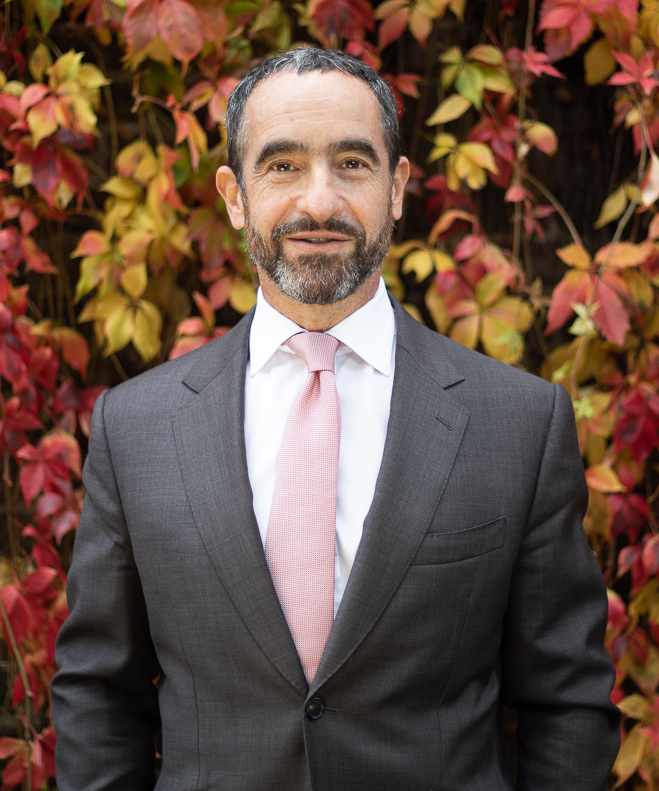
Michael is an acknowledged thought leader on clean energy, mobility, technology, climate, sustainability and finance. He is Co-Managing partner of EcoPragma Capital and CEO of Liebreich Associates. Michael is also co-host and founder of 'Cleaning Up' a podcast and YouTube Series.
Former roles include member of the UK’s Taskforce on Energy Efficiency, chairing the subgroup on industry and an advisor to the UK Board of Trade, an advisor to the UN on Sustainable Energy for All, and a member of the board of Transport for London. He is also the founder of and a regular Senior Contributor to BloombergNEF.