




The Audacious Plan To Build a Transatlantic Electricity Cable | Ep246: Laurent Segalen






This week on Cleaning Up, host Bryony Worthington sits down with investor and energy strategist Laurent Segalen, co-host of the Redefining Energy podcast, for a sweeping conversation that spans carbon markets, uranium trading, battery innovation, and Laurent’s bold plan to connect Canada and Europe with a 5,000km subsea electricity cable.
Laurent shares the personal moments that shaped his obsession with energy security, from witnessing Cold War division in Germany to cleaning an oil spill off the beaches of Brittany, and how those experiences led him to the heart of Europe’s carbon trading system and into high-stakes commodity markets.
Along the way, Laurent recounts:
- How he became becoming one of the most profitable uranium traders on the market
- The financial mechanics behind interconnectors, and why east-west cables make money
- Why sodium batteries could reshape grid storage
- His experience designing carbon markets, and whether they are working or not.
At the centre of the discussion is NATO-L (North Atlantic Transmission One Link): an audacious proposal to link Canadian hydro and wind to European markets through ultra-high-voltage subsea cables.
Leadership Circle:
Cleaning Up is supported by the Leadership Circle, and its founding members: Actis, Alcazar Energy, Davidson Kempner, EcoPragma Capital, EDP, Eurelectric, the Gilardini Foundation, KKR, National Grid, Octopus Energy, Quadrature Climate Foundation, Schneider Electric, SDCL and Wärtsilä. For more information on the Leadership Circle, please visit https://www.cleaningup.live.
Links and more:
- NATO-L website: https://nato-l.com/
- Redefining Energy Podcast: https://www.redefining-energy.com/
- Ep92: Simon Morrish "650 Leagues of HVDC Under the Sea": https://youtu.be/m6KIMswZkWA
Bryony Worthington
People might be thinking, how the hell do you lay a cable, an electricity cable, 5,000 kilometres long?
Laurent Segalen
The supply chain is not really a problem, bizarrely, because when you talk to National Grid, when you talk to the cable guys, they all say, oh, yeah, long, yeah, deep, yeah, you know, I'm not blowing their minds. So they say: OK, fine, we need each section, we can do 200 kilometres and then, you know, come the second guy, the second boat and, you know, we link them together and boom. And yes, 4,000 metres, we need to, you know, avoid the trenches and everything. But right now in between Sardinia and Sicily, they went down to 3,000 metres. So again, I'm never far away. You know, I'm 25% away. It's not like I just discovered a wonderful thing in my lab and I need to build a factory of 100,000 football fields.
BW
No, it's an incremental.
LS
I am in the zone.
BW
Hello, I'm Bryony Worthington, and this is Cleaning Up. My guest this week is Laurent Segalen, the co-host of the Redefining Energy podcast alongside Gerard Reid. Laurent is a longtime investor and tracker of clean energy. He's worked as a director at PwC, a fund manager at Natixis, and then managing director of clean commodities at Lehman Brothers and Nomura Bank. Today, alongside podcasting, he's the founder of Megawatt-X, his own clean energy transition investment platform. One of those investments is in NATO-L, the North Atlantic Transmission One Link, which is an ambitious plan to link Canadian and European power markets via a 5,000 kilometre long subsea electricity cable. Given all that's going on in geopolitics at the moment, this project feels particularly timely. Canada and Europe linking their electricity markets could be both a symbol of solidarity and a practical demonstration of some awesome engineering that could increase energy security, reduce emissions, all at an affordable price. To discuss this project and a range of other clean energy issues, including his adventures in uranium trading, please join me in welcoming Laurent Segalen to Cleaning Up.
Michael Liebreich
I'm delighted to announce we've just relaunched the Cleaning Up newsletter. Now written and edited by my longtime New Energy Finance and Bloomberg NEF colleague, Angus McCrone, it will come out every second Monday. Angus is going to be diving into all the latest from the Cleaning Up universe, the episodes we're recording, the events we're hosting, the stories we're watching and what co-hosts Bryony Worthington and I are up to. To sign up to the newsletter and get all the Cleaning Up latest straight to your inbox, visit cleaningup.live.
BW
Laurent, thank you so much for joining me on Cleaning Up, I'm really looking forward to this conversation. I wanted to start things off really by, you've spent quite a lot of time in finance, raising finance for various projects. And I wanted you to just tell me a few of the highlights of that period of your life, the sort of ventures in finance that stand out for you.
LS
OK, so that's an excellent question to which I'm going to reply a bit later. But first, I have to say the following. At the end of the day, everybody wonders: why is he here? What are the drivers of what he's doing and what his passions are? I would say the first moment to trigger probably where I am now is: I was 13 years old and we were on a trip, a school trip to Germany, and we visited the border between East and West Germany. And I saw Europe scarred and separated in two. And the chauffeur said, ‘look, you can go, but you can't cross that line because the Russian soldiers on the Mirador, they can shoot you if you pass. So that's my aspect. Security. Security is very important.
And the second one. Two years later and one part of my family comes from Brittany and a gigantic oil tanker ran aground and there was the worst oil spillage ever. And I went at weekend with cousins who were still local in Brittany. And, you know, I got the bucket and the shovel and I cleaned the beach. And I can tell you, looking back, people were very furious against the French administration who took sides with the oil company was Amoco, you know, which then became part of BP. So I would say I got my environmental credentials kind of early on with a bucket and a shovel.
And then 9-11. So that's much more recent, but still now is 25 years ago. And I was at PwC at the time. And we were designing with two friends, Carter Bartels and Adam White, the carbon market for America and in parallel, the carbon market for Europe. And we're doing an extraordinary job. And I remember the last call I had with them was the 8th of September. And they were in the North Tower. And they died. And for me, you know, I remember the last email, I could not remove it from my inbox for more than a year. So friends, that's very special. Back to security again.
So I delivered the scope 1, 2, 3, I delivered the European trading system. Once that was delivered, I was a bit frustrated to be a consultant, because at the end of the day, I like to do deals. One of my clients said, okay, you know what, why don't we create a fund and start investing in clean energy assets. So I jumped to Natixis. And all of a sudden, age 40, I kind of became a banker by accident.
So I managed to raise a fund, which was, I mean, looking back, not very big, but at the time was kind of big, 140 million. I became very cocky, you know, you know, I raised a fund, the biggest fund, you know, it was like, ‘yeah, yeah, yeah.’ And then in the elevator of the bank, in comes this kid with mother’s milk still wet on his face. He was a bond trader. And I said, You know what, I just raised 140 million in nine months. And the guys say I raised 4 billion this afternoon. So you have got this, you know, deflating feeling, and this is where you realise how we can lower the risk and increase the liquidity. So we get as much money as possible to be invested in green energy.
BW
Let's dig in a bit then to your specifics that you did with the raising of the finance and the fund you mentioned. I mean, I've always thought it was really interesting that you found an opportunity within the uranium commodities market, right? Talk to me a little bit about what you did there. And what was the key insight?
LS
Now, so that's a very, that's a very funny story. So that was post Lehman Brothers, so I was at Nomura. And at the time, I was head of clean energy, you know. And, but that was before Fukushima, two years before Fukushima. And I ended up on the desk, and the carbon market was dead post 2008. You know, the stuff has gone to one euro, I mean, there was nothing to trade. At some point, we started seeing Goldman Sachs and Deutsche Bank start to trade uranium and I said, ‘Oh, yeah, it's clean, after all. I can trade uranium.’
So I talked to my boss, who was a former head of metals and said, What do you think about uranium? Oh, uranium? Yeah, it's interesting. But then you start looking, it's a very tiny market, but the price was kind of going up. So I said, fine. But how do you do that?
So I do my thing, I'm quite good at this. You know, I went on a scouting expedition, and they were trading — the other banks — they were trading futures, but they didn't touch the physical. So the trick was to touch the physical. Now in order to touch the physical, uranium is very regulated, you know, you can't put it on any ship, and it has to come from mines. The satellite, they track the shipment, they're like, you know, every container is sealed, and it can go only in a few places. Now, one of the places where the uranium could land was in France, okay, in a nuclear plant, where they would store the yellow cake.
I said, That's great. You know, I'm French. So you know, most of the time, even after 20 years being British, when you're French here, you’re still a second class citizen. But here, it was very good, because of my French, people would say ‘your French is very good.’ Yeah, of course…
So anyway, I find the lady who is in charge of the warehouse. And I call her and I send her flowers, and I send her chocolates, and we talk on the phone. And anyway, one day, I managed to get officially a number where the bank could physically receive yellow cakes. Within 24 hours, my phone was ringing. Hello, this is BHP. Hello, this is Rio Tinto. Hello, this is Paladin from Namibia. Hello, this is Cameco. I say, ‘Oh, great, great.’
So I had a budget, you know, they gave me a budget. So I started buying uranium. The second problem is I had no idea what the price was, because there was no price. So I had bought that, I don't know, $38 per pound. And the next guy who calls me, I say $36. And I say, okay, go. And another guy called me to say, ‘okay, $34.’ And I managed to bring the price down. And that's how I built my position.
BW
Well, I find this fascinating because you basically saw a market which was pretty illiquid, and which didn't have any real commercial ability to store in order to sort of arbitrage high and low prices, right? Is that a fair description? And what strikes me is that that's kind of what batteries are today for electrons, right?
You’re already sort of seeing that where you can make money in markets is if you've got that physical capability to sort of break the buyer and seller immediacy and wait. Create some time difference that you can arbitrage. Is that right?
LS
Well, it was, it was a bit less sophisticated, you know, they have given me $50 million to buy, so I bought. I bought and I did not really know what I would do with it. Anyway, I filled my quota, and then the phone stopped ringing. Silence for two months. So now, of course, my risk management starts freaking out. So okay, you've got all this in the warehouse, what’s the price? What’s going on?
And I say, I don't know, I don't know. Nobody's answering the phone. And then one day, great surprise: “Bonjour, mon ami. Bonjour.” I say, “Oh, yeah. You want to sell more?” They say “no, no, I want to buy.” “What do you mean?” “I want to buy what I sold you three months ago. Can I have it back?” I say, “Yeah, but now it's $45.” And the guy say, “done.”
And then another guy calls me, can I get my quantity back? I say no problem. Because they knew it was in the warehouse. Never moved. “Okay, fine. 52” and pa-pa-pa-pa. And lo and behold, I managed to get out of all the positions. I think I made $30 or $40 million, which was a great trade. Now I had no idea how I managed to buy and no idea how I managed to sell. Six months later, Rio Tinto announced that their Granger mine in Australia was flooded. The market I entered was a long market. The mine got flooded, the market became short. And everybody who sold me their surplus was buying it out. So I was the luckiest, and most useless uranium trader you ever saw. That's, that's the uranium story.
BW
Let's move to other projects that you raise finance for, particularly because this leads on to something I know you're actively working on today. I'm interested in how you raise money for the interconnector that joins the Irish market to the British market because that was something that kind of got you… And well, similarly, it's about market flexibility, right, and market connecting markets, giving it some arbitrage.
LS
Exactly. Exactly. Look, after a while, and that's not from me, that's from my co-host Gerard: an energy source scales, not when it's discovered, but when people know how to move it and store it. Okay. It's as simple as it is now. So moving storage, space and time. Space is the interconnector. Time is the batteries, but it gets a bit more sophisticated than that because you realise that batteries pair very well with solar.
Whereas when it comes to wind, it's always better to have a hydro system or some cables around because, you know, the wind is going to blow nonstop for two days, and then it's going to stop for two days. So batteries, the economics of batteries collocation with wind are much more difficult than batteries with solar, which is a bit of a no brainer. So when people say, ‘yeah, the solution is this or is that’, I would say, ‘not that simple.’
The second thing is when you when you have a cable, you realise that the rotation of the earth is very important, even if you took the interconnector between France and GB, which are just like, you know, 50 kilometres or 100 kilometres, just an hour peak difference creates a lot of arbitrage, because the principle of interconnector is goes, you know, east to west, west to east. And that's where if you look at the interconnectors that make money, compared to the one who loses money, it's always east west to make money. And north-south, they don't make any money because you don't take advantage of the rotation of the earth.
BW
Would you say that's true, even when it comes to things like solar, where north to south does determine the length of the day. So therefore, how much light you get to harvest? Or is that just batteries that replace that?
LS
And let's say you are the interconnector from Spain to GB. Okay. And they say we're gonna, we're gonna send you excess power at noon. Again, GB says sorry, we’ve got solar as well, your noon is my noon. I've got my price on negative also. So I don't need your power now, I would need it in six hour, or six hours ago. That's the power of east to west. So my first foreign into interconnector, I was more or less doing my boutique things, brokering out of these bigger institutions. After a while, I said, you know what, I'd rather do it myself or in partnership, it's always in partnership, never be alone, but partnership with the right people. And so I was brokering solar, I start to have a bit of a name, because I knew how to make a transaction. And then came this guy. And, and he says, I have an interconnector between Dublin and Liverpool. I say, “uh huh, uh huh.”
He said, “No, no, you need to look into it.” And then I started looking into the economics, when the wind is… the wind takes four hours to cross the Irish Sea. So you have the wind in the morning in Ireland, and then you've got a wind in the afternoon in GB. And the interesting thing is there was already a cable called EWIC, East-West Interconnector, which had been opened in the early 90s. So in fact, I had the P&L already. So I realised those things, they really pay for themselves. And why do we make more, is that they pay for themselves. There's the one under the Eurotunnel, which was finished in 2022, was supposed to be paid in 20 years, it was paid in 20 months.
BW
Just pausing on the economics of it, because when you're evaluating a generating technology, you're just looking at what is the price per kilowatt hour. You're taking into account the OpEx, CapEx, etc, over time, cost of capital. But with an interconnector, what's your kind of price metric that makes you know, ‘oh, yeah, that's a good one; this isn't a good one.’ What's the equivalent of that kind of dollars per megawatt hour generating number?
LS
You will have ancillary services, you will have congestion, you will have capacity. Now, a tiny interconnector is going to cost you 10 euro per megawatt hour.
BW
For just CapEx?
LS
Yeah there’s no OpEx. The only OpEx is insurance. So the moment you have more than 10 euro per megawatt hour, at any point, the interconnector can start functioning.
BW
And that could be, it doesn't have to be the difference between the two market prices, it could just be you're being paid by a grid operator to provide us ancillary services, right? So it's a different market to just buying the electrons.
LS
You can do a bit of revenue stack, that depends how much you sell the capacity. You can sell the capacity one month ahead, three months ahead, daily, or at least in the market. But that's then the company who manages the cable decides if they want to go pure merchant. Or you go and to see the government and they give you what they call a cap and floor. So the cap and floor means okay. So that's Ofgem’s is very good. Number one in the world to do that. And Ofgem has done a lot of, you know, very accurate financial modelling and say, okay, fine. If you do the floor is 3% return on your equity. So that's not great. But you know, it's still good. At least you can raise the debt. So that's good. So if you do less than 3% return on equity, we'll top you up until 3%.
And they put a cap, let's say 10%. If you do more than 10%, if you do 11, 12, whatever, you pay us back. So that's the cap and floor regime. And the beauty was that my future partner. So that's a British regime. He managed to convince the Irish government to adopt the same cap and floor regime. So as the revenues are fungible, because the coverage is the same on both sides, you can raise the debt as one pool because if one side says I'm going to pay you like this, and the other side say I'm going to pay you like that, you need to raise two different types of debt. And it becomes a nightmare. So what I learned was with interconnectors, you need to align the regulation also on both sides.
BW
One of the success stories of the UK on climate is the decarbonisation of our power sector. You're basically using carbon pricing to get rid of the coal, and then bringing in contracts for difference and renewables markets to bring a massive amount of money into wind, and then solar, which went gangbusters, all of a sudden, despite being a northern country. But then so then we also then in parallel built out the transmission. So you're talking about the links from Ireland into the west of England. But we've linked out, as you said, to France, but we've also now linked out to Norway, right, which is not one of the largest.
LS
Norway, Denmark, 800 kilometres, the longest in the world. No, there's real expertise. But what's very interesting is that it's really the offshore wind industry, we started moving cables, and you know, the same boat and everything. So in fact, the interconnector industry has been using the expertise of the offshore wind supply chain. So I don't need to invent, I don't need to invent any technology like, okay, my SMR, my hydrogen, my whatever, my membrane, that's okay. The boats, the expertise, at the end is going to be Siemens, GE, Hitachi, Prismian, AKT, Nexans, Jan De Nul, all the supply chain for interconnectors exists. And nothing comes out of China.
BW
Because this is what actually stimulated me to pick up the phone and say, Laurent, why don’t you come on the show. It was watching Mark Carney interacting with the politics of the North Americas, and realising that Mark was very much trying to send a signal that Canada was now going to look further afield for partners, rather than relying on its neighbour to the south. And I knew that you were looking at a cable interconnector cable between Canada and Europe and between the UK. So I really want you to sort of describe that project, because it's pretty audacious.
LS
Okay, let's do that. So as I kind of follow that sector, I see the Australians, they want to connect Singapore, like 5000 kilometres. You know, I thought that, you know, beyond 1000, it was impossible. But I see a lot of intelligent people say, we're going to 5000, of course, X-Links, we're going to do 5000 or 4000. So I say, Oh, interesting. You’ve get some interesting people who start, you know, breaking the glass ceiling of the length.
And then comes, three years and a half ago, four years ago, the Ukraine war, the beginning of the Ukraine war, which is a personal drama for me. But then they blow the pipelines, I don't mean they blow them, but I mean, the pipelines are blown. And the pipeline, the interconnector, this is a link. You send a ship there, you know, a ship, okay that's dating, okay. But a cable, a pipeline, it's a wedding.
BW
It's a marriage.
LS
Okay. You need to trust the other person. And the Germans trusted the Russians, and they've been trusting them. And right now they're having a bit of a series of dramas, because they realised they could not rely on the Russians. Now they realise they can't rely on the Americans. So it's difficult to be German right now, because who can we trust? So I was very, very downbeat. And I don't know, in my head, I said, we need energy security in Europe. Why not America?
BW
North America?
LS
Yeah, North America. But you know, just like that. And then I said come on, somebody must be working on it. So I start googling, googling, googling. I saw no one. And the only thing I saw was the telegraph cable of 1866. You know, and it's from Newfoundland to Ireland, 3500 kilometres, 3000. It's less than Morocco. So the distance, you know, we're in the same, we're in the same ballpark.
So I kind of do a bit of fantasising. And after two weeks, I call Simon, my partner — me, I can be a bit of a dreamer. He’s the Excel sheet guy, you know? I say, what do you think? Is it stupid? He said give me 10 days. He came back after 10 days and said ‘you know what, maybe it's doable.’ And that's really how it started.
BW
And, you know, if I think, given the current geopolitics, a Canada to UK marriage on clean energy makes a lot of sense to me as a politician. But just talk us through the practicalities then of, you know, for people who might be thinking, how the hell do you lay a cable electricity cable 5000 kilometres long? I mean, it's a series of segments, two boats crossing, isn't it? So you can just keep restocking and joining links together. So, as long as you source the materials in the boats, is there a physical limitation to how far you can go?
LS
A certain number of things. Yeah, okay, fine. We have a honeymoon right now. But what you know that if you have a 10 year development, you're gonna have three, four or five election cycles. So it cannot just be a politics, you know, vanity project. It has to stand on economic ground, maybe you will have a bit of government top up. But as a private developer, can I design a product where most of the revenue is going to be economic? Of course, they're going to be wrapped in government guarantees, but for me, that's the most important thing. If I design a product, which is 80% public money, that's not my job, the government, they can do it themselves.
So the supply chain, not really a problem, bizarrely, because when you talk to National Grid, when you talk to the cable guys, they all say, Yeah, long. Yeah, deep. But I'm not blowing their minds. If you look at the evolution of the cable, they are 300,000 volts now, they went to 500,000 volts, and then they went to 600,000 volts, and the Chinese are already at 1 million volts. And voltage is kind of important, because the more voltage, the less losses you have. And the last thing you want is you want, you don't want to send, you know, 100 at one point of the Atlantic, and then having only 50 on the other side.
So that this is where guys like DNV, I mean, a lot of guys volunteered, you know, they just say, if you do this, like that. So right now, the current generation is 600,000 volts. We believe we need to go to 800,000 volts to get a 5% loss, 5-6% loss, which is very important for the P&L. So weirdly, I'm kind of reassured from a technical perspective, now, how does it work? You talk to Jan De Nul, who are like the masters of the universe, when it comes to laying down cables, they say, ‘yeah, okay, fine.’
BW
And Jan De Nul is a boat provider or service provider?
LS
Yeah, it's Belgium. They are everywhere, you need to dredge, you need to lay down cable everywhere. They have the biggest cabling boats in the world.
So they say, ‘okay, fine, we need each section, we can do 200 kilometres.’ And then, you know, the second guy, the second boat, and you know, we link them together, and boom. And yes, 4,000 metres, we need to avoid the trenches and everything. But right now in between Sardinia and Sicily, they went down to 3,000 metres. So again, I'm never far away, you know, I'm 25% away. It's not like, I just discovered a wonderful thing in my lab, and I need to build, you know, a factory of 100,000 football fields.
BW
No, it's an incremental...
LS
I am in the zone. So I am in the zone. Then, in order to see if there is economics, and as we are north, and we are not talking solar, we're talking wind, there's only one question, does the wind blow at the same time in the North and Eastern Canada?
And here I have to salute Ember, because I had lunch with Dave Jones, who was also very interested. I said, look, I kind of have a hunch that the wind doesn't blow at the same time. But you have all the data, you're Ember, you have your great reputation. I mean, I love those people. And last year, they published an extraordinary report. And frankly, I say ‘your numbers, if it's correlated, just say it.’And they put the report and they say, look, not correlated, but not only the wind, but the cold snaps, the heat waves, the hydro system, the rainy years and the wet years, it’s a perfect arbitrage in terms of resources. It's perfect.
BW
So where would people go to find out more about this project? And so what I'm hearing, I'm hearing my political antennae are sort of, you know, alerted to this opportunity. But what you're saying is, clearly, that the economics and the physical delivery have to also be possible. And that's where you spent your time in grounding those realities. And now you're looking at how you because as you said before, you've got to get kind of the two landing zones to be somewhat aligned in terms of how they treat this connection. I mean, you've got to lay the groundwork for the marriage. And is the next step then for you to just work with the Canadian provinces and work out what kind of policies are needed or are the policies already there?
LS
So yes and no. So we have a good idea where we can land. And I can tell you that the recent summit in the North Sea, you know, where they're going to build, and they're going to mesh the North Sea and connect everything with artificial islands. That's the perfect way for us to land. In Canada, it's a totally different thing. But it's going to be mostly around Quebec, because that's the biggest grid. But also maybe in what they call the maritime provinces. So maybe Labrador, maybe Nova Scotia. That's going to depend now from a regulatory perspective, totally different. So physically, I kind of know how to do it. The next work we're going to do now is building a revenue model, where the two sides from a legal regulatory point of view are going to converge.
BW
Line up. So you're going to have to use your French language skills and delivering boxes of chocolates again to ease this one into being or are you working with partners?
LS
Of course, I go there and I speak French to the Quebecans.
BW
Of course, once again, your language skills come into play. Okay, this is fascinating. I look forward to following the progress of this project, because for me, it's following the sun as well. I mean, I use that as a proxy for just interconnecting the whole planet. Those sorts of scale projects really give me hope.
ML
Cleaning Up is proud to be supported by its Leadership Circle. The members are Actis, Alcazar Energy, Arup, Cygnum Capital, Davidson Kempner, EcoPragma Capital, EDP, Eurolectric, the Gilardini Foundation, KKR, National Grid, Octopus Energy, Quadrature Climate Foundation, Schneider Electric, SDCL and Wärtsilä. For more information on the Leadership Circle, please visit cleaningup.live. If you're enjoying this episode, please hit like, leave a comment and also recommend it to friends, family, colleagues and absolutely everyone. To browse our archive of around 250 past episodes and to subscribe to our free newsletter, visit cleaningup.live.
BW
So, Laurent, you were around at the kind of advent of carbon markets and carbon trading in Europe, and Europe was the first country and region to sort of regulate a regulated carbon market. But that's where I sort of started out my advocacy career. Post involvement in the Climate Change Act, I was focused really heavily on the EU emissions trading scheme. And I was coming at it from a kind of campaign civil society perspective. And the thing I'm most worried about was its over-allocation that set off with a huge amount of allowances being handed out without, it didn't feel to me like there was proper scrutiny on some of the assumptions. And where were you on that side of the debate? Do you remember those debates about the overall cap and how much inflation there was in it?
LS
Yeah, of course, everybody cooked their books and arrived and said emissions were going to go up. And look, I think the deal to get the Germans Onside was to give them for free at the beginning. So it was very, very, very slow. But look, when first of all, it's always a great academic idea to do a carbon market, we managed to put it out together, because it was a time where there was a surplus of power on the market. So in fact, the utilities were for it, because it was a way to kind of decrease the demand, and especially the most polluting part of the demand. So you always need to have the industry behind you. It's not you know, the environmental movement on its own would not have pulled it off. If we didn't have the industry behind us, and of course, the consumers, the steel and cement, we can't do it. We're gonna die. What about the competition? The debate we're still having today was the CBAM. So they were given the allowances for free.
BW
The carbon border tax adjustment mechanism. I mean, for me, two things happened around that time. One was we decided to put industrial emissions in when it would have been better just sorting out the power markets, probably, right? Because what happened was it gave us inadvertently, a massive surplus to industry, which just then power bought, so reducing the price, took away the price signal.
LS
Brussels politics.
BW
Yeah, completely right.
LS
If you had done just the utilities for the bond, the consigliere of the energy and the fact that you put the others, you would consigliere of the environment. So it was pure politics.
BW
And bad politics, really, turns out in the long run. Brussels politics, it worked. And then I guess the other question is, relative to other policies, like the renewables directive, did we need the carbon price? I mean, the carbon price seems somewhat, not irrelevant, but it did take a while for it to even have a price signal. And in the meantime, we were providing subsidies for clean, which seemed to be working to undermine the cap as well. So could we have done it in a more simple way by just bringing the clean forward?
LS
Well, the thing is, when it was started in 2002, we had no idea that the clean would go down so fast, no idea. And even the government, when they start doling out the subsidies, you know, they gave a 600 euro per megawatt hour, and they realised the stuff could be produced at 300. By the time they reduced the subsidy to 300, the gap was 150. But nobody saw it coming. Even me, I was inside, you know, my first solar was at, you know, $5 a watt. Now we're at 9 cents a watt.
You know, you say I know, Michael, which I love, and you know, he’s your colleague with all the charts, and you know, the curve, and he could foresee that. But the people in the middle, like me, trying to do deal after deal, you know, we could nott foresee that. So the policy was done, you know, a bit haphazardly with whatever information we have.
Now, it was really about nuclear gas and coal. Really, it was about that. It was the end of the first phase until, you know, the mid 2010s. The price was between five and 20 euro per tonne, which is 20 euro per megawatt hour on the top of coal, and 10 euro.
But at the same time, you had the wind guys, they were raking 200 euro per megawatt hour and said, You want to play the carbon? Why not? Of course not. You know, I'm going to get 10 times more subsidy that I can get on carbon. So it was really parallel policies. It was really bad policy. Now, if you ask me now, would we do it? Probably not. But at the time, it looked like it was the worst, with the exception of all the others.
BW
I suppose that because it's a cap on the whole, you know, it's a large volume of emissions underneath it. There are all sorts of other, sometimes nation state decisions, which affect the volumes. And one of the most obvious being if this was a policy to try and reward nuclear and gas, Germany basically decided to go with the gas route and shut the nuclear. So that was a sovereign decision, which meant that the thing that should have been rewarded by the carbon price, they decided to shut down anyway, pushing them more into gas, right?
LS
Yeah, but again, the mindset, that was the mindset at the time, it was a mindset of deregulation, there was a huge deregulation and creation of the energy market and unbundling between generation, distribution, transmission and retail. And the Kyoto, the old Kyoto things, which really, you know, 97 was also a cap. So it was kind of, okay, I take Kyoto at the global level. And then it trickles down to countries, sectors, factories, and so on. So it was the tool we had. So, you know, are they still valid today? I don't know. But at the time, yeah.
BW
And at the moment, Europe's about to embark on an expansion of that cap, right? They're about to bring in the other sectors, mainly heating and transport. I'm wondering how that's going to go down in today's climate, where top down solutions seem to be falling out of favour.
LS
But the thing is, the moment you have a system, you have an administration, and the first thing an administration does is fight for his own survival. So they can put this, we're gonna put that. And also with the auction, you know, it's quite a lot of tax receipts. So I don't know if it's a good policy or not, but I can understand why they do it.
BW
Tell me a little bit about your interest in sodium batteries, because we do a lot of work on batteries and electrification on this podcast, as you do at Redefining Energy. But what is it particularly about sodium that's got you interested in them?
LS
Look, I buy batteries. So I own batteries in partnership, always in partnership with a fund called Conquest. And what we have decided is to work behind the meter. So these are mobile batteries, which are rented either to DNOs (Distribution Network Operators) in the winter to support their network or to EV charging or to construction sites.
I see a new market coming in, but not my idea, it was Zenovi’s idea. We're going to help accelerate the installation of big batteries, because we'll be able to pre charge them. So there's a lot of economies to be made here. So we see more and more utilisation of mobile batteries. You know, I end up being very middle of the road, okay, I'm going to use CATL batteries, you know, LFP prismatic 280-amp hours.
BW
CATL is the Chinese manufacturer of lithium ion batteries, it's really broken the cost curve, right?
LS
Yeah, yeah. But the rest of the batteries is built in Europe. And especially there are a lot of questions about the software because the European cyber thing, they don't want Chinese software. So in fact, I'm just using the cells from China, frankly. They are the best and the cheapest, but all the rest is the inverter, the anti-fire system, you know, the racks, that's done in Europe. So that's how you learn. And of course, now, I get better because after a year or two of that exercise, now I understand what people say, which was not the case two years ago.
And the second thing is, I understand if they really promised me stuff, which they can't hold. So I'm interested. So sodium will really pick up if the price of lithium went crazy in 2022 into $80 per kilo, then crashed to $10 per kilo, where it stayed for two years and a half, and now it's back up to $20 per kilo. At that level, it's high, medium high. So some, especially the Chinese who are very, very price sensitive might decide to start switching into sodium, especially because from an industrial point of view, building sodium batteries, you can almost use the same production line as lithium batteries, it's not like flow batteries, you know, something totally different. So it's, it's a cousin. So that's very interesting. They are less dense. So it means your battery is going to get bigger. So it doesn't work for cars, but might work for ESS.
BW
Energy services and grid services, you mean?
LS
Yeah, yeah. So I think it's coming, because the technology, I think it's really the price of lithium, which is going to trigger a fast adoption or slow adoption of sodium batteries.
BW
Are there any other advantages? So switching out the lithium gives you a cheaper supply chain, but as you say, less energy dense. Is there any other reason why, other than those two factors that make sodium a winner?
LS
It's a bit better from a security perspective. It's a bit better.
BW
Security as in safety, like fire risk?
LS
Fire risk. Look, fire risk is nickel. It's always the one who burns. It's always, every time you have a battery burning, there's always nickel in the battery. Why? Because nickel you can pack is super dense. It's super dense.
So if you want a super dense battery, you use nickel. And if you look at the, you know, if I don't know if there's video, but if, if this, this is a size of LFP, this is the size of a nickel battery. So you pack a lot. Everybody knows nickel is super dense, excellent. The problem of nickel is it burns. So the only thing you can do to prevent nickel from burning is to coat it with cobalt.
But the problem is cobalt, for whatever reason, you can't use it because the poor child labour in Congo and yada, yada, yada, which for me, that's a disgrace because for one cobalt mine, there's a thousand illegal gold mine, and nobody ever talks about it. You know, there's no demonstration in front of Tiffany that the gold is, you know, used. Nobody said to ExxonMobil, you're half of the cobalt in the world is using refineries. Nobody asked ExxonMobil where the cobalt was coming from. Okay. But all of a sudden we want to use it in EVs, sorry, I'm a bit conspirationist here, but I can tell you the attack on cobalt is a scandal.
BW
Yeah. Well, it's not, it's just one of many attacks, right. That's trying to hold back electric vehicles. And it's for us to sound like conspiracy theorists, but you know, I looked at the narrative around EVs throughout Europe, the seeding of these stories, it got to the ridiculous levels of claiming that we couldn't ever have EVs in multi-story car parks because EVs are going to be too heavy and they're all going to collapse. Forgetting that we're all buying bigger, heavier SUVs and we've all been fine with that. You know, it's just, there is definite evidence of wilful promotion of false stories around EVs. We are running out of time and there's so many other things I want us to talk about.
LS
Yeah. Look, there are a few things I want to say and maybe you'll get it, but I would say, look, if you, if you look at the energy sector, there are two fundamental ways of thinking about it. You have on one side Vaclav Smil and on the other, you have Clayton Christensen.
Okay. Clayton Christensen is, he's been dead for 10 years or so. He was a professor in Harvard, he was the god of innovation. He found the disruption, the Kodak effect, the S-curve, that's all Christensen. So it's really the theory of tech disruption.
Vaclav Smil, everybody knows it. Okay. It's ‘there's no replacement, there's just an addition and blah, blah, blah.’ He's a great historian, but every time you talk about the future, I get it wrong. And then of course, come down to experts, the son of Smil is Daniel Yergin, of course, which is a bit of a hero because I read The Prize 35 years ago and it was really to open my eyes about, you know, what the oil sector was. And the spiritual son of Christensen is Michael Leibriech. Michael says, and he used the S-curves and disruption, he says, ‘look the tech is there and you know, we're going to grow.’ Whereas Yergin said a lot of ‘transition has to be prudent, you know, we need to not to shake too much. We still have fossil fuel in 300 years and so on.’
And at the end, it's always the same debate, you know, it's the flow versus the stock. It's always the same debate. So each expert or each person working in energy needs to make his own cocktail. Me, it's very clear. I'm 75% Michael, but I'm still 20% Yergin because there are parts, I mean, Michael's almost pure, you know.
BW
Well, have you read his pragmatic reset though? Because he's becoming, I think he's becoming 80% of Michael himself because he's accepting there's a role for fossil.
LS
If you look the past 15 years, he's got it more right than all the others. So that I give him credit for, but at some point you've got inertia, you've got incumbency, you've got corruption, you've got stupidity, and there's the human factor, which can create a lot of progress, as you said, and wealth and so on. But there's also a lot of human factors which can, you know, create a lot of delay, unfortunately. And yeah, that's it. So my love and respect for Michael.
BW
Yeah, well, mutually, I'm sure we're all listeners of your podcast as well. And I mean, I do think you've hit on something there and I describe it as the tragedy of the incumbency, right? There's just this, you're pushing against a headwind of quite a lot of established power and established literal power and, you know, figurative political power.
But it does seem now as if what we're shifting to, which is manufactured energy, you know, that we're putting in place the efficiencies of production lines for units that can keep coming down the price curve does seem to, you know, win out. It seems to be winning out in terms of speed and cost and just the learning cycles, right? That the speed with which things iterate seems to be giving, giving clean an advantage.
And maybe the thing to end on is, you've said this to me and it really struck me, is that clean is clean in more than one way. It's clean for the environment, but it's also clean in terms of the sector that sits behind it. And we haven't got time to go into here, but I know you've got lots of experiences of the sort of murkier end of the fossil industry.
LS
Oh my God. Don't let me start me on this.
BW
Well, look, we'll perhaps have to save that for another conversation because we can go right back to the beginning with you, with your bucket on the beaches of Brittany, clearing up the muck of, of, of, of, of the fossil fuel that's landed on your beach. We are in the business of clean up the whole sector, right? And I'm really delighted to have you on the show. As I say, I'm an avid listener of Redefining Energy and thank you for doing what you're doing.
LS
Thank you for having me, and send my best to Michael.
BW
So that was Laurent Segalen, long time investor in clean energy and co-host of the Redefining Energy podcast. As always, we'll put links in the show notes to the resources we discussed, including our past conversation with Simon Morrish, CEO of X-Links, another long distance interconnector cable proposing to link Europe to Morocco. My thanks to Oscar Boyd, our producer, Jamie Oliver, our video editor, Kendall Smith, our head of operations and to the rest of the Cleaning Up team and to the wonderful Leadership Circle members who make this podcast possible. And thanks to you for listening. Please join us at the same time next week for another episode of Cleaning Up.
ML
Cleaning Up is proud to be supported by its Leadership Circle. The members are Actis, Alcazar Energy, Arup, Cygnum Capital, Davidson Kempner, EcoPragma Capital, EDP, Eurolectric, the Gilardini Foundation, KKR, National Grid, Octopus Energy, Quadrature Climate Foundation, Schneider Electric, SDCL and Wärtsilä. For more information on the Leadership Circle, please visit cleaningup.live. If you're enjoying this episode, please hit like, leave a comment and also recommend it to friends, family, colleagues and absolutely everyone. To browse our archive of around 250 past episodes and to subscribe to our free newsletter, visit cleaningup.live.
Co-host, Cleaning Up Podcast / Lord
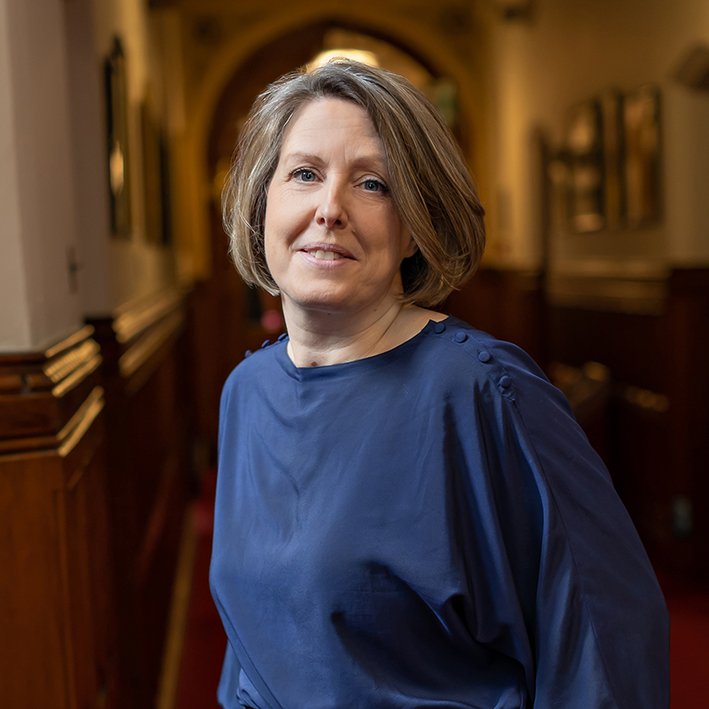
Baroness Bryony Worthington is co-host of Cleaning Up. She is a Crossbench member of the House of Lords, who has spent her career working on conservation, energy and climate change issues. Bryony was appointed as a Life Peer in 2011. Her current roles include co-chairing the cross-party caucus Peers for the Planet in the House of Lords and Co-Director of the Quadrature Climate Foundation.
Her opus magnum is the 2008 Climate Change Act which she wrote as the lead author. She piloted the efforts on this landmark legislation – from the Friends of the Earth’s ‘Big Ask’ campaign all the way through to the parliamentary works. This crucial legislation requires the UK to reduce its carbon emissions to a level of 80% lower than its 1990 emissions. She founded the NGO Sandbag in 2008, now called Ember. It uses data insights to advocate for a swift transition to clean energy. Between 2016 and 2019 she was the executive director for Europe of the Environmental Defence. Prior to that she worked with numerous environmental NGOs. Baroness Bryony Worthington read English Literature at Cambridge University